Male reproductive cancers
 Call Kai
 Learn
Learn Practice Test
 Spaced Repetition
 Match
Match Flashcards
 Knowt Play
1/71

There's no tags or description
Looks like no tags are added yet.
Name | Mastery | Learn | Test | Matching | Spaced | Call with Kai |
|---|
No analytics yet
Send a link to your students to track their progress
72 Terms
What is the organ that secrets testosterone and produces sperm?
testes
Note: the testes produce 90 to 95% of testosterone in the body
what organ stores sperm that are going to mature?
epididymis
what organ transfers the sperm from the epididymis to the seminal vesicles
vas deferens
where does the sperm transfers to after it matures in the epididymis?
seminal vesicles
The sperm gets trasferred to the seminal vesicles through the vas deferens by __________ through the ejaculatory ducts.
muscle contraction
What gland surrounds the first part of the urethra and the ejaculatory ducts at the base of the urethra, just below the bladder?
prostate gland
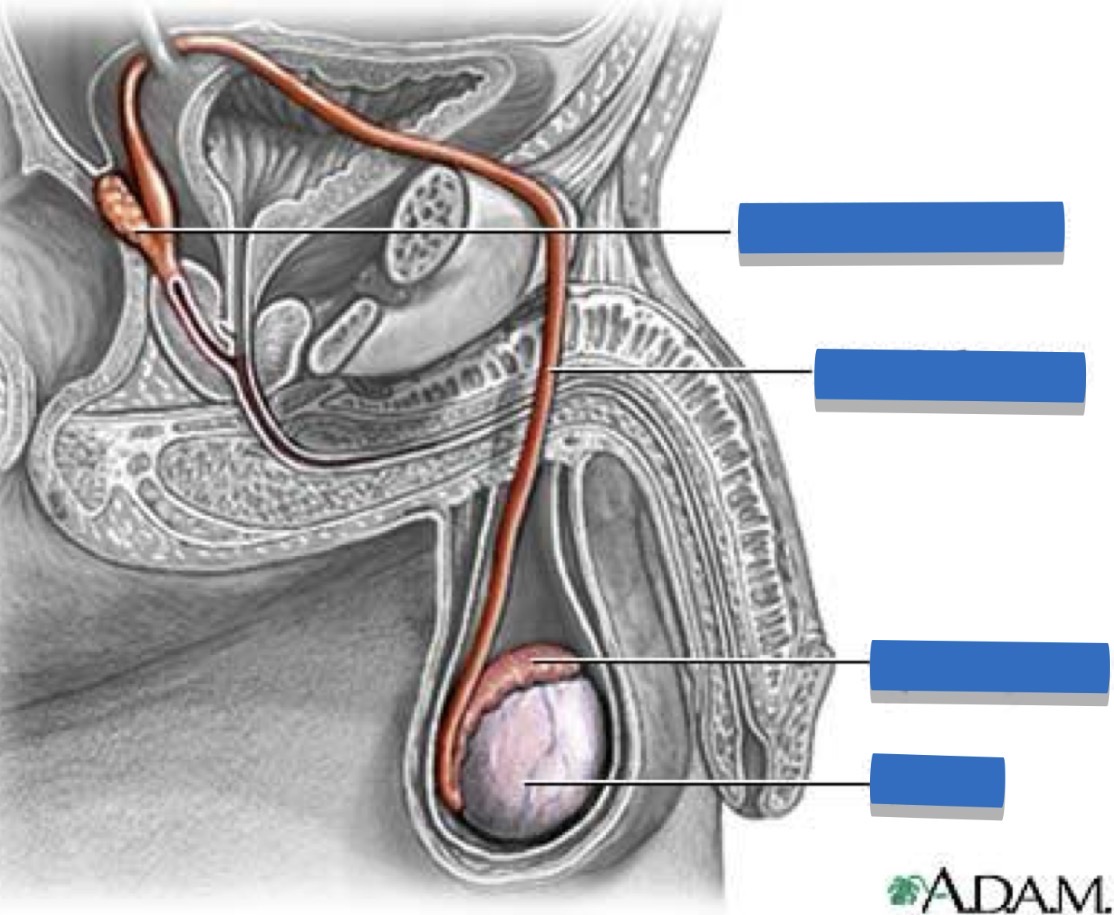
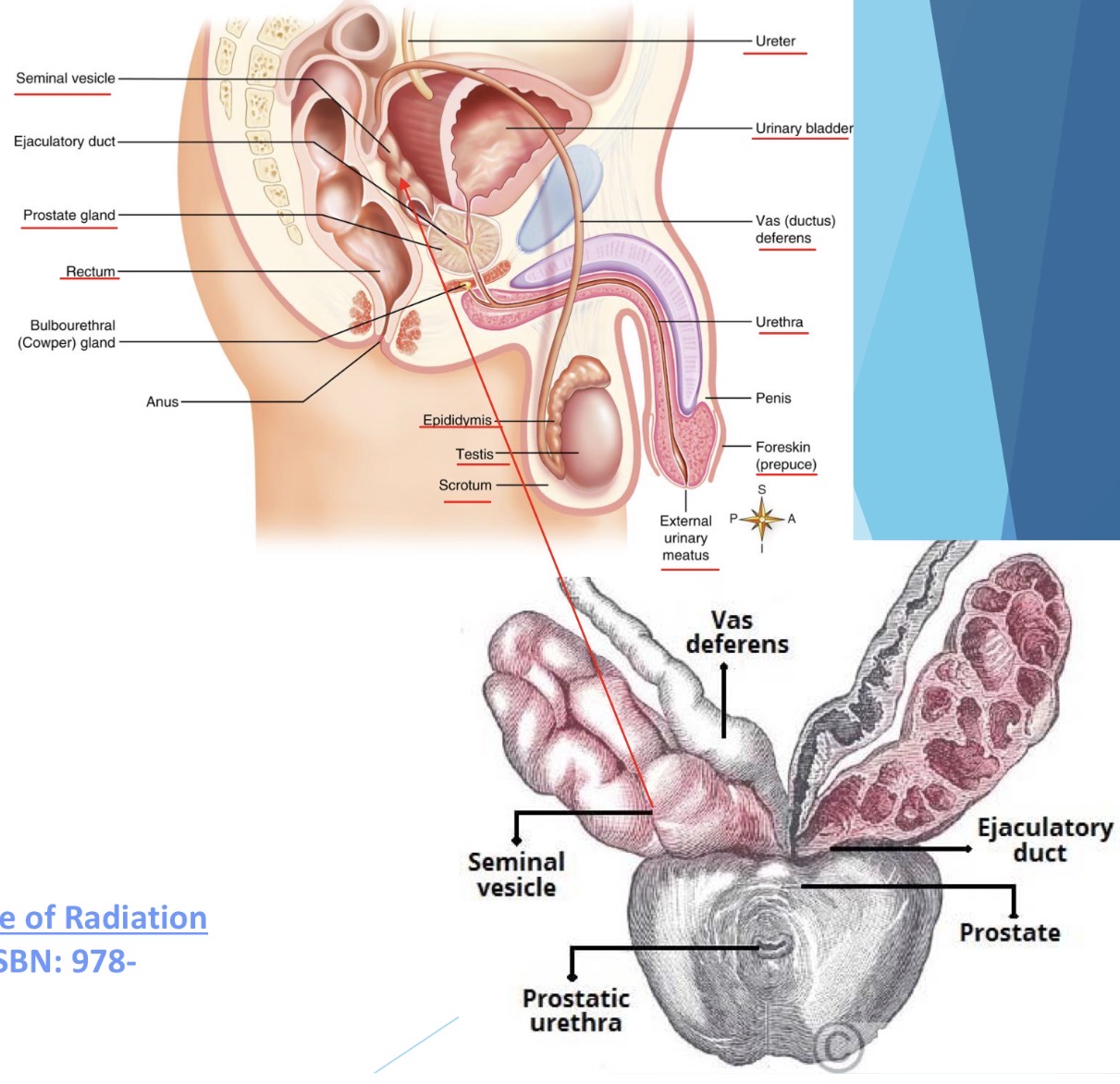
Name the anatomy
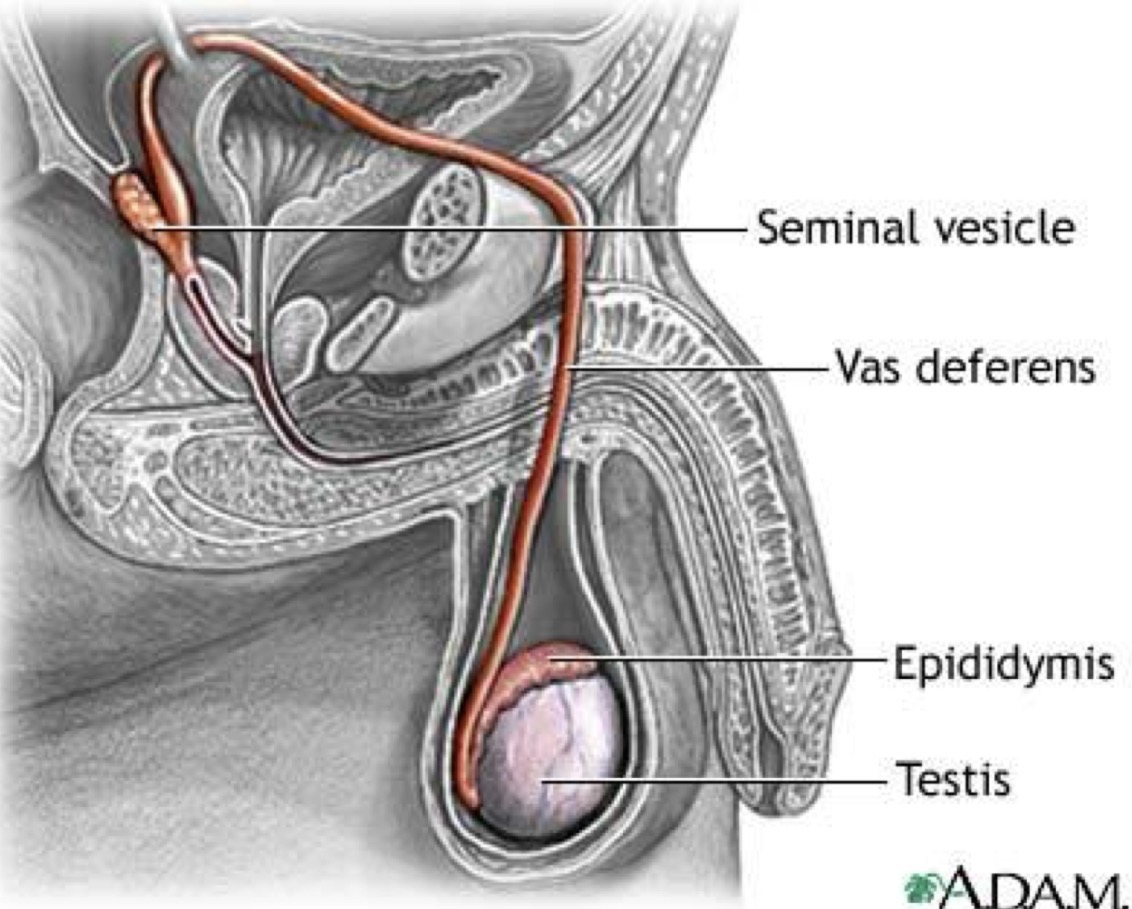
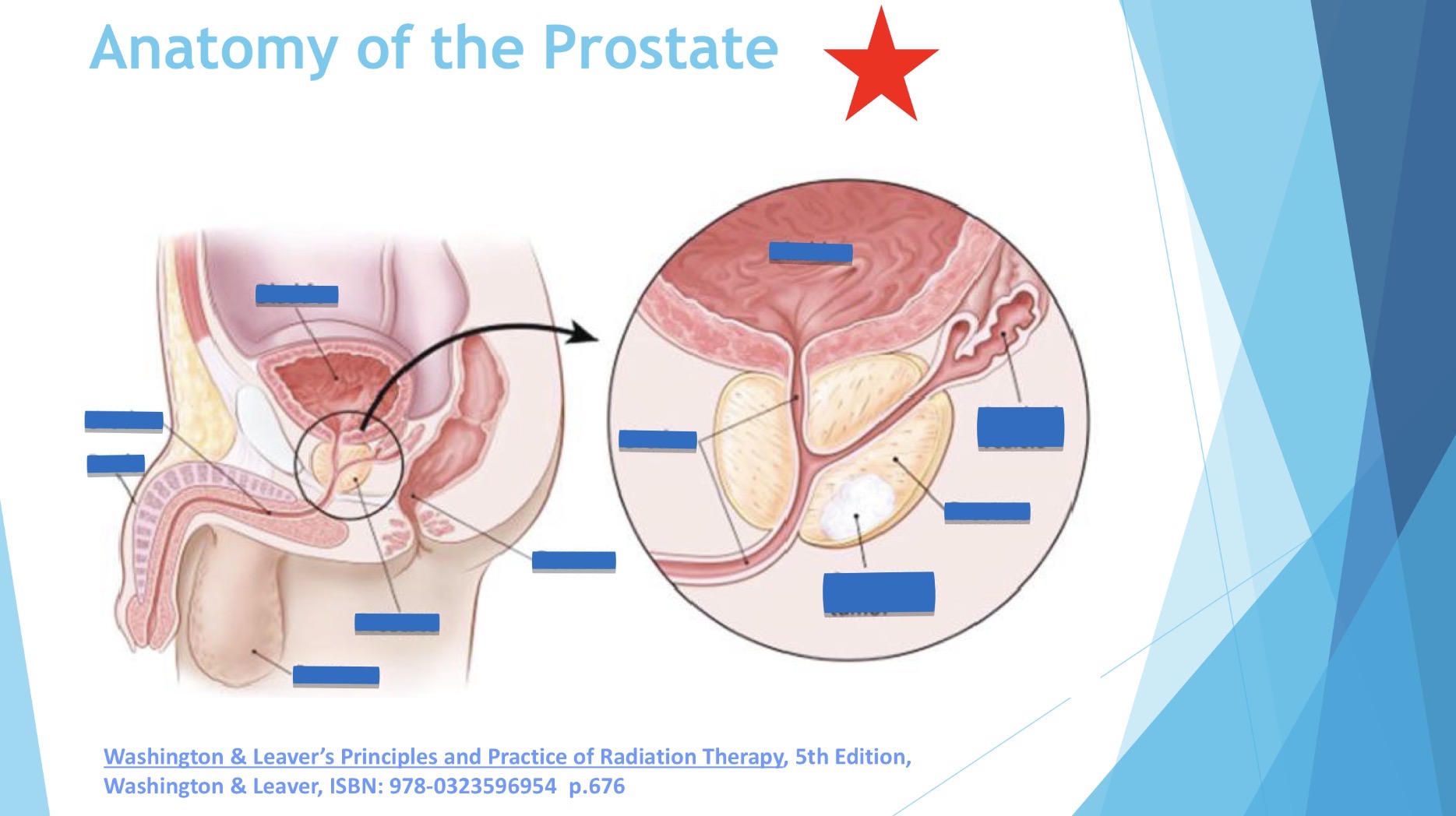
name the anatomy
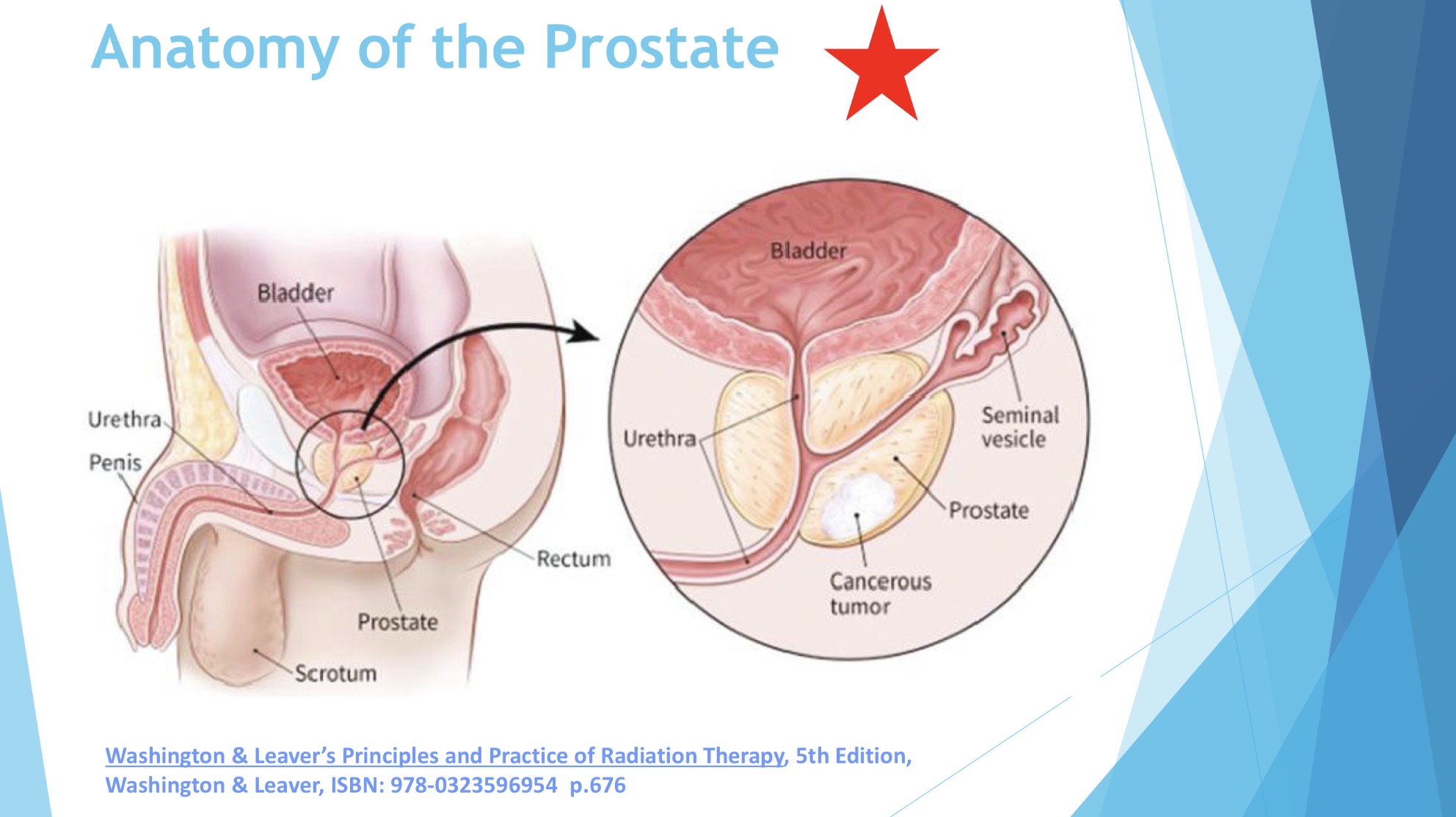
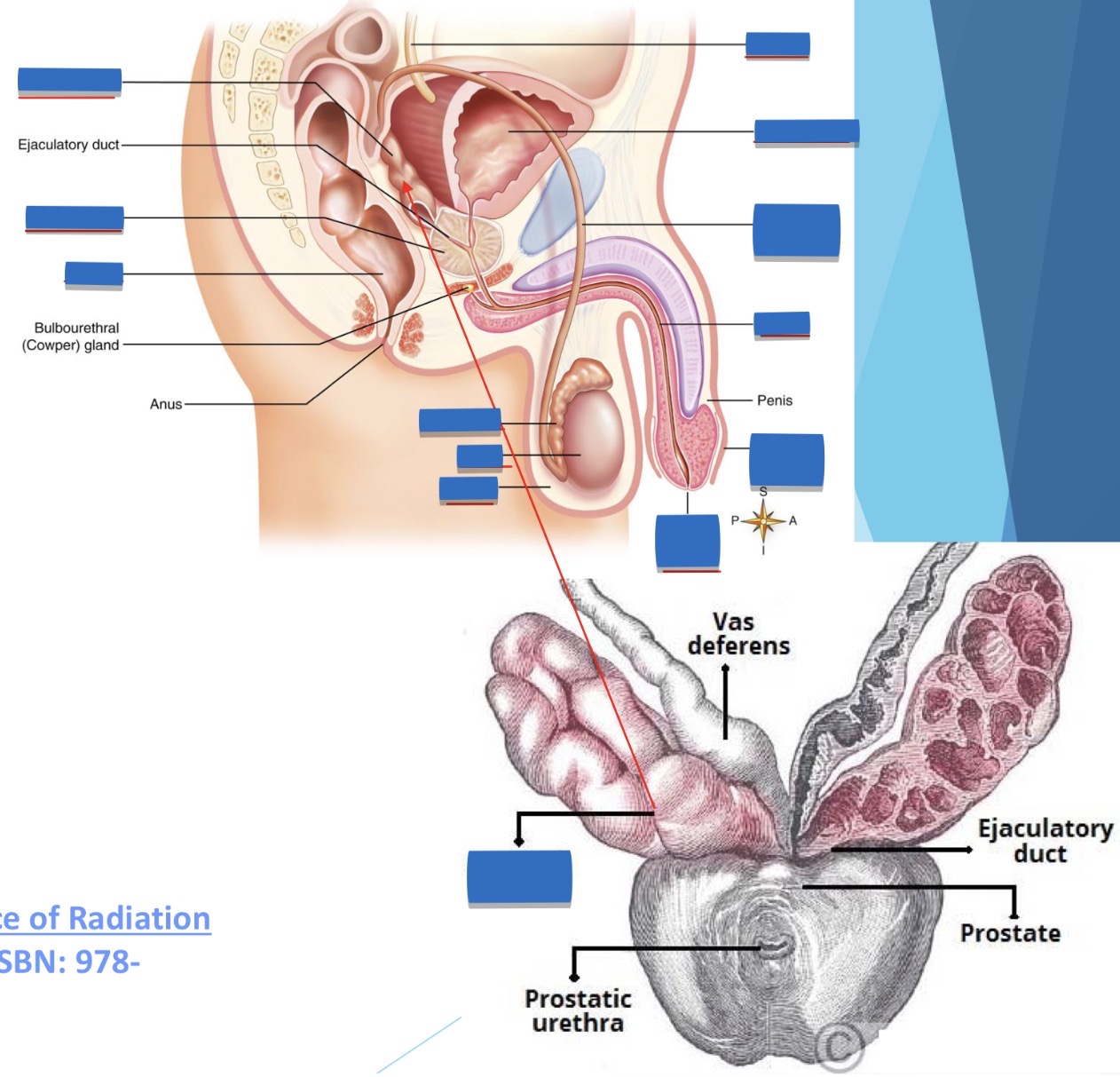
name the anatomy
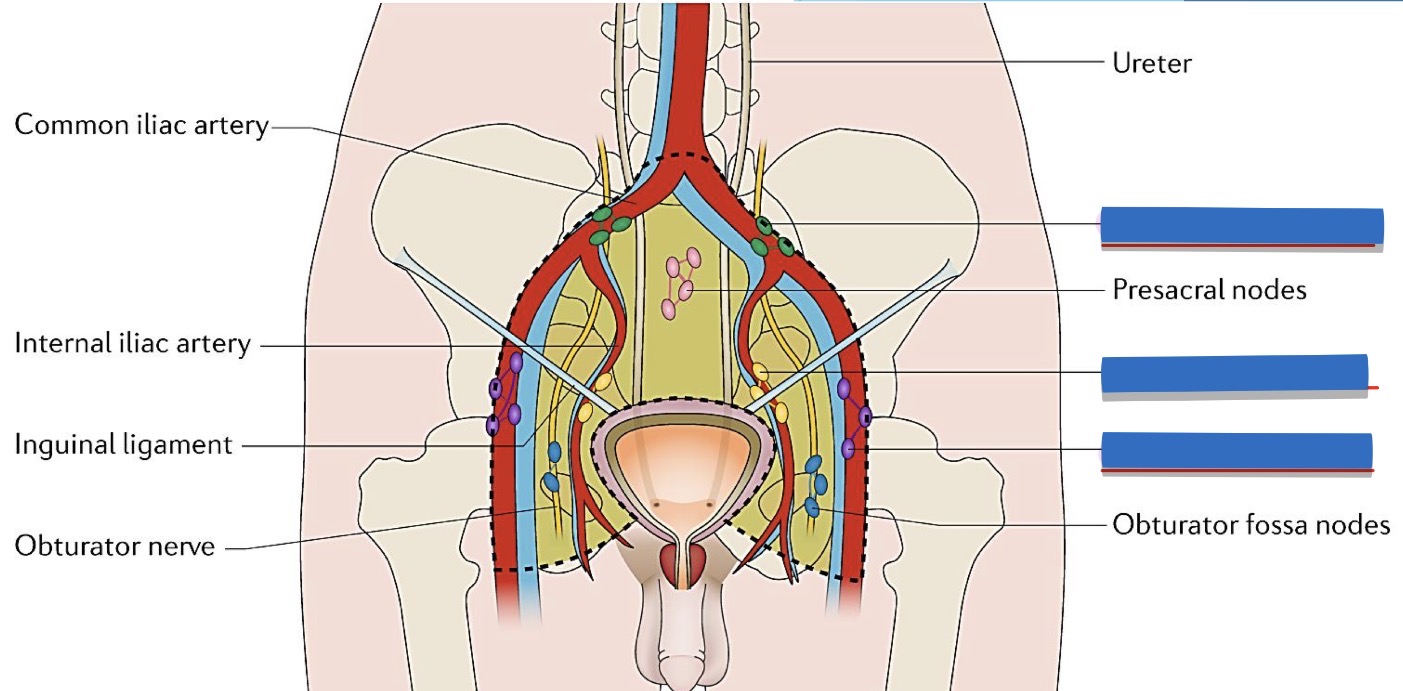
name the lymph nodes
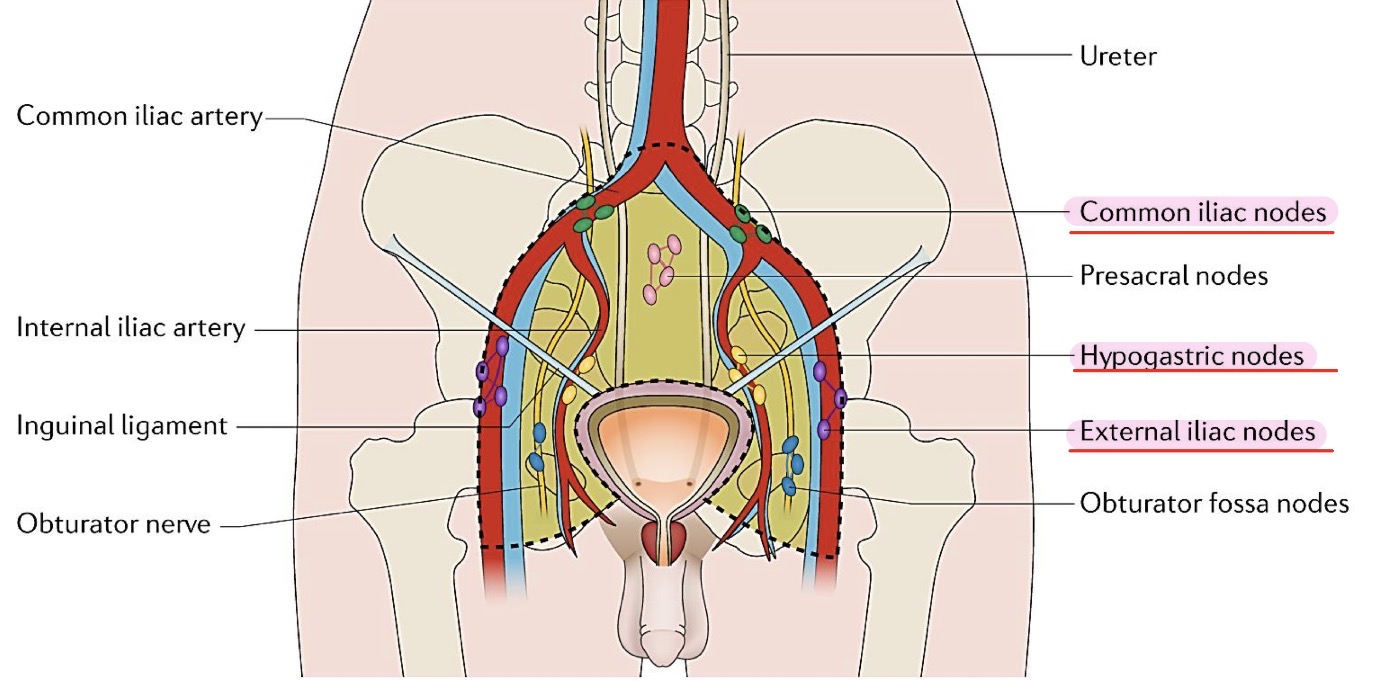
in regard of male reproductive cancers, what is the first line of spread for the pelvic lymph nodes?
periprostatic nodes
obturator nodes
In regard of male reproductive cancers, what is the second line of spread of the pelvic lymph nodes
external illiac
internal iliac / hypogastric nodes
common iliac nodes
paraaortic nodes
What are the lymph nodes a standard prostatectomy LN dissection sample target?
obturator fossa nodes
external iliac nodes
what is the difference between exocrine and endocrine glands?
Exocrine glands excrete substances through a duct
Endocrine glands secrete substances directly into a cavity without a duct
What is the function of the penile bulb?
Provides support to the penis during exitation
True or false: The fluid the prostate gland produces forms part of the semen.
True
what protein does the prostate produce? It is also considered a tumor marker.
Prostate specific antigen (PSA)
The _______ plays a part in controlling the flow of urine.
Prostate
Where is the largest node of the penile lymphatic drainage found?
It’s found underneath the inguinal ligament
Where does the penile lymphatic drainage occur?
In the inguinal nodes (deep and superficial)
external nodes
para-aortic nodes
Where do the lymphatic drainage of the testes occur?
Para-aortic and iliac nodes
Note: Regional spread through the lymphatic pathway consist of the retroperitoeal, para-aortic, and renal hilar nodes
What is the puch of skin that envelops the testes called?
scrotum
Why are the testes located outside the body
It is due to the temperature. Sperm develops at a temperature cooler than the normal internal body heat
What is the most common malignancy (cancer) in males
prostate cancer, which occurs in 1 in 9 men
At what age does prostate cancer most commonly occur in men?
It is most common amongst men aged > 65 y.o
Which of the male reproductive cancers occurs less than 1% of all male cancers
Testicular cancer
Where is penile cancer most frequently found on the penis?
Anywhere on the penis, but more often on the foreskin of uncircumcised men or the glans
What is the rate (percentage) of men developing penile cancer?
< 1% (rare)
At what age does penile cancer most commonly occur in men?
the rate of this cancer has increased amongst men > 60 y.o
At what age does testicular cancer most commonly occur in men?
It’s common in men aged 15 to 35 y.o
Define cryptorchidism
A condition where one or both of the testes fail to descend into the scrotum before birth
Is testicular cancer more common on the right or left testes?
most common on the right
True or false: 2% of men diagnosed with testicular cancer have a history of cryptorchidism
False: 50% of men have a history of cryptorchidism
Testicular cancer is most common amongst what ethnic group?
White males
Gene mutations are one of the common causes of prostate cancer. What are the 2 most common genes?
HOXB13
BRCA2
What are some etiological factors / causes associated with prostate cancer?
obesity
family history of prostate cancer
tall adult height
black ethnicity
gene mutations
What are some clinical presentations / symptoms of prostate cancer?
asymptomatic in early stages
difficulty peeing
polyuria
nocturia
urgency
dysuria (pain when urinating)
hematuria (blood in urine)
Late: bone pain, weight loss, fatigue, anemia, weakness/numbness in legs or feet
What are some clinical presentations / symptoms of penile cancer?
non-healing sore
lump
foul smell with discharge
itching (puritis)
inguinal mass - nodes involved 30% - 45%
What are some clinical presentations / symptoms of testicular cancer?
pain / discomfort in testes
ache in lower abdomen or groin
build up of fluid in scrotum
gynecomastia
painless lump/swelling
change in how testes feel
Late: abdominal mass, urethral obstruction, pulmonary symptoms
Define gynecomastia
a condition where the breast tissue enlarges in men, typically caused by an imbalance of hormones (estrogen and testosterone)
What can an increased PSA test indicate?
proctitis
Benign Prostate Hyperplasia (BPH) - enlargement of prostate
prostate cancer
what is the normal range of PSA?
< 4 ng / mL
What are some investigations or diagnosis done for prostate cancer
clinical or history examination
MRi or CT scan
Bone scan
DRE
tumor marker tests: PSA
PET lab studies: CBC, urinalysis, liver and renal functions
Gleason score
Biopsy: core needle / TRUS
How doe a biopsy work for prostate diagnosis
A needle is inserted through the wall of the rectum into the prostate gland to look for abnormalities.
Note: also known as endorectal ultrasound (ERUS)
Which lobe of the prostate gland is the most aggressive when affected by cancer and why?
Central Zone: median lobe because it tends to spread to the seminal vesicles
Note: 20% of prostate cancers occur in this zone
In which zone of the prostate gland does 70% of prostate cancers occur?:
Peripheral zone: posterior lobe
What zone of the prostate gland does BPH primarily occur in
Transitional zone: anterior lobe
Note: this zone consists of 5% - 15% of prostate cancers
What cancer consists of 95% adenocarcinomas?
Prostate cancer
Penile cancers mainly consist of what type of cell?
Squamous cell carcinoma (SCC)
Note: adenocarcinomas, melanomas, sarcomas, basal cell carcinomas (BCC) are rare for this cancer
There are 2 main classifications for testicular cancer. What are they?
Seminomas and Non-Seminomas
Note: when a tumor contains both seminoma and non seminoma, then it is treated as a non seminoma
Note: Seminomas are more common
At what age range do testicular seminoma cancer occur
They occur in men between 25 and 45
True or false: spermatocytic seminomas are a rare type of seminomas
true
Note: grows slowly and less likely to spread to other areas
Note: occurs in older men about 65 y.o
True or false: 95% of seminomas are classical GCT (Germ Cell Tumor) in regard of testicular cancer
True
what are the 4 main types of non-seminoma tumours
embryonal carcinoma
yolk sac carcinoma
choriocarcinoma
teratoma
What is the 5-Year survival rate percentage for prostate cancer locally, regionally, and distantly?
Local: 100% (stage I + II)
Regional: 100% (stage III)
Distant: 31% (stage IV)
What is the relative 10-Year survival rate for prostate cancer?
91%
What is the relative 15-Year survival rate for prostate cancer?
76%
What is a prostatectomy?
Surgery to remove the prostate
What are the 2 types of radical prostatectomy and define them
Retropubic prostatetomy: surgery through an incision is made in the abdomen
Perineal prostatectomy: surgery through an incision made between the scrotum and the anus
What are some risk factors related to a prostatectomy
bowel incontinence
urine incontinence
urinal stricture (tightness of the urinary opening from the scar tissue)
impotence
injury to the rectum
Other than the testes, what other gland is able to secrete testosterone
Adrenal glands
Note: adrenal gland produces 5 to 10% of testosterone
what is an orchiectomy
surgery to remove the testes
what are the different types of hormone therapy used?
Luteinizing Hormone-Releasing Hormones (LHRH) agonists / Gonadotropin-Releasing Hormones (GnRH) agonists / LHRH analogs
LHRH antagonists / GnRH antagonists
Anti-androgens
Androgen synthesis inhibitors
How are LHRH agonists used in hormone therapy and give examples of drugs used.
enhances the production of LH, causing the pituitary to rest from the increase of androgens (flare-up effect). testosterone levels start to drop
Drugs used: Zoladex, Lupron, Lupron depot, Eligard, Trelstar
How are LHRH antagonists used in hormone therapy, and give examples of drugs used.
block / reduces the pituitary’s receptor to produce of LH / FSH, causing the testes to stop the production of testosterone. Faster than LHRH agonists
Drugs used: Firmagon
How are anti-androgens used, and give examples of drugs used.
blocks the use of testosterone as its used as the same time as LHRH agonists. Its also taken for a few weeks (30 days) to reduce tumor flare reaction
Drugs used: Casodex
How are androgen synthesis inhibitors used, and give examples of drugs used.
used for advanced or mets patients. It blocks enzymes needed to produce testosterone, and the production of cortisol
Drugs used: Zytiga
How is hormone therapy administered?
Injection:
subcutaneous or into muscle (abdomen) for LHRH
once a month every 6 months
Orally medication daily for ant-androgens
How do Dr follow up with hormone therapy
Regular blood tests:
PSA levels
testosterone levels
When is hormone therapy considered the primary treatment modality for a prostate case?
Early stage to shrink the tumor before radiotherapy or surgery
tumor beyond prostate walls - spread to other areas (mets)
recurrent or risk of recurrence
How does hormone therapy work for a prostate case
It blocks or reduces the of androgens from being used
for a prostate case, what are some possible side effects of hormone therapy
hot flashes
sexual problems (ex: impotence, low sex drive, etc)
fatigue
osteoporosis (condition that weakens bones)
gynecomastasia + breast tenderness