Lecture 11 - T-cell Subsets (Gallucci)
 Call Kai
 Learn
Learn Practice Test
 Spaced Repetition
 Match
Match Flashcards
 Knowt Play
1/17

There's no tags or description
Looks like no tags are added yet.
Name | Mastery | Learn | Test | Matching | Spaced | Call with Kai |
|---|
No analytics yet
Send a link to your students to track their progress
18 Terms
Obj. 1
Define the terms “mature” and “naive” relative to T cells.
Naive
If the Ag has NEVER been seen before, there are very few T-cells that will recognize it
“Ready, but unexperienced”
Mature
Fully developed T-lymphocytes that have completed their maturation, positive selection, and negative selection in the Thymus.
Th0 cells require activating cytokines (IL-12, IL-2, IL4) to differentiate
“Graduated from training school”
⚡ Key Relationship
👉 Most naive T cells are actually:
Mature + Naive
Meaning:
Fully developed ✔
But haven’t been activated yet ✔
Obj. 2
Contrast Th cells with T Killer (CTL) cells regarding their function.
CD4+ T Cells (Th): MHC Class II Restricted
T-helper cells mostly
Cytokine factors:
CD4⁺ cells work by releasing cytokines (chemical signals)
Involved in Delayed Type Hypersensitivity (DTH):
A T-cell–mediated immune response
Takes 24–72 hours → “delayed”
CD8+ T Cells: MHC Class I Restricted
Cytotoxic Lymphocytes (CTL) or T-killers
Cellular assassins
Can kill specific target cells (e.g., virus infected, tumor, etc.)
Primarily kills via apoptotic processes
Obj. 3
Contrast Th cells with CTL with regard to surface markers.
Th cells
Th cells express CD4+ (binds MHC II)
CTL
CTL express CD8+ (binds MHC I).
Obj. 4
List the different types of T helper cells.
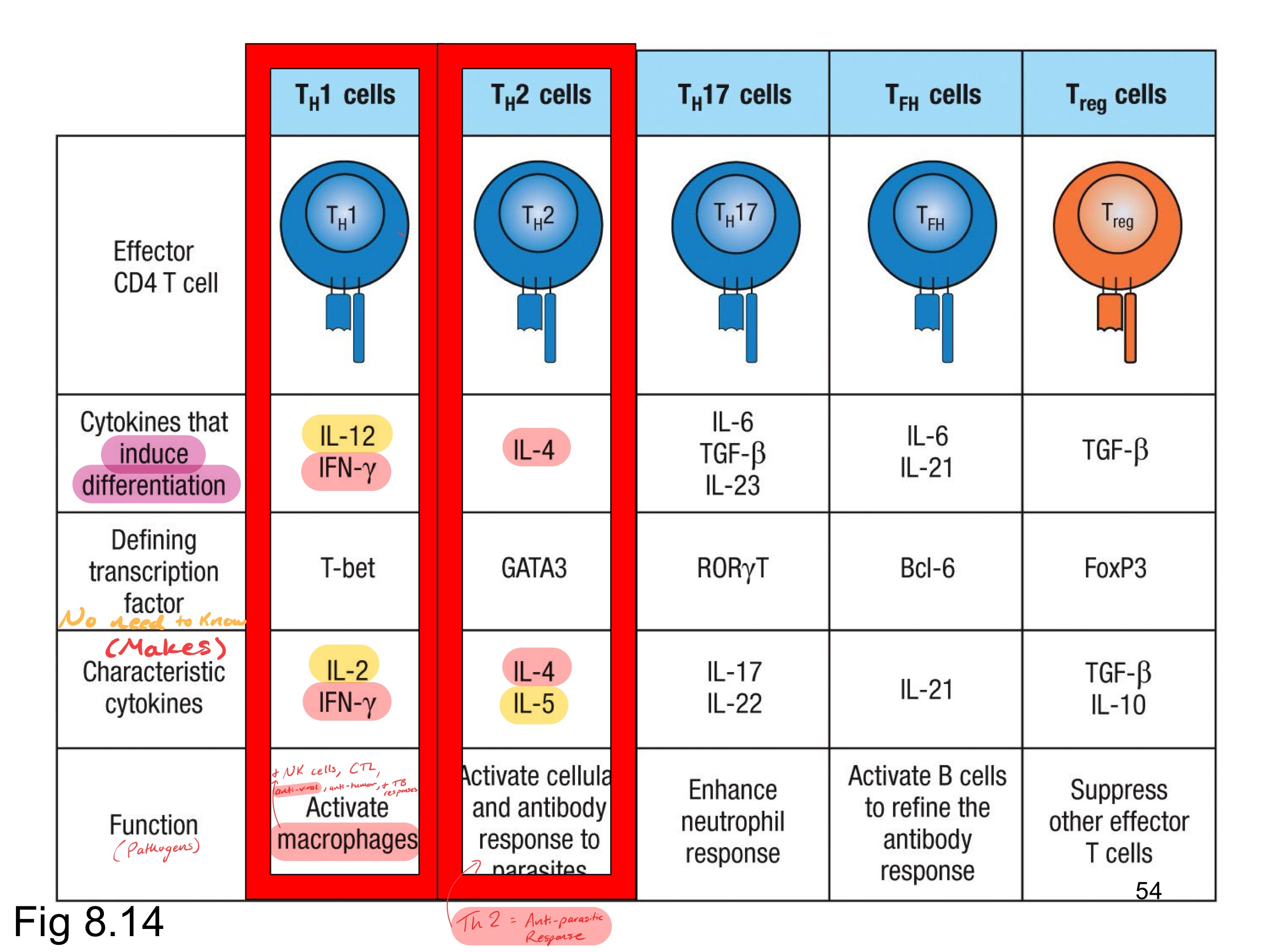
Th0 cells can differentiate into:
Th1, Th2, Treg, Th17, Tfh
Each cell type steers the immune response to meet a specific pathogen type
Most mature CD4+ T cells are Th1 or Th2
Obj. 5
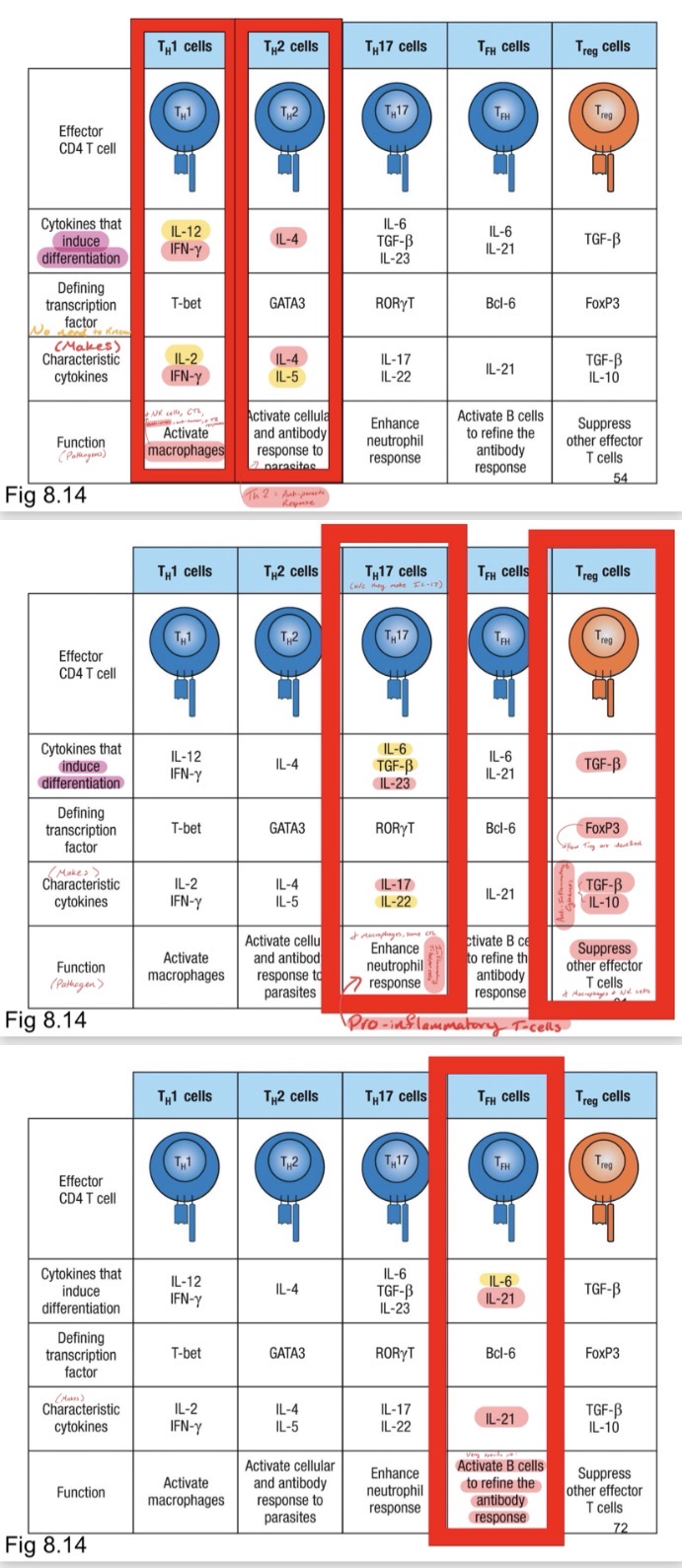
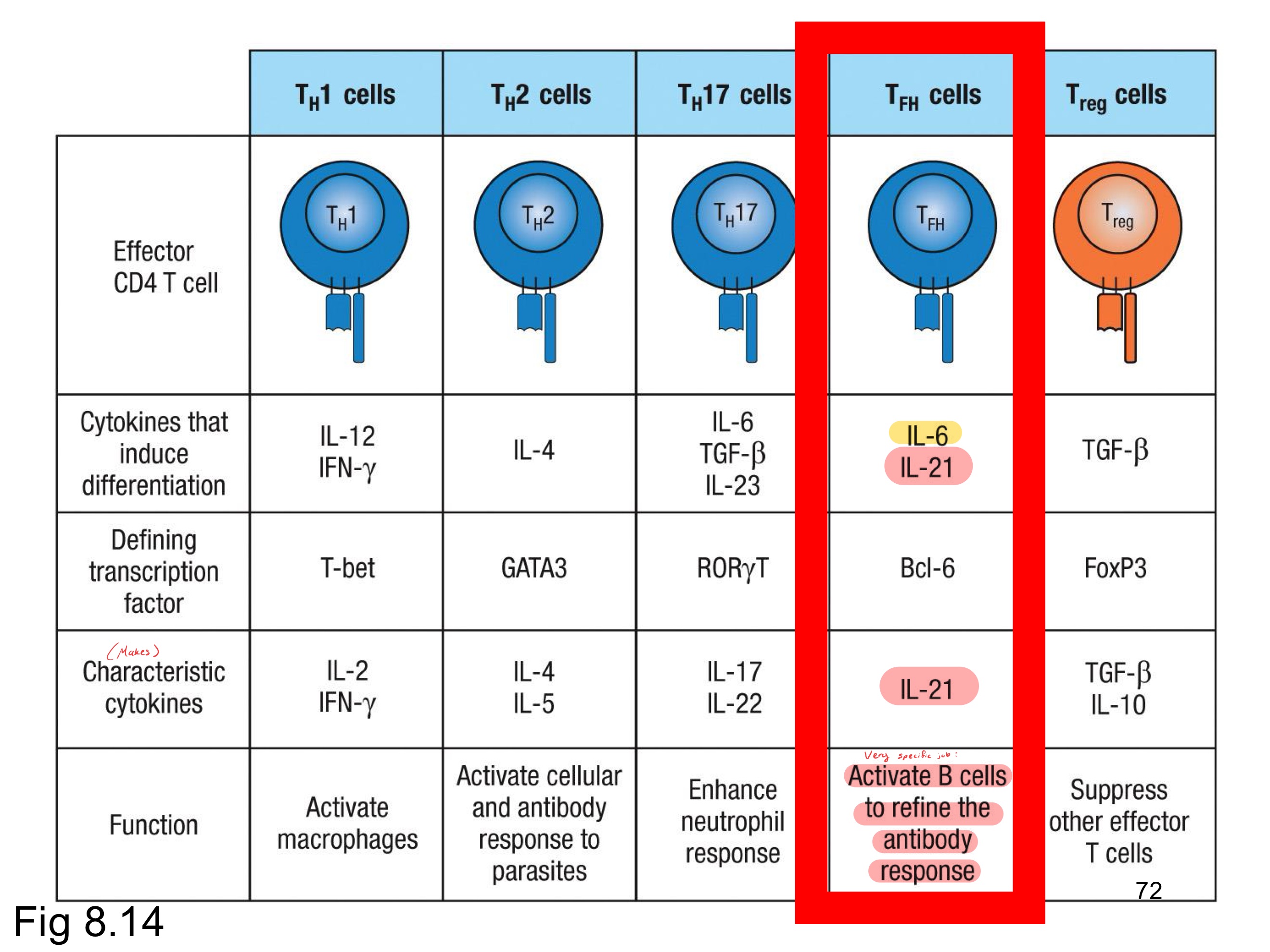
Recognize the defining cytokines each Th type PRODUCES.
Th1 →
Cytokines that INDUCE Differentiation:
IFN-γ & IL-12
Makes/produced:
IFN-γ (& IL-2; associated w/ cell-mediated immunity)
Th2 →
Cytokines that INDUCE Differentiation:
IL-4
Makes/produced:
IL-4 (IL-4, 5, 13)
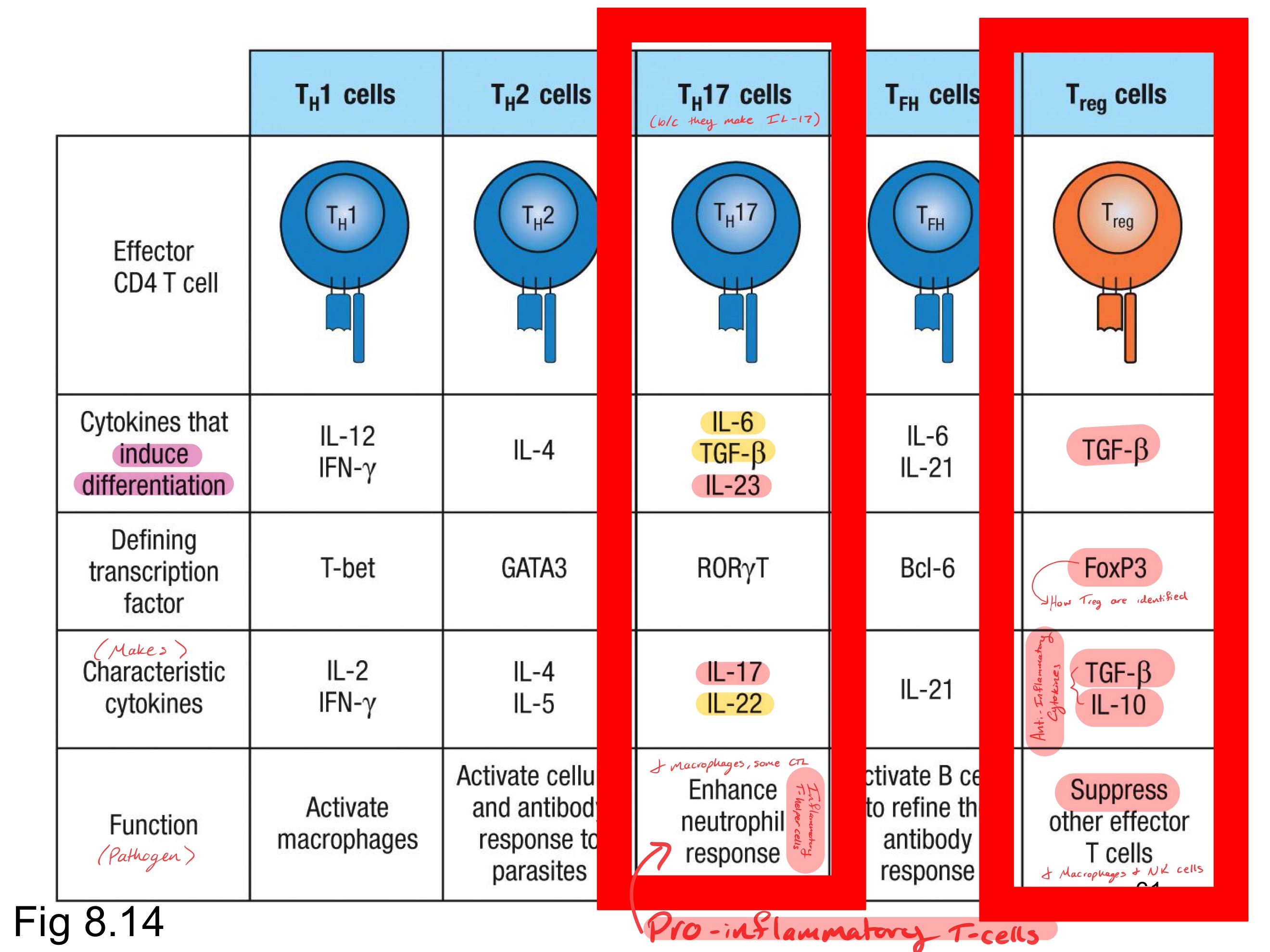
Th17 →
Cytokines that INDUCE Differentiation:
IL-23 (& IL-6 + TGF-β)
Makes/produced:
IL-17 (& IL-22)
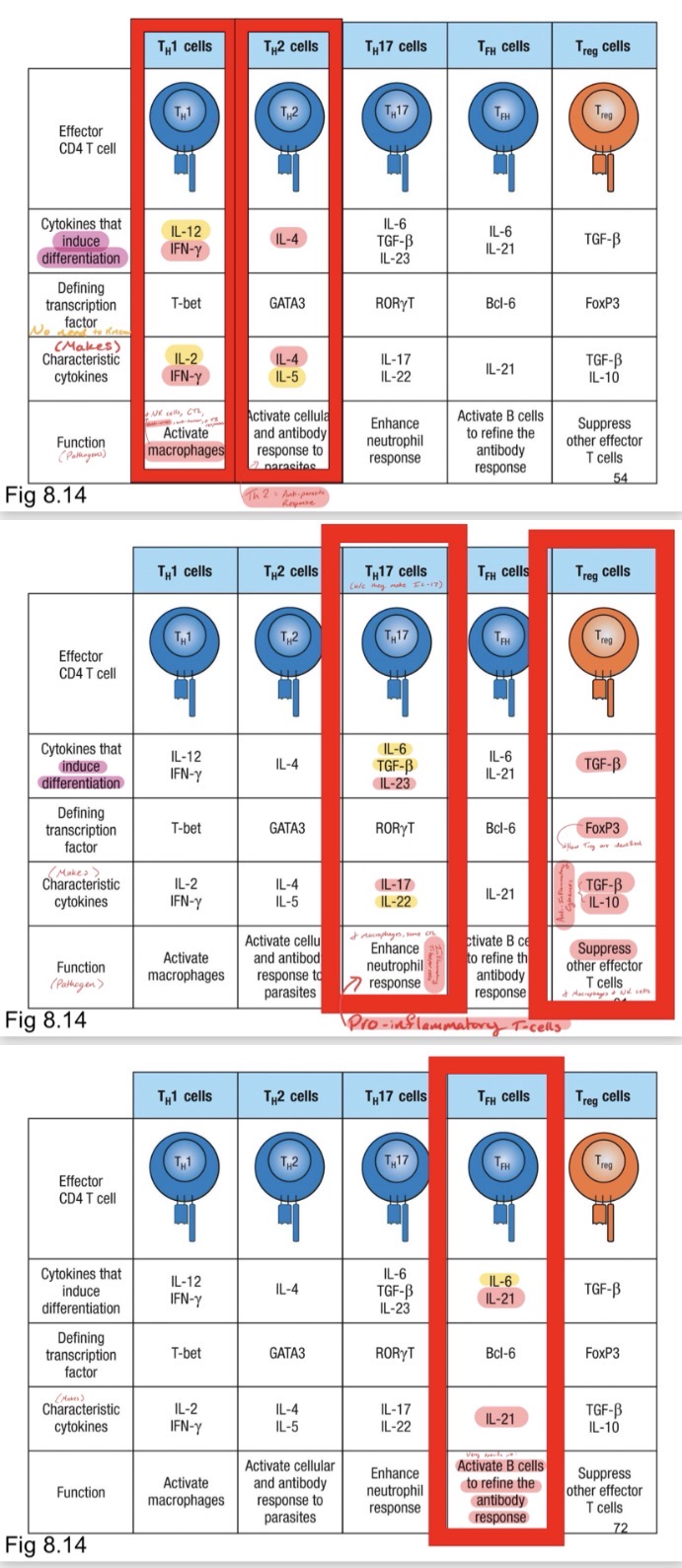
Tfh →
Cytokines that INDUCE Differentiation:
IL-21 (& IL-6)
Makes/produced:
IL-21
Treg →
Cytokines that INDUCE Differentiation:
TGF-β
Makes/produced:
TGF-β & IL-10
Obj. 6
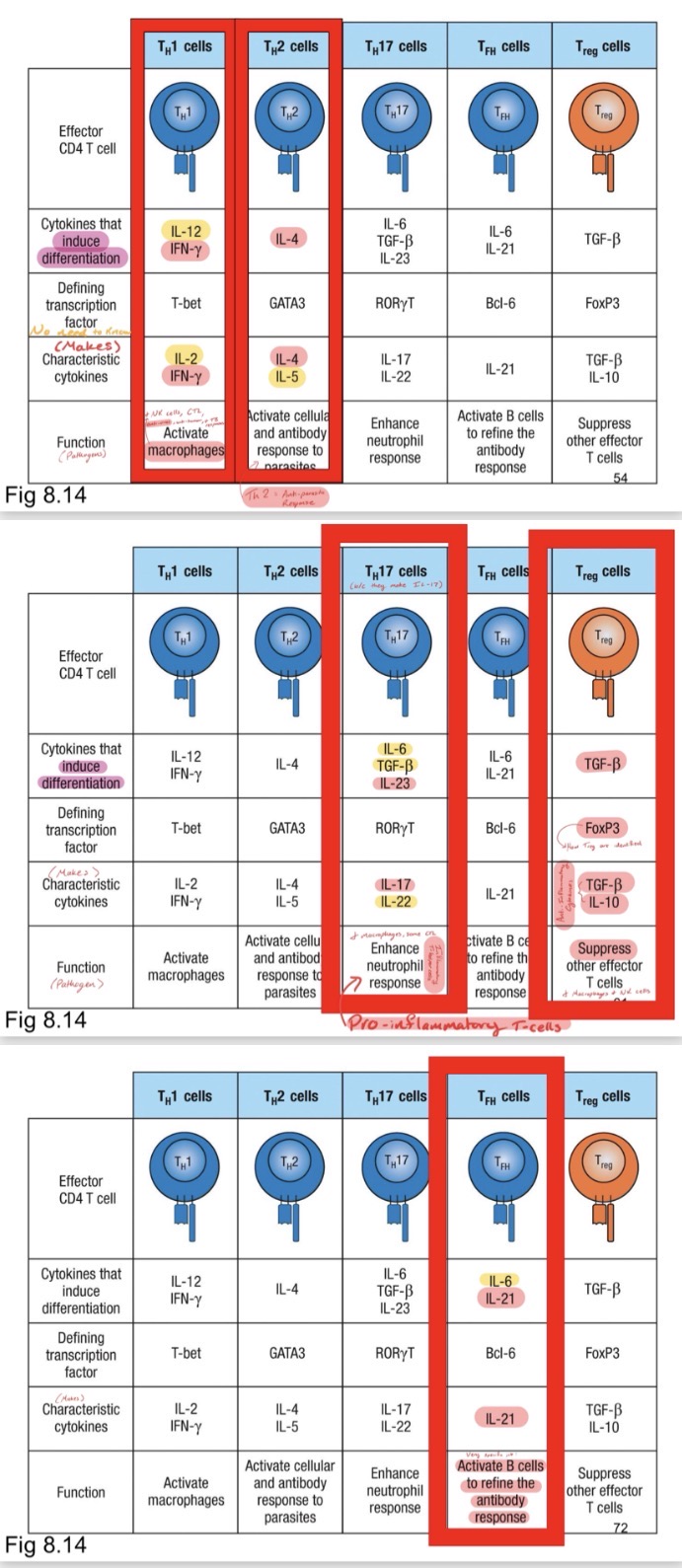
Name at least one characteristic cytokine to each Th type produces.
Th1 → IFN-γ (& IL-2)
Th2 → IL-4 (& IL-5)
Th17 → IL-17 (& IL-22)
Tfh → IL-21
Treg → TGF-β + IL-10
Obj. 7
Describe the principal pathogen(s) each Th cell targets.
Th1 → Activate Macrophages (& NK cell, CTL, ANTI-VIRAL, anti-tumor, & TB responses)
viral or bacterial infection (cell-mediated immunity)
Th2 → Anti-parasitic, allergy
Th17 → Enhance Neutrophil responses/Recruit neutrophils/Inflammatory
GOOD: Inflammatory responses - bacteria, fungus, myobacteria
BAD: Involved in autoimmune disease (e.g., RA, MS, IBS, asthma)
Tfh → Activate B-cells to refine the Ab response
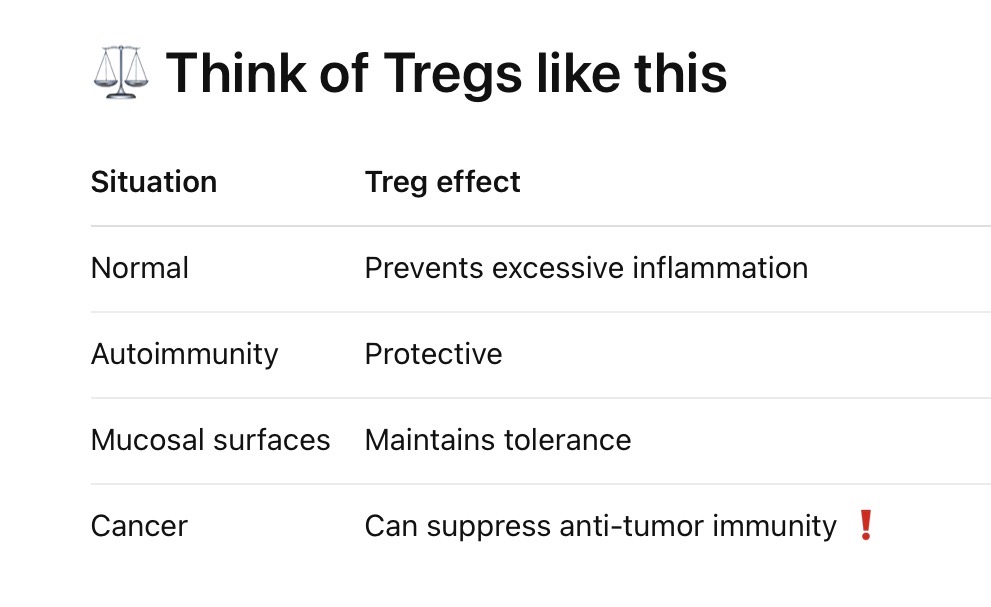
Treg → Anti-inflammatory; suppress other effector T-cells
Cancer, immune regulation (mucosal immunity, autoimmunity)
Obj. 8
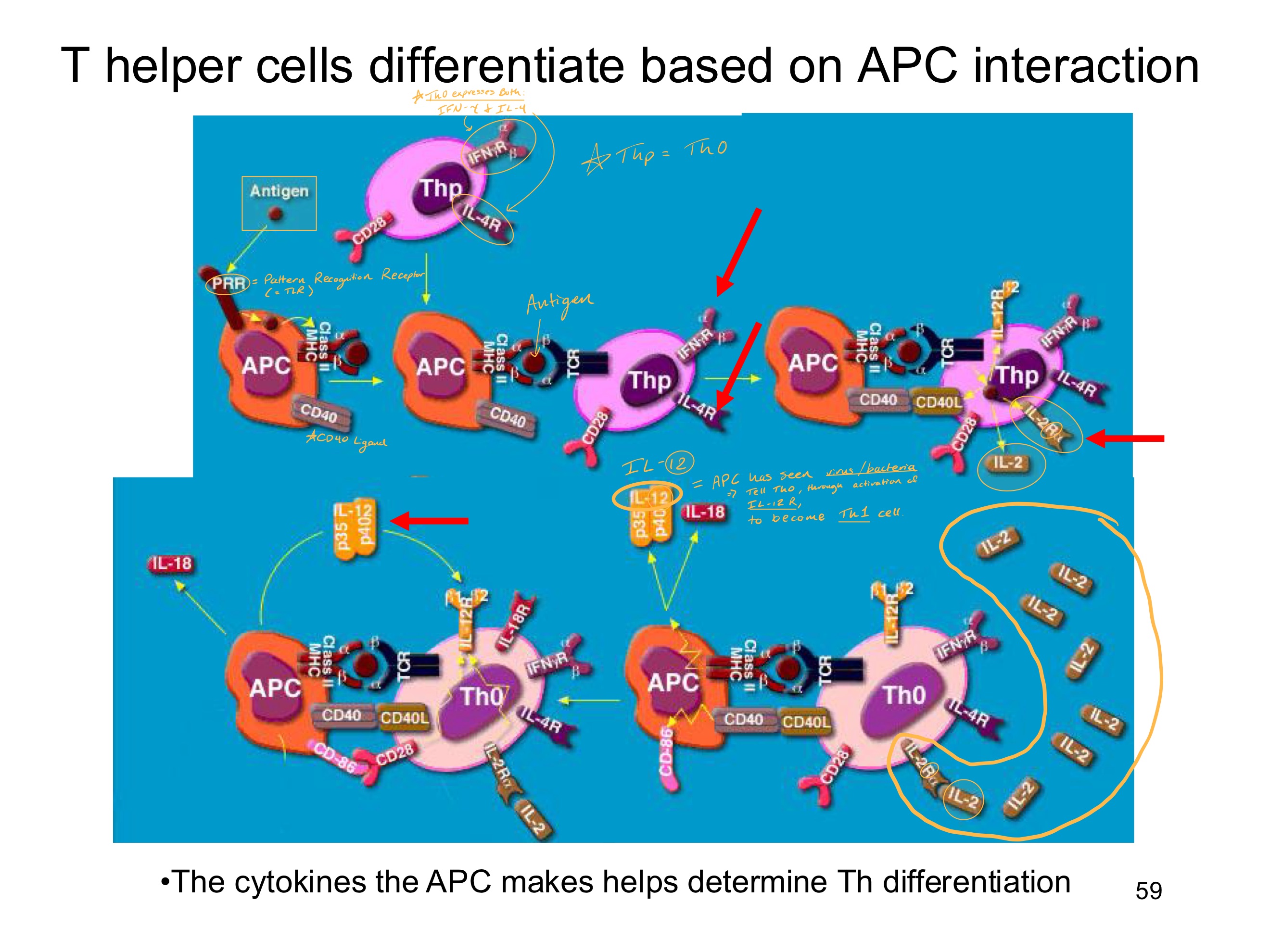
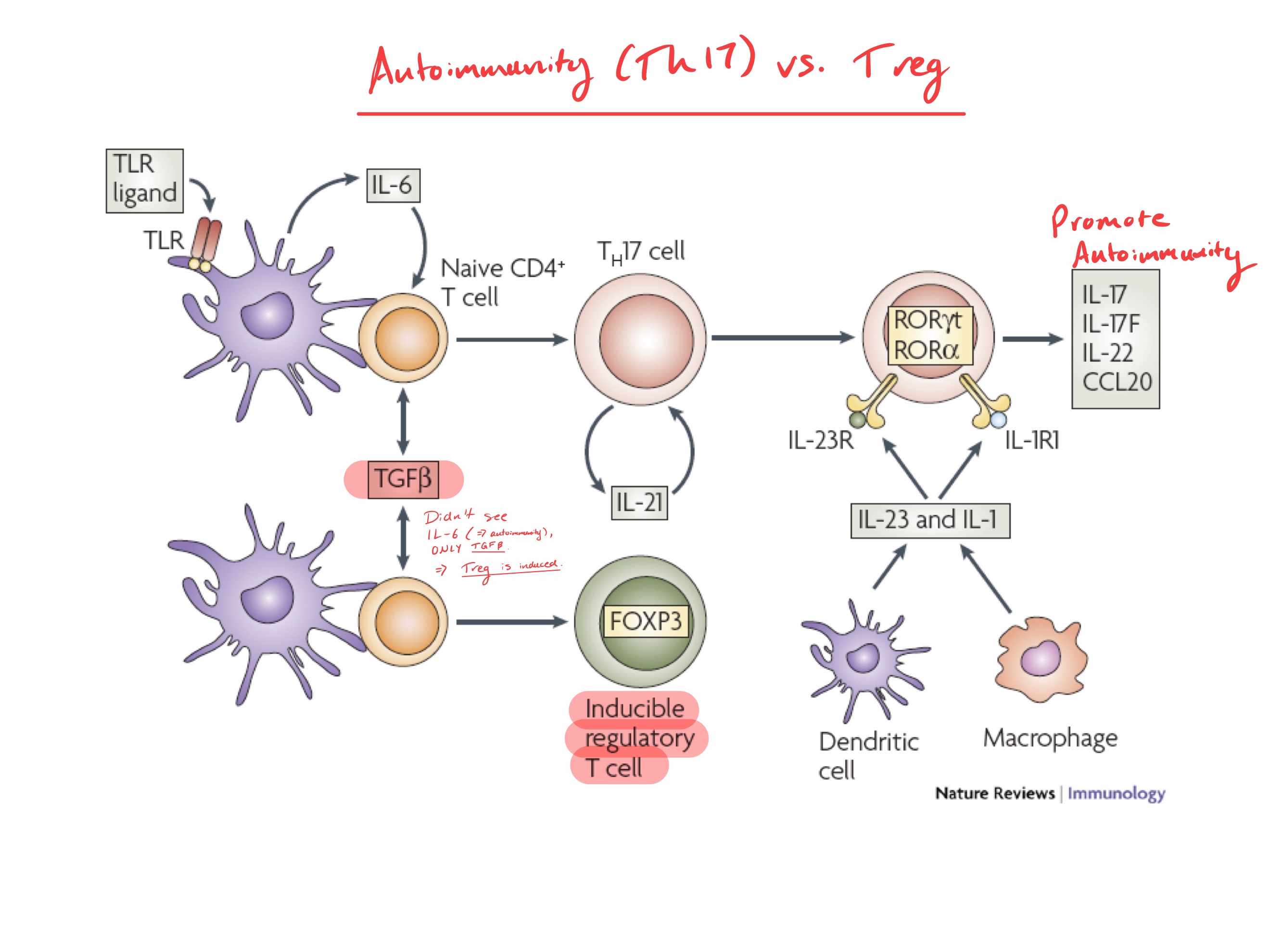
Describe what and how a specific cell type helps a Th0 cell to decide what type of Th cell it becomes.
APC interaction determines differentiation
The cytokines APC makes helps Th differentiate
Obj. 9
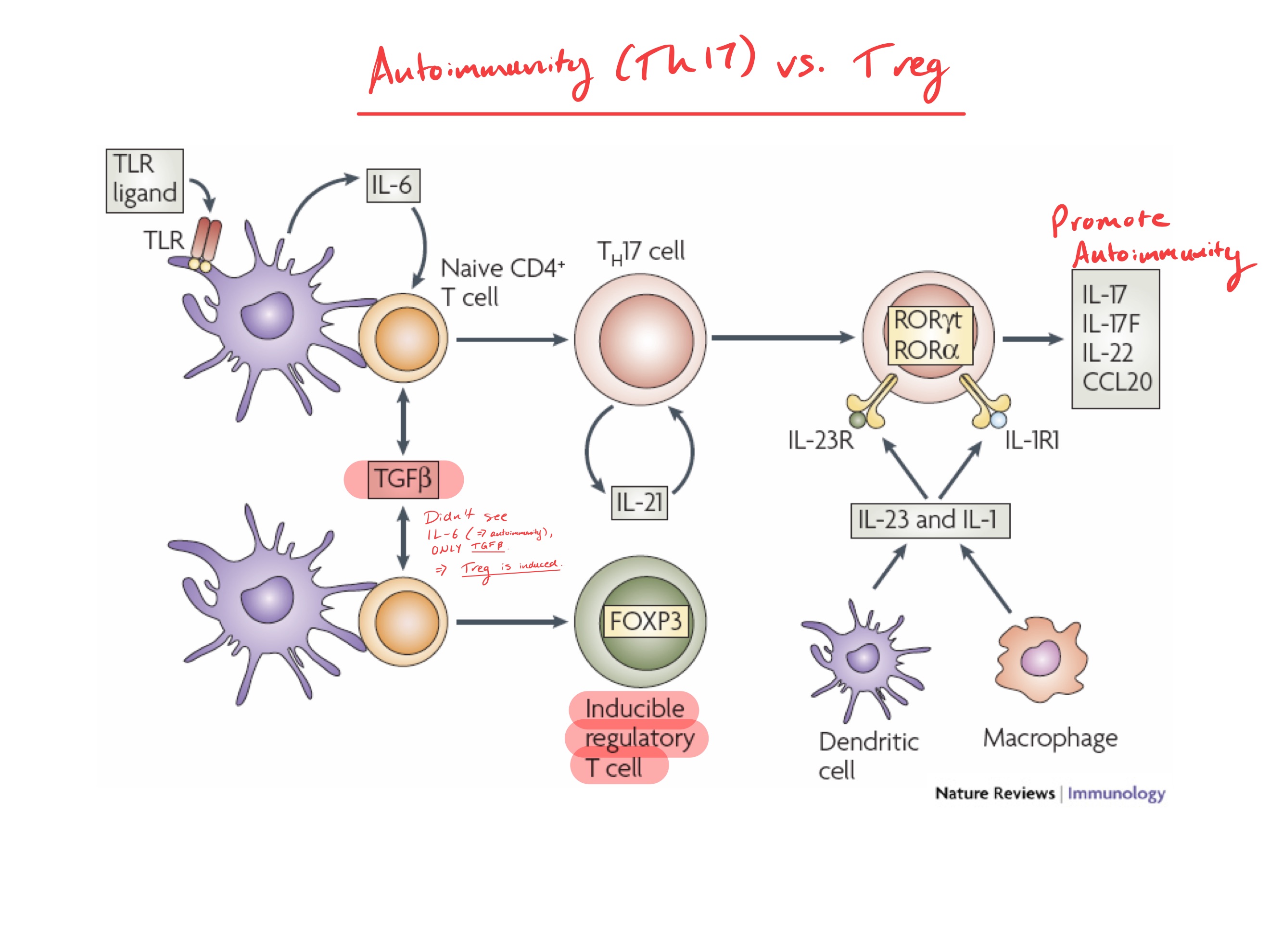
Contrast in basic terms a Treg with an “ordinary” T helper cell.
Treg
Regulatory helper subset
Primarily immunosuppressive
Maintains mucosal immunity
Suppress other effector cells
Ordinary T-cells
Promote immune activation via cytokines
Drive pathogen specific responses
Obj. 10
What defining characteristics helped researchers differentiate Treg cells from activated T cells?
Treg were difficult to discover b/c they look like activated T-helper cells
Express CD4+, CD25+ (IL-2Rα)
Their defining characteristic was the expression of high levels of FoxP3 transcription factors - could not be seen w/ conventional flow cytometry
Obj. 11
Contrast how a follicular T helper cell (Tfh) differs from an “ordinary” T helper with regard to anatomic location.
Goes to lymphoid follicle after differentiation
Activate B cells to refine Ab responses (T-dependent Ab production, meaning: Requires Tfh help)
B-cell + Tfh → results in formation of the germinal center
Promote class switch to IgG, especially IgG1
IgM → IgG/IgG1
🧠 Big Picture
👉 After activation, some B cells don’t just start pumping antibodies immediately.
They go to a lymphoid follicle to improve their antibodies.
Think: “basic antibodies → upgraded, high-quality antibodies”
Obj. 12
Contrast how a follicular T helper cell (Tfh) differs from an “ordinary” T helper cell with regard to the cell it “helps.”
Follicular T helper (Tfh) cells
Specifically localize to B cell follicles within lymph nodes and the spleen to provide essential help to B cells for germinal center formation, affinity maturation, and antiboday production.
Conversely, “ordinary” T-helper cells (e.g., Th1, Th2, Th17)
Primarily operate in the T cell zones or tissues to assist macrophages, neutrophils, or other immune cells
Obj. 13
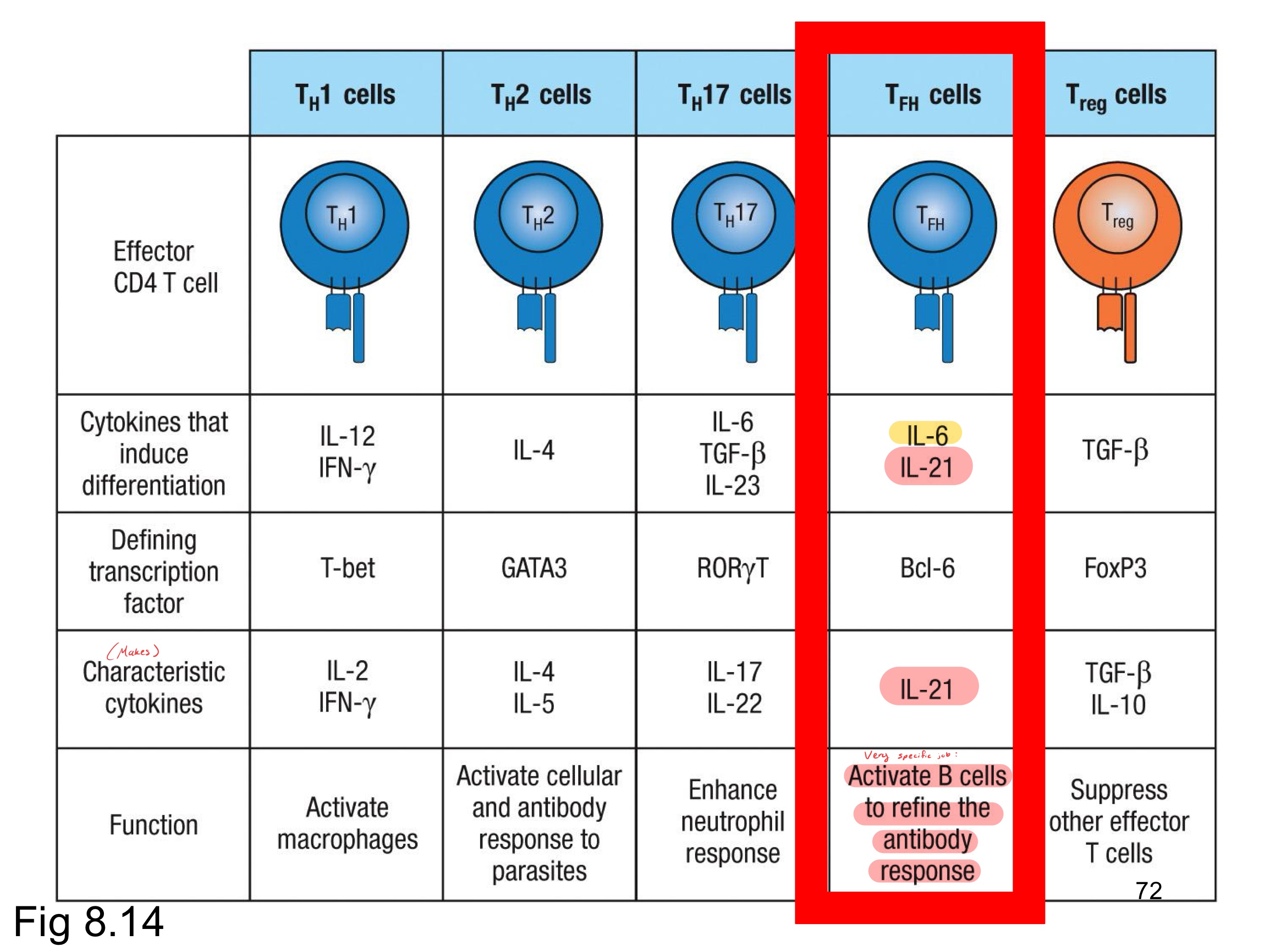
Name a follicular T helper cell (Tfh) characteristic cytokine.
IL-21
Obj. 14
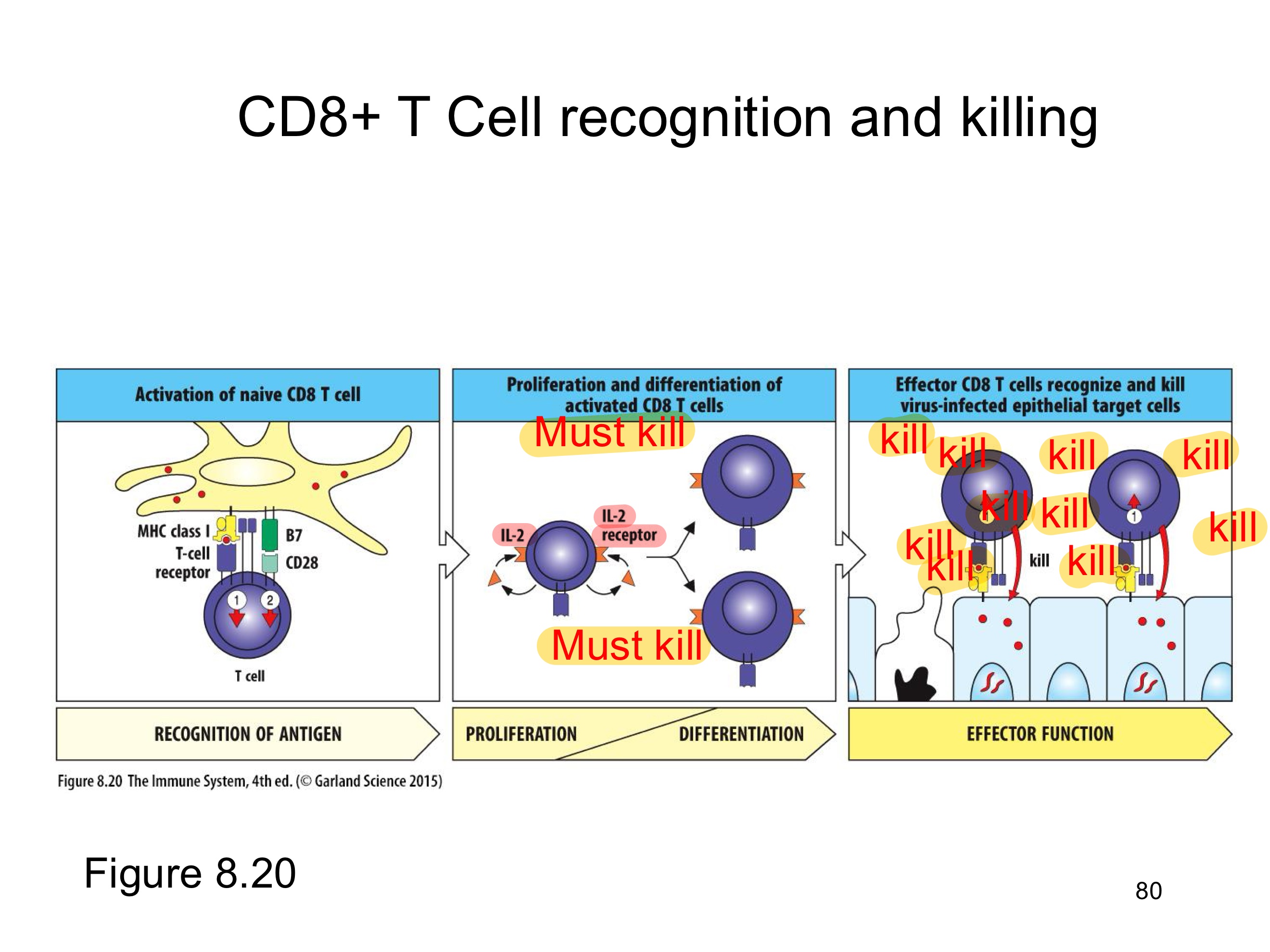
Describe how a CTL kills an infected cell.
Recognition:
APC presents antigen via MHC I + co-stimulation (B7 + CD28).
Proliferation and Differentiation:
IL-2 drives proliferation → many CD8 clones.
Killing:
Effector CD8 cells recognize infected cells → induce apoptosis.
Obj. 15
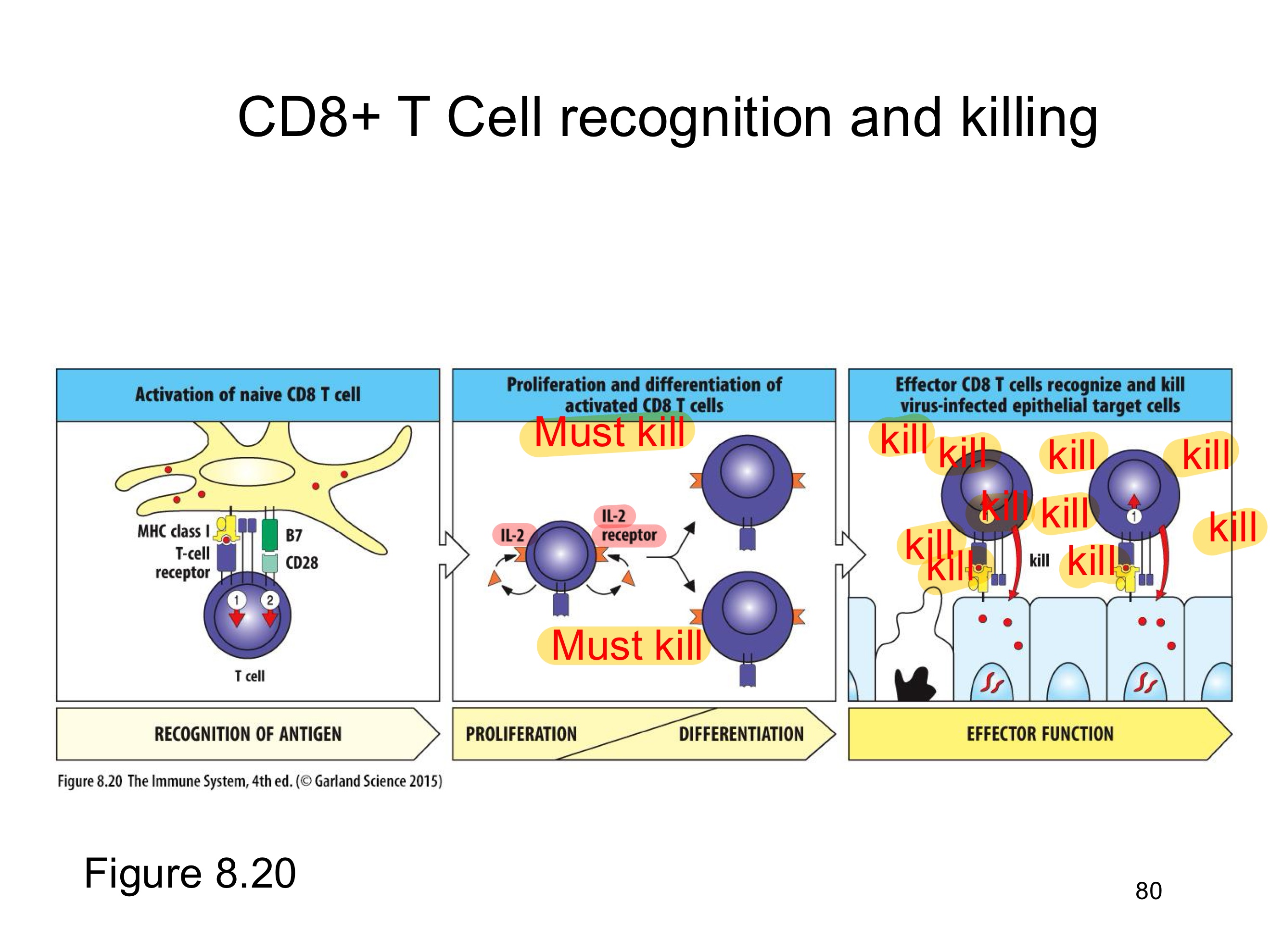
Identify the mechanism by which an APC activates a CTL.
Antigen presentation (processed peptide + MHC)
Co-stimulation (B7 on APC binding CD28 on T cell)
Cytokine signals (APC releases cytokines → tells T cell what type to become: Th1, Th2, etc.)
a. Without co-stimulation → anergy
b. Conundrum: T cells need an APC to activate them, but CTLs only see an antigen in the context of MHC I.
👉 Problem:
APCs usually present exogenous antigens on MHC II
CTLs need MHC I
So how does this work??
🔥 The Answer: Cross-Presentation
🧬 Mechanism: Cross-presentation (cross-priming)
👉 Specialized APCs (especially dendritic cells) can:
Take external (exogenous) antigen
AND present it on MHC Class I
Obj. 16
Describe at least two defining characteristics of γδT cells.
MINOR population in peripheral blood.
Major population in the intraepithelial lymphocytes.
Do not go through thymic selection (perhaps).
Does not use CD4 or CD8, therefore does not need an MHC.
Ligands are different from ⍺/β T cells; not short peptides (e.g., small bacterial phosphoantigens).
Produces cytokines.
Are cytotoxic → especially certain tumor cells.
Role in tissue maintenance and repair – looks for distressed cells.
Obj. 17
Describe at least one functional characteristic that makes NK cells different from T killer cells.
Killing is not immunogen specific nor MHC restricted – sort of.
Possess IL-2 receptors → lymphokine activated killer cells (LAK).
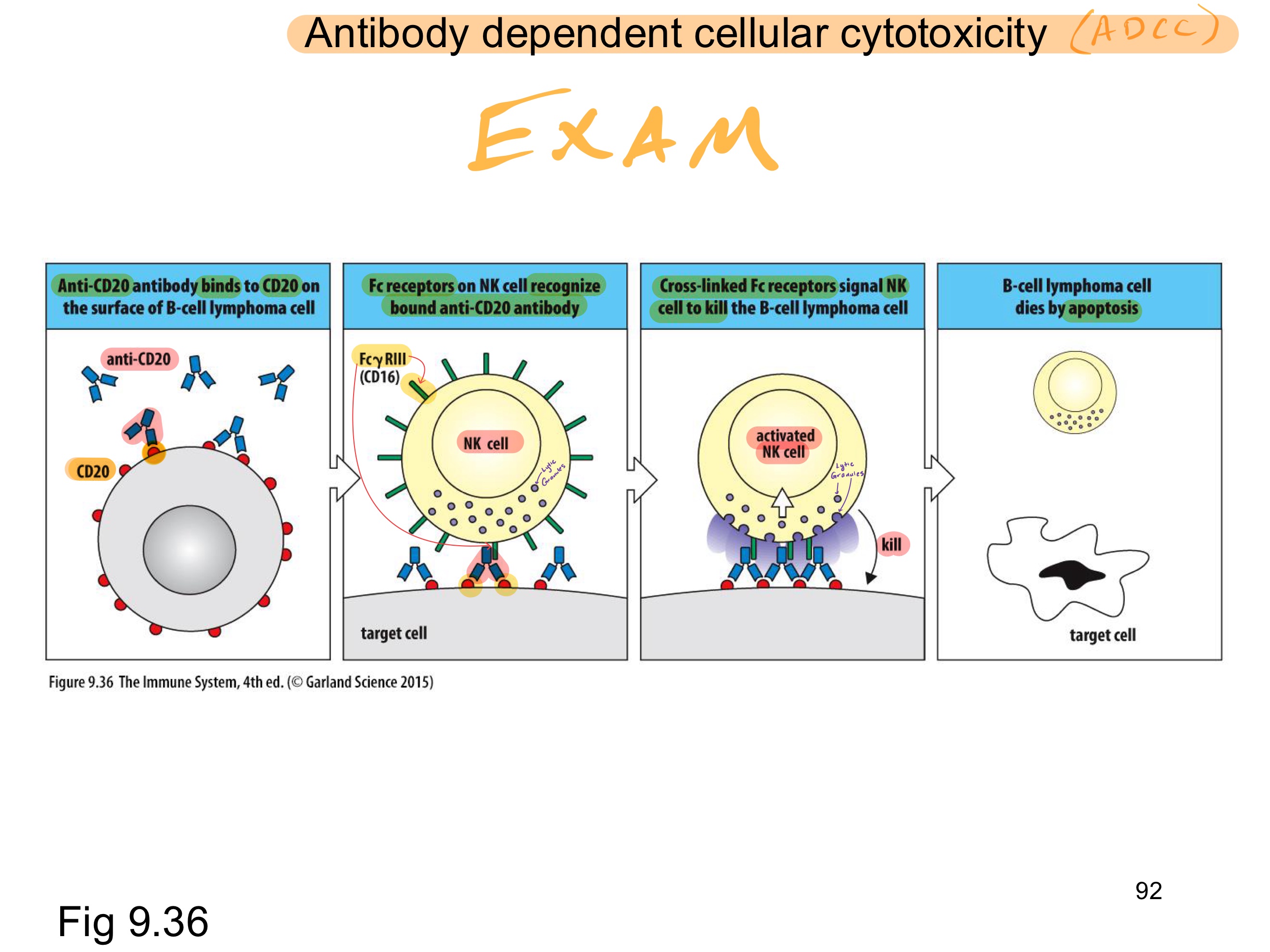
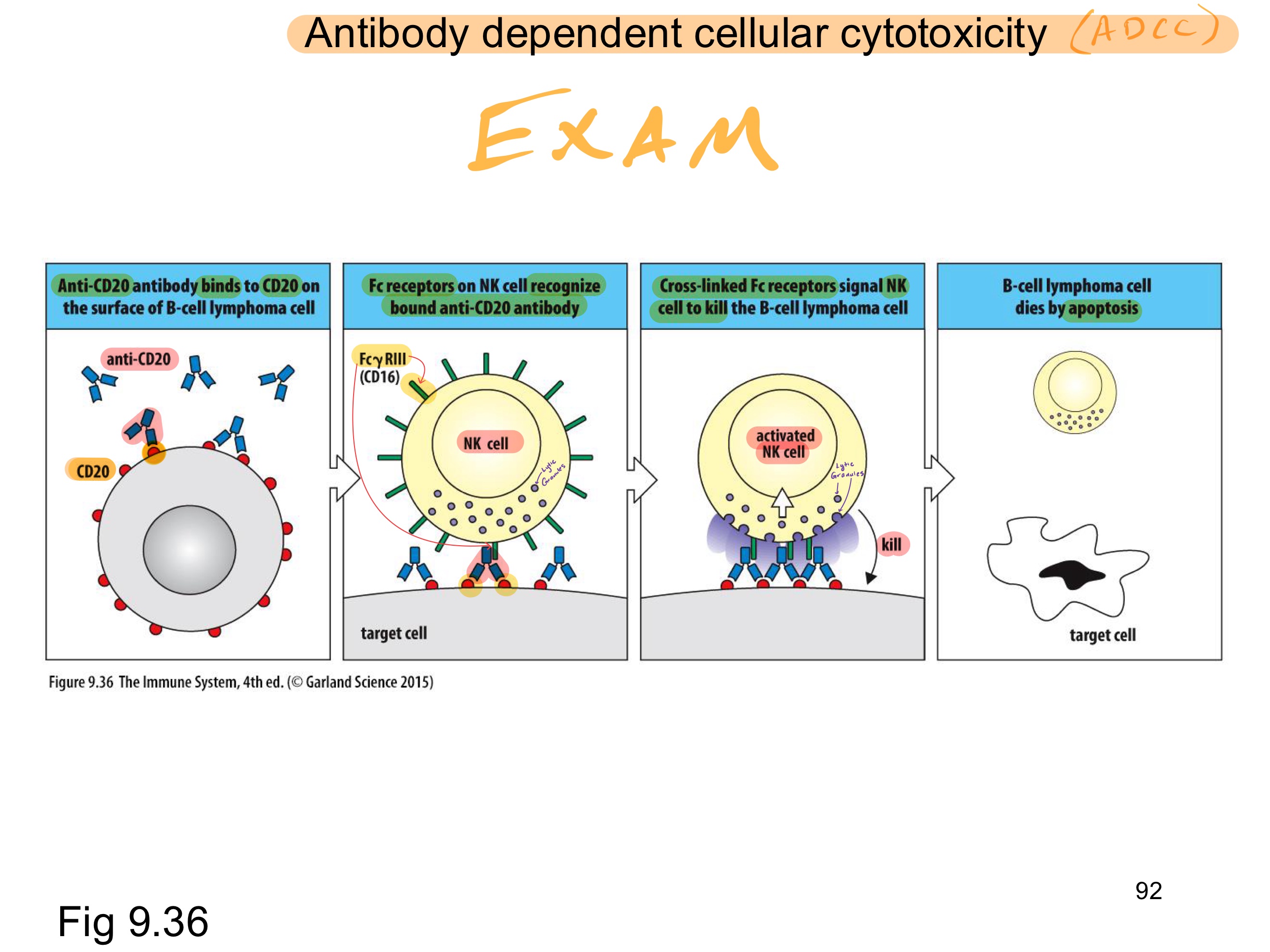
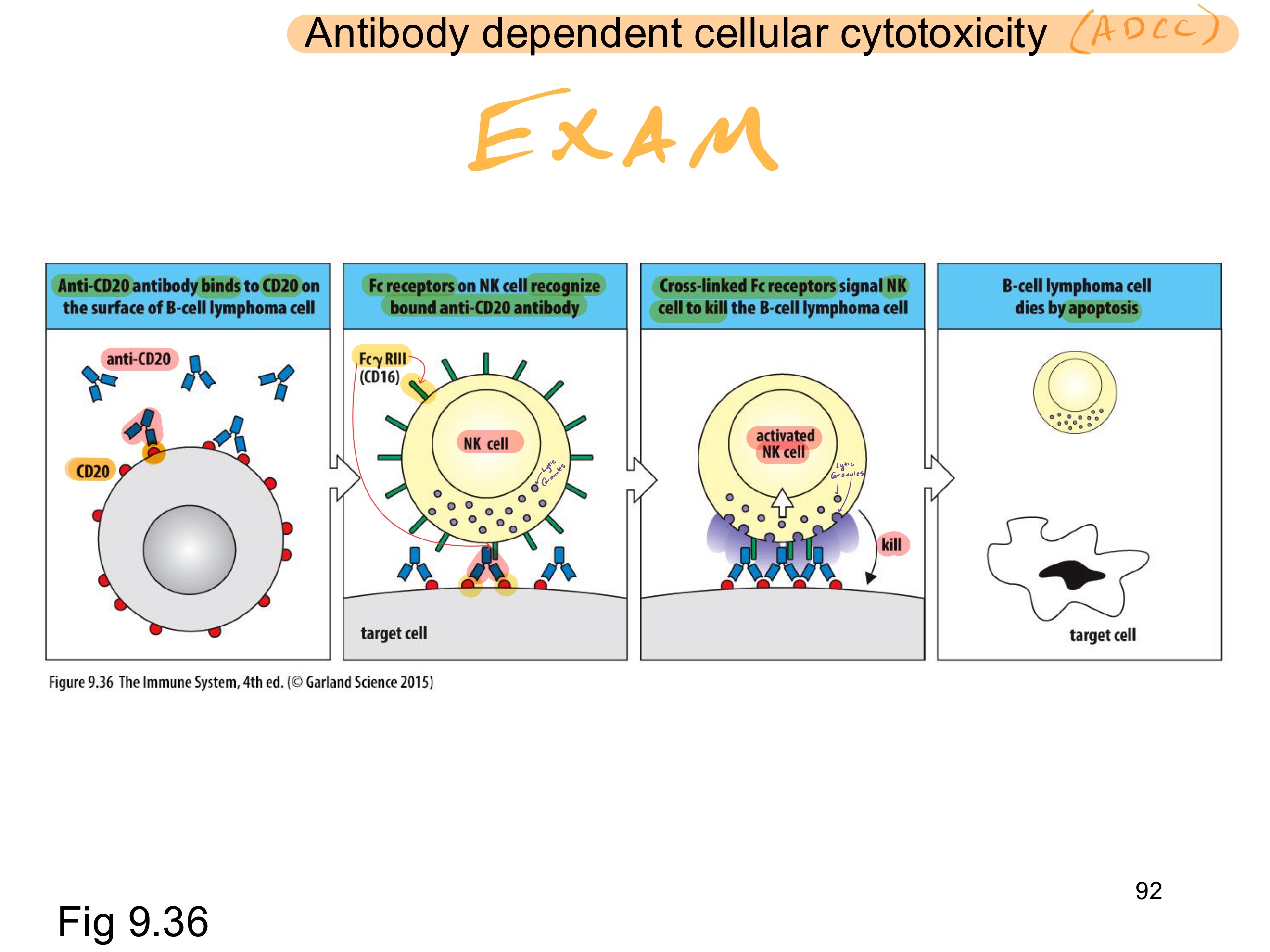
Possess Fcg receptors (ADCC) - antibody dependent cell mediated cytotoxicity.
Looking for cells W/OUT MHC; all ⍺β T cells will have MHC I unless the cell is virally infected.
Obj. 18
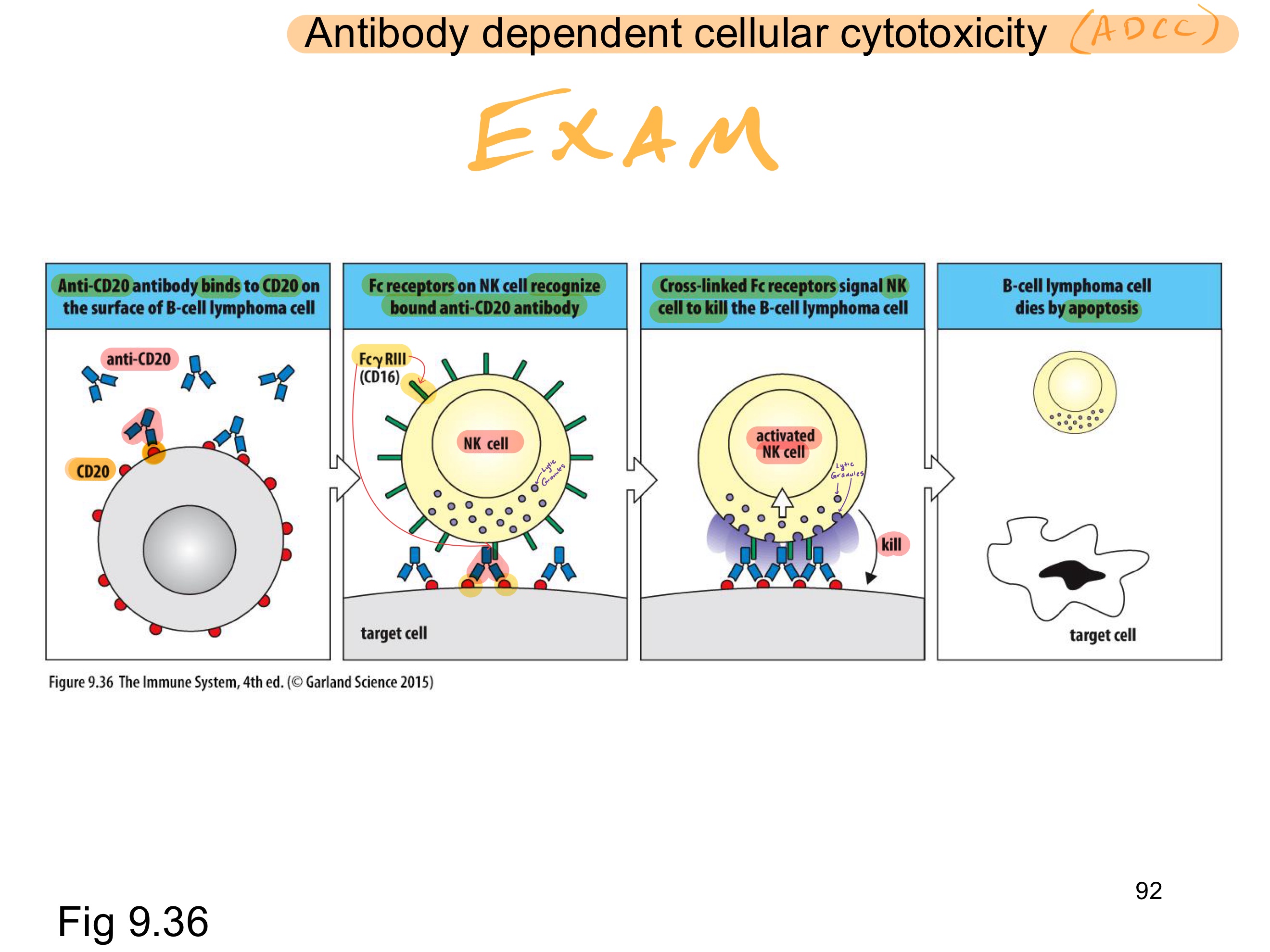
Describe the process of ADCC.
ADCC = antibody-dependent cellular cytotoxicity – immune cells kill targets coated with antibody.
Per Image:
Antibody binds CD20 on B-cell lymphoma.
NK cell Fc receptor binds antibody Fc region.
NK cell activation via Fc receptor cross linking.
Release of perforin/granzymes.
Cancer cell apoptosis.
Antibody → tags; NK → assassinates.