Difference between Respirator and Source Control Masks
 Call Kai
 Learn
Learn Practice Test
 Spaced Repetition
 Match
Match Flashcards
 Knowt Play
1/15

Earn XP
Description and Tags
https://www.cdc.gov/niosh/bulletin/2020/source-control.html
Name | Mastery | Learn | Test | Matching | Spaced | Call with Kai |
|---|
No analytics yet
Send a link to your students to track their progress
16 Terms
Respiratory protection
Refers to respirators
Can include filtering facepiece respirators (FFRs)
Ex: N95 respirators
What are respirators?
Device that covers a person’s nose, mouth, entire face — prevent from breathing in contaminants
Helps protect YOU from contaminants and droplets
Source control
Use of mask to cover person’s mouth & nose — reduce spread of respiratory droplets to others when talking, sneezing, or coughing
2 purpose for face masks
Respiratory protection
Protects wearer
Uses a respirator (N95)
Filters harmful particles from air the wearer breathes in
Source control
Protects other people
Uses a mask (cloth or surgical mask)
Reduce spread of respiratory droplets from wearer
____________________________________________
Respiratory = Protects ME
Mask = Protects OTHERS
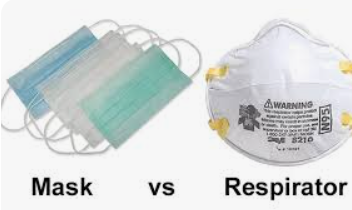
How respirators work
Respirators remove particles from inhaled air using a filter
They protect against:
Bacteria
Viruses
Dust
Mold
Other airborne particles
Requirements for Respirators to Work Properly
1. Effective Filter
The respirator must have a filter that captures airborne particles
2. Tight Face Seal
The respirator must fit the user’s face snugly to minimize the number of particles that bypass the filter
Good seal = air goes through filter
✔ Good filter
✔ Tight seal
N95 Respirators
What does N95 mean?
An N95 respirator filters at least 95% of airborne particles.
MUST be discarded after every use or shift
Damaged seal (metal nose strip)
Particles build up
Damaged, wet, soiled, moisture = reduce filter efficiency
National Institute for Occupational Safety and Health (NIOSH)
Respirators should be NIOSH-approved
Some products are labeled "N95" but are NOT NIOSH-approved
Not NIOSH approved = Respiratory protection not guaranteed
Look for:
The word "NIOSH"
Official labeling
Fit Testing by OSHA
Why is Fit Testing Needed?
A respirator must fit the wearer's face to create a tight seal = provide protection
Fit testing minimizes contaminant leakage into facepiece
No proper fit = no proper protection
Occupational Safety and Health Administration (OSHA) requires:
Fit testing on make and model of respirator before use
Annual fit testing (first time used and every year after)
SOONER testing if
Weight change
Facial features change
Dental work
Respirators with Exhalation Valves
Respirators with exhalation valves:
1 way flap that releases hot air when exhale, closes when inhale
Protect the wearer
Allow unfiltered air to escape
Because of this:
They should NOT be used for source control during COVID-19
If Source Control is Needed
Use a respirator without an exhalation valve
OR
Cover the valve with a surgical or cloth mask (without affecting the fit).
Why Masks Are Not Respirators
Masks do not reduce particles the wearer will inhale
Do not form a tight seal
Are not designed to filter very small airborne particles
Are not fit tested
Are not approved or evaluated by NIOSH as respiratory protection
They help prevent asymptomatic people from spreading droplets
✔ Helps protect others (reduce spread)
❌ Does not provide respiratory protection like an N95.
Cloth Masks
Benefits
Can be/ should be washed after every use
Should I wear a respirator?
CDC does not recommend general public to wear respirators to protect themselves
Supply shortage for critical workers that need respiratory protection in healthcare
Public can’t get fit tested = Not protected
Who Should NOT Wear Masks?
Masks should not be worn by:
Children under 2 years old.
Anyone who has trouble breathing
Surgical Masks in Healthcare
A surgical mask is a loose fitting mask used in healthcare settings
Creates physical barrier between mouth/nose from contaminant in environment
Cannot block small particles
Not tight seal
Used as source control as well
Helps block
Large particle droplets
Splahes
Sprays
Splatters (germs such as viruses and bacteria) from reaching wearers mouth/nose
Regulated by the:
Food and Drug administration (FDA)
Best way to prevent COVID 19
Stay home
Stay 6 feet apart
Hand hygiene