Respiratory system functions + Respiration Process
 Call Kai
 Learn
Learn Practice Test
 Spaced Repetition
 Match
Match Flashcards
 Knowt Play
1/13

There's no tags or description
Looks like no tags are added yet.
Name | Mastery | Learn | Test | Matching | Spaced | Call with Kai |
|---|
No analytics yet
Send a link to your students to track their progress
14 Terms
Respiratory system functions
Gas exchange
Regulation of blood pH
Voice Production
Olfaction
Protection
Oxygen enters blood and carbon dioxide leaves
Regulation of blood pH
Altered by changing blood carbon dioxide levels
What are the four steps of respiration
•To supply the body with oxygen and dispose of carbon dioxide
•Respiration – four distinct processes must happen
Pulmonary ventilation
External respiratory
Transport
Internal respiration
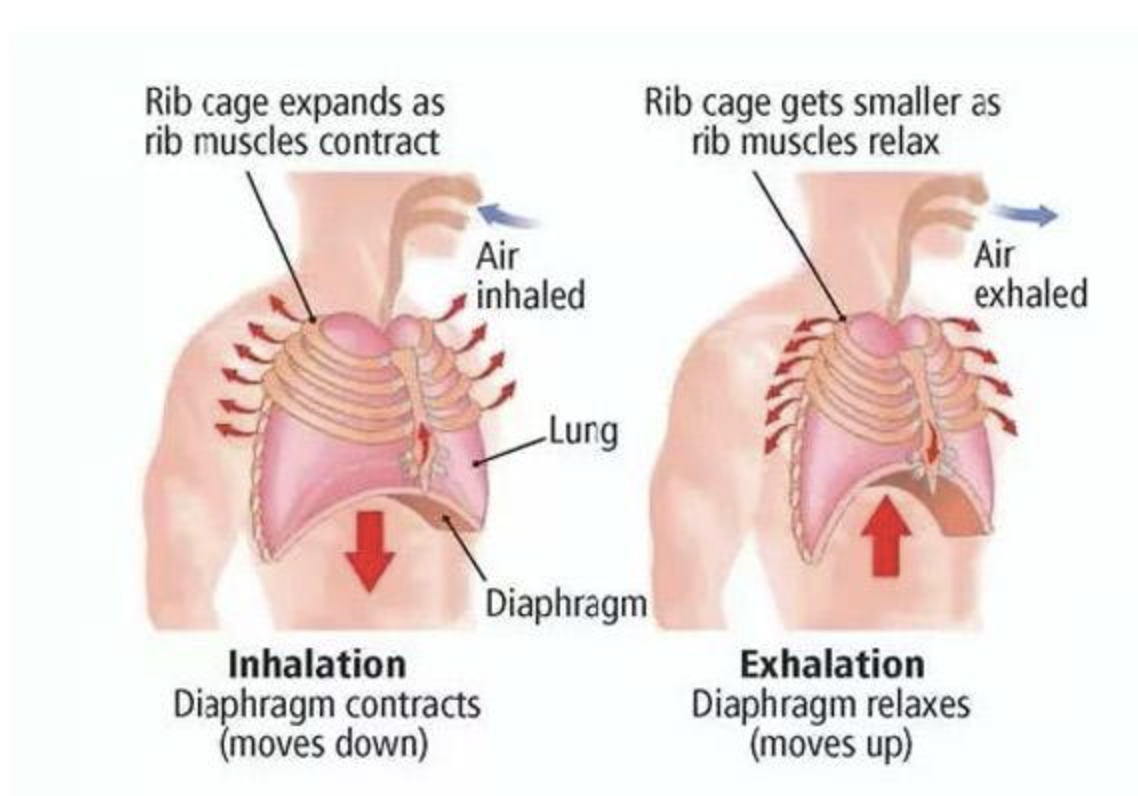
Step 1 of Respiratory: Pulmonary Ventilation(Breathing)
Simply breathing in and out
Air moves:
Into lungs (inhalation)
Out of lungs (exhalation)
👉 No gas exchange yet — just moving air
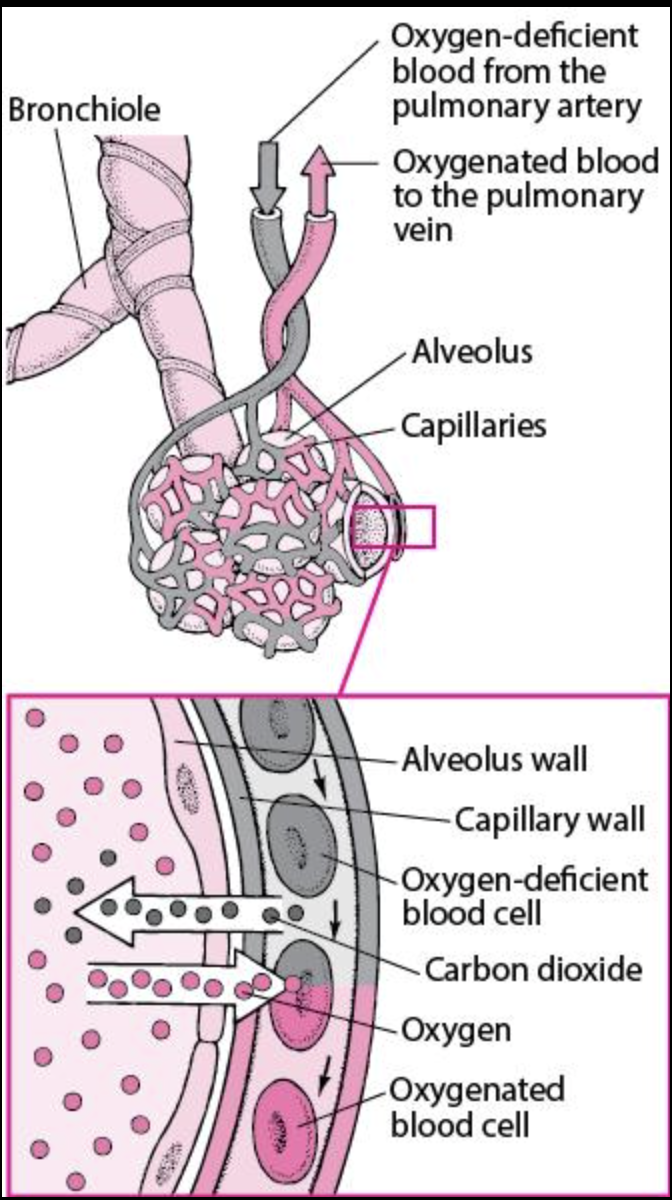
Step 2 of Respiratory: External respiration
gas exchange between the lungs and the blood
Happens in the alveoli (air sacs in lungs)
Oxygen → moves into blood
Carbon dioxide → moves into lungs
👉 This is where gas actually enters/leaves the blood
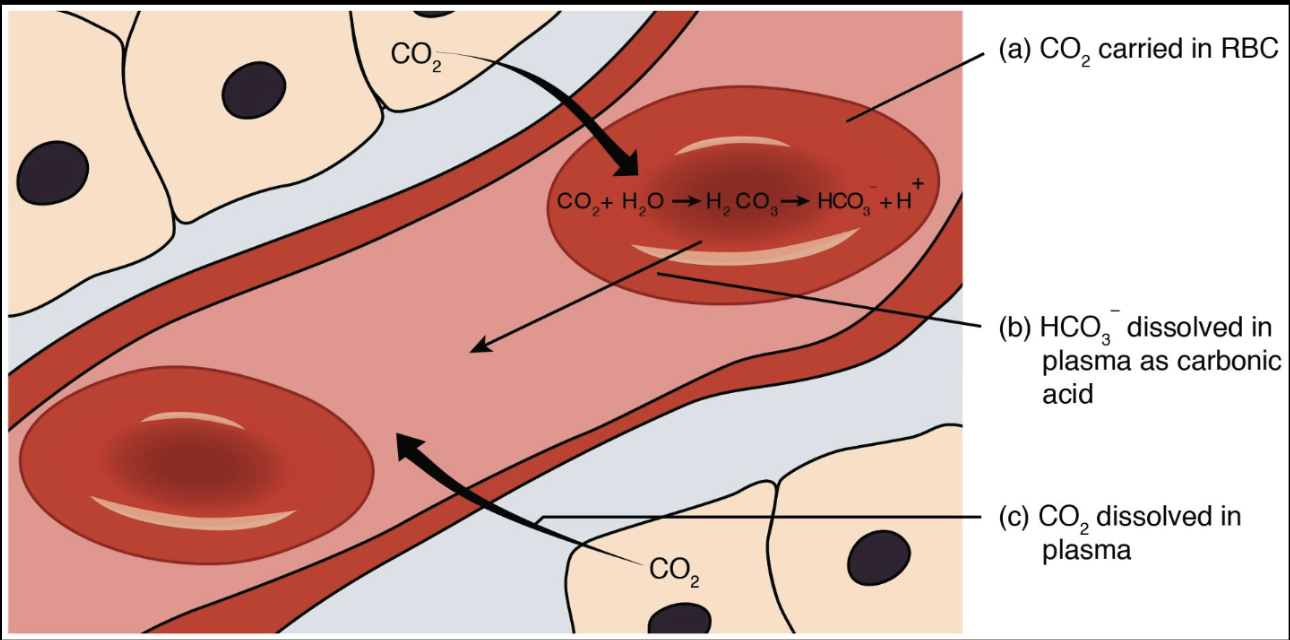
Step 3 of Respiratory: Transport(Blood Movement)
transport of oxygen and carbon dioxide between the lungs and tissues
Blood carries gases:
O₂ → from lungs to tissues
CO₂ → from tissues back to lungs
Blood = delivery + pickup system
Delivers O₂
Picks up CO₂
👉 Think: delivery system
Step 4 of Respiratory: Internal respiration(Blood ↔ Tissues)
exchange of O₂ and CO₂ between blood and tissues
Happens at the cells
Oxygen → leaves blood and enters cells
Carbon dioxide → leaves cells and enters blood
👉 This is where cells actually use oxygen
What is the function of the nose
Passage way for Air
Warm
Filter
Voice
Smell
What happens to your respiratory system as you age
Aging causes structural and functional changes in the respiratory system that reduce lung elasticity, chest mobility, gas exchange efficiency, and immune protection.
What happens to your pulmonary function as you age
Pulmonary function declines with age due to reduced airflow, weaker gas exchange, decreased lung elasticity, and increased air trapping.