Bio end of year
 Call Kai
 Learn
Learn Practice Test
 Spaced Repetition
 Match
Match Flashcards
 Knowt Play
1/62

There's no tags or description
Looks like no tags are added yet.
Name | Mastery | Learn | Test | Matching | Spaced | Call with Kai |
|---|
No analytics yet
Send a link to your students to track their progress
63 Terms
Define ecology
The study of relationships between components of ecosystems and the interactions between them.
Define species
Groups of organisms that can interbreed to produce fertile offspring.
Define population
A group of organisms of the same species who live in the same area at the same time.
Define community
Populations of different species living together and interacting with each other
Define ecosystem
A community of living things and their non-living environment working together.
Define biome
A large region with a particular climate and types of plants and animals. A collection of ecosystems sharing similar climatic conditions.
Define biodiversity
The variety of different living things in an area.
What are 3 abiotic factors? (non-living parts of environment)
Sunlight - Provides energy for growth.
Water - Needed for survival.
Temperature - Affects where plants and and animals can live.
What are three biotic factors? (living)
Plants - Provide food and shelter.
Animals - Help control populations by feeding on other organisms.
Bacteria/Fungi - Break down dead matter and recycle nutrients.
How do abiotic factors influence a community?
They determine which organisms can survive in an area.
How do biotic factors influence a community?
They affect how organisms interact, such as feeding and competition.
What are the 6 biomes?
Tiny -Tundra (Artic and alpine)
Cats - Coniferous Forest
Bounce - Broadleaf Forest
Through - Tropical forest
Green - Grassland
Deserts - Desert
What are the climates like of the 6 biomes?
Tundra - -30, long winters, 5-100cm rainfall.
Coniferous Forest - -10-5, mild summers, 40-250cm rainfall.
Broadleaf Forest - 10-25, cool winters, 50-220cm rainfall.
Tropical Rainforest - 20-30, humid all year, 150-450cm rainfall.
Grassland - 5-20, cold winters, 30-90cm rainfall.
Desert - 3-15, very dry, 5-30cm rainfall
What is the vegetation like for the 6 biomes?
Tundra - Small plants, no trees. Subsoil frozen in winter.
Coniferous Forest - Evergreen trees with needles.
Broadleaf Forest - Broadleaf trees and undergrowth. Trees love leaves.
Tropical Rainforest - Many trees and other plants. Very diverse.
Grassland - Grass and herbs with few trees.
Desert - Specialised plants for conserving water.
What are the 5 stages of primary succession?
Bears - Bare rock
Love - Lichens
Small - Small annual plants
Green - Grasses, shrubs, shade-intolerant trees
Snacks - Shade-intolerant trees
What are the changes in biodiversity during primary succession?
The first four changes are pioneer stages.
The 5th is the intermediate stage.
The 7th is the climax community.
What is a pioneer species?
The species that first colonise an area
What is a climax community?
The final result at the end of succession.
What’s the word and symbol equation for photosynthesis?
Carbon dioxide + water - glucose + oxygen (using light)
6CO2 +6H2O - c6h12o6 + 6O2
Where does carbon dioxide occur in the plant?
CO2 enters the stomata found on the underside of leaves. Turns into O2 and water vapour.
Where does water absorption occur in the plant?
Absorbed by root hair cells in the roots by osmosis.
Where does light absorption occur in the plant?
In leaves in the chloroplasts.
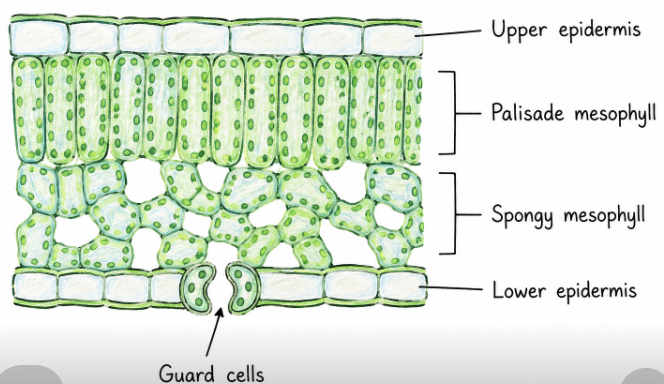
Sketch a cross-section of a leaf and label the Upper epidermis, Palisade mesophyll, Spongy mesophyll, Lower epidermis and Guard cells.
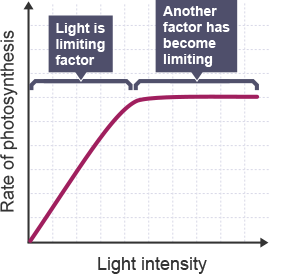
Draw a graph and explain how light intensity affects the rate of photo synthesis
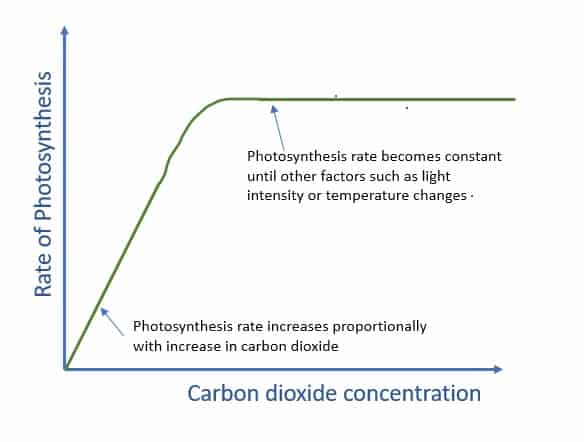
Draw a graph and explain how CO2 concentration affects the rate of photosynthesis
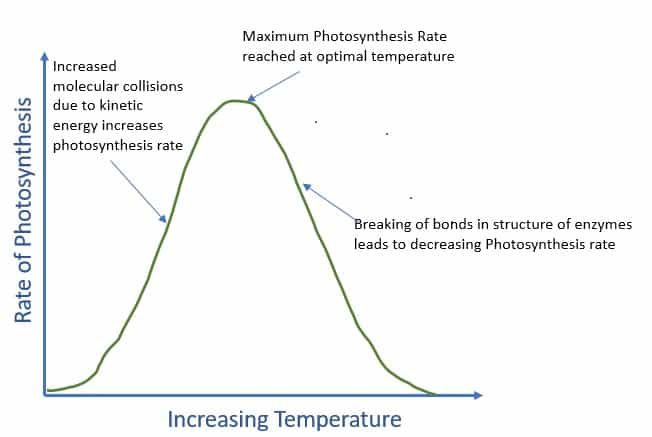
Draw a graph and explain how temperature affects
What are three advantages of asexual reproduction?
One parent
Identical offspring
Energy efficient and quick
What are three advantages of sexual reproduction?
Genetic variation
Increased survival rate
Disease resistance
What cells do mitosis produce and what are they used for?
Two identical diploid body cells
Growth, repair, asexual reproduction
What cells do meiosis produce and what are they used for?
Four non-identical haploid gametes
Sexual reproduction
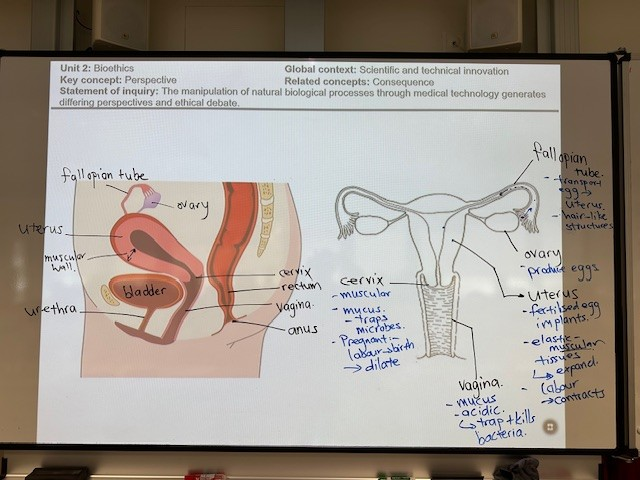
Draw and annotate the female reproductive systems with functions.
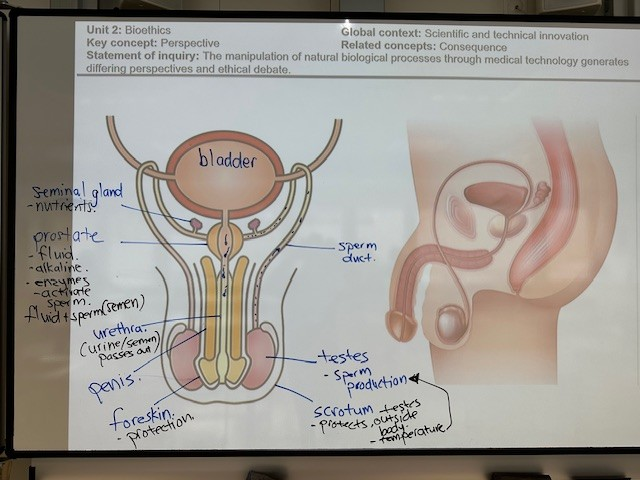
Draw and annotate the male reproductive system with functions.
What happens in the uterus and ovaries during the menstrual cycle?
Day 1 - 5 = menstruation (period). Uterus lining is shed.
Day 13-16 = ovulation. Egg released from ovary.
Day 16-28 = Egg dies. Uterus lining thickens.
What role does FSH, estrogen, LH, and progesterone play in the menstrual cycle?
FSH - Matures an egg in the ovary and helps produce estrogen.
Estrogen - Repairs and thickens the lining of the uterus.
LH - Triggers ovulation.
Progesterone - Preserves uterus lining for pregnancy.
Summarise the processes of fertilization, pregnancy (placenta + amniotic sac), and birth.
Fertilisation - Sperm fertilises egg in the oviduct, forming a zygote. Takes 3-4 days to reach uterus moved by cilia.
Pregnancy - Progesterone maintains lining. Placenta provides oxygen, nutrients and removes wastes. Amniotic sac/fluid protects and cushions the baby.
Birth - Water breaks due to amniotic sac rupturing. Oxytocin causes contractions which opens cervix. Placenta delivered after.
What are 3 methods of contraception
Condom - Barrier collecting semen. Protects against STIs and no hormonal effects. Can break or slip off, not 100 percent effective.
Diaphragm - Silicone cup in vagina. Sponge covers cervix. Non-hormonal, reusable, low cost. Must stay in for 6 hours after sex. Doesn’t protect against STIs.
Morning after pill - Emergency. Provides progestin to signal ovaries to not release. Allows backup plan. Effectiveness decreases overtime, naseau, expensive.
Define: Gene, Allele, Chromosome.
Gene – A section of DNA that controls a characteristic.
Allele – A different version of a gene.
Chromosome – A long strand of DNA containing many genes.
Describe the structure of DNA.
Double Helix
Two strands of nucleotides
Bases pair together: AT and CG
What is a universal code?
The genetic code is the same in almost all living organisms.
Explain how a change in the DNA sequence can affect the protein it codes for
A mutation changes the DNA base sequence. This can change the amino acids used to build a protein, altering its shape and function.
What is natural selection, and how does it lead to evolution? Give an example.
Natural selection is the survival and reproduction of organisms with advantageous traits. Over generations, these traits become more common, causing evolution.
Example: Peppered Moths
Dark moths were better camouflaged.
They survived and reproduced more.
Explain the principle of genetic modification and give a real-world application.
Genetic modification involves transferring a gene into an organism's DNA to give it a useful trait.
Example: bacteria are genetically modified to produce human insulin.
What are telomeres, and how are they related to ageing?
Protective caps at the ends of chromosomes.
They shorten each time a cell divides, causing cells to age.
Describe Alzheimer’s
A brain disease causing memory loss and difficulty thinking.
List the 7 components of a balanced diet and state one function of each.
Carbohydrates – energy
Proteins – growth and repair
Fats – energy storage
Vitamins – healthy body functions
Minerals – healthy bones and tissues
Fibre – helps digestion
Water – chemical reactions and transport
What is the difference between a monomer, a polymer, and a macromolecule?
Monomer = A small building-block molecule.
Polymer = Many monomers joined together.
Macromolecule = A very large biological molecule.
Describe the structure of a protein. Why can there be so many types?
Long chains of amino acids folded into a specific shape.
Different amino acid sequences create different shapes.
Compare kwashiorkor and marasmus
Kwashiorkor = Protein deficiency despite enough calories.
Marasmus = Severe deficiency of calories and protein.
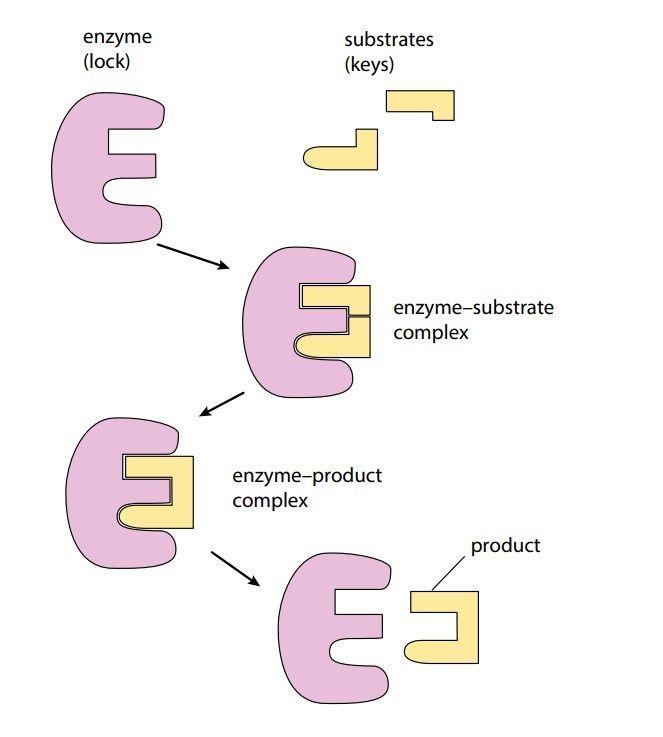
What is an enzyme? - Draw a diagram of enzyme action
A biological catalyst that speeds up reactions.
What factors can denature enzymes?
High temperature and extreme pH.
List different types of carbohydrates and their sources.
Glucose (fruit)
Sucrose (sugar)
Starch (potatoes, bread)
Glycogen (animals)
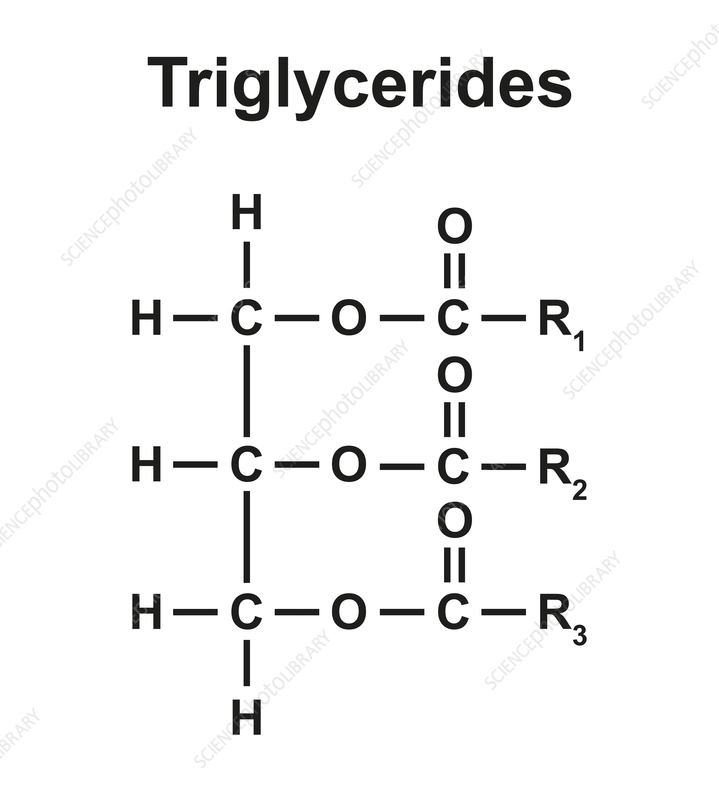
Draw the basic structure of a triglyceride. What’s the difference between saturated and unsaturated fats?
Saturated = no double bonds
Unsaturated = one or more double bonds.
What happens to excess carbohydrates, proteins, and fats in the body?
Carbohydrates = Stored as glycogen or fat.
Proteins = Converted to urea and removed.
Fats = Stored in adipose tissue.
Describe the causes and risk factors of coronary heart disease.
Cause :Fatty deposits narrowing coronary arteries.
Risks: Smoking, obesity, high-fat diet, lack of exercise.
Compare aerobic and anaerobic respiration (word and symbol equations).
Aerobic = Respiration using oxygen.
Word equation: Glucose + Oxygen → Carbon dioxide + Water + Energy
Symbol: C₆H₁₂O₆ + 6O₂ → 6CO₂ + 6H₂O + Energy
Anaerobic = Respiration without oxygen.
Word: Glucose → Lactic acid + Energy
Symbol: C₆H₁₂O₆ → 2C₃H₆O₃ + Energy
Define homeostasis.
Maintaining a stable internal environment.
Explain how blood glucose is controlled using insulin and glucagon.
Insulin lowers blood glucose. Insulin Moves glucose into cells and stores excess as glycogen.
Glucagon raises blood glucose. Glucagon Converts glycogen back to glucose.
Compare Type I and Type II diabetes.
Type I diabetes caused by pancreas producing little or no insulin. Treatment = Insulin injections.
Type II diabetes caused by cells becoming resistant to insulin. Treatment = Diet, exercise, medication.
How does diet impact reproduction and pregnancy?
A balanced diet supports fertility and healthy fetal development.
How can genetic modification be used to improve food production?
Creates crops with higher yields and pest resistance.
Why is biodiversity important?
Maintains stable food webs and food supplies.
What ethical dilemmas arise from cloning to solve nutrition shortages?
Animal welfare concerns and reduced genetic diversity.
How could climate change influence the spread of diseases?
Warmer temperatures allow disease-carrying organisms to spread further.