ch 7 - digestive system
 Call Kai
 Learn
Learn Practice Test
 Spaced Repetition
 Match
Match Flashcards
 Knowt Play
1/37

There's no tags or description
Looks like no tags are added yet.
Name | Mastery | Learn | Test | Matching | Spaced | Call with Kai |
|---|
No analytics yet
Send a link to your students to track their progress
38 Terms
3 main functions of DS
break down food consumed
releases nutrients
absorbs nutrients into body
2 most central partnerships of DS
endocrine system
cardiovascular system
name the components that:
regulate and control digestion
transport nutrients
hormones
blood and lymph
2 main parts of DS structure
alimentary canal - food actually passes through this tract
accessory structures - sits outside of the tract, may secrete fluids and enzymes
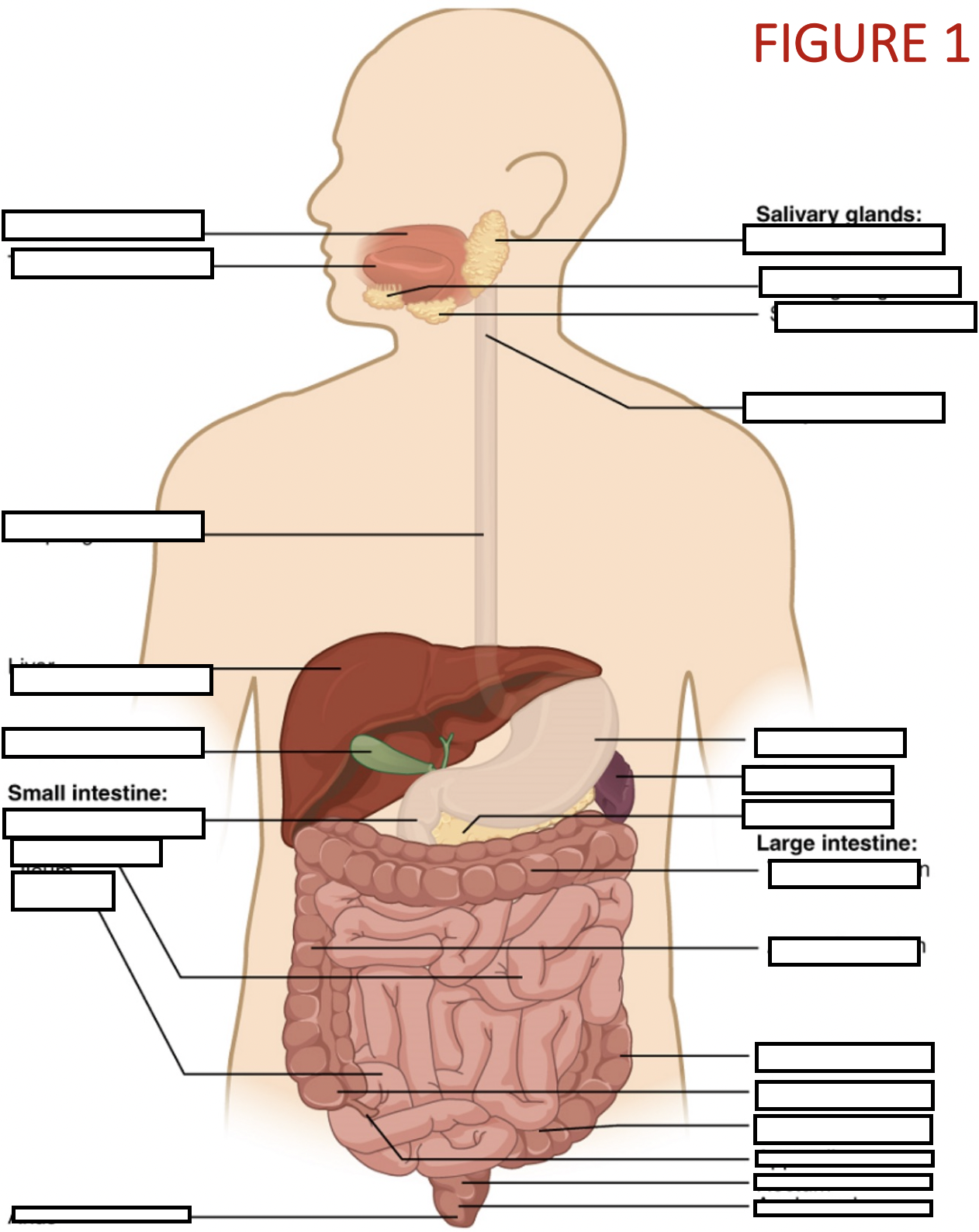
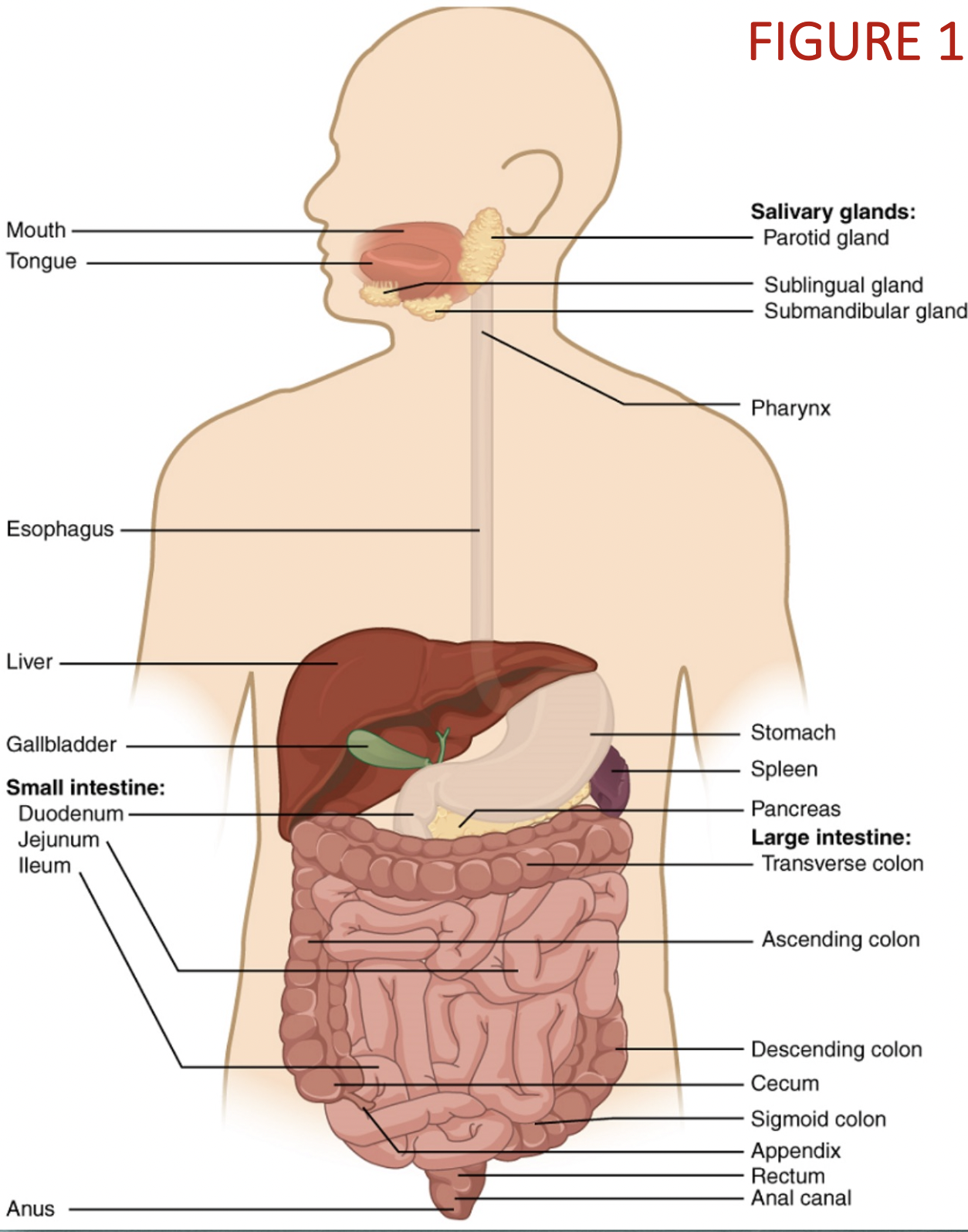
provide a list of organs found in both alimentary and accessory portions of the DS
alimentary:
mouth
pharynx
esophagus
stomach
SI, LI
accessory:
teeth, tongue
liver
gallbladder
pancreas
alimentary canal (def + 4 tissue layers)
the gut - one-way passageway for food + derivatives
4 tissue layers
mucosa
submucosa
muscularis
serosa
accessory structures
organs/structures assisting in food processing
label the alimentary canal tissue layers and structures
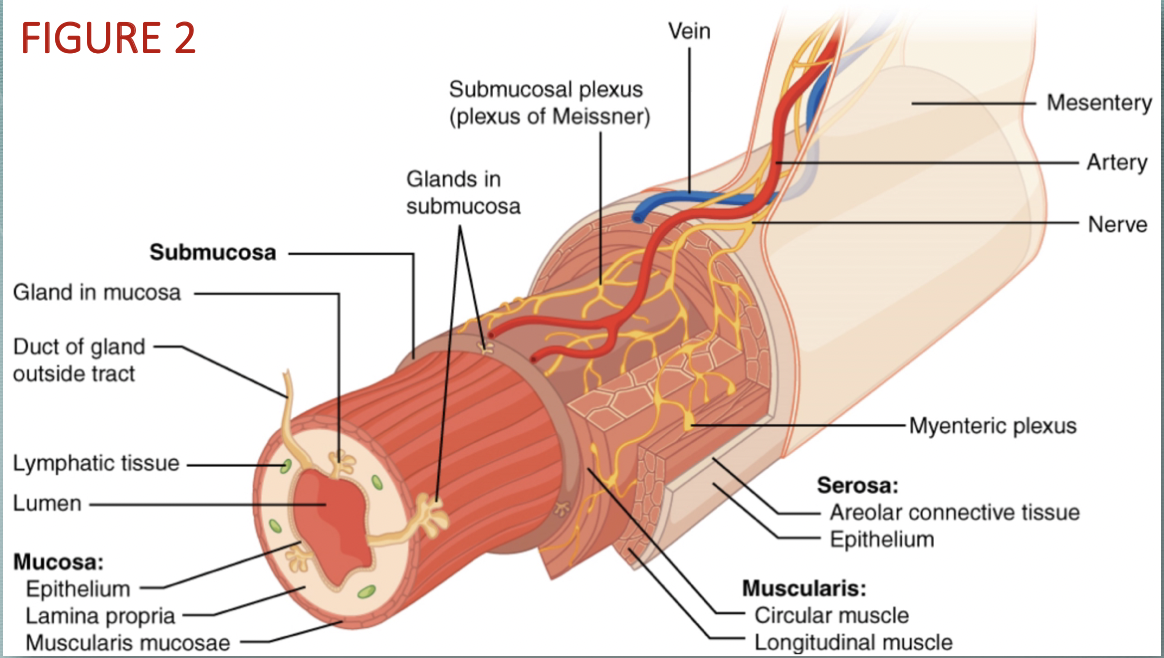
describe 4 tissue layers of alimentary canal (provide names + structural details)
mucosa: produces mucous
epithelium lining lumen
lamina propria (connective tissue)
muscularis mucosae (pulls mucosa into folds for digestion)
goblet cells (secrete mucous)
endocrine cells (produce hormones)
submucosa: connects mucosa to muscularis
blood and lymph vessels
submucosal plexus (nerve network for sensory input)
muscularis:
2-3 layers of smooth muscle in stomach
2 layers of smooth muscle in intestines
skeletal muscle at mouth, pharynx, anal sphincter for swallowing/defecation
serosa: outermost layer, only in abdominal cavity
visceral peritoneum (over loose areolar connective tissue)
adventitia (collagen fiber layer holding structures in place)
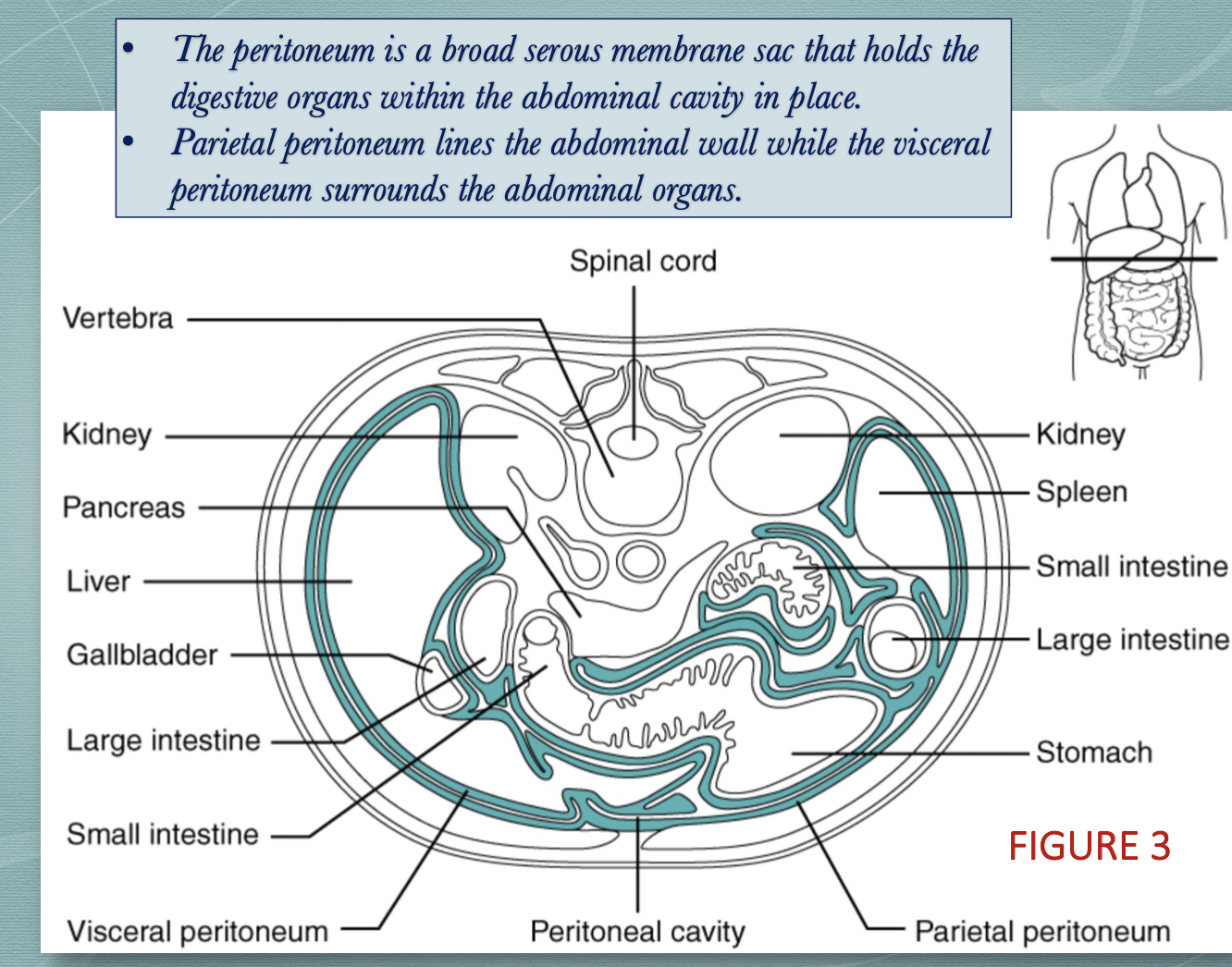
peritoneum
serous membranes lining the digestive organs in abdominal cavity
parietal peritoneum = lines abdominal wall
visceral peritoneum = surrounds abdominal organs
label peritoneal structures
(6) list overview of digestion steps
ingestion
propulsion
mechanical digestion
chemical digestion
absorption
defecation
ingestion (def, steps)
entry of food into alimentary canal
food into mouth
saliva (contains enzymes to begin digestion)
chewing → becomes BOLUS to swallow
propulsion (def, steps)
movement of food through digestive tract
swallowing (tongue, pharyngeal muscles bring food into esophagus)
peristalsis (alternating contractions of longitudal and smooth muscle in alimentary canal wall)
mechanical digestion (def, methods involved)
process making food smaller for digestion, makes pieces easier to pass thru system
mastication (chewing)
tongue manipulation (mixing food w/ saliva)
chyme creation (churning food in stomach)
segmentation (SI circular muscle contraction)
chemical digestion (def, steps)
enzymes break down nutrients into chemical building blocks
begins: mouth
completed: SI
digestive secretions: speed up chemical reactions w/ enzymes
extracellular digestion in lumen of alimentary canal
absorption (def, processes involved)
uptake of nutrients entering blood + lymph
epithelial cells lining lumen: absorb nutrients into bloodstream
lacteals: lipids enter these to get to bloodstream
defecation (def)
remove unused/indigested materials as feces through the anus
name the receptors the alimentary canal contains for nervous control of digestion
mechanoreceptors (touch)
chemoreceptors (chemical stimuli)
osmoreceptors (osmotic pressure)
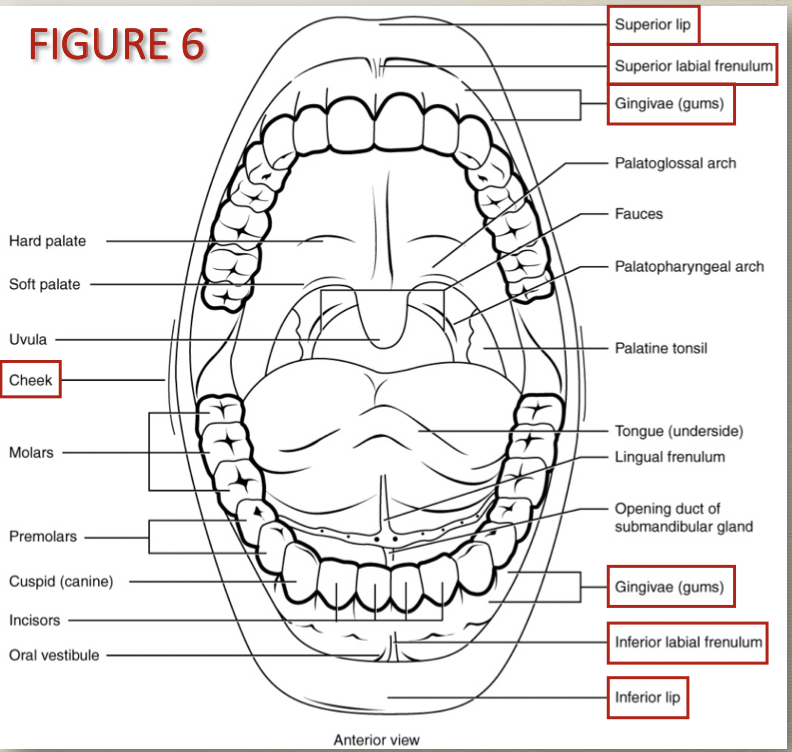
label the red boxes of the mouth/oral cavity
teeth (funct, #)
# deciduous
# permanent
# incisors
# cuspids
# premolars
# molars
mechanically break down food
20 deciduous teeth (baby teeth)
32 permanent teeth
8 incisors
4 cuspids
8 premolars
12 molars
for the following structures, describe their desired movement and effect
lips and cheeks
salivary glands
tongue’s extrinsic muscles
tongue’s intrinsic muscles
taste buds
lingual glands
teeth
hold food btwn teeth; ensure food is chewed evenly
secrete saliva; moisten interior of mouth, food, soften food
move tongue sideways, in and out: shape food into bolus
change tongue shape: manipulate food to be swallowed
sense taste and food: nerve impulses stimulate glands, resulting in saliva secretion
secrete lingual lipase: in stomach, breaking down triglycerides
mechanical digestion: breaks food into smaller particles for digestion
describe the following structures of the mouth/oral cavity
Labia
Labial frenulum, gums
Cheeks
Oral vestibule
Fauces
Palate
Hard palate
Soft palate
Uvula
Tongue
labia: LIPS, regulating what goes in and out
labial frenulum: attaches each lip to gums
cheeks: side walls of the mouth
oral vestibule: inner chamber of the mouth
fauces: opening between mouth and oropharynx
palate: roof of mouth
hard palate: (anterior) separates nasal and oral cavity
soft palate: (posterior) skeletal muscle, not rigid
uvula: bead of tissue dropping from soft palate
tongue: skeletal muscle for ingestion, digestion, sensation, swallowing
name the structures that move upward when swallowing to prevent food from entering the nasal cavity
soft palate and uvula
papillae
bumps on the tongue containing taste buds and touch receptors
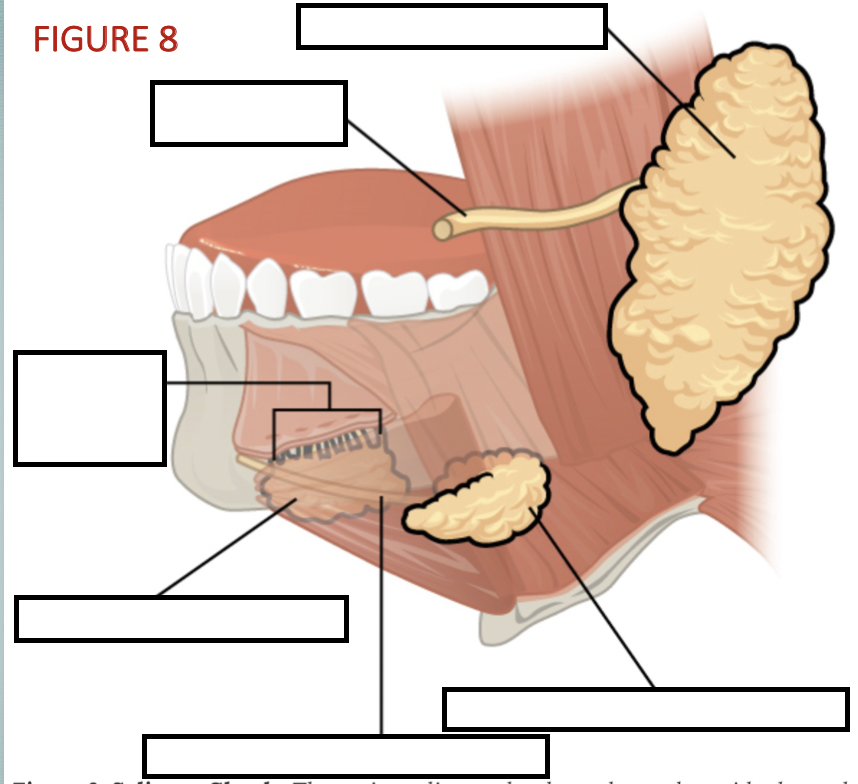
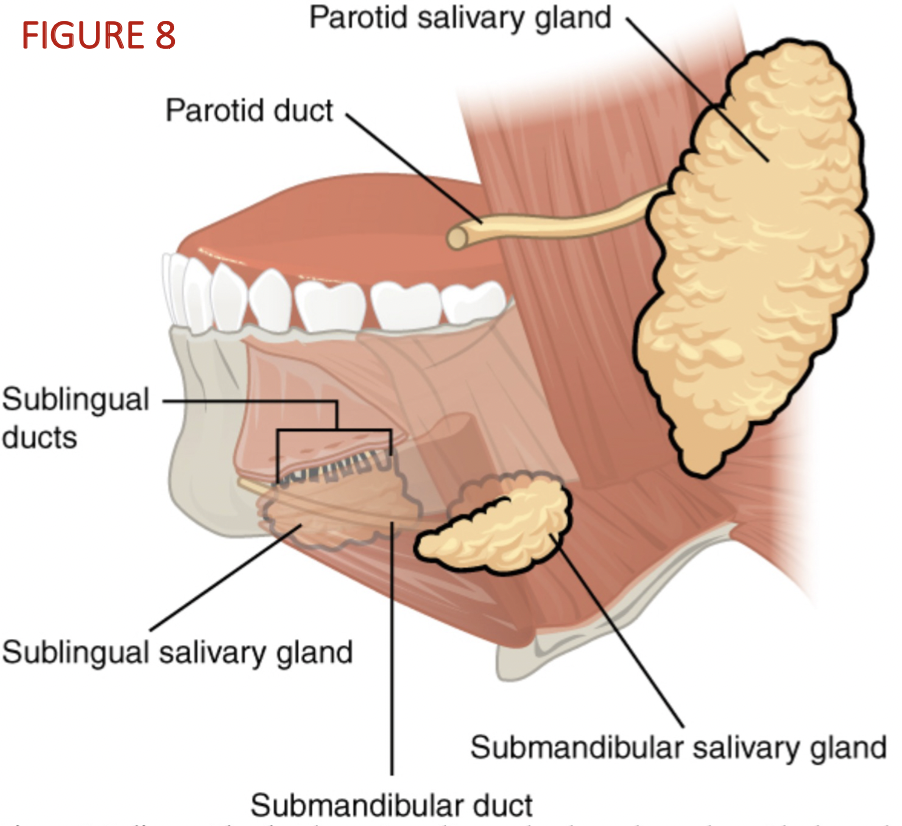
glands of mouth/oral cavity
salivary glands: within mucous membranes
exocrine glands: secrete saliva into the mouth
submandibular glands
sublingual glands
parotid glands
saliva (chemical makeup + enzyme)
water (>95%), ions, enzymes, glycoproteins
enzyme: salivary amylase - starch breakdown
submandibular glands (location)
(exocrine glands, secrete saliva into mouth)
floor of mouth
sublingual glands (location)
(exocrine glands, secrete saliva into mouth)
below the tongue
parotid glands (location)
(exocrine glands, secrete saliva into mouth)
between skin and masseter muscle near the ears
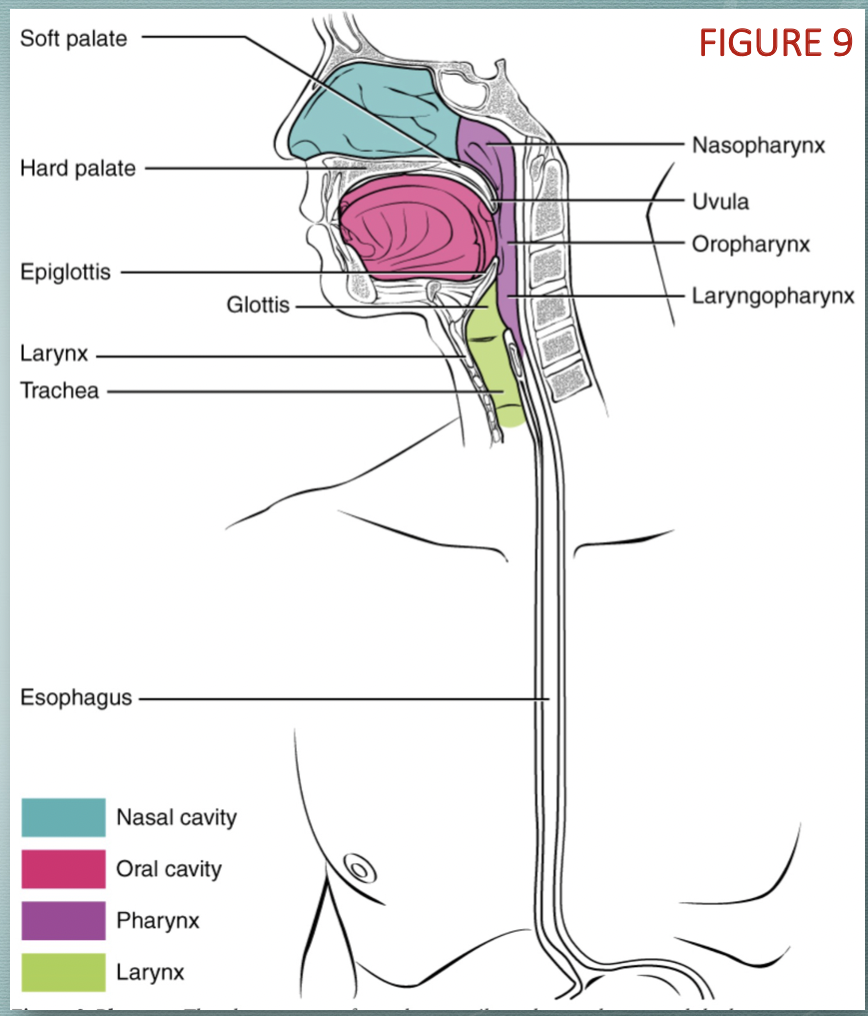
pharynx
muscular passageway connecting oral, nasal cavities to esophagus
nasopharynx: breathing, speech
oropharynx: breathing, digestion
laryngopharynx: breathing, digestion
describe how the pharynx and esophagus are used during swallowing
pharynx raises and expands to receive bolus, which is forced into esophagus
esophagus
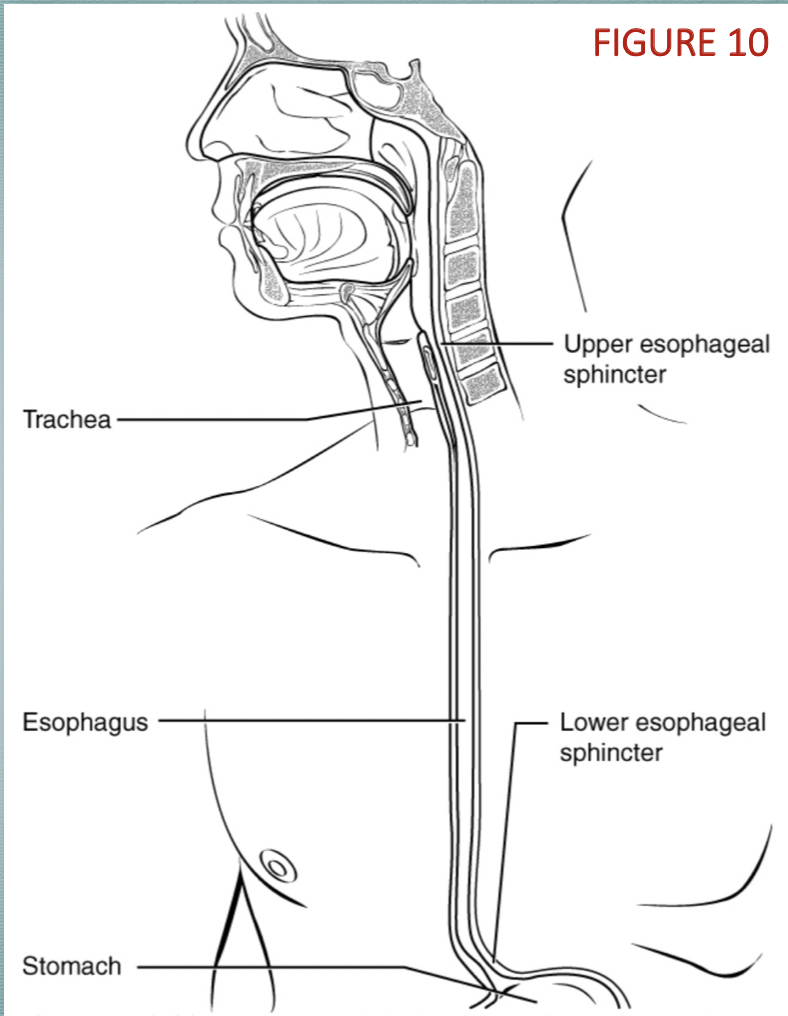
muscular passageway connecting pharynx to stomach
route goes through mediastinum
enters abdomen through esophageal hiatus
label the esophageal regions
deglutition (def, list stages)
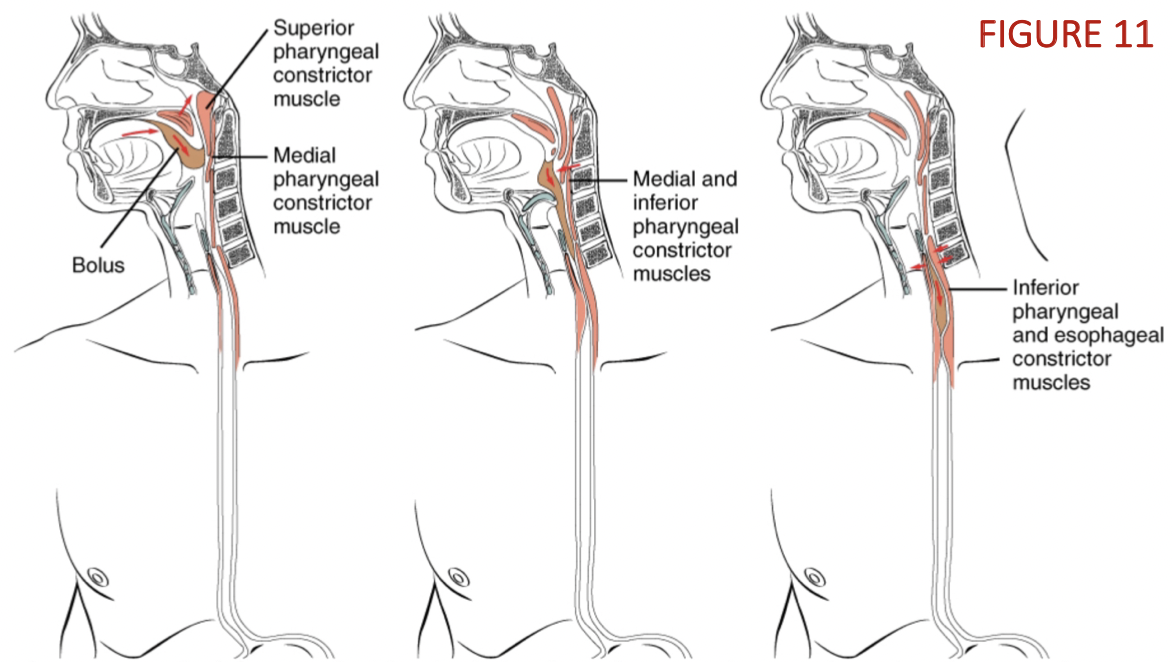
swallowing - movement of food from mouth to stomach by tongue muscles, pharynx, esophagus, mucus + saliva
voluntary stage
pharyngeal phase
esophageal phase
expand on the stages of deglutition (describe movements with specific structural names)
voluntary stage: swallowing food
tongue moves up and back
bolus pushed into oropharynx
pharyngeal phase:
soft palate + uvula close off nasopharynx
nasopharynx is closed → deglutition apnea (breathing ceases) occurs
pharyngeal constrictor muscles move bolus to upper esophageal sphincter
bolus enters esophagus
esophageal phase:
peristalsis moves bolus down to lower esophageal sphincter
lower esophageal sphincter relaxes → bolus enters stomach