Biology Unit 7 Genetics IHS Skavaril
 Call Kai
 Learn
Learn Practice Test
 Spaced Repetition
 Match
Match Flashcards
 Knowt Play
1/57

There's no tags or description
Looks like no tags are added yet.
Name | Mastery | Learn | Test | Matching | Spaced | Call with Kai | Chat |
|---|
No analytics yet
Send a link to your students to track their progress
58 Terms
Codominance
Both alleles are dominant so phenotype reflects both traits; coexist (e.g. blood type A + blood type B = AB)
Incomplete dominance
Mix/blend of alleles as they aren’t strong enough for one to be dominant (e.g. white/homo rec flower and red/homo dom flower = pink hetero flower)
Crossing over
Exchange of genetic material between paired homologous chromosomes (non-sister chromatids) during prophase I of meiosis
Gamete
A mature reproductive cell (sperm/egg)
Sex-linked gene
Genes located on the sex chromosomes (usually X, but sometimes Y)
Nondisjunction
The failure of homologous chromosomes or sister chromatids to separate properly during cell division
Homozygous/Purebred
Homozygous dominant: AA
Homozygous recessive: aa
Same alleles
Heterozygous/Hybrid
Aa
Different alleles; one dominant one recessive
Phenotype
Physical trait produced by alleles (expression of genes)
Genotype
Combo of alleles in an individual
Fertilization
When genetic information from 2 individuals combine to result in a new individual
Genetics
The study of inheritance
Genes
Segment of DNA that codes for one specific protein
Allele
Different version of a gene/genetic code
Rule of Dominance
Only need 1 dominant allele to express that certain trait
Law of Segregation
Every cell gets 1 copy of each allele
Law of Independent Assortment
Meiosis results in unique haploid cells. Chromosomes line up randomly during metaphase I
Polygenic Trait
When one trait is affected by more than 1 gene (e.g. eye color is determined by at least 3 different genes)
Multiple Alleles
One gene has more than 2 alleles — more than one way a gene can be found on the same chromosome
Autosomes
Chromosomes 1-22 and follow simple inheritance rules
Autosomal Dominant
Only 1 copy of the dominant allele is necessary to see the phenotype
Autosomal Recessive
2 copies of the recessive allele is necessary to see the phenotype
Sex-linked Dominant
The dominant/affected gene can be found on the X chromosome of either parent
If affected:
Females: XᴬXᴬ or XᴬXᵃ
Males: XᴬY
Sex-linked Recessive
Only 1 copy of the allele is necessary to see the phenotype in males, but 2 copies are necessary in females
If affected:
Females: XᵃXᵃ
Males: XᵃY
X-chromosome inactivation
Process that “turns off” one X chromosome in each cell of females
Unaffected
Individuals with no copies of the disease allele and are not sick
Carrier
Individual with one disease allele but is not sick
Affected
Individual that has the disease allele and is sick
Pedigrees
Used to show how alleles have been passed between generations
Females are represented as circles
Males are represented as squares
One level = one different generation
Female sex chromosomes
XX
Male sex chromosomes
XY
Order of genotype ratio
Homo dom : Hetero : Homo rec
Order of phenotype ratio
Dom trait : Rec trait
What do the letters on the outside of a Punnett square represent
Haploid gametes
What do the letters inside the boxes of a Punnett Square represent
Haploid offspring
Meiosis
Process that produces gametes with haploid number of chromosomes. Must occur so that zygotes will have the proper number of chromosomes after fertilization
Phases of meiosis
Interphase, Prophase I, Metaphase I, Anaphase I, Telophase I, Cytokinesis, Prophase II, Metaphase II, Anaphase II, Telophase II, Cytokinesis
Product of meiosis
4 haploid cells
How is meiosis is different from mitosis
Meiosis: 4 haploid cells, different from each other, (mitosis 2x)
Mitosis: 2 diploid cells, identical to each other, PMAT one time
How many sets of genes are found in most adult organisms
2 sets of chromosome in every cell (diploid organisms)
Karyotypes
All the chromosomes from a cell paired together and placed in order
Monosomy
One chromosome
Trisomy
Three chromosomes
Aneuploidy
Abnormal number of chromosomes (not two of autosomes)
How many homologous PAIRS does a typical human somatic cell contain
23
How many total chromosomes does a typical human gamete have
23
Homologous chromosomes
Contains the same genes, but one comes from the mother and one comes from the father, so they might contain different alleles making them not exactly identical
Diploid organism
Has two sets of chromosomes
Haploid organism
Has one set of chromosome
Genome
Entire set of DNA instructions found in a cell
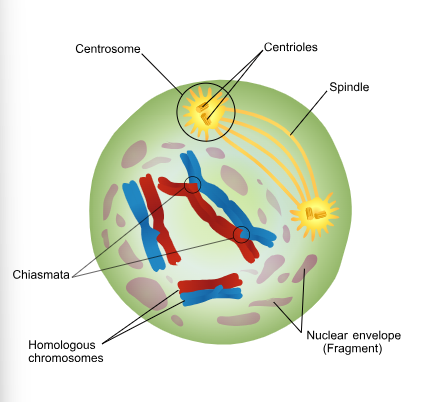
Prophase I
The chromosomes condense, and the nuclear envelope breaks down
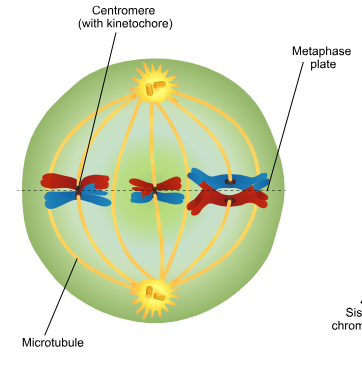
Metaphase I
Pairs of homologous chromosomes move to the equator of the cell
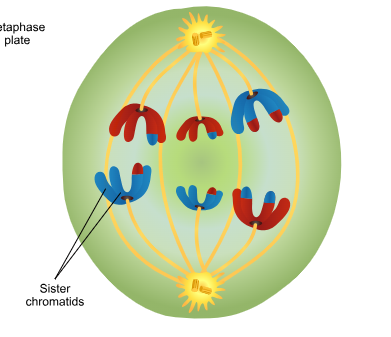
Anaphase I
Homologous chromosomes move to the opposite poles of the cell
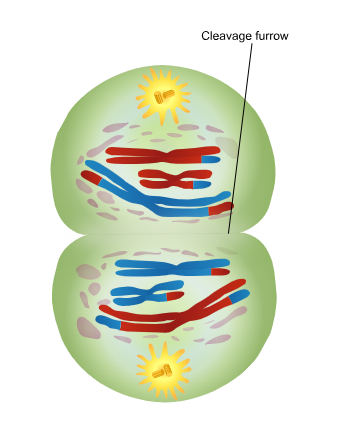
Telophase I & Cytokinesis
Chromosomes gather at the poles of the cells. The cytoplasm divides into 2 cells
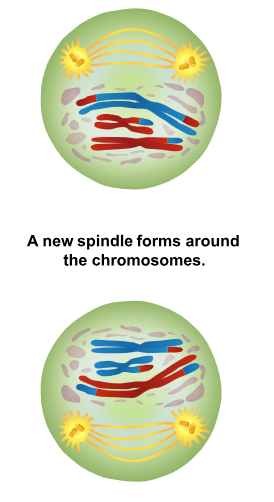
Prophase II
A new spindle forms around the chromosomes
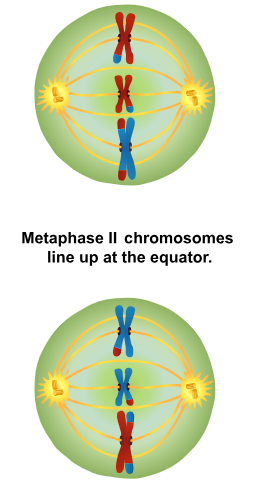
Metaphase II
Chromosomes line up at the equator
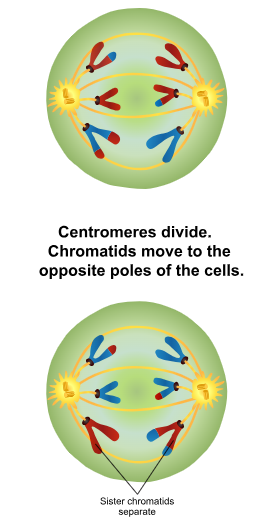
Anaphase II
Centromeres divide. Chromatids move to the opposite poles of the cells
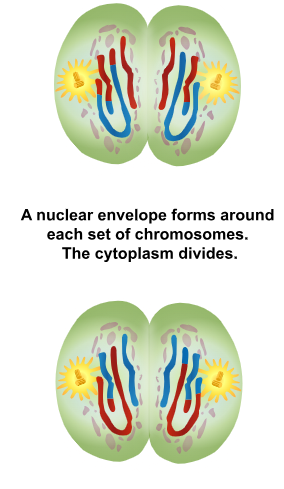
Telophase II & Cytokinesis
A nuclear envelope forms around each set of chromosomes. The cytoplasm divides, yielding 4 cells in total