Lec 1
 Note
 Call Kai
 Learn
 Practice Test
 Spaced Repetition
 Match
 Flashcards
 Knowt Play
1/71

There's no tags or description
Looks like no tags are added yet.
72 Terms
Metabolism
- sum of chemical changes that convert nutrients into energy and the finished products of the cell.
- greek for change
- interconnected pathways involving production of energy + synthesis of molecules using energy
Pathway
A series of consecutive reactions that can be linear, cyclic, or branched.
linear pathway example
glycolysis
cyclic pathway exmaple
citric acid cycle
branched pathway example
amino acid metabolism
Macronutrients
Nutrients required in large amounts, including fats, carbohydrates, and proteins.
forms of energy
atp, gtp
Micronutrients
Nutrients required in smaller amounts, including vitamins and minerals.
A>a>B>b>C>c>D>d>E>e
- inital substrate = A
- final product = E
- enzyme = b,c,d,e
- intermediates = B,C,D
- metabolites = A,B,C,D,E
reactions are catalyzed by
enzymes
ATP
Adenosine triphosphate, the primary energy carrier in cells.
Anabolism
synthesis of complex molecules from simpler ones
ex of anabolism
gluconeogenesis.
Catabolism
breakdown of complex molecules into simpler ones (degradative)
ex catabolism
glycolysis
traits of anabolytic/catabolytic pathways
- distinct enzymes that catalyze irreversible reactions
- cannot operate simultaneously (futile cycling, substrate cycling)
futile cycling/substrate cycling
- 2 metabolic pathways run simultaneously in opposite directions
- has no overall effect
- dissipate energy in the form of heat.
pathways are controlled by
- allosteric regulation
- covalent regulation by phosphrylation
Enzyme
A protein that catalyzes biochemical reactions, facilitating metabolic pathways.
Allosteric regulation
A form of regulation where the activity of an enzyme is modified by the binding of an effector molecule.
Compartmentalization
- localization of enzymes and metabolites in specific organelles to enhance metabolic efficiency
- maintains separate pools of enzymes/metabolites/cofactors for seperate processes
- requires specific transport proteins
- offers control regulation
increased efficiency of assembly line
- localizing enzymes for glycolysis/citric acid in one location
- diffusion distance reduced
In vivo
- Studies conducted in living organisms, reflecting complex biological systems.
- no complete control over conditions
In vitro
- Studies conducted outside of living organisms, often in controlled laboratory conditions.
- difficult to extrapolate from controlled experiment
- not under physiological conditions
organizational levels of study
whole organism > isolated organism > tissue > whole cell > cell extract > purified components (isolated mitochondria/enzyme)
tools to study metabolism
- metabolic probes
- radiotope labels
important of studying metabolism
- need for energy (work, active transport, molecule biosynthesis)
- understand etiology of metabolic errors (PKU, diseases)
- diet (weight loss, diabetes)
- manufacturing food products
- studying hibernation/estivaition
BMI
Body Mass Index, a measure used to rank obesity based on weight and height.
BMI formula
= weight (kg) / height (m²)
normal BMI
20
overweight bmi
25
obese bmi
30
fat basic unit and storage
- basic unit: free fatty acid
- storage form: triglycerides
where is fat found and in which form
- muscle: triglycerides
- adipose tissue: triglycerides
- blood plasma: free fatty acid
carbohydrate basic unit and storage
- basic unit: glucose
- storage form: glycogen
where are carbs found and in which form
- liver. muscle: glycogen
- blood/plasma: glucose
protein basic unit and storage
- basic unit: amino acid
- storage form: muscle protein
where are proteins found and in which form
muscle: protein
muscle accounts for ___ total body mass
½
*muscle is also major consumer of glucose
muscle contraction is caused by
cycling of actin-myosin cross bridges in cytoplasm
ATP is hydrolyzed by
actomyosin ATPase
rate of ATP turnover varies with
tissue and metabolic activity
ATP stores are
finite
*must be continously replenished and resynthesized
from rest to maximal exercise ATP turnover in muscles can
increase 100 fold
muscle cells only have enough ATP to maintain
1-2 secs of maximal sprint exercise
what is highest energy demanding tissue of human body
brain (consumes 20% oxygen + ¼ glucose)
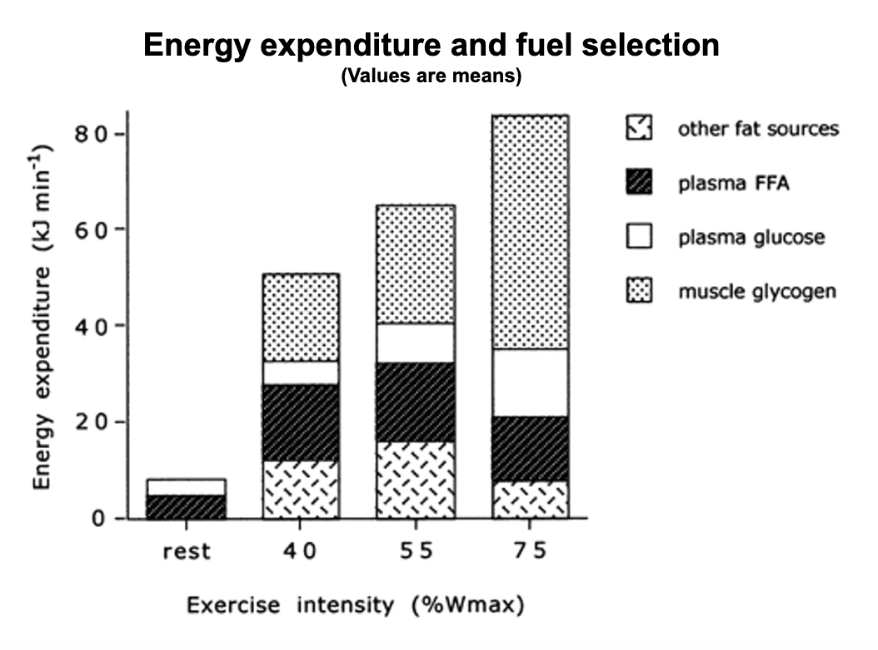
inverse relation btw
exercise intensity and duration of exercise
fuel availability ranking
1) PCr
2) carbs
3) fat
as intensity increases
- turnover increases
- carb fuel selection increases (fats used less)
PCr (phosphocreatine)
- high-energy compound that rapidly replenishes ATP during short bursts of activity.
ATP is replenished at site of contraction by
substrate phosphrylation of ADP by PCr
PCr + ADP =
ATP + Cr
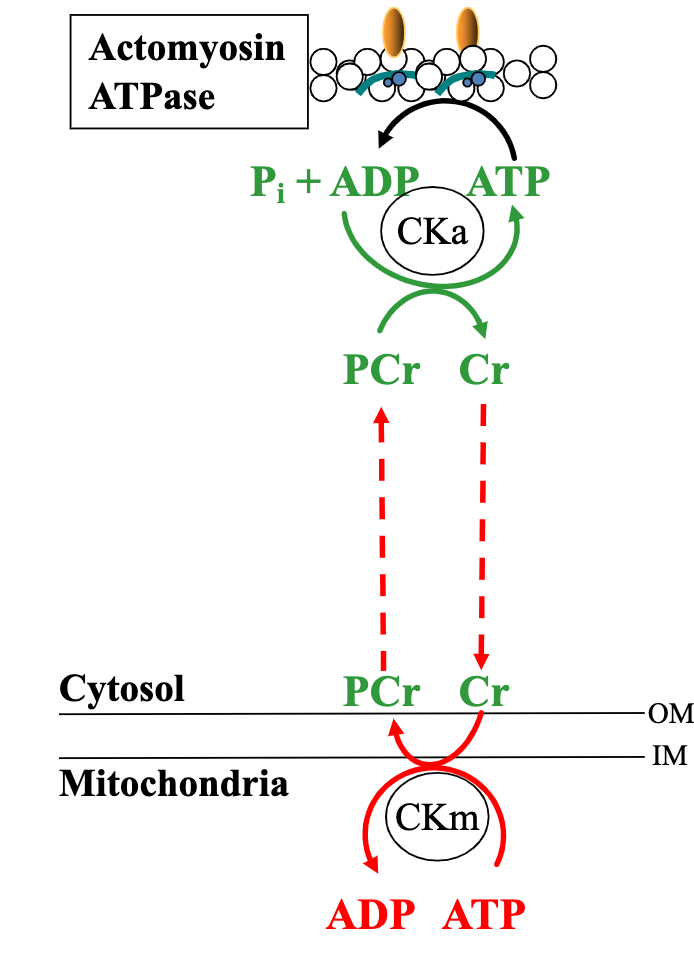
what catalyzed phosphate transfer
creatine kinase (CK)
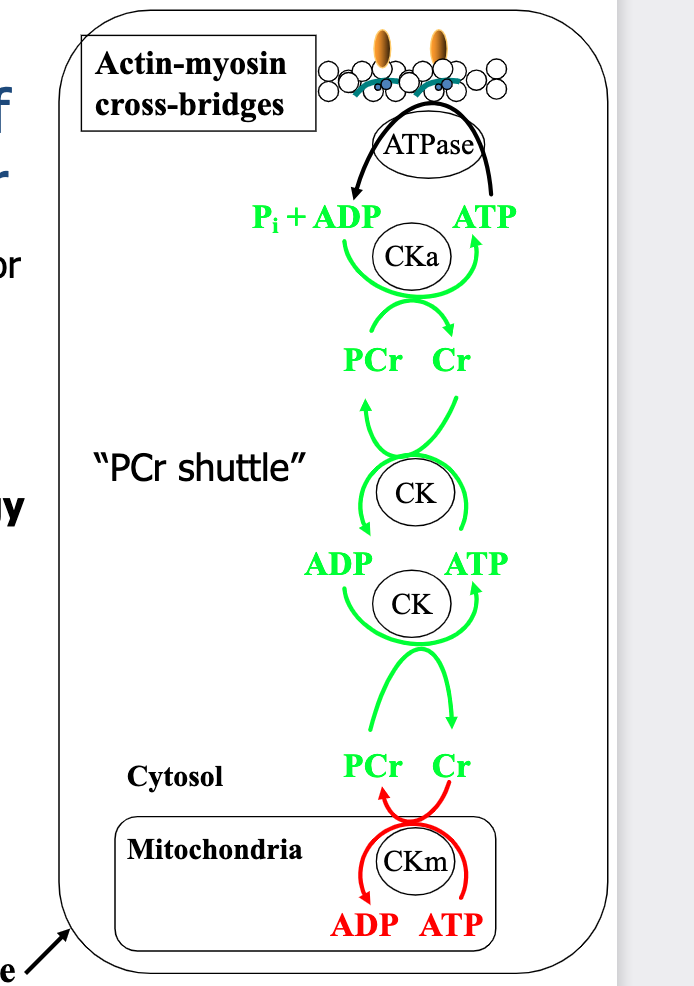
PCr shuttle
shuttles energy from site where ATP is made (mitochondria) to where it is required in cell (bc no efficent method for ATP to diffuse rapidly)
clusters of CK scattered througout cell to ensure PCr transfer
Phosphagen system
A metabolic pathway that uses PCr to quickly regenerate ATP during high-intensity exercise.
Creatine Kinase (CK)
An enzyme that catalyzes the transfer of a phosphate group from PCr to ADP to form ATP.
Ergogenic aids
Substances ingested to enhance physical performance and exercise capacity.(ergo-work)
ATP stores last
1-2 sec during maximal exercise
PCr stores offer energy for another
10 secs
Creatine supplementation
The practice of ingesting creatine to increase muscle creatine and PCr stores.
endogenous creatine
amino acid derivatives synthesized in body (glycine, arginine, methionine)
exogenous creatine
dietary intake (1-2 g/day)
storage of creatine in body
- skeletal muscle (95% - 60% stores as PCr)
- 5% in brain, liver, kidney, testes
role of PCr during exercise
- impt during high intesnity exercise + first few secs of exercise
- gives 50-70% energy in first 2-10 secs
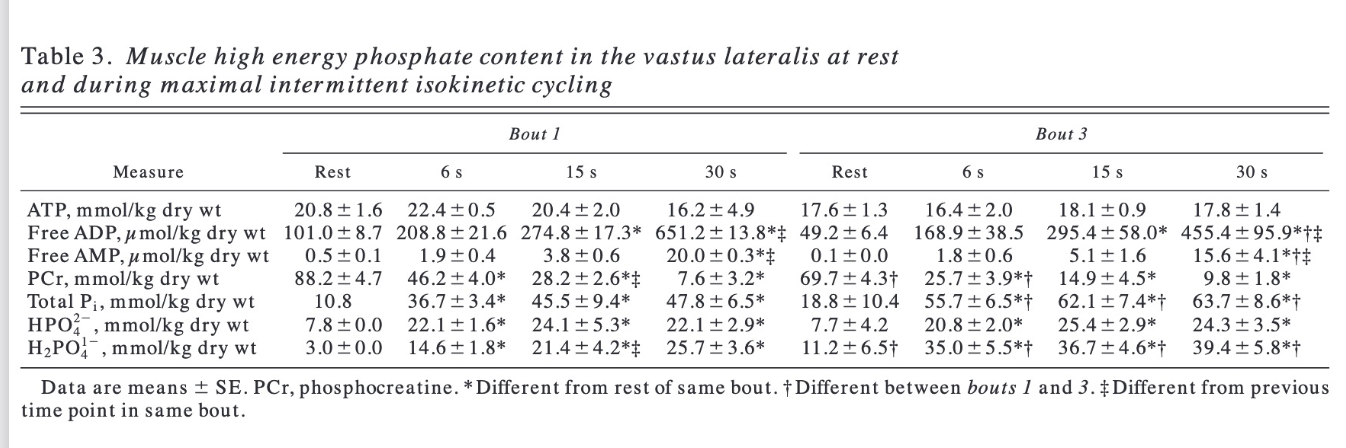
key takeaways
- atp preserved bc of creatine
- during rest pcr stores replenished
- atp pretty consistent btw bouts
loading phase
3g/day for 28 days
Loading phase
A period of increased creatine intake to boost muscle creatine levels.
a) loading phase
b) loading + maintenance
loading + maintenance
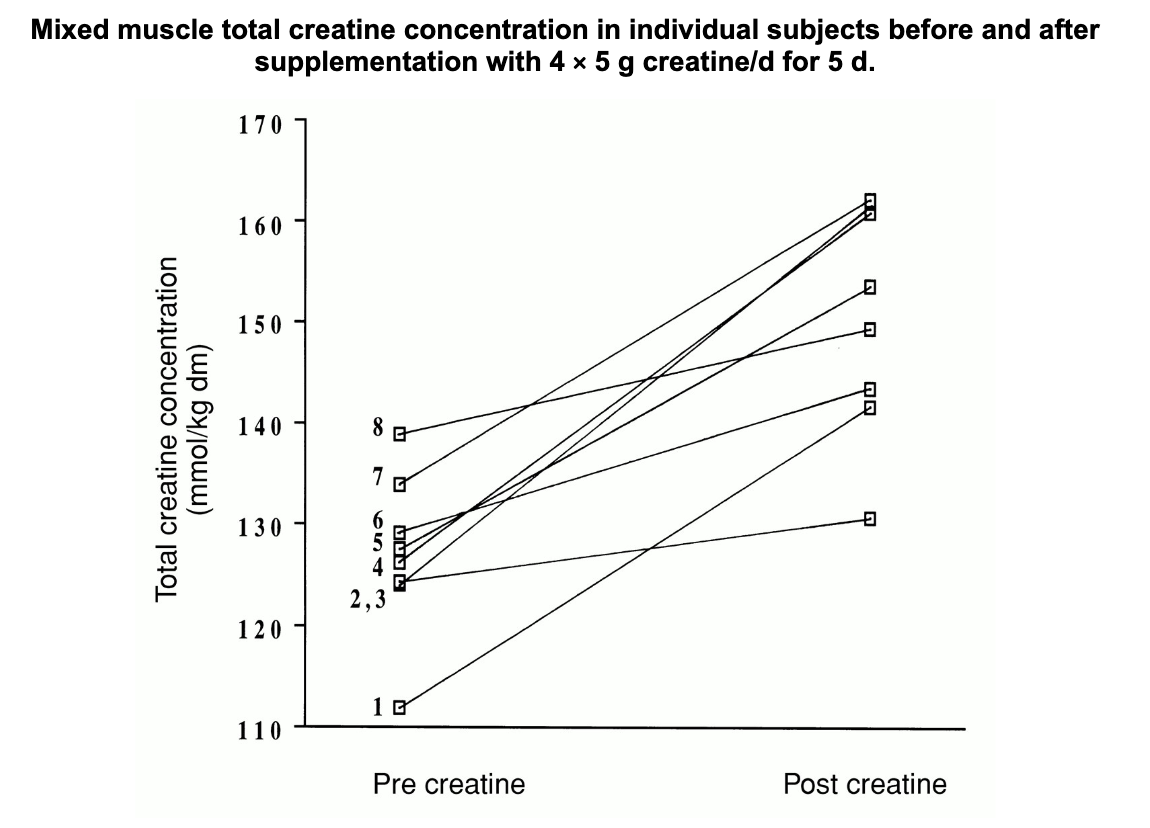
- loading: 20g/day for 5 days
- mainthenance: 2g/day
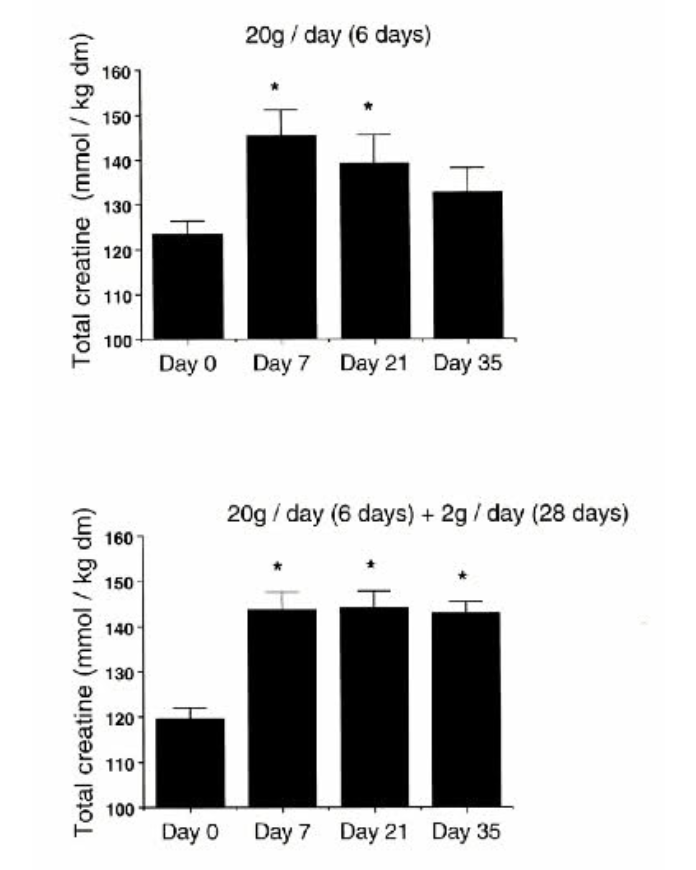
creatine study results
top: loading phase only, creatine levels dropped
bottom: loading + maintenance, creatine levels maintained
mechanism of creatine loading
– Increases short-term power output by increasing PCr/Cr
energy stores
- increase intensity of contraction
– Enhances resynthesis of PCr during recovery - lowers fatigue
- increase volume of training
– Reduces reliance on glycolysis (less lactate production)
– May delay breakdown of muscle glycogen
– Consumes H +, and thus reduces lactic acidosis
concerns with studies
- Results are variable and often conflicting due to
– different experimental exercise protocols
– inter-individual variations in response to supplementation
- Most beneficial for sports involving
– short bouts of high intensity activity
– repetitive bouts of high intensity activity (sprinting/cycling,
weight lifting)
Side effects of creatine
Potential adverse effects including gastrointestinal upset, muscle cramps, and renal dysfunction.
no short term studies have demonstrated these side effects