T5 - IE5 - Pulmonology - Elshahawi - Medicinal Chemistry of Asthma and COPD
 Call Kai
 Learn
Learn Practice Test
 Spaced Repetition
 Match
Match Flashcards
 Knowt Play
1/114

There's no tags or description
Looks like no tags are added yet.
Name | Mastery | Learn | Test | Matching | Spaced | Call with Kai |
|---|
No analytics yet
Send a link to your students to track their progress
115 Terms
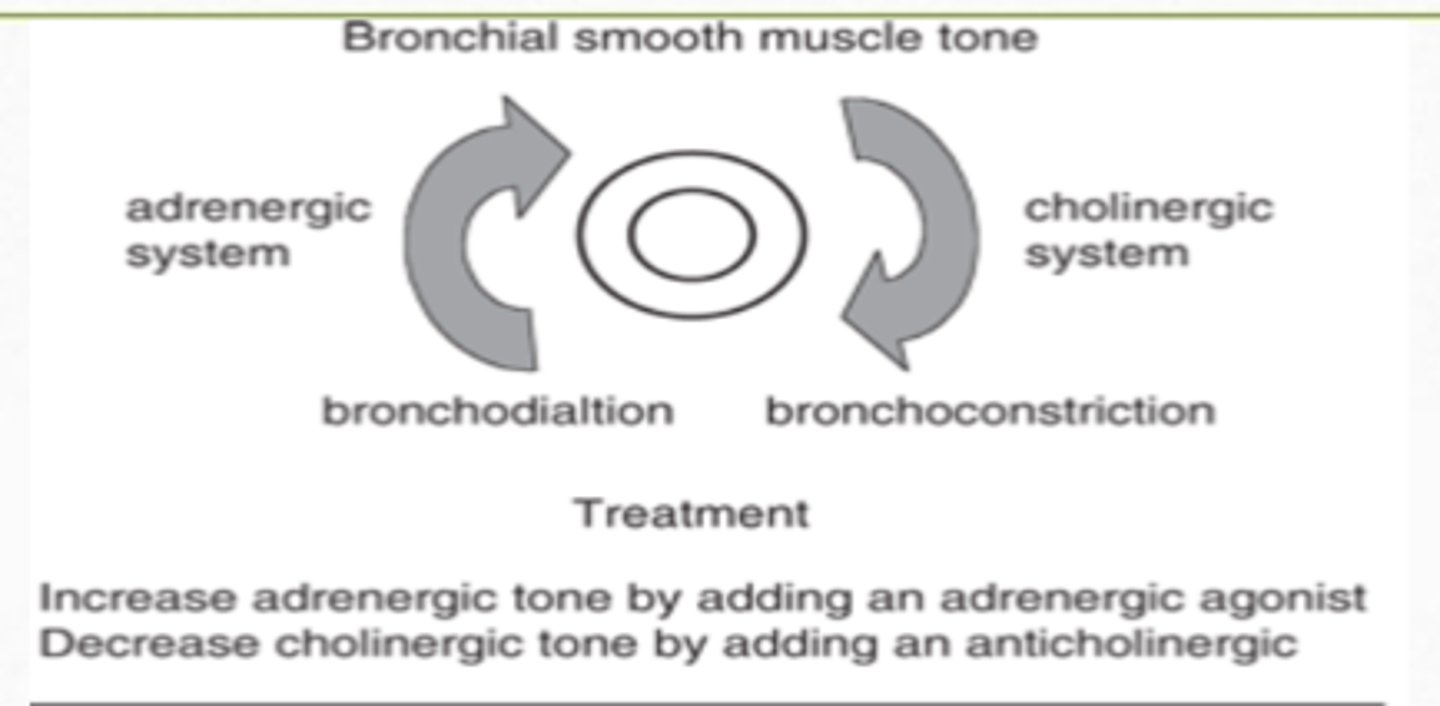
Adrenergic system causes _______________
- (causes) bronchodilation
Cholinergic system causes ________________
- (causes) bronchoconstriction
Increase adrenergic tone by adding an ____________ ________
- (adding an) adrenergic agonist
Decrease cholinergic tone (and thus ____________ bronchoconstriction) by adding an _____________ / ____________
- inhibiting (bronchoconstriction)
-(by adding an) antimuscarinic / anticholinergic
Bronchial smooth muscle tone action figure
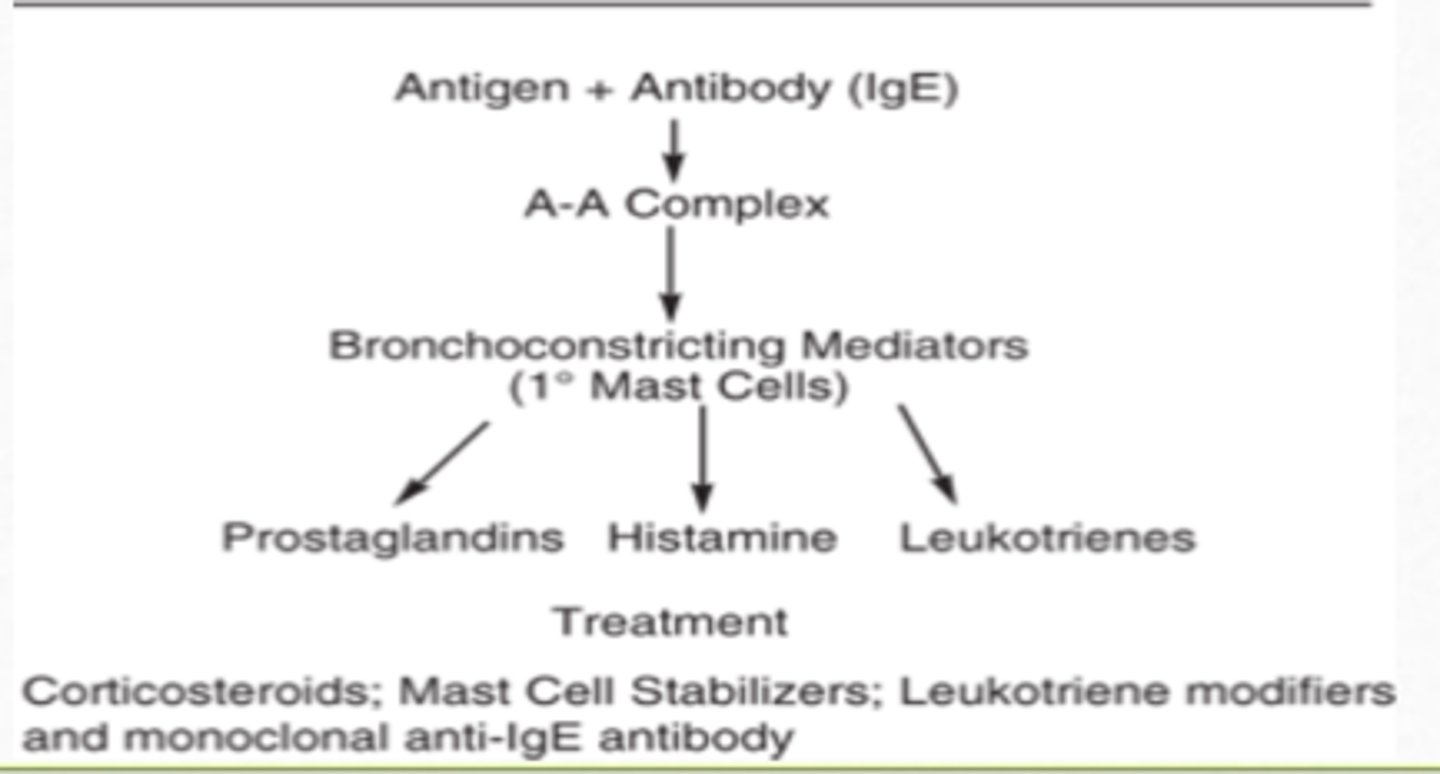
Inflammatory pathway figure
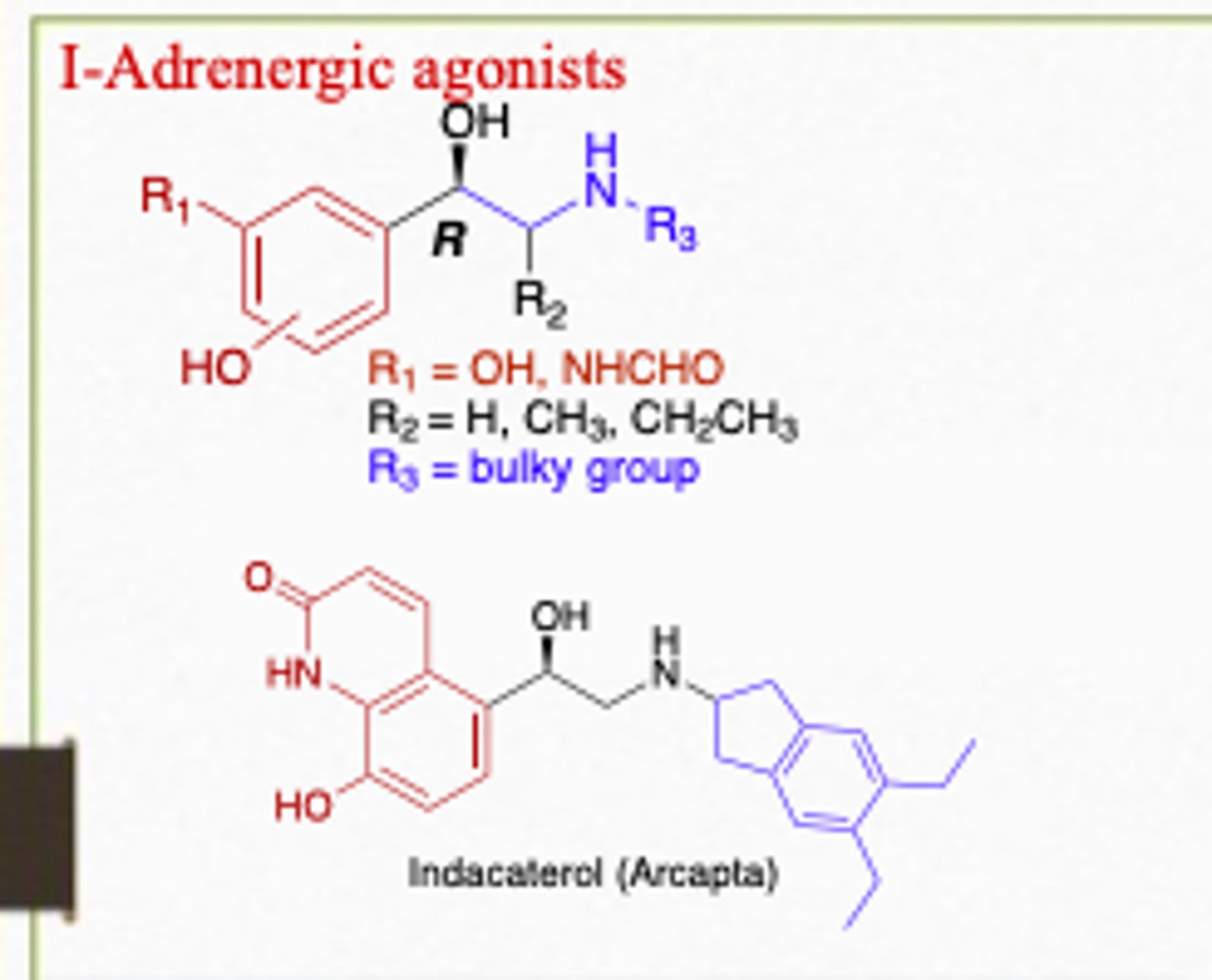
Adrenergic agonist medicinal chemistry figure
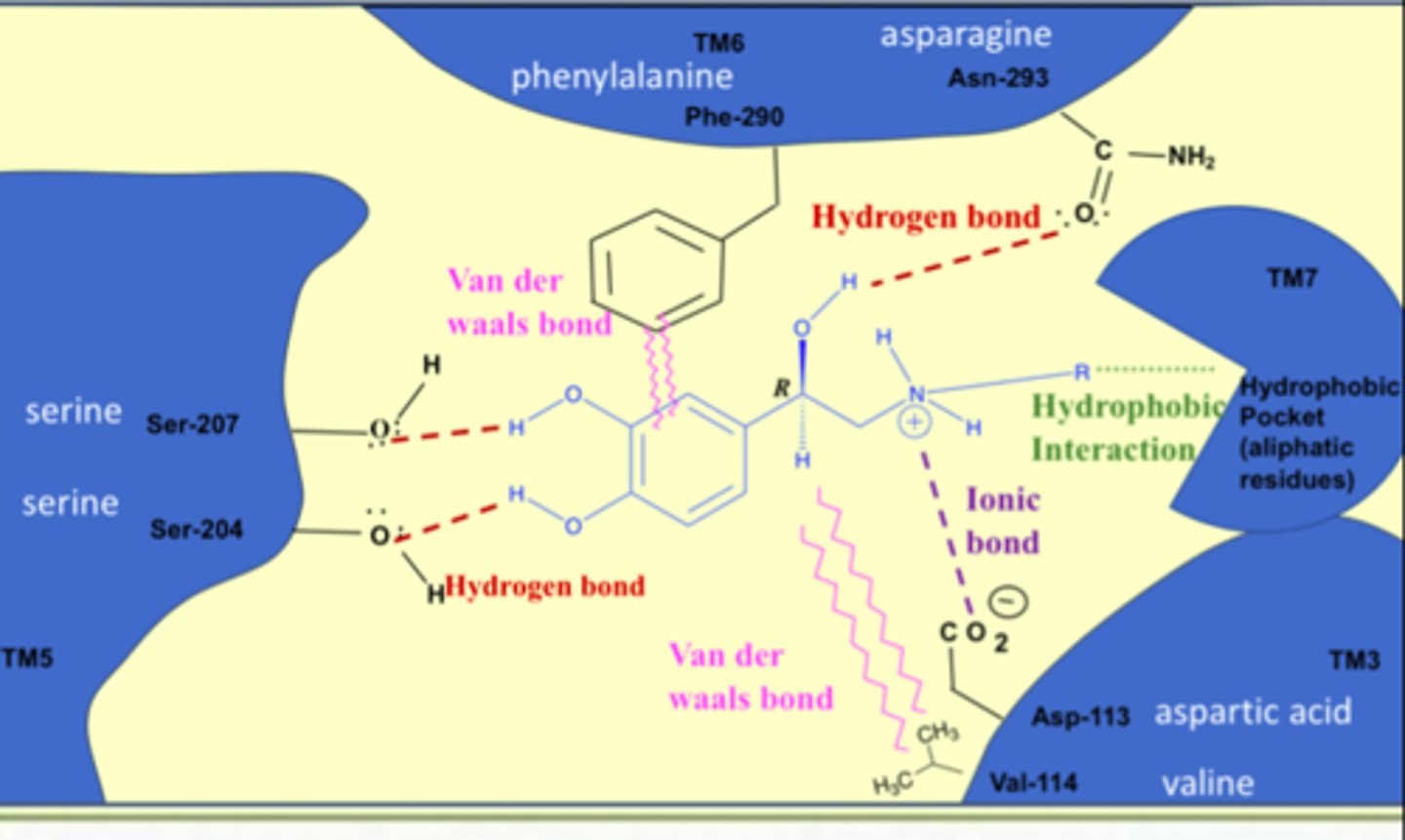
Adrenergic receptor binding site for asthma and COPD figure
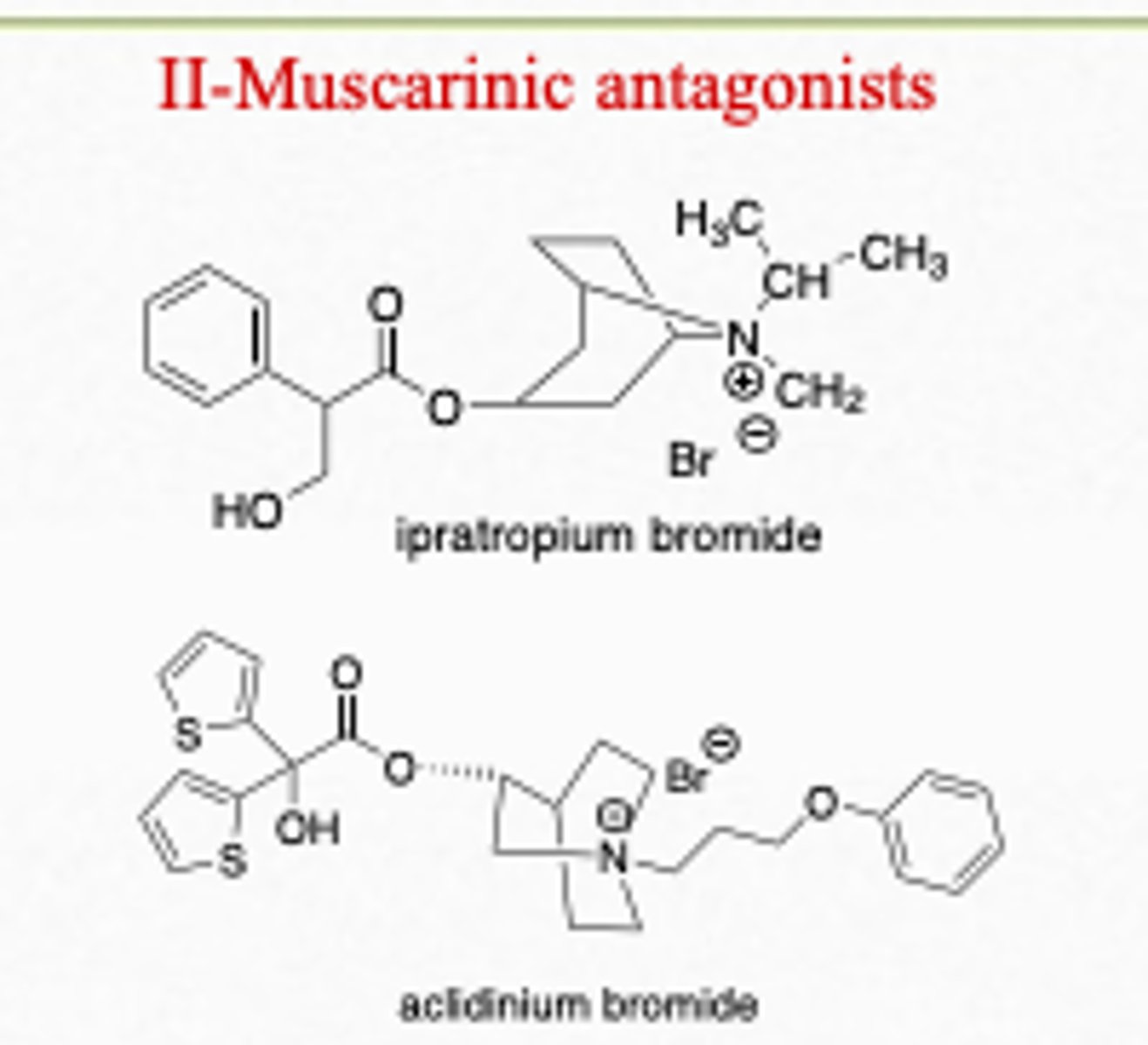
Muscarinic antagonist medicinal chemistry figure
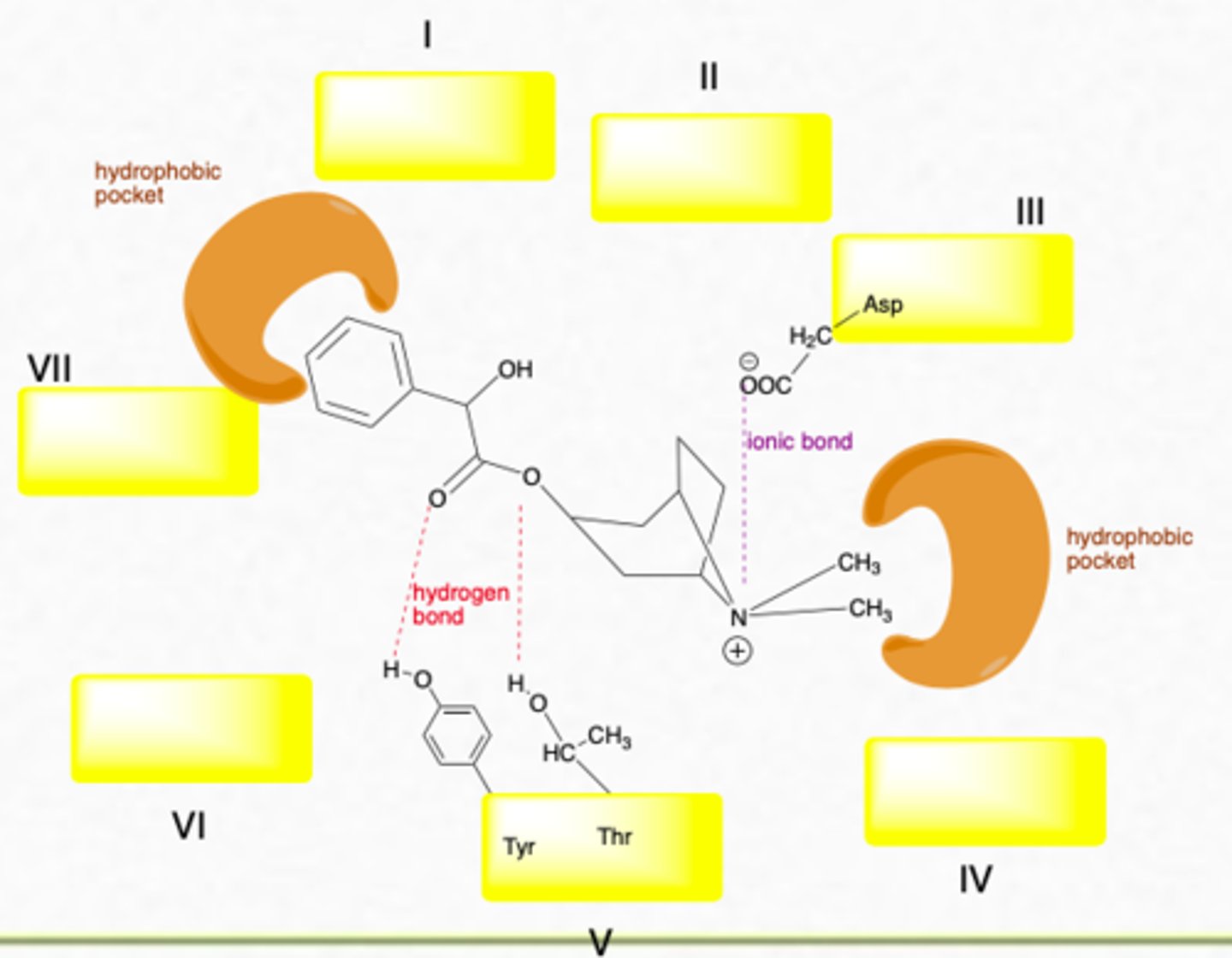
Cholinergic receptor binding site for asthma and COPD figure
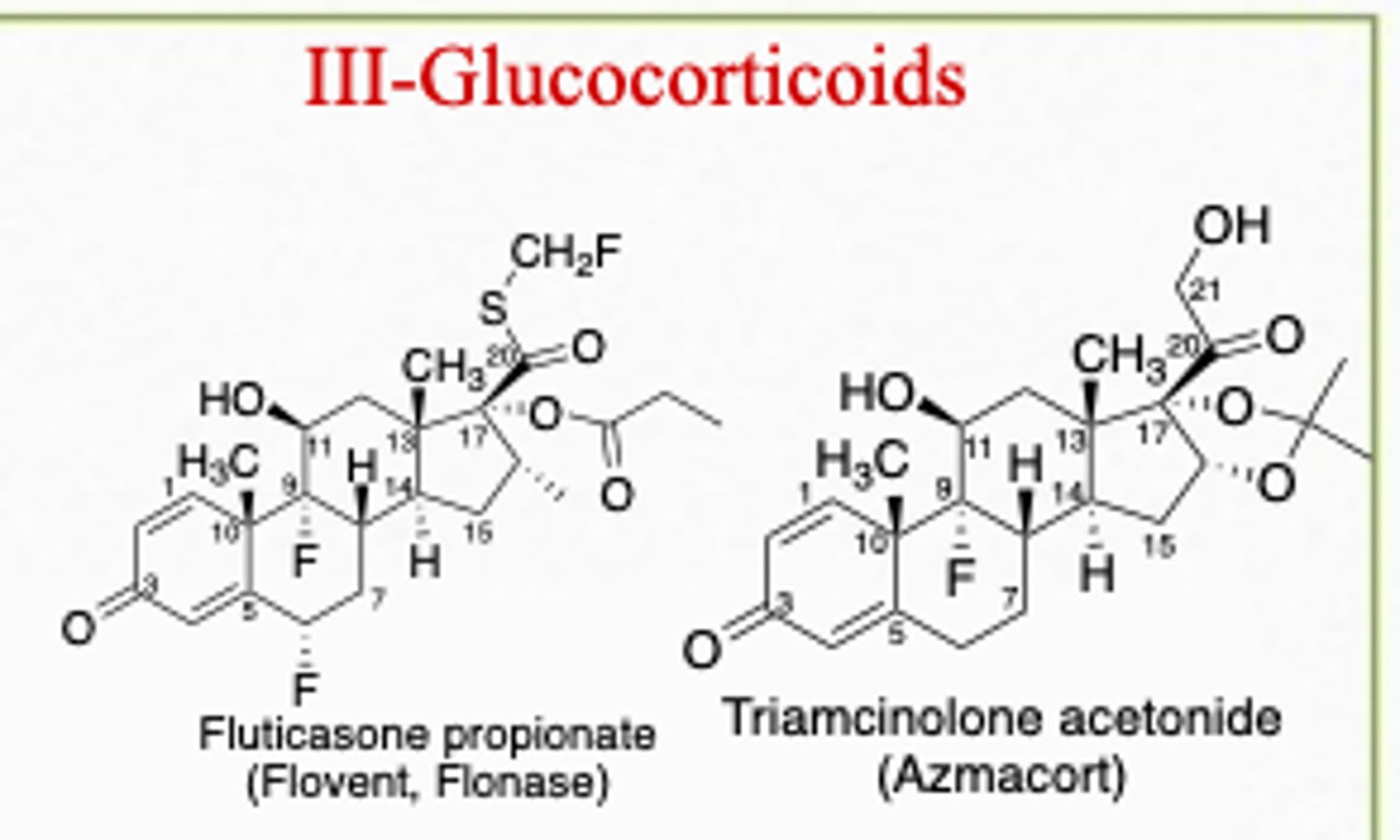
Glucocorticoids medicinal chemistry figure
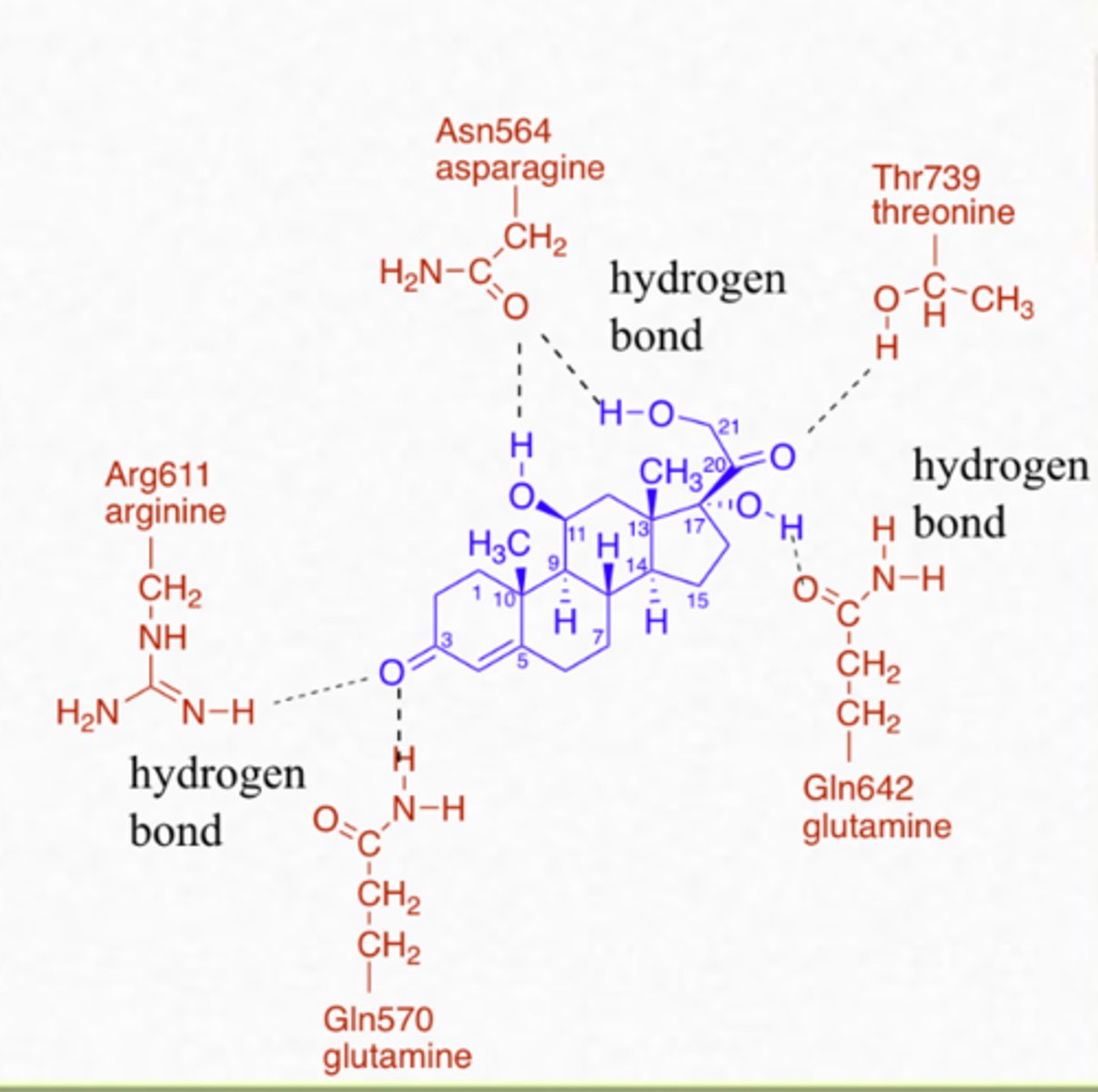
Glucocorticoid receptor binding site for asthma and COPD figure
Phosphodiesterase inhibitors: a phosphodiesterase inhibitor is a drug that blocks _____ or more of the _____ subtypes of the enzyme _____________ (_____)
- one
- five (subtypes)
- (enzyme) phosphodiesterase (PDE)
Phosphodiesterase inhibitors: __________ the inactivation of the intracellular __________ __________ cyclic adenosine monophosphate (cAMP) and cyclic guanosine monophosphate (cGMP) by the respective PDE subtype(s)
- prevents (the inactivation)
- second messengers
Phosphodiesterase inhibitors: prevents the inactivation of the intracellular second messengers _________ _____________ ____________ (_______) and _______ ____________ __________ (______) by the respective PDE subtype(s)
- cyclic adenosine monophoshate (cAMP)
- cyclic guanosine monophosphate (cGMP)
Phosphodiesterase inhibitors pathway figure
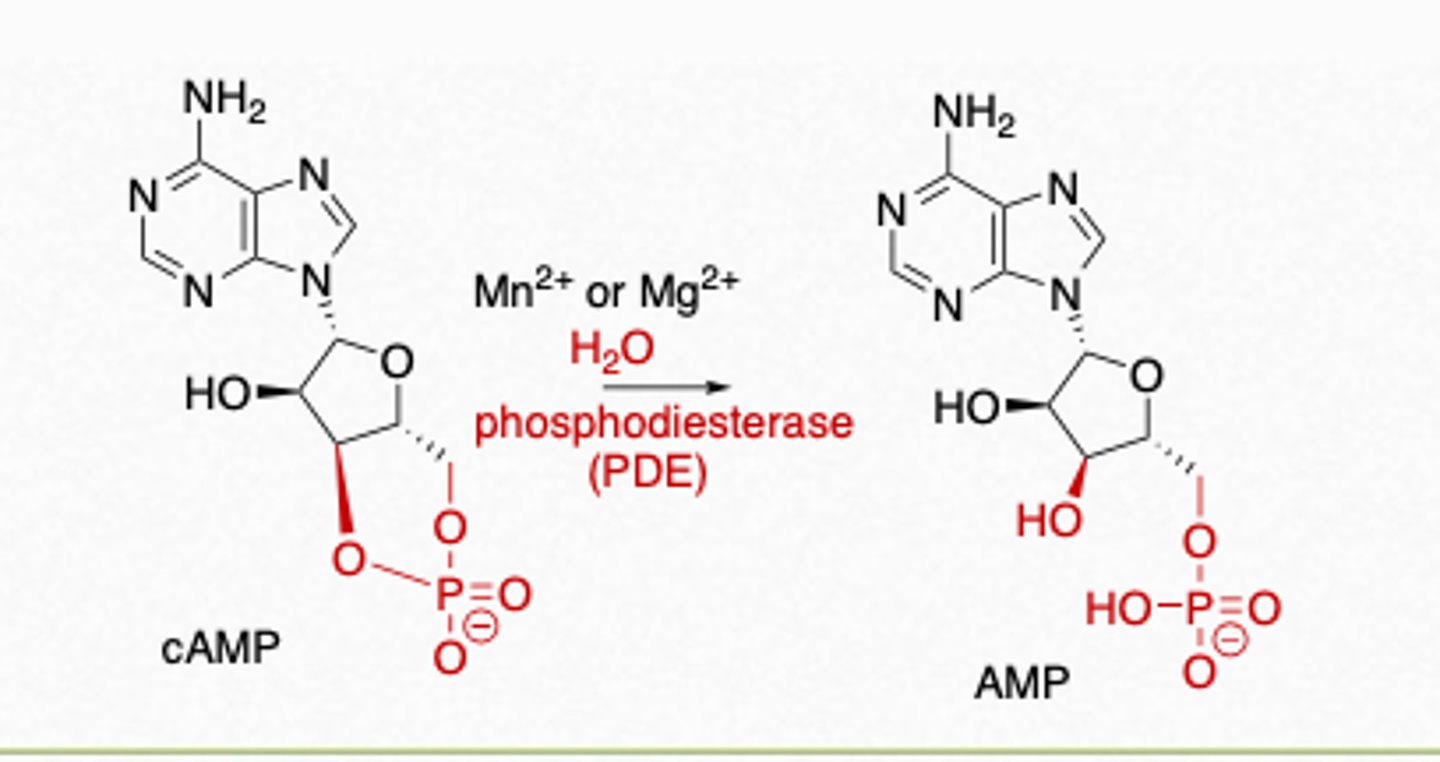
Phosphodiesterase inhibitors MOA
prolongs the action of cAMP and cGMP by inhibiting PDE, which prevents the breakdown, leading to relaxation of bronchiole smooth muscles and inhibition of release of inflammatory chemicals (anti-inflammatory role)
Phosphodiesterase inhibitors MOA: _____________ the action of cAMP and cGMP by inhibiting PDE, which prevents the ___________, leading to relaxation of bronchiole smooth muscles and inhibition of release of inflammatory chemicals (anti-inflammatory role)
- prolongs (the action)
- (prevents the) breakdown
Phosphodiesterase inhibitors MOA: prolongs the action of cAMP and cGMP by inhibiting PDE, which prevents the breakdown, leading to _____________ of bronchiole smooth muscles and inhibition of release of ____________ _________ (anti-inflammatory role)
- relaxation (of bronchiole smooth muscles)
- inflammatory cytokines [anti-inflammatory role]
Phosphodiesterase inhibitors: ______ is the major cAMP-metabolizing enzyme found in _____________ and immune cells
- PDE4 (is the major cAMP-metabolizing enzyme)
- inflammatory (and immune cells)
Phosphodiesterase inhibitors: _______________ is a PDE4 inhibitor, used for the treatment of COPD
- roflumilast (is a PDE4 inhibitor)
Phosphodiesterase inhibitors: ______ _________ are used in pulmonary hypertension
- PDE5 inhibitors
Phosphodiesterase inhibitors: roflumilast is a PDE4 inhibitor used in the treatment of _________
- (used in the treatment of) COPD
Phosphodiesterase inhibitors: PDE5 inhibitors are used in ___________ _____________
- (used in) pulmonary hypertension
Methylxanthine structure
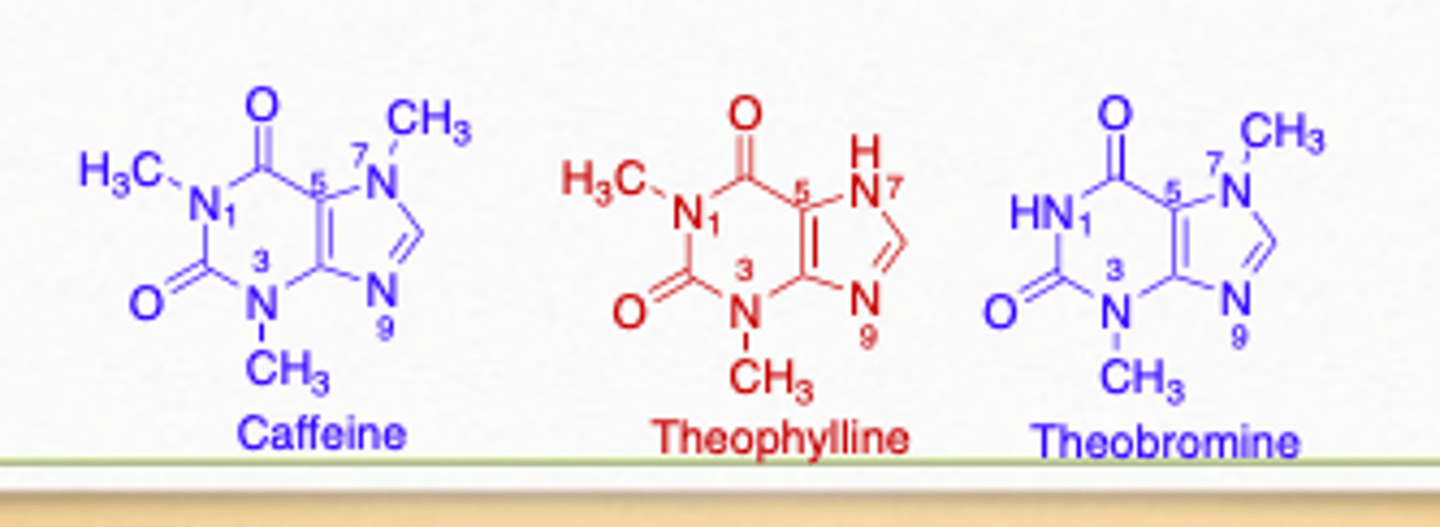
Methylxanthines naturally occur in ______, ________, and _____
- coffee
- cacao
- tea
Major methylxanthines are caffeine, theophylline, and theobromine
Differ by position and number of methyl-groups on their xanthine ring system
Methylxanthines: differ by _____________ and __________ of methyl-groups on their xanthine ring system
- position
- number (of methyl-groups)
Methylxanthines: such as theophylline is used for its ______________ effects in the treatment of asthma
Methylxanthines are ______________ _____________ phosphodiesterase inhibitors, which raise ___________ ______, activate PKA, inhibit leukotriene synthesis and reduce inflammation
- bronchodilating (effects)
- competitive nonselective (phosphodiesterase inhibitors)
- (raise) intracellular cAMP
Methylxanthines: such as theophylline is used for its bronchodilating effects in the treatment of _________
Methylxanthines are competitive nonselective ____________ _________, which raise intracellular cAMP, activate PKA, inhibit leukotriene synthesis and reduce inflammation
- (treatment of) asthma
- (competitive nonselective) phosphodiesterase inhibitors
Methylxanthines: such as theophylline is used for its bronchodilating effects in the treatment of asthma
Methylxanthines are competitive nonselective phosphodiesterase inhibitors, which raise intracellular cAMP, activate _____, inhibit __________ ________ and reduce __________
- (activate) PKA
- (inhibit) leukotriene synthesis
- (reduce) inflammation
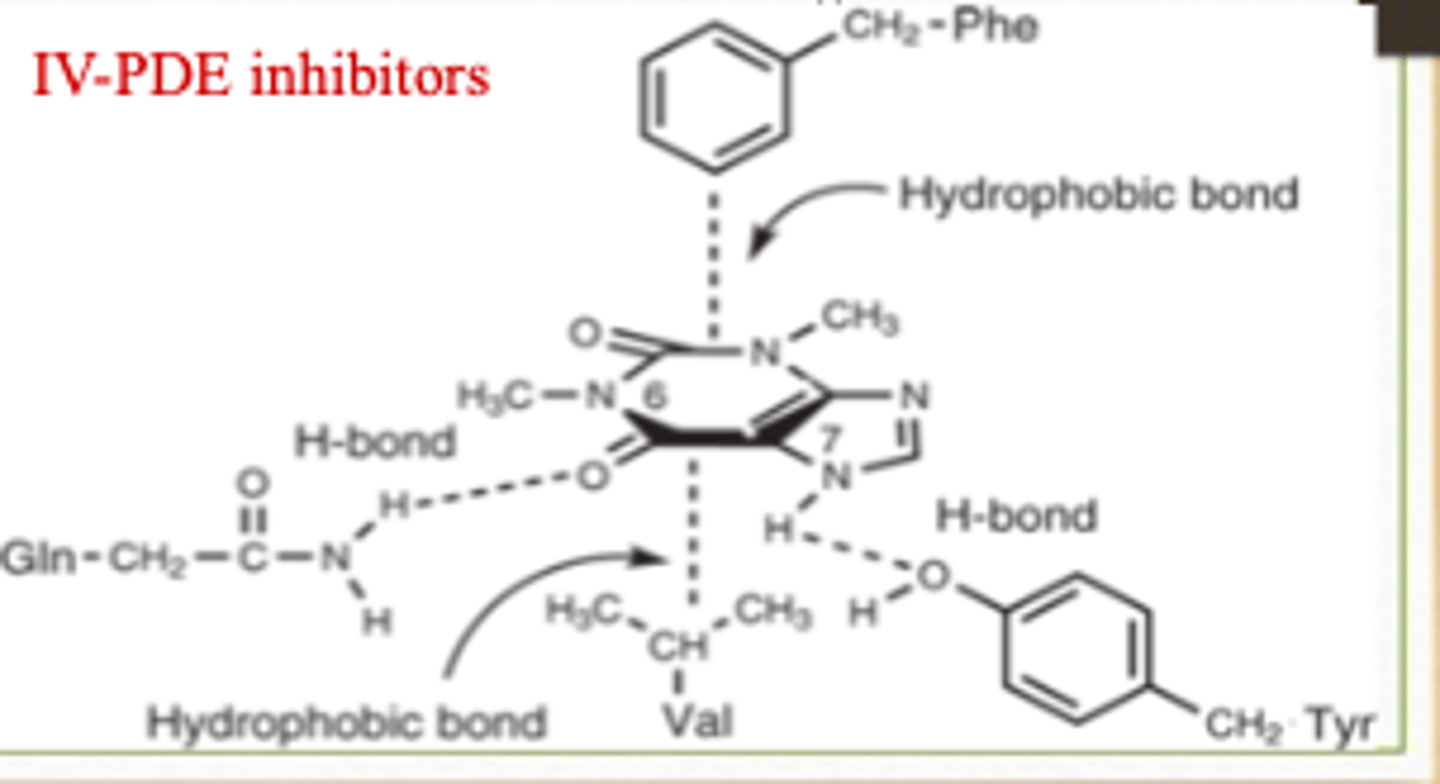
Binding interactions in the catalytic pocket of PDE:
Theophylline (xanthine, pyrazolopyridininone ring) is sandwiched between _____________ (____) and ________ (_____) via hydrophobic bond
- phenylalanine (PHE)
- valine (VAL)
Binding interactions in the catalytic pocket of PDE:
Theophylline ( _______, _____________ ring) is sandwiched between phenylalanine (PHE) and valine (VAL) via ____________ bond
- xanthine
- pyrazolopyridininone (ring)
- hydrophobic (bond)
Binding interactions in the catalytic pocket of PDE: interaction of methylxanthine (e.g., theophylline) is enforced by hydrogen bonding between ____________ (_____) and ___-___ and glutamine and O-6
- tyrosine (TYR)
- N-7
Binding interactions in the catalytic pocket of PDE: interaction of methylxanthine (e.g., theophylline) is enforced by hydrogen bonding between tyrosine (TYR) and N-7 and ___________ and ___-____
- glutamine
- O-6
Binding interactions in the catalytic pocket of PDE: binds to PDE and PDE5 in a _________ _______
- similar manner
Binding interactions in the catalytic pocket of PDE: PDE6 regulates the _____________ cascade where PDE6 rapidly reduces the steady-state concentration of cGMP in response to ________ stimuli
Thus, a side effect of PDE5 inhibitors involves ________ ______ in some patient populations. Thus, need more selectivity to PDE5
- phototransduction (cascade)
- light (stimuli)
- (involves) decreased vision
Theophylline
ELIXOPHYLLINE, BRONKODYL
Methylxanthine: __,___-__________ contains both an acidic and a basic nitrogen (N-7 and N-9, respectively)
Physiologically, it behaves as an ______
- 1,3-dimethylxanthine
- (behaves as an) acid
pKa = 8.6
Methylxanthine: 1,3-dimethylxanthine contains both an _________ and a _______ nitrogen (__-___ and ___-___, respectively)
Physiologically, it behaves as an acid
- acidic
- basic (nitrogen)
- N-7
- N-9
Methylxanthines: theophylline - poor aqueous solubility can be enhanced by _____ formation with _________ ________
- salt (formation)
- (with) organic bases
Methylxanthine: theophylline is metabolized by combination of ___-____ _________ and ____-________ to yield methyl uric acid metabolites
- C-8 oxidation
- N-demethylation
Aminophylline
EUPHYLLIN, PHYLLOCONTIN
Methylxanthines (aminophylline): aminophylline is __________ __________, which contains ____% theophylline and is available in tablets, liquid, parenteral and suppository dosage forms
- theophylline ethylenediamine
- 79(% theophylline)
Aminophylline contains...
79% of theophylline
i.e., 79 mg of theophylline (anhydrous) is equivalent to 100 mg aminophylline
Methylxanthines (aminophylline): care must be taken to correctly calculate the ___________ dose when switching a patient from theophylline to one of its salts
____ mg of theophylline (anhydrous) is equivalent to 100 mg of aminophylline dihydrate
- equivalent (dose)
- 79 (mg of theophylline)
Phosphodiesterase (PDE) inhibitors - roflumilast (DALIRESP): the ___________ oxygens form hydrogen bond to a ___________ deep inside the binding pocket
- diakylphenyl (oxygens)
- glutamine (deep inside the binding pocket)
Phosphodiesterase (PDE) inhibitors - roflumilast (DALIRESP): the ____________ group and the _________ group contribute to hydrophobic bonds
- difluoromethoxy (group)
- cyclopropyl (group)
Phosphodiesterase (PDE) inhibitors - roflumilast (DALIRESP): is metabolized in the ______ to its ___-_______ derivative, which is also a PE4 inhibitor, and it has a plasma half-life of 20 hours
- liver
- N-oxide (derivative)
Phosphodiesterase (PDE) inhibitors - roflumilast (DALIRESP): N-oxide derivative, is also a ______ ________ and has a plasma half-life of ____ hours
- PDE4 inhibitor
- 20 (hours)
Drugs used to treat pulmonary hypertension
Thiazide diuretics
Loop diuretics, vasodilators
Calcium channel blockers
Prostaglandins
Endothelin receptor antagonists
PDE5 - erection is initiated by sexual stimulation, which causes the release of _________ _______ (_____) from nerves and cells
____ diffuses into cells, were it activates the enzyme guanylyl cyclase, which synthesizes cGMP, an intracellular second-messenger molecule.
This cGMP is degraded by PDE5. Inhibition of PDE5 causes accumulation of _______ and ________
- nitric oxide (NO)
- NO (diffuses into cells)
- cGMP and erection
PDE5 - erection is initiated by sexual stimulation, which causes the release of nitric oxide (NO) from nerves and cells.
NO diffuses into cells, where it activates the enzyme _________ ______, which synthesizes ______, an intracellular second-messenger molecule.
This _______ is degraded by PDE5. Inhibition of PDE5 causes accumulation of ______ and _________
- (enzyme) guanylyl cyclase
- (synthesizes) cGMP
- cGMP (is degraded)
- cGMP
- erection
PDE5 - erection is initiated by sexual stimulation, which causes the release of nitric oxide (NO) from nerves and cells.
NO diffuses into cells, were it activates the enzyme guanylyl cyclase, which synthesizes cGMP, an intracellular second-messenger molecule.
This cGMP is degraded by _____.
Inhibition of _____ causes accumulation of cGMP and erections
- PDE5
- (Inhibition of) PDE5
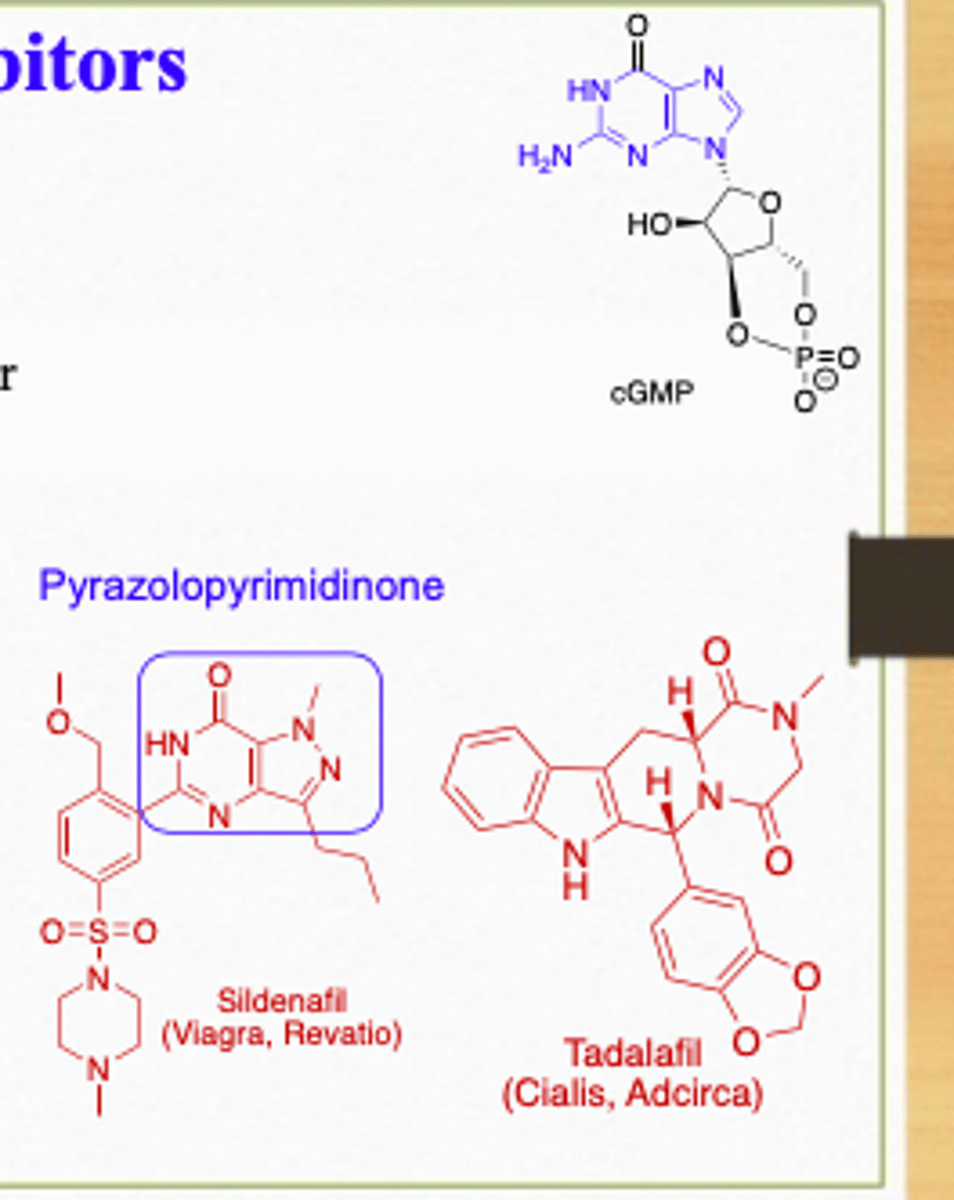
PDE5 selective inhibitors: _________ and ________, selectively inhibit PDE5, which is cGMP-specific and responsible for the degradation of cGMP
- sildenafil
- tadalafil
PDE5 selective inhibitors: sildenafil and tadalafil __________ inhibit PDE5, which is ________-_______ and responsible for the degradation of cGMP
- selectively (inhibit)
- cGMP-specific
PDE5 selective inhibitors: are used primarily as remedies for __________ _________, as well as having some other medical applications such as the treatment of __________
- erectile dysfunction
- (treatment of) PAH
PDE5 selective inhibitors: sildenafil (REVATIO) was approved for treatment of ______ through its inhibition of camp and _________ ______ _______ of the pulmonary vasculature
- PAH
- smooth muscle relaxation (of the pulmonary vasculature)
PDE5 selective inhibitor structure
kind of similar to purine ring, allows to fit
Summary: PDE4 inhibitors have proven potential as ______-__________ drugs in asthma and COPD
- anti-inflammatory (drugs in asthma and COPD)
Summary: the binding pocket of PDE4 involves ________ and ________ bonding with ligands
- hydrophobic
- hydrogen (bonding with ligands)
Summary: methylxanthines are ____________ ______ ____________
- nonselective PDE4 inhibitors
Summary: switching between theophylline and aminophylline requires _______ ___________
- (requires) dose adjustments
Summary: PDE4 inhibitors for treatment of COPD include _____________
- (include) roflumilast
PDE inhibitor binding site medicinal chemistry
Prostanoids are ___________ /__________
- eicosane / icosane
Eicosanoids - Prostanoids: __________-_______ lipid signaling molecules produced from the oxidation of natural _______ (__________ family)
- biologically-active (lipid signaling molecules)
- lipid
- oxylipin (family)
Eicosanoids - Prostanoids: biologically-active _______ _______ __________ produced from the oxidation of natural lipid (oxylipin family)
- lipid signaling molecules
Prostanoids: act ______, mediated by ___________
- (act) locally
- (mediated by) GPCR
Prostanoids: are derived from ______________ ____ and _______
- arachidonic acid
- COX
Eicosanoids pathway figure
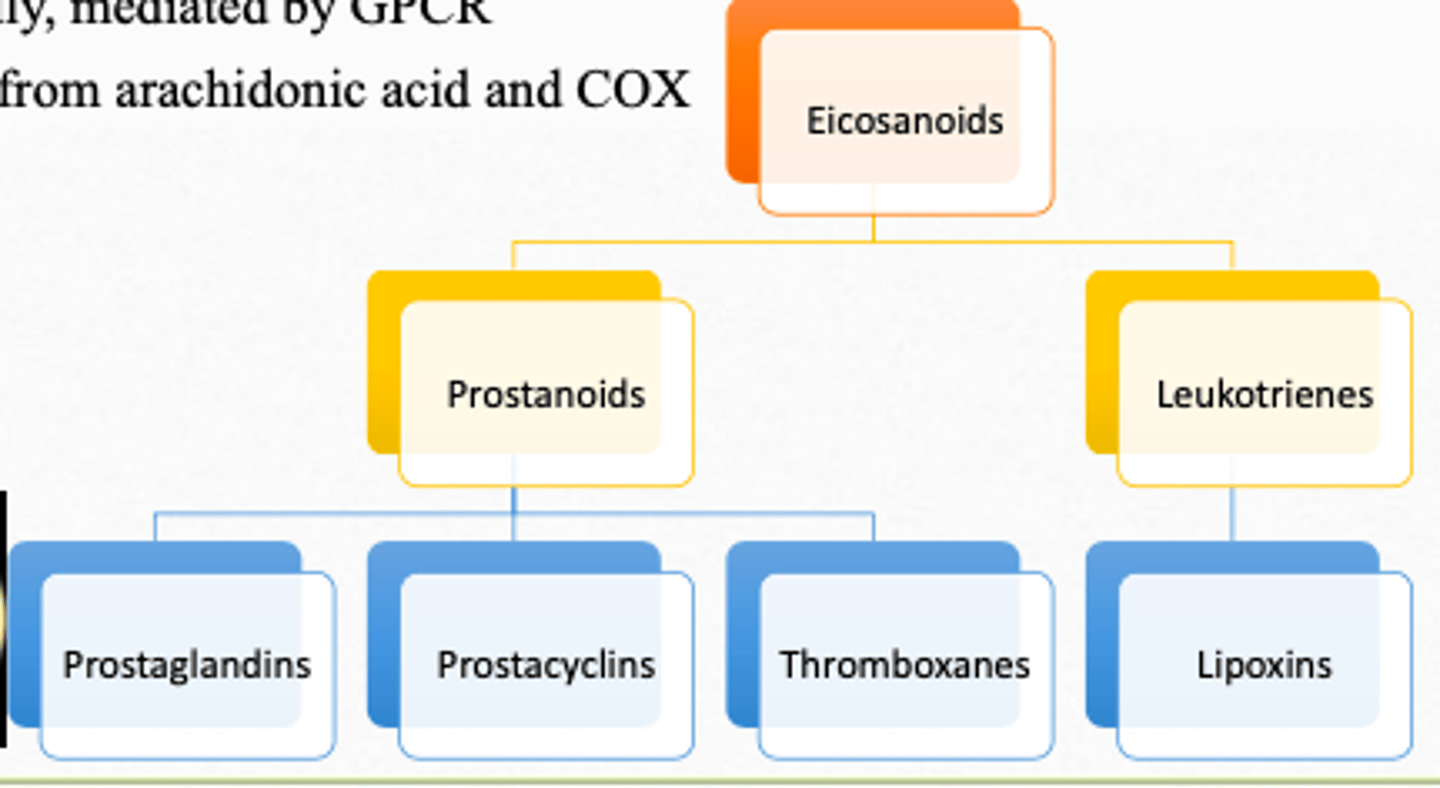
Prostanoids [natural] are also called _____________ or _________________ ____ (_____)
- prostacyclin
- prostaglandin I2 (PGI2)
Epoprostenol (FLOLAN / VELETRI) is _________ ____________
- natural prostanoid
Prostanoids [natural] drug product
Epoprostenol (FLOLAN / VELETRI)
epoprostenol
FLOLAN, VELETRI
Eicosanoids - Prostanoids [natural] - epoprostenol (FLOLAN / VELETRI): is a ________ analog biosynthesized enzymatically in humans from ____________ ____________
- biosynthesized (analog)
- prostaglandins endoperoxides
Eicosanoids - Prostanoids [natural] - epoprostenol (FLOLAN / VELETRI): it is used to treat PAH by causing ____________ and inhibits __________ _________
- (causing) vasodilation
- (inhibits) platelet activation
Eicosanoids - Prostanoids [natural] - epoprostenol (FLOLAN / VELETRI): binds to the __________ ________ (________) signaling adeylyl cyclase to produce cAMP, which activates ______ __________ ________ ________ _______ _______ (_______) leading to smooth muscle relaxation and vasodilation
- prostacyclin receptor (GPCR)
- PKA inhibiting myosin light chain kinase (MLCK)
Eicosanoids - Prostanoids [natural] - epoprostenol (FLOLAN / VELETRI): binds the prostacyclin receptor (GPCR) signaling ______ _______ to produce cAMP, which activates PKA inhibiting myosin light chain kinase leading to _______ ________ ________ and ___________
- adenylyl cyclase
- (leading to) smooth muscle relaxation
- vasodilation
Eicosanoids - Prostanoids [natural] - epoprostenol (FLOLAN / VELETRI): is __________ at physiological pH and temperature
- unstable (at physiological pH and temperature)
Eicosanoids - Prostanoids [natural] - epoprostenol (FLOLAN / VELETRI): T1/2 of _____ ________, metabolized through ___-_________ and also converted into two metabolites that are weak vasodilators: 6-keto-PGF1 (spontaneous degradation) and 6,15-diketo-13,14-dihydro-PGFi (enzymatically)
Both ave several orders of magnitude less activity
- 42 seconds
- (metabolized through) β-oxidation
Eicosanoids - Prostanoids [natural] - epoprostenol (FLOLAN / VELETRI): requires __________ _________ through a _____ _______ catheter
- continuous infusion
- central venous (catheter)
Due to the very small half-life of 42 seconds
Eicosanoids - synthetic prostanoids
treprostinil (TYVASO, REMODULIN, ORENITRAM)
iloprost (VENTAVIS)
treprostinil
TYVASO (inhaled)
REMODULIN (SC, IV)
ORENITRAM (oral)
iloprost
VENTAVIS
Eicosanoids - synthetic prostanoids: treprostinil and iloprost have ________ ________ than epoprostenol
- better stability (than eproprostenol)
Eicosanoids - synthetic prostanoids: treprostinil and iloprost are also subjected to ____-_________
- (subjected to) β-oxidation
Eicosanoids - synthetic prostanoids can be administered: ____, _____, __________ or even _______
- SC
- IV
- inhalation
- (even) oral
Iloprost is prone to oxidative metabolism if taken orally
Non-prostanoids prostacyclin agonist selexipag structure
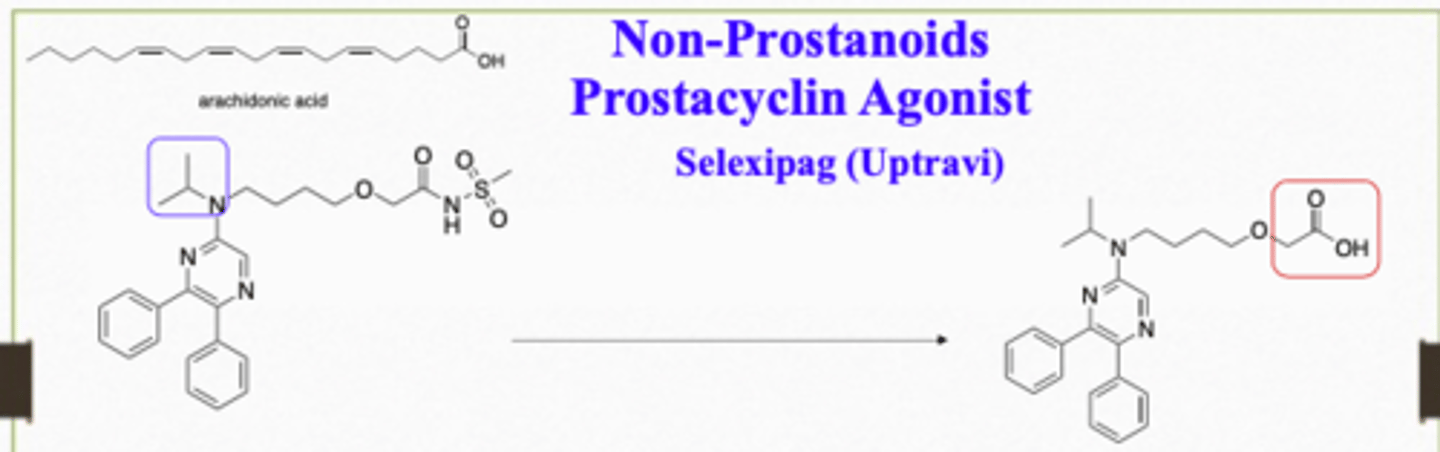
Non-prostanoids prostacyclin agonist: selexipag is an _______ _______ agent
- orally active (agent)
Tertiary amine is essential for activity
Non-prostanoids prostacyclin agonist: selexipag - ________ ______ is essential for activity
- tertiary amine (is essential)
Selexipag is also derived from ___________ ________
- (derived from) arachidonic acid
Non-prostanoids prostacyclin agonist: selexipag is also more stable because it is a ____-________ that needs to be _________ for full activity
- pro-drug
- metabolized (for full activity)
Endothelin Receptor Antagonists - Endothelin (ET) receptors are _________.
Activation leads to increase in _________ ________ __________ levels
- (are) GPCRs
- intracellular free calcium (levels)
Endothelin Receptor Antagonists - binding of ____________-___ (___ amino acid peptide) with ET receptors leads to vasoconstriction
- endothelin-1
- 21 (amino acid peptide)
Endothelin Receptor Antagonists - there are different ________
Binding of endothelin-1 (21 amino acid peptide) with ET receptors leads to ______________
- (different) subtypes
- (ET receptors leads to) vasoconstriction
Endothelin receptor antagonists: can be used in treatment of ________
- (treatment of) PAH
Bosentan (TRACLEER); Ambrisentan (LETAIRIS); Macitentan (OPSUMIT)
Endothelin receptor antagonists medicinal chemistry structures
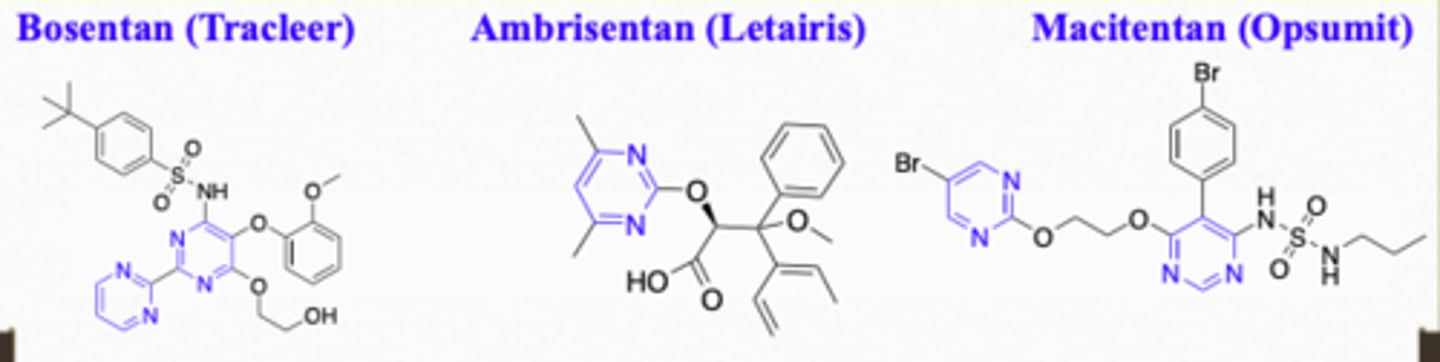
Endothelin receptor antagonists: inhibit the bidding of ET receptors with ____________-____
It is characterized by a __________ ring
- endothelin-1
- pyrimidine (ring)
Endothelin receptor antagonists: Bosentan (TRACLEER) inhibits _____-____ and ______-_____
- ET-A
- ET-B
similar to macitentan (OPSUMIT)
Endothelin receptor antagonists: ambrisentan (LETAIRIS) inhibits ______-_____
- (inhibits) ET-A