L1(3.4.4c Principles of evolution)
 Call Kai
 Learn
Learn Practice Test
 Spaced Repetition
 Match
Match Flashcards
 Knowt Play
1/6

There's no tags or description
Looks like no tags are added yet.
Name | Mastery | Learn | Test | Matching | Spaced | Call with Kai |
|---|
No analytics yet
Send a link to your students to track their progress
7 Terms
Answer image prep quiz?
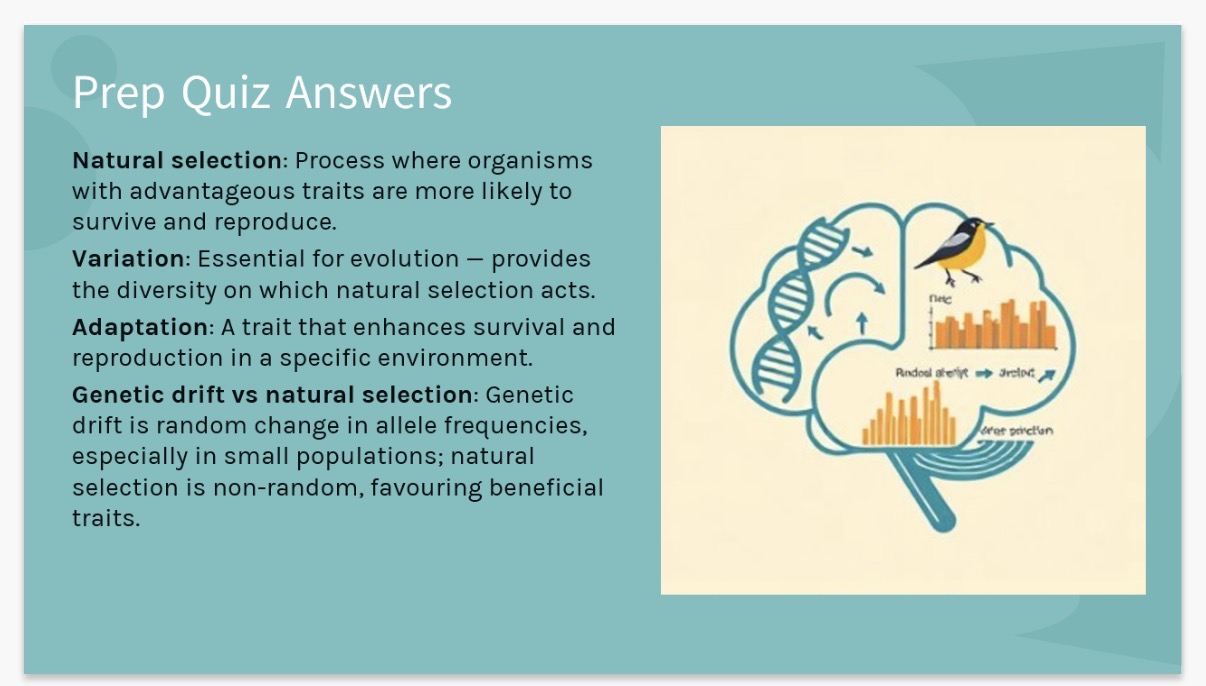
Define the keywords, (“Evolution”) (“Natural selection”). (“Variation”) (“Phenotype”)
Evolution:Organisms evolving over generations through inherited trait changes.
Natural Selection: Where Individuals with beneficial traits survive and pass genes to offspring.
Variation: Differences in species due to mutations, meiosis, and sexual reproduction.
Phenotype: The observable traits of an organism shaped by genes and environment.
What is Evolution?
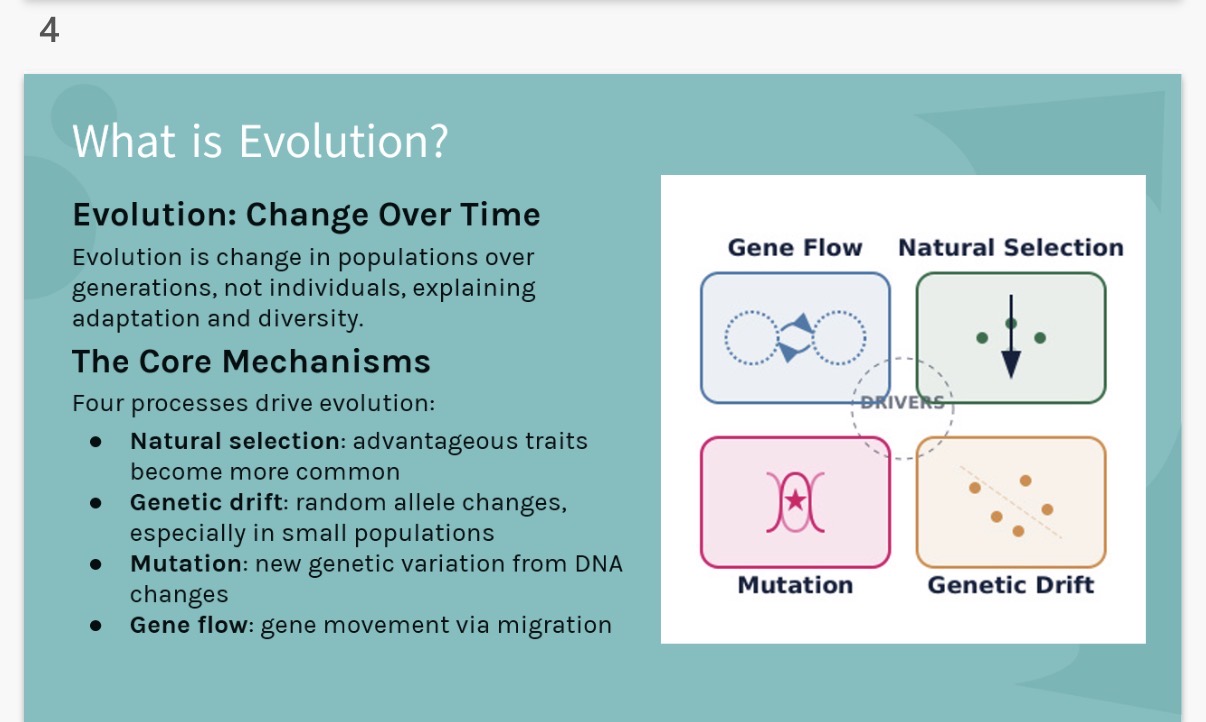
Evolution : Change Over Time Evolution is the change in …1? over generations, not individuals( which explains adaptation and diversity)
The Core Mechanisms
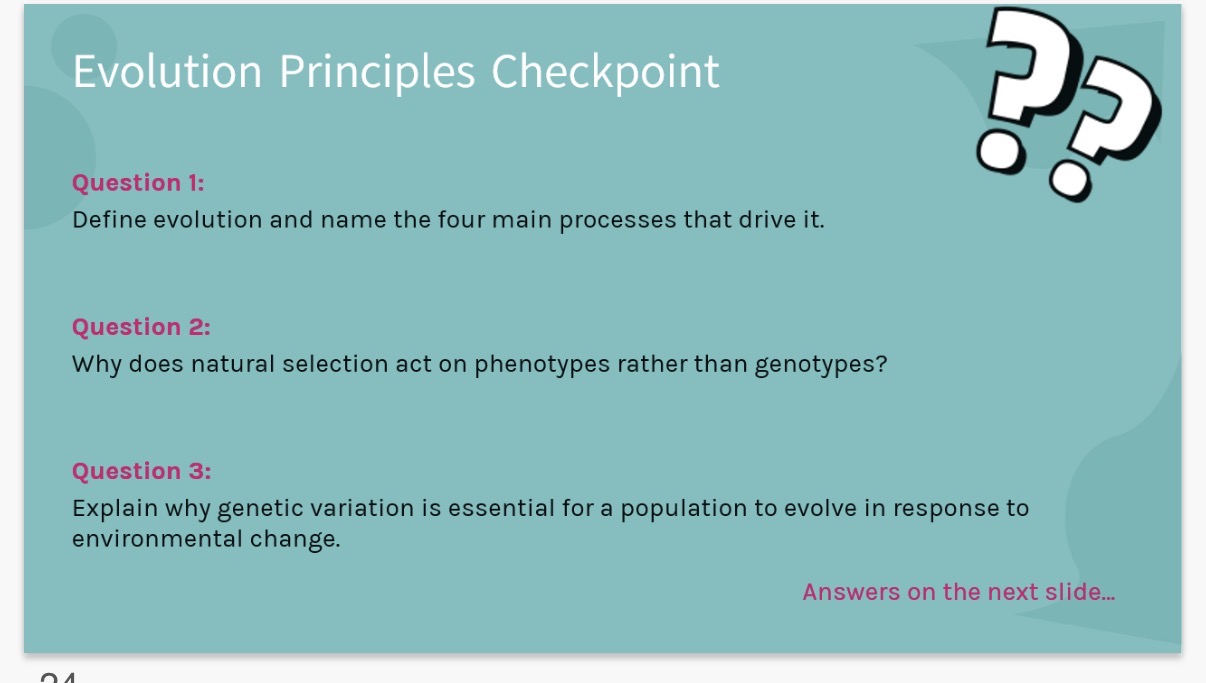
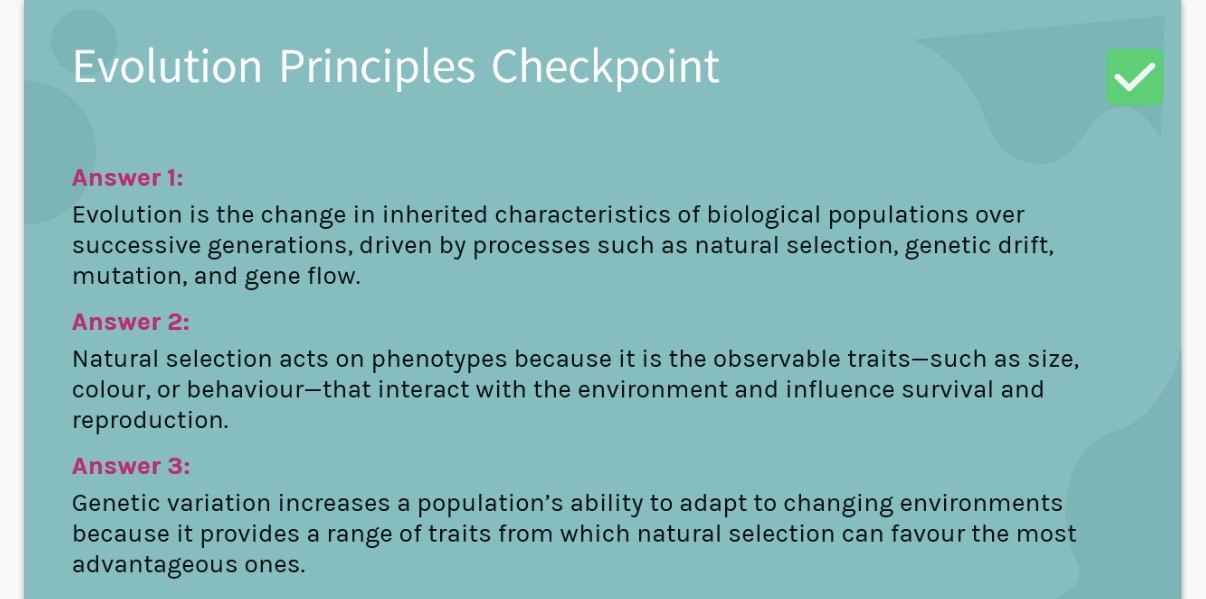
There are 4 processes that drive evolution. Name and briefly explain them?
Change Over Time
Evolution is the process by which species change across …3?. These changes are passed on through ..4?.
Not Individuals, But Populations
Individuals do not evolve - …5? do. Over many generations, the proportion of certain …6? in a population can shift.
Evidence All Around Us
From antibiotic-resistant …7? to Darwin's finches, evolution is observable in nature and laboratories alike
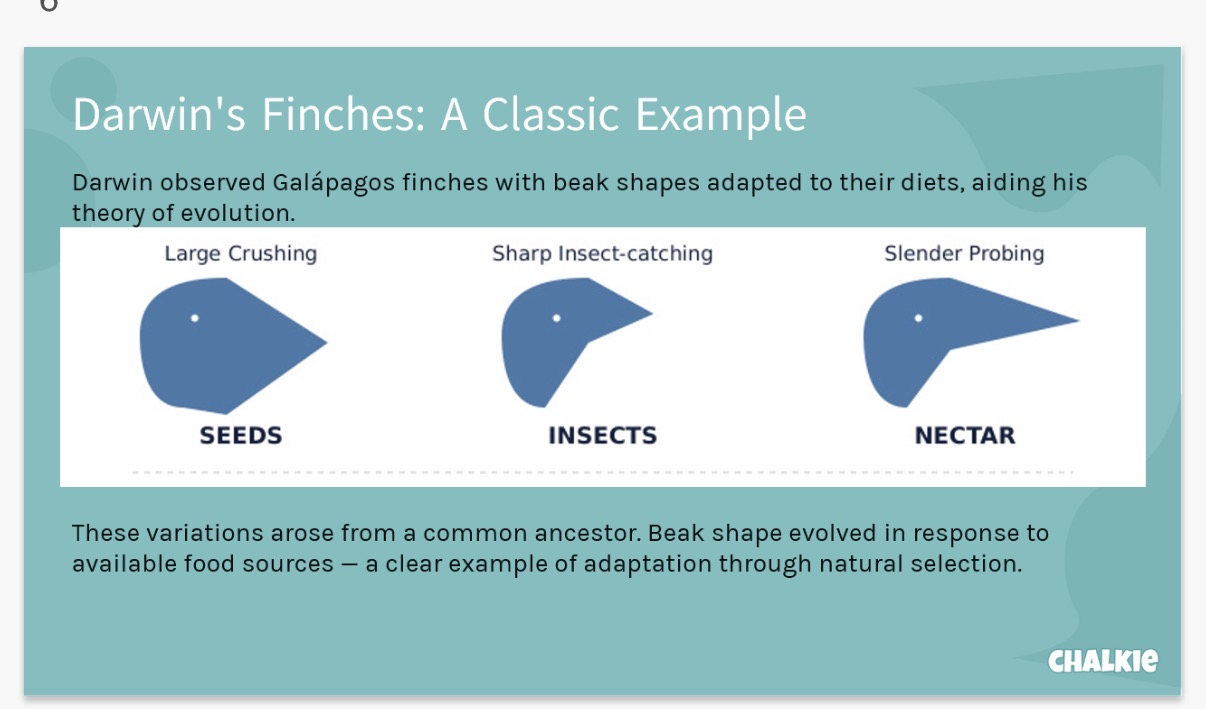
Note: image in the other side contains an example of how Darwin’s Finches study links to evolution
Populations
• Natural selection:Where advantageous traits become more common
• Genetic drift: random changes in the frequency of alleles, especially in small populations
• Mutation: new genetic variation from DNA changes
• Gene flow: gene movement via migration
Generations
DNA
Populations
Traits
Bacteria
Darwin and Natural Selection
Charles Darwin's Insight Darwin observed Galápagos finches with beak shapes adapted to their diets
The Theory of Natural Selection
Explain What Darwin proposed for the theory of Natural selection?
Genetic Variation: The Raw Material
Where does variation arise from?
Why It Matters:
Without variation, everyone responds identically to …3? changes - survival may occur, but no evolution.
Real-World Impact example
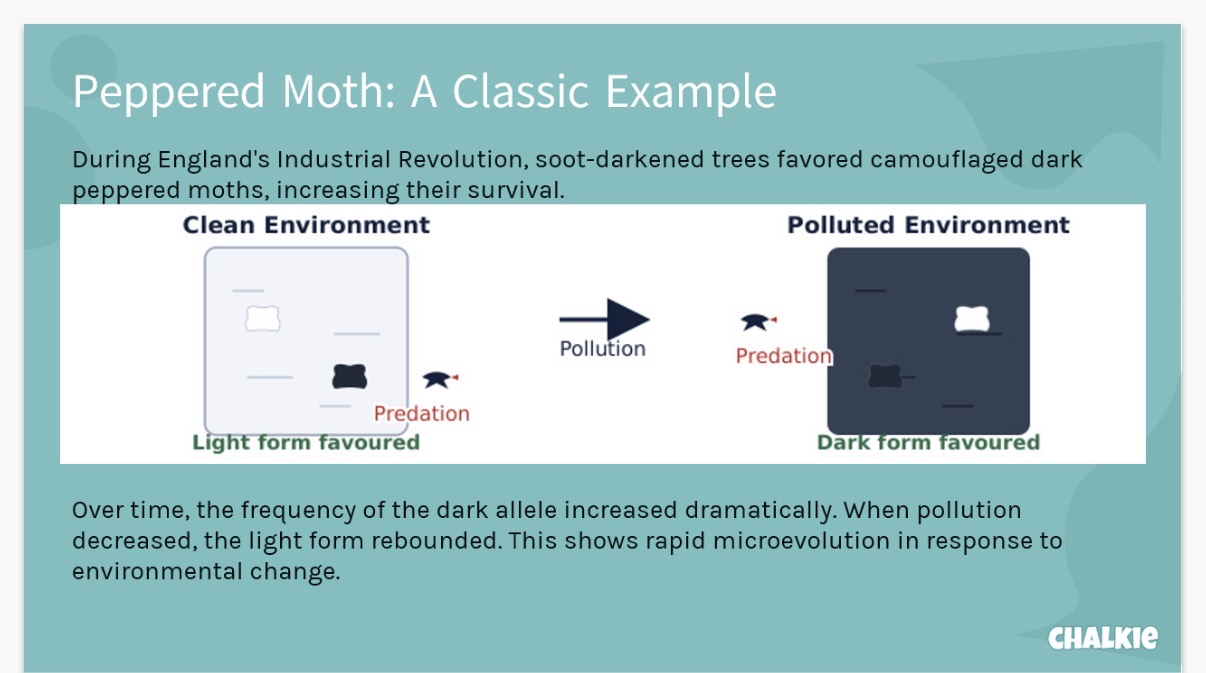
In moths, a random …4? causing darker colouring can become advantageous in soot-covered environments during industrialisation.
Explain how natural selection works?
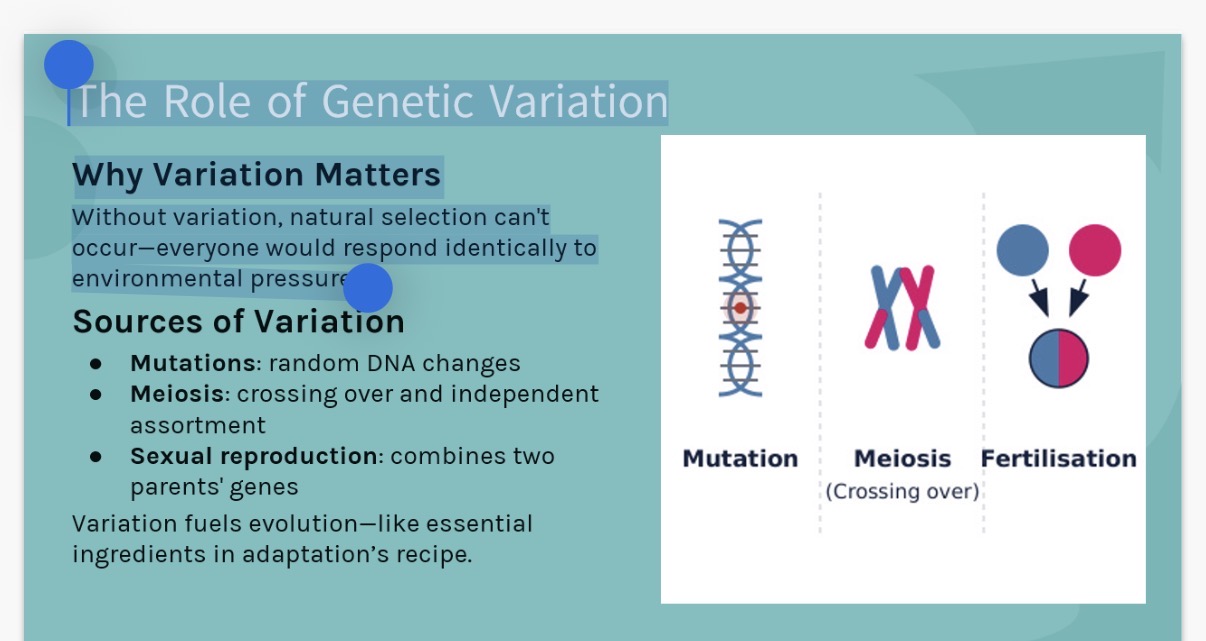
The Role of Genetic Variation
Why Variation Matters
Without variation, natural …6? can't occur-everyone would respond identically to environmental pressures
Sources of Variation
• Mutations: random …7? changes
• Meiosis: crossing over and independent …8?
• Sexual reproduction: combines two parents' …9?
Note-Variation fuels evolution-like essential ingredients in adaptation's recipe
Info: The image on the other side shows an example of how peppered moths evolved
State 4 reasons why evolution takes time?
1) Overproduction: Organisms produce more offspring than the environment can support which leads to competition for survival.
2) There is variation among individuals in a population therefore they are not identical.
3) Individuals with advantageous traits are more likely to survive their environment.
4) The traits that allow for survival are passed down to the next generation.
Mutations and gene shuffling during meiosis and sexual reproduction introduce DNA differences.
Environmental
Mutation
1) Variation Exists: Individuals vary in traits like size, color, or speed due to genetic differences
2) Selection Pressure: Environmental factors favor certain traits based on predators, climate,and food availability
3)Survival & Reproduction: Advantageous traits increase survival, reproduction, and gene transmission
4)Change Over Time: Beneficial alleles increase over generations; so the population evolves
Selection
DNA
Assortment
Genes
1) Generational Shift: Evolution needs many generations-often thousands/millions of years-for small changes.
2) Slow Mutation: Rate Beneficial mutations are rare and spread slowly.
3) Environmental Stability: Environments change slowly, so selective pressures shift gradually.
4) Genetic Inertia: Large populations change slowly due to gradual gene frequency shifts
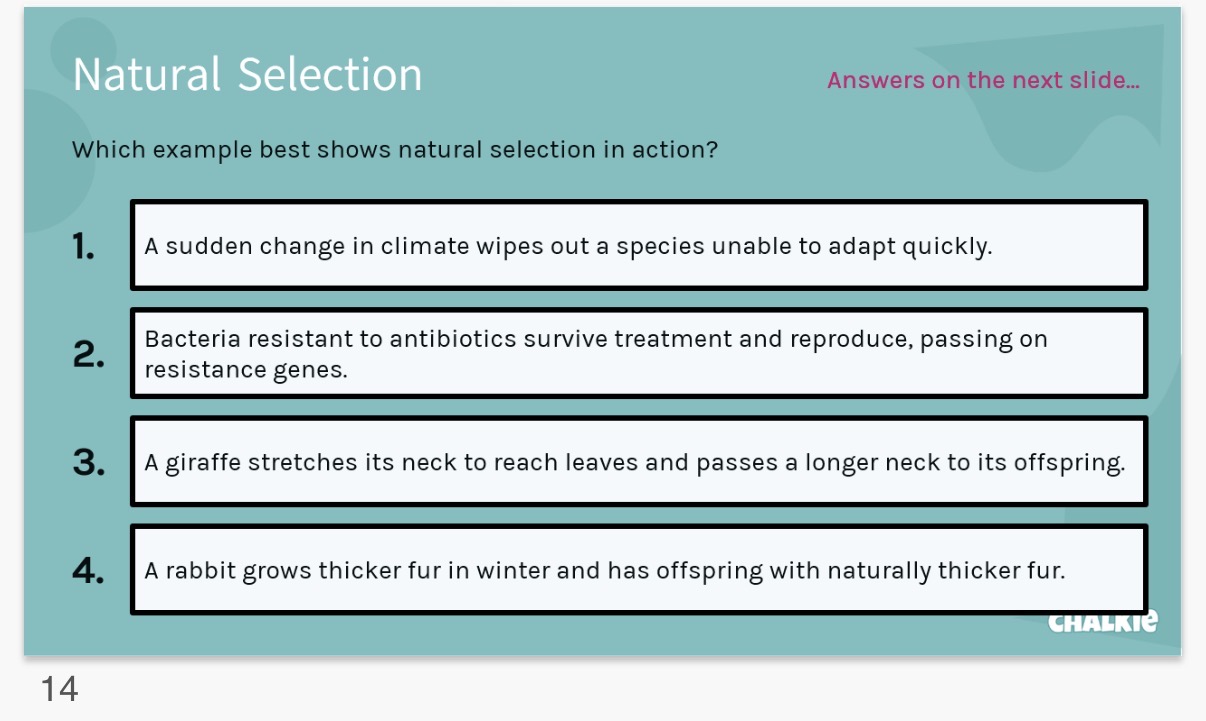
ANSWER IMAGE Q?
Phenotype vs Genotype
Phenotype:
The …2? characteristics of an organism - such as fur colour, height, or enzyme activity.
It results from the interaction between genes and the …3?.
Example: A plant may have the genes for tall growth, but poor soil keeps it short.
Genotype:
The …4? makeup of an organism - the specific …5? it carries. This is inherited and can change over generations through …6?.
Example: Two plants may look short (same phenotype), but one has tall alleles suppressed by the environment, whilst the other lacks them (different genotypes).
Antibiotic Resistance Evolution Today
A Modern Example of Natural Selection
When antibiotics are used, most bacteria die - but some may carry resistance genes.
These survivors reproduce, passing on resistance.
Over time, resistant strains dominate. This is evolution in real time - and a major challenge in medicine
Observable
Environment
Genetic
Alleles
Evolution
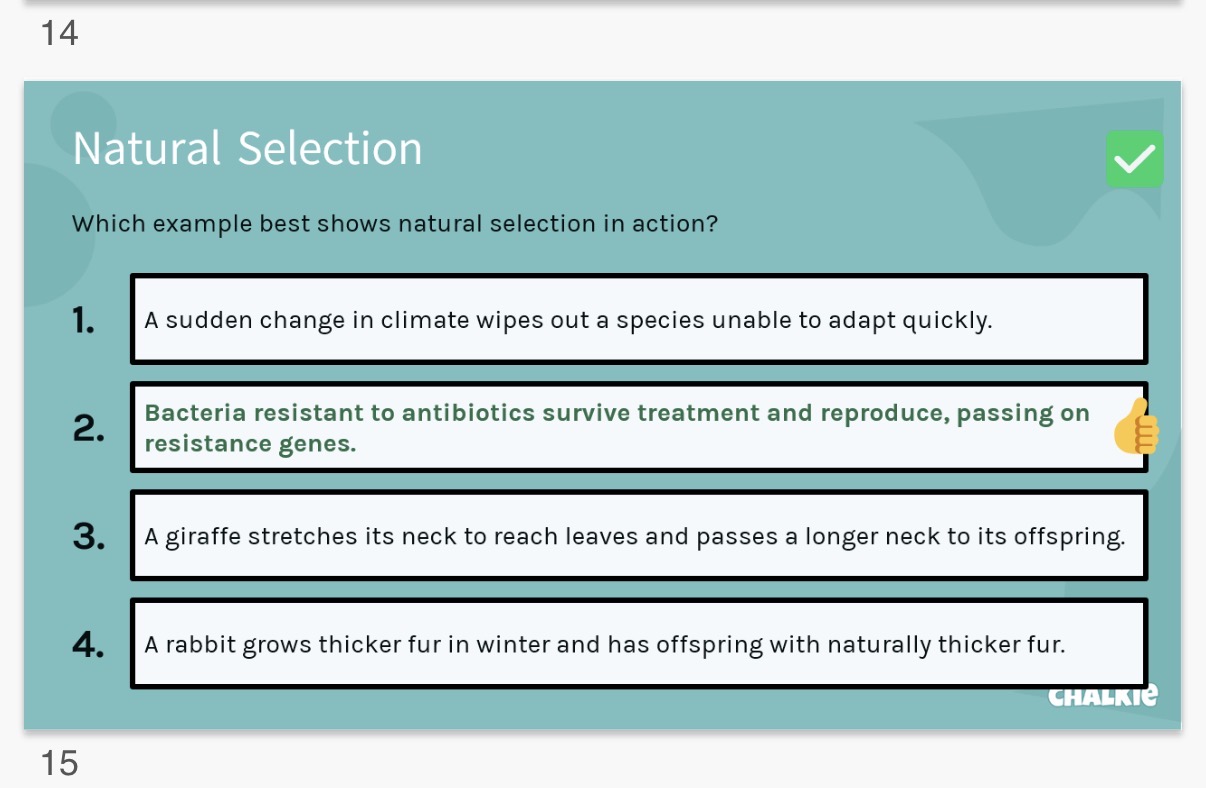
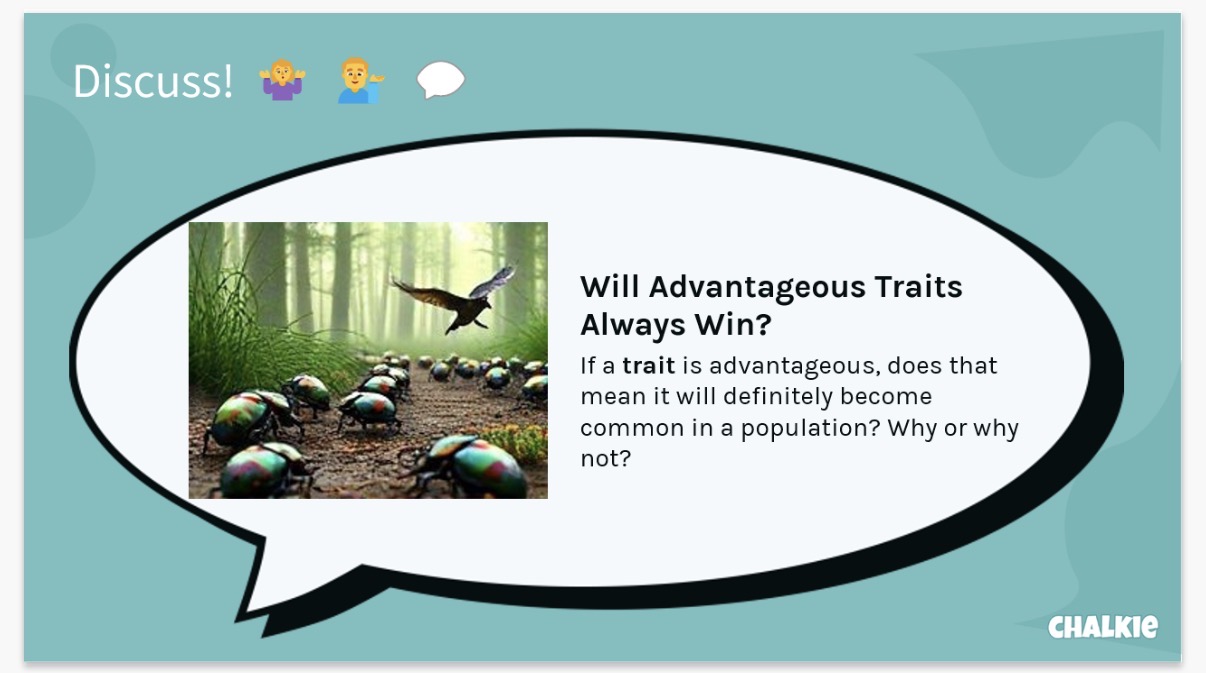
Answer image question?
Fossil Evidence of Evolution
Info: Fossils reveal past life forms and show how species evolved over millions of years.
Info: Transitional fossils, like Tiktaalik, show features between fish and amphibians - supporting the idea of gradual evolutionary change from water to land.
Comparative anatomy
What are homologous structures?
Example: The forelimbs of humans, bats, whales, and birds have the same basic bone structure, adapted for different functions.
What are analogous structures?
Example: Insect and bird wings both allow flight but evolved independently.
Molecular Evidence
DNA and Protein Comparisons
Closely related species have more similar DNA and …3? sequences.
Info: Humans and chimpanzees share about 98.8% of their DNA - strong evidence of common ancestry.
Info: Even distantly related species share genes for essential functions, showing a universal genetic code shaped by evolution.
Answer image question?
Similar anatomy due to shared ancestry.
Similar function but different evolutionary origin
Amino acid
Summary