fertilisation and blasocyst development
 Call Kai
 Learn
Learn Practice Test
 Spaced Repetition
 Match
Match Flashcards
 Knowt Play
1/37

There's no tags or description
Looks like no tags are added yet.
Name | Mastery | Learn | Test | Matching | Spaced | Call with Kai | Chat |
|---|
No analytics yet
Send a link to your students to track their progress
38 Terms
time of ovulation in cows sheep goats swine human
10-12 hours after end of estrous
late of estrous
mid estrous
day 14 after initiation of mestrual cycle
oocyte fertile life for cows sheep pig human
8- 12 hours
16-24 hours
8-10 hours
6-24 hours
where is the site of semen deposition in cows sheep pig and human
all vagina except pig which is cervix+uterus
stage one- intermediate transport
retrograde loss
phagocytosis
entrance into cervix/ uterus
low motility sperm cannot pass into the cervix
annular rings and interdigitations act as barriers
avoiding retrogade in ewes, pig and horse/dog
how much percent lost in a cow
60
sperm deposited in external cervical os in wew
intra uterine semen deposition in pig
semen squirted through cervix at copulation in horse and dog
variation
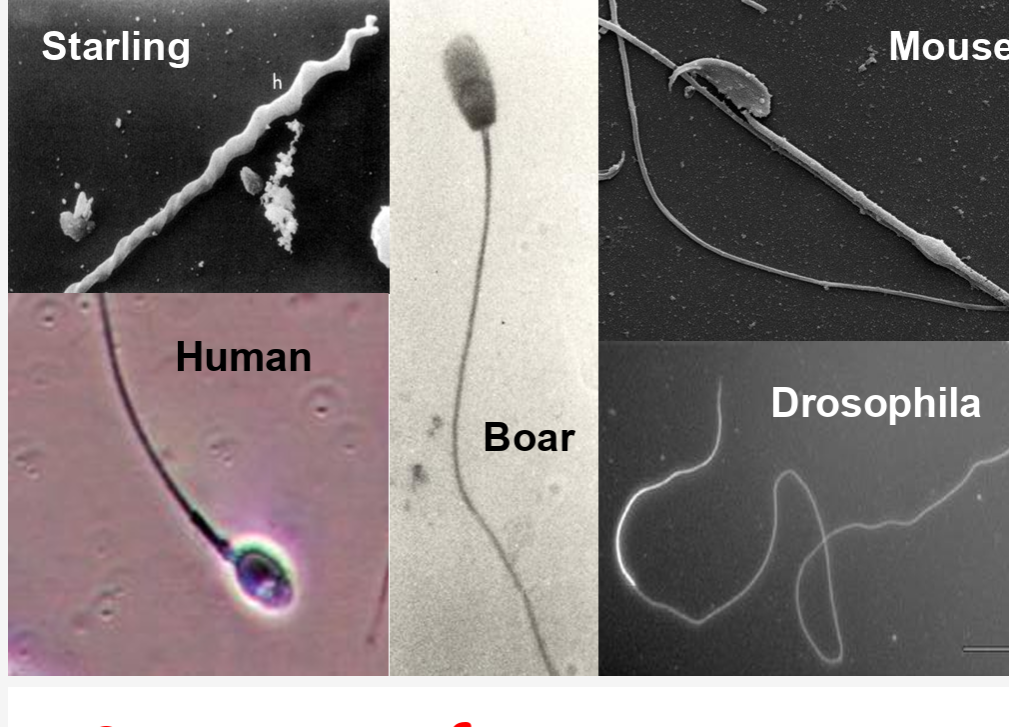
azoospermia
absence of sperm in the semen
oligospermia
low conc of sperm in the ejaculate
asthenospermia
reduced sperm motility
cryptorchism
failure of testes descending into the scrotum
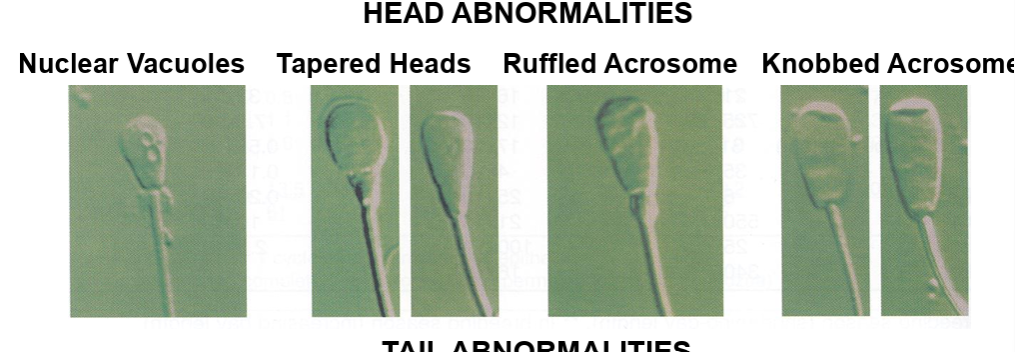
examples of sperm head abnormalities
nuclear vacuoles
tapered head
ruffled acrosome
knobbled acrosome
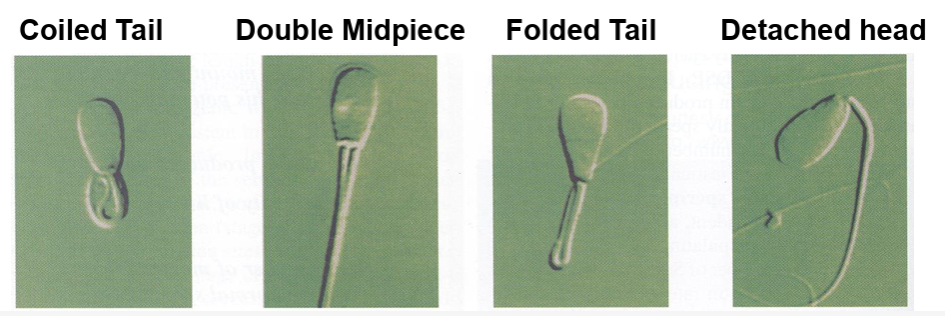
tail abnormalities examples
stage 2- cervix
‘priveliged pathways’
removal of non motile sperm
removal of some abnormalities
what are the 2 phases in sperm transport in the female
rapid
reaches oviduct within minutes
unable to fertilise the oocyte
sustained
sperm undergo
capacitation
hyperactivation
acrosome reaction
what is capacitation
ejaculated sperm cannot fertilise the occyte and sperm must undergo capacitation
progressive destabilisation of the plasma membrane:
glycoprotein coating sperm head removed
exposure of zona pellucida bindng proteins
this allows sperm to bind to oocyte at fertilisation
surface change altered- may attract sperm to oocyte
membrane fluidity increased to aid breakdown of acrosome
epididymis, ejaculation, capcitation
epidymis- surface molecules added (protein and carb)
ejaculation- surface moleules coated with seminal plasma proteins (decapacitation factors)
capacitation- female tract strips some proteins leaving exposed areas for sperm egg binding. this happens in the uterus.
stage 3- uterus
capacitation
phagocytosis
hyperactivation
-what is it
what happens intracellularly
why does it happen
• Capacitated sperm exhibit hyperactivated motility
• Strong, wide amplitude, whiplashing tail beats
• Increased intracellular calcium leads to elevated cAMP
• Increased force required to swim through the viscous environment within the oviduct
stage 4- oviduct
capacitation completed
hyperactive motility
stage 5- fertilisation
acrosome reaction
spermatozzon penetrates oocyte
male and female pronuclie form
sperm storage
times in pig, human, horse and bat
and what is cervical storage
• Extends ‘window’ for fertilisation • Storage time varies between species • Pig – 6 days • Human – 4 days • Horse – 6 days (up to 3 months?) • Bat – 1 year • Cervical storage • Sperm held in cervical crypts • Cervix will only release sperm in the absence of progesterone • Cervix also selects against morphological abnormalities
oviduct sperm storage
where does sperm bind
what does this coincide with
what can maturation be delayed by
• Sperm bind to cells in the oviductal isthmus
• Release from the isthmus coincides with ovulation
• In vitro, sperm maturation can be delayed by
– Co-incubation with oviduct epithelial cells
– Co-incubation with proteins extracted from the plasma membrane of oviductal epithelia
events of fertilisation
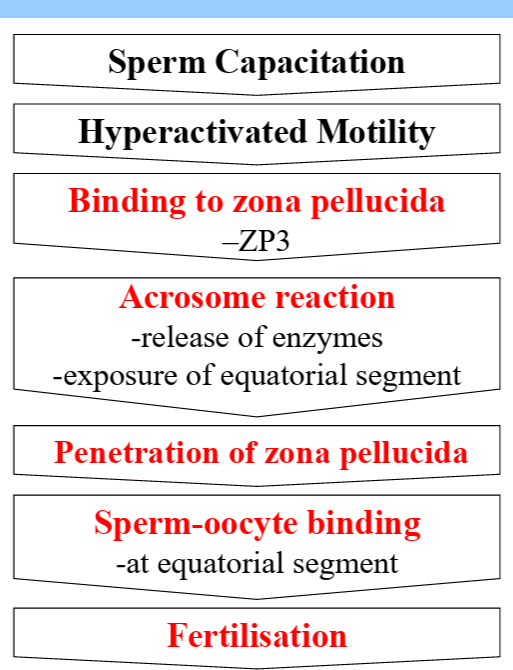
what is ZP3
structural component of the zona pellucida
is a sperm receptor
inducer of acrosome reaction
what is the acrosome
what is it derived from
where is it
golgi derived lysosome like organelle
overlies the nucleus in apical region of sperm head
acrosome reaction
mulitple fusions between the outer acroosmal membrane and the plasma membrane
extensive formation of hybrid membrane vesicles
exposure of inner arosomal membrane and acrosomal content
fertilisation event
what do acrosomal enzymes do
where do sperm go
what fuses
what blocks polyspermy
acrosomal enzymes digest small hole in zona pellucida
penetration of zona pellucida is a rapid process
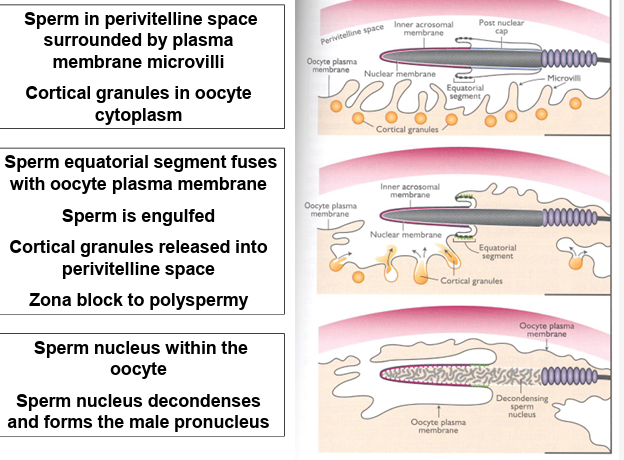
sperm move into perivitelline space between zona and oocyte plasma membrane
oocyte plasma membrane fuses with sperm equatorial segmanet
sperm engulfed
cortical grnaules from oocyte moe into perivitelline sace to cause zona block to polyspermy
fertilisation
sperm in perivitelline space surrounded by plasma membrane microvilli
sperm equatorial segment fuses with oocyte plasma membrane and the sperm is engulfed
cortical granules released into perivitelline space
zona block to polyspermy
sperm nucleus within the oocyte
sperm nucleus decondenses and forms the male pronucleus.
sperm oocyte activaton
how does the sperm activate the egg (2 ways)
what is the mitochondrial DNA from
Sperm activates egg by:
• Causing calcium oscillations signaling event
• Providing centriole to contribute to initial cell division
• To form male and female pronuclei which arrange on the first mitotic spindle for the division of the zygote NB. Although sperm mitochondria enter the egg cytoplasm they are subsequently destroyed and do not contribute to mitochondrial DNA. Therefore mitochondrial DNA is entirely from the maternal side
acrosome reaction
what are the receptors
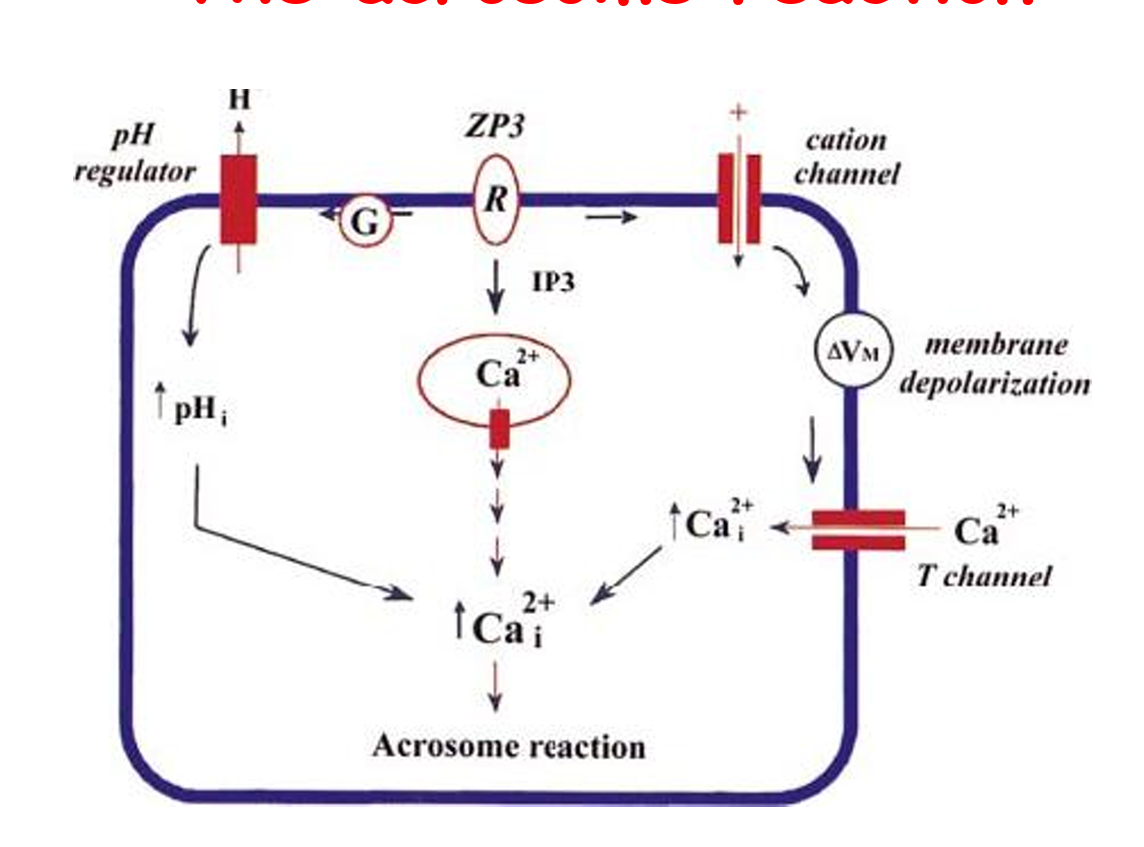
zona pellucida binds to at least 2 different receptors in the plasma membrane
receptor R is a G coupled receptor that activates phospholipase C
receptor TK is a tyrosine kinase receptor coupled to PLC gamma
binding to r regulates adenylyl cyclase leading to elevation of cAMP and PKA activation
PKA activates voltage dependent calcium channer which releases calcium from inside to cytosol
PLC gamma is activated and more calcium increase through cascade
TK can alson activate Na/H exvhanger leading to alkalinisaion of the cytosol
increase in calcium and pH leads to membrane fusion and acrosomal exocytosis
fertilisation
where does the sprm penetrate
what leads to the acrosome reaction
where fuse
sperm penetrates cumulus oophorus
ZP contact and acrosome reaction is triggered by ZP3
sperm penetration of ZP and adhere to and fuse with the plasma membrane
meiosis is complete and 2nd PB extrusion
Mechanism of PLCζ-induced Ca2+ release
PLCζ from spermatozoa (phospholipase C) is considered to be the responsible activator
it activates phospholipase C which catalyses the hydrolysis of PIP2 to DAG and IP3
IP3 acts on its receptor in the ER whihc causes intracellular release of Ca
block to polyspermy
cortical granules are vesicles and when sperm fuses with egg they release contents
enzymes released by the cortical granules harden the zona pellucida- cross linking of zona pellucida proteins form
this blocks additional sperm from entering
BUT cannot overcome simultaneous penetration
pre implantation embryo development
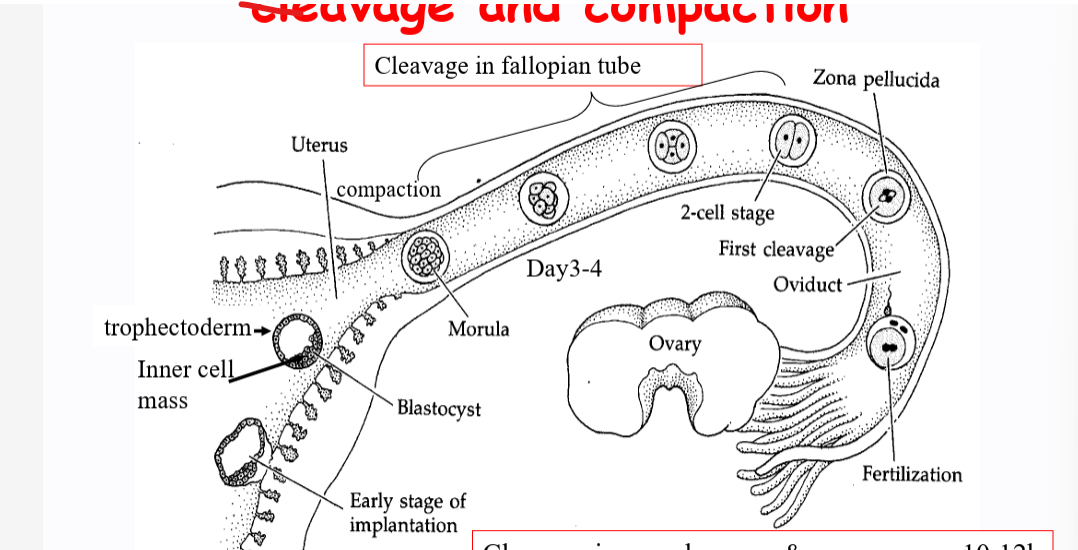
cleavage - zygote undergoes mitotic divisions in the zona pellucida
fallopian tube
asynchronous and occurs eery 10-12 hours from 2 cell
compaction - cells increase cell to cell adhesion
forms a morula
no net growth during pre implantation period
what is a pronucleus
stage of the fertilised egg where sperm and egg has not yet fused