🍏 climate change
 Call Kai
 Learn
Learn Practice Test
 Spaced Repetition
 Match
Match Flashcards
 Knowt Play
1/61

Earn XP
Description and Tags
Name | Mastery | Learn | Test | Matching | Spaced | Call with Kai |
|---|
No analytics yet
Send a link to your students to track their progress
62 Terms
weather vs climate? (1)
the set of environmental patterns from day to day (short period of time)
the set of environmental patterns averaged over years (long period of time)
temperature, winds, precipitation
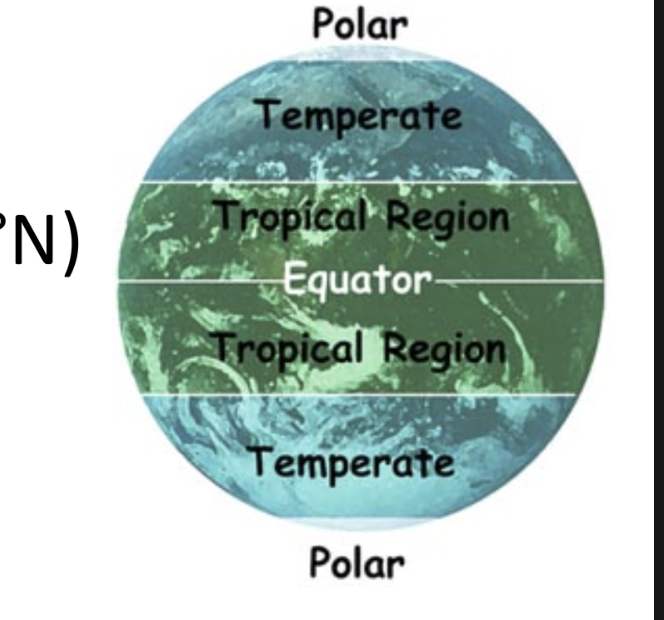
three climate zones? (1)
tropical zone relatively warm temperatures
temperate zone temperature varies, experiences cold and warm seasons
polar zone relatively cold temperatures
5 canadian biomes? (1)
tundra
mountain forest
grasslands
deciduous temperate forest
boreal forest
ecozones? (1)
climate zones focusing on the ecology of a region
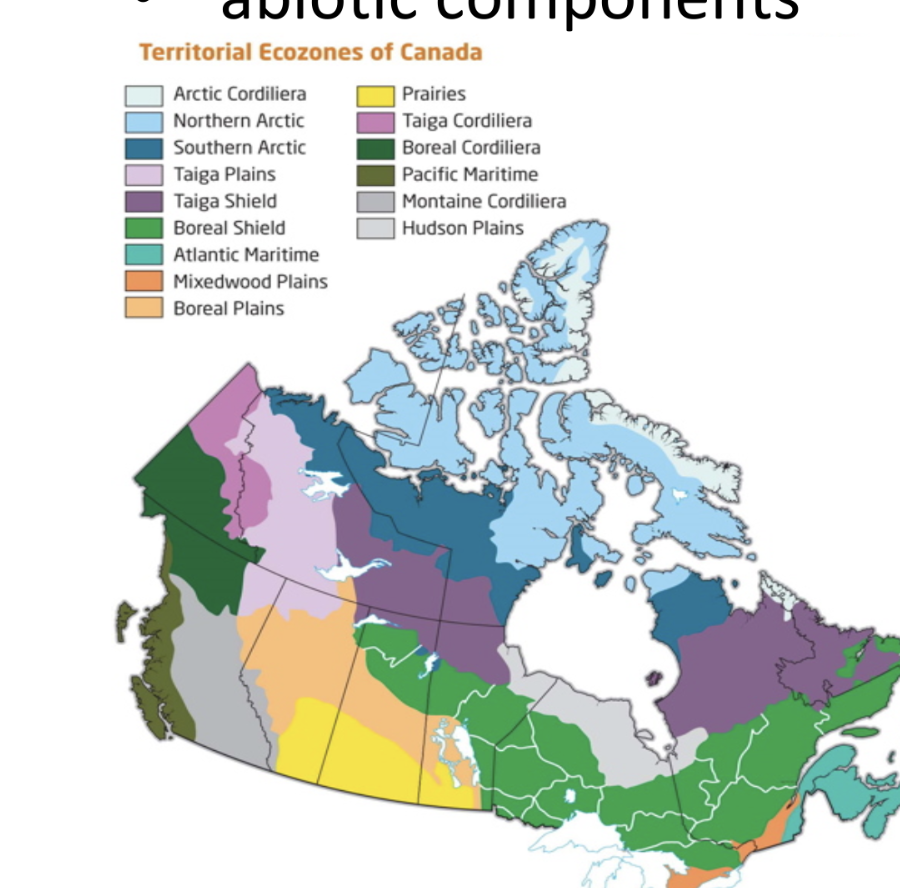
how are ecozones different from biomes?(1)
Ecozones are different from biomes because neighbouring ecozones are separated by a geological feature such as an ocean, desert, mountain, or soil
what three factors did koppen take into account in his system? (1)
average monthly temperature
average monthly precipitation
average annual precipitation
what percent of solar radiation is absorbed or reflected? (2)
70% is absorbed and 30% is reflected
what happens as energy is absorbed into the earth? (2)
it gains thermal energy and converts it to infrared radiation
energy absorbed by earth and atmosphere = energy radiated by earth
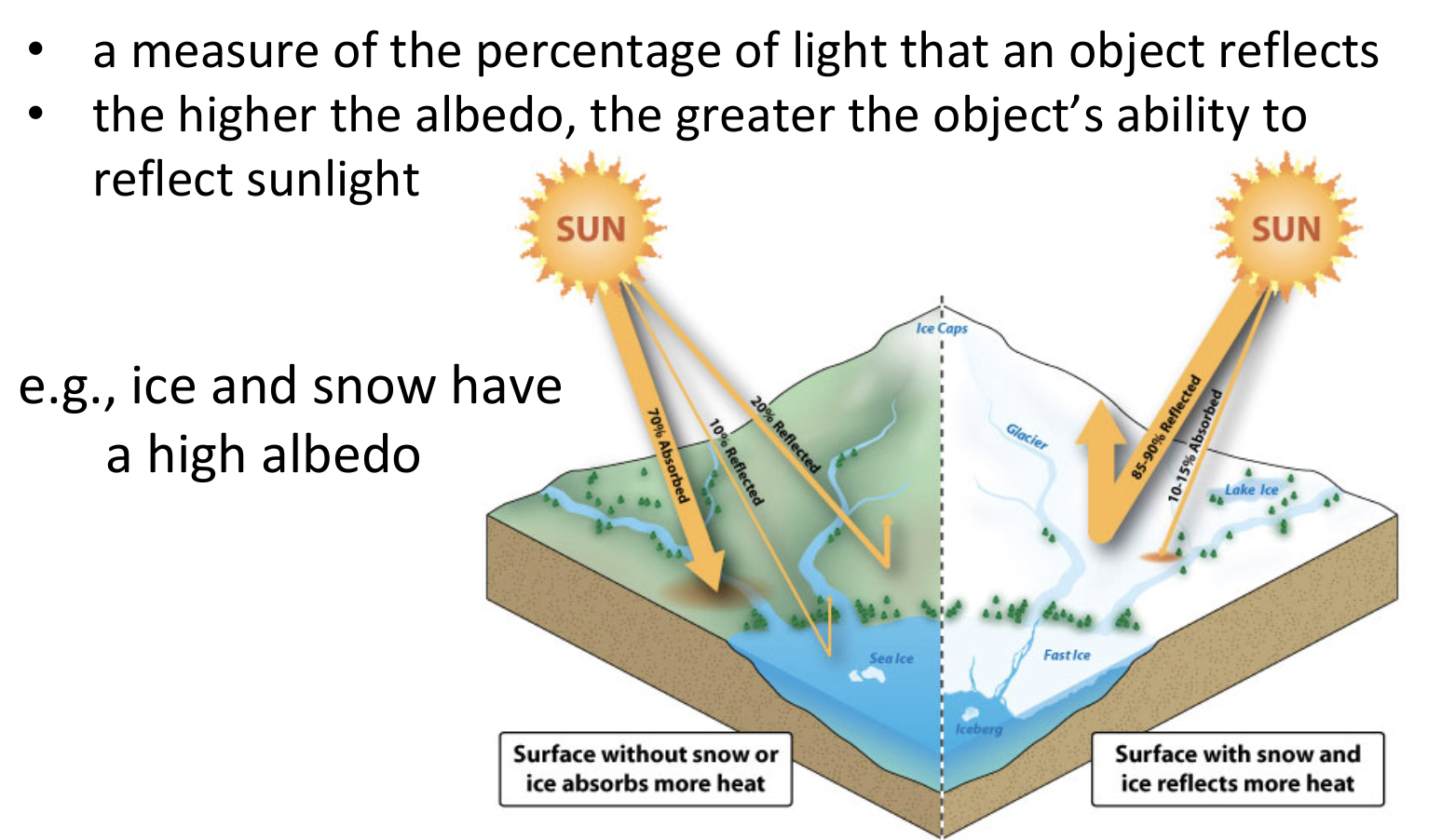
albedo? (2)
a measure of the percentage of light that an object reflects
the higher the albedo, the greater the object’s ability to reflect sunlight
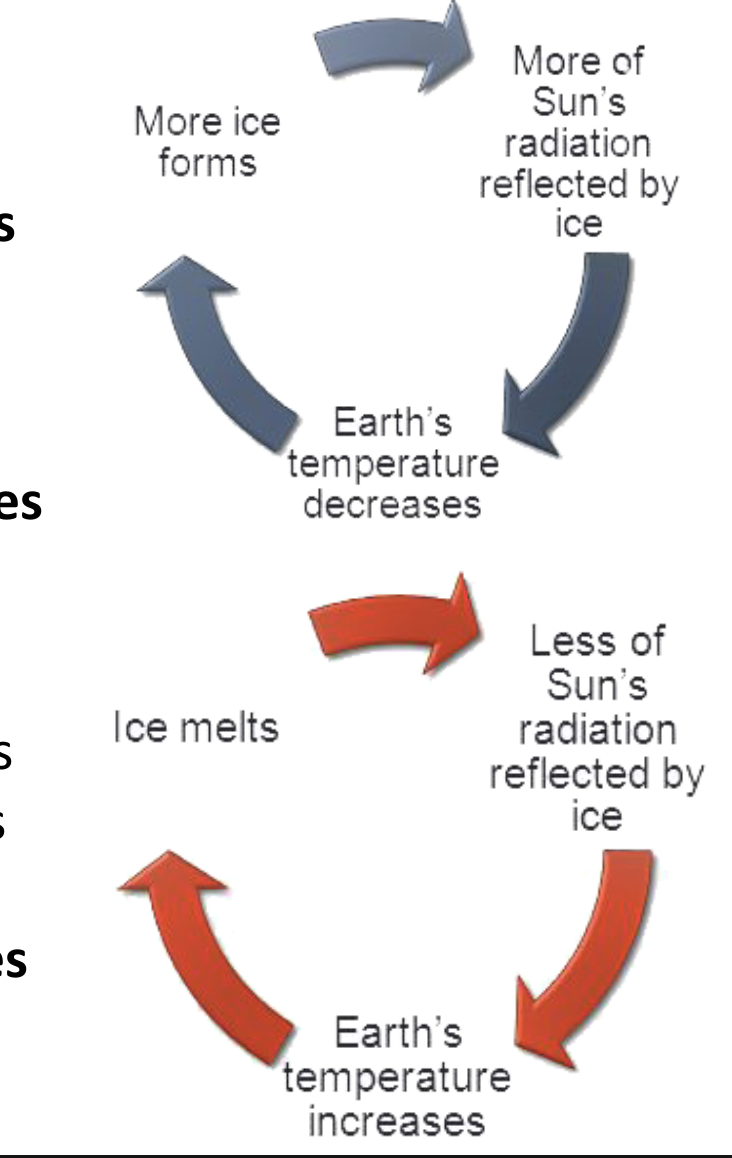
the “albedo effect”? (2)
if earth’s temperature slightly drops, more ice forms
this ice reflects more of the sun’s radiation and earth’s temperature decreases even more
if earth’s temperature slightly increases, more ice melts
more of the sun’s radiation is absorbed, and earth’s temperature increases even more
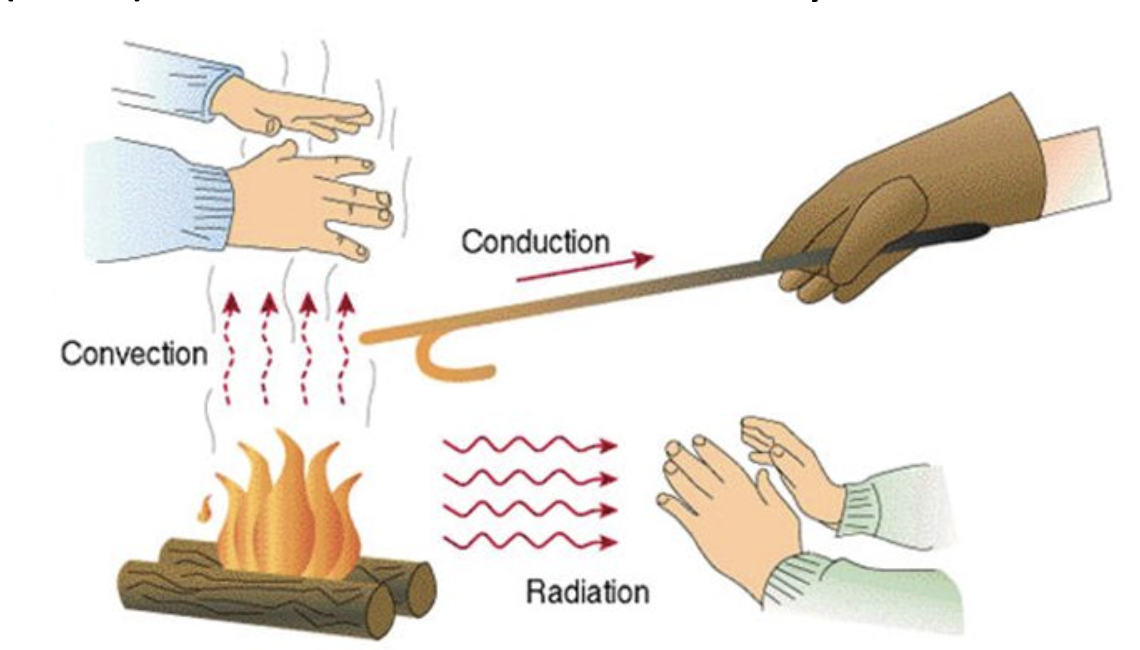
three ways that thermal energy is transferred? (2)
radiation, convection, and conduction
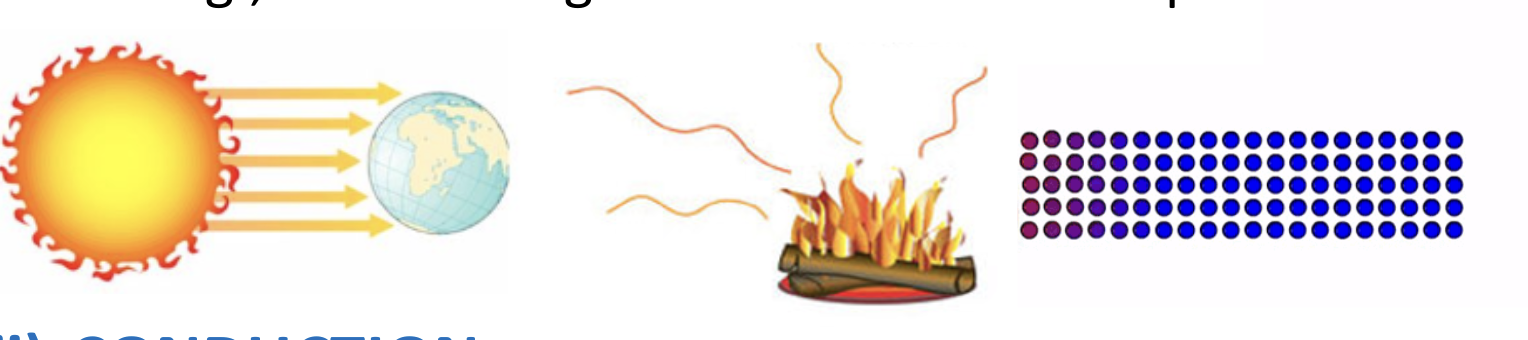
radiation? (2)
transfer of energy by electromagnetic waves
can travel through empty space
ex. heat coming from sun/campfire
conduction? (2)
transfer of energy through contact
transfer of heat is always from an area of high temperature to a low one
ex. a metal pot handle heating up on a stove

convection? (2)
transfer of energy through collision of particles in a fluid (liquid/gas)
warm fluids rise and fall
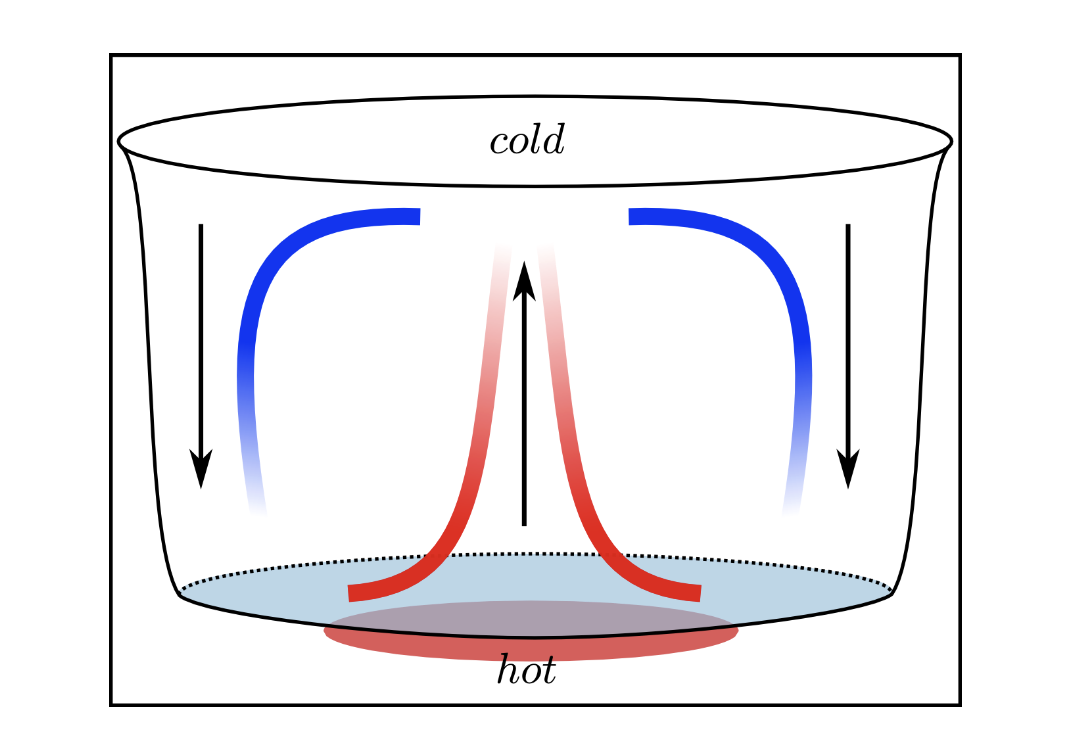
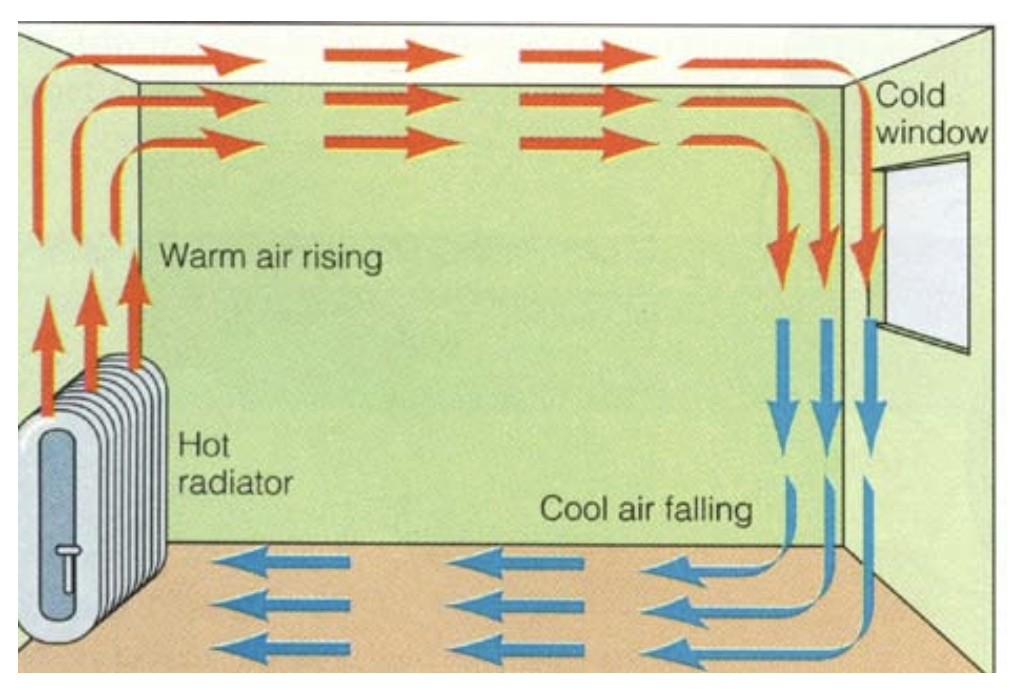
convection current? (2)
when a fluid is unevenly heated a current forms
the cooler, denser fluid falls and pushes the warmer, less dense fluid up
two factors that affect the amount of solar energy that reaches earth’s surface? (2)
latitude
movements of earth in space
latitude? (2)
distance north or south of earth’s equator
the sun’s radiation reaches earth at different temperatures
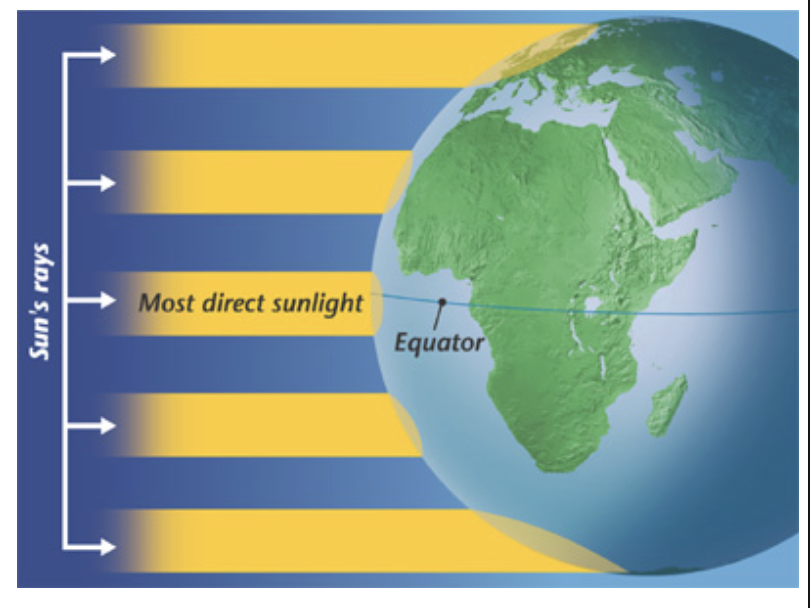
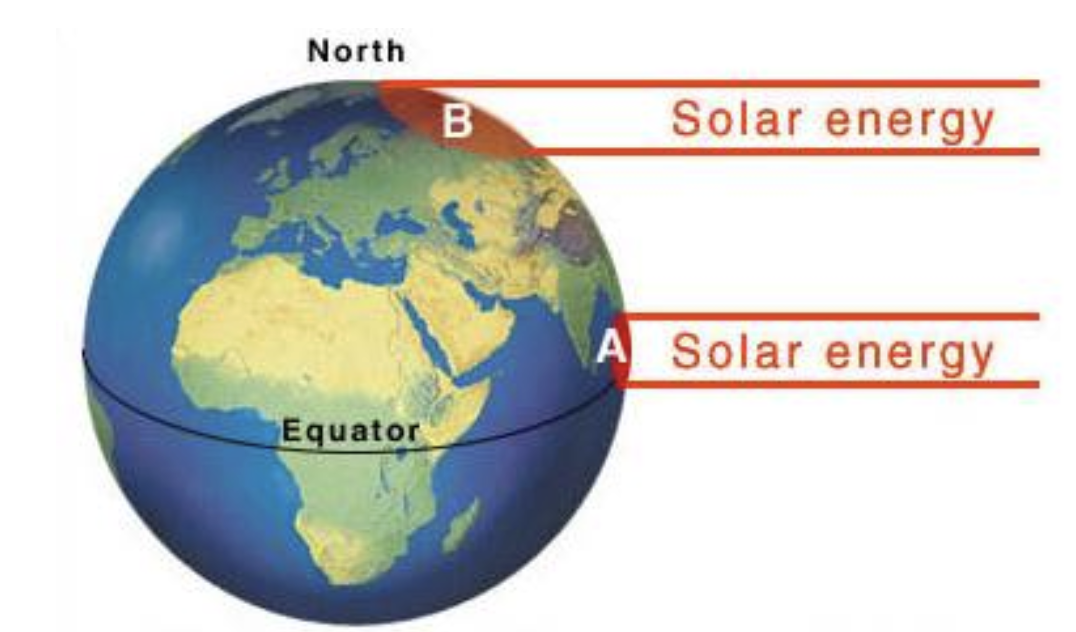
what happens when the sun’s radiation hits earth at a higher/lower latitude? (2)
at higher latitudes (further from the equator), solar radiation hits earth’s surface at a larger angle, so it’s spread across a larger area
at lower latitudes (closer to the equator), solar radiation hits earth’s surface almost right on, so it’s concentrated in a smaller area
heat sink? (2)
the ability to absorb energy and become warmer— atmosphere and hydrosphere are examples of that (these two + the lithosphere all have different capacities to absorb heat)
heat capacity? (2)
the amount of heat a substance requires to increase its temperature by a degree celsius
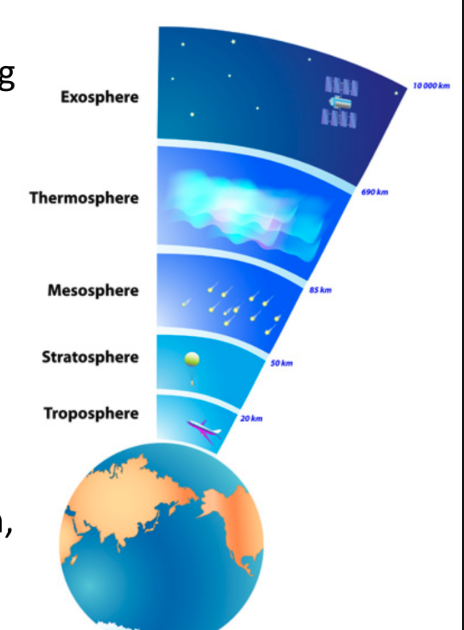
mnemonic to remember order of atmosphere? (3)
The Silly Monkeys Tickled Elephants
troposphere? (3)
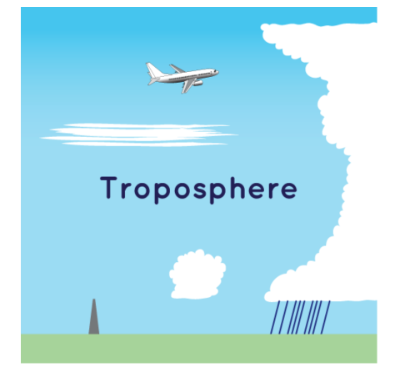
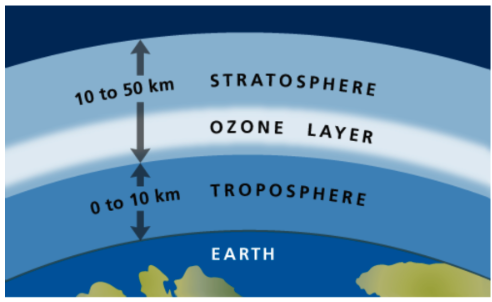
closest to earth
weather occurs here
as altitude increases, temperature decreases
stratosphere? (3)
many jets fly here as it is stable
contains the ozone layer which absorbs UV rays
mesosphere? (3)
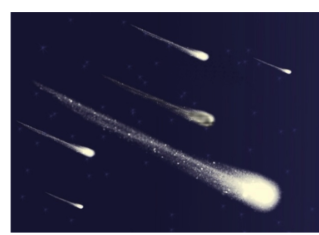
very low temperature
meteors burn up here
thermosphere? (3)
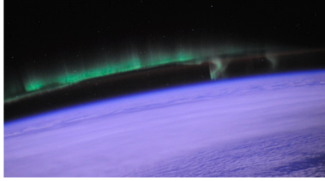
temperature becomes very high and meteors become “excited”
northern lights, satellites and space shuttles orbit here
exosphere? (3)
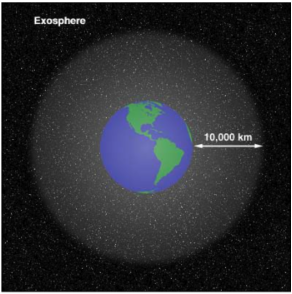
outer space
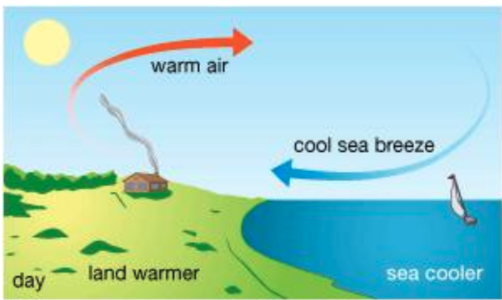
sea breeze? (3)
during the day, the land is warmer than the water
convection current —> warm land warms the air, which causes it to rise, pushing the cold air towards land (aka sea breeze)
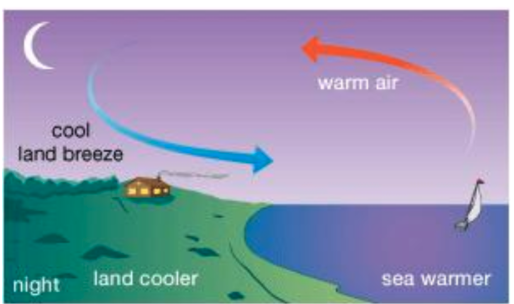
land breeze? (3)
opposite of sea breeze, this occurs at night
sea is warmer, land is colder
cool breeze from the land is called land breeze
types of wind? (3)
local/regional winds (sea/land breeze)
prevailing winds
winds that affect larger areas
coriolis effect
earth’s eastward rotation causes large air and ocean masses to appear to change direction
jet stream
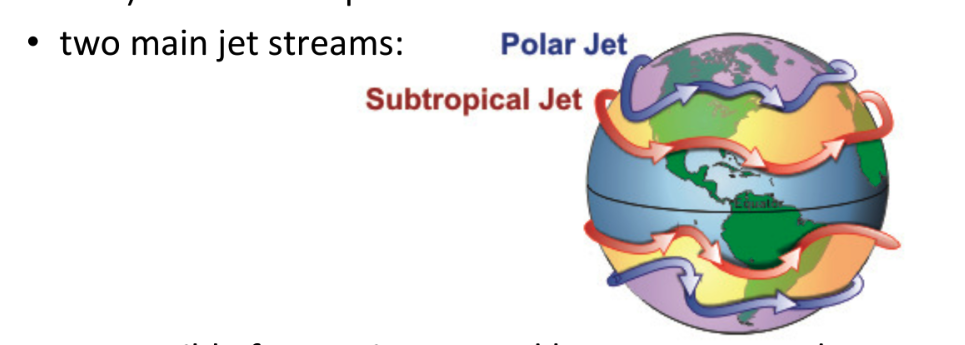
jet stream? (3)
special kind of prevailing wind
high speed winds move from west to east in the atmosphere
responsible for moving around low and high-pressure air systems
important for air travel as travelling against/with the jet stream can change travel time
effects of hydrosphere on earth’s climate? (3)
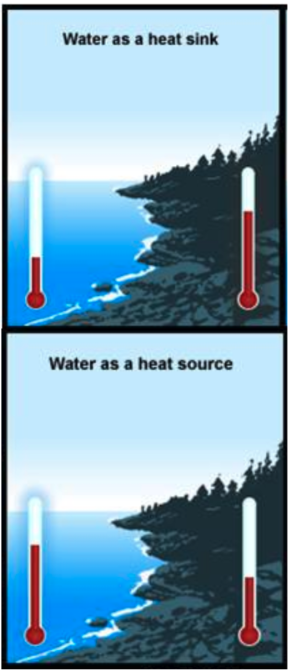
large bodies of water moderate the temperature of coastal regions
water moves thermal energy away from the equator (towards the poles)
oceans act as a carbon sink (water absorbs CO2 from the atmosphere and stores carbon in the form of carbonates)
how do large bodies of water moderate the temperature of coastal regions? (3)
water has a high heat capacity, as it can store large amounts of energy without getting too hot (good heat sinks)
water transfers energy by convection, which is why coastal regions are warmer in winter and colder in summer
5 things that cause ocean currents? (3)
convection currents (warm water moving away from equator)
earth’s rotation (coriolis effect)
shape of continents (currents have to change direction when they encounter a large land mass)
heat capacity of water (oceans are large heat sinks)
salt content in oceans (evaporating water at the equator leaves behind saltier and denser water, allowing less dense and warmer water to move on top)
effects of ocean currents? (3)
cold ocean currents cause air to be cold and dry (this forms deserts on landmasses)
warm ocean currents cause air to be moist and warm (this forms rainforests)
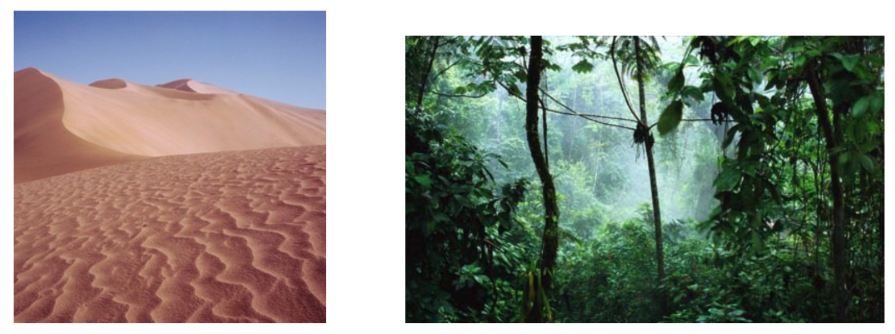
describe one way in which each component is important to the climate system? (3)
atmosphere regulates earth’s temperature by trapping heat
hydrosphere acts as a large heat sink and transportation system
the lithosphere absorbs and radiates the sun’s heat
the biosphere exchanges gases in the atmosphere (releasing oxygen through photosynthesis and releasing carbon dioxide through cellular respiration)
what are greenhouse gases? (4)
gases that absorb infrared radiation and trap heat in the atmosphere
natural ones include water vapour, co2, and methane
if there were no greenhouse gases, the average global temp would be -18 C instead of 15, and ice would cover the surface, making survival impossible
greenhouse effect? (4)
the effect of trapping heat
greenhouses are glass enclosures, used for trapping heat
anthropogenic (human influenced) greenhouse effect? (4)
human activities (ex. burning fossil fuels, deforestation) increasing greenhouse gases
greenhouse gases have been increasing since the industrial revolution
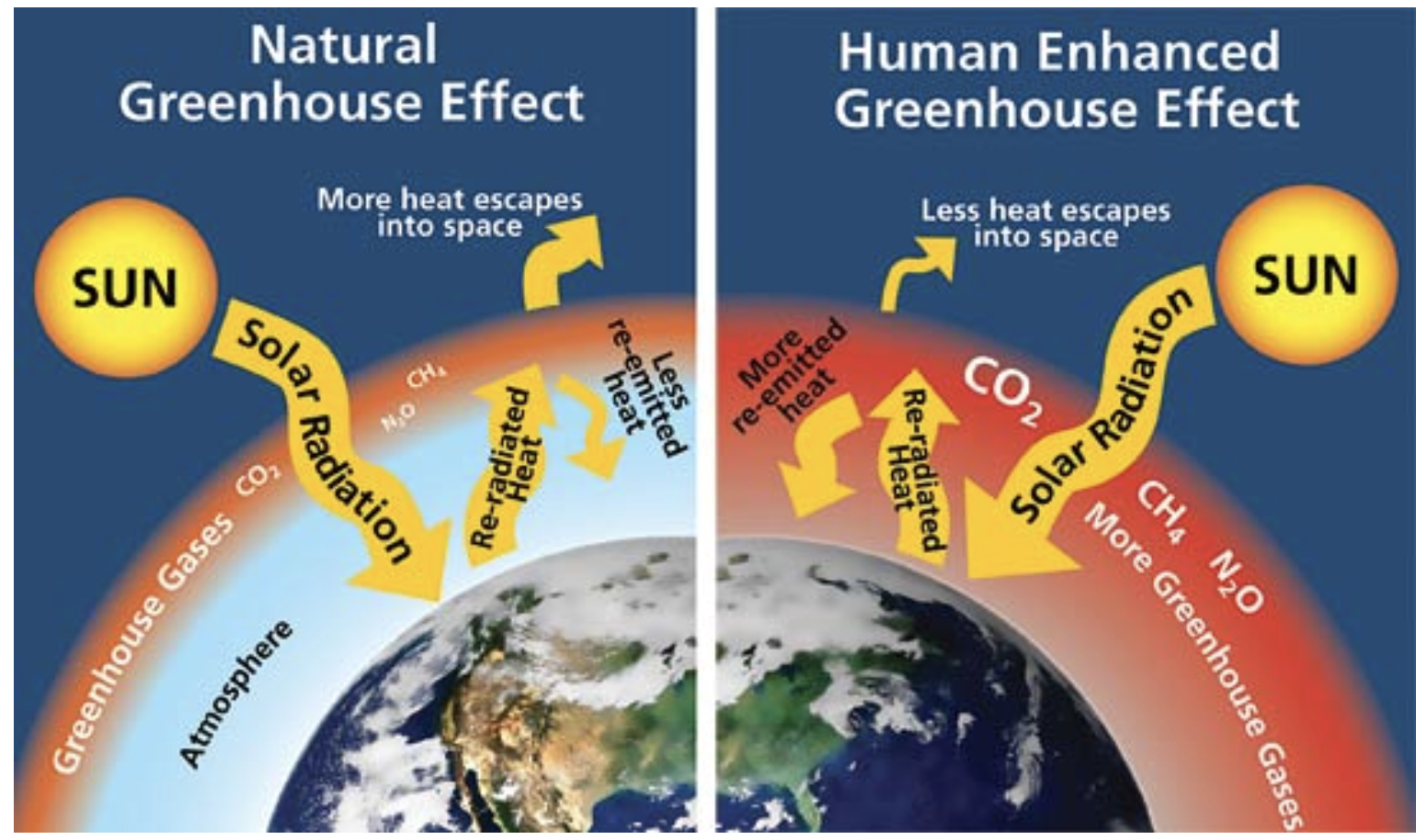
natural + anthropogenic sources of co2? (4)
decomposition, volcanoes, fire
burning fossil fuels, deforestation
volcanoes’ effect on environment? (4)
when volcanoes erupt, they emit numerous gases and particles such as ash and sulfur dioxide
the particles reflect sunlight away which creates a temporary cooling effect
they also contribute to greenhouse effect
natural source of water vapour? (4)
clouds
causes around 2/3 of the earth’s natural greenhouse effect
methane? (4)
can absorb 23x more thermal energy then co2
natural sources are wetlands, termites and oceans
anthropogenic sources are agricultural activities, landfills and coal mining
nitrous oxide? (4)
most effective greenhouse gas— it absorbs 300x more energy than co2
natural sources include soils under natural vegetation and oceans
anthropogenic sources include livestock feed and waste and use of nitrogen fertilizers
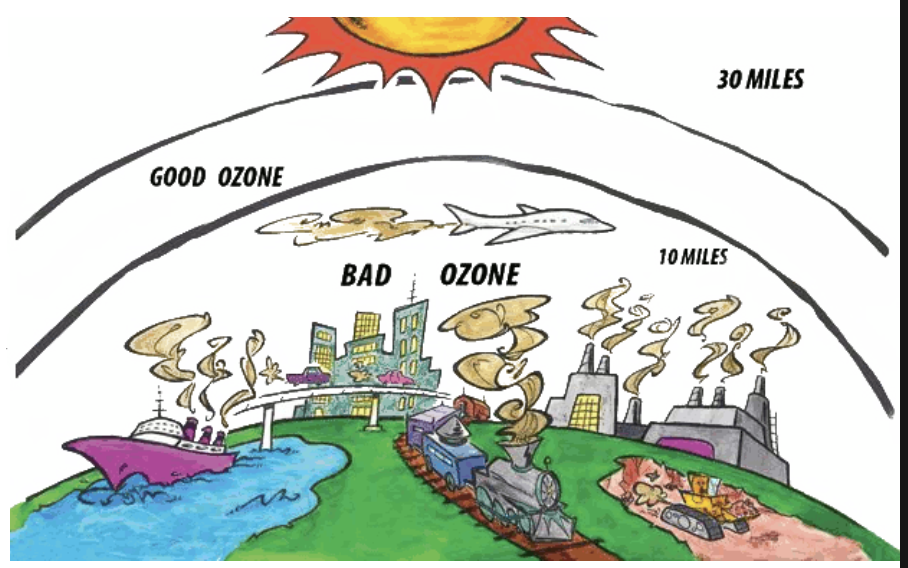
ozone? (4)
forms when gases such as nitrogen oxides and carbon monoxide react in the presence of sunlight
anthropogenic sources include motor vehicle exhaust, industrial emissions and chemical solvents
chlorofluorocarbons (CFC)? (4)
very strong greenhouse gases
anthropogenic sources include aerosol cans, refrigerators and air conditioners
good vs bad ozone? (4)
ozone in the stratosphere protects life on earth from the sun’s harmful uv rays
use of CFCs has greatly depleted the ozone layer, leaving holes in polar regions
ozone in the troposphere (ground level), harmful to breathe in and it also damages vegetation
carbon and ecological footprint? (4)
total greenhouse gases caused by an organization, event, product or person
a measure of how fast we consume resources and produce waste, compared to how fast nature can absorb our waste and generate new resources
continental drift?
the theory that earth’s continents used to be one fused supergroup named pangea
this influences ocean currents, wind patterns. distribution of land mass and heat transfer
the northern hemisphere has the most land mass, and because it has less bodies of waters, it produced the coldest winters and warmest summers
the uplifting of mountain ranges has also influenced climate
long term cycles in climate?
earth experienced its last ice age 20,000 years ago and the average temperature was about 10 degrees lower compared to today
ice sheets covered much of canada and sea levels dropped
earth has been cycling between interglacial periods— a time between ice ages when Earth warms up
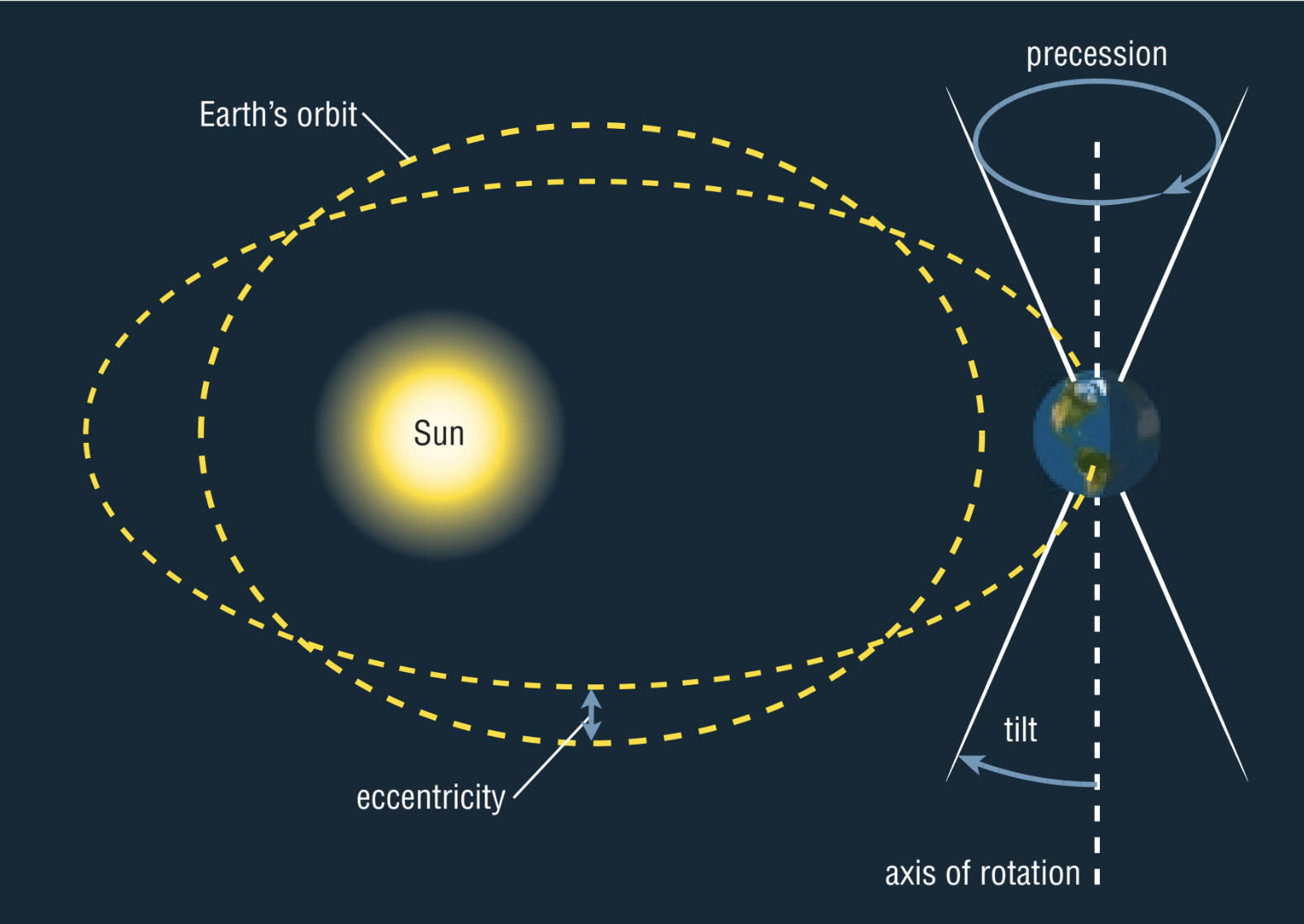
three ways that the earth’s orbit around the sun changes (why do interglacial periods and ice ages keep happening)?
eccentricity (shape of orbit
earth’s orbit varies from being circular to elliptical
this is due to influence from jupiter and saturn’s gravities
tilt
earth tilts back and forth on its axis and seasonal differences increase with this
precession of tilt (wobble)
earth slowly wobbles, like a spinning top (toy)
short term variations of climate?
volcanic eruptions
small changes in the sun’s radiation
changes in the circulation of air and ocean currents
el nino?
every 3-7 years the prevailing winds temporarily switch direction
instead of pushing warm water towards the west pacific, it goes east, towards south america
paleoclimatologists? (5)
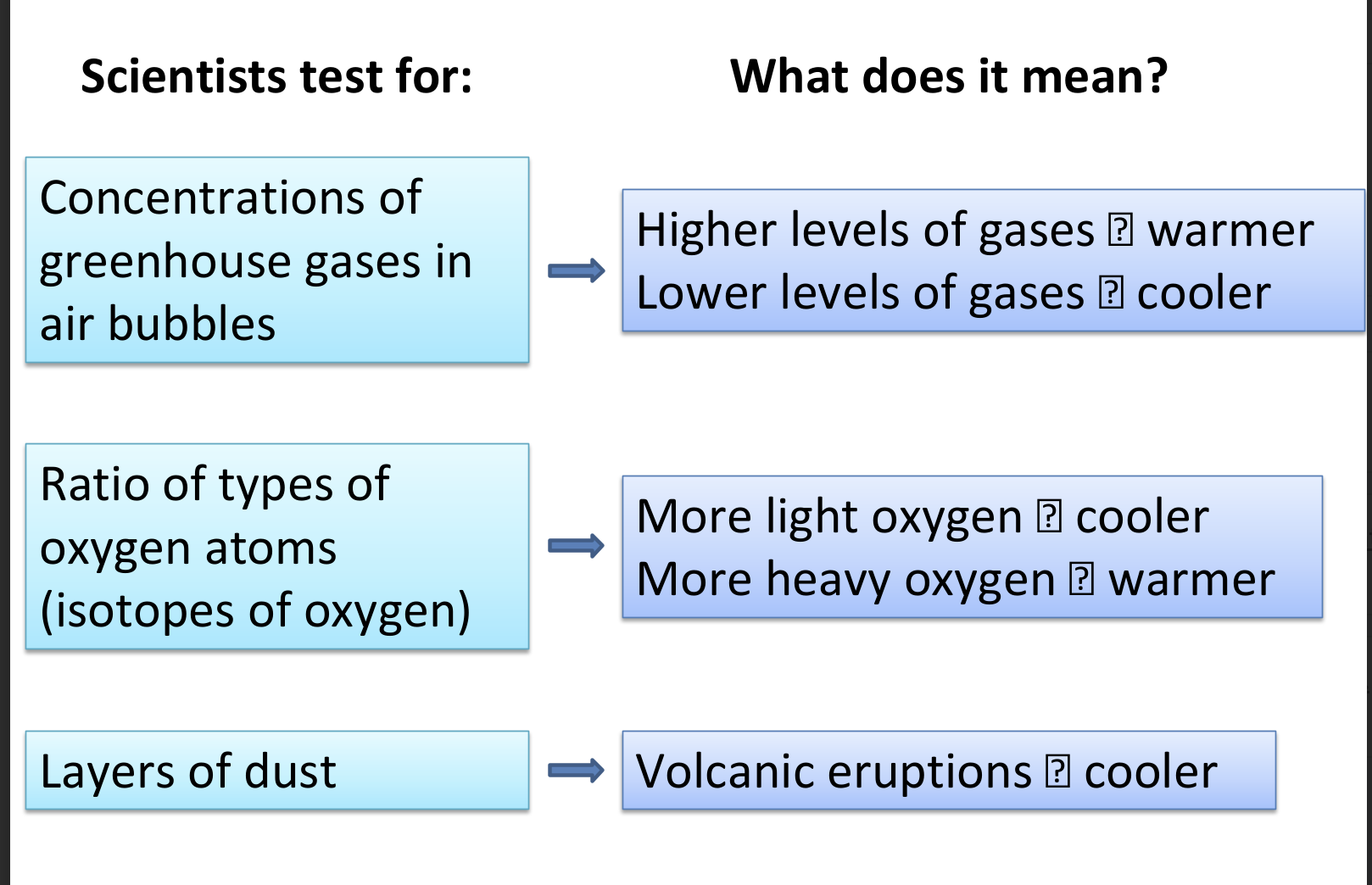
study past climate using proxy records (collection of natural info) such as fossils, tree rings, ice cores, and coral reefs
not direct measurements of temperature and precipitation
ice cores? (5)
ice cores drilled in antarctica and greenland contain trapped air bubbles
they provide records gong back 800,000 years ago
provide info on greenhouse gases and temeprature
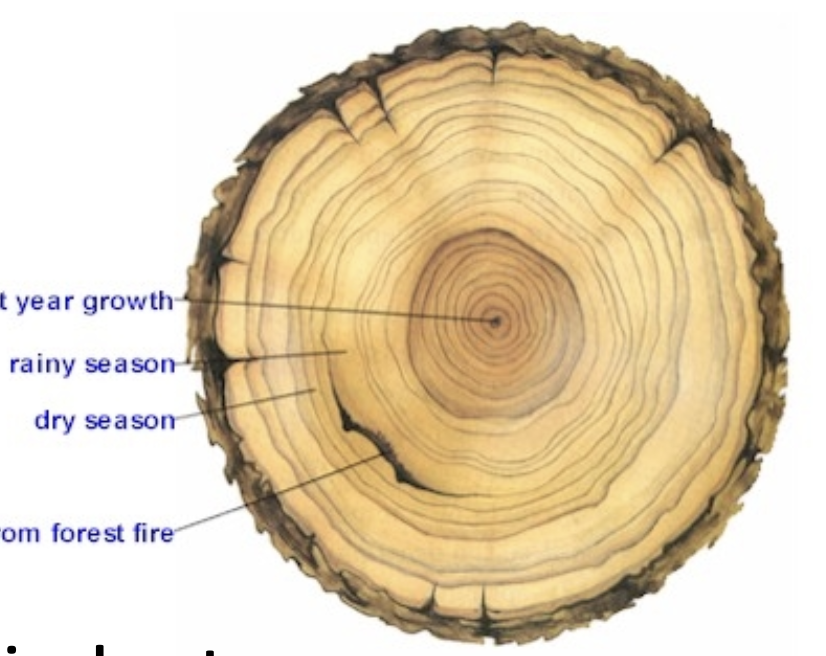
tree rings? (5)
wide rings indicate periods of rapid growth which occur during periods of cool and wet weather
narrow wings indicate periods of slow growth when conditions were hot and dry
record only goes back a few hundred years at most
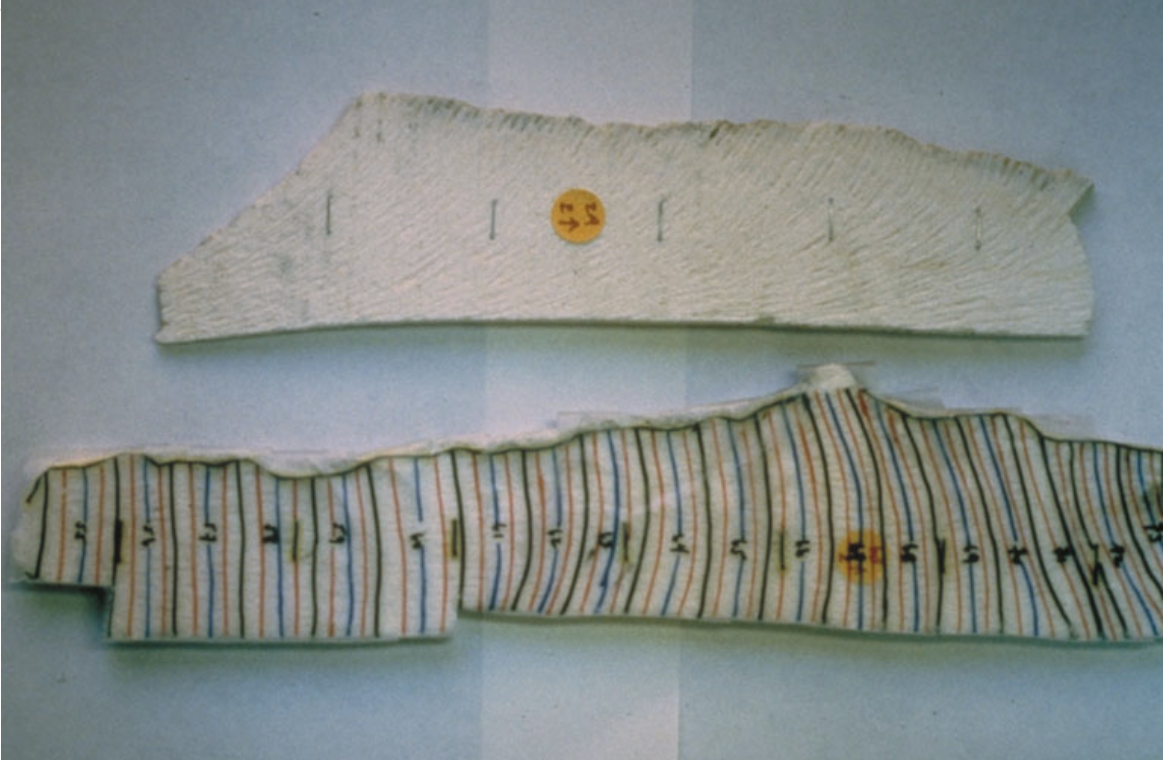
coral reefs? (5)
corals build their hard skeletons from calcium carbonate
scientists drill cylinders of coral and study their layers
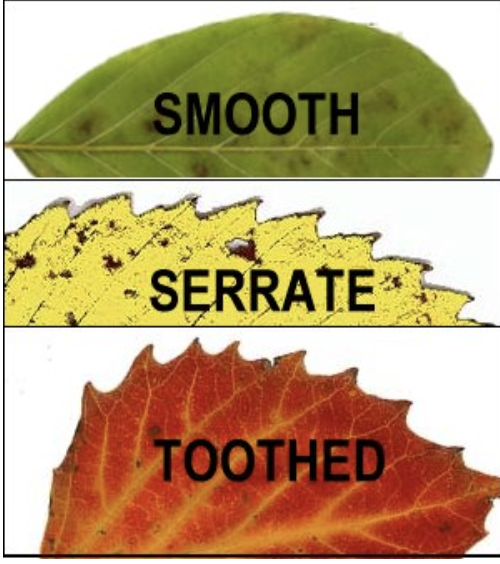
leaf edges? (5)
leaves with smooth edges grow in warmer climates, and ones with jagged edges can endure colder temperatures
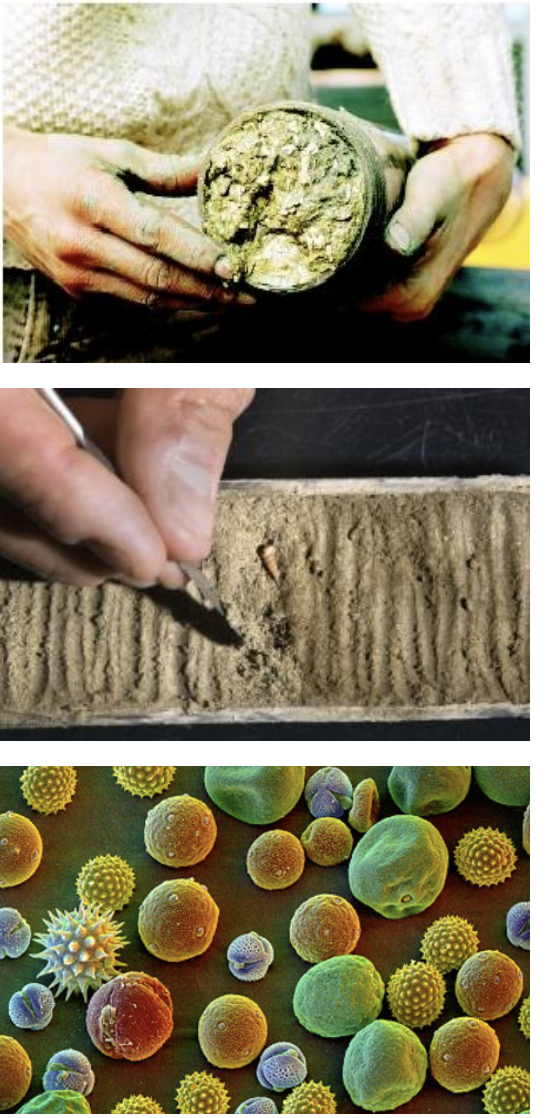
lake and ocean sediment? (5)
scientists drill sediment cores from the ocean floor
pollen grains in the sediment can be used to identify plants that grew thousands of years ago
the species of plant can give clues to the climate
evidence of climate change? (6)
rising temperatures
melting glaciers / ice sheets / ice
rising sea levels
changes in severe weather
changes in wind and precipitation patterns
changing seasons and ecosystems
longer growing seasons, undesirable plants and insects migrating into new regions
thermal expansion? (6)
water expanding when it warms up
effects of climate change on ecosystems + ontario’s ecosystems? (7)
biodiversity will be lost
repercussions will happen throughout the food web
in ontario, some animals will benefit from the warmer temperature, while others will migrate north
effect of climate change on electricity use in ontario? (7)
more electricity use will occur, leading to more GHGs