Electrical Stimulation Exam
 Call Kai
 Learn
Learn Practice Test
 Spaced Repetition
 Match
Match Flashcards
 Knowt Play
1/56

There's no tags or description
Looks like no tags are added yet.
Name | Mastery | Learn | Test | Matching | Spaced | Call with Kai |
|---|
No analytics yet
Send a link to your students to track their progress
57 Terms
ion
particle with an electrical charge
polarity
net charge of an object
anode (+)
looses and electron and becomes positive
cathods (-)
gains electrons and becomes negative
Electrical power
measured in watts
the rate in which electrical power is being use
voltage
force resulting from the build up of electrons
electrical current
flow of electrons in response to voltage force
conductors
water
metal
nerves
blood
muscle
insulators
rubber
plastic
fat
myelin
bone
Ohm’s law
current is dependent on the voltage and resistance to movement of ions/electrons
I=V/R
Resistance
hair
calloused skin
excessive adipose tissue
direct current
continuous unidirectional flow of electrons for at least 1 second
alternating current
uninterrupted bidirectional flow of electrons for at least 1 second
pulsed currents
uni- or bi-directional flow of electrons that periodically ceases for defined period of time
most commonly used therapeutic current
phase
flow of current in one direction
pulse
flow of current separated from each other by interpulse duration
pulse duration (width)
time of each pulse
burst
2 or more consecutive pulses separated by an inter-burst interval
burst frequency
burst per second
frequency
the number of cycles or pulses per second
measured in Hertz (Hz)/PPS/CPS
the higher the PPS for therapeutic electrical stim
the greater the comfort level for the patient
low frequency currents
1-200 hz
medium frequency currents
between 1000 and 10,000 hz
high frequency currents
100,000 to 250,000 hz
amplitude modulation
ramp up or down
amplitude of current
Intensity of current
highest point on each phase
higher amplitude>peak voltage or intensity
waveform
Representation of electrical current
defined by:
shape
direction
amplitude
duration
pulse frequency
electrochemical
Na+ to cathode Cl- to anode
sclerosis
increased blood flow to restore pH
electrothermal
production of heat in response to movement of electrodes through resistance
electrophysical
nerves are depolarized first, then muscles
strength and duration of current important, a,long with nerve size and location of electrodes
cellular response
excite nerve cells
Stimulate protein synthesis, fibroblasts/osteoblasts activity
change cell membrane permeability
tissue response
skeletal and smooth muscle contraction
tissue regulation (softening)
segmental response
imporve joint mobility
increased circulatory/lymphatic activity
change in ANS responses via stimulation of sensory pathways
systemic response
analgesic effects via pain gate and endogenous opioid theory
direct effect
muscle contraction
improves strength and function
Indirect effect
pain modulation
sensory and motor stimulation
non-excitatory
tissue healing
medication delivery
russian current
burst modulated alternating current, commonly used for muscle strengthening
2,500 Hz AC is burst modulated at 50 bps using a 10-msec bursts
IFC
amplitude modulated alternating current, two asynchronous currents to form a current with amplitude modulation
pre mod- generated by machine
used primarily for pain modulation
HVPC
twin peaked monophasic pulsed current a high-peak intensity
short pulse duration
commonly used for tissue repair, wound healing and pain modulation
symmetrical/asymmetrical biphasic PC
used for muscle stimulation and pain modulation
no evidence to support or refute use of one over the other
low-intensity DC (microcurrent)
amplitude below threshold to stimulate sensory or motor nerves
used for tissue repair, wound healing
TENS units
home stim units used for pain modulation
used to stimulate peripheral nerves
consistutes the majority of all therapeutic electrical generators
NMES
used for innervated muscle contraction
depolarizes the motor nerve
attempts to mimic voluntary contractions and is stronger in the initial stages of rehab, preventing muscle atrophy
EMS
used for denervated muscle
depolarized the muscle
pulse duration greater than 10ms
MENS
micro current electrical nerve stimulation
intensity too small to elicit peripheral nerves
used for pain, mostly chronic pain clinics
contraindications for E-STIM
cardiac pacemakers or defibrillators
implanted stimulators; phrenic nerve or urinary bladder
Pregnancy- over abdomen or low back and pelvis
electrode placement over carotid sinus
stimulation across chest
over eyes or gonad area
over areas of active osteomyelitis
PVD
areas of venous or arterial thrombosis
acute stage of inflammation
precautions for E-STIM
history of seizures
uncontrolled hypertension/hypotension
immature or confused patients
decreased or absent sensation
obesity
osteoporosis
cancer
adverse effects of E-stim
electrical burns
skin reaction to electrodes
pain
strength duration curve
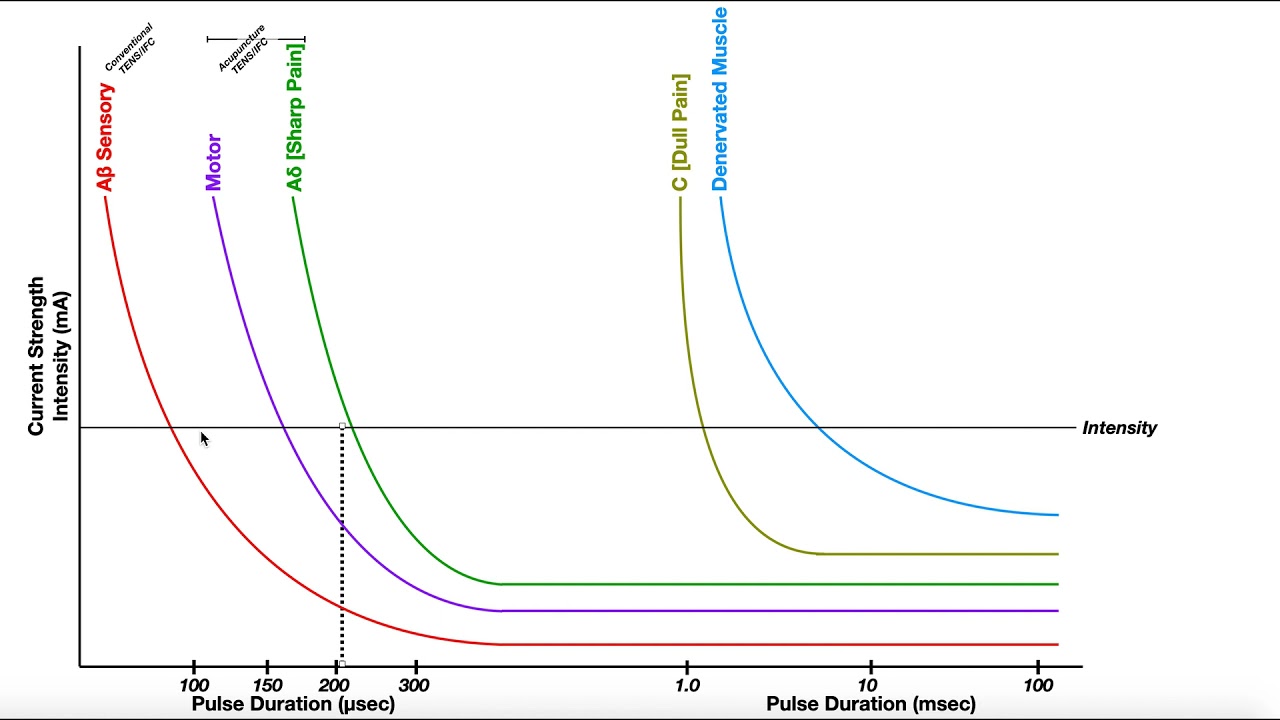
the current induced must be
Sufficient amplitude (strength)
adequate length of time (duration)
accommodation
nerve becomes progressively less response to stimulus
all receptors adapt to stimuli that are sustained or frequently repeated
modulation
variation of stimulation parameters
how does skeletal muscle contraction occur?
electrical stimulation of the alpha motor neuron
FES
Traditionally for patients with SCI
activity should be functional to patient
facilitates or improves purposeful movements
works on the agonist and antagonist muscles together
denervated muscle
maintain contractile properties while awaiting reinnervation
maintain muscle mass to prevent pressure sores/aid with circulation
requires depolarization of the muscle membrane itself
muscle contracting stimulation is through the muscle directly
biofeedback
how fast the nerve is conducted
monitoring, detection, or assessment of skeletal muscle activity
can be combined with FES
used a lot for pelvic floor and quad