gas exchange in the lungs and tissues; and how oxygen and carbon dioxide are transported in the blood
0.0(0)
Studied by 0 people Call Kai
 Learn
Learn Practice Test
 Spaced Repetition
 Match
Match Flashcards
 Knowt Play
Card Sorting
1/20

There's no tags or description
Looks like no tags are added yet.
Last updated 5:27 AM on 5/3/26
Name | Mastery | Learn | Test | Matching | Spaced | Call with Kai |
|---|
No analytics yet
Send a link to your students to track their progress
21 Terms
1
New cards
How does gas move through the conducting zone?
by bulk flow, driven by pressure gradients, independent of gas concentration
2
New cards
How does gas move through the respiratory zone?
by diffusion, driven by concentration gradients, depends on partial pressures
3
New cards
What determines the direction of gas movement?
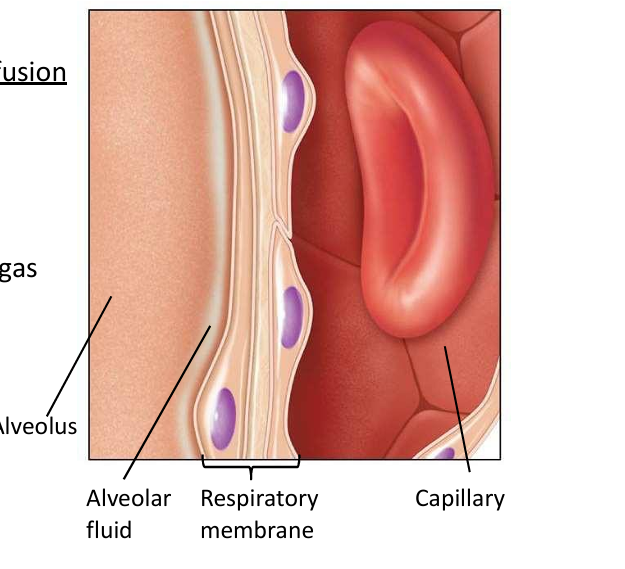
relative partial pressures of O2 and CO2, gases diffuse from high to low partial pressure, concentration gradients across respiratory membrane
4
New cards
What is external respiration?
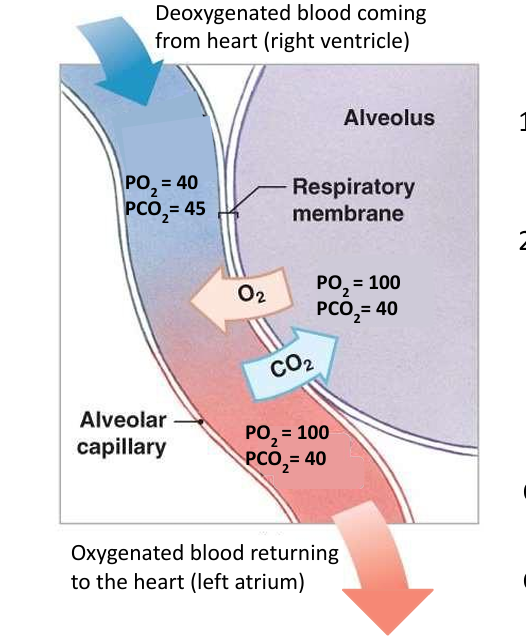
gas exchange between alveoli and blood, occurs after inspiration fills alveoli with gas, deoxygenated blood arrives at alveolar capillaries
5
New cards
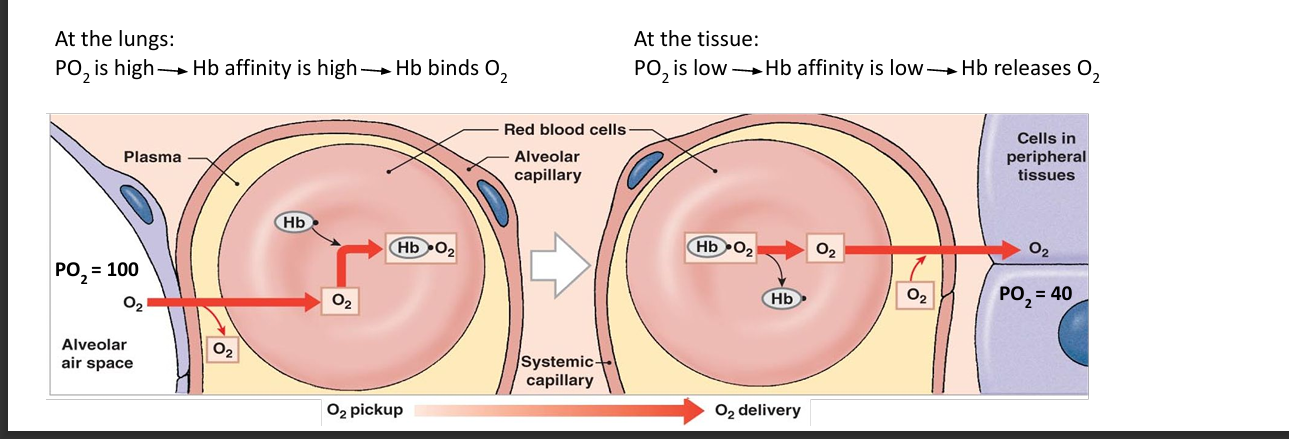
How does oxygen move during external respiration?
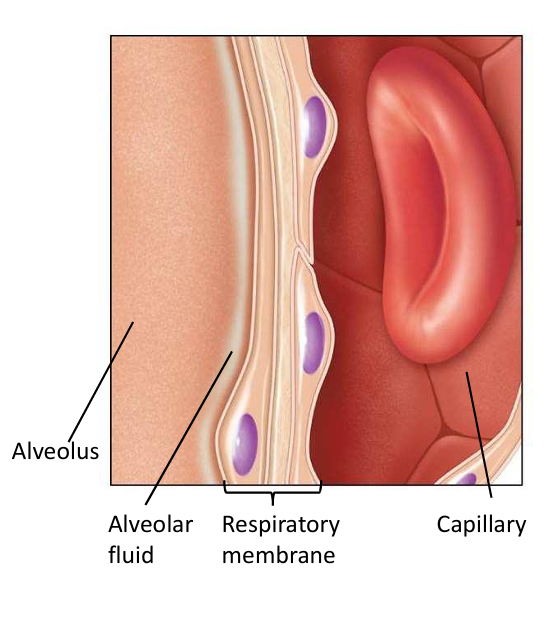
O2 diffuses from alveolus to capillary, driven by higher alveolar PO2, continues until equilibrium
6
New cards
How does carbon dioxide move during external respiration?
CO2 diffuses from capillary to alveolus, driven by higher capillary PCO2, continues until equilibrium
7
New cards
What influences gas exchange across the respiratory membrane?
partial pressure gradients, membrane thickness, membrane surface area
8
New cards
What is internal respiration?
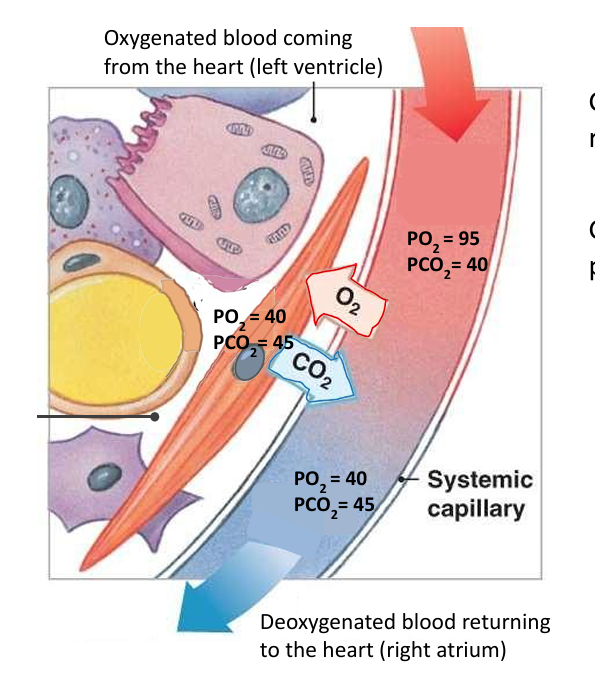
gas exchange between systemic capillaries and tissues, driven by partial pressure gradients, supports cellular metabolism
9
New cards
How does oxygen move during internal respiration?
O2 diffuses from capillary to tissue, capillary PO2 is higher than tissue PO2, continues until equilibrium
10
New cards
How does carbon dioxide move during internal respiration?
CO2 diffuses from tissue to capillary, tissue PCO2 is higher than capillary PCO2, continues until equilibrium
11
New cards
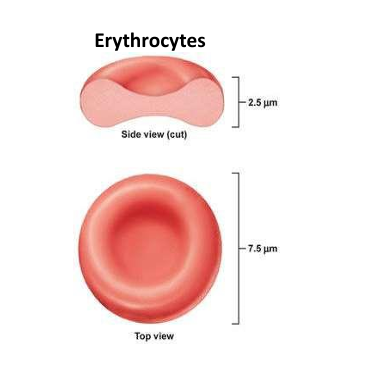
Why is oxygen transport needed?
O2 is poorly soluble in water, requires haemoglobin in red blood cells, Hb binds O2 reversibly
12
New cards
How does haemoglobin behave in the lungs?
high PO2 increases Hb affinity, Hb binds oxygen, facilitates O2 loading
13
New cards
How does haemoglobin behave in the tissues?
low PO2 decreases Hb affinity, Hb releases oxygen, facilitates O2 delivery
14
New cards
What is hypoxia?
low oxygen levels in body tissues, causes shortness of breath rapid heart rate and fatigue, may cause cyanosis
15
New cards
What causes hypoxia?
reduced RBC count or haemoglobin, reduced or blocked circulation, reduced blood PO2
16
New cards
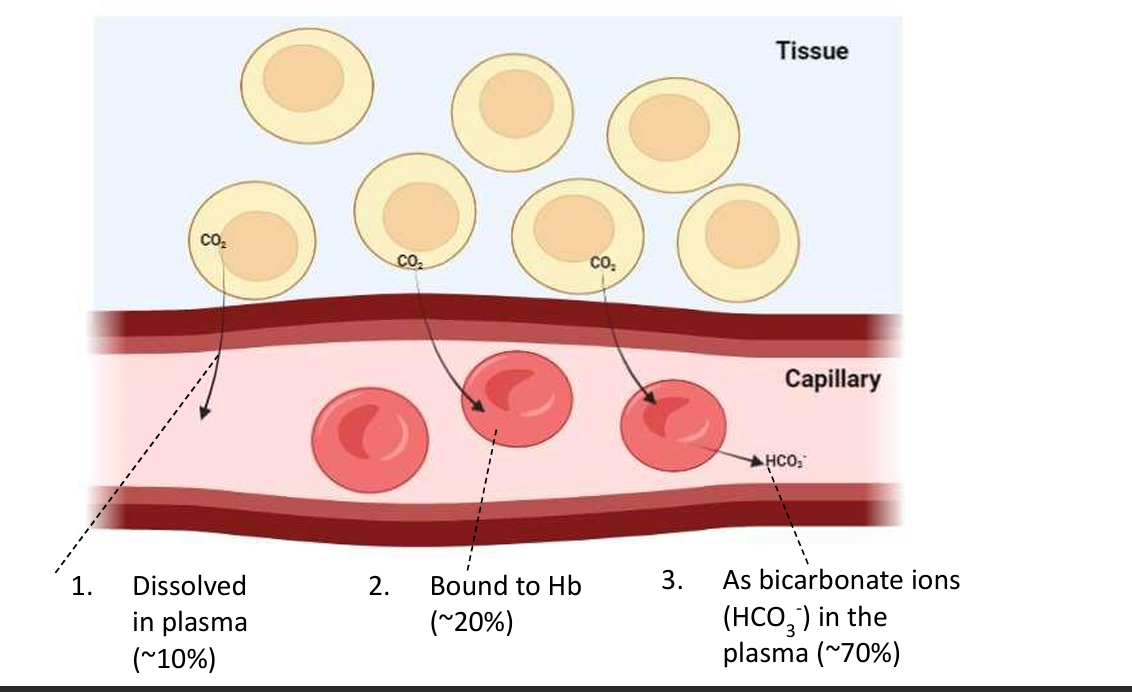
How is carbon dioxide transported in the blood?
dissolved in plasma about 10 percent, bound to haemoglobin about 20 percent, as bicarbonate ions about 70 percent
17
New cards
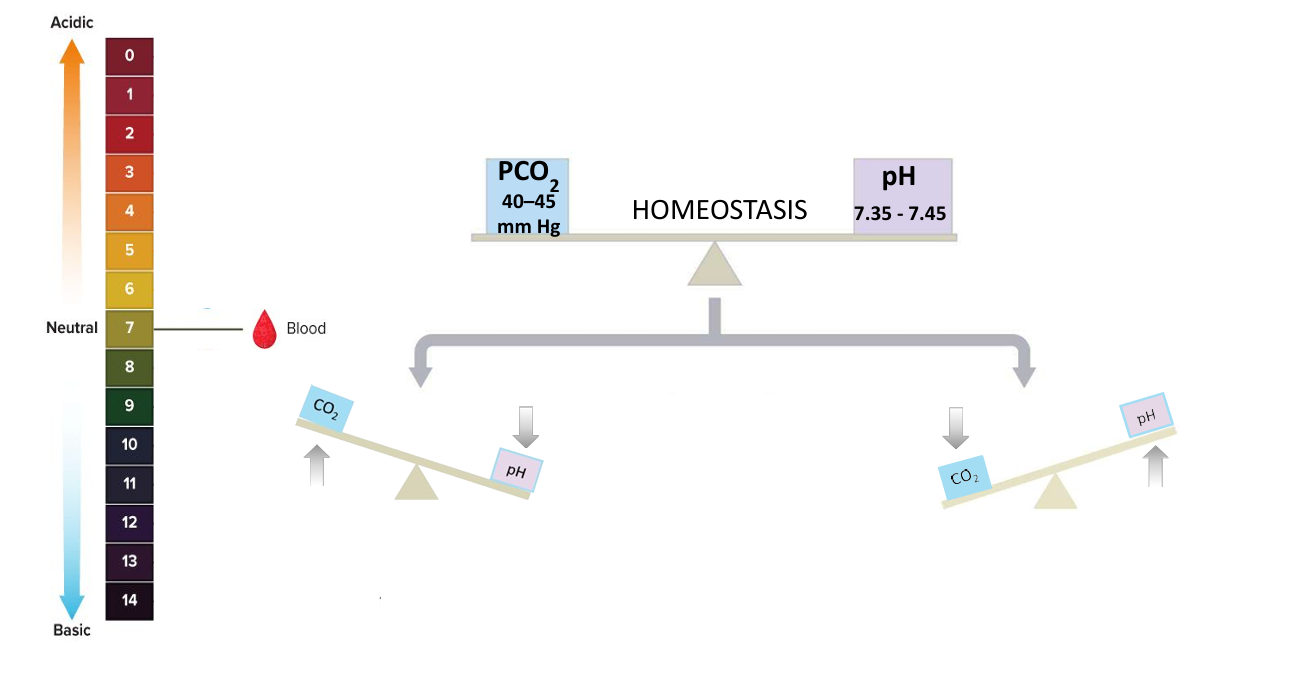
How are PCO2 and pH related?
inversely related, increased CO2 lowers pH, decreased CO2 raises pH
18
New cards
What is normal homeostatic PCO2 and pH?
PCO2 between 40 and 45 mmHg, pH between 7.35 and 7.45, balance maintained by respiration
19
New cards
What happens when CO2 increases?
pH decreases causing acidosis, respiratory system increases ventilation to remove CO2
20
New cards
What happens when CO2 decreases?
pH increases causing alkalosis, respiratory system decreases ventilation to retain CO2
21
New cards