The Brain and spinal cord
 Call Kai
 Learn
Learn Practice Test
 Spaced Repetition
 Match
Match Flashcards
 Knowt Play
1/15

There's no tags or description
Looks like no tags are added yet.
Name | Mastery | Learn | Test | Matching | Spaced | Call with Kai |
|---|
No analytics yet
Send a link to your students to track their progress
16 Terms
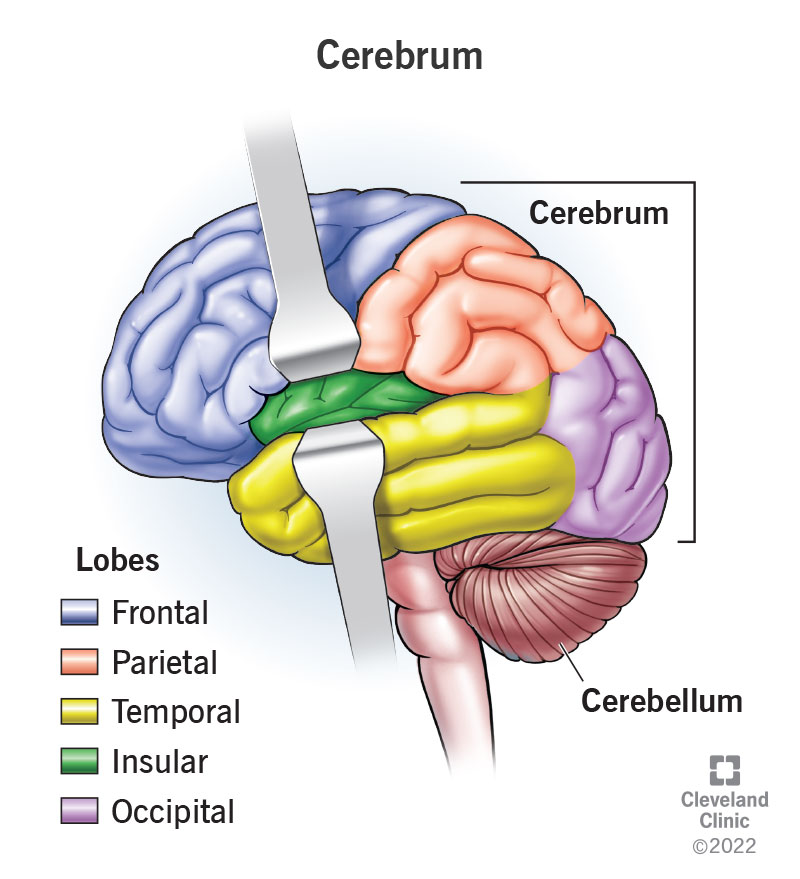
Cerebrum
Controls voluntary action such as higher thought processing
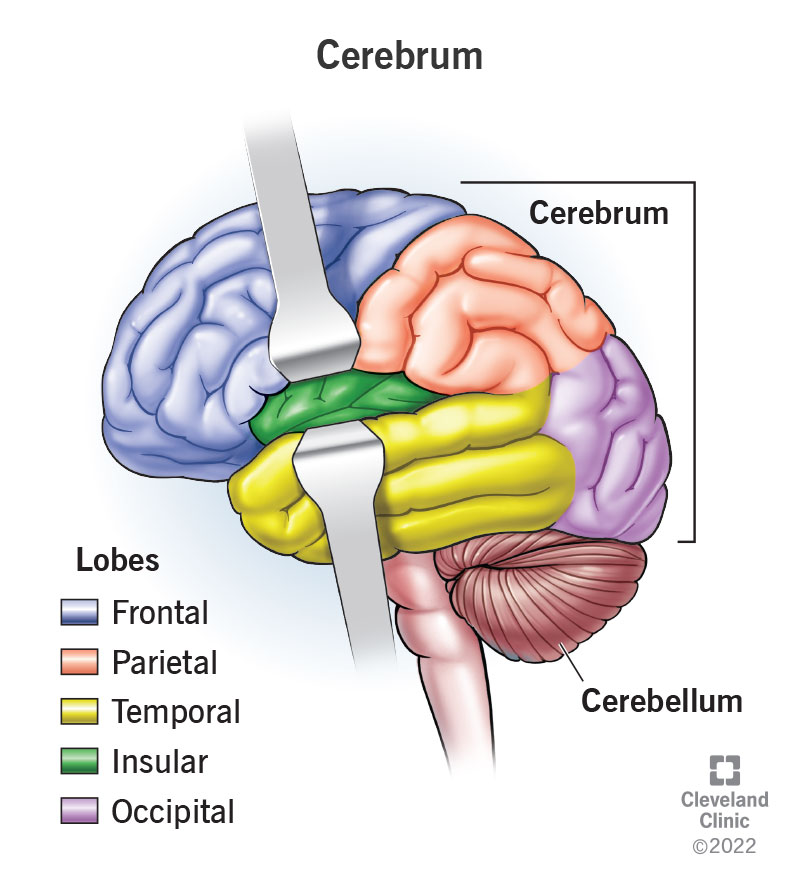
Cerebellum
Coordinates voluntary movements and controls muscle tension to maintain balance
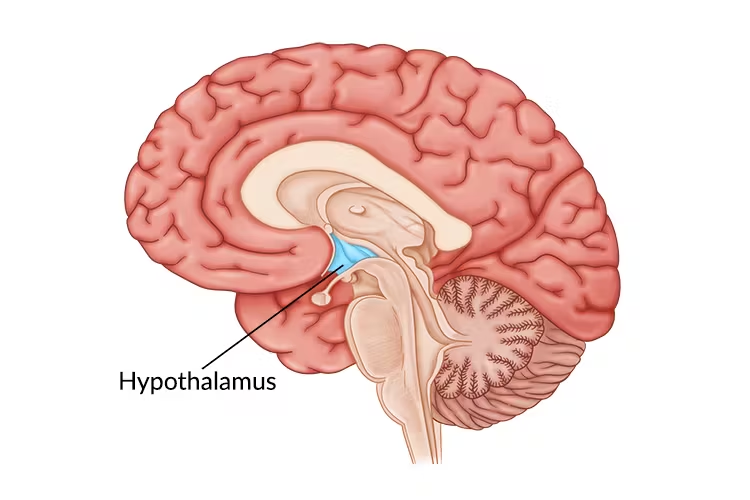
Hypothalamus
Control centre for hunger, temperature and emotions
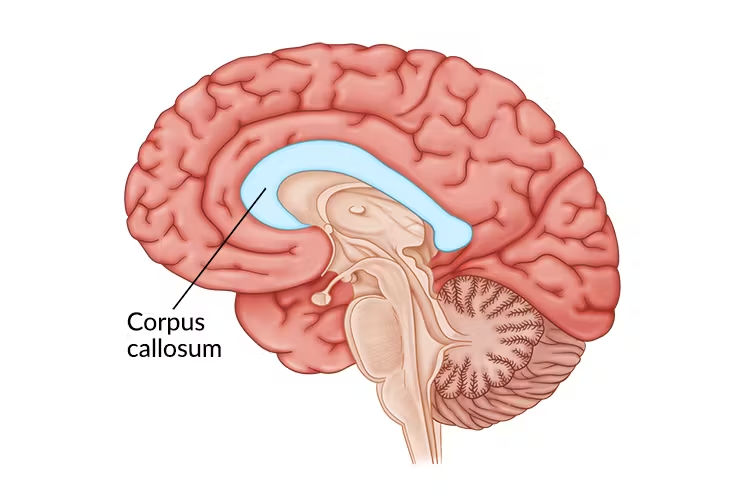
Corpus callosum
Connects the left and right hemisphere of the brain to allow for communication between the two hemispheres
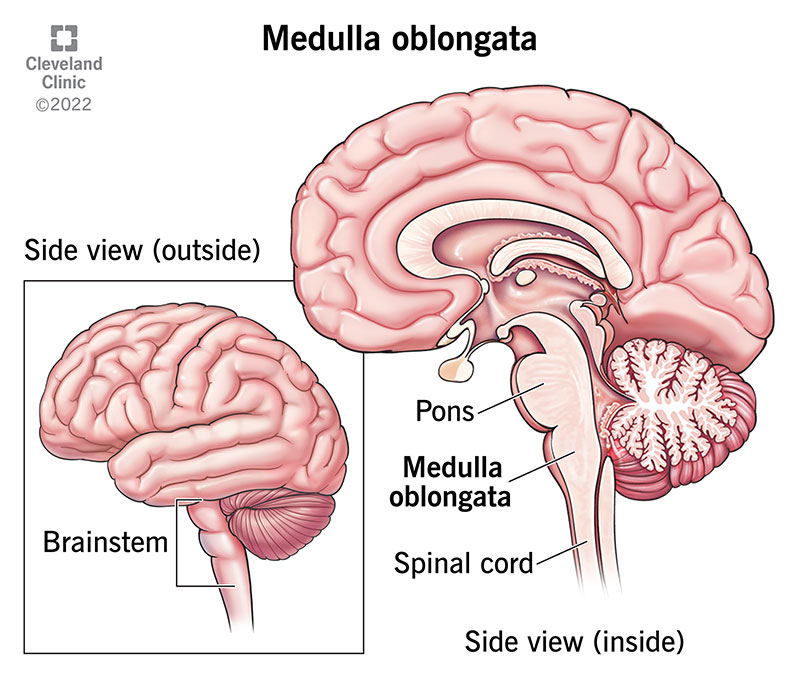
Medulla oblongata
Controls involuntary actions such as heart rate and it also transmits nerve impulses between brain and spinal cord
Sensory neuron
-Unipolar
-Carries impulse from receptors to the CNS
Interneuron
-Bipolar
-Connects the sensory and motor neurons within the CNS
Motor neuron
-Multipolar
-Carries impulses from the CNS to effectors
Receptor
Converts stimulus into an impulse
Effector
Muscle or gland
Stimulus
A detectable change such as heat or pain
Dorsal root
(Facing towards the back of spinal cord) use sensory neurons
Ventral root
(Facing the front of the spinal cord) uses motor neuron
Reflex arc
A quick, automatic response to a stimulus to prevent further damage
Reflex action
R.S.I.M.E
1)RECEPTOR detects stimulus and converts it to an impulse
2)The impulse is then transported by a SENSORY NEURON through the dorsal root to the interneuron
3)The INTERNEURON then transfers the impulse via a synapse to the motor neuron
4)The impulse is then carried by the MOTOR NEURON via the ventral root to an effector
5)The EFFECTOR will then contract and pull away
Synapse
It’s a connection between the axon of one neuron and the dendrites of another neuron