Hydrology FINAL (Cumulative)
 Call Kai
 Learn
Learn Practice Test
 Spaced Repetition
 Match
Match Flashcards
 Knowt Play
1/27

Earn XP
Description and Tags
Name | Mastery | Learn | Test | Matching | Spaced | Call with Kai |
|---|
No analytics yet
Send a link to your students to track their progress
28 Terms
Standard Rain Gauge
Measures depth using a funnel attached to graduated cylinder.
Weighing Recording Gauge
Collects rainwater and measures depth using a spring scale beneath the bucket platform. Doesn’t underestimate intense rain and can measure other precipitation (rain, snow, hail)
Tipping Bucket Rain Gauge
Collects and channels precipitation into a see-saw container, that tips at a certain maximum (and sends an electrical signal). Less expensive, less maintenance, less accurate.
Non-Recording Rain gauge
collecting rainwater: economical, minimum intervention, less maintenance
recording rain gauge
collecting rainwater: more expensive, can be automated, measures intensities, measure accumulation
Satellites
(PERSIANN) measures precipitation
hyetograph
explains temporal distribution of precipitation event during a storm
Infiltration
defined as the flow of water through soil
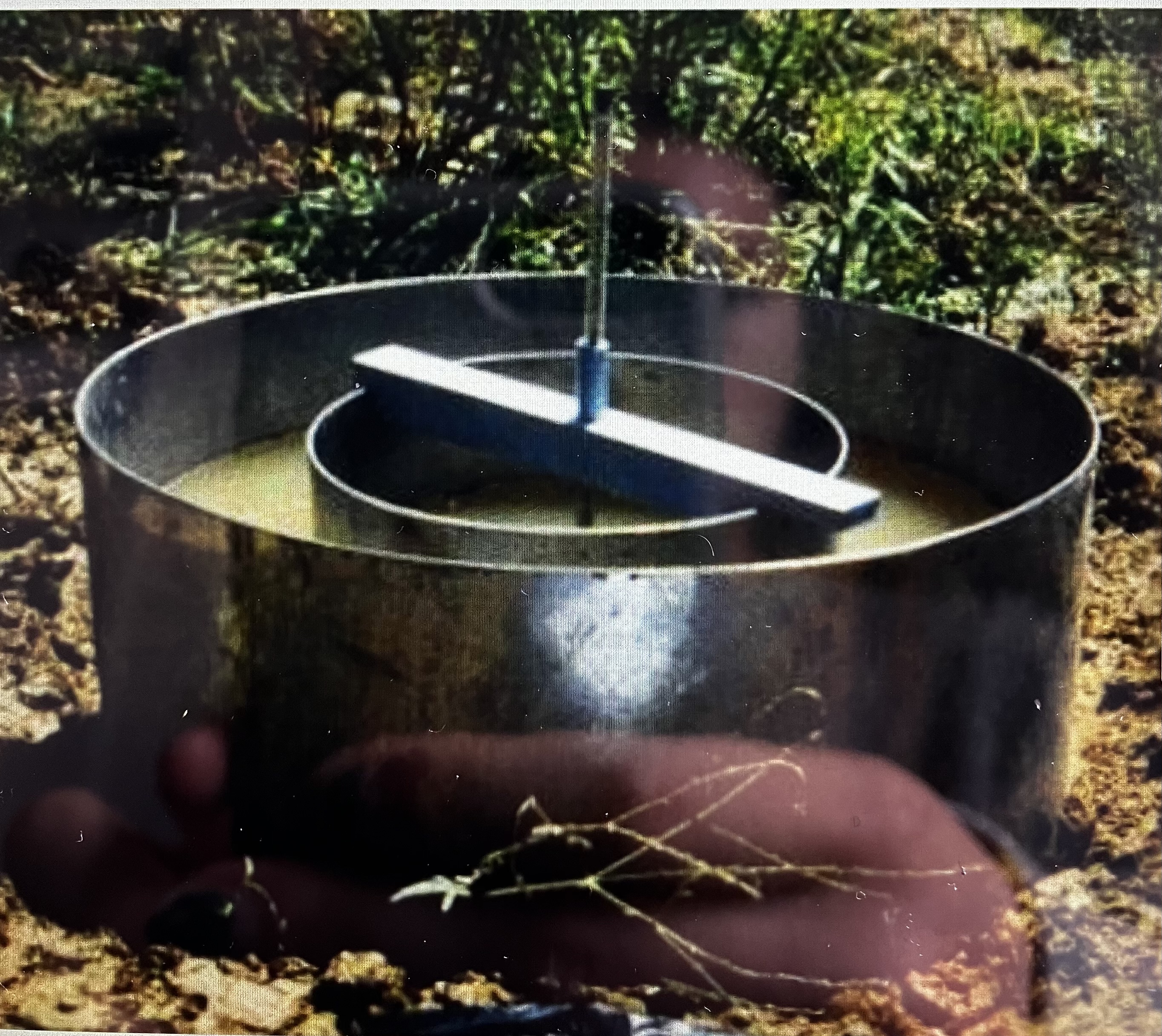
what is this and what does it do?
ring infiltrometer, measures the rate at which water enters the soil
Van Genuchten/Rosetta
math model estimating soil retention curve
CHEMFLO
computer program that simulates water flow to understand flow and transport
Evaporation pan
oldest and simplest method, how much water evaporates from pan over time
Blaney Criddle
useful for air-temperature datasets available for a site
Jensen-Haise Alfalfa-Reference ET Radiation Method
obtaining 5-day daily ET estimate
Thornthwaite Method
predicts monthly potential ET from mean temperature
Penman Method
accounts for solar energy and a mechanism to remove water vapor; well-watered grass reference crop
Penman-Monteith
Why do we care about runoff?
flooding, low flows, impact assessment of changing land use
WHAT Model
(Web-based Hydrograph Analysis Tool) used for signal analysis and processing to separate high frequency signals and low frequency signals
AMC I
dry conditions, soils are dry [<35 mm rain growing season; <12 mm rain dormant season]
AMC II
normal conditions, [35-53 mm growing; 12-28 mm dormant]
AMC III
wet conditions, heavy rainfall [>53 mm growing; >28 dormant]
Time of concentration (Tc)
the longest time required for water to travel from the boundary to the outlet
Lag time (TL)
the average time for water from all locations to reach the outlet
Rational Method
use to estimate peak runoff for small areas
unit hydrograph
useful for developing hydrographs for ungauged watersheds were a land use change is planned
channel capacity
channel must be able to carry the design discharge at average velocities less than the permissible velocity