Seedless Plants: Evolution, Diversity, and Adaptations in Bryophytes and Vascular Plants
 Call Kai
 Learn
Learn Practice Test
 Spaced Repetition
 Match
Match Flashcards
 Knowt Play
1/44

There's no tags or description
Looks like no tags are added yet.
Name | Mastery | Learn | Test | Matching | Spaced | Call with Kai |
|---|
No analytics yet
Send a link to your students to track their progress
45 Terms
What group of eukaryotes do plants share a common ancestor with?
Charophytes (green algae) in the archaeplastida supergroup.
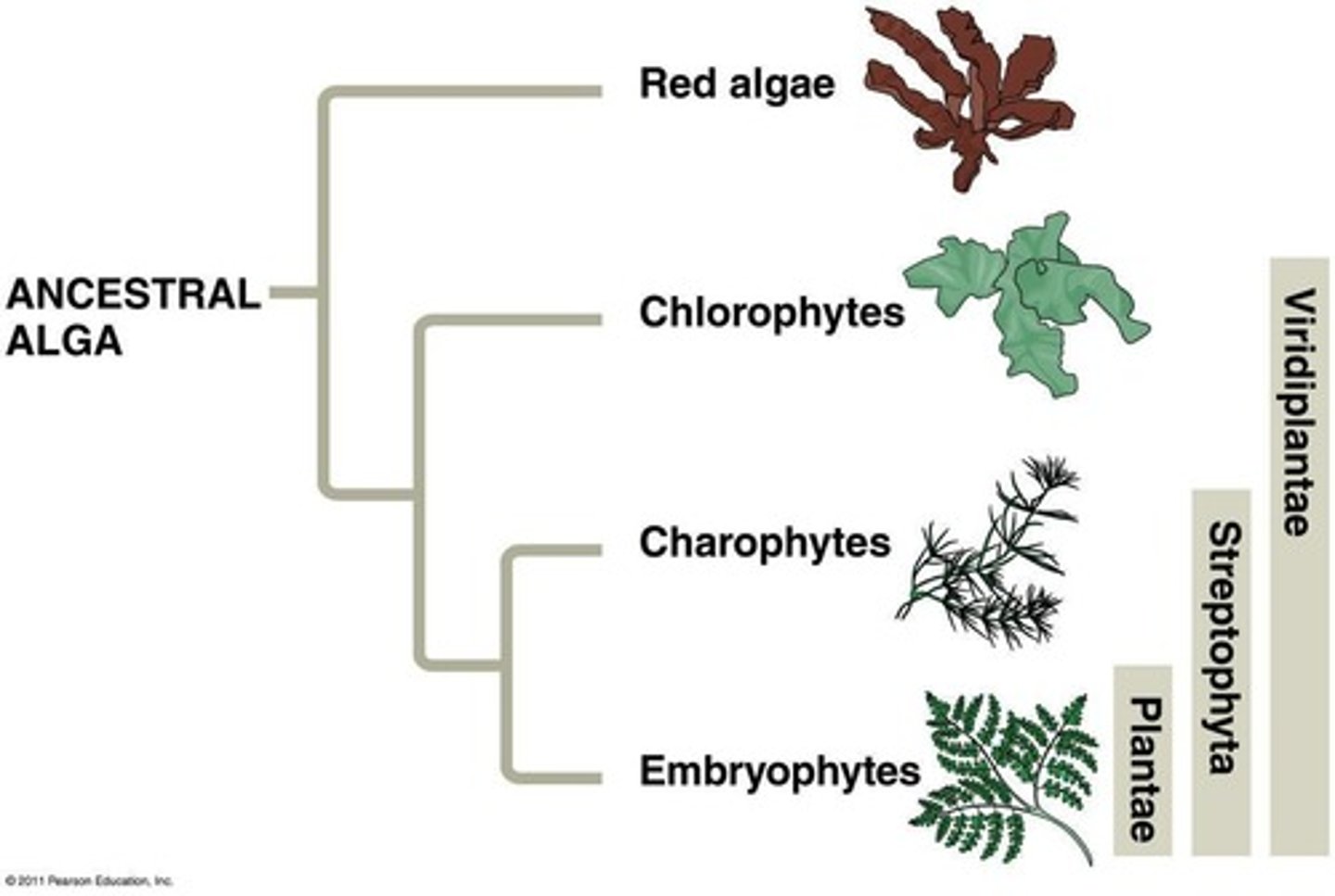
What are the shared characteristics between chlorophytes, charophytes, and plants?
Multicellularity, cell walls with cellulose, chloroplasts with the same pigments (chlorophyll a & b), and starch as a storage molecule.
What major transition did multicellular green algae undergo around 470 million years ago?
They expanded from shallow seas into rivers and lakes, marking the transition to land life.
What are some advantages of living on land for plants?
Higher CO2 concentration, increased light intensity, more minerals, and absence of herbivores and competition.
What is a significant disadvantage of terrestrial life for plants?
The risk of desiccation (drying out).
What is the alternation of generations in plants?
A life cycle that includes both haploid (gametophyte) and diploid (sporophyte) stages.
What type of spores do land plants produce?
Walled haploid spores that are protected by sporopollenin.
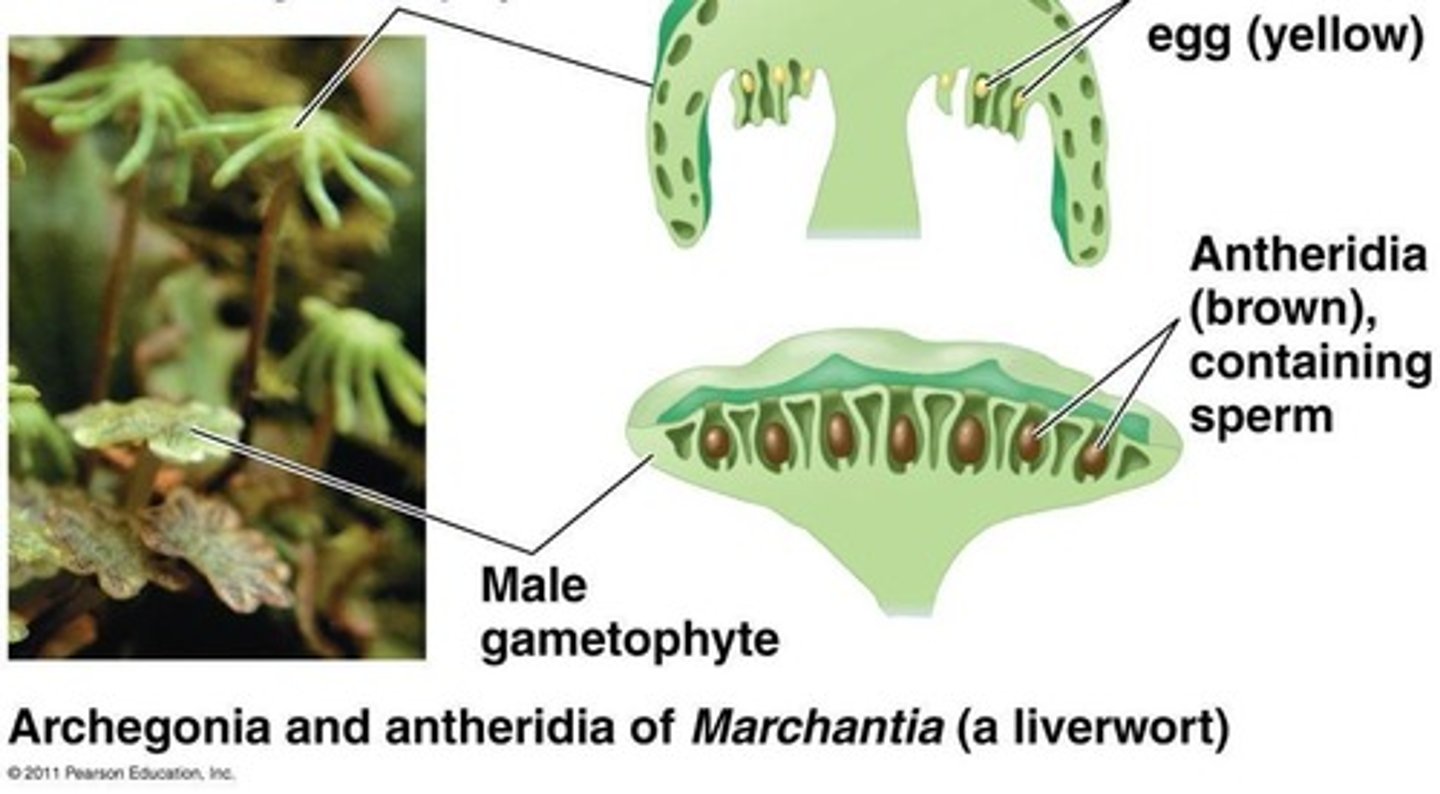
What are multicellular gametangia?
Structures that protect gametes, with antheridia for sperm and archegonia for eggs.
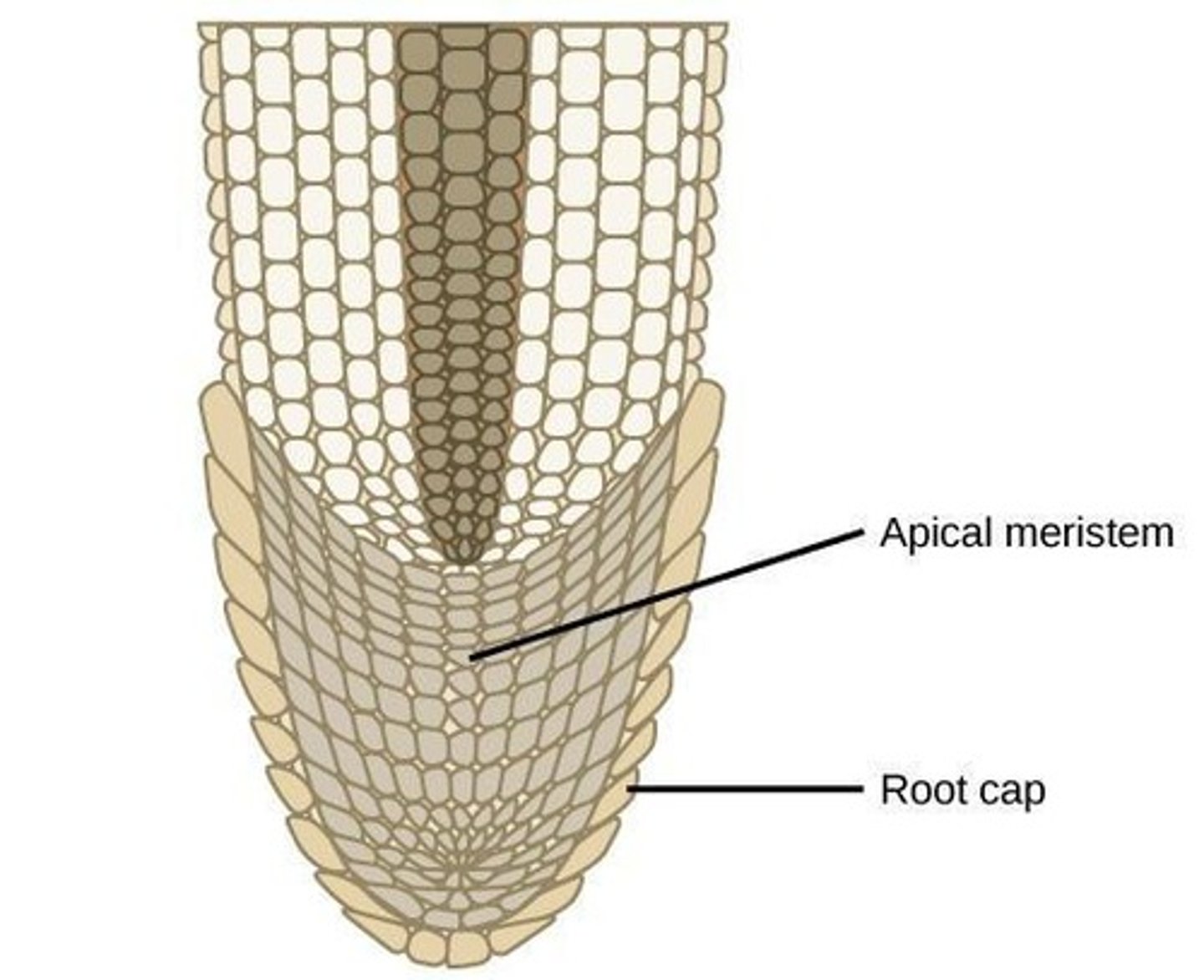
What is the role of apical meristems in plants?
They consist of continuously dividing cells that allow roots and shoots to grow toward resources.
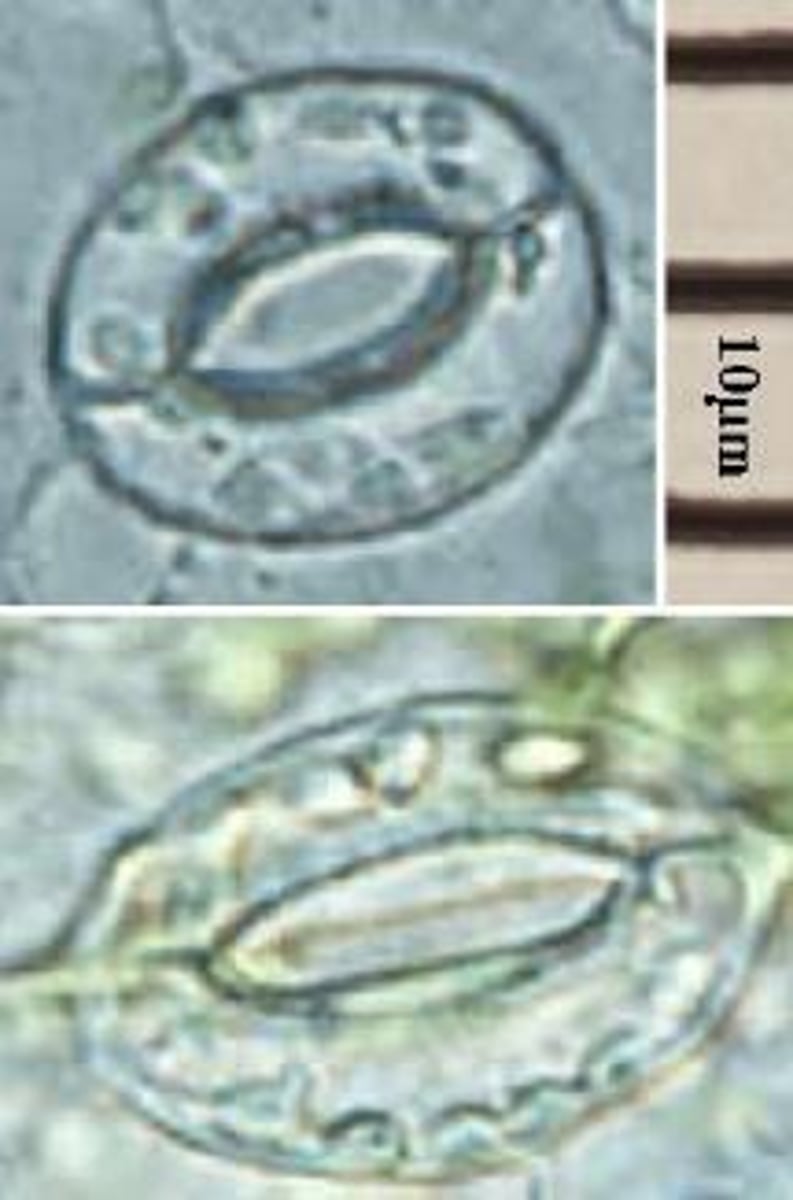
What is the function of a waxy cuticle in plants?
To prevent desiccation while allowing for gas exchange through controllable stomata.
What are secondary metabolites?
Chemicals produced by plants that deter, repel, or poison competitors, herbivores, and parasites.
What is mycorrhizae?
A mutualistic relationship between fungi and plant roots that aids in water and mineral absorption.
What are the two major divisions of seedless plants?
Seedless nonvascular plants and seedless vascular plants.
What is the dominant generation in lower plants?
The gametophyte generation.
How does the size of the gametophyte and sporophyte generations change as plants evolve?
The gametophyte generation becomes smaller while the sporophyte generation becomes more dominant.
What is the significance of the zygote in charophytes?
The zygote undergoes meiosis to produce only four diverse offspring, unlike the alternation of generations in plants.
What is the primary function of stomata in plants?
To regulate gas exchange, allowing CO2 in and O2 and H2O out.
What adaptations do plants have to protect their gametes from desiccation?
Gametes are protected within multicellular structures (antheridia and archegonia).
What is the evolutionary significance of mycorrhizae?
They date back to the first land plants, indicating early adaptations for nutrient absorption.
What does the term 'haplontic' refer to in plant life cycles?
A life cycle where the haploid stage is dominant.
What does the term 'diplontic' refer to in life cycles?
A life cycle where the diploid stage is dominant, as seen in humans.
What are Bryophytes?
Collectively referred to as seedless, nonvascular plants including liverworts, hornworts, and mosses.
What is the dominant form in Bryophytes?
The haploid gametophyte is the dominant form.
What do Bryophytes require for reproduction?
Water is required for reproduction.
What is the role of the diploid sporophyte in Bryophytes?
The diploid sporophyte depends on the gametophyte for food and water.
What are the three phyla of Bryophytes?
Marchantiophyta (Liverworts), Anthocerotophyta (Hornworts), and Bryophyta (Mosses).
What is a key characteristic of liverworts?
Most have elevated gametophytes that resemble miniature trees.
What is the common name for Anthocerotophyta?
Hornworts, named for their horn-like sporophyte shape.
What ecological role do mosses play?
Mosses are pioneer species in nutrient-poor soils and major primary producers in cold or high-altitude regions.
What is Sphagnum moss known for?
Sphagnum moss forms peat bogs, important wetlands that can preserve corpses for thousands of years.
What are seedless vascular plants (SVP)?
Plants that have vascular tissue but do not produce seeds.
What is a characteristic of SVP sporophytes?
SVP sporophytes are branched and independent of gametophytes for nutrition.
What are microphylls and megaphylls?
Microphylls are small, spine-shaped leaves with a single vascular strand; megaphylls are larger leaves with a branched vascular system.
What is the significance of sporophylls?
Sporophylls are leaves modified to bear sporangia, crucial for spore production.
What is the difference between homosporous and heterosporous spore production?
Homosporous produces one type of spore; heterosporous produces two types (megaspores and microspores).
What are Lycophytes?
A group of seedless vascular plants that include club mosses and relatives.
What are Monilophytes?
A group of seedless vascular plants that includes ferns, horsetails, and whisk ferns.
What is a fiddlehead?
The coiled young frond of a fern.
How do ferns reproduce?
Ferns reproduce via spores produced in sori on the underside of sporophylls.
What ecological importance do seedless plants have?
They accelerate topsoil formation, promote weathering of rocks, and serve as food and fuel.
What is the significance of peat moss?
Peat moss is used as a fuel source and soil conditioner.
What is the lifespan of the diploid sporophyte in Bryophytes?
The sporophyte grows within the archegonium of the gametophyte.
What is the role of rhizoids in Bryophytes?
Rhizoids are used for attachment, but they are not true roots.
What is the evolutionary significance of seedless vascular plants?
They represent a major step in the transition of plants from water to land.
What type of environments do mosses inhabit?
Mosses can inhabit extreme environments such as mountain tops, tundra, and deserts.