Lecture 9 - Program Design
 Call Kai
 Learn
Learn Practice Test
 Spaced Repetition
 Match
Match Flashcards
 Knowt Play
1/13

Earn XP
Description and Tags
Name | Mastery | Learn | Test | Matching | Spaced | Call with Kai | Chat |
|---|
No analytics yet
Send a link to your students to track their progress
14 Terms
Program Variables of Sport
Mechanics: body and limb movement patterns
Speed/Strength: force production requirements
Duration: length of efforts/play
Frequency: number of efforts/plays
Loads: uniform, equipment, and terrain
Injury Prevention: sites for joint/muscle injury and causes of injury
Program Variables to consider of Players
Needs and goals
Current training status: level of preparedness, current or previous injuries
Training background: type of training, length of participation, level of intensity, degree of skill
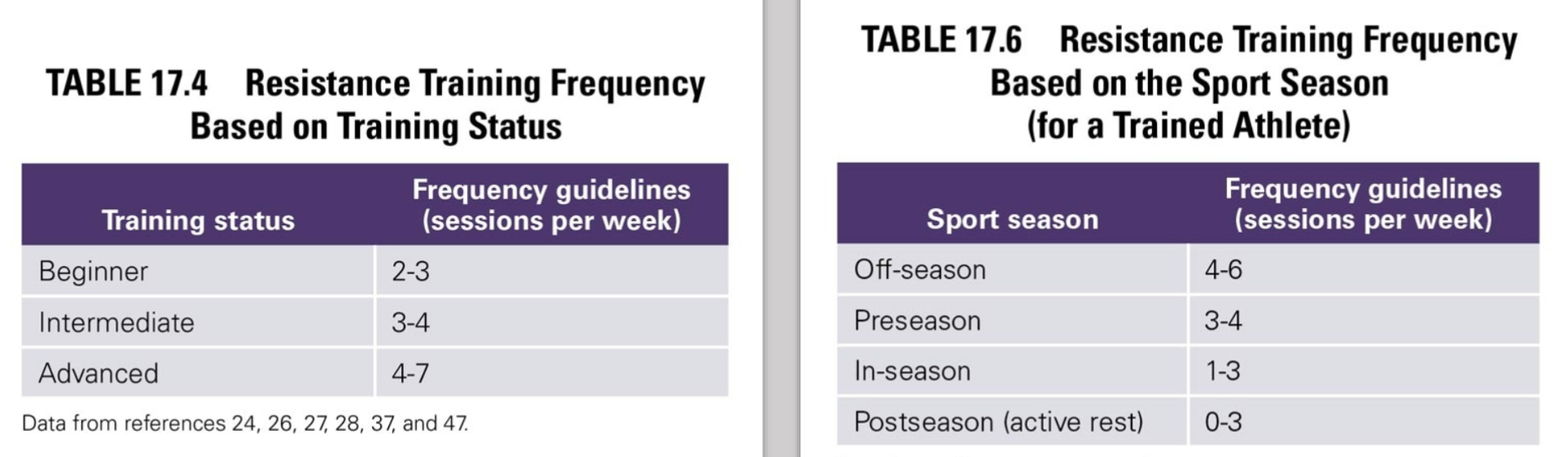
Training Frequency program variable
Training status
Sport season
Exercise type and load (more intense exercises require more rest time = lower frequency per week)
Exercise Selection program variable
Applying Exercises to Skills
Quality: power, strength, size, rehab, or motor patterns
Purpose: structural, functional, axial, or peripheral (skeleton)
Type: sport specific, assistance, multi-joint, single-joint
Season: in-season (all sport specific), off-season (doesn't have to be all sport specific), pre-season, or post-season
Exercise Placement: before, during, or after sport practice
Ex: squats, bulgarian ss don’t do much for swimmers because sport doesn’t utilize very much knee or ankle flexion; instead hip thrusts are used for hip flexion
Exercise Order
Speed (sprinting, plyometrics, agility training)
Power (Olympic lifts - snatch, clean & jerk)
Strength (Squat, bench, deadlift)
Accessories (Anything else)
Rules of Exercise Order
speed and power before strength before accessories/assistance
Axial before peripheral (load spine and core before limbs)
Multi-joint before single-joint (speed and power goes first bc utilizes multi-jointed)
Alternate upper/lower, push/pull (can only alternate within a category, not between categories)
Free weights before machines (machines are considered accessories)
Sport specific exercises before accessories
Correct Exercise Order Examples
Cleans, deadlifts, single leg RDLs
Squats, BB bench, lunges, chest flys
Heavy back squat, leg press, light front squat, lunges
Drop jumps, snatches, deadlifts, tempo RDLs
Close-grip pull ups, wide-grip barbell rows (may be different depending on individual but personally I would be too fatigued to do pull ups last)
Agility drills, cleans, squats, RDLs
Intensity and Repetition
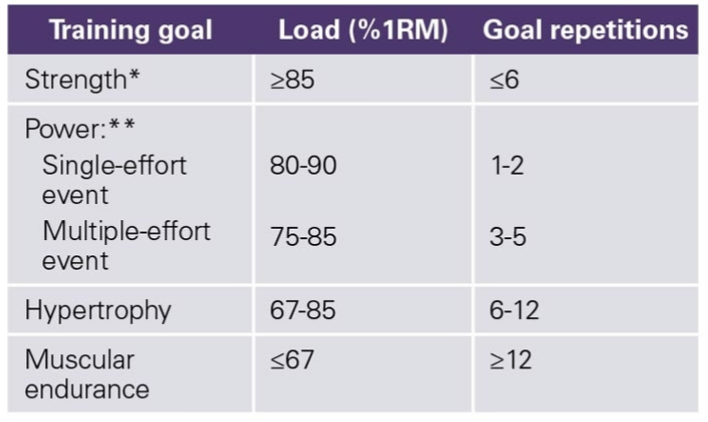
Intensity: # of reps (match reps with proper % of 1RM)
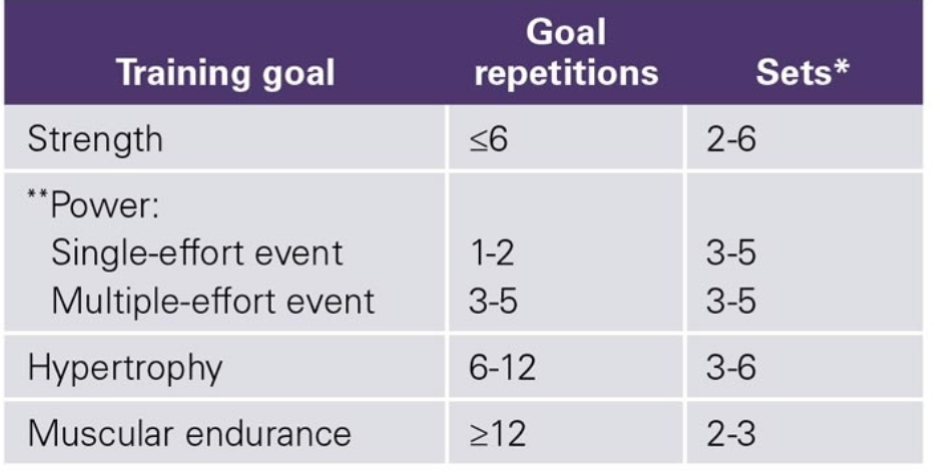
Reps: dictates volume (weight x total reps)
Strength: above 85% Max 6 reps
Power: 85% for 1-2 reps or 3-5 if doing multiple efforts
Hypertrophy: 65-85% for 6-12 reps
Muscular Endurance: below 65% for above 12 reps
Rep Tempos
Speed, Power, Max Strength = 1-0-X
Max Strength = 2-0-1
Functional Hypertrophy = 2-0-1
Structural Hypertrophy = 3-0-3
Stability/Control = 4-0-4
Volume
Rep Volume: # of sets x # of reps (3×10 = 30)
Volume load: weight x rep volume (3×10 @100lbs = 3000)
Rest
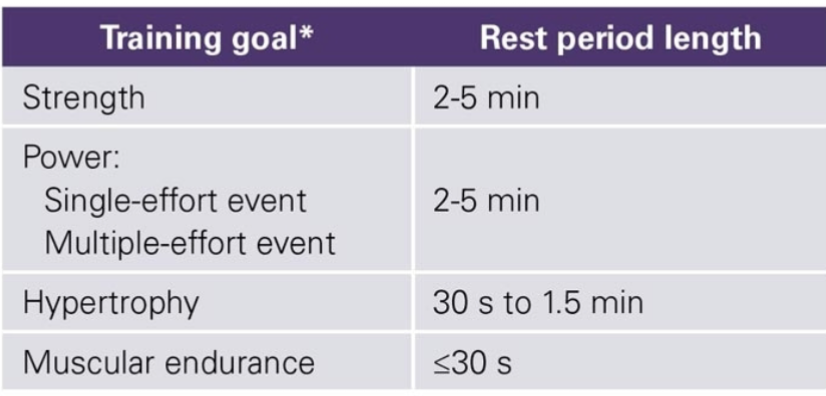
0-30s = 50% metabolic system recovery
30s-2min = 90% metabolic system recovery
2-3min = near complete metabolic system recovery
3-5min = near complete neural recovery
5-10min = complete neural recovery
**when your nervous system is used to a high degree of intensity, more time is needed to rest between sets (important in speed, power, and max strength work)
Program Design for Strength Training Unit
Choose 1-2 from each section, 6-8 exercises total MAX
Lower Body Push: squat, front squat, split squat, lunge, leg press
Lower Body Pull: deadlift, RDL, snatch, single leg deadlift
Olympic Lifts: snatch, clean, DB snatch, high pulls, DB high pulls
Upper Body Push: bench, DB bench, push press, jerks, overhead press
Upper Body Pull: seated row, DB row, lat pull, pull up, chin up
Torso Work (Abs): plank, side plank, deadbugs, twists
Assistance: lateral, posterior, front raises, leg extension, leg curl
Program Design for Speed & Agility Unit
Speed Exercise Choices
Jumping: vertical, long, side, box, hurdles, resisted, using bands
Med Ball Throws (Ballistic): overhead, chest, side, sit ups
Sprinting: mechanics, drills, starts, short sprints < 30 yards
Sport Skill Loading: heavier, lighter, using bands
Agility Exercise Choices
Shuttle Work: shuffle, carioca, sprint touches, cones, hurdles
Unilateral Work: single leg directional combos, drill variant combos
Reaction Drills: mirror drills, whistle drills, stance starts
Sport Loading: heavier, lighter, and/or bands <10%
Program Design for Endurance Unit
Aerobic Capacity
Runs: for distance, time, or tempo
Other Modes: cycling, stepping, rowing , elliptical, spinning
Periodize long, medium, and short duration bursts
Anaerobic Capacity
stadium, hill, incline treadmill sprints
multiple short sprints
resisted/assisted short sprints
periodize to include all phases of intermittent bursts