Chapter 19: Dental Lamina and Enamal Organ
 Call Kai
 Learn
Learn Practice Test
 Spaced Repetition
 Match
Match Flashcards
 Knowt Play
1/60

There's no tags or description
Looks like no tags are added yet.
Name | Mastery | Learn | Test | Matching | Spaced | Call with Kai |
|---|
No analytics yet
Send a link to your students to track their progress
61 Terms
Dental lamina
Thickened band of oral epithelium that follows the curve of each developing arch
When does the dental lamina begin forming
6th embryonic week
The 20 thickened sites of dental lamina will form
The enamal of teeth
Bud stage
First stage in development of enamal organ, initial budding of dental lamina in 20 areas
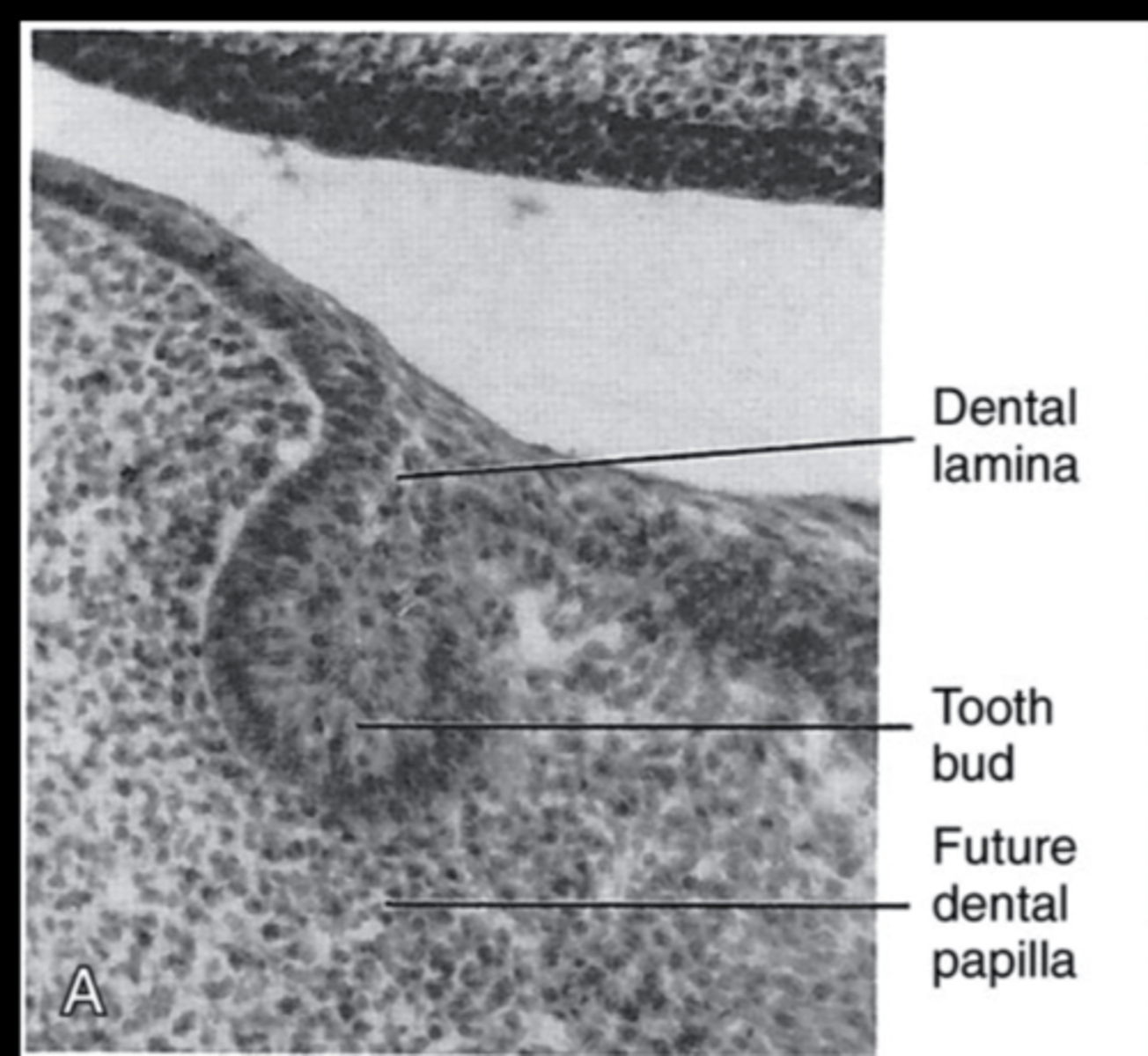
What forms the tooth enamal
Enamal organ
During the bud stage only ________ of the tissues occurs, no _________ change to the cells
Proliferation, structural
All teeth and their associated tissues develop from both the ________ and _______ tissue
Ectoderm, mesoderm (Ectomesenchyme)
In areas where teeth will not develop the dental lamina
Merely thickens
Macrodontia
Abnormally large teeth
- fusion
- gemenition
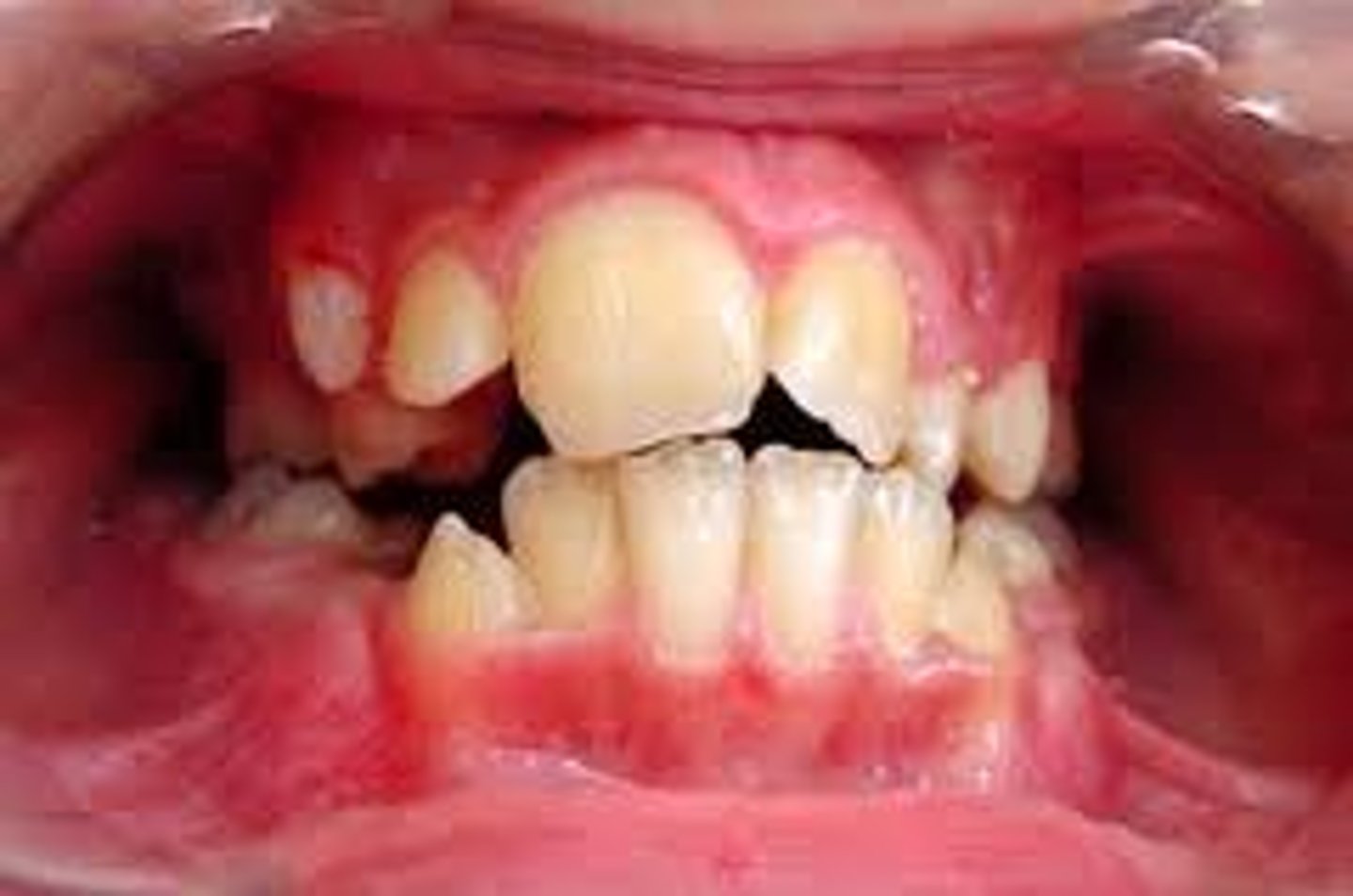
Microdontia
Abnormally small teeth
- peg lateral (maxillary lateral incisor most common tooth)
- peg molars
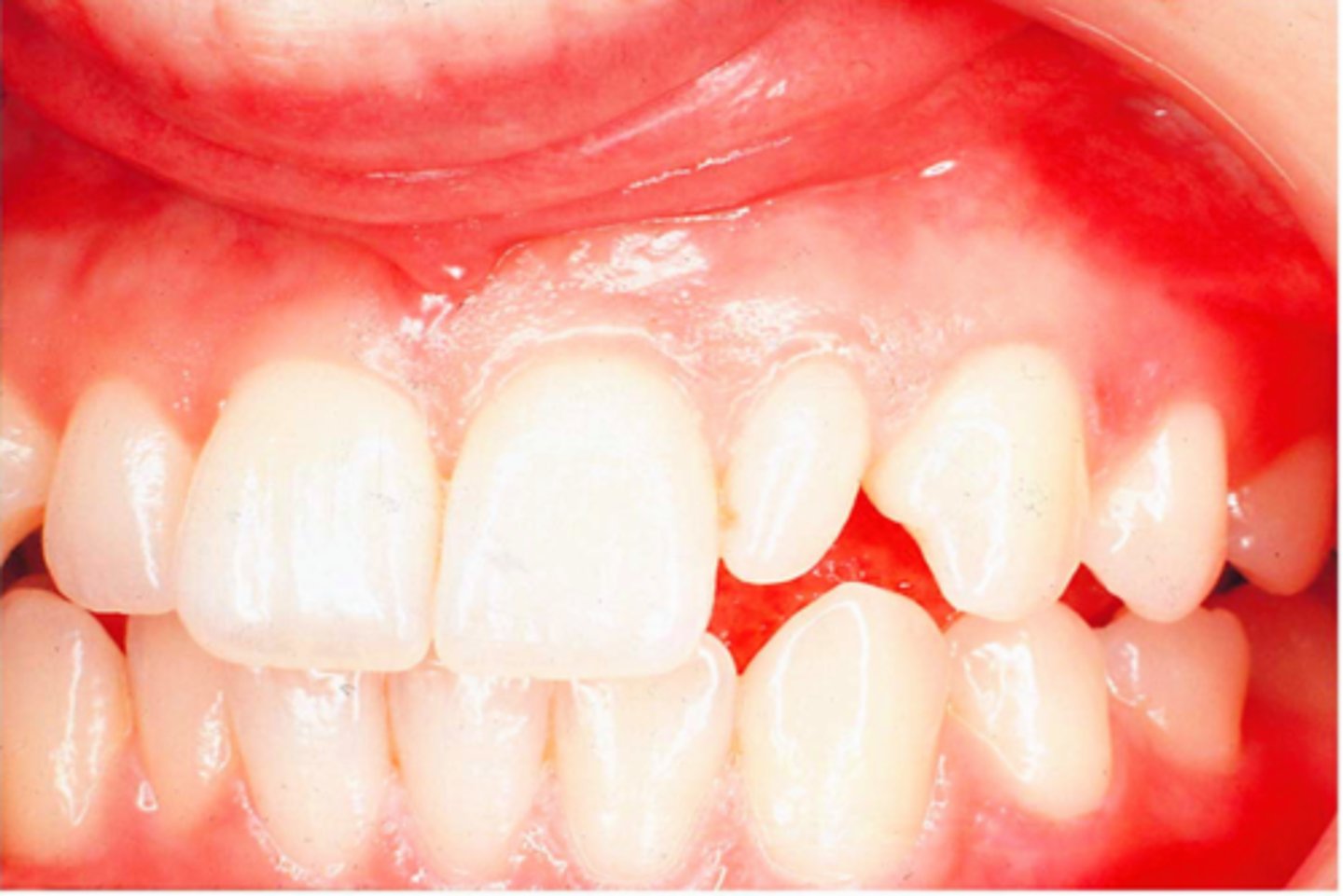
When does microdontia occur
During bud stage
The localized form of microdontia is
Hereditary
Microdontia means ________ dysfunction is complete
Endocrine
What teeth does microdontia commonly involve
Permanent maxillary lateral incisors and third molars
When does macrodontia occur
During bud stage of development
Macrodontia usually results in ________ dentition
Partial
Macrodontia can be a dysfunction of the _________ gland
Pituitary
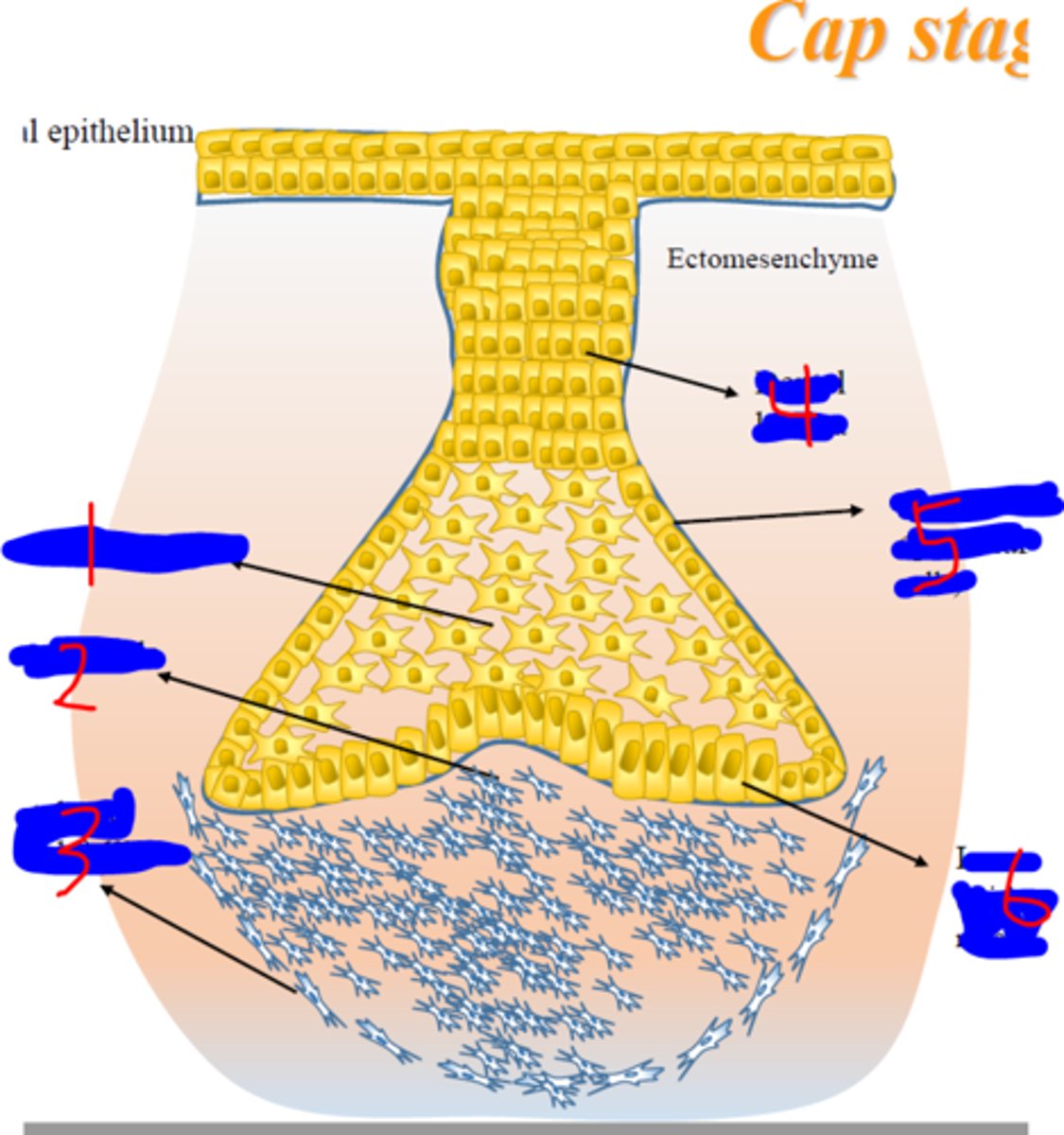
What are the 3 components of the cap stage
Outer enamal epithelium, inner enamal epithelium, stellate reticulum
What do the cap stage components do
Get ready to produce enamal, each layer is responsible for building enamal
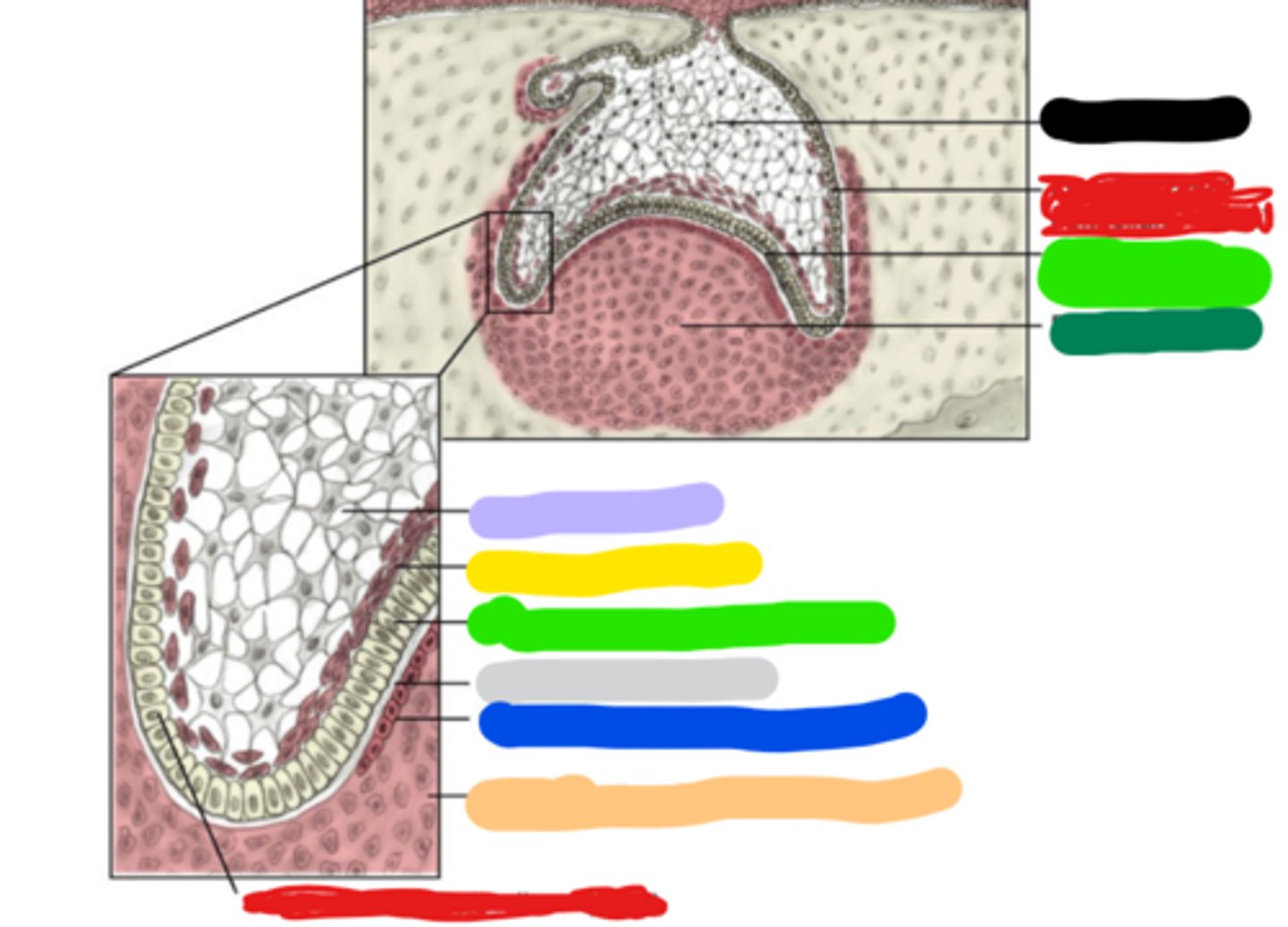
Outer enamal epithelium
Outermost part of structure, direct continuation of basal layer of oral epithelium (red)
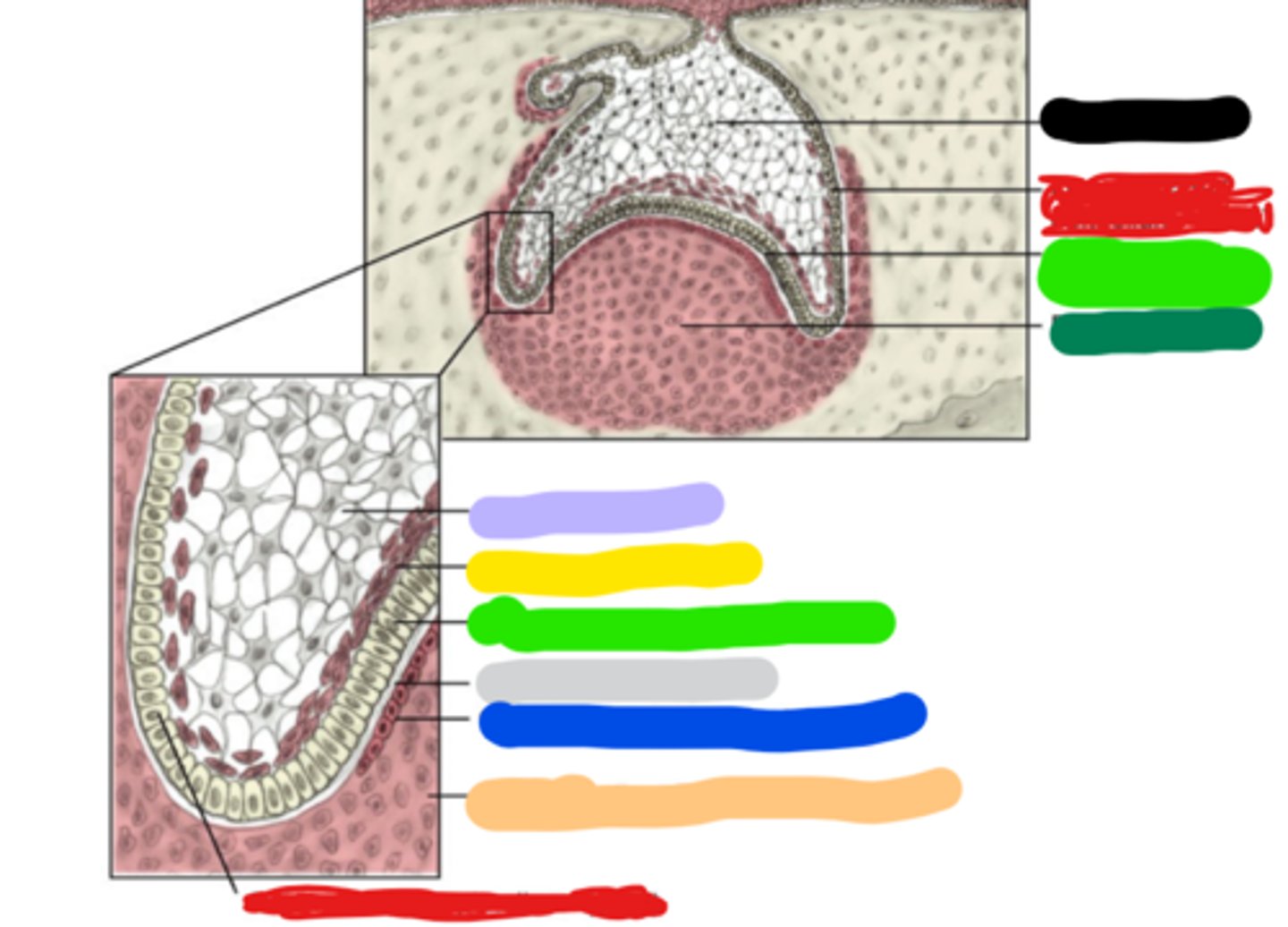
What cells make up the OEE
Low columnar and cuboidal cells
Inner enamal epithelium
Outline the concavity in the deepest part, continuous with OEE cells (light green)
What does the IEE originate from
Basal layer of oral epithelium
Stellate reticlum
Between IEE and OEE, ectodermal cells
What layer of oral epithelium does the stellate reticulum originate from
Superficial layers
Is there an equal or unequal growth of the tooth bud during the cap stage
Unequal, one side is thicker than the other
Cap stage
Formation of a cap shape or enamal organ attached to the dental lamina
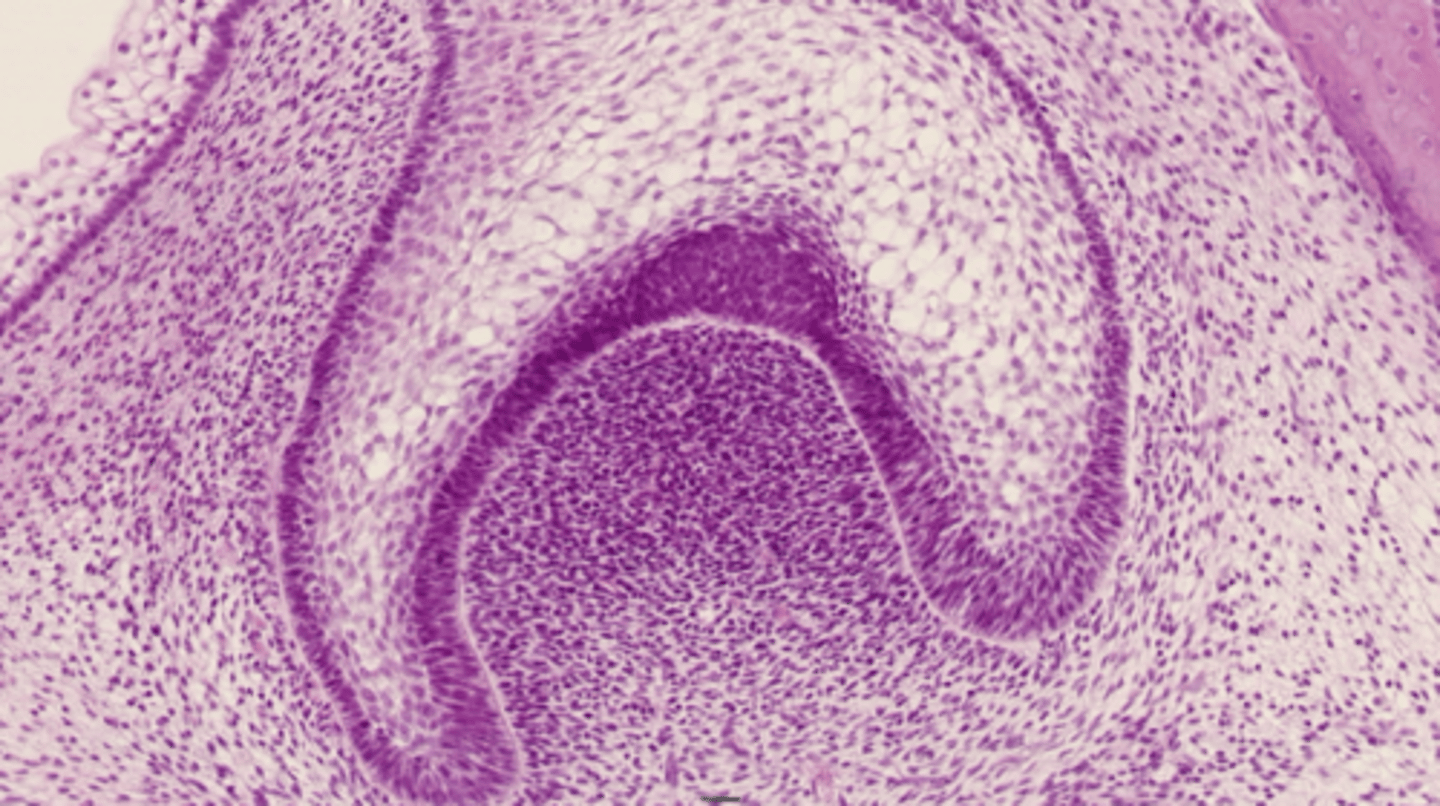
What is the pre-dominant physiological process during the cap stage
Morphogenesis
Morphogenesis
How it's changing it's shape
What part of the enamal organ determines the tooth's future crown form
Inner most margin of the cap shape
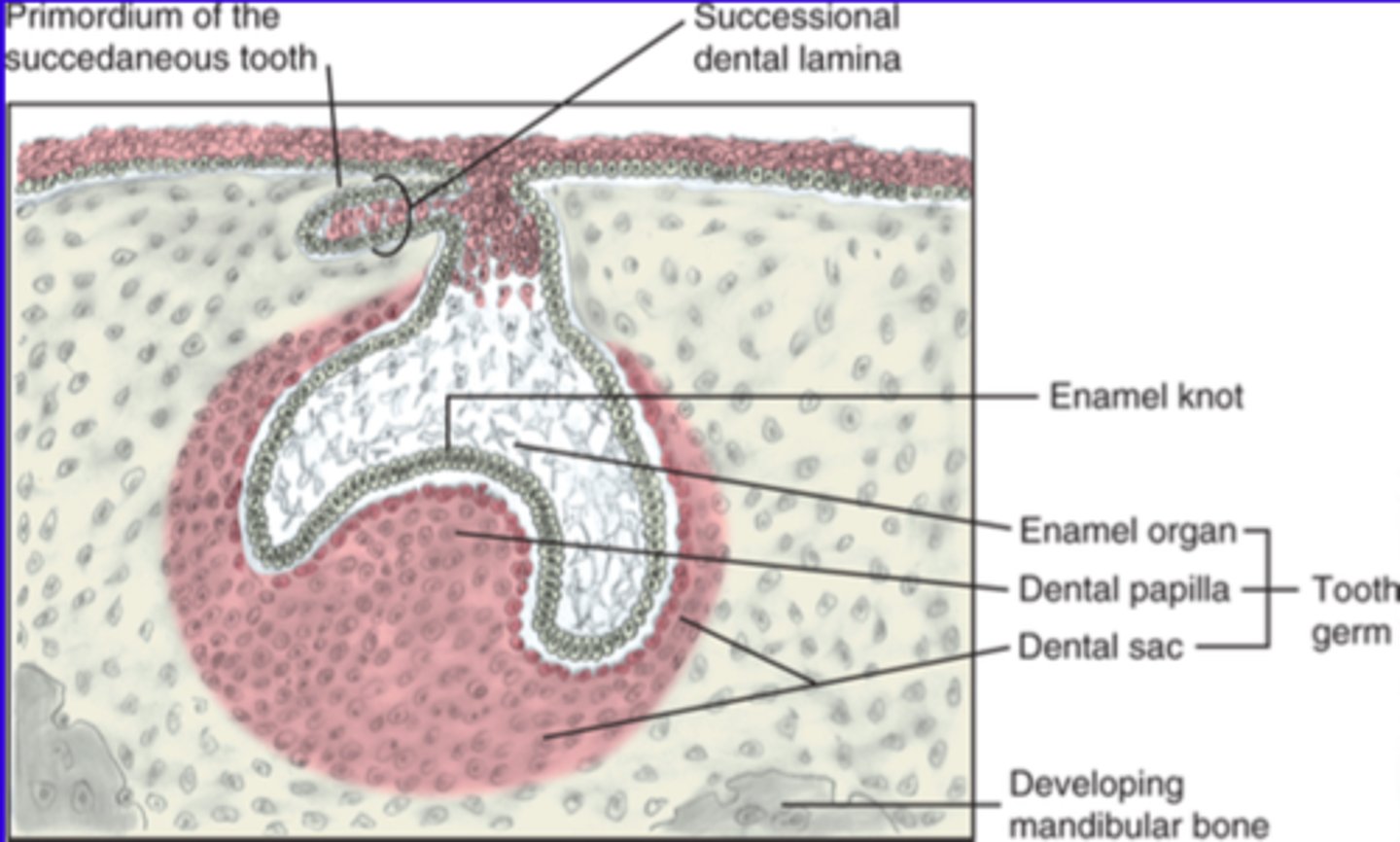
What does the dental papilla give rise to
Dentin and pulp
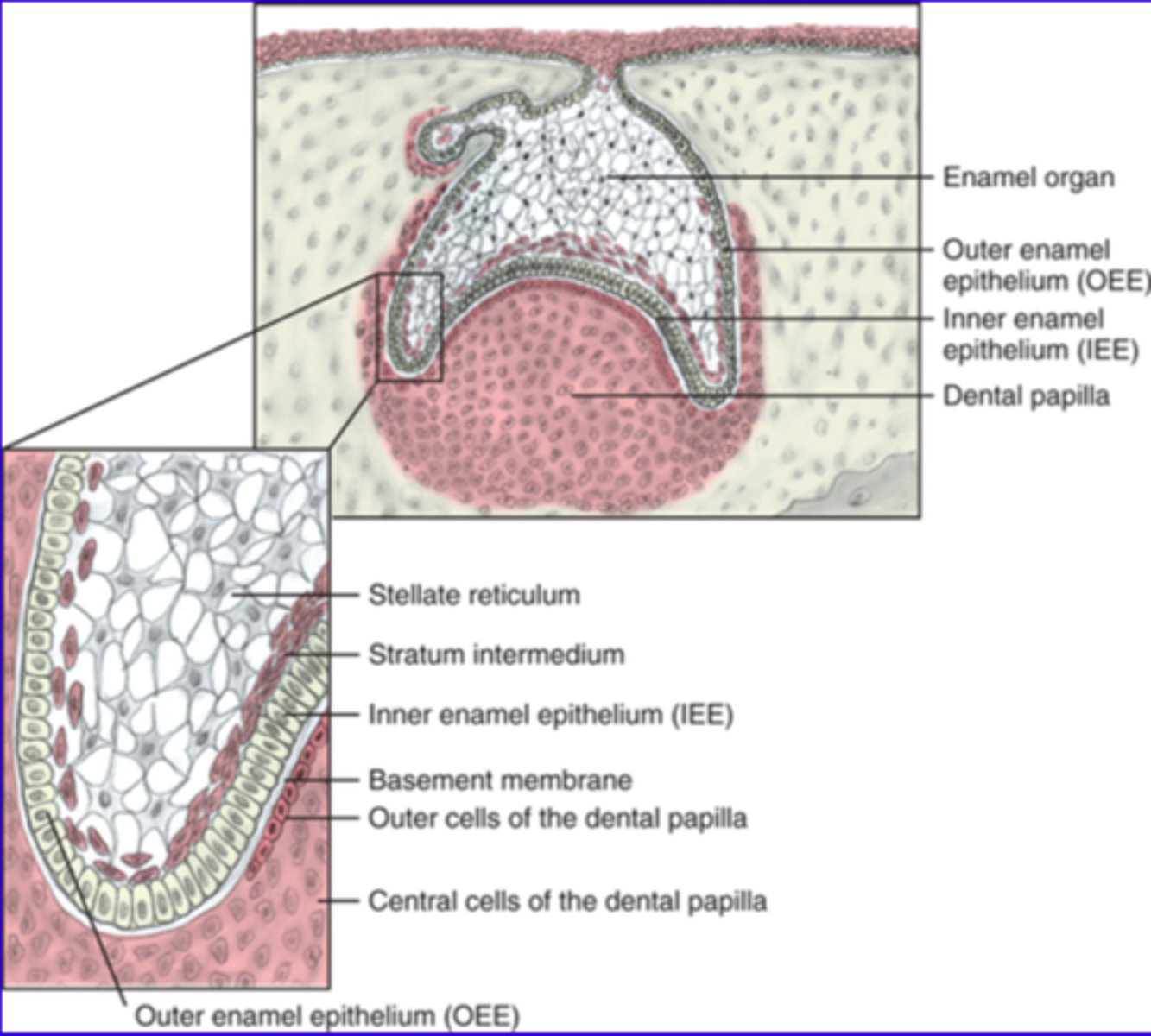
Dental sac
Condensed mass of ectomesenchyme surrounding the enamal organ
What will the dental sac give rise to
cementum, periodotal ligament, and alveolar bone
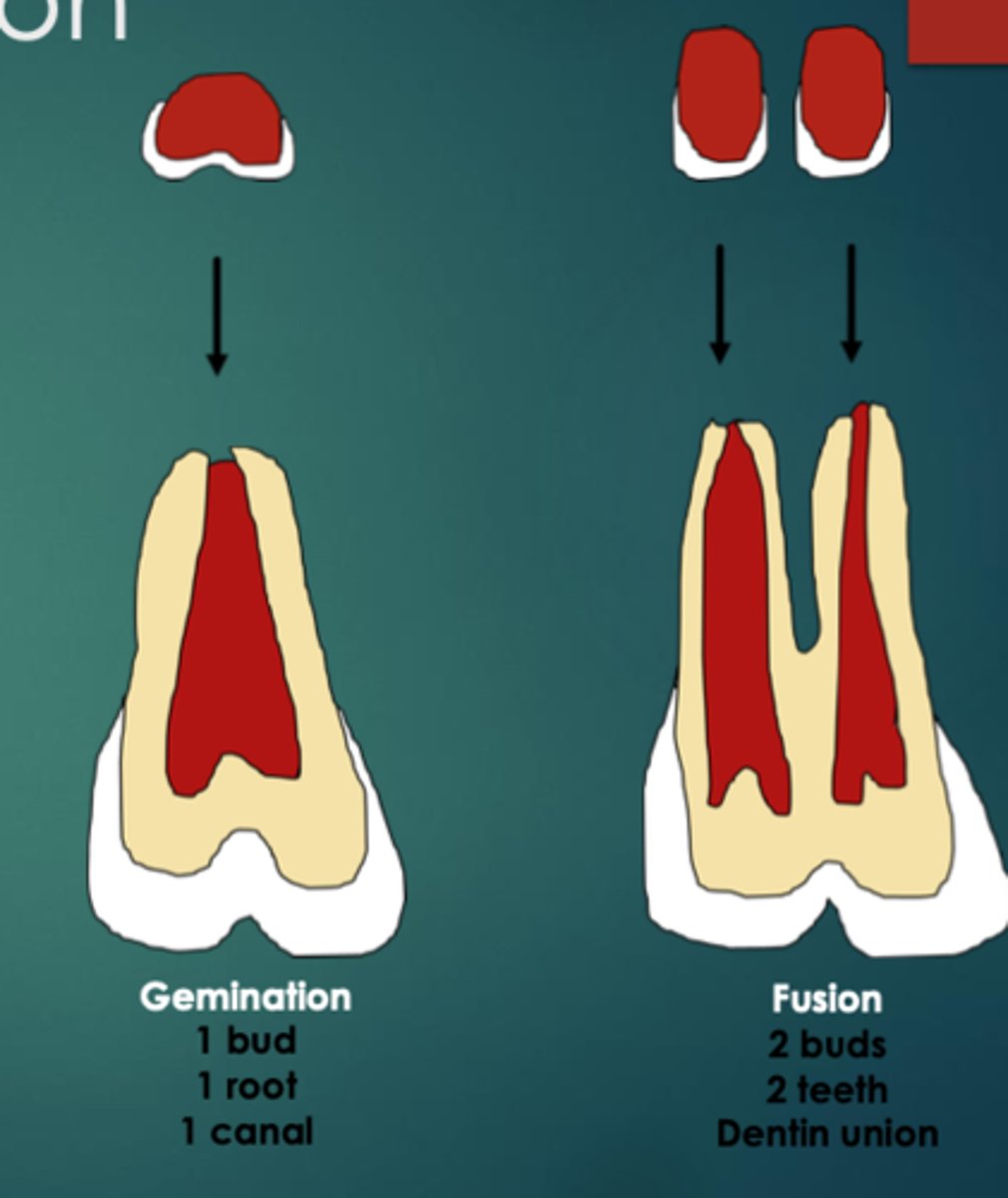
Gemination
Tooth germ tries to divide but results in 1 large tooth
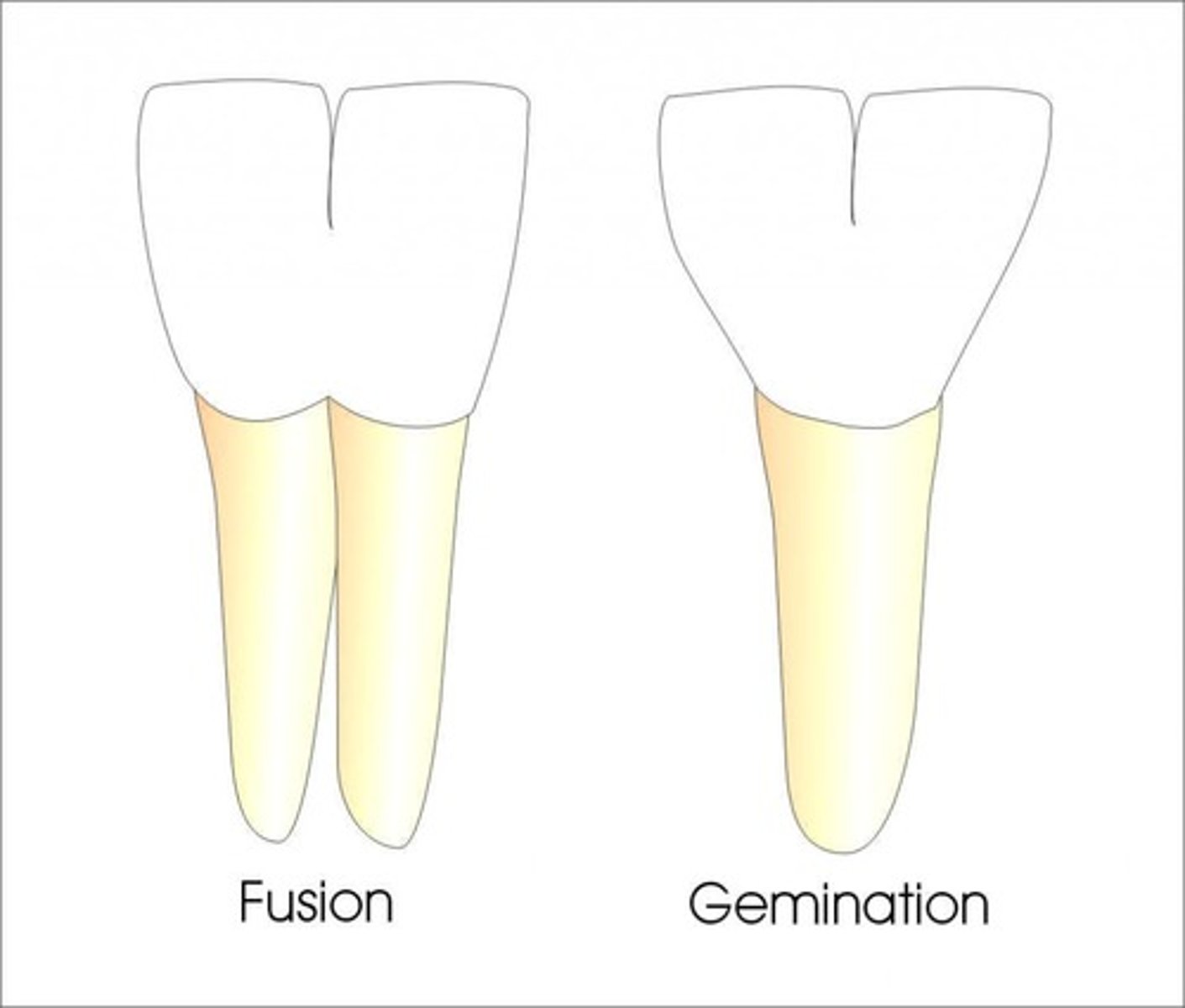
When gemintaion occurs is there more or less teeth in the mounth
Same amount of teeth with less space
What do the roots of fused teeth look like
2 roots fused together
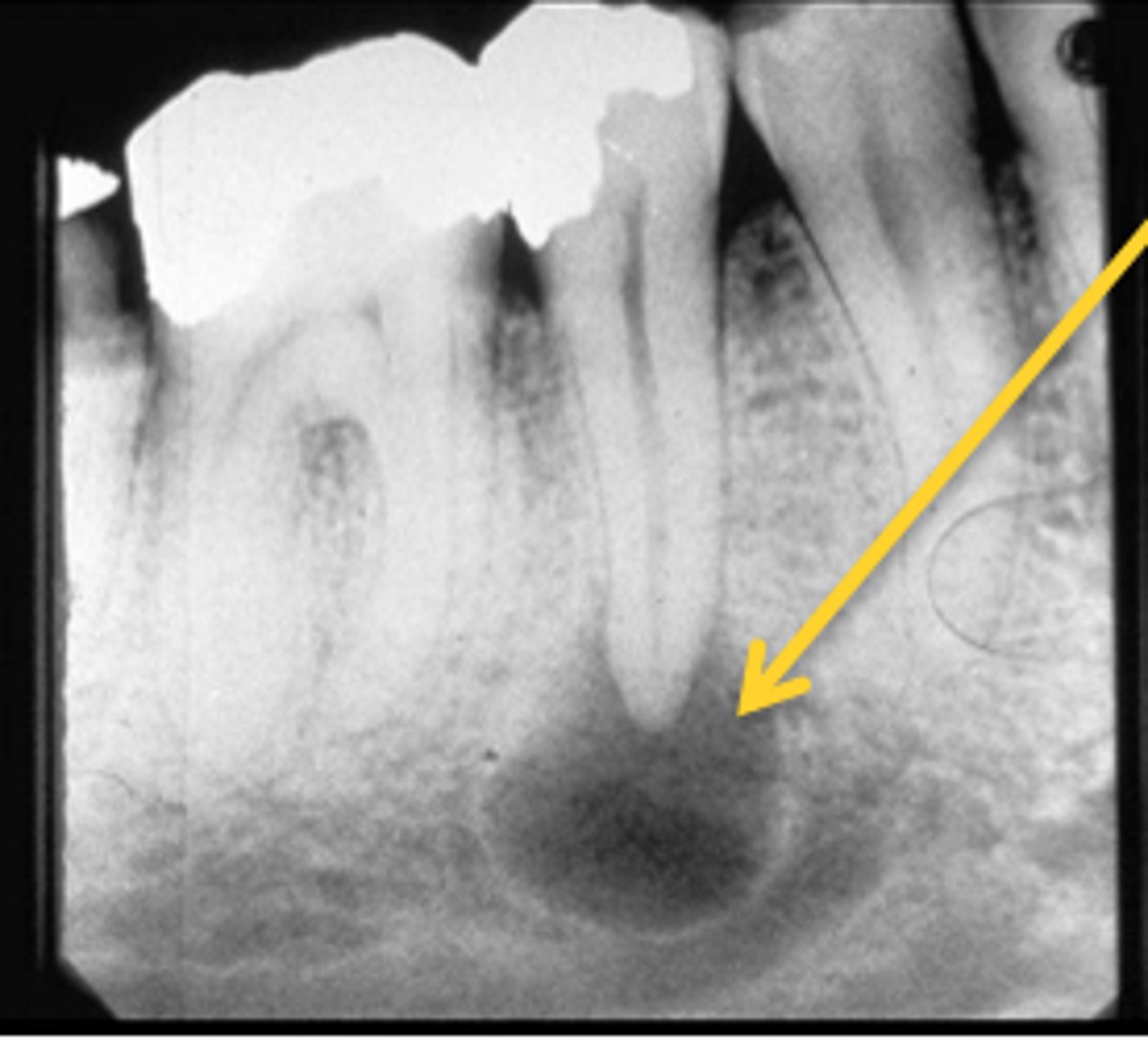
What do the roots of germintation look like
2 crowns sharing 1 root
Dens in dente
Tooth within a tooth
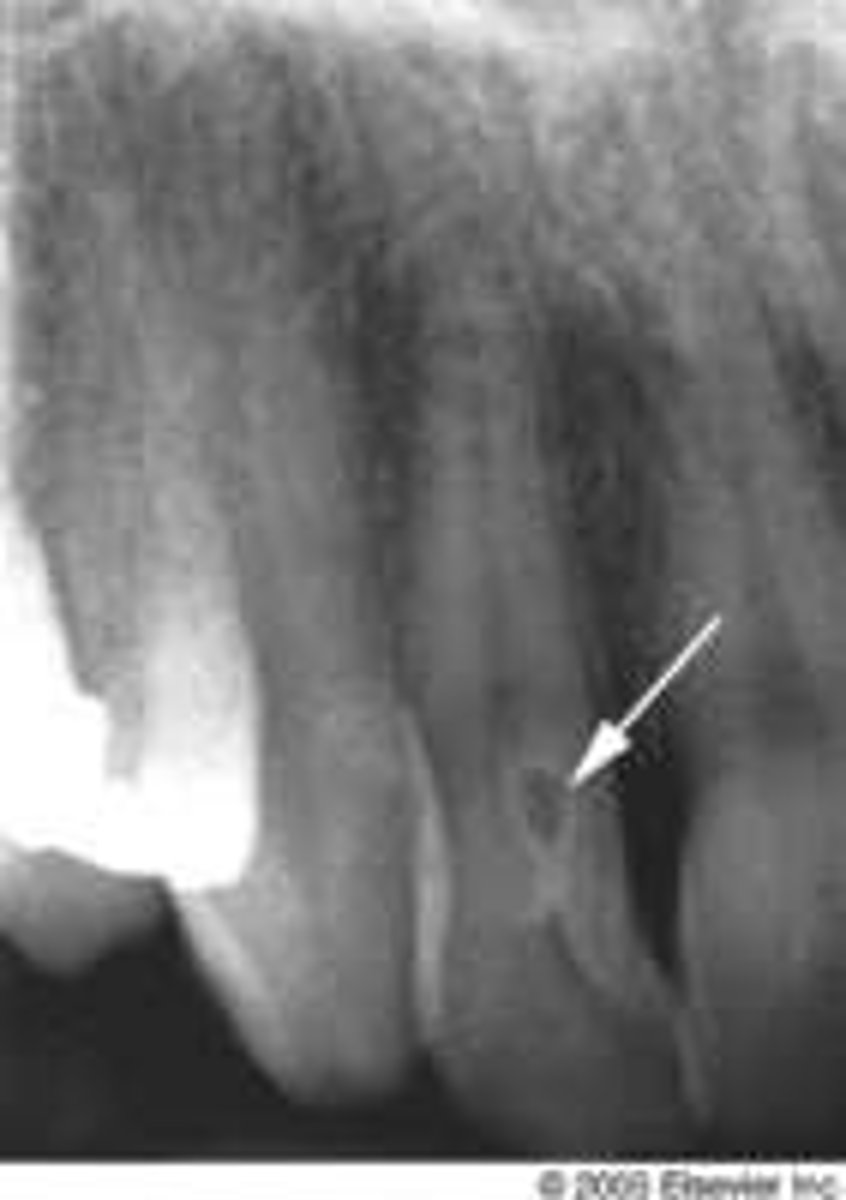
When a tooth grows inside another tooth the ________ ________ invaginates into the ________ ________
Enamal organ, dental papilla
Dens in dente is H_______
Hereditary
Which tooth does dens in dente commonly affect? this tooth may have a deep _______ pit and need _________ therapy depending on the _______
Permanent maxillary lateral incisor. Lingual, endodontic, root
Tubercle
Extra cusp
What can cause a tubercle
Trauma, pressure, and metabolic disease
A tubercle is common on permanent _______ or ________ of ______ teeth
Molars, cingulum, anterior
During what stage of the cap stage does an enamal pearl occur
Apposition and maturation stage
An enamal pearl is the
Displacement of ameloblasts on the root surface (cementum)
All the developmental disturbances occur during which stage of the enamal organ
Cap stage
Bell stage of enamal organ
3rd stage when a fourth layer of epithelium appears, stratum intermedium
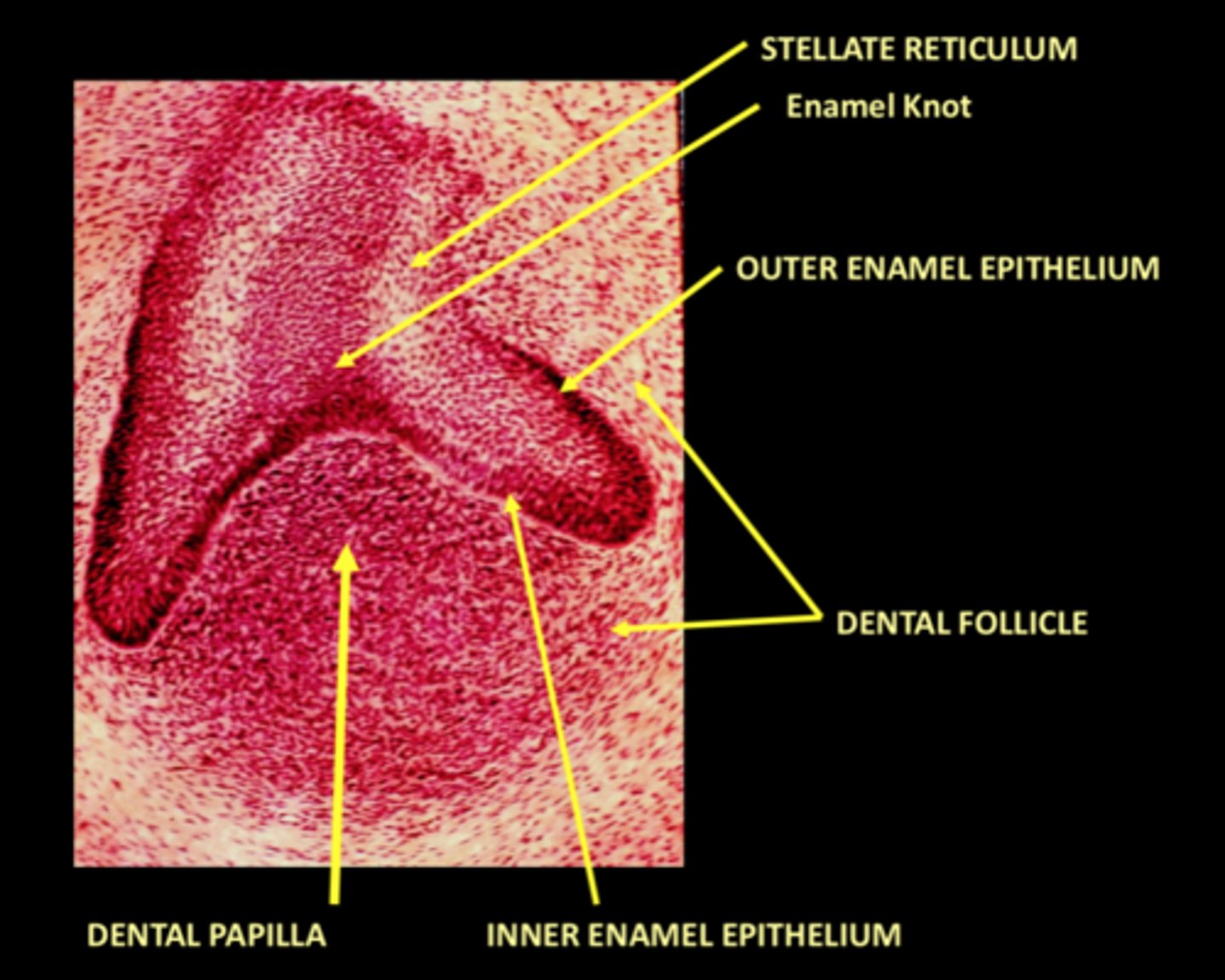
The bell stage includes several layers of flattened _______ cells
Squamous
Where is the stratum intermedium
Between IEE and stellate reticulum
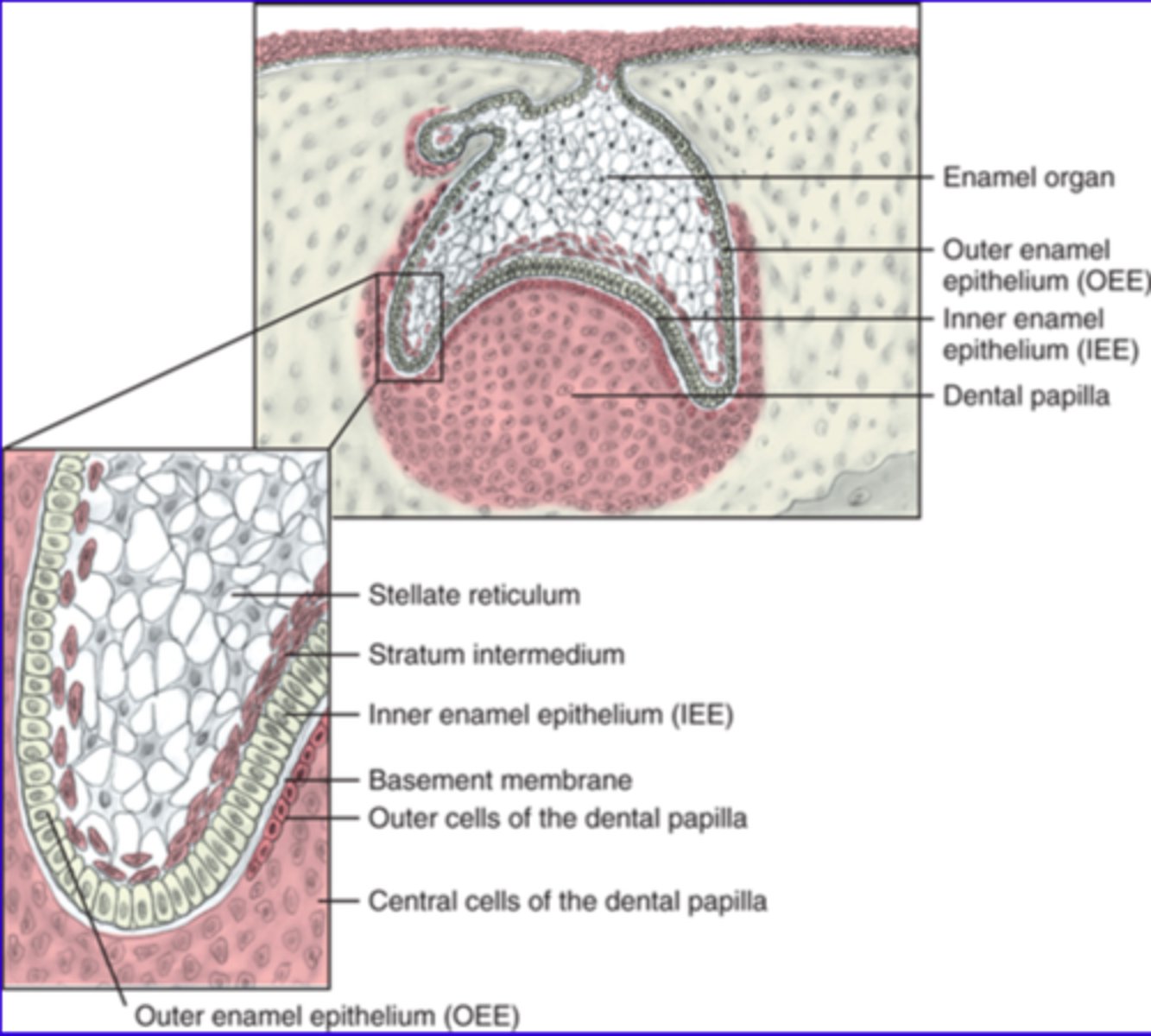
What determines the future outline of tooth crown
How cell layers expand during the bell stage
During the bell stage cells change to lead to enamal production, especially which cells
IEE cells
Function of the 4 layers of enamal organ
- OEE : Protective layer later playing a role in gingiva attachment to teeth
- IEE cells: Elongate and change internally to become ameloblasts
- Stellate reticulum: Cushioned protection for IEE cells, nourishes stratum intermedium, and allows vascular fluid to move between cells
- Stratum intermedium: Help provide nourishment to IEE cells and produce protein
Successional lamina
Extension of dental lamina to lingual side of each tooth, go through enamal organ stages to form permanent incisors, canines, and premolars
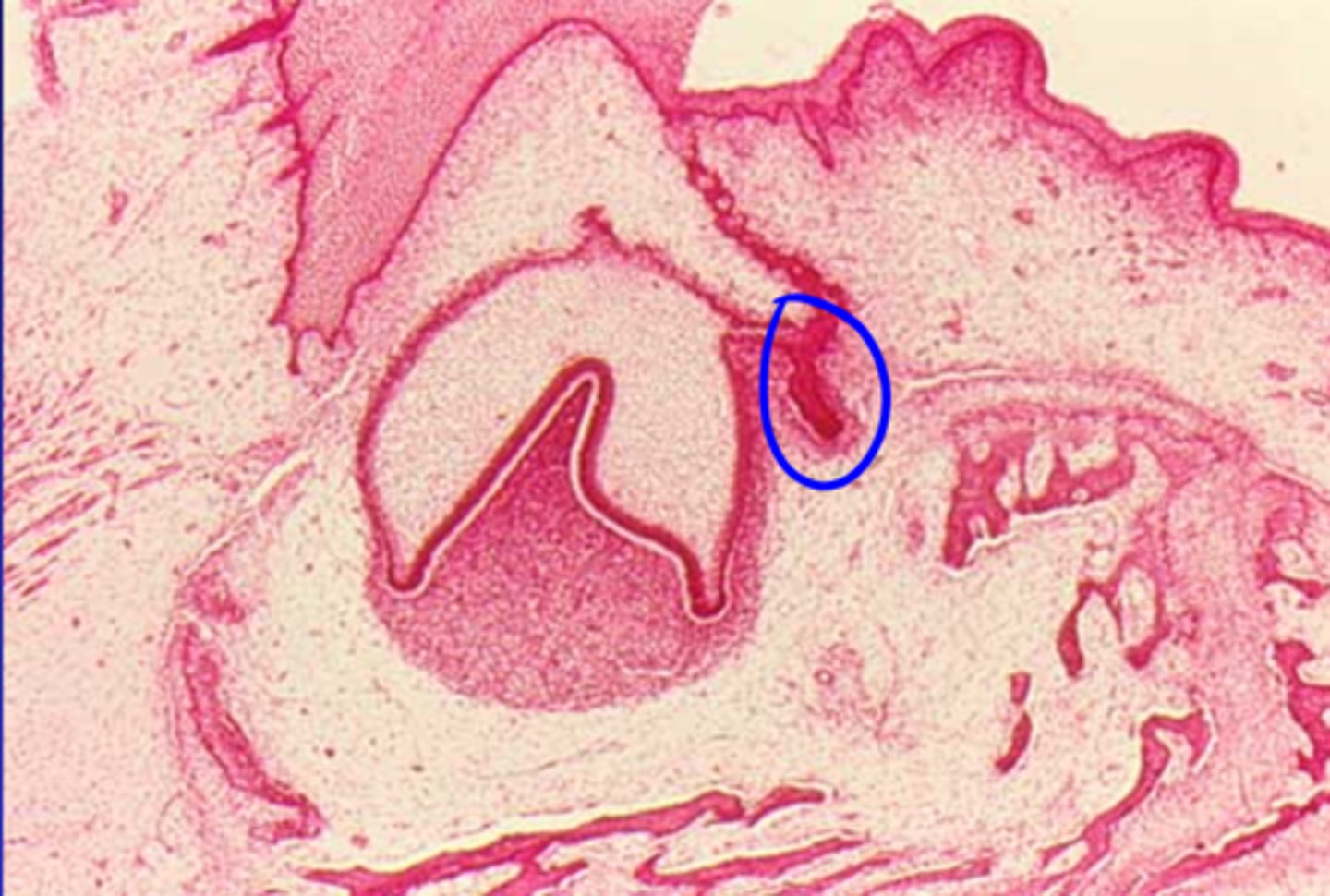
Permanent molars are
Nonsuccessional
Laminar attachment breaks down as developing teeth reach ______ stage and now primary tooth lamina is _______ lamina
Bell, lateral
Vestibular lamina
Thickening of oral epithelium in facial or buccal direction from dental lamina
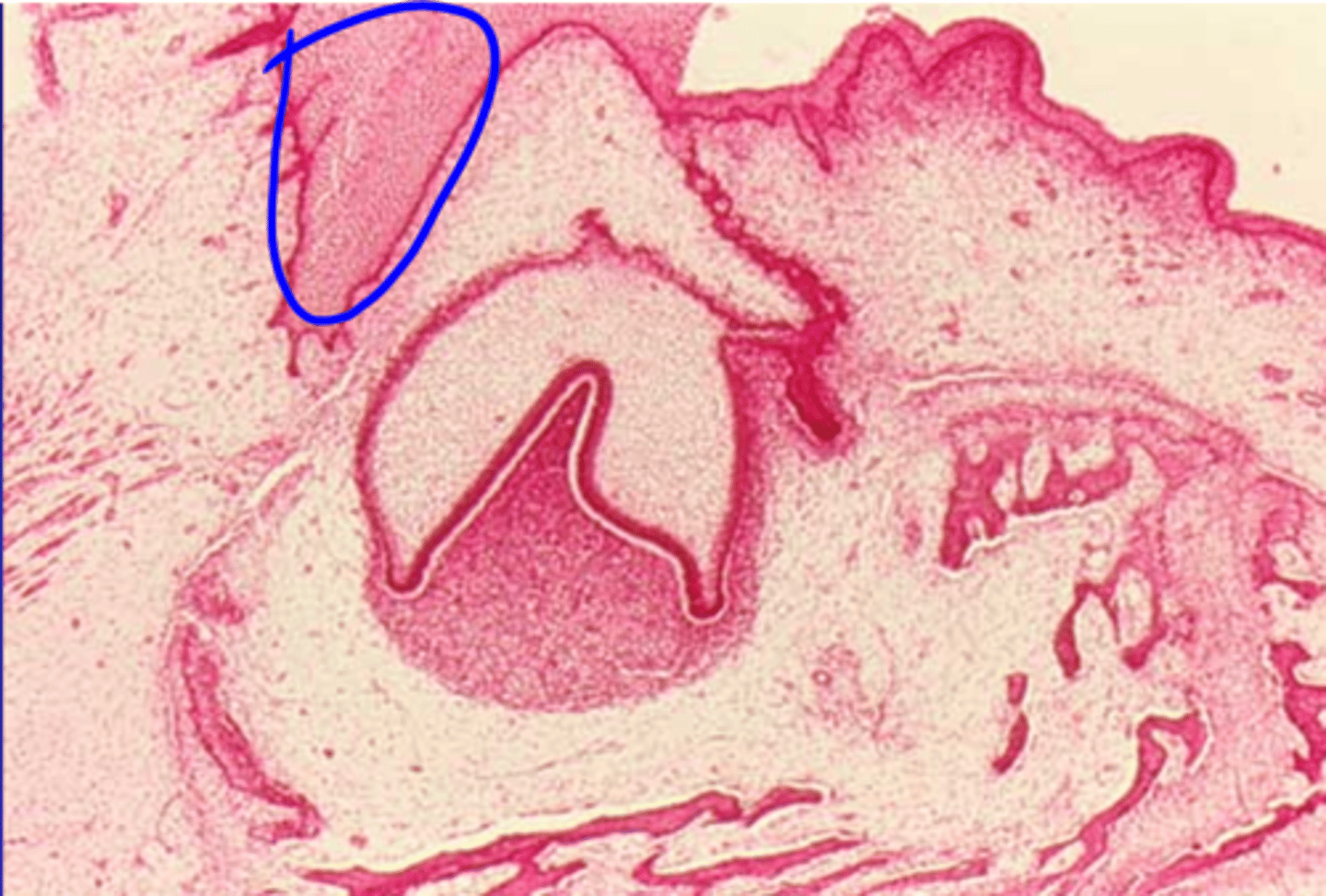
The vestibular lamina ______ in the thickened area and eventually forms a ______ which becomes the ________ or _________ fold in future vestibule
Splits, groove, mucobuccal, muccolabial
The dental papillar arises from the _______ and is first seen in the late _____ stage but becomes more pronounced during the ________ stage
Mesoderm, Bud, bell
What is the dental sac aka
Dental follicle
What does the dental sac arise from
Mesoderm