FRCA Physics
 Call Kai
 Learn
Learn Practice Test
 Spaced Repetition
 Match
Match Flashcards
 Knowt Play
1/149

There's no tags or description
Looks like no tags are added yet.
Name | Mastery | Learn | Test | Matching | Spaced | Call with Kai |
|---|
No analytics yet
Send a link to your students to track their progress
150 Terms
Second
(a measure of time – s)
One second = 9,192,631,770 oscillations of a Caesium 133 atomic clock.
Metre
One metre = The distance travelled by light in vacuum in 1/299,792,458 second
Mole
(a measure of amount of substance – mol)
One Mole = The amount of substance containing the same number of atoms/molecules as there are atoms in 12g of Carbon-12
0.012kg of carbon-12
Ampere
One Ampere = The current applied to two parallel conductors of negligible cross section and infinite length, one metre apart in a vacuum which would produce a force between them of 2.0 x 10⁻⁷ Newtons per metre.
current needed to produce a certain electromagnetic force between two conductors one metre apart
Candela
(a measure of light – cd)
One Candella = The luminous intensity, in a given direction, of a source that emits monochromatic radiation of frequency 5.4×10¹⁴ hertz and that has a radiant intensity in that direction of 1/683 watt per square radian.
amount of light that supplies a certain intensity of light energy
Kilogram
One Kilogram = The mass of the international kilogram prototype in Pavillon de Breteuil, Sévres, France.
Kelvin
(a measure of temperature – K)
One Kelvin = 1/273.16 of the thermal energy of the triple point of water.
triple point of water
T=273.16K (0.01∘C), P≈611Pa
three phases: gaseous, liquid, ice
absolute zero
0 K= −273.15∘C
Newton
Unit of Force – kg.m.s-2
Pascal, Pressure
Unit of pressure – 1N/m2 = kg.m-1.s-2
Pressure = Force applied per unit area
Joule
unit of Energy – kg.m-2.s-2
1 J to praca wykonana przez siłę 1 N działającą na odległości 1 m.
STP, Standard temperature and pressure
0oC (or 273.15K) and atmospheric pressure or 101.325 kPa (760 mmHg, 1 Bar).
Boyle's law
at a constant temperature in a closed system with a fixed mass of gas, the pressure is inversely proportional to the volume
P=1/V (temperature constant) Water ‘boyles’ at a constant temperature.
P x V = K (constant)
if the piston is driven inwards to halve the volume then the pressure doubles (P1V1 = P2V2)
Charles's law
at a constant pressure in a closed system with a fixed mass of gas, the volume is directly proportional to the absolute temperature
(V ∝ T)
Charles is under constant pressure to be king.
Gay Lussac’s Law
At constant volume, Pressure of a fixed volume of gas will increase in proportion to absolute temperature
(P ∝ T) or P / T = K (constant)
Ideal gas law
PV=nRT
P = Pressure in Pascals (NOT kPa!!)
V = Volume in m3
n = number of moles
R = Molar gas constant 8.31 J/K/Mol
T = Temperature (in Kelvin!)
Henry's Law
the solubility of a gas in a liquid is directly proportional to the partial pressure of that gas on the surface of the liquid
(dissolved gas ∝ P)
=At constant temperature, the amount of gas dissolved in a liquid is directly proportional to the partial pressure of this gas in equilibrium with it.
At constant pressure: increasing temperature decreases gas solubility
Dalton's law
Total pressure of a gas is equal to the sum of the partial pressure of the component gases
Force
Force = mass x acceleration (kg m s-2 or N)
Work
Work = force x distance (Nm or Joules)
Work = pressure x volume (Nm-2 x m3 = Nm or Joules)
Work = 1/2mass x velocity2 (stopping the car)
Work = mass x specific heat capacity x temp. change
Power
Power = work done per second (W, J/s)
Flow
Movement of a volume of fluid from one place to another per unit time
m3/s, L/min.
Flow is represented by the equation: Flow = Quantity/Time
Viscosity
Viscosity (η) is the tendency of a fluid to resist flow or, to put it another way, 'fluid friction'. It is measured in poise (P) or Pascal seconds (Pa.s). For example, blood runs slower than crystalloids through a giving set as blood has greater viscosity
viscosity is the most important factor affecting laminar flow
Newtonian and non-newtonian fluids
Newtonian, e.g. water or air - where viscosity is constant, or
Non-Newtonian, e.g. blood - where viscosity is not constant
Density
Density is the mass of substance per unit volume.
Density is measured in kilogram per metre cubed (kg/m3) and is usually denoted by the Greek letter 'ρ'.
is the most important fluid factor for turbulent flow
Hagen-Poiseuille equation
for laminar flow

Turbulent flow
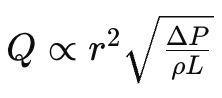
Turbulent flow ∝ r2 and √∆P and 1/length and density of the fluid
Flow ∝ r²
Larger radius → much greater flow, but less increased than laminarFlow ∝ √ΔP
Increasing pressure increases flow, but not linearlyFlow ∝ 1/√ρ
Lower-density gases flow more easily in turbulence (e.g. Heliox).Flow decreases as tube length increases
Longer tube → more resistance → less flow.
Heliox and flow
Heliox has a low density, which reduces turbulent resistance and makes airflow easier, for example in upper airway obstruction (predominant turbulent flow)
In bronchospasm (lower airway obstruction), airflow is predominantly laminar, where resistance depends mainly on viscosity rather than density. Since the viscosity of heliox is similar to that of air, heliox is less beneficial in bronchospasm
Reynold's number (Re)
Re <2000 flow is likely to be laminar
Re >2000 flow is likely to be turbulent
ρ = fluid density
v = fluid velocity
d = tube diameter
η = fluid viscosity
So, the critical velocity = Reynold's number = 2000. Transition from laminar to turbulent flow depends on the gases present

Resistance
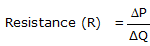
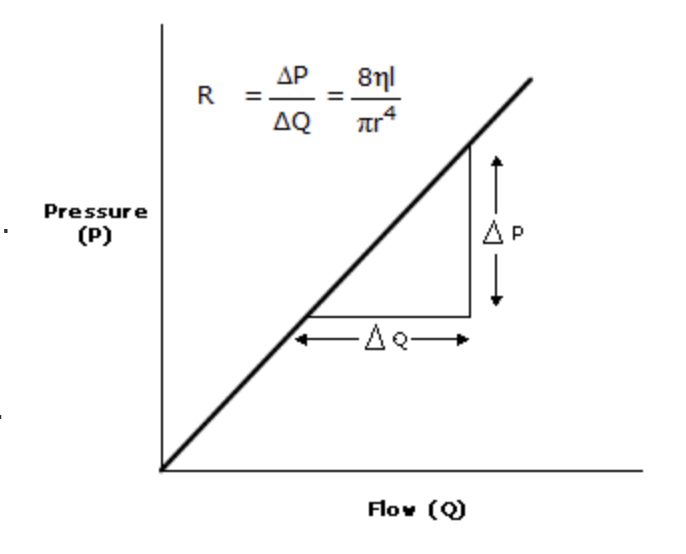
Laminar flow resistance
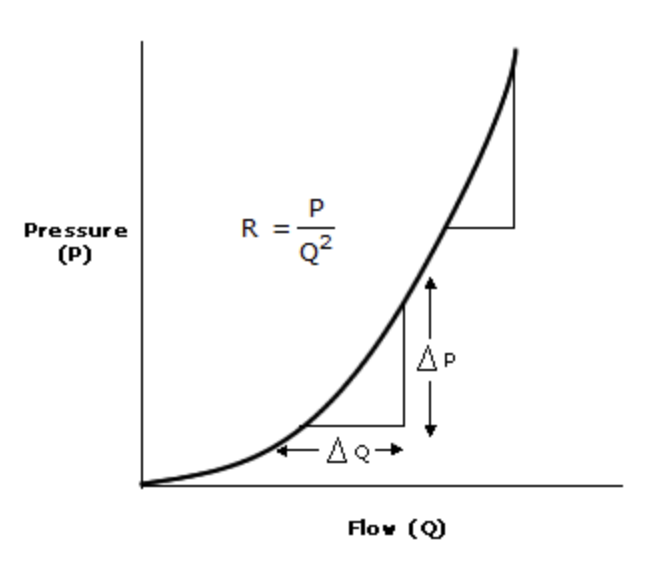
Turbulent flow resistence
Resistance increases with flow in turbulent flow
Bernoulli's principle
increase in velocity of an ideal fluid undergoing laminar flow is accompanied by a simultaneous reduction in its pressure
For an ideal fluid, that is non compressible, non viscous and flowing in a laminar fashion, the sum of the pressure, kinetic and potential energies per unit of fluid remain constant at all points
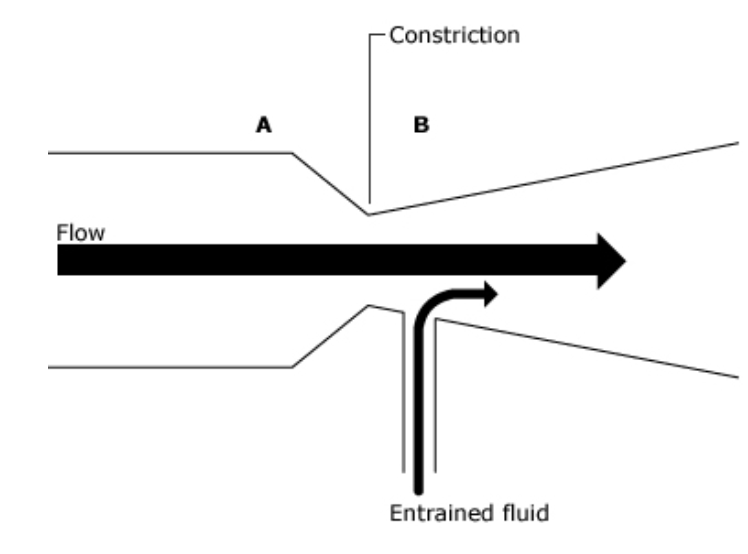
Venturi effect
When fluid moves through a tube with a constriction, the kinetic energy increases but at expense of a drop in pressure and potential energy past the constriction. This is used to entrain a second fluid/gas.
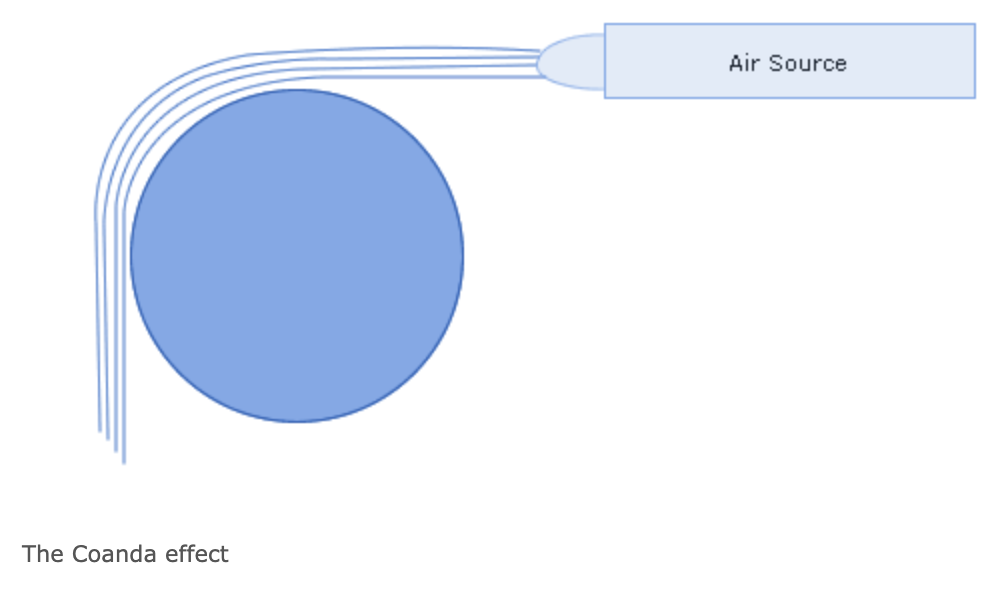
Coanda effect
Coanda effect describes the tendency of a stream of fluid flowing close to a convex surface to follow the line of the surface, rather than its original course
Rotameter
constant pressure, variable orifice flow meter
accurate to within 2% of the flow rate shown
Needle valves with integrated flow control knobs
Inverted conical tubes with calibrated markings
Bobbins
low flows, the bobbin is at the narrower end of the tube. This means that the gas flows across an obstruction of greater length than diameter, i.e. the gas will behave as if flowing through a tube and flow will be laminar
high flows, the bobbin rises higher, into the wider portion of the tube. This means that the obstruction caused by the bobbin has greater diameter and reduced length, i.e. the gas behaves as if flowing through an orifice and flow is turbulent.
pneumotachograph
creates laminar flow through multiple small diameter tubes or mesh and uses the linear relationship between flow and pressure difference as per the Hagen- Poiseuille equation. The small resistance offered by the tubes causes a pressure drop proportional to the flow which is then transduced
Why are rotameters gas specific?
Because gases have different densities and viscosities, which in turn affect flow under different conditions.
What factors might affect the density or viscosity of a gas and have an effect on a rotameter's accuracy?
Warmer gas has a lower density and viscosity, which may cause over-reading
Reduced atmospheric pressure reduces the density of a gas, which may cause over-reading (though viscosity is unaffected by pressure)
critical velocity
critical velocity occurs at a Reynold's number of 2000, so the likelihood of turbulence depends on fluid density, viscosity, velocity and tube diameter.
Divers and nitrogen
When a deep sea diver breathes nitrogen under pressure, more nitrogen dissolves in the blood and tissues. In the event of a rapid ascent to atmospheric pressure, bubbles of gas can come out of solution and cause the syndrome known as 'the bends'
Fluid warmer and gas solubility
When cold fluid or blood passes through a fluid warmer, dissolved gas escapes and can appear as bubbles in the line. Therefore, many fluid warmers have a bubble trap in the warm limb to collect this gas.
Nitrogen and nitrous oxide solubility
Using nitrous oxide in patients with an air-filled cavity (such as a pneumothorax) can lead to an increase in cavity size, because nitrogen diffuses out more slowly than nitrous oxide enters.
Gas solubility
measured as the volume of gas that dissolves in a given volume of liquid, and is referred to as a solubility coefficient
Bunsen Coefficient
volume of gas, corrected to Standard Temperature and Pressure (STP), that dissolves in 1 unit volume of the liquid at the temperature concerned, where the partial pressure of the gas above the liquid is 1 atmosphere
Ostwald coefficient
volume of gas that dissolves in 1 unit volume of liquid at the temperature concerned
not corrected to STP
independent of pressure, provided the dissolved volume of gas is measured at ambient pressure
partition coefficient
ratio of the amount of substance present in equal volume phases of liquid and gas in a closed system at equilibrium at a standard pressure and temperature
FA/FI ratio for various anaesthetic agents
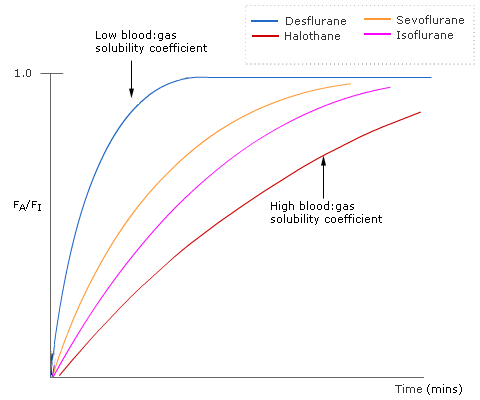
1 osmole
contains Avogadro's number of particles (6.02 x 10²³)
plasma osmolarity
2 x (Na+ + K+) + urea + glucose
2 x because of associated anion (mainly chloride)
The Four Colligative Properties
As the number of particles in solution (osmolarity) increases:
Osmotic pressure increases
Freezing point decreases
❄ harder to organise → freezing point ↓
Boiling point increases
🔥 harder to escape → boiling point ↑
Solvent vapour pressure decreases (Raoult's Law)
fewer escape → vapour pressure ↓
Isotonic and isosmolar
Molarity refers to the number of osmoles in solution whereas tonicity refers to the effective osmoles in solution (not glucos, urea, alcohol)
Moles and freezing temperature
One mole of a substance added to one kilogram of water depresses the freezing point by 1.86oC.
Specific heat capacity
the amount of heat required to raise the temperature of a unit mass of substance by 1K (J/Kg/K)
Triple point water
temperature and pressure at which the solid, liquid and gas phases of a substance exist in equilibrium (for H2O 273.16 K – 0.01°C, 611.2 Pa)
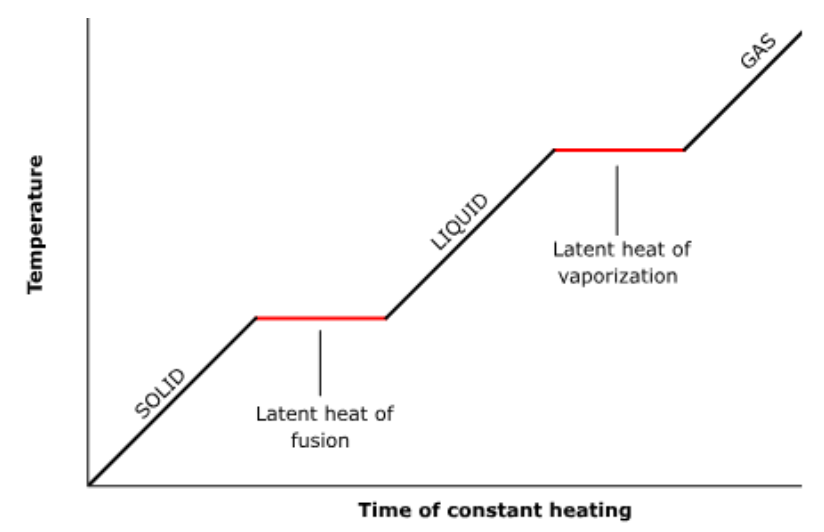
Latent heat
energy required to change the state of a substance without changing its temperature
Latent heat of vaporisation and fusion
Latent heat of vaporisation: heat energy required to convert a given mass of liquid into vapour whilst maintaining the same temperature
Latent heat of fusion: heat energy required to convert a given mass of solid into liquid at the same temperature.
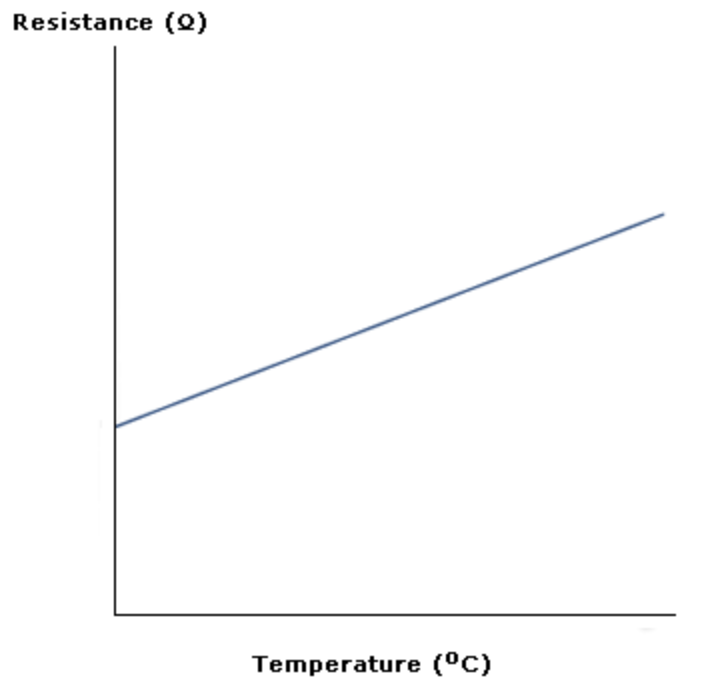
Resistance wire (= resistance thermometer)
The resistance of metal (e.g. platinum) increases linearly with temperature
the metal atoms vibrate more,
electrons collide with them more often,
so it becomes harder for current to pass
A Wheatstone bridge is used to increase sensitivity
Advantages
Disadvantages
Very accurate
Fragile
Slow response time
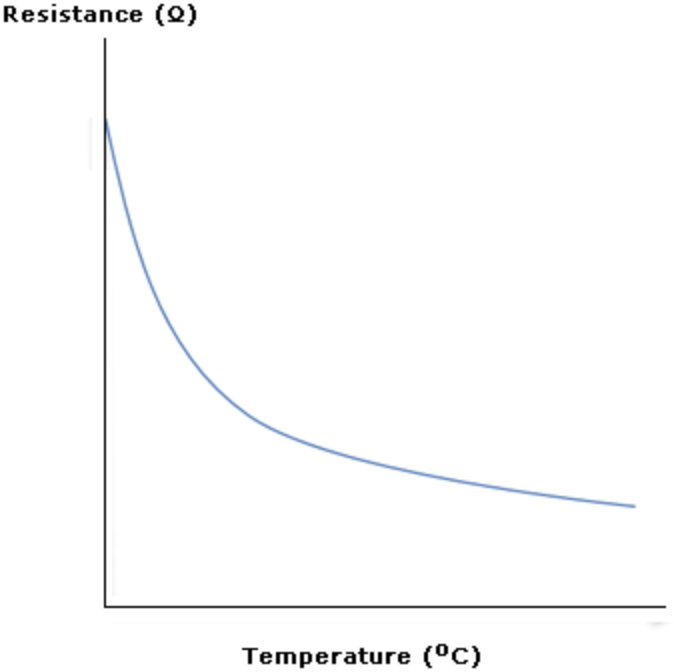
Thermistor
A small bead of metal oxide (semiconductor). Resistance falls exponentially with temperature
Often used with Wheatstone bridge
Used in PA catheter and oesophageal probe
Advantages
Disadvantages
Cheap
Calibration error*
Fast response time
Deteriorate over time
Small
Thermocouple
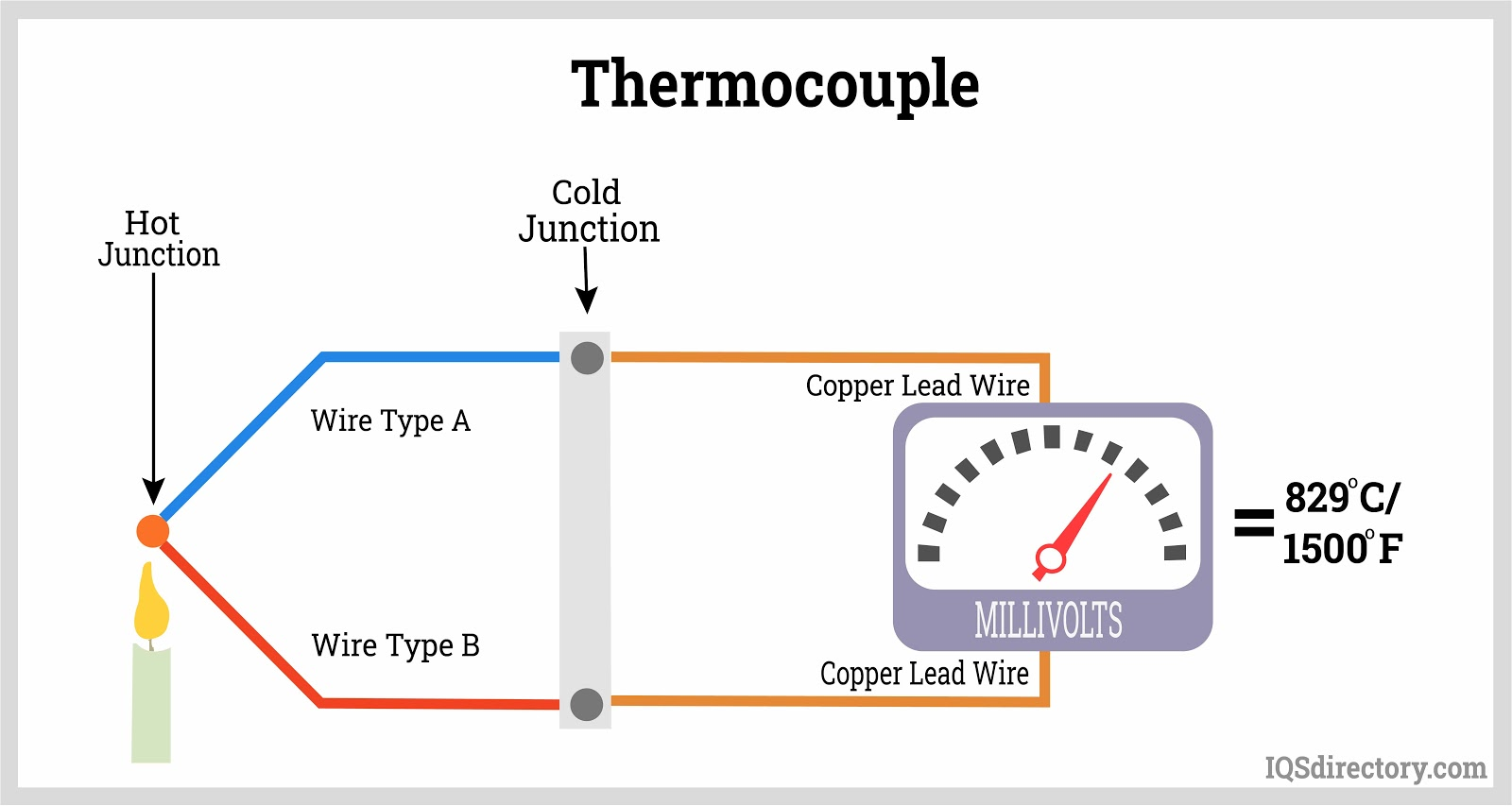
Measures voltage
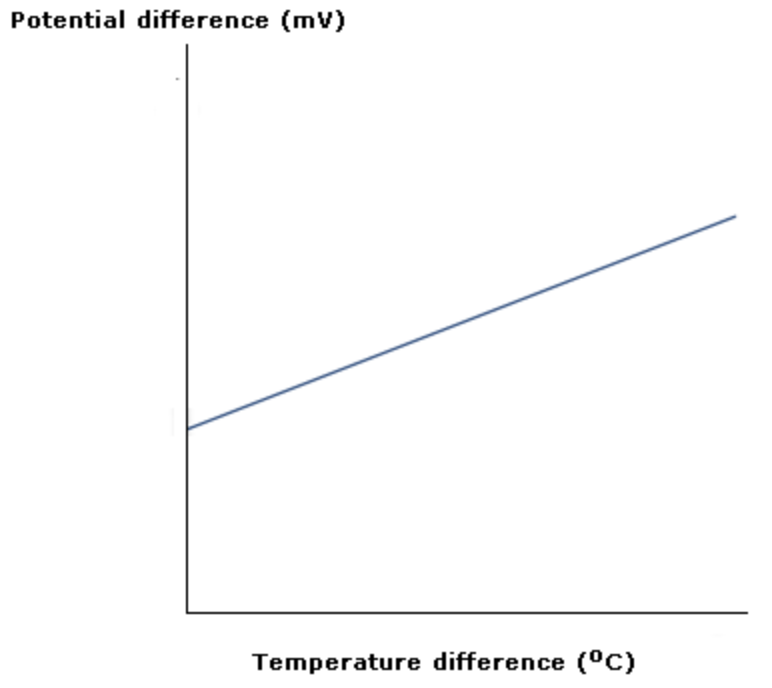
Utilizes the Seebeck effect, when the junction is heated, it generates a small voltage.
The circuit requires two junctions – the reference junction is kept at a constant temperature, a near-linear curve of voltage against temperature is produced at the other, measuring junction
Advantages | Disadvantages |
|---|---|
Can be made very small | Needs signal amplification |
Cheap | |
Tough |
Liquid expansion
change in volume of a liquid dependent on the temperature:
Mercury and alcohol can be used
Mercury is more suitable for high temperatures -39°C and 250°C
Alcohol is cheap, less toxic and more suitable for low temperatures between -117°C and 78°C
Advantages | Disadvantages |
|---|---|
No power supply needed | 2-3 min needed for equilibration |
Simple | Risk of cross infection (non-disposable) |
Reliable | Rigid - risk of breakage/trauma |
Bimetallic strip
Two dissimilar metals with different coefficients of expansion are fixed together in a coil. As the temperature rises the metals expand by different amounts causing the coil to tighten and the lever to move clockwise over the scale
Used in thermostat switches
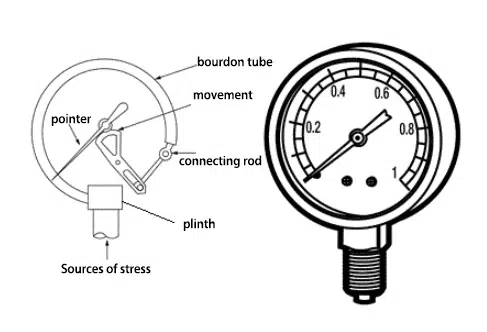
Bourdon (aneroid) gauge
Same principle (bimetallic strip) as when used for measuring pressure but the hollow tube is filled with a volatile liquid which expands as the temperature rises, causing the tube to unwind which moves a pointer
Tympanic and infrared ear thermometers
Tympanic membrane emits electromagnetic (primarily infrared) radiation. The intensity and the wavelength for which the intensity of radiation is maximum varies with body temperature
Infrared ear thermometers detect radiation emitted by the ear drum and ear canal
Tympanic membrane thermometers are inserted further into the ear and receive radiation from the tympanic membrane only – more representative of core temperature
Require two sensors- a pyroelectric sensor and a thermopile sensor (made of thermocouples)
Temperature measurement sites
Oesophageal | Accurate if lower 1/3 used – higher in the oesophagus the temperature may be cooled by inspired air |
Rectal | 0.5-1°C higher than core due to bacterial fermentation and insulating effect of faeces. Risk of perforation in babies |
Blood (via PA catheter) | Best estimate of core temperature but very invasive |
Skin | The difference between skin and core temperature can be used as an assessment of the degree of shock/peripheral perfusion |
Bladder | High flow rates required for accuracy |
Tympanic membrane | Correlates best with hypothalamic temperature |
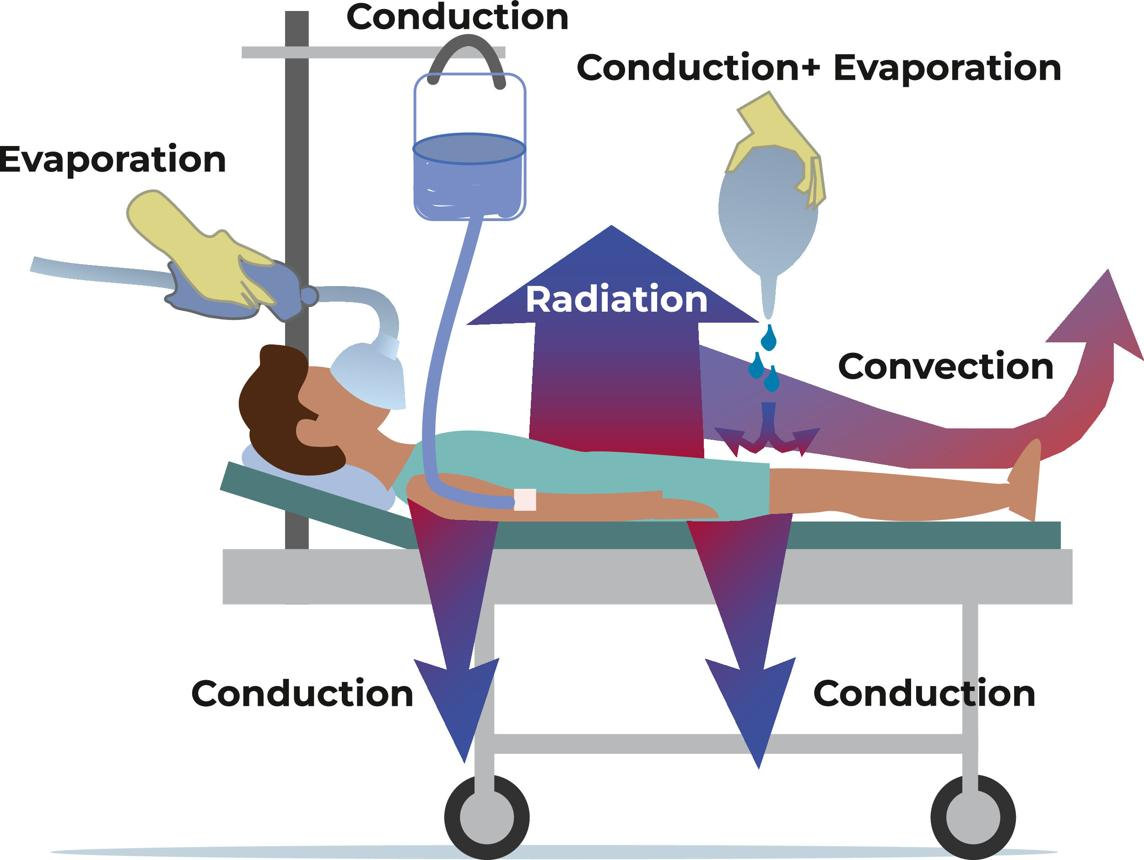
Heat loss during anaesthesia
Radiation (40% of heat loss during anaesthesia is via radiation)
Convection (30%)
Evaporation (20%)
Conduction (<5%)
10% is lost via respiration (heating of air plus latent heat of vaporization to humidify)
Radiators Catch Every Cold Lung
Radiation
Differs as does not require matter for heat transfer (the method the sun heats the earth). All objects >0 Kelvin emit radiation as electromagnetic waves. The overall amount of radiation emitted and absorbed by an object is a function of the temperature of the object. Accounts for 40% of the body’s heat loss in theatre.
Electromagnetic waves falling in the infrared spectrum are felt as heat.
Stefan-Boltzmann law
relates the total amount of radiation emitted as a function of its temperature:
E = sT4
E = the total amount of radiation emitted per m2 of an object
s = a constant
T = the temperature in Kelvin of the object
Conduction
Heat transfer due to collision of molecules of two substances with differing temperatures. Molecules of the substance with higher temperature have a higher kinetic energy and collide with molecules of lower temperature with lower kinetic energy.
Not an important method of heat loss in theatre
Convection
The transfer of heat by the movement of a liquid or gas itself (the air layer adjacent to the body is warmed by conduction, expands, becomes less dense and rises, carrying heat away)
Evaporation
Conversion of a liquid to the vapour state by the addition of heat which provides the energy to the liquid molecules to break the bonds between them. (Loss of this latent heat of vaporization due to evaporation of moisture on the skin surface causes cooling)
heat losses through respiration
humidification (8%) and warming (2%) of the inspired gases. This occurs through the combination of the other 3 processes
Reduced Heat Production
Basal metabolic rate
GA → fall in basal metabolic rate → reduces heat generation by metabolically active tissues such as the liver
Spontaneous respiration
NMBs and high dose opioids obtund spontaneous respiration in the patient and this reduces heat generation by respiratory muscle contraction.
Resting muscle tone
All resting muscle tone is reduced which also reduces heat production.
Physiological response to hypothermia
impaired moving or shivering, vasoconstriction and piloerection
Behavioural responses
The normal behavioural responses, such as finding a warmer environment and dressing appropriately, are removed.
Effects of Hypothermia
Less volatile needed (i.e. reduced MAC)
Prolongs effects of neuromuscular blocking agents
Reduced metabolic rate (can be useful)
Diuresis (secondary to inability to reabsorb sodium and water)
Shivering causes postoperative O2 consumption to increase up to 10x
Coagulopathy; the clotting cascade is enzymatic and platelet function is temperature dependent
Increased incidence of wound breakdown and infection
Metabolic acidosis
NICE guidelines perioperative temperature regulation
Higher risk if 2 or more of:
ASA 2 or above
Preoperative temperature <36°
Combined RA and GA
Intermediate or major surgery
At risk of CVS complications
Need forced air warming if higher risk or surgery >30 min
Temperature should be measured every 30 min
IV fluids >500 ml should be warmed
absolute humidity
The mass of water vapour present per unit volume of gas at a given temp and pressure (mg/L or kg/m3)

Relative humidity
Absolute humidity/the SVP of water at that temp, or,
The ratio of the mass of water vapour in a given volume of air compared with the mass that would be required to saturate that given volume of air at the same temp.

Dew point
The temperature at which the relative humidity of the air exceeds 100% and water condenses out of the vapour phase to form liquid.
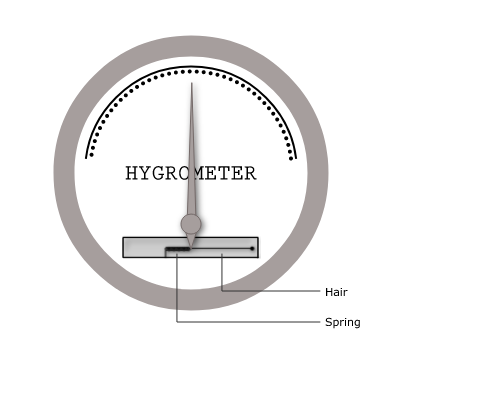
Hair hygrometer
Measures relative humidity
As relative humidity increases, the length of the hair increases which moves a pointer (human or animal hair or paper)
Simple, most accurate between relative humidities of 30-90%
Time lag between change in humidity and change in reading (approx 5 mins)
Unreliable when ambient temperature below freezing
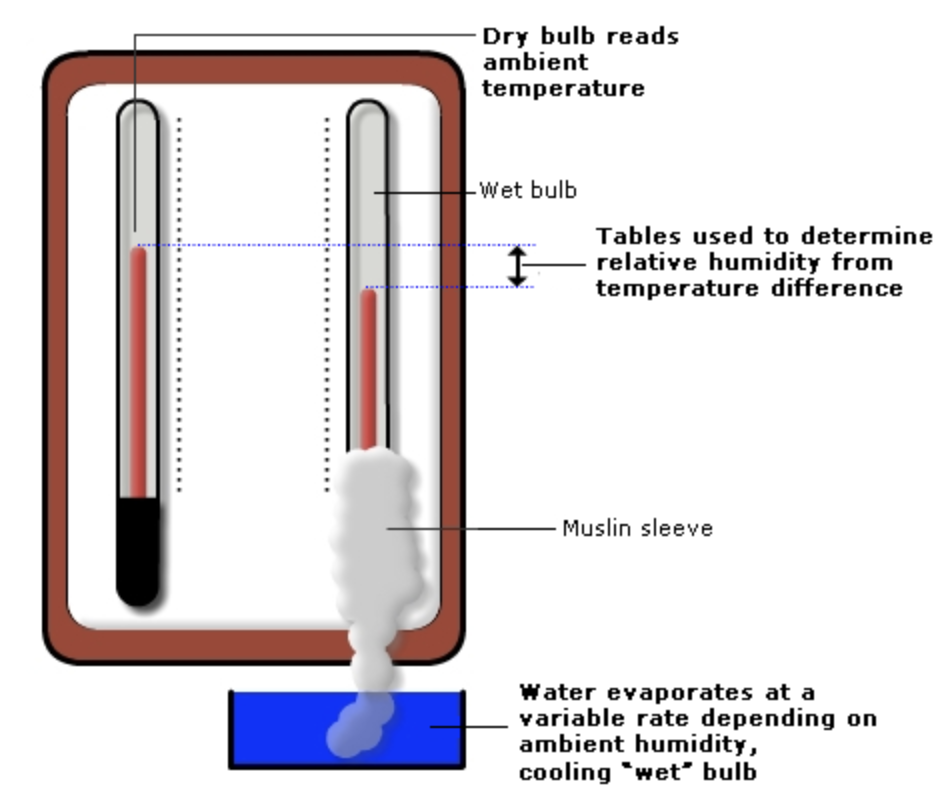
Wet and dry bulb hygrometer
Relative humidity can be calculated
Consisits of two mercury thermometers. One reads the ambient temperature whilst the second sits in a container of water which cools as the water evaporates due to loss of the latent heat of vaporization
The rate of evaporation varies with the humidity of the surrounding air and hence the difference in temperature measured by the two thermometers varies as humidity varies
Tables are used to determine the relative humidity for a given temperature difference
Requires adequate air movement to be accurate
Regnault's hygrometer
Relative and absolute humidities can be calculated
Consists of a silver tube containing ether
Air is bubbled through the ether-containing tube, cooling it
When condensation occurs on the outside of the tube, this is the dew point (ie the temperature at which the ambient air is fully saturated)
Graphs of water content of saturated air against temperature can then be used to determine relative humidity
More accurate than either the hair hygrometer or the wet and dry bulb hygrometer
Normal humidity values
At sea level, 20°C, SVP = 17 g/m3
At sea level, 37°C, SVP = 44 g/m3
Upper airway 34°C, SVP = 34 g/m3
Dry air in the airways
Drying of the respiratory mucosa
Thickening of mucus causing airway plugging
Reduced ciliary activity
Keratinization and ulceration of the airways
Humidity in theatres
Should be maintained at 50-60% humidity
Higher values are uncomfortable for staff
Lower values will increase the patient’s heat loss via evaporation
Lower values increase the risk of sparks due to the build up of static charge
methods for humidifying inspired gases
Cold water bath (passive)
HME
Hot water bath
Bernoulli (gas driven) nebulizer
Ultrasonic nebulizer
(least to most efficient)
Heat and moisture exchanger (HME)
Two ports (one 15 mm, one 22 mm) +/- sampling port for gas monitoring; main body which contains a hygrophobic or hygroscopic (readily absorbs moisture) medium (ceramic fibre, paper, aluminum)
As warm, humidified gas is exhaled, it condenses on the cooler HME and warms it. During inspiration gases pass through the HME the other way, the condensed water evaporates, humidifying the inspired air which is also warmed as it passes through the HME and is returned to the patient, warming and humidifying them. Heat is conserved during expiration and inspired air is heated and humidified
humidifying efficiency of HMEs decreases with large tidal volumes
Mostly consist of hygroscopic material e.g. foam or chemically coated paper
Increase resistance 0.1-2 cm H2O
Can achieve a relative humidity of 60-70%
Max: 35g/m3
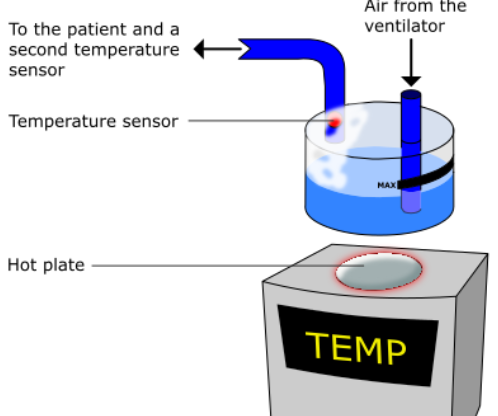
Hot water bath
Gas is passed over or through hot water
The gas is not saturated at the temperature of the bath but as it cools along the tubing to the patient, gas becomes near saturated i.e. 100% humidity
Potential risks | Minimized via: |
|---|---|
|
|
|
|
|
|
|
|
Nebulizers
produce microdroplets of water (or drug) suspended in a gas. The quantity of water droplets delivered is not limited by gas temperature as it would be with vapours.
Nebulizer size of droplets
The size of the droplets affects where they are deposited (ideal size 1-5 μm):
20 μm: deposited in tubing/upper respiratory tract
2-5 μm: tracheo-bronchial tree
1 μm: alveoli – may impair gas exchange
<1 μm: no significant deposition – get inhaled and then exhaled again
Nebulizers types
Gas driven: high flow gas is ejected close to the exit of a tube filled with water. This causes a drop in pressure (Bernoulli effect) and brings up water. The steam then hits an anvil to divide the droplets: 50-60g/m3
Ultrasonic: Water is dropped onto a vibrating plate at ultrasonic frequency where tiny droplets are produced <2 μm, 80-90g/m3
Risk of overhydration (can produce gas with 200% relative humidity at 37°C)
Methods for measuring humidity
Relative
Hair hygrometer
Wet and dry bulb hygrometer
Regnault hygrometer
Absolute
Transducer: change in either the resistance or the capacitance of a substance when it absorbs water vapour from the atmosphere
Mass spectrometer
Other methods
Ultraviolet light absorption (reduction in transmission of UV light when water vapour present)
critical pressure
minimum pressure required to liquefy a gas at its critical temperature
Gas
When above the critical temperature, a reduction in volume will increase gas pressure. The substance is referred to as a gas (fixed gas).
A compressible fluid where intermolecular spacing is so large that intermolecular forces are negligible.
vapour
A gas below its critical temperature, thus compression to the liquid is possible.
When below the critical temperature, a reduction in volume will cause substance
liquidation.
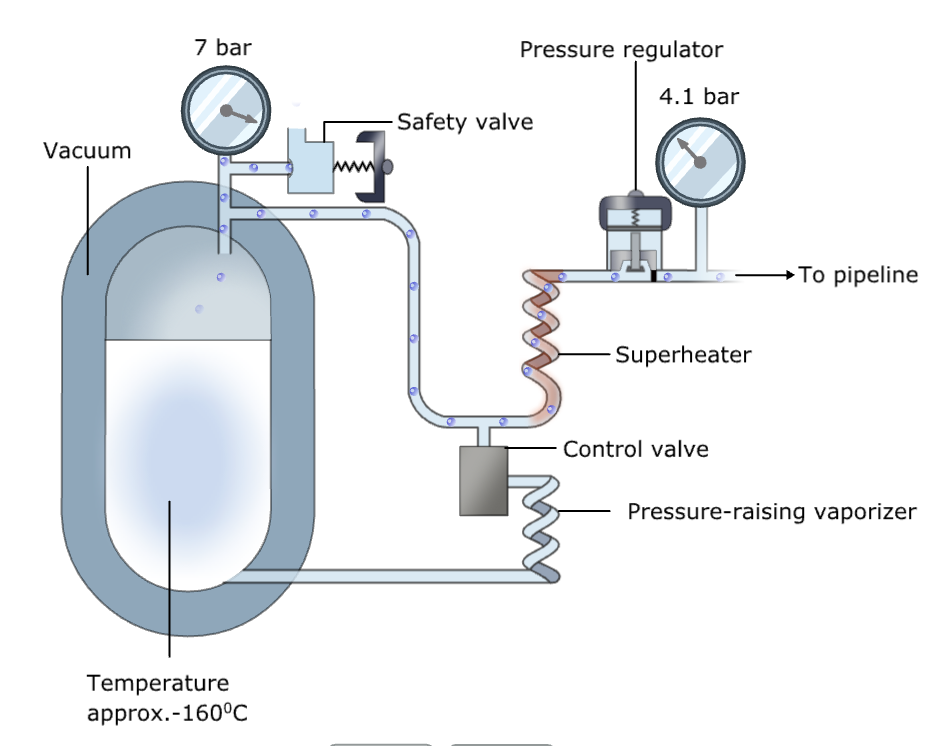
vacuum insulated evaporator (VIE)
double-skinned steel tank;
a vacuum of 0.16-0.3 kPa → helps to maintain the oxygen at around -160°C to -180°C
O2 below its critical temperature of -118° C → liquid form with a saturated vapour at a pressure of 10 bar above the liquid
requires a cooling system: if none is used, temperature rises → increased pressure via third gas law and oxygen blows off through the safety valve (1500kPa) which also reduces temperature through latent heat of vaporisation
supply pressure 4.1 bar
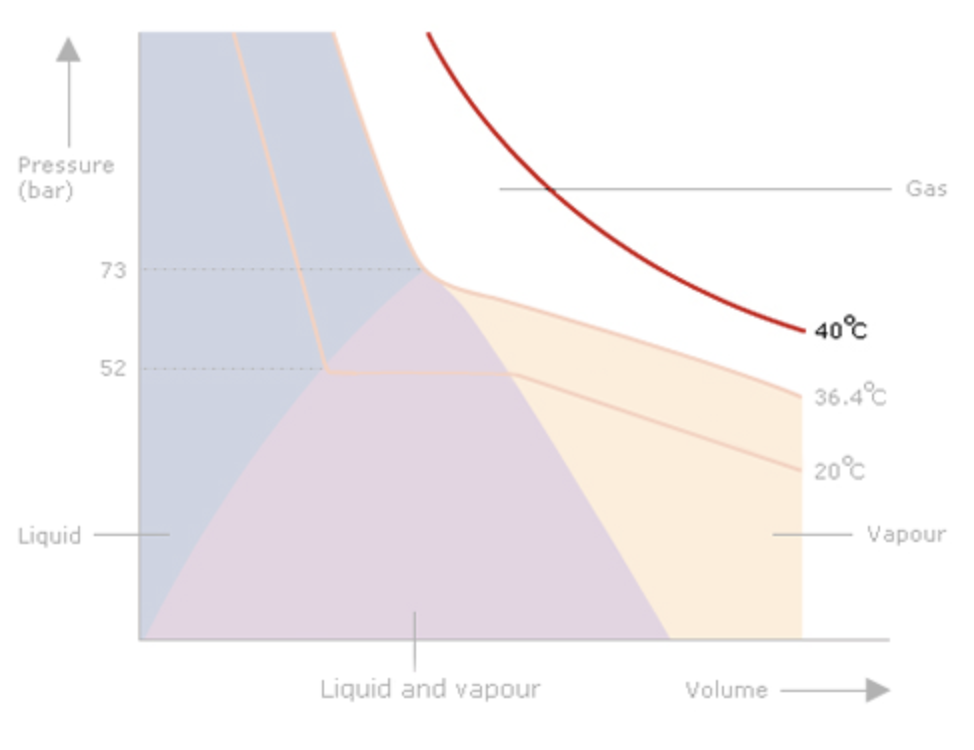
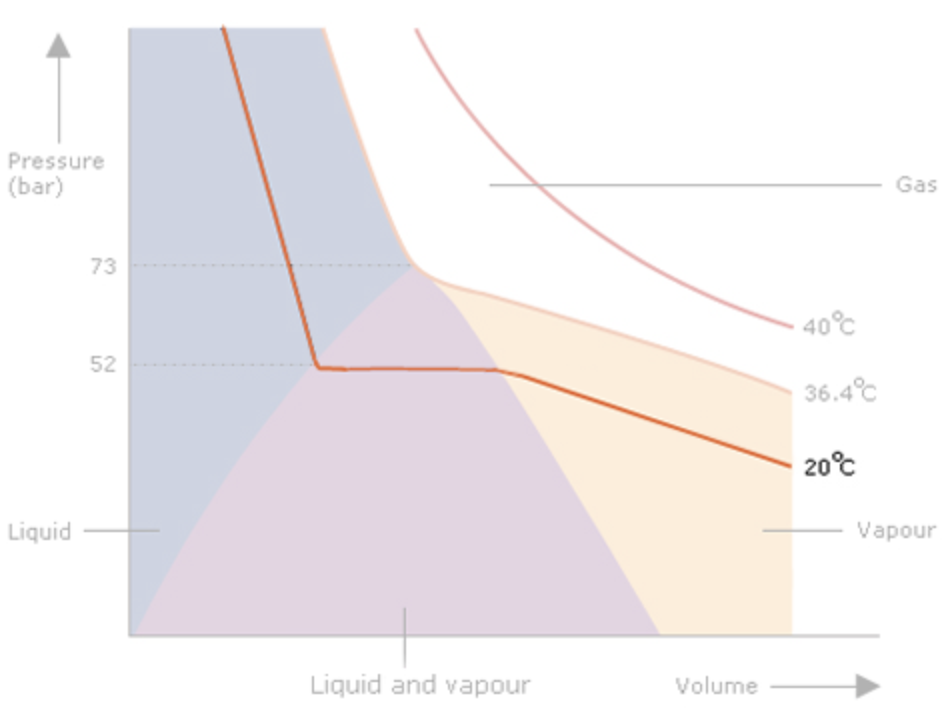
Nitrous oxide isotherms 40°C line
This line is well above the critical temperature
Above critical temperature, the substance is a fixed gas so cannot be liquefied by increasing the pressure
The relationship approximates to Boyle’s law
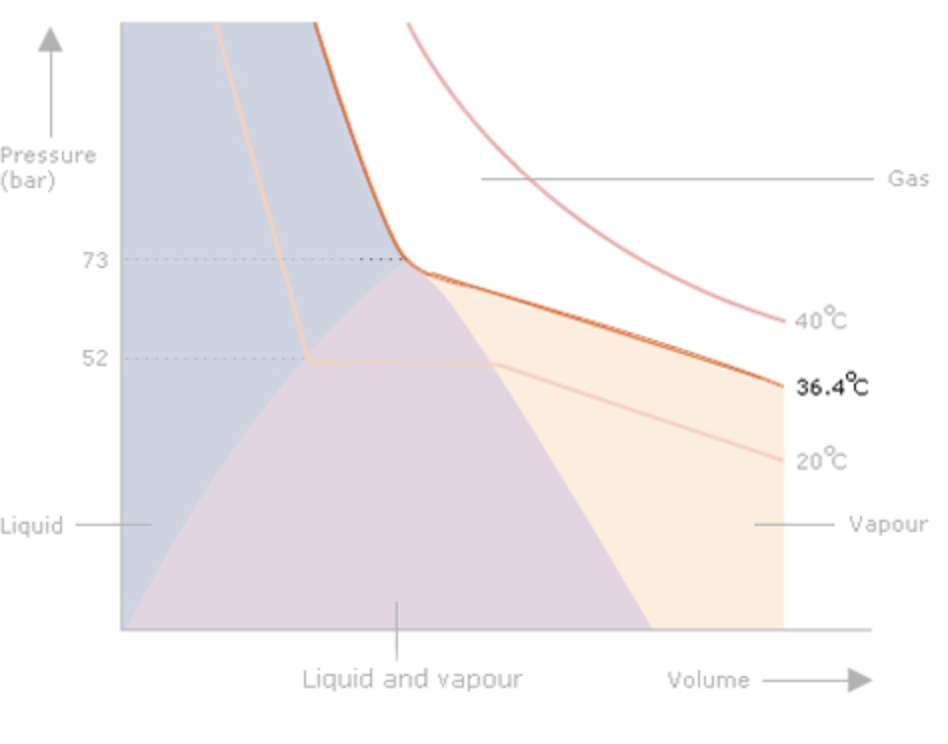
Nitrous oxide isotherms 36.4°C
Critical temperature line
Demonstrates a sharp inflexion at 73 bar (critical pressure) where liquefaction occurs
At critical temperature, any vapour is on a temperature and pressure ‘knife-edge’; any tiny change causes either liquefaction or transformation to a fixed gas so very little vapour exists
Sharp pressure rise with further volume decrease as liquids are incompressible
Remember, liquefaction cannot occur above a substance's critical temperature
Nitrous oxide isotherms 20°C
Room temperature line
So far beneath critical temperature, vapour will not transform to the gas
Steady linear increase as vapour is compressed
Plateau in pressure as further volume reduction now results in liquefaction
Vapour/liquid mixes exist over a wide volume range
Sharp rise once all the vapour is liquefied
Nitrous Oxide Cylinders
Stored as a liquid where the vapour pressure is 44 bar.
Liquid is less compressible than vapour so cylinders have a filling ratio of 0.75 as to allow expansion and prevent explosion (warmer climates 0.67).
The filling ratio describes the weight of fluid within a nitrous cylinder compared with the weight of the cylinder when filled completely with water
based on weight not volume; differing densities of N2O (1222 kg/m3) and water (1000 kg/m3) so 0.75 filling ratio does not give a cylinder 75% full by volume
Stored vertically.
Tare weight is the weight of the empty cylinder.
During continuous use of nitrous oxide cylinders, latent heat of vaporisation causes cooling, leading to a gradual fall in pressure rather than a constant pressure until the liquid is exhausted.