Properties and types of waves: Waves in matter: Physics: GCSE (9:1)
 Call Kai
 Learn
Learn Practice Test
 Spaced Repetition
 Match
Match Flashcards
 Knowt Play
1/16

There's no tags or description
Looks like no tags are added yet.
Name | Mastery | Learn | Test | Matching | Spaced | Call with Kai |
|---|
No analytics yet
Send a link to your students to track their progress
17 Terms
Waves
One of the ways in which energy may be transferred between stores without transferring matter
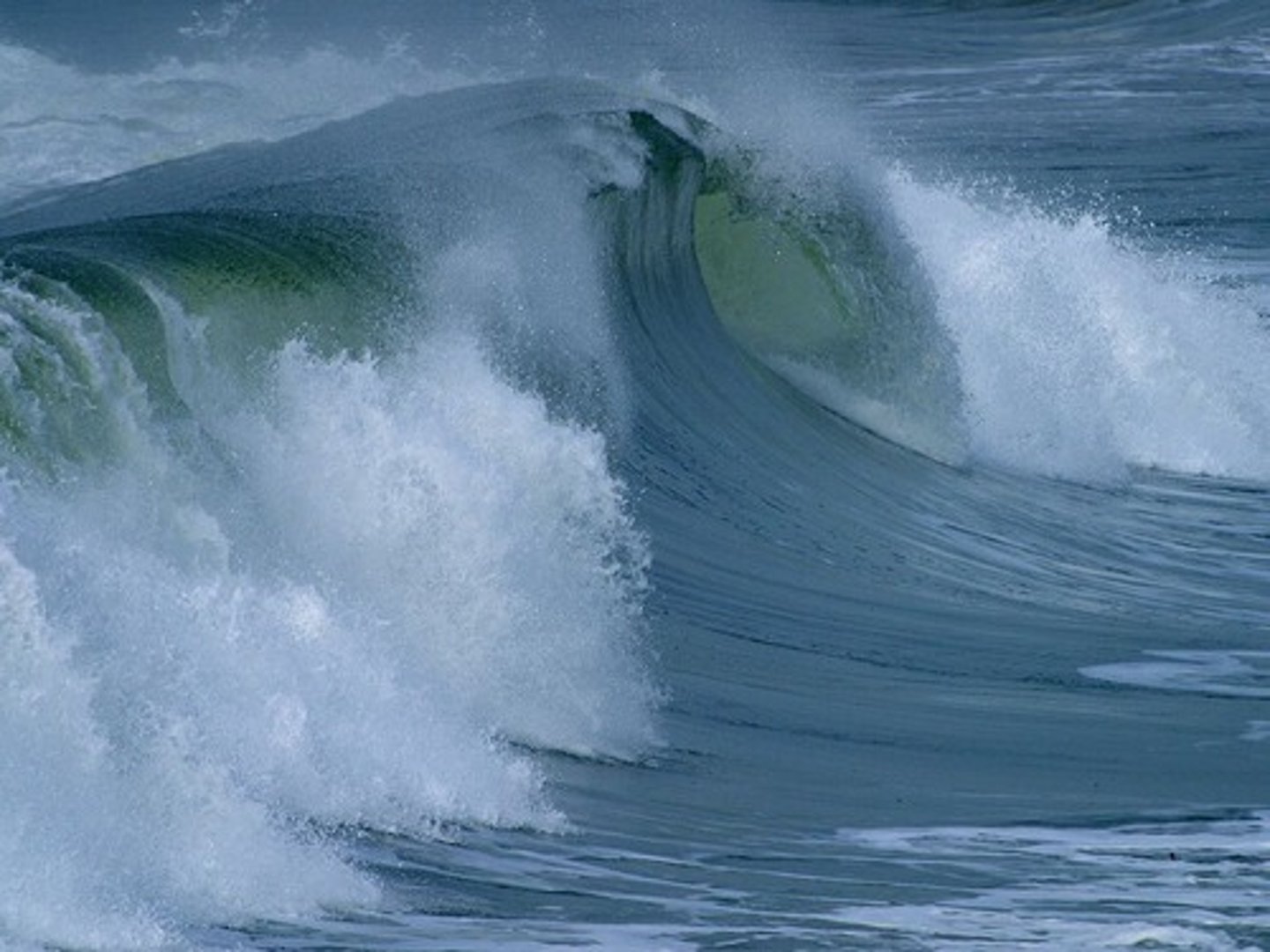
Oscillations
Repeated and regular fluctuations above and below a fixed point
Vibrations
Repeated forwards and backwards movement about a fixed point
Longitudinal wave
A wave in which the vibrations or oscillations are parallel to the direction of wave travel
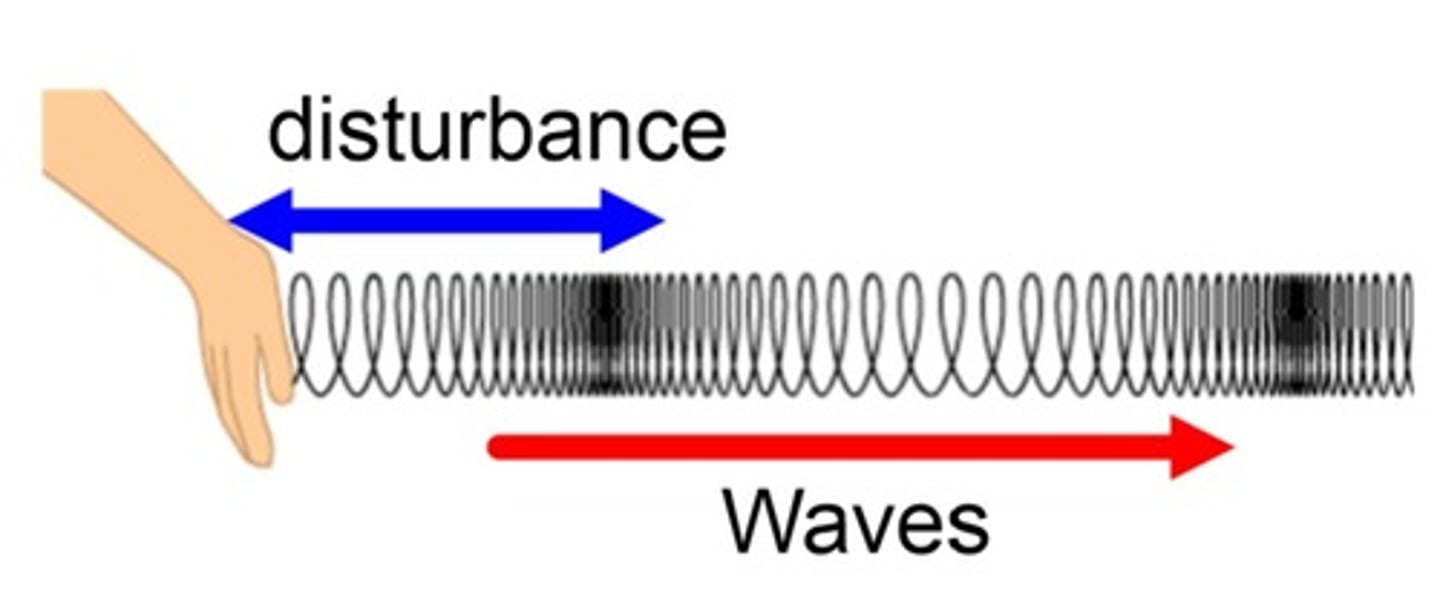
Compression
A region in a longitudinal wave where the particles are closest together
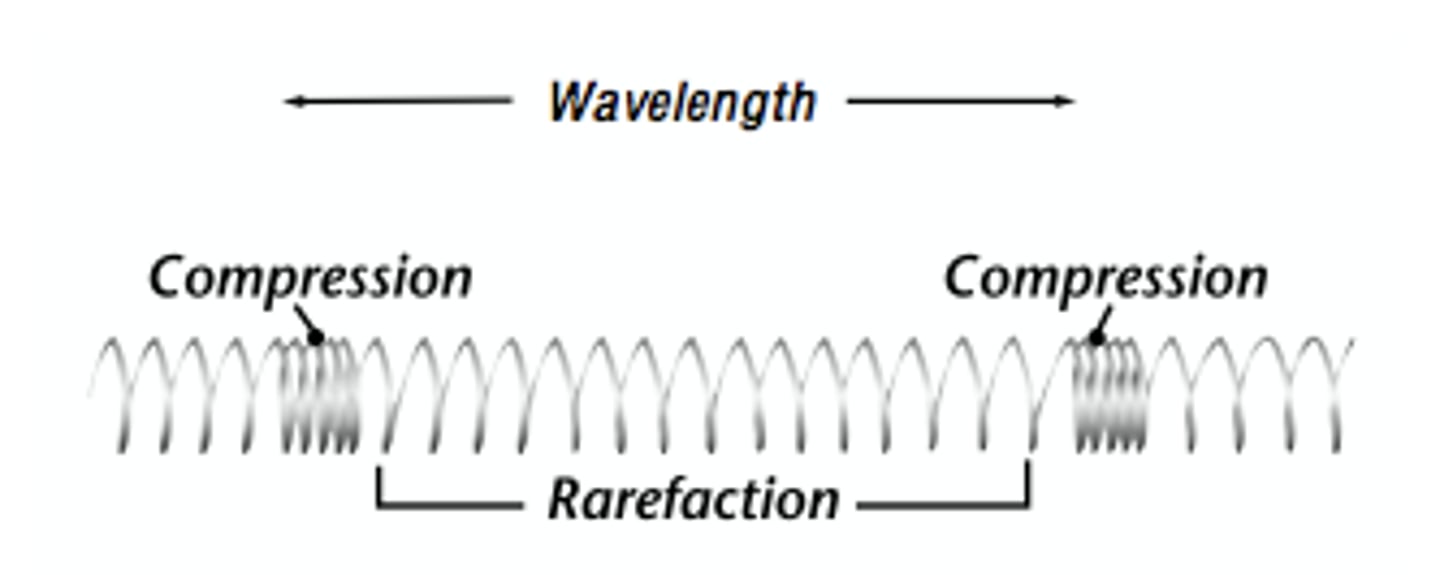
Rarefaction
A region in a longitudinal wave where the particles are furthest apart
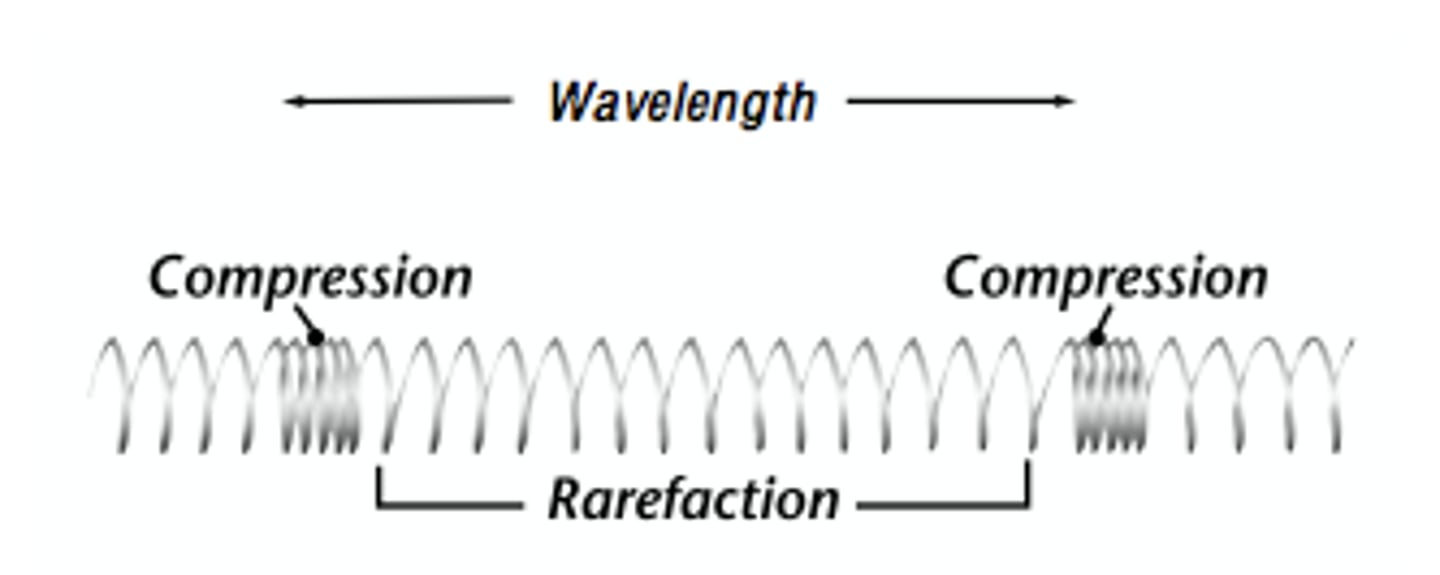
Examples of longitudinal waves
Sound, ultrasound, seismic P-waves
Transverse wave
A wave in which the vibrations or oscillations are perpendicular to the direction of wave travel
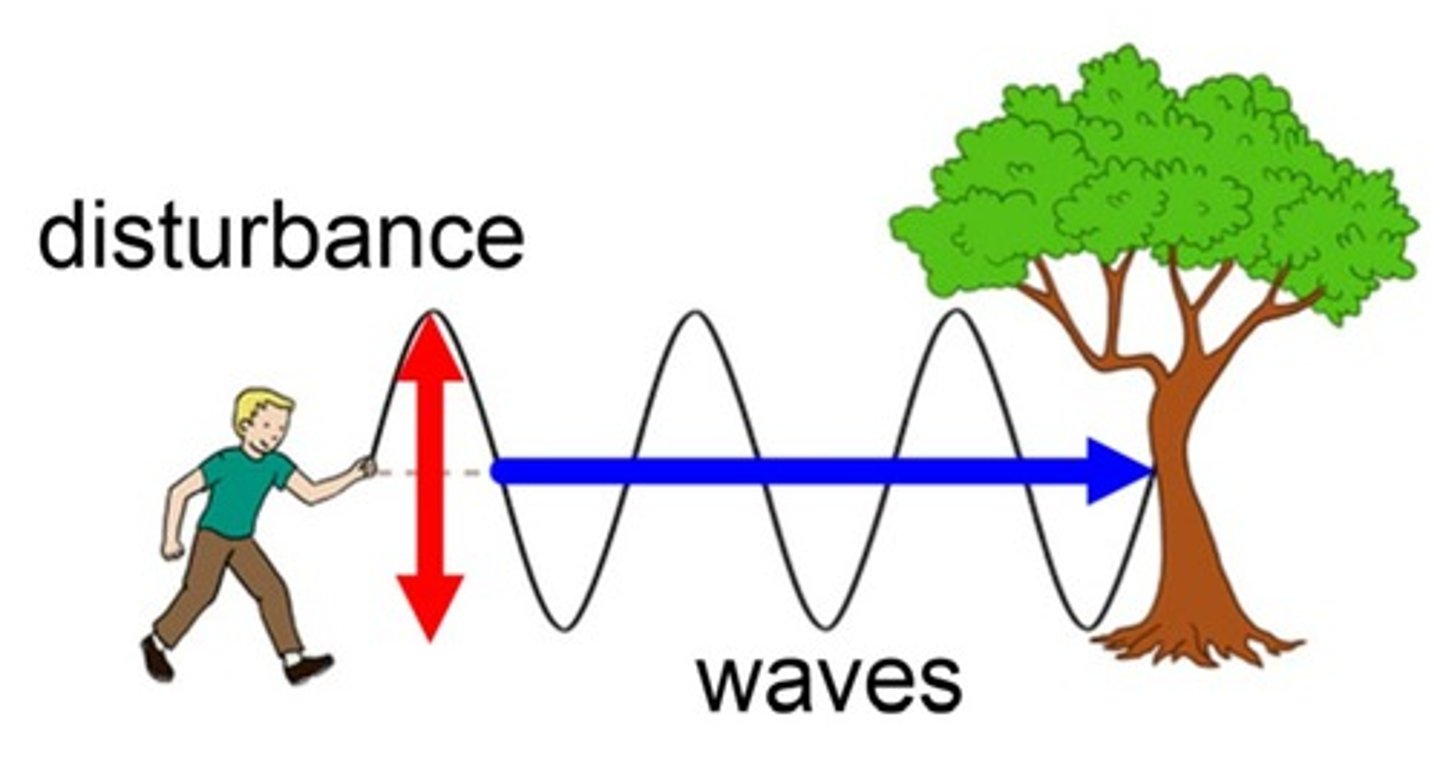
Examples of transverse waves
Water waves, vibrations along a string, Mexican wave, electromagnetic waves (light waves, microwaves, radio waves etc), seismic S-waves
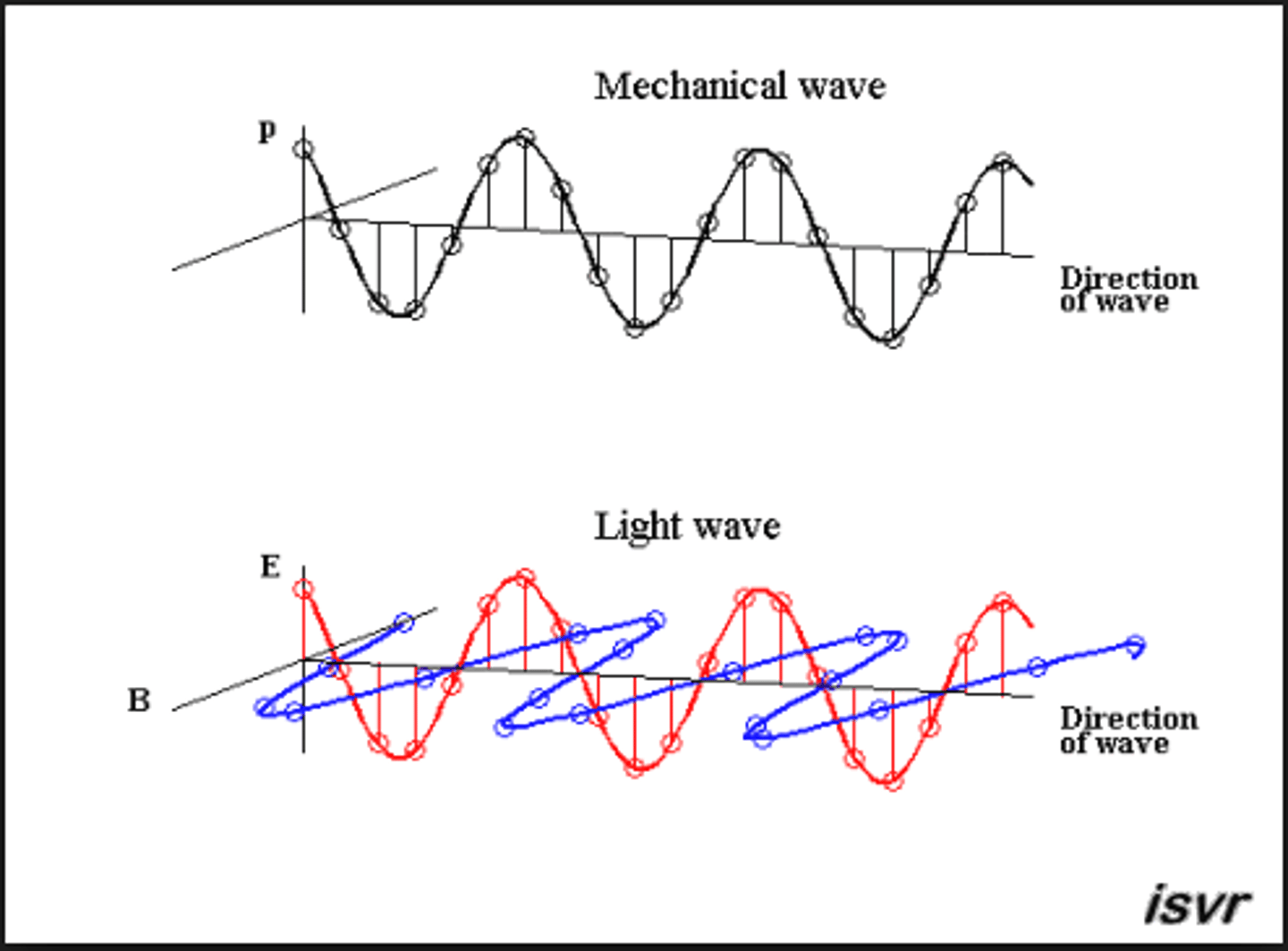
Mechanical waves
Cause the particles in a solid, liquid or gas to oscillate and need medium to travel through
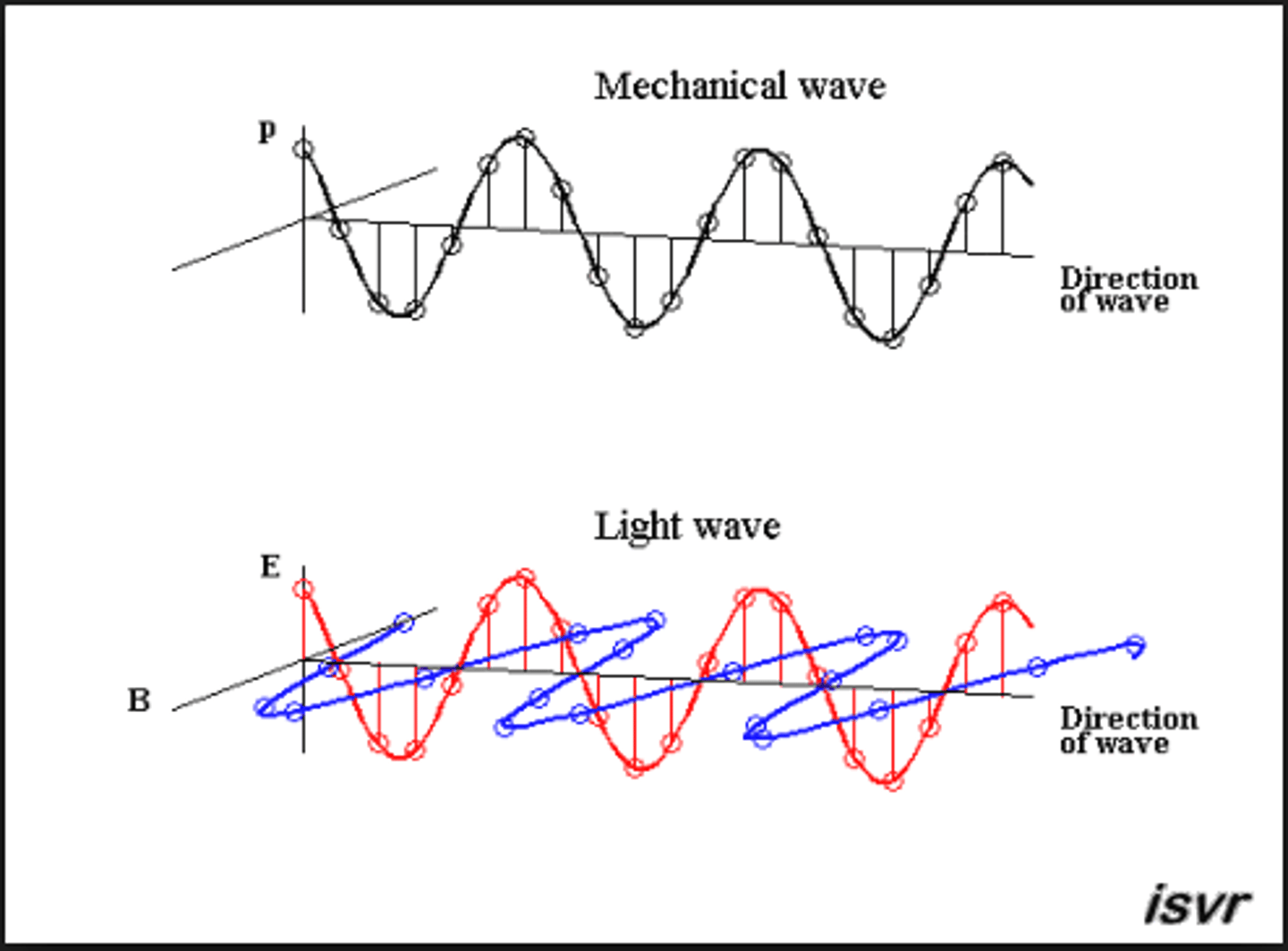
Electromagnetic waves
Cause electrical and magnetic fields to oscillate
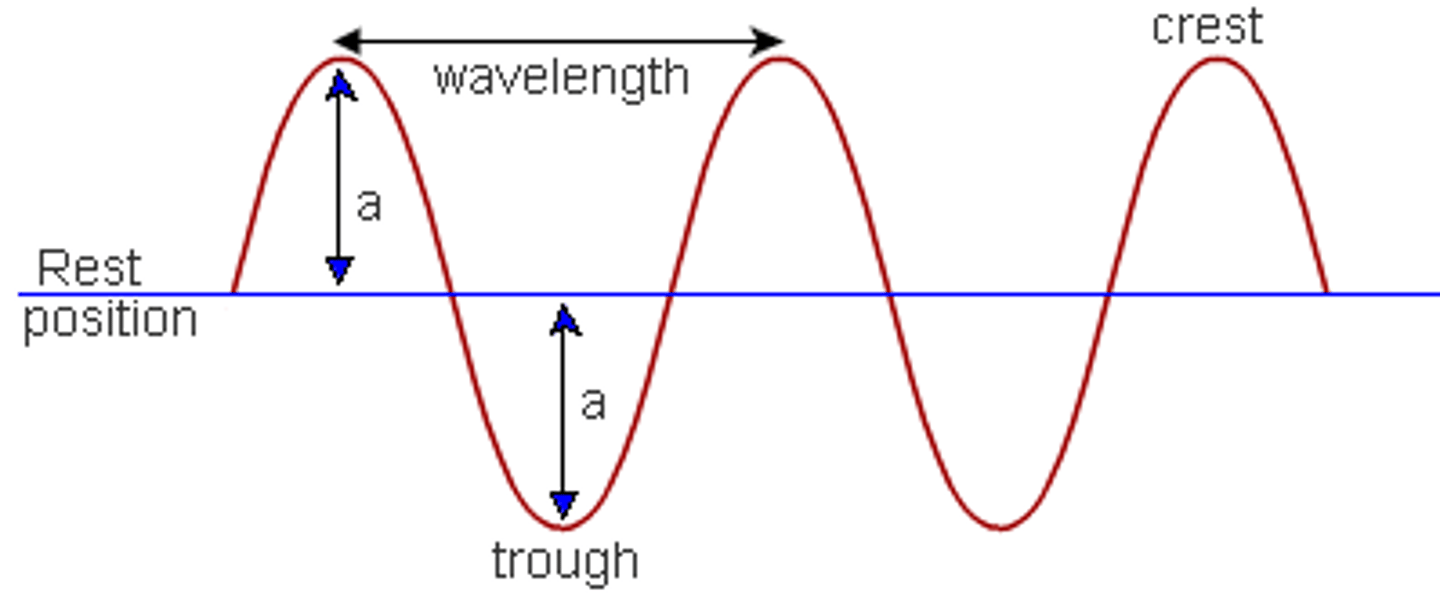
Rest position
The position of particles or fields when they are not vibrating
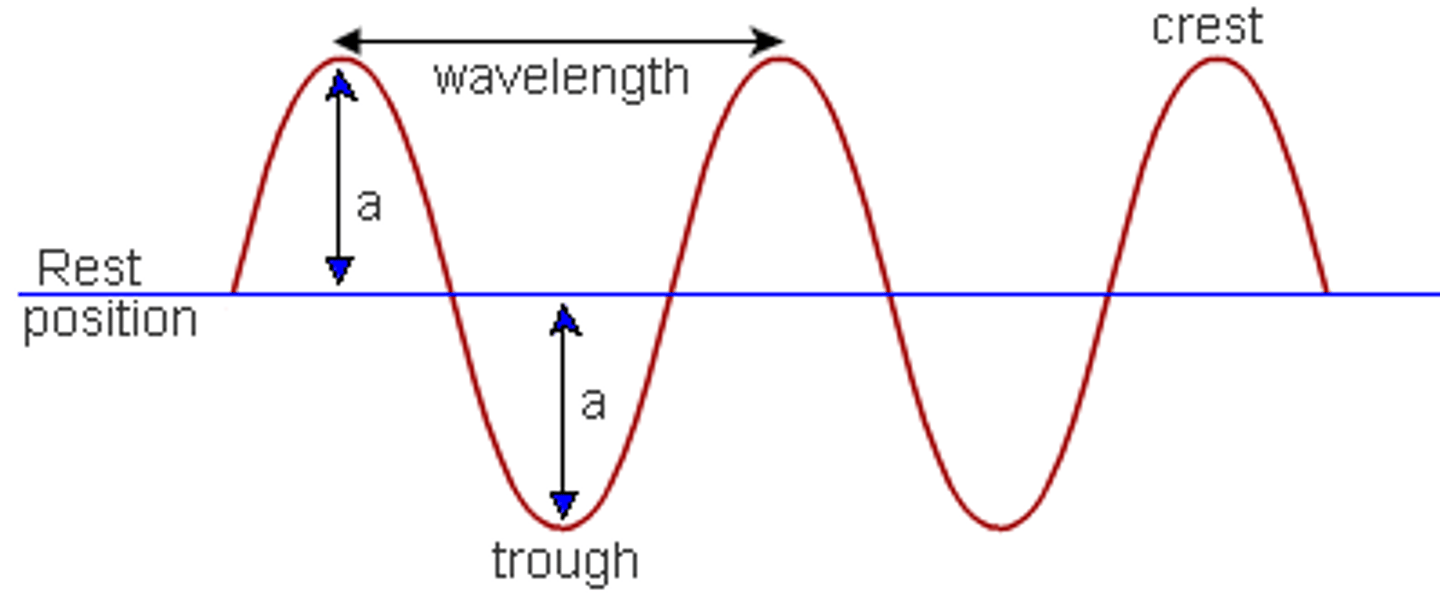
Displacement
The distance that a point of a wave has moved from its rest position
Amplitude (a)
The maximum displacement of a point of a wave from its rest position
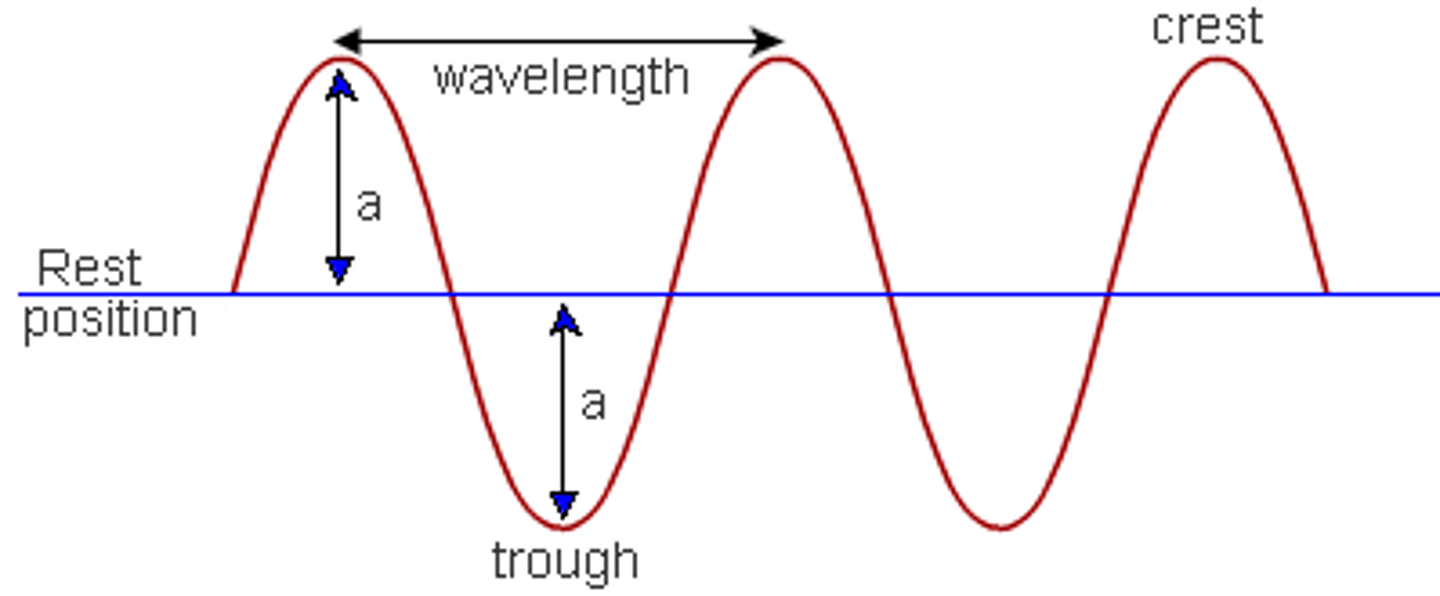
Peak or crest
The largest displacement of a point of a wave above the rest position
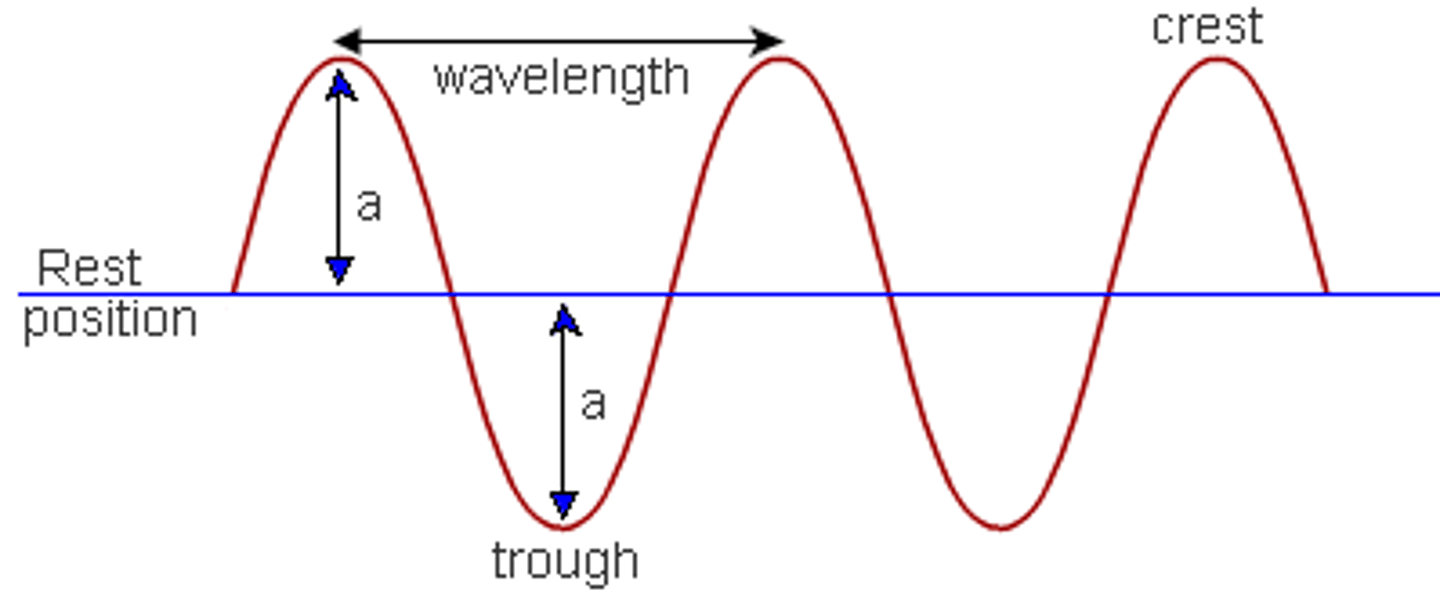
Trough
The largest displacement of a point of a wave below the rest position
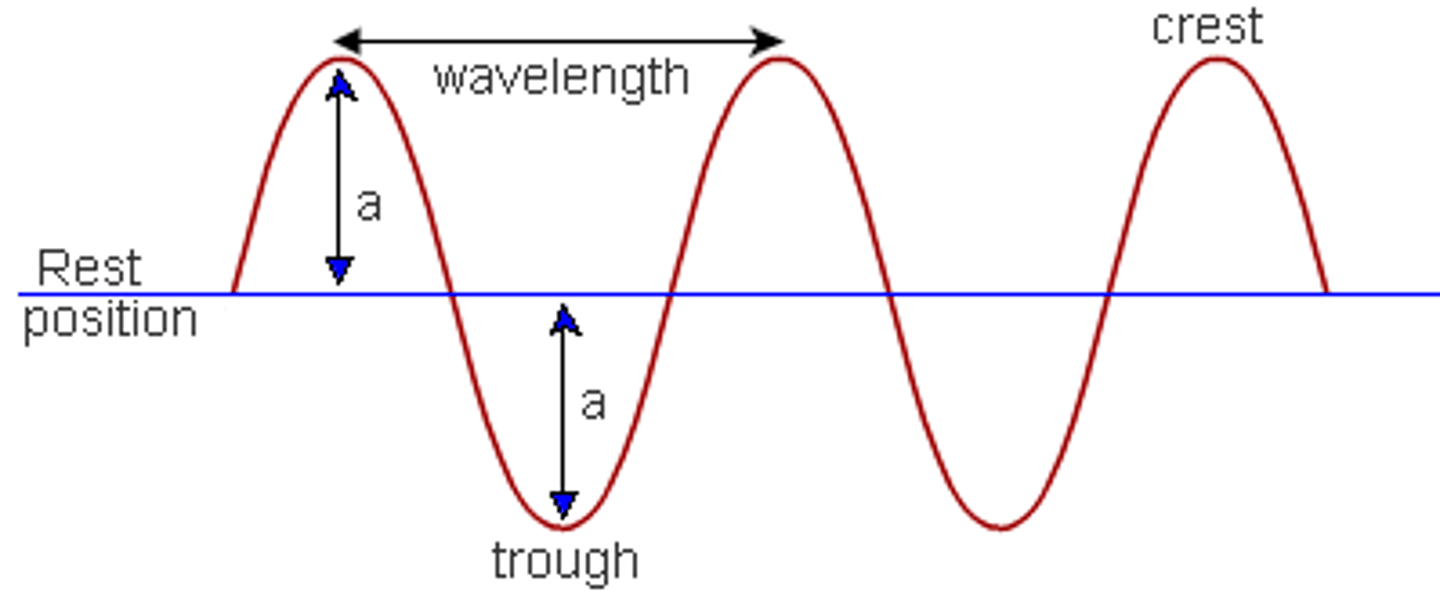
Wavelength (λ)
The distance covered by a full cycle of the wave