Chapter 12: Managing Organization Change and Innovation
 Call Kai
 Learn
Learn Practice Test
 Spaced Repetition
 Match
Match Flashcards
 Knowt Play
1/35

Earn XP
Description and Tags
Name | Mastery | Learn | Test | Matching | Spaced | Call with Kai |
|---|
No analytics yet
Send a link to your students to track their progress
36 Terms
what is organization change?
any substantive modification to some part of the organization
can involve any dimension or element of an organization
can have effects beyond actual area where change is implemented
common for multiple to go on at same time
what are external forces?
From organization’s general and task environments
new rules of production, laws, courts, inflation, cost of living, $$$, what products are made, etc.
highly affected by regulators and competitors (ex. laptops)
what are internal forces?
forces inside the organization that cause change
could reflect external forces
organization must respond directly to the internal pressure generated
what is planned change?
change that is designed and implemented in an orderly and timely fashion in anticipation of future events
almost always preferred to reactive change
best to anticipate forces urging change and plan ahead to deal with them
what is reactive change?
a piecemeal response to circumstances as they develop
what is the “Lewin Model”
suggests every change requires three steps
unfreezing (people affected by change must be led to see why change is necessary)
change itself
refreezing (reinforcing and supporting the change so it becomes a part of the system)
what is the comprehensive approach to change?
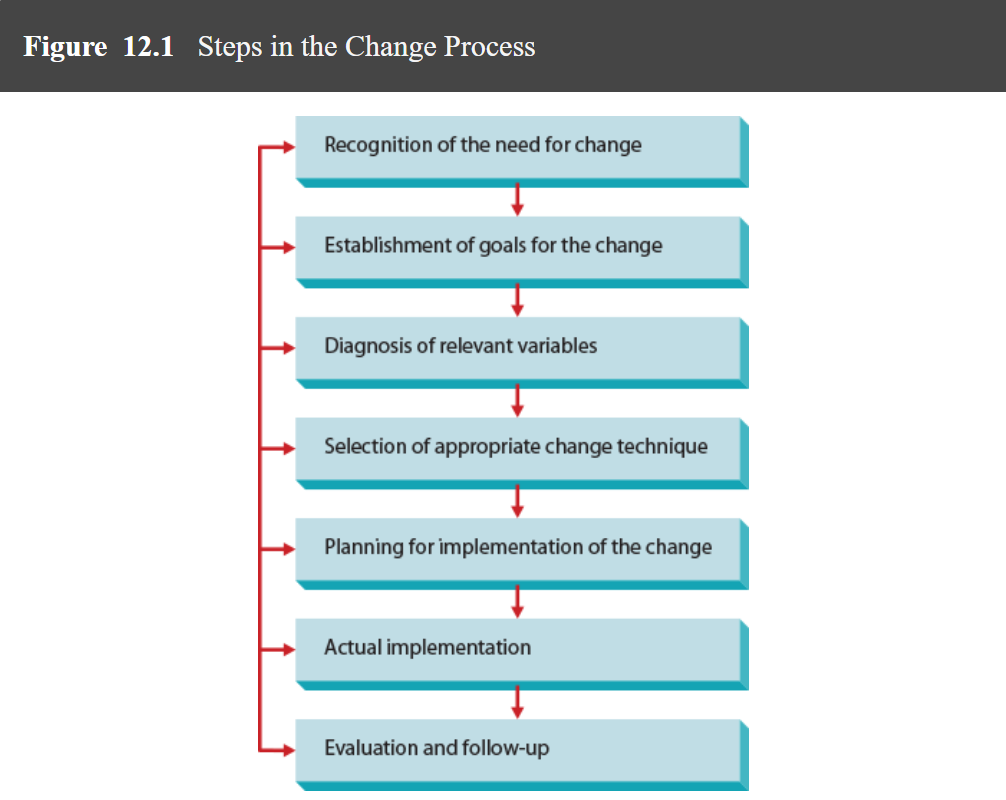
takes a systems view and delineates a series of specific steps that often lead to successful change
List the reasons for resistance to change
uncertainty (become anxious and nervous, ability to meet job demands, threaten job security, dislike ambiguity)
threatened self-interests (change could diminish power or influence of manager)
different perceptions (people not agreeing with situations)
feeling of loss (disrupt social networks from altering work arrangements)
List how to overcome resistance to change?
participation (employees are better able to understand reasons for change)
education and communication (reduce uncertainty)
facilitation (making only necessary changes, announcing changes in advance, allowing people time to adjust)
force-field analysis (listing forces and try to tip balance so forces facilitating change outweigh those hindering it)
why might the organization change?
basic components of organization structure or design
change overall design
any part of its human resource management system
list important forms of technological change
information technology
equipment (keep up with competitors)
what is enterprise resource planning (ERP)?
a large-scale information system for integrating and synchronizing the many activities in the extended workplace
bought from external vendors who tailor products to client’s needs
manage companywide processes (cut across product lines, departments, and geographic locations)
integrates all activities and information flows that relate to the firm’s critical processes
keeps updated real-time information on their current status, reports past and future transactions, and provide electronic notices that action is required to meet schedules (bunch of other stuff)
how do you deploy the ERP system?
identifying the key processes that need critical attention (supplier relationships, materials flows, or customer order fulfillment)
explain why people, perceptions and expectations, and employee attitudes and values are a focus of organization change?
change skill level of its workforce (change tech or upgrade quality of workforce)
increase workers’ performance level (incentive system or performance-based training)
informing and educating the workforce about the comparative value of its compensation package.
adopting a more collaborative relationship
what is business process change (reengineering)
The radical redesign of all aspects of a business to achieve major gains in cost, service, or time
more comprehensive than ERP
why do businesses go through business process change?
organizations subject to entropy —> decline
recognize onset of environmental shifts or entropy to correct
what is organization development (OD)
an effort that is planned, organization-wide, and managed from the top, intended to increase organizational effectiveness and health through planned interventions in the organization’s process, using behavioral science knowledge
what are the theory and practice of OD based on?
employees have desire to grow and develop
employees have a strong need to be accepted by others in organization
total organization and its design will influence the way individuals and groups within the organization behave
what are some OD techniques?
diagnostic activities
team building
survey feedback
education
intergroup activities
third-party peacemaking
technostructural activities
process consultation
life and career planning
coaching and counseling
planning and goal setting
what is innovation?
the managed effort of an organization to develop new products or services or new uses for existing products or services
what is innovation development?
the evaluation, modification, and improvement of creative ideas
transform low potential product/service to significant potential
what is innovation application?
stage in which an organization takes a developed idea and uses it in the design, manufacturing, or delivery of new products, services, or processes
innovation —> tangible goods/services
what is application launch?
stage which organization introduces new products or services to the marketplace
what is application growth?
after innovation is launched
high economic performance for organization, demand > supply
if fail to anticipate, could unintentionally limit growth or overestimate = sit in warehouse
what is innovation maturity?
stage which most org have access to an innovation and are applying it in approximately the same way
does not provide competitive advantage
what is innovation decline?
org not keep competitive advantage from an innovation from maturity, encourage workers to search for new innovation
stage which demand for an innovation decreases and substitute innovations are developed and applied
what are radical innovations?
a new product, service, or technology that completely replaces an existing one
firms shift nature of competition and interaction of firms within their environments
Ex. CD —> spotify for music
what is incremental innovations?
a new product, service, or technology that modifies an existing one
alter but do not change competitive interaction in industry
ex. each generation of iPhone
what are technical innovations?
a change in the appearance or performance of products or services or of the physical process through which a product or service passes
what are managerial innovations?
a change in the management process in an organization
what are product innovations?
a change in the physical characteristics or performance of an existing product or service or the creation of a new product or service
affect broader context of development
what are process innovations?
a change in the way a product or service is manufactured, created, or distributed
directly affect manufacturing
what are reasons organizations may fail to innovate?
lack of resources (dollars, time, and energy)
failure to recognize opportunities (evaluate innovations and select ones with most potential)
resistance to change (need to give up old and do new)
what are ways to promote innovation?
the reward system (encourage and discourage certain behaviors by employees; salaries, bonuses, and pre-reqs; reward creativity)
organization culture (support innovative activity, communicate innovation is valued and rewarded and some failure is fine)
Intrapreneurship in Larger Organizations
what is intrapreneurship?
similar to entrepreneurs except that they develop new businesses in the context of a large organization
what are the intrapreneurial roles?
inventor (person who conceives and develops new idea, product or service by means of the creative process)
product champion (middle manager who learns about the project and becomes committed to it)
sponsor (top-level manager who approves and supports a project)