BIO 222 Lecture7.DigestiveSystem.Digestion&Absorption Review
 Call Kai
 Learn
Learn Practice Test
 Spaced Repetition
 Match
Match Flashcards
 Knowt Play
1/59

Earn XP
Description and Tags
BIO 222 Anatomy & Physiology 2
Name | Mastery | Learn | Test | Matching | Spaced | Call with Kai |
|---|
No analytics yet
Send a link to your students to track their progress
60 Terms
In mouth.
In stomach.
In small intestine (recall digested material is chyme at this point).
digestion
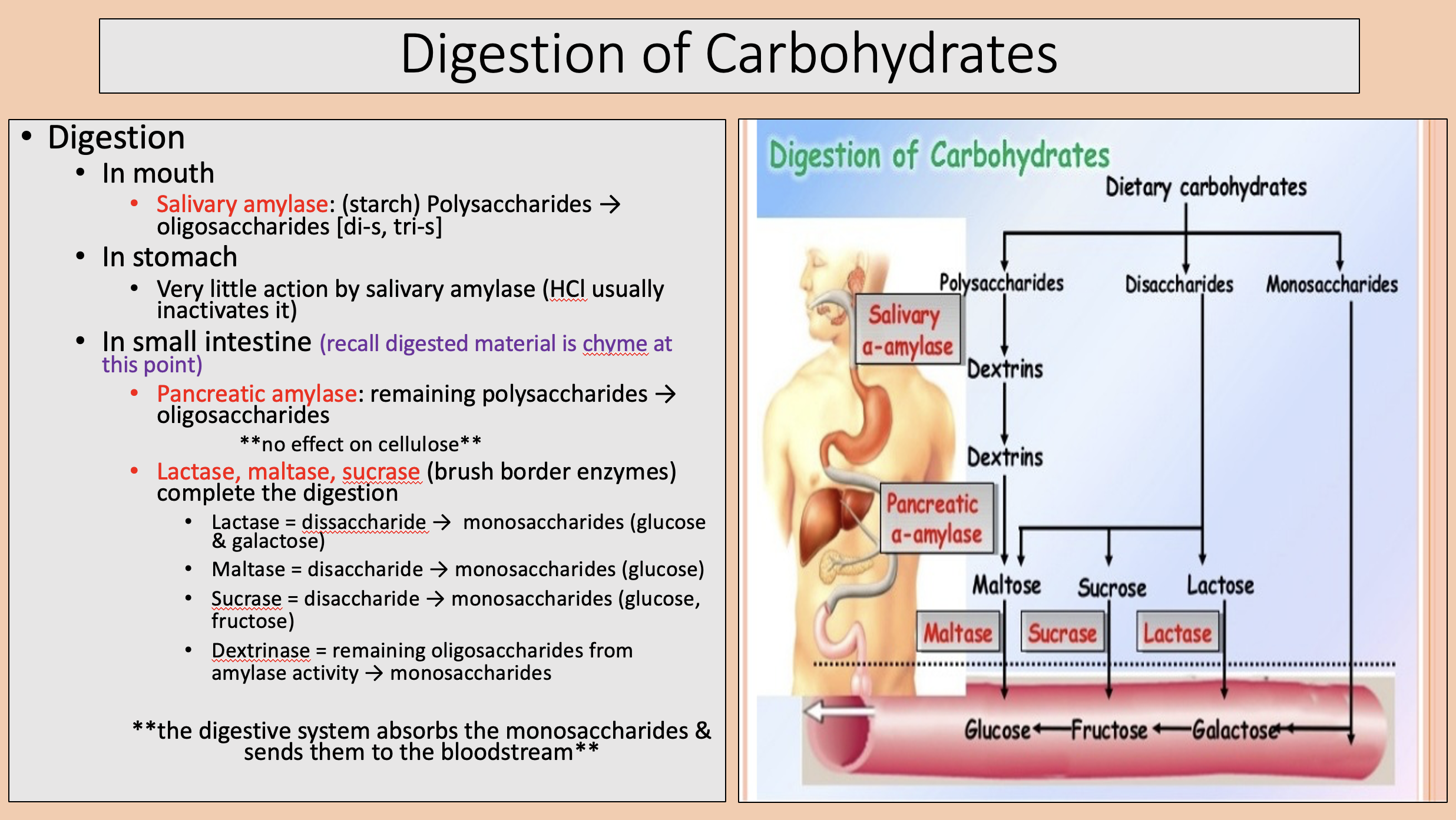
In mouth.
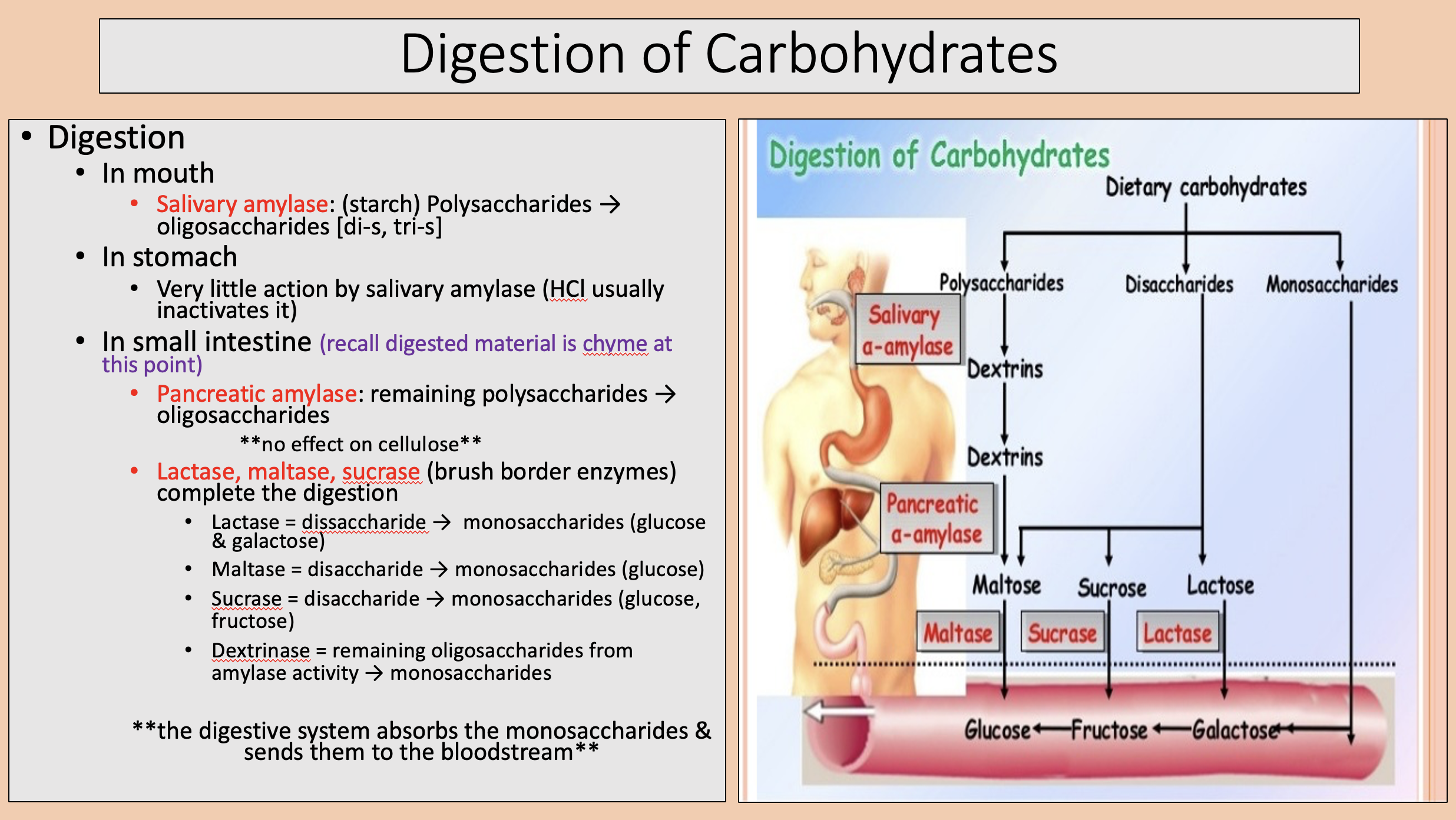
(Starch) Polysaccharides → oligosaccharides [di-s, tri-s].
salivary amylase
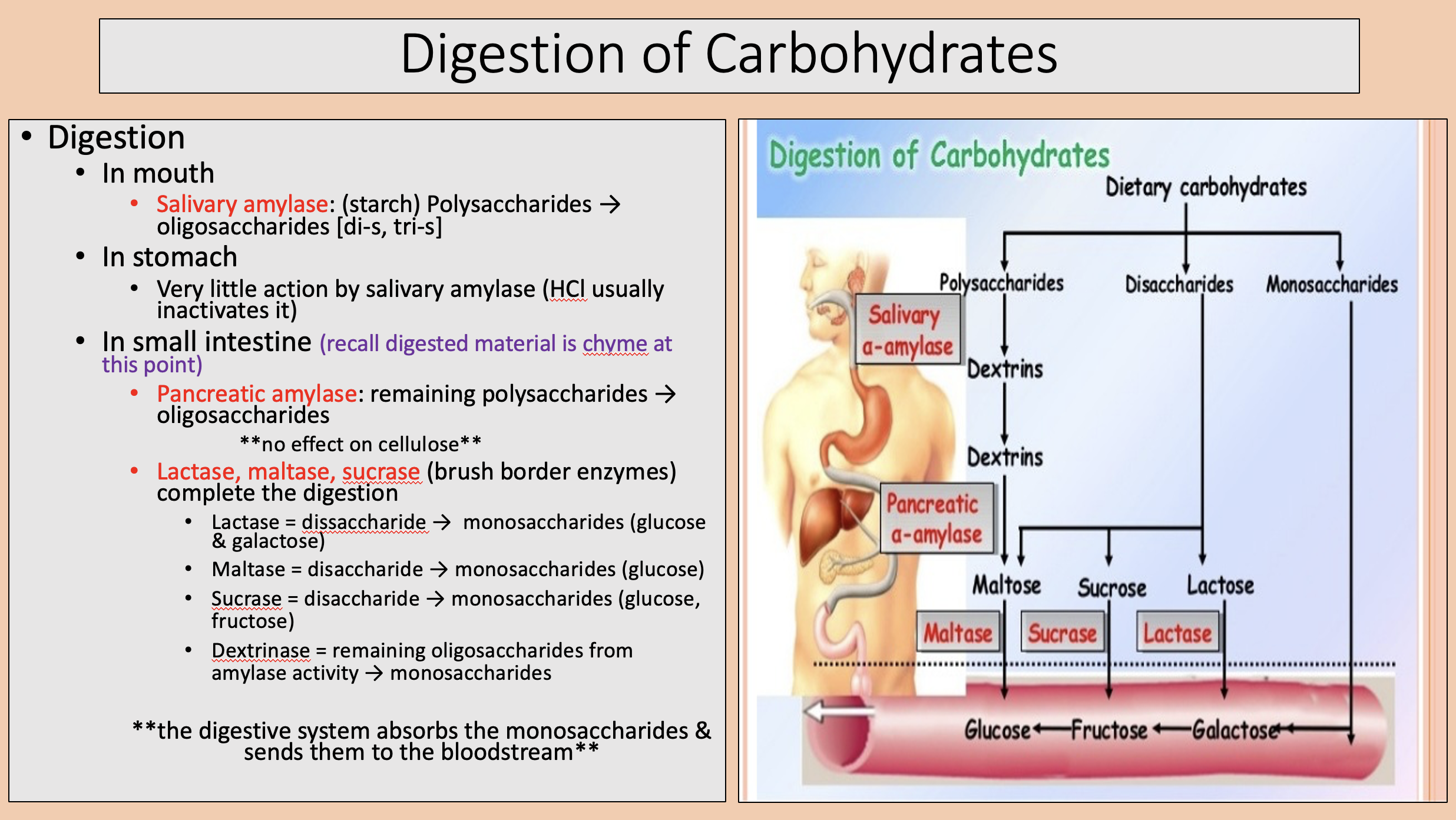
Very little action by salivary amylase (HCl usually inactivates it)
in stomach
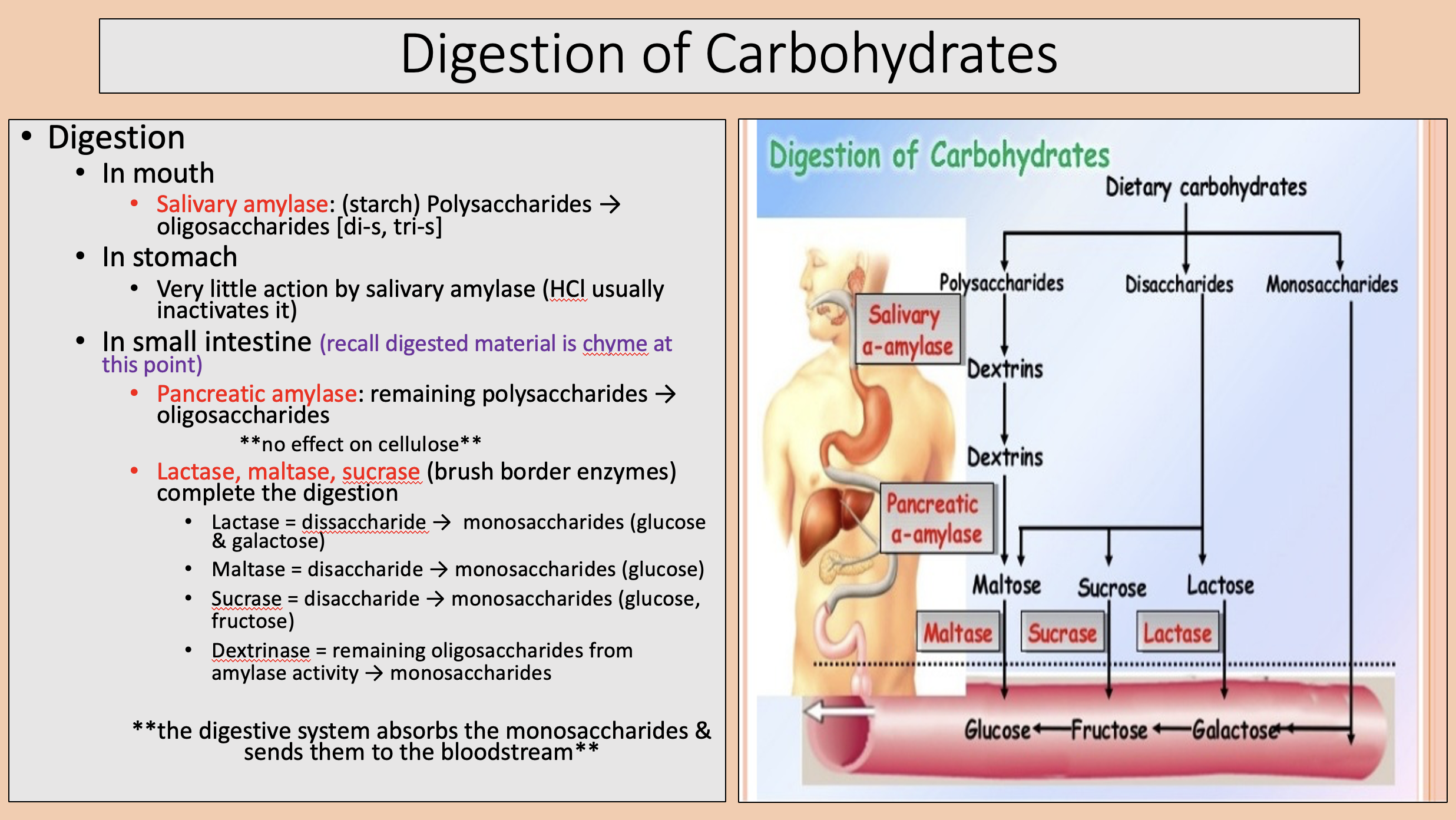
In small intestine
pancreatic amylase
lactase
maltase
sucrase
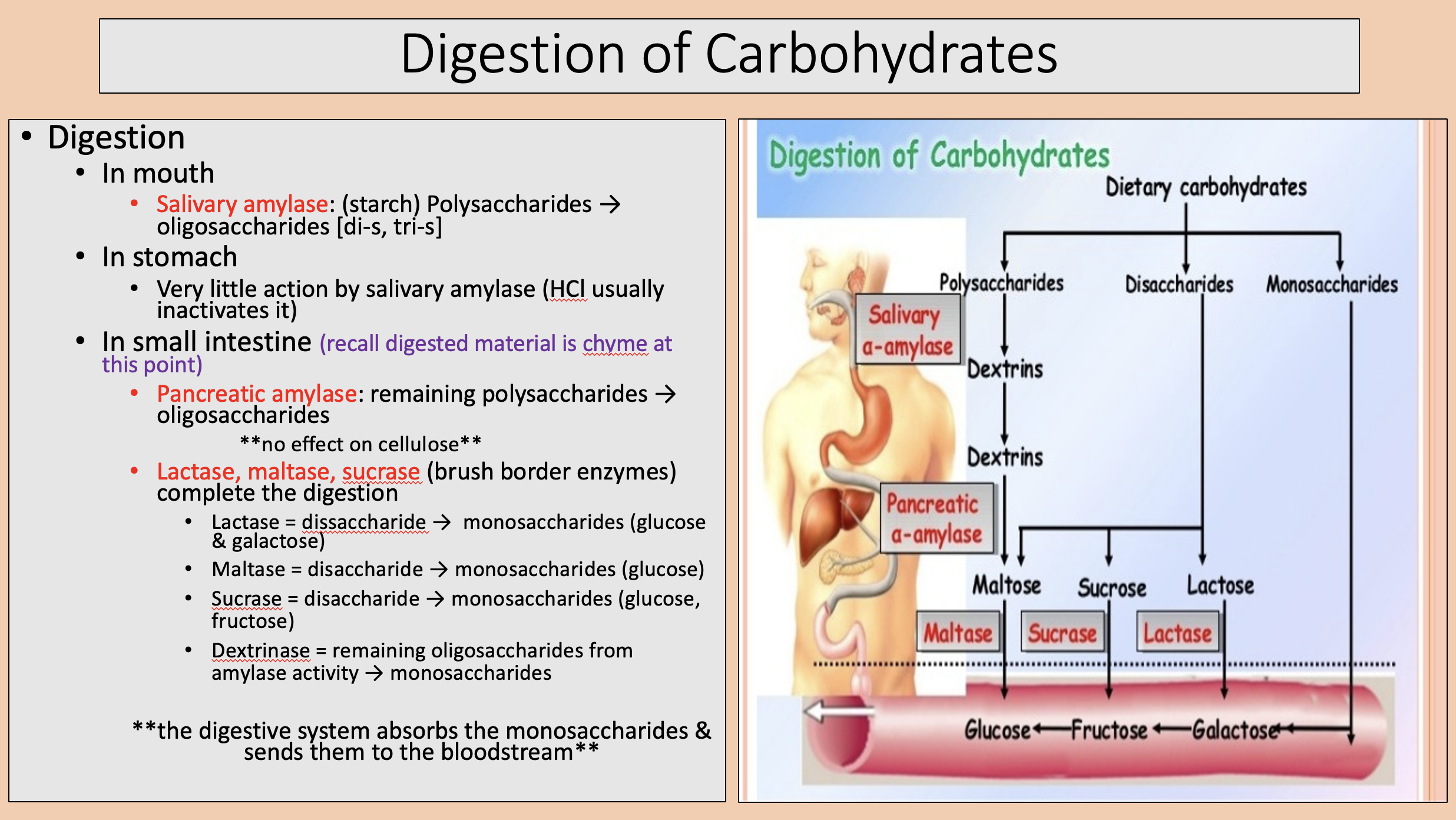
Remaining polysaccharides → oligosaccharides.
**No effect on cellulose**.
pancreatic amylase
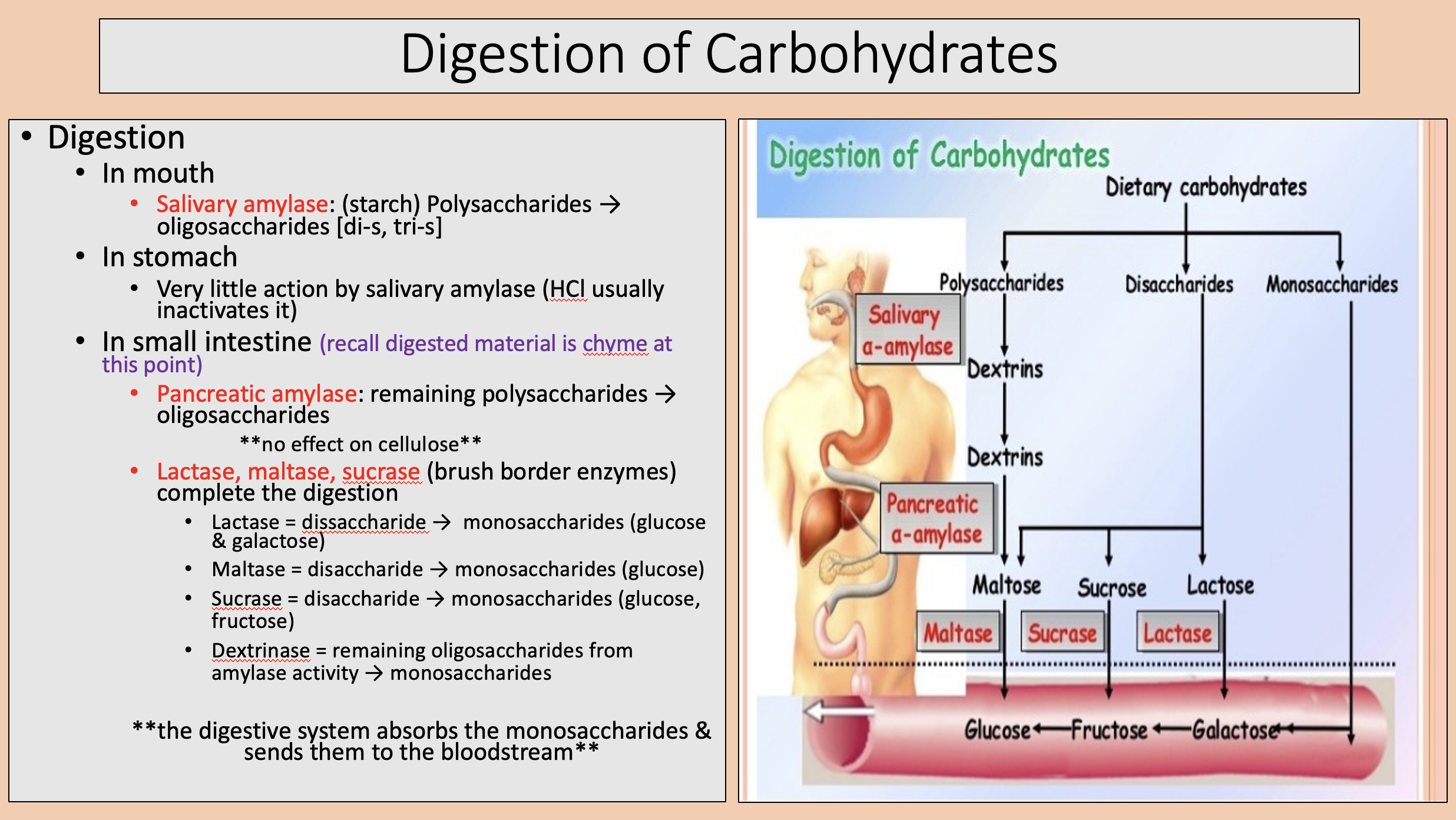
(Brush border enzymes) complete the digestion.
**The digestive system absorbs the monosaccharides & sends them to the bloodstream**.
lactase
maltase
sucrase
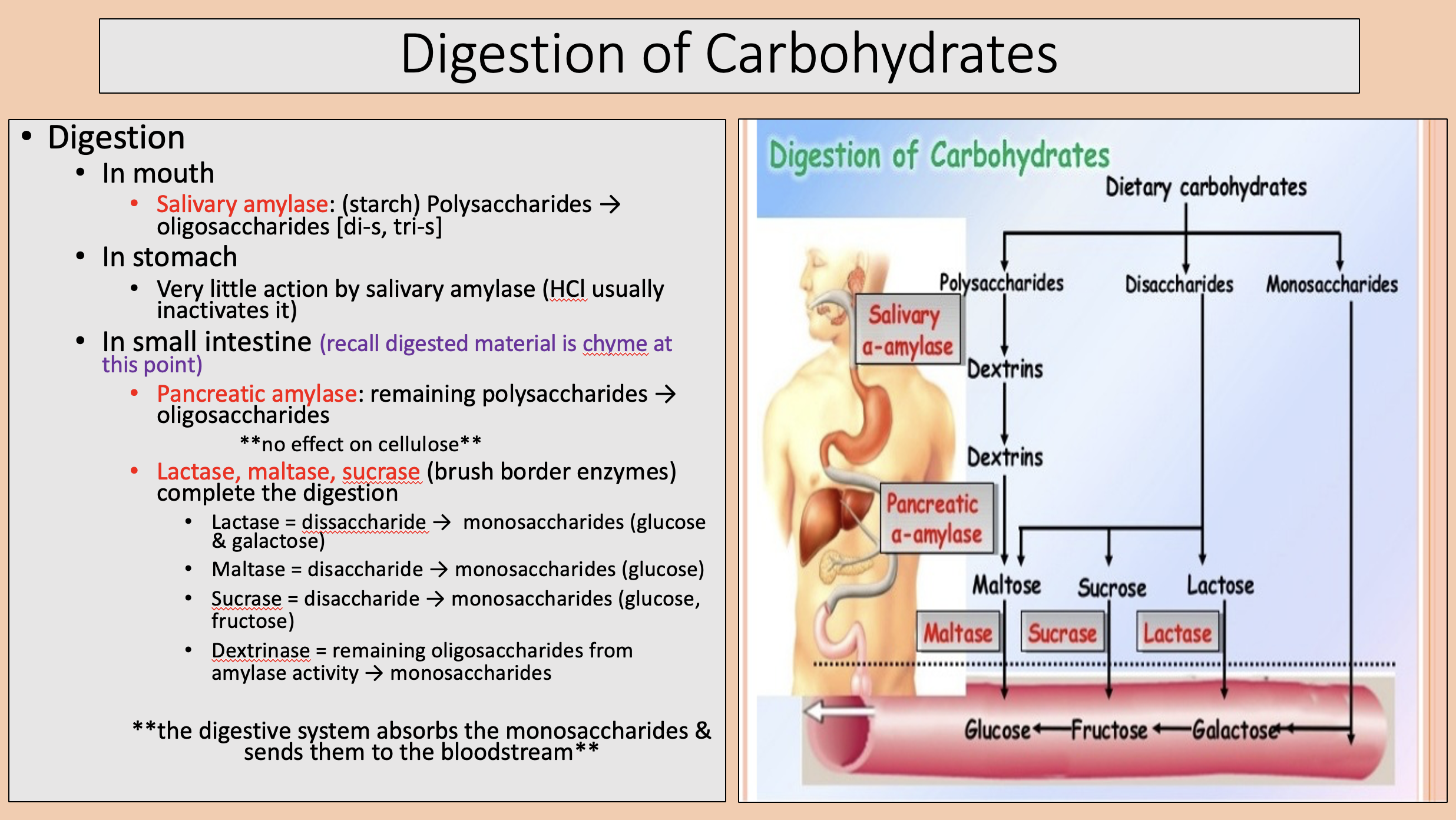
Dissaccharide → monosaccharides (glucose & galactose)
lactase
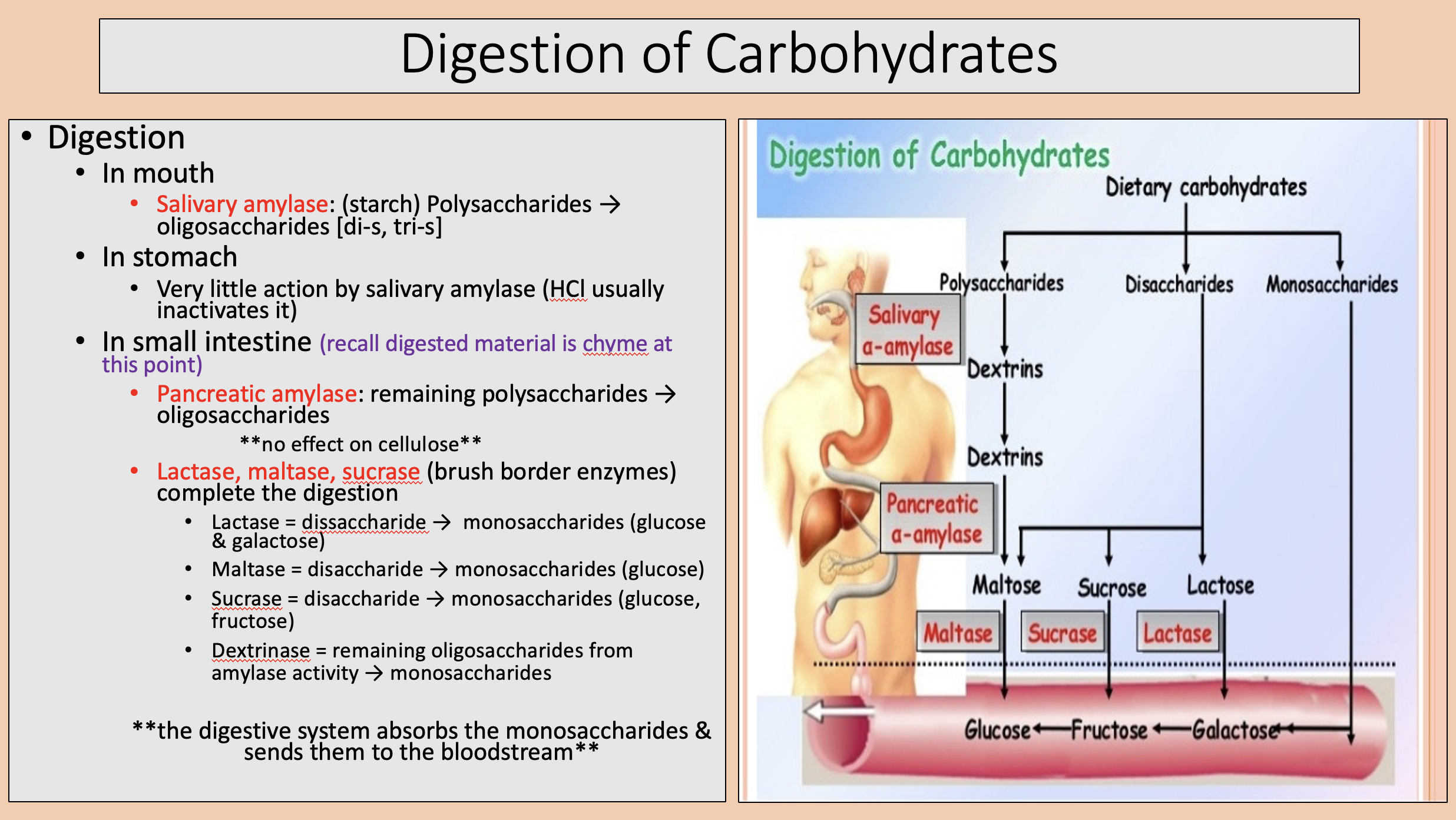
Disaccharide → monosaccharides (glucose)
maltase
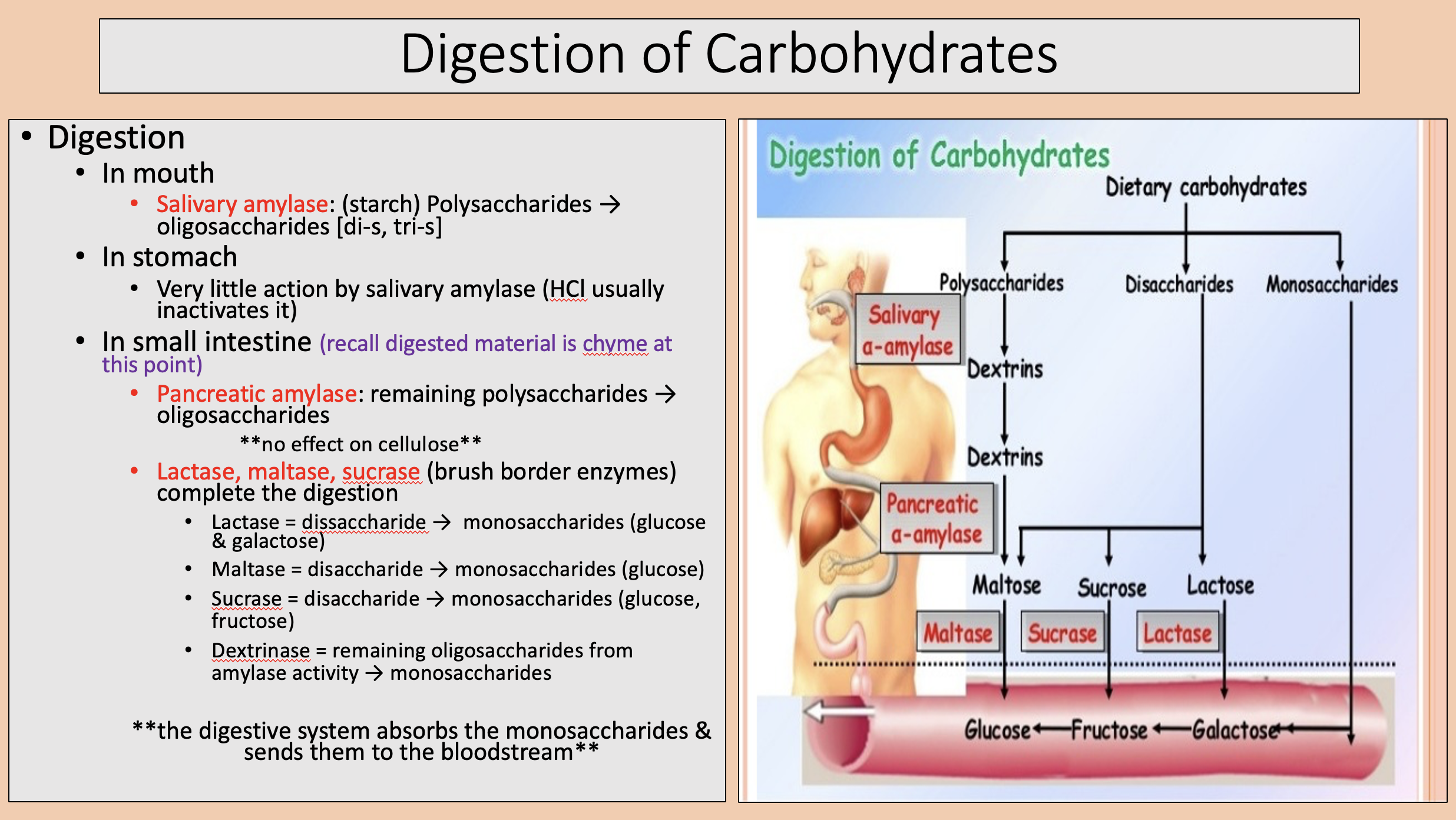
Disaccharide → monosaccharides (glucose, fructose)
sucrase
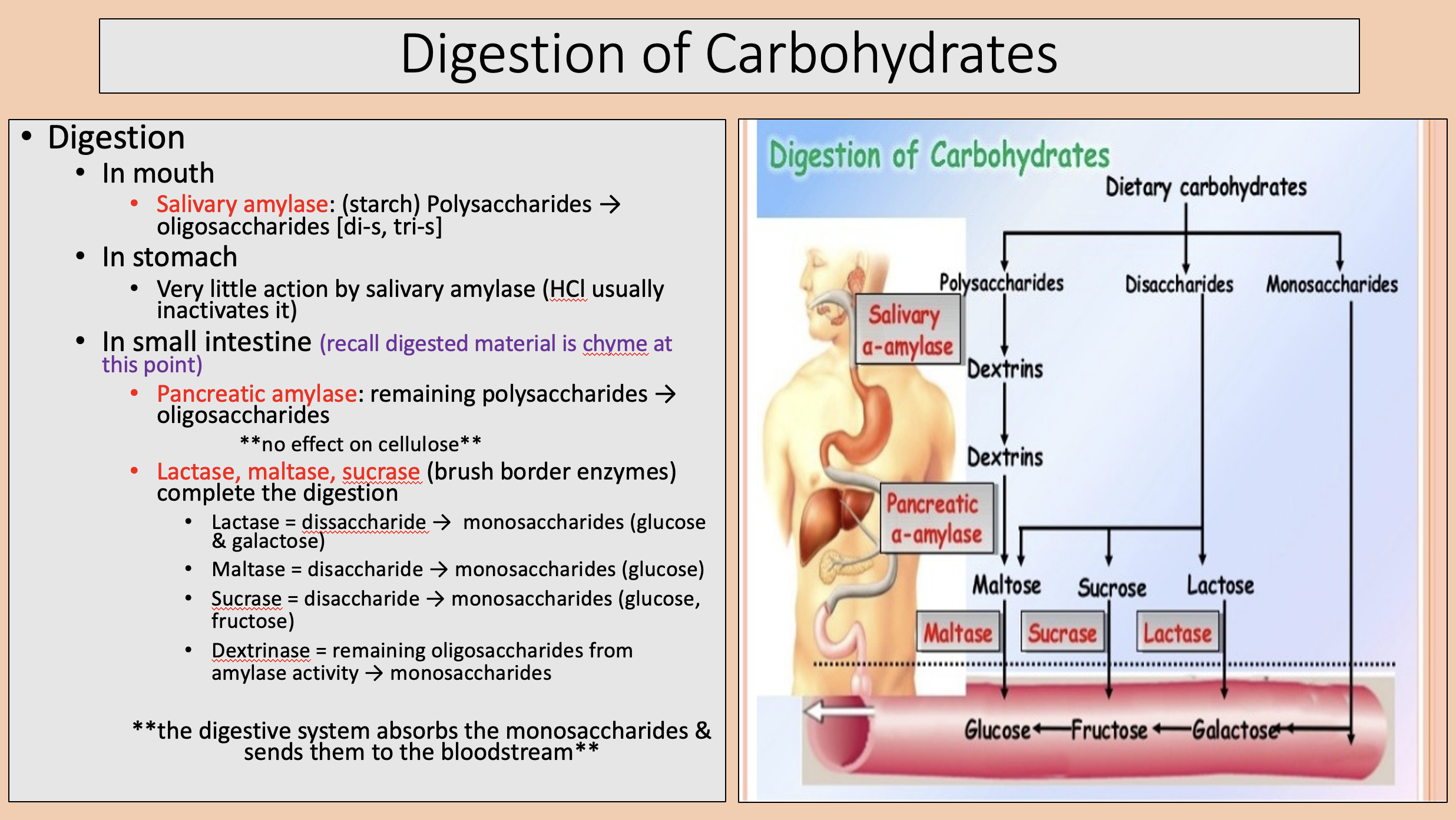
Remaining oligosaccharides from amylase activity → monosaccharides
dextrinase
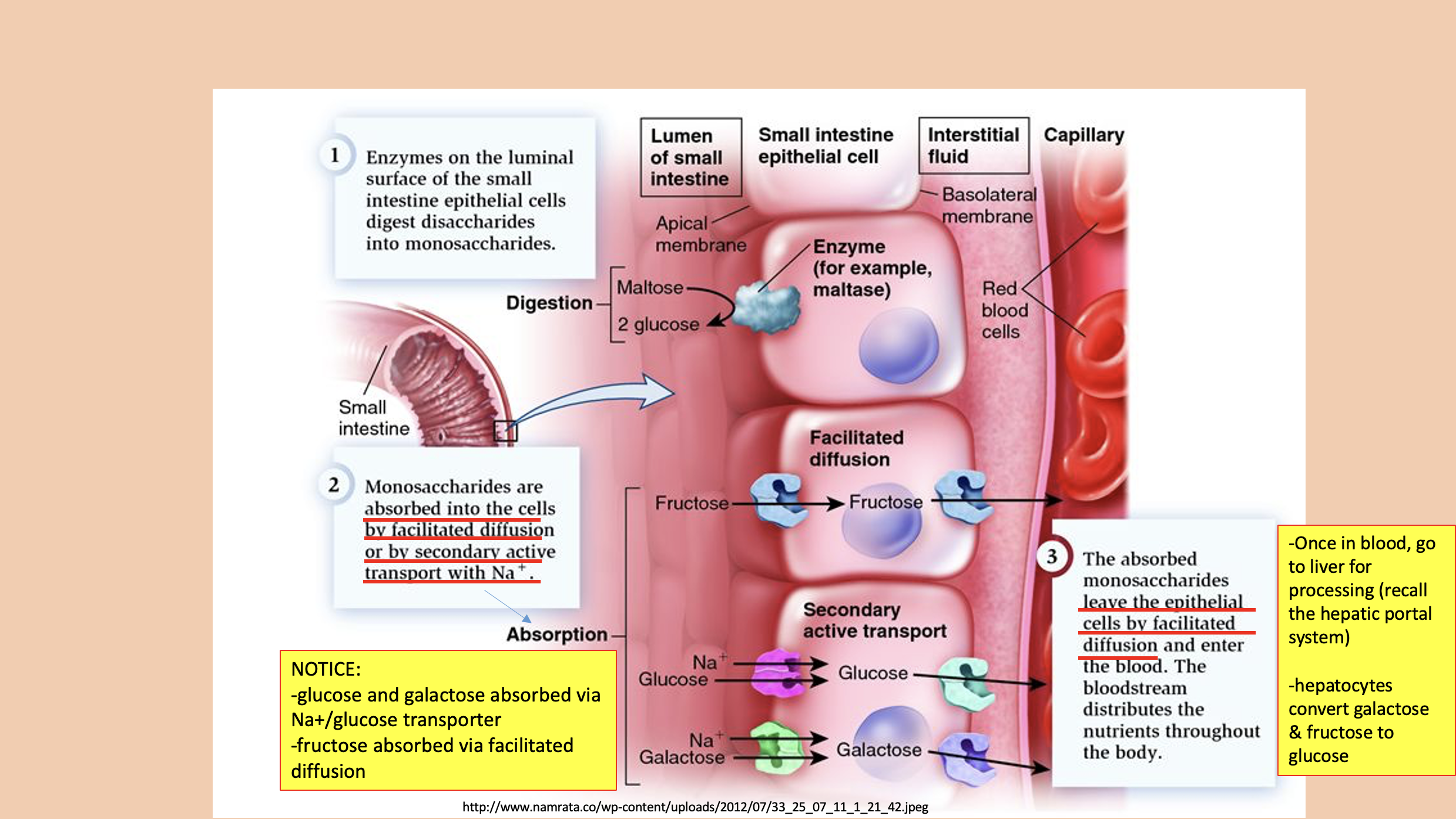
Glucose and galactose absorbed via
Na+/glucose transporter
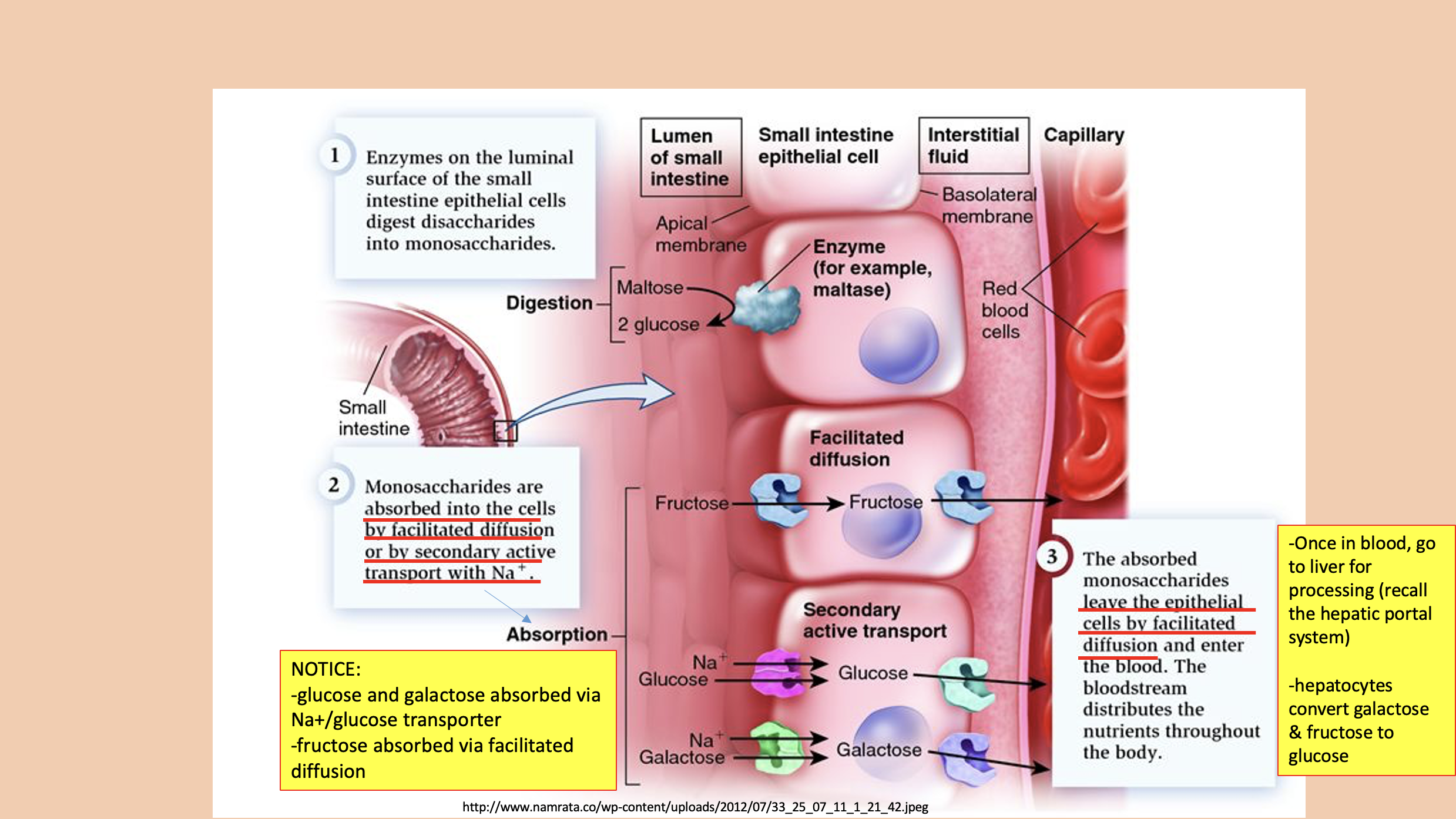
Fructose absorbed via
facilitated diffusion
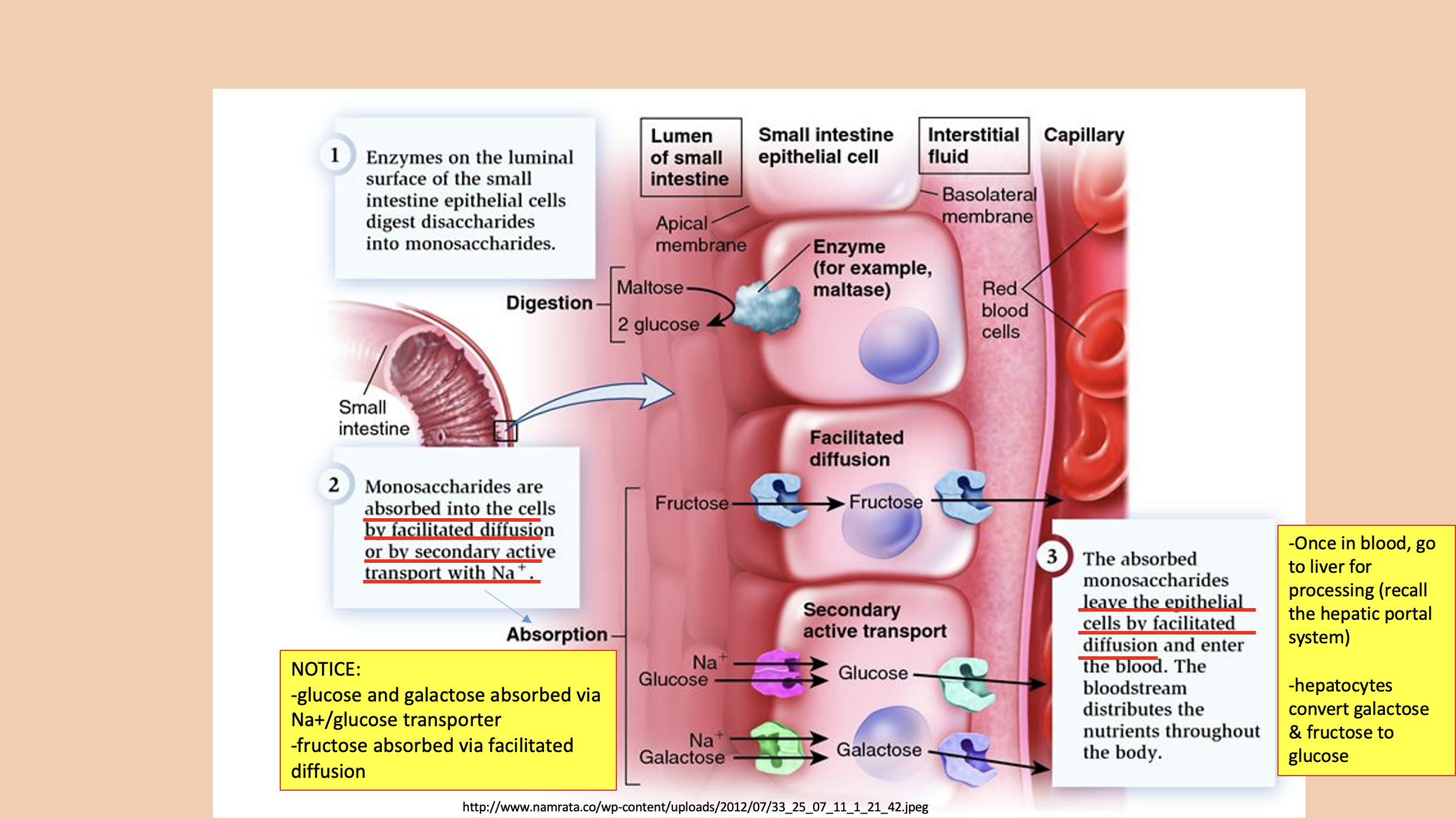
Hepatocytes convert galactose & fructose to
glucose
Glucose used for:
cell respiration
glycogenesis
lipogenesis
amino acid synthesis
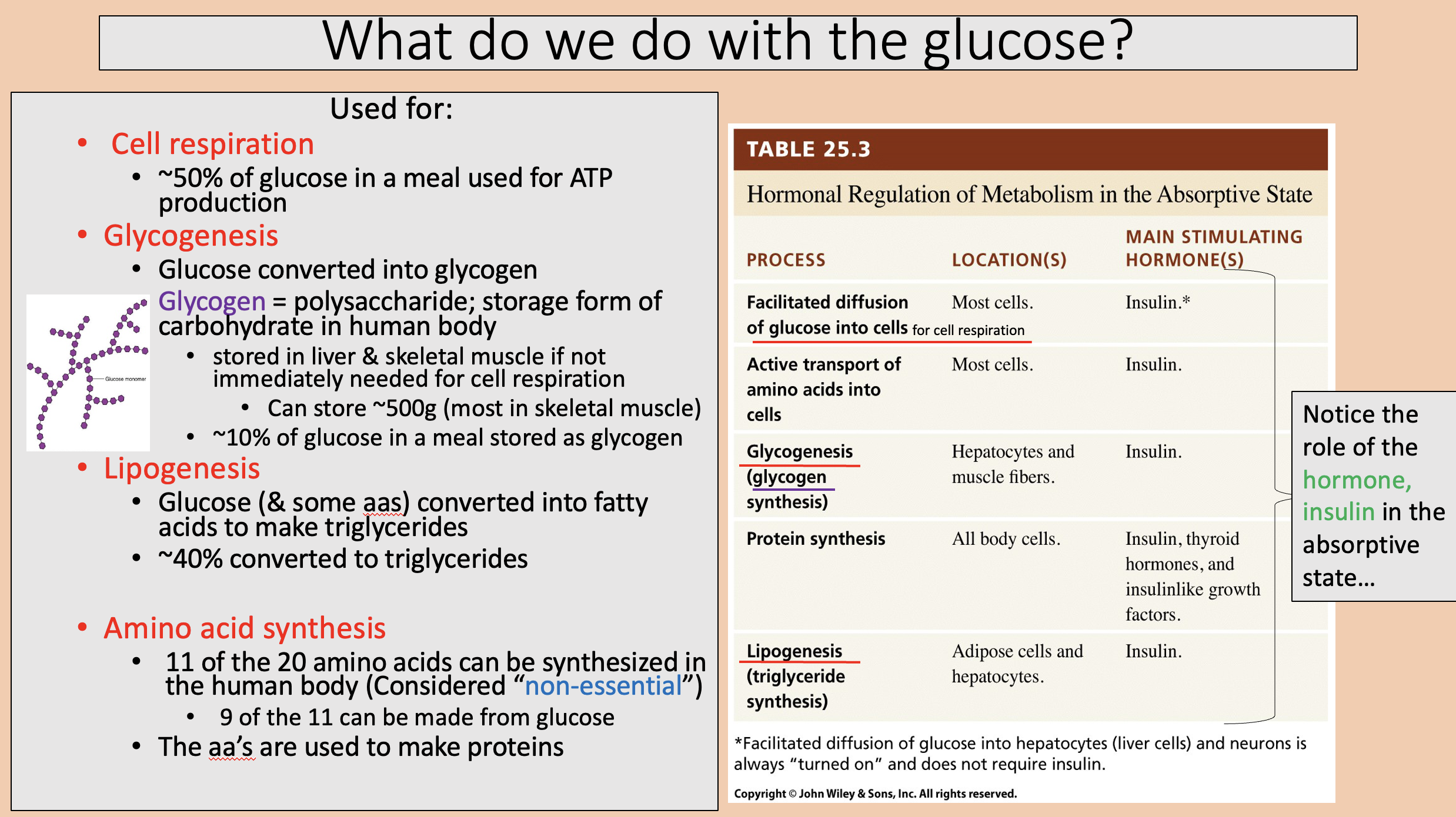
~50% of glucose in a meal used for ATP
cell respiration
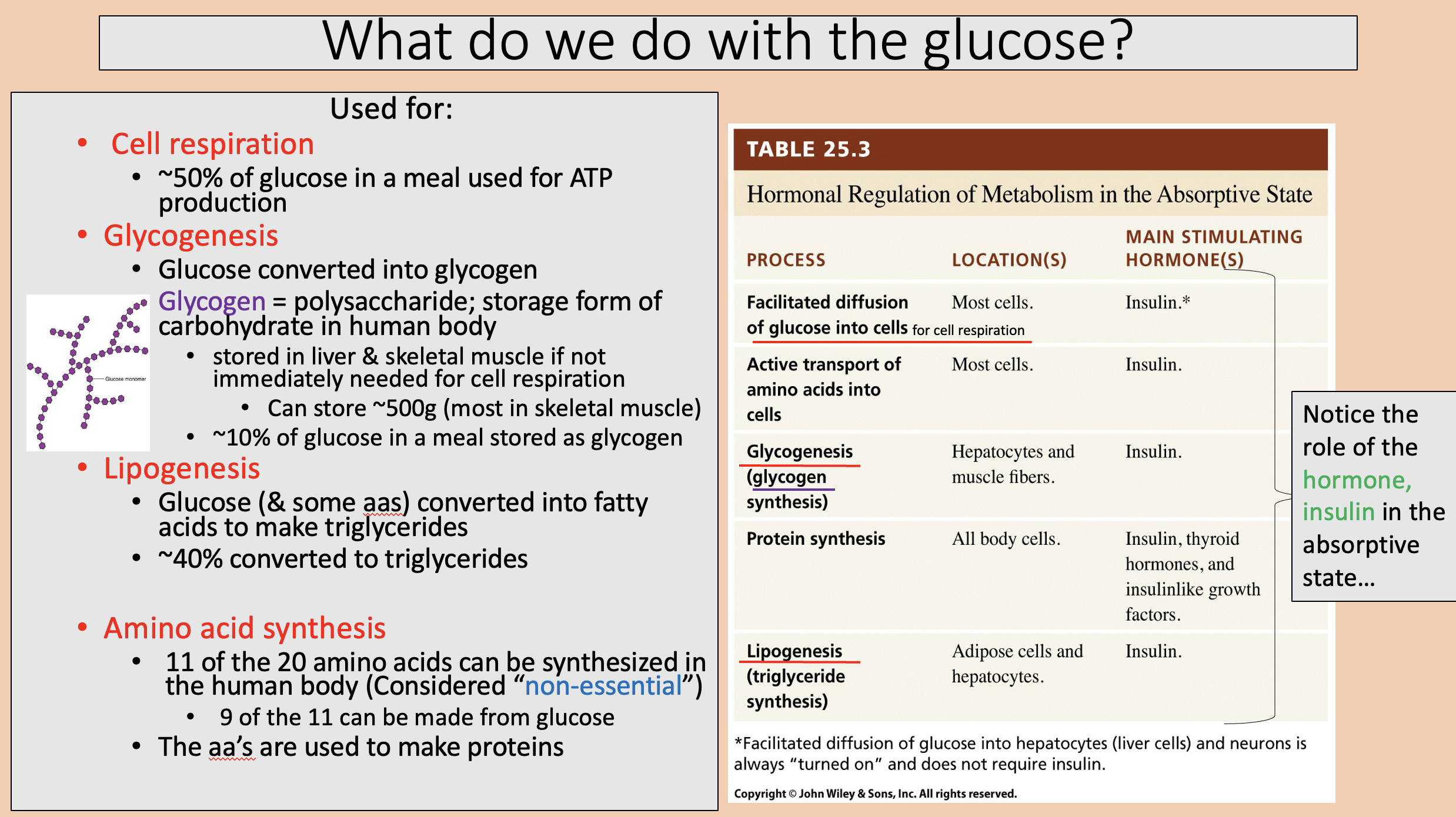
Glucose converted into glycogen.
Glycogen.
Stored in liver & skeletal muscle if not immediately needed for cell respiration.
Can store ~500g (most in skeletal muscle).
~10% of glucose in a meal stored as glycogen.
glycogenesis
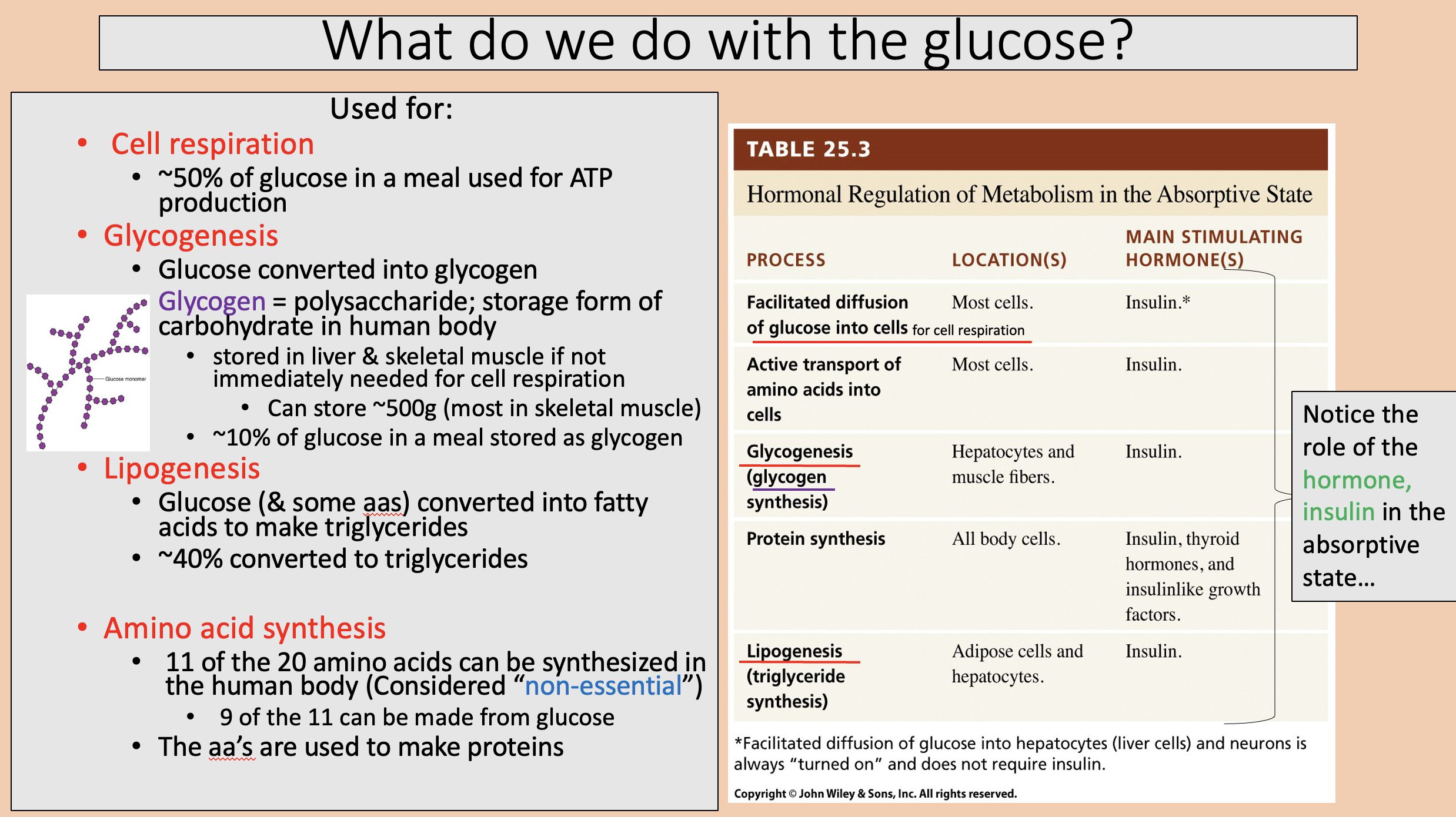
Polysaccharide; storage form of carbohydrate in human body
glycogen
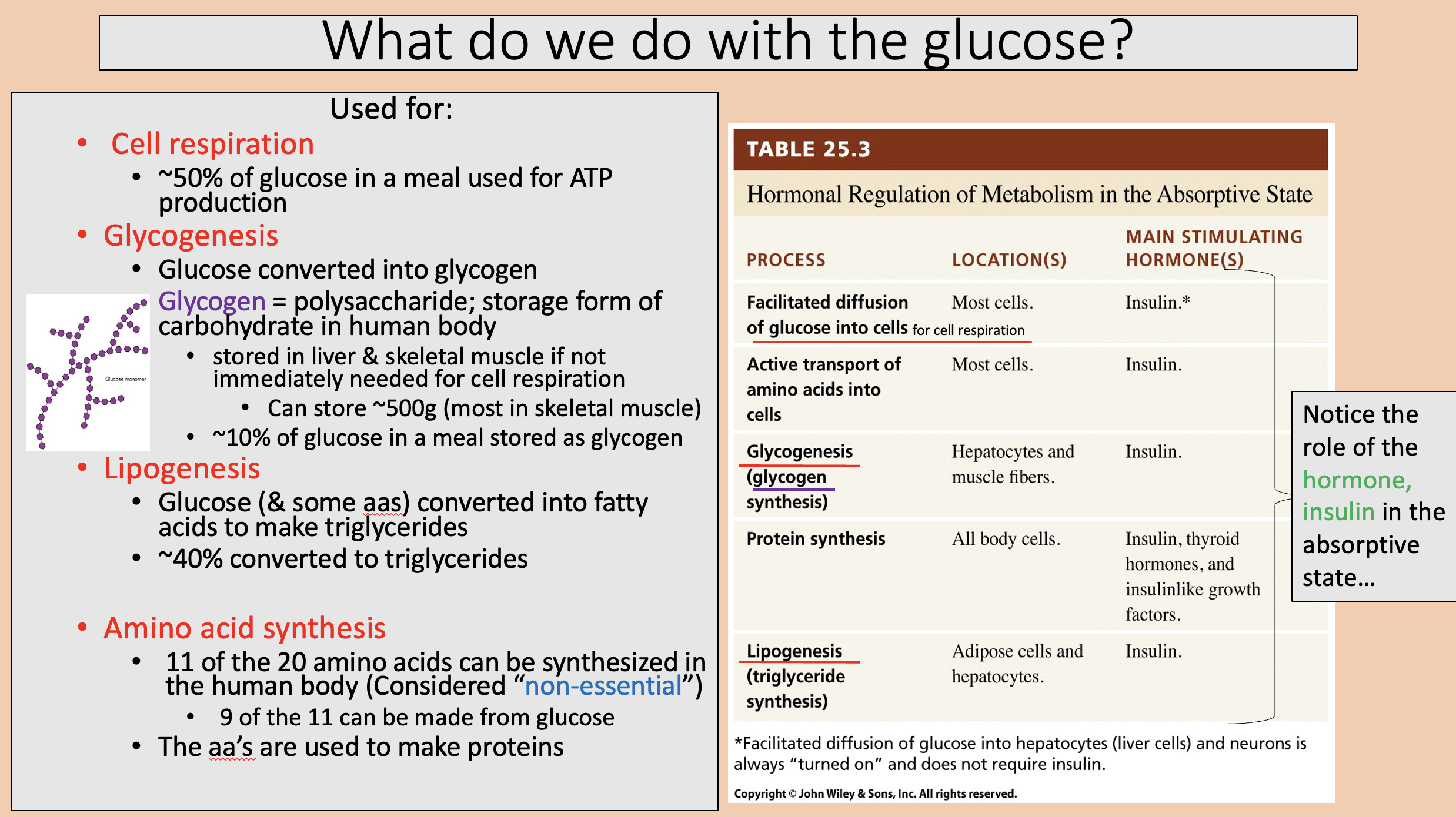
Glucose (& some aas) converted into fatty acids to make triglycerides.
~40% converted to triglycerides.
lipogenesis
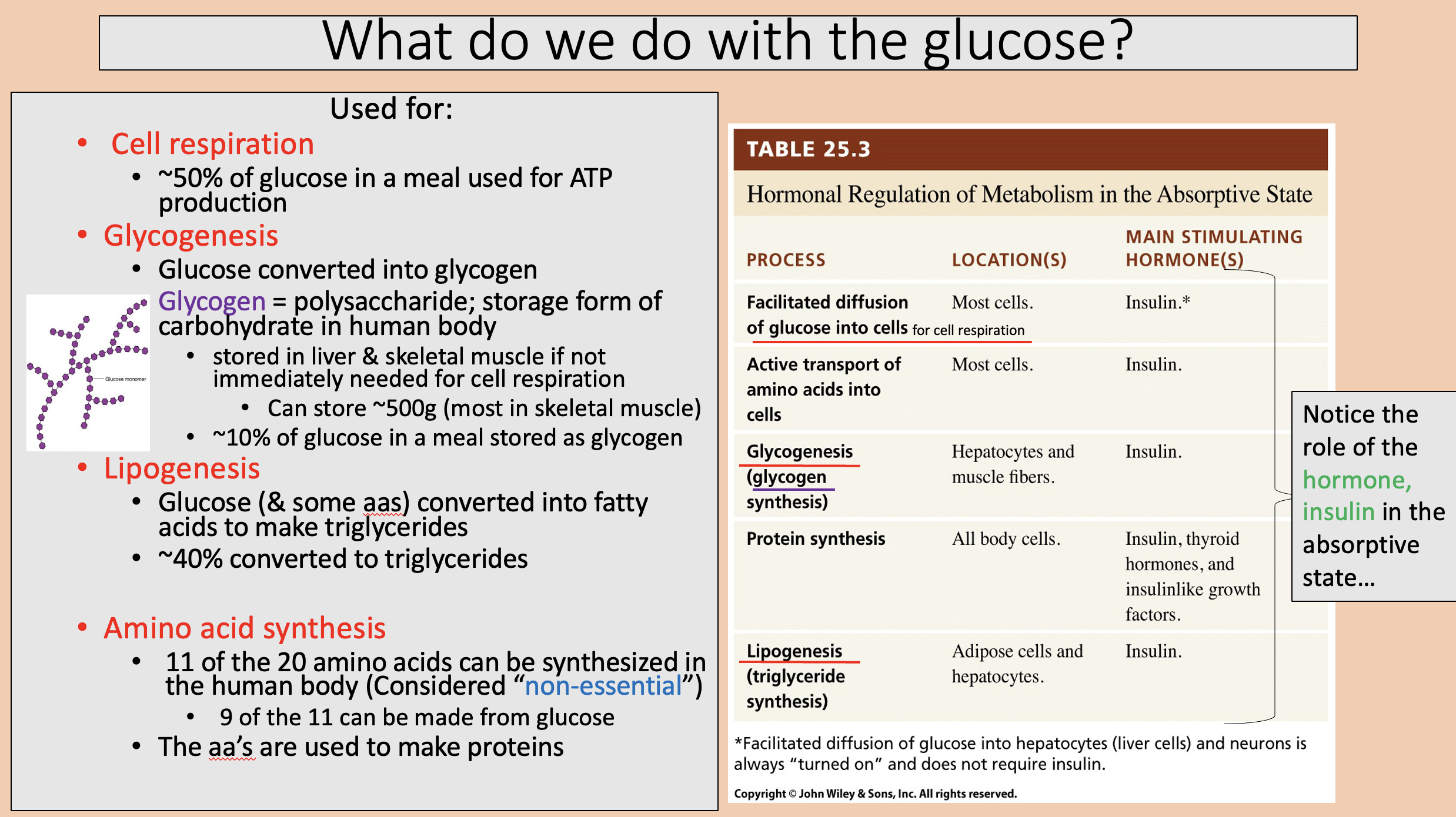
11 of the 20 amino acids can be synthesized in the human body (Considered “non-essential”).
9 of the 11 can be made from glucose.
The aa’s are used to make proteins.
amino acid synthesis
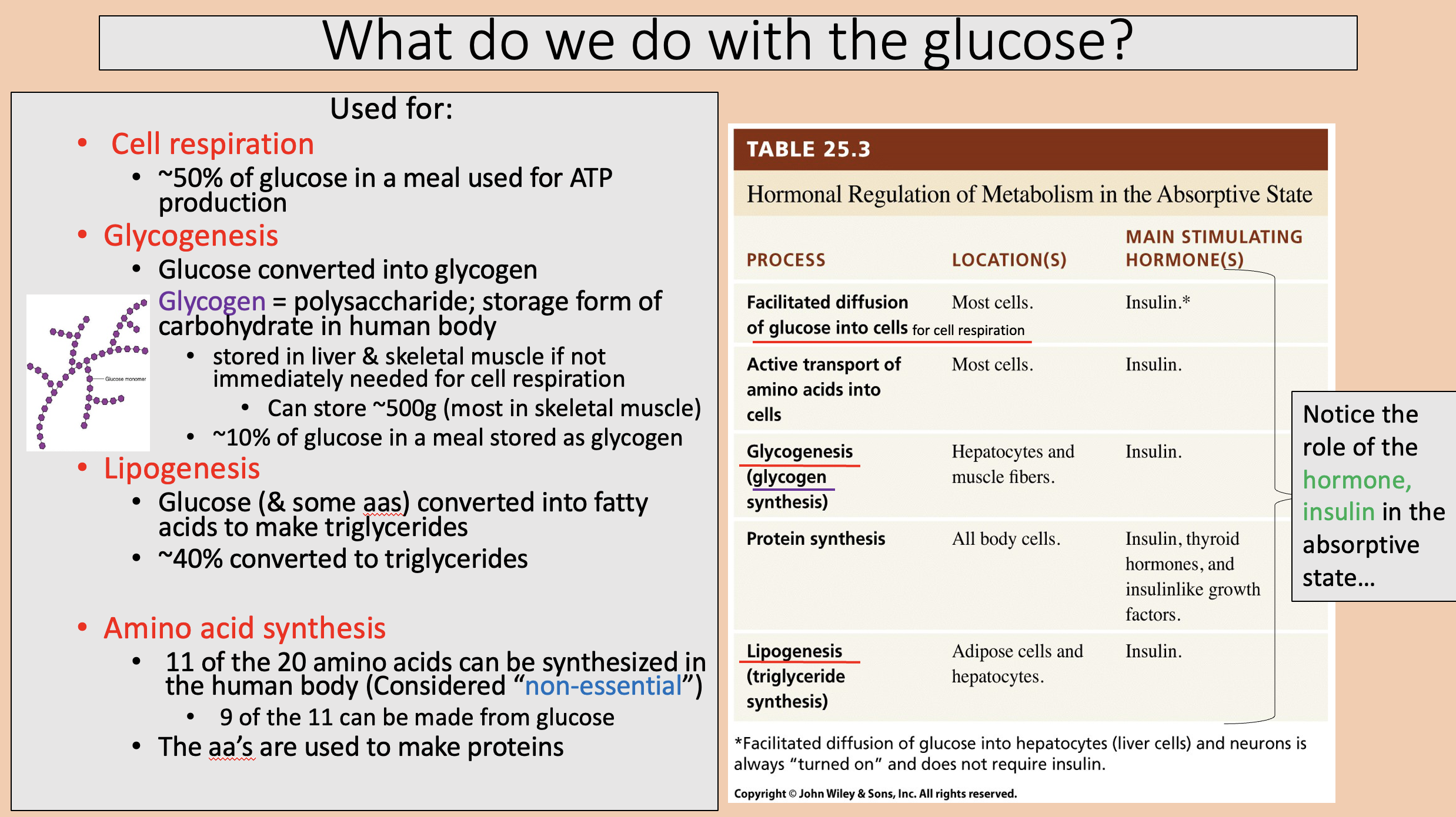
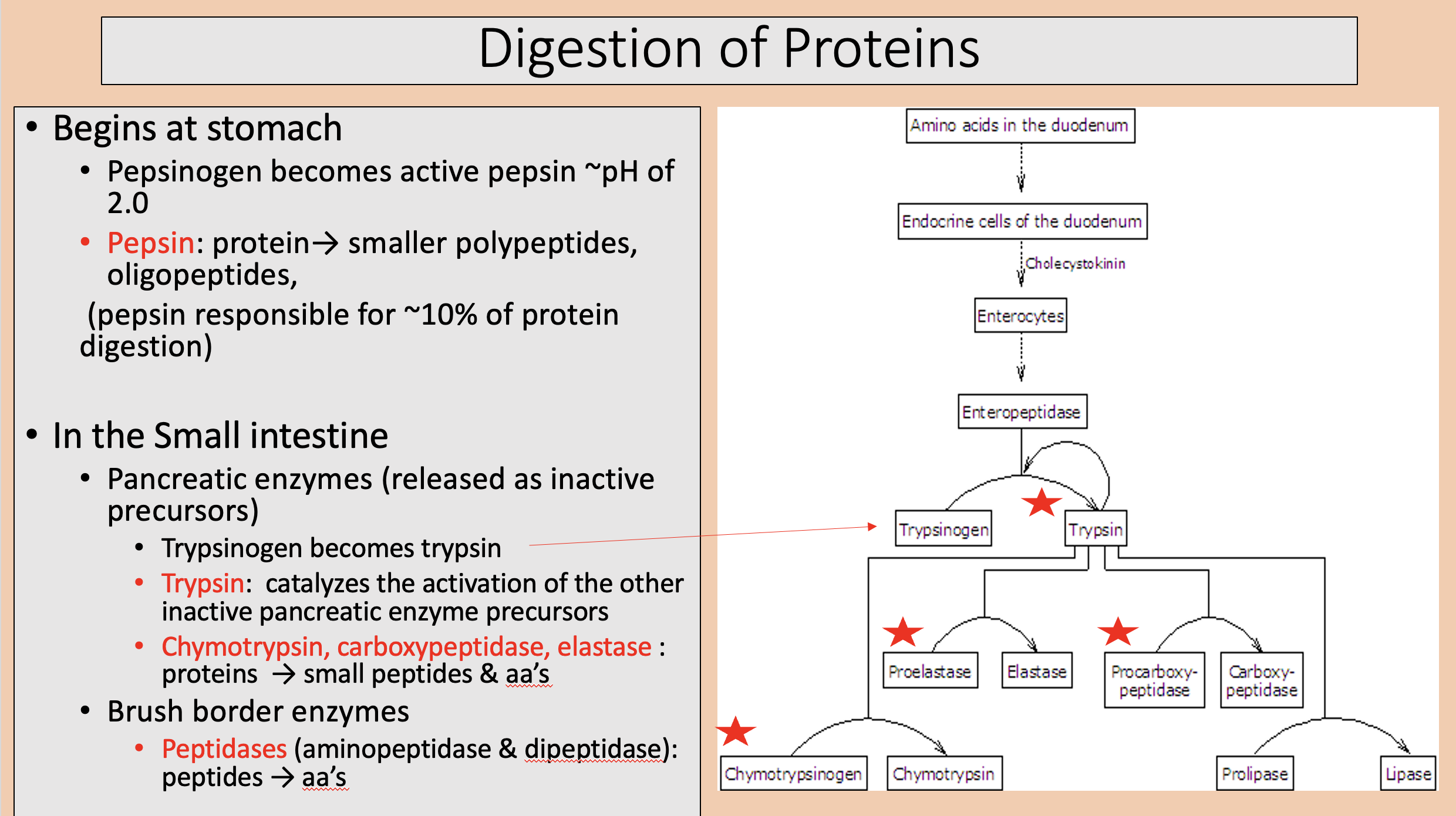
Protein → smaller polypeptides, oligopeptides, (pepsin responsible for ~10% of protein digestion)
pepsin
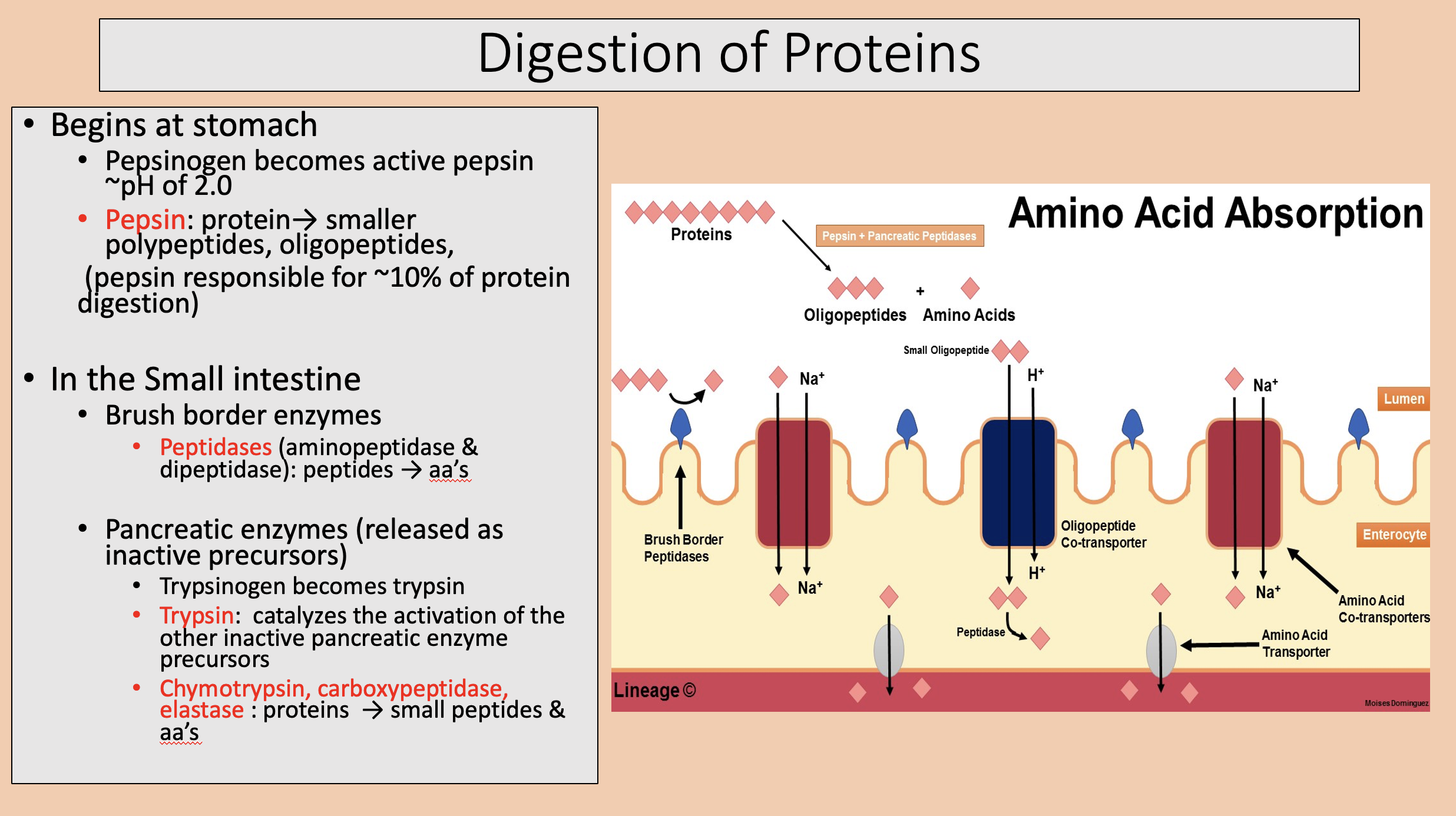
Brush border enzymes.
Pancreatic enzymes (released as inactive precursors).
digestion of proteins in small intestine
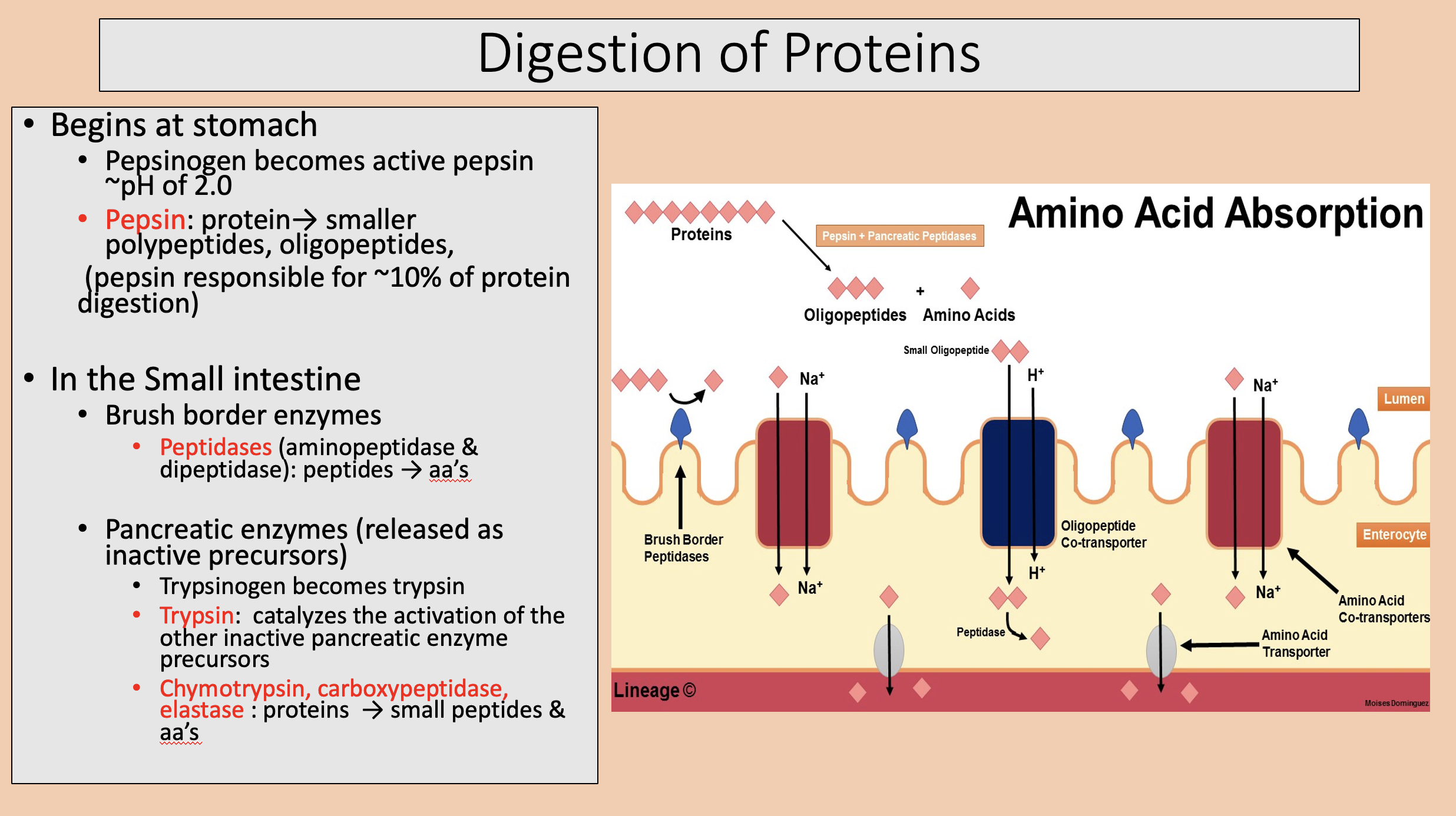
Brush border enzymes.
(Aminopeptidase & dipeptidase): peptides → aa’s.
peptidases
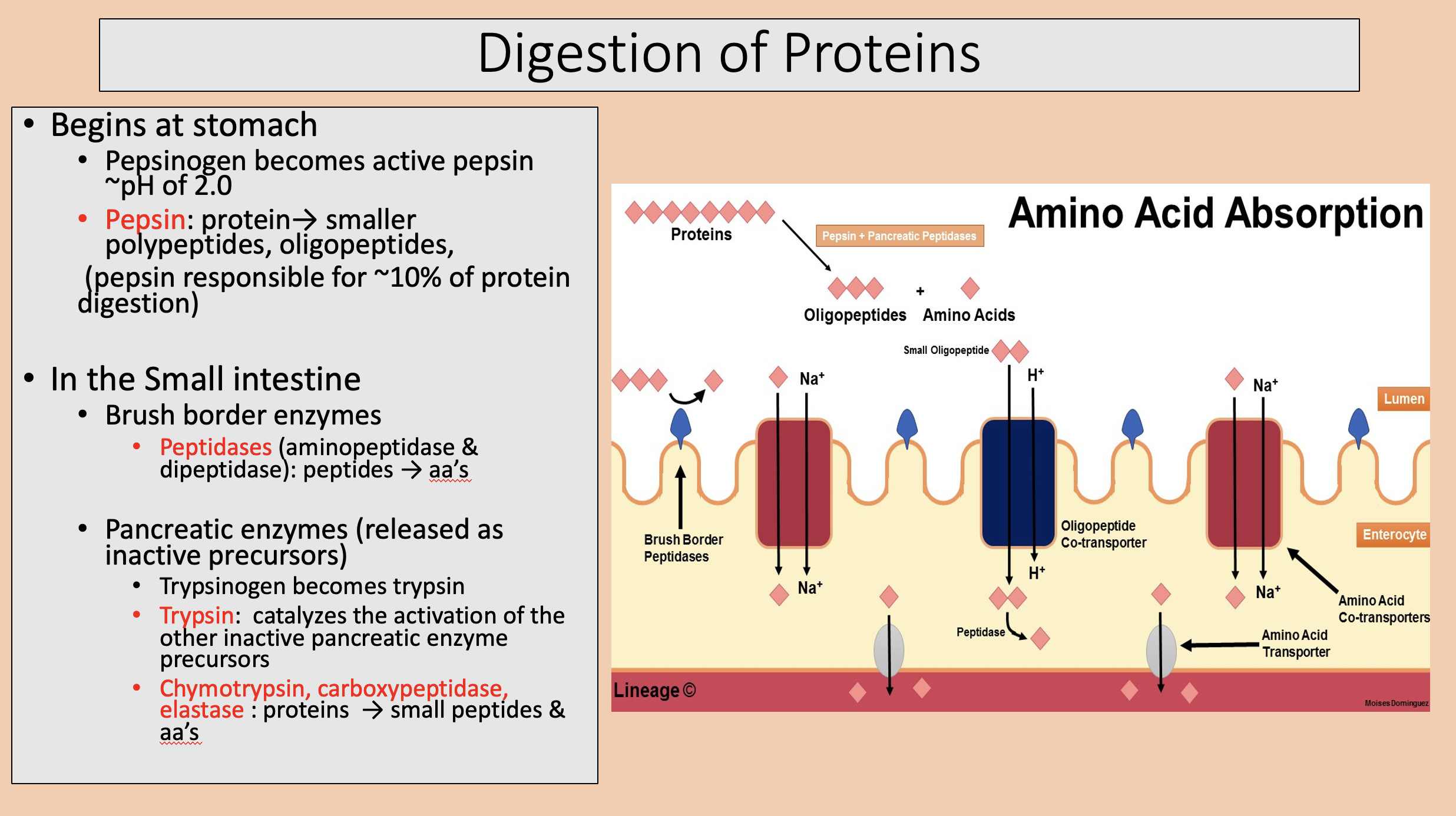
Pancreatic enzymes (released as inactive precursors)
trypsin
chymotrypsin
carboxypeptidase
elastase
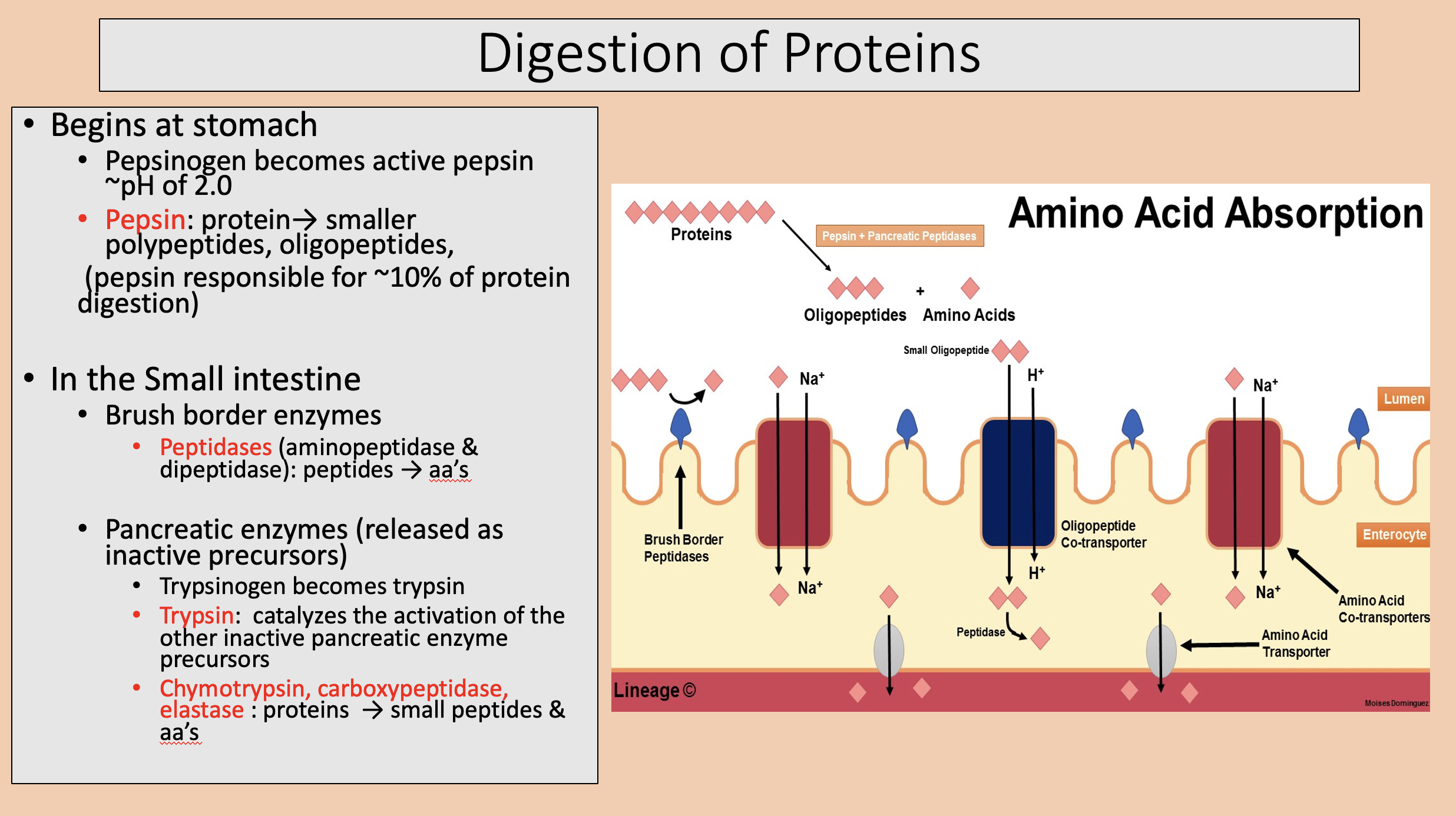
Trypsinogen becomes
trypsin
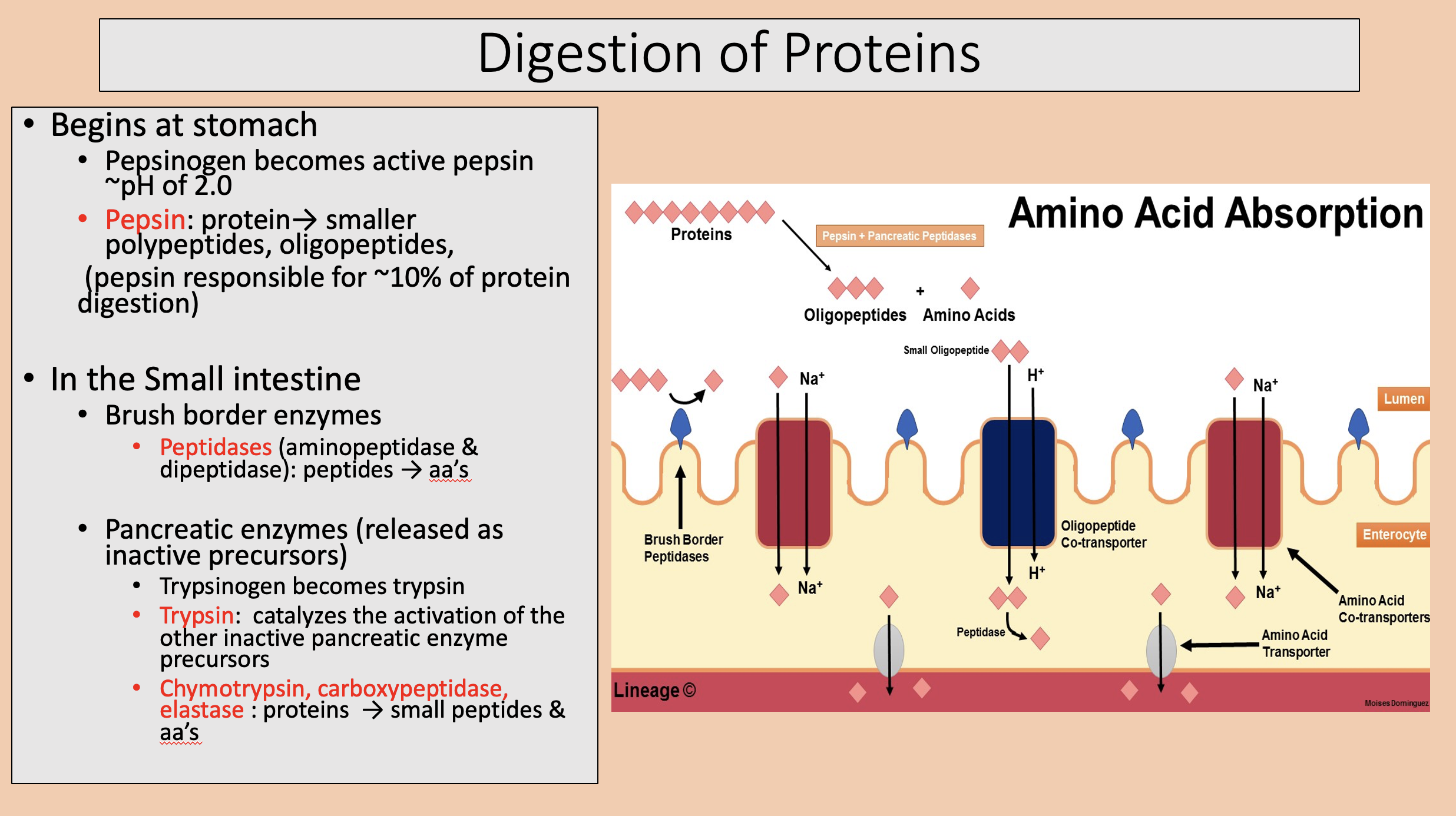
catalyzes the activation of the other inactive pancreatic enzyme precursors
trypsin
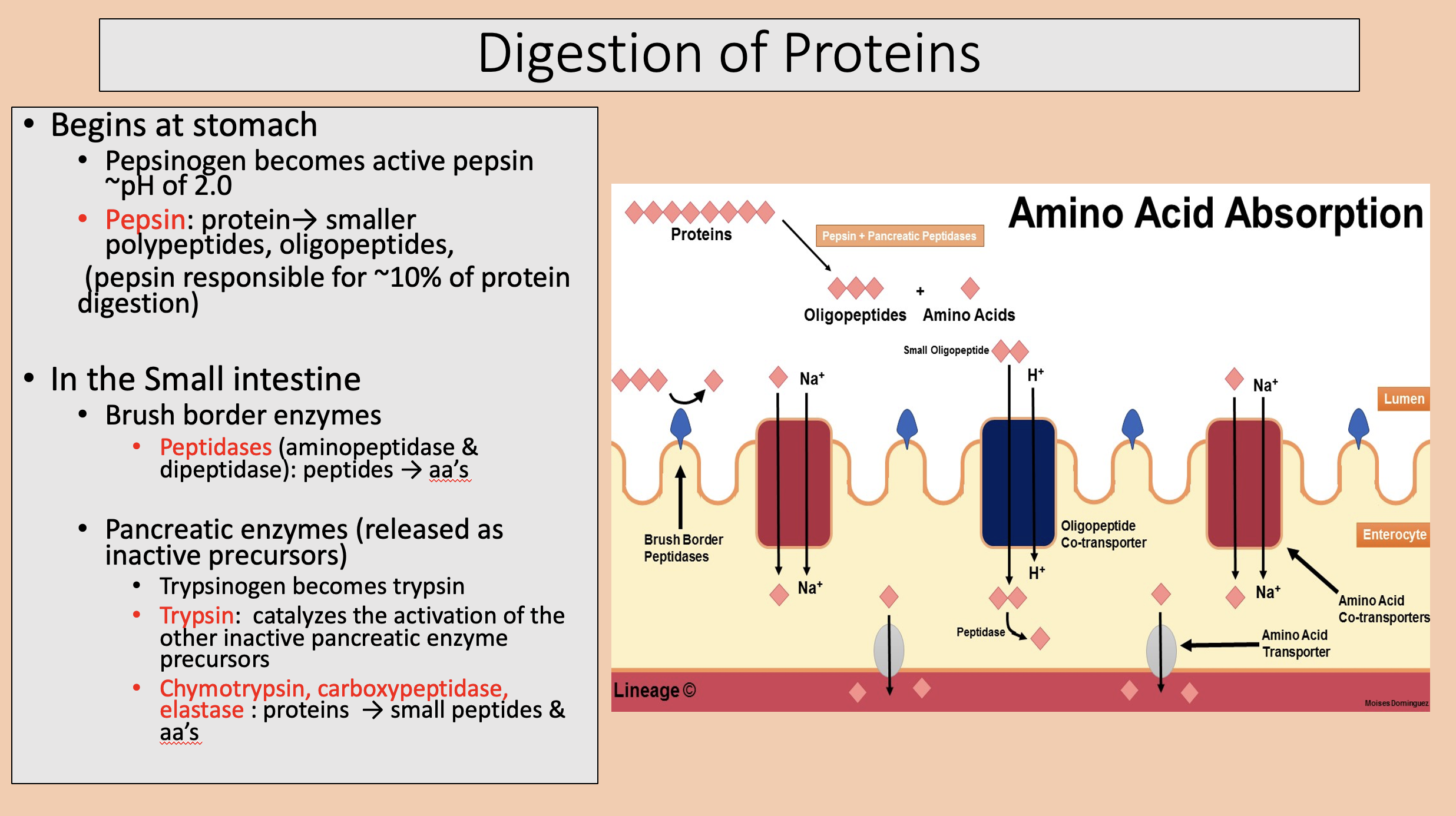
proteins → small peptides & aa’s
chymotrypsin
carboxypeptidase
elastase
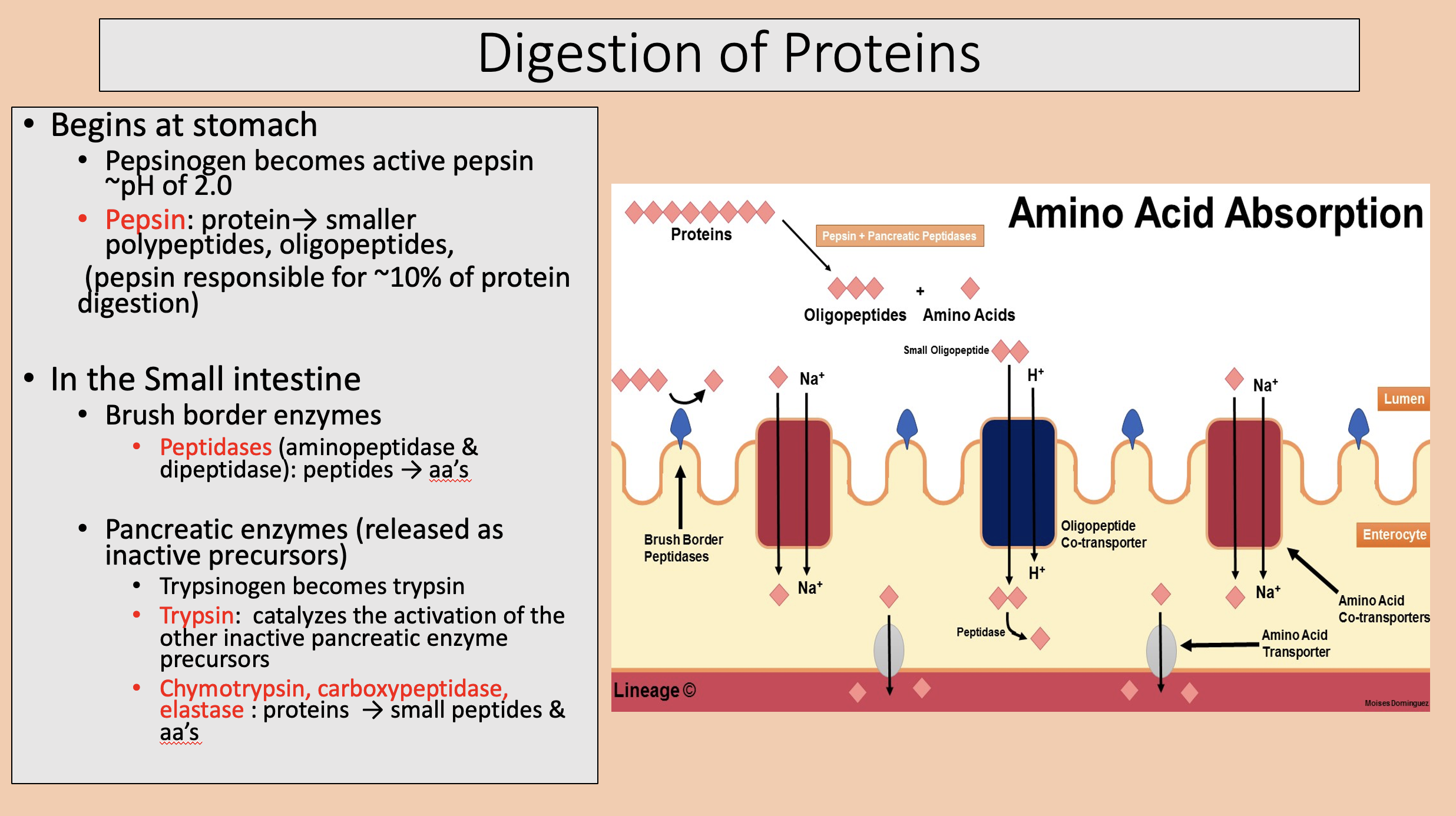
Proelastase becomes
elastase
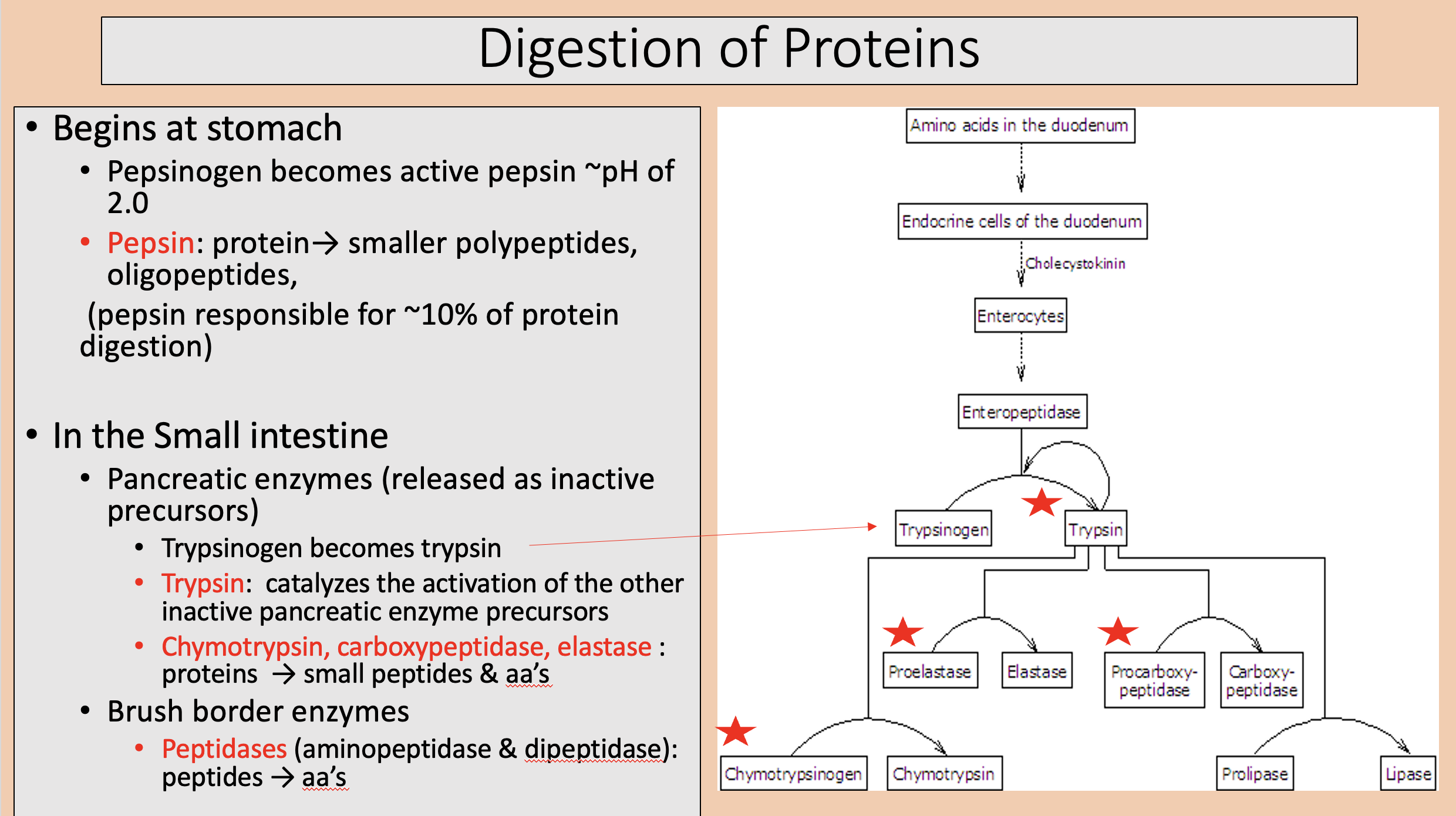
Procarboxy-peptidase becomes
carbaxy-peptidase
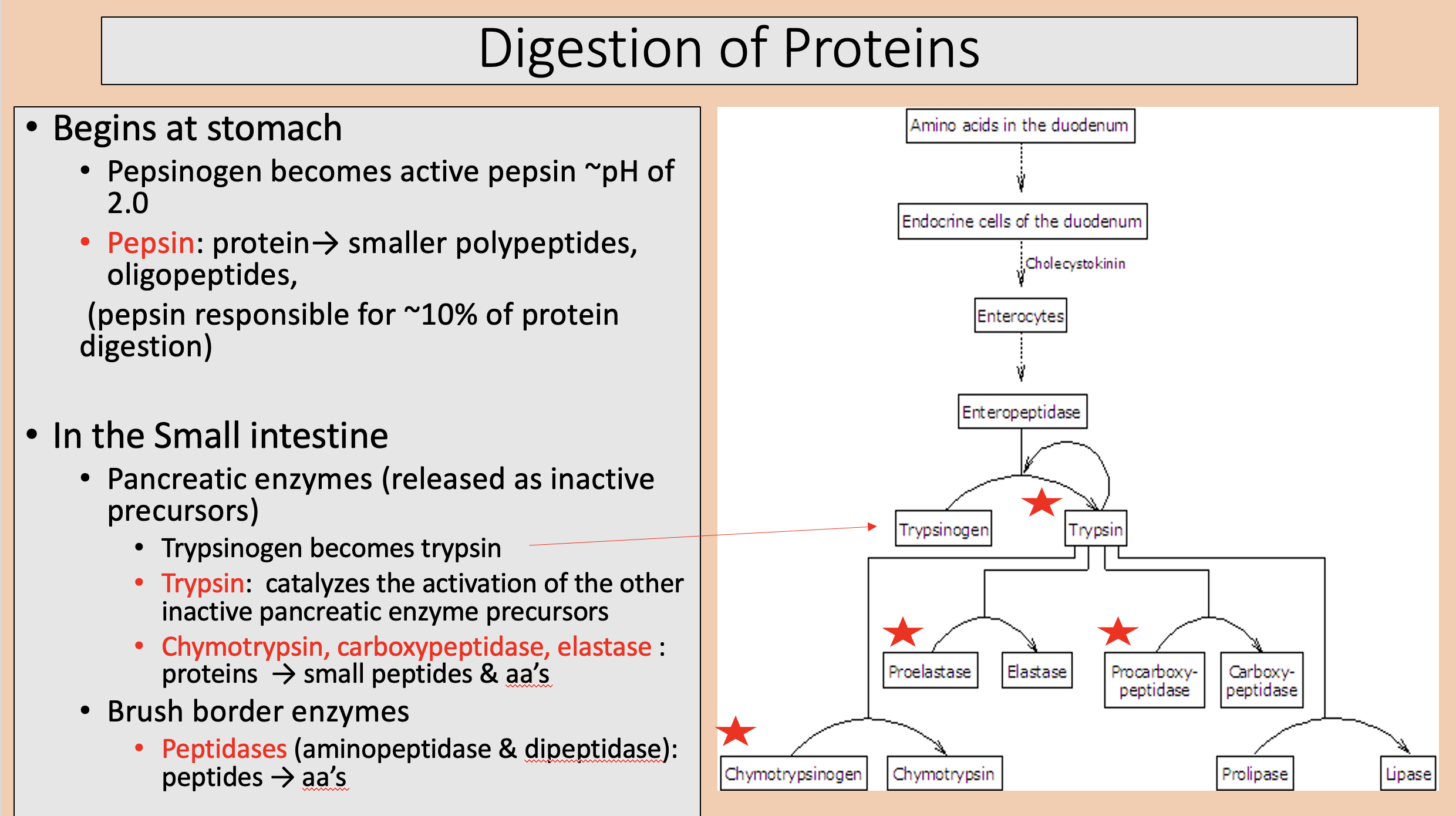
Chymotrypsinogen becomes
chymotrypsin
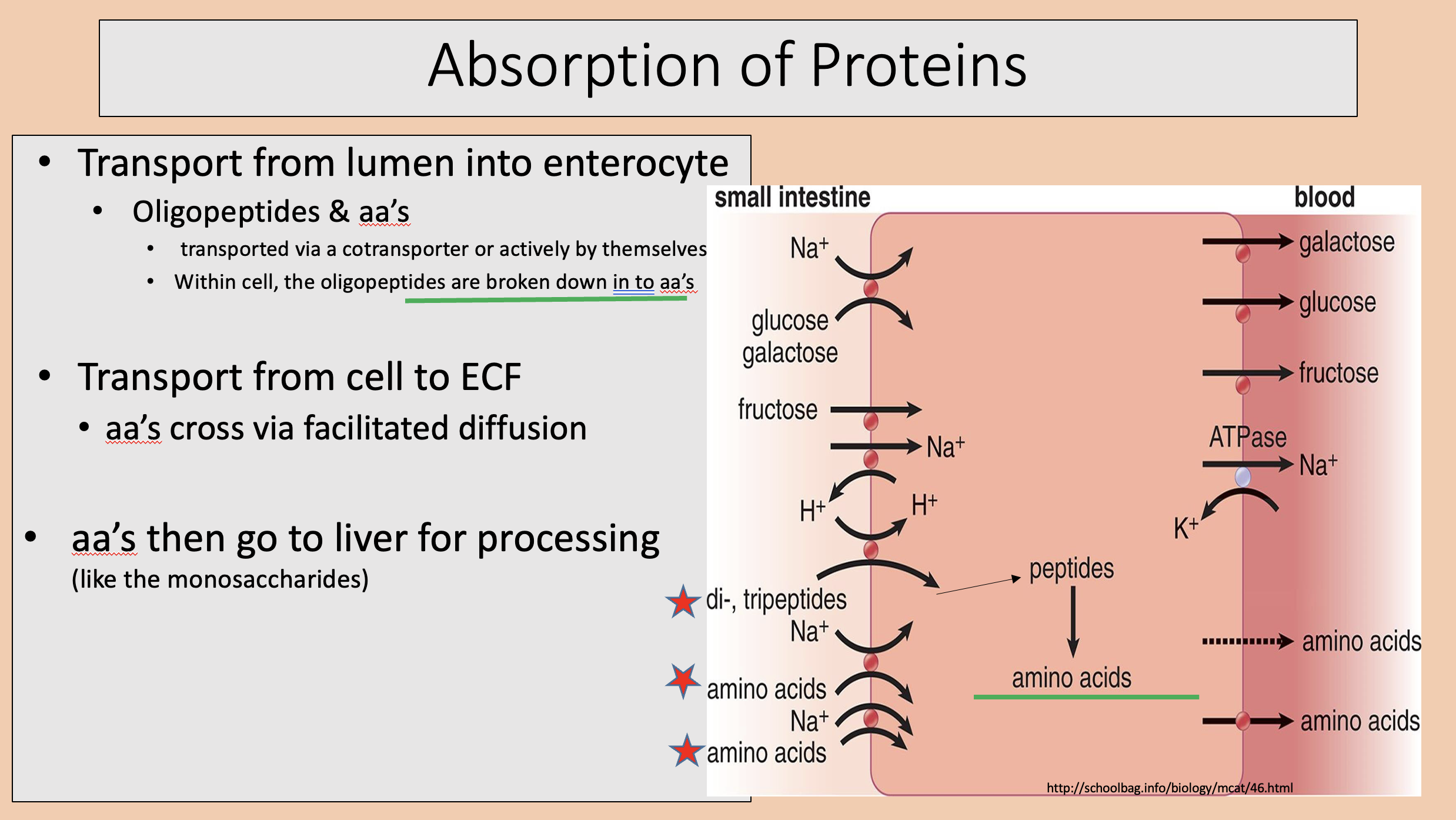
Transport from lumen into enterocyte.
Transport from cell to ECF.
aa’s then go to liver for processing.
absorption of proteins
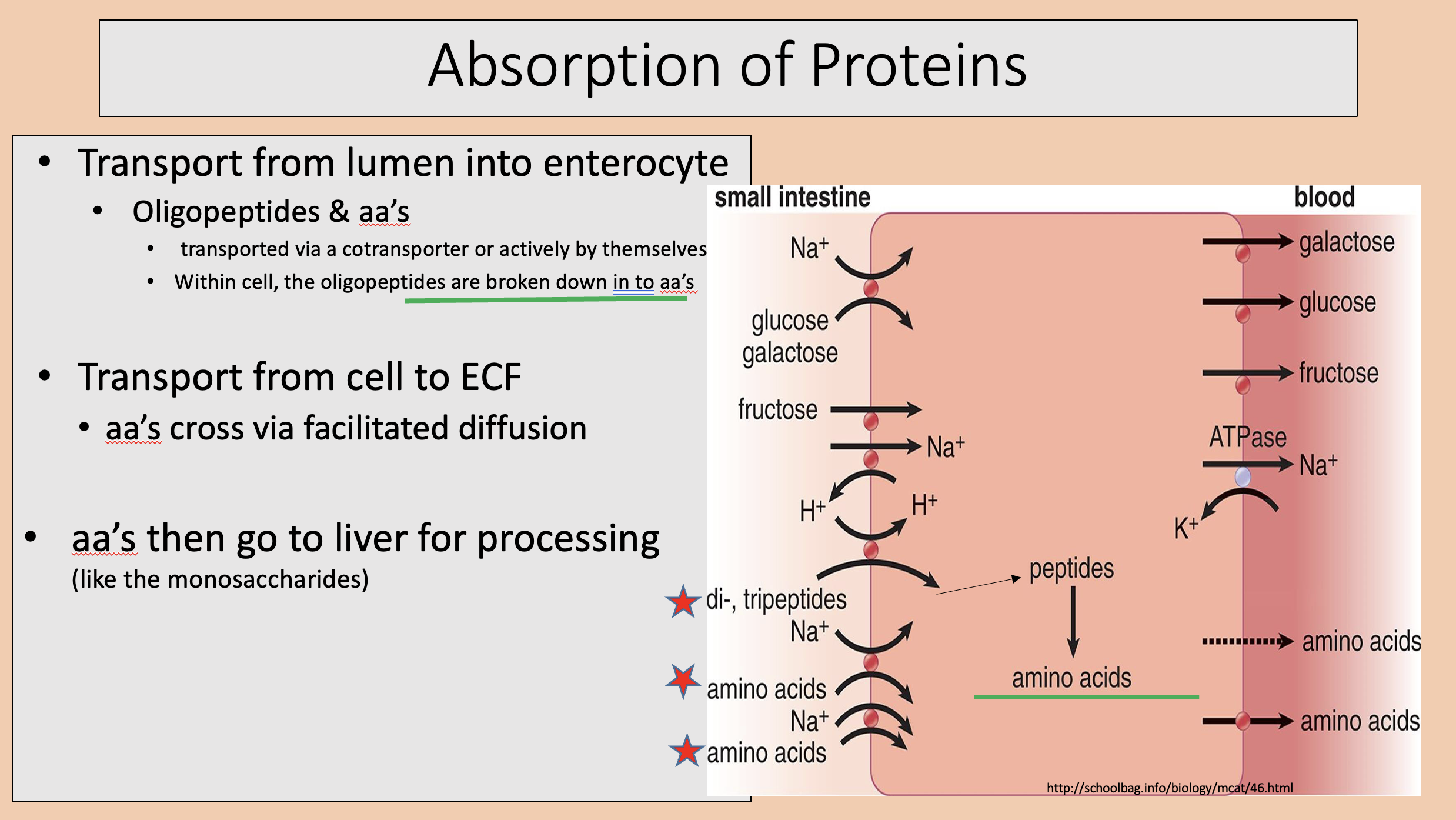
Transport from lumen into enterocyte.
Transported via a cotransporter or actively by themselves.
Within cell, the oligopeptides are broken down in to aa’s.
oligopeptides
aa’s
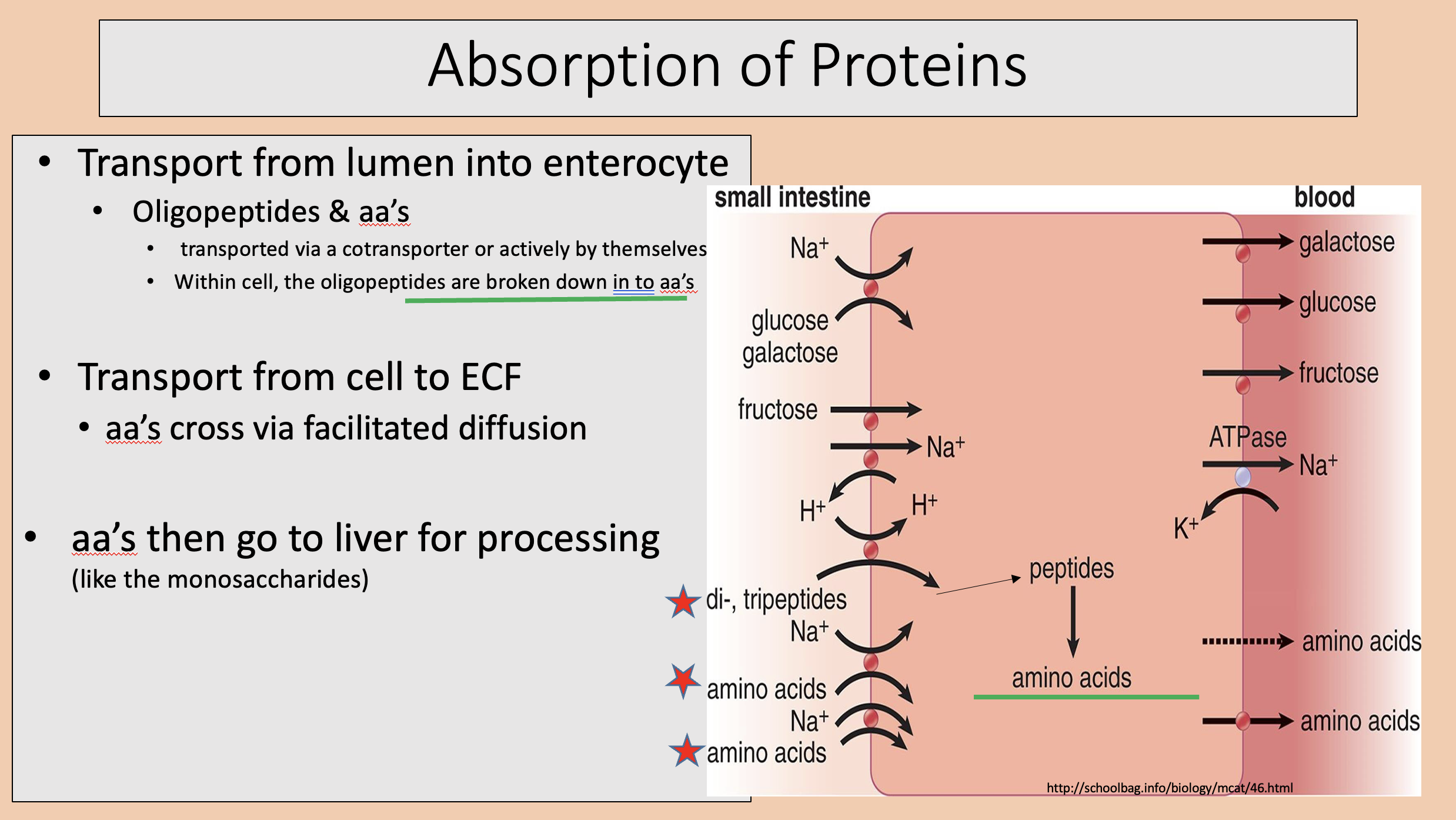
Transport from cell to ECF
aa’s cross via facilitated diffusion
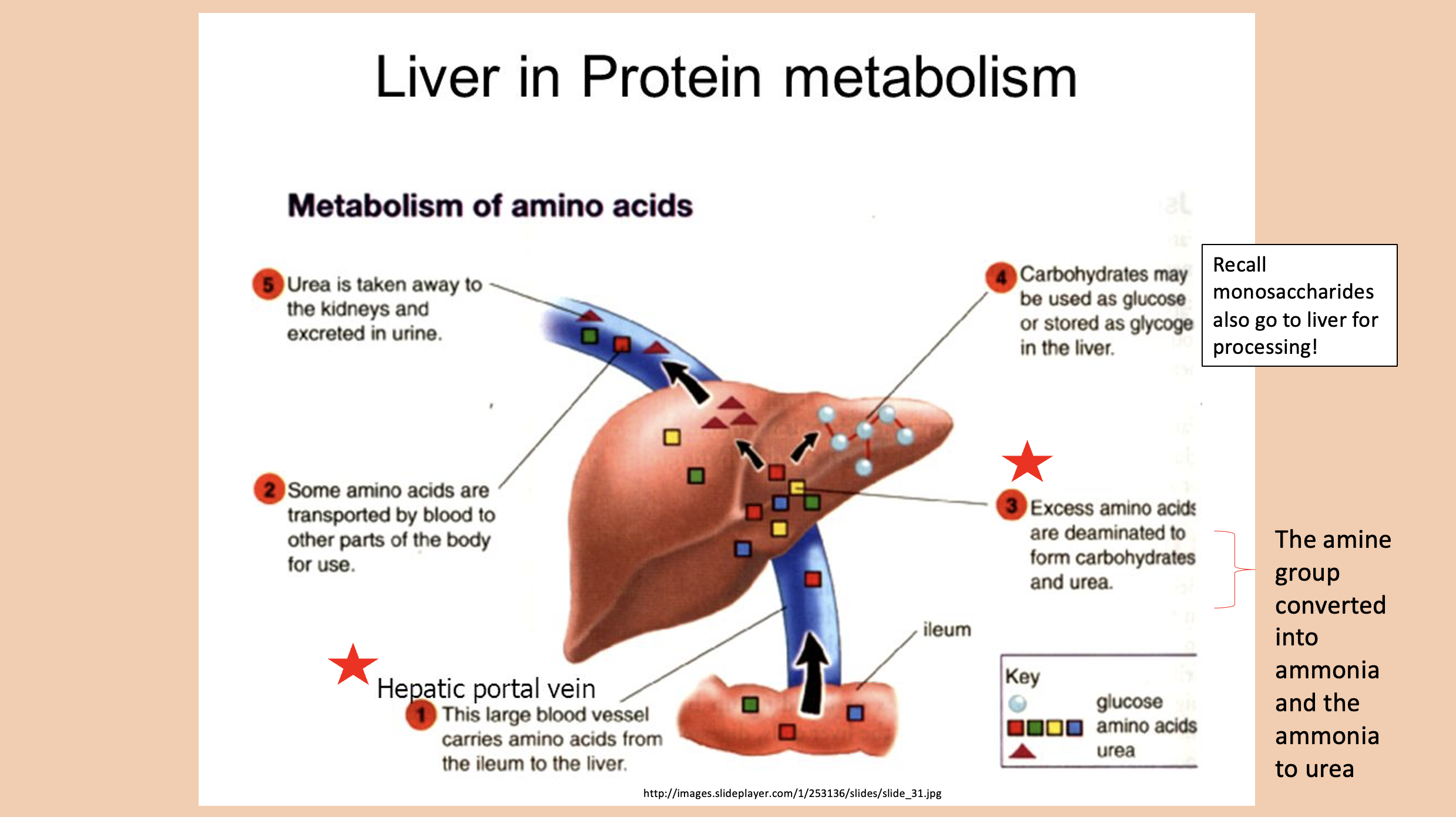
The amine group converted into ammonia and the ammonia to
urea
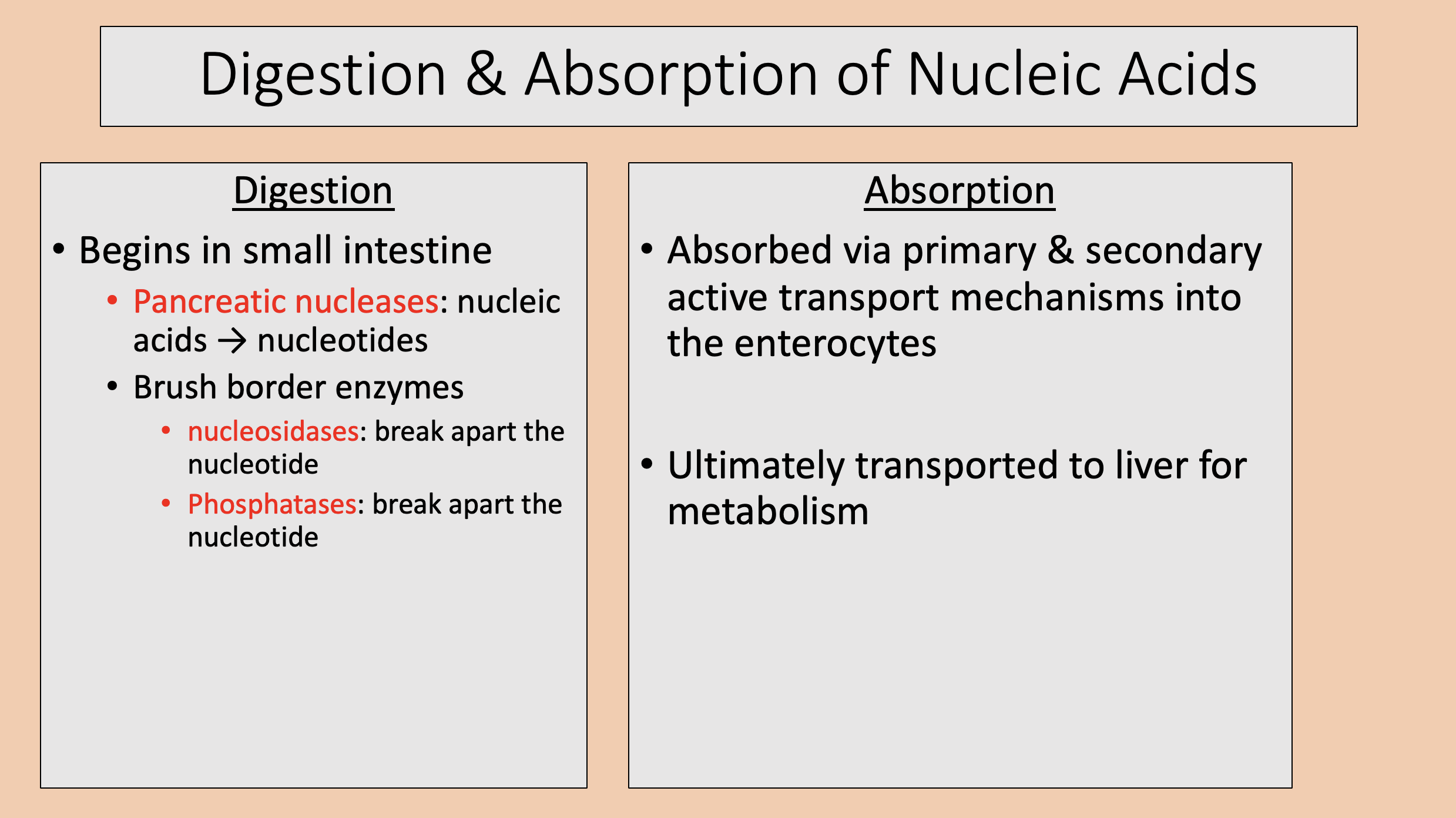
nucleic acids → nucleotides
pancreatic nucleases
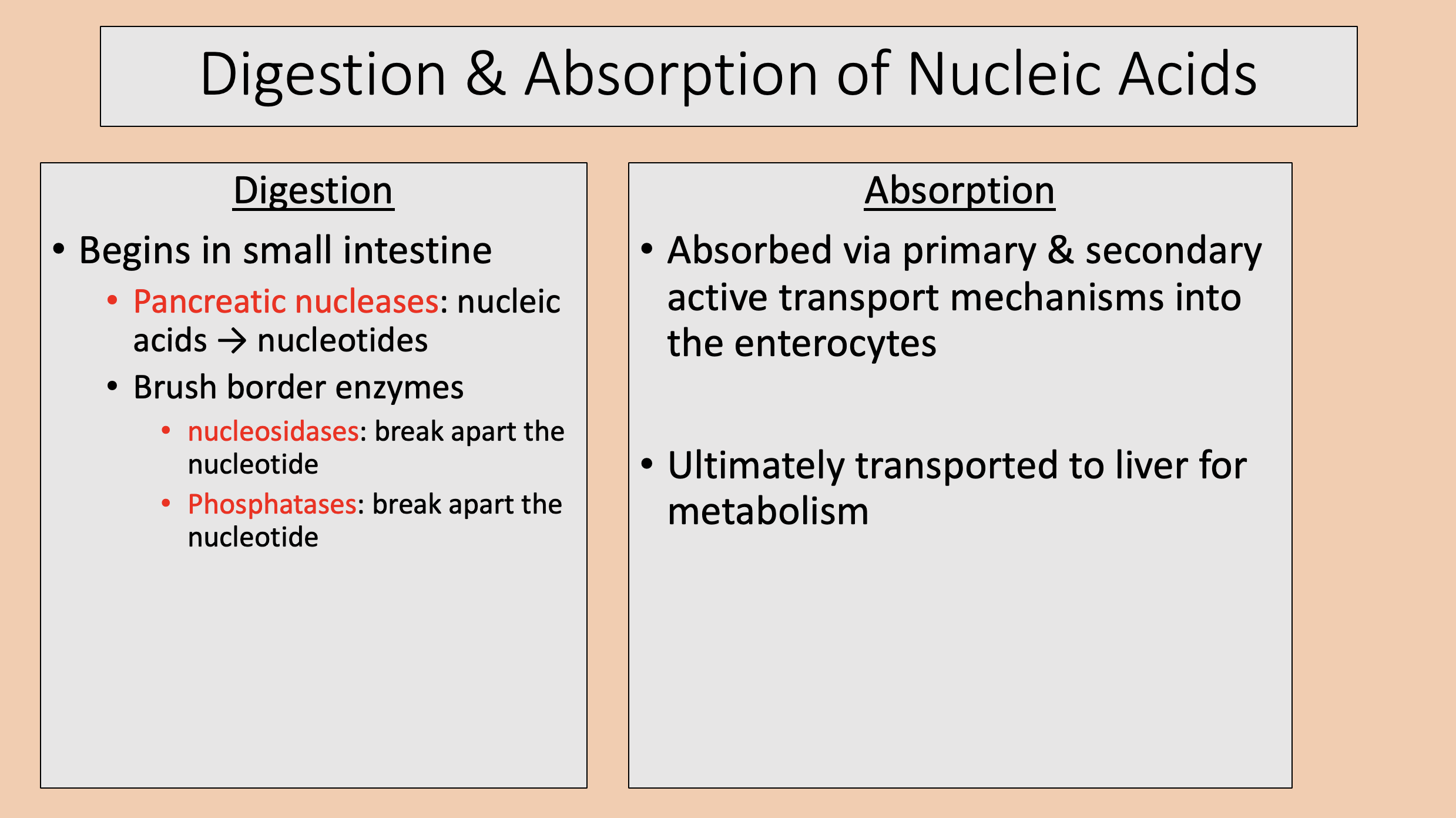
Brush border enzymes
nucleosidases
phosphatases
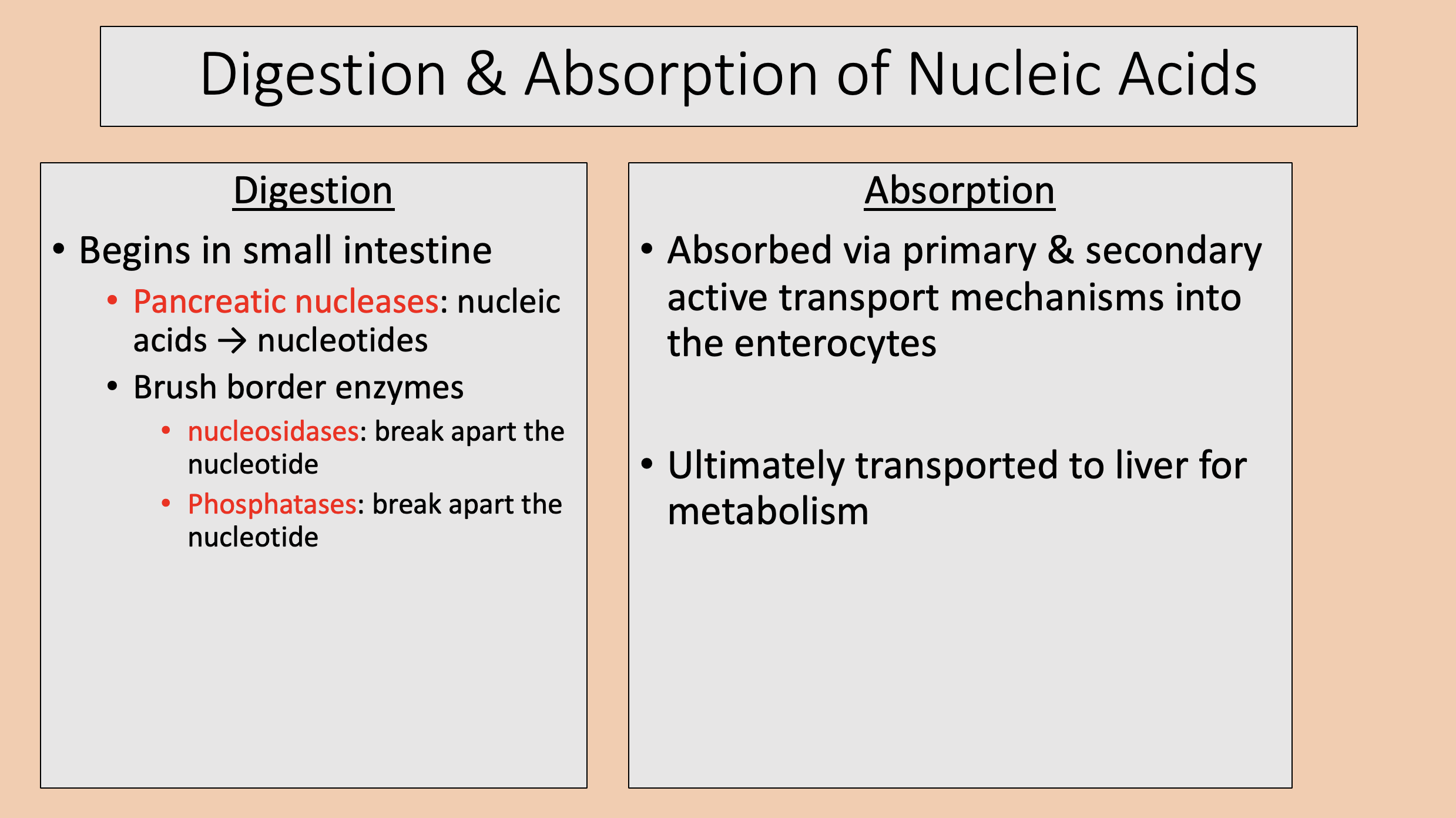
Break apart the nucleotide
nucleosidases
Break apart the nucleotide
phosphatases
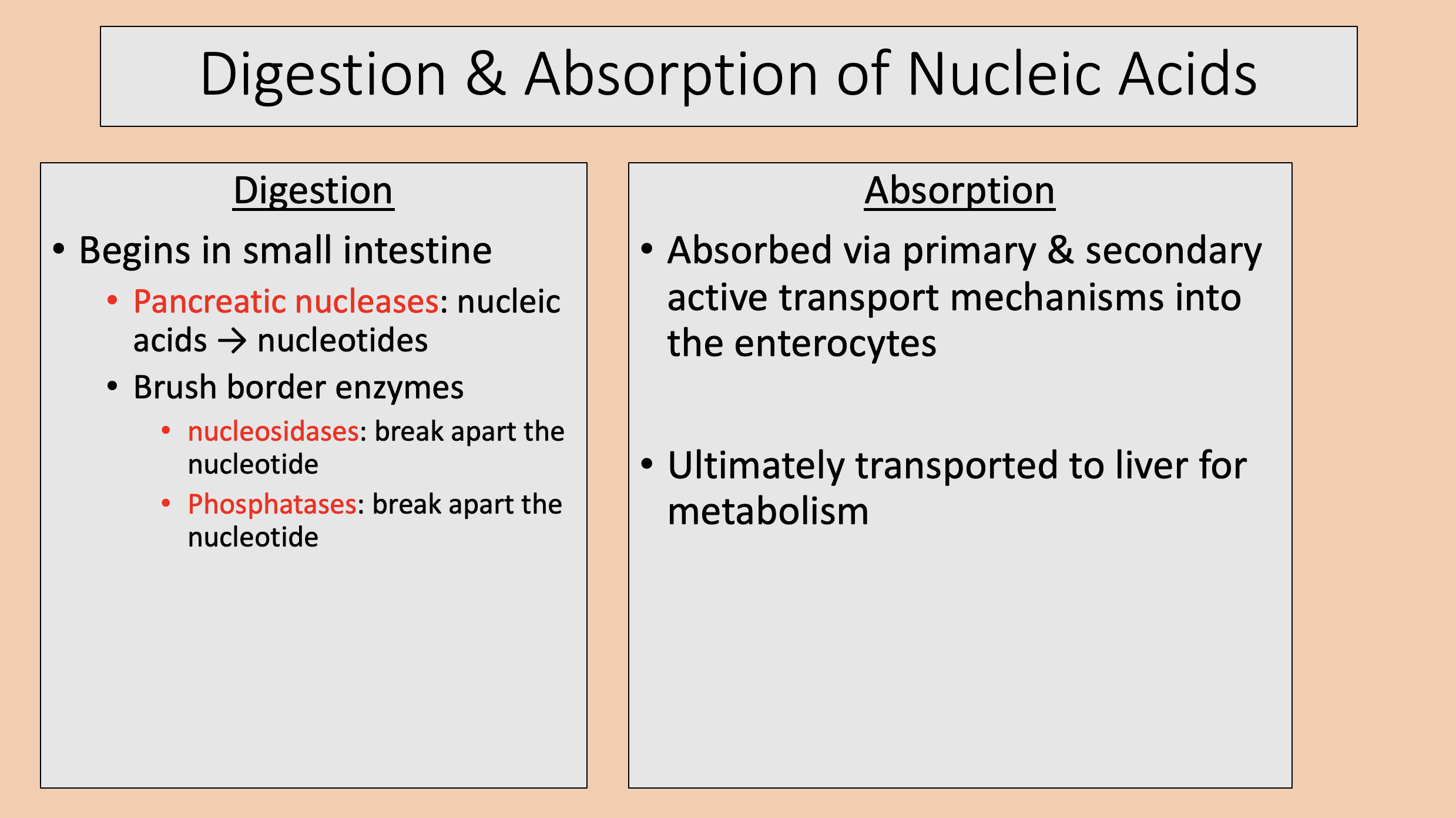
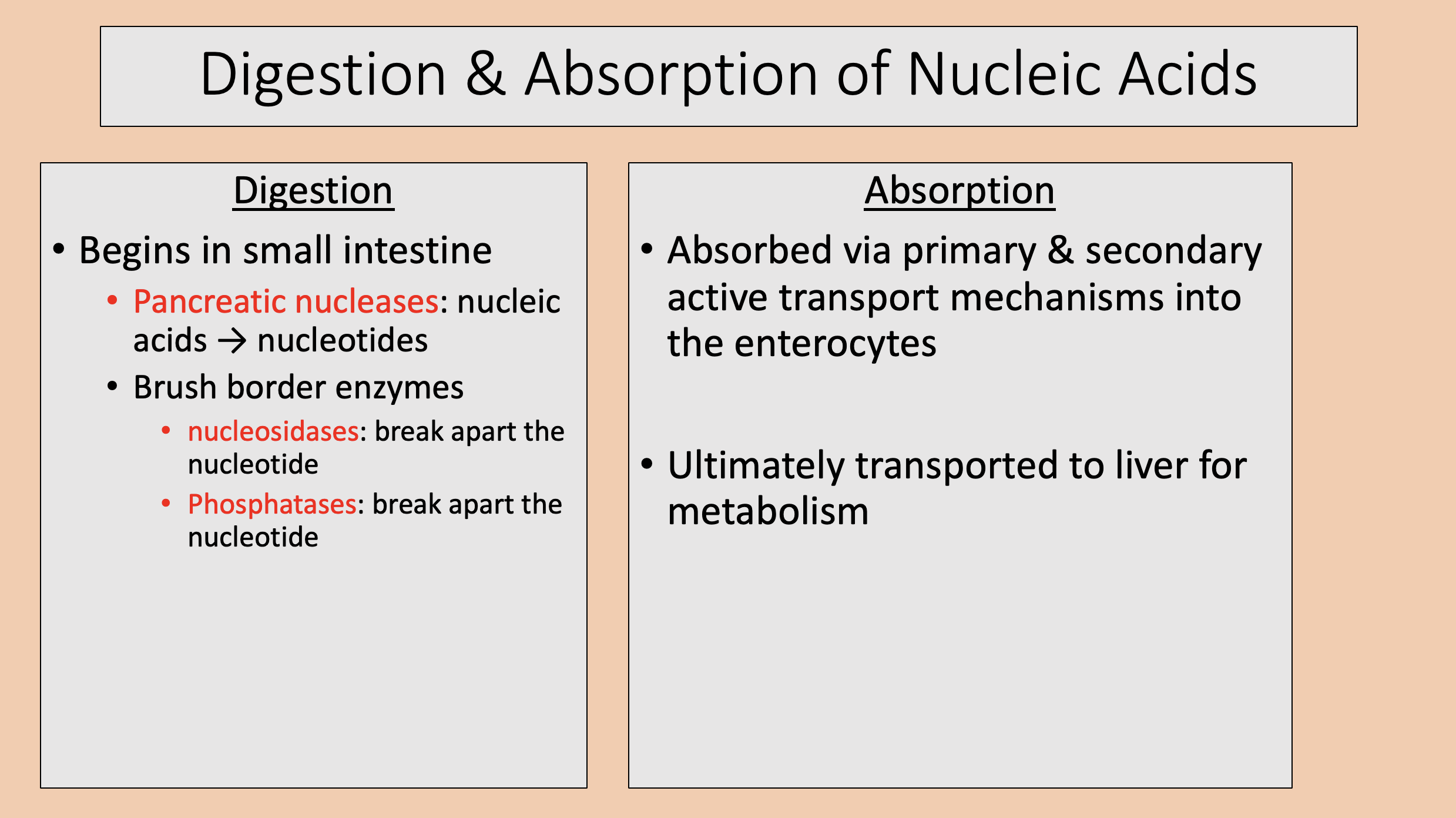
Absorbed via primary & secondary active transport mechanisms into the enterocytes.
Ultimately transported to liver for metabolism.
absorption of nucleic acids
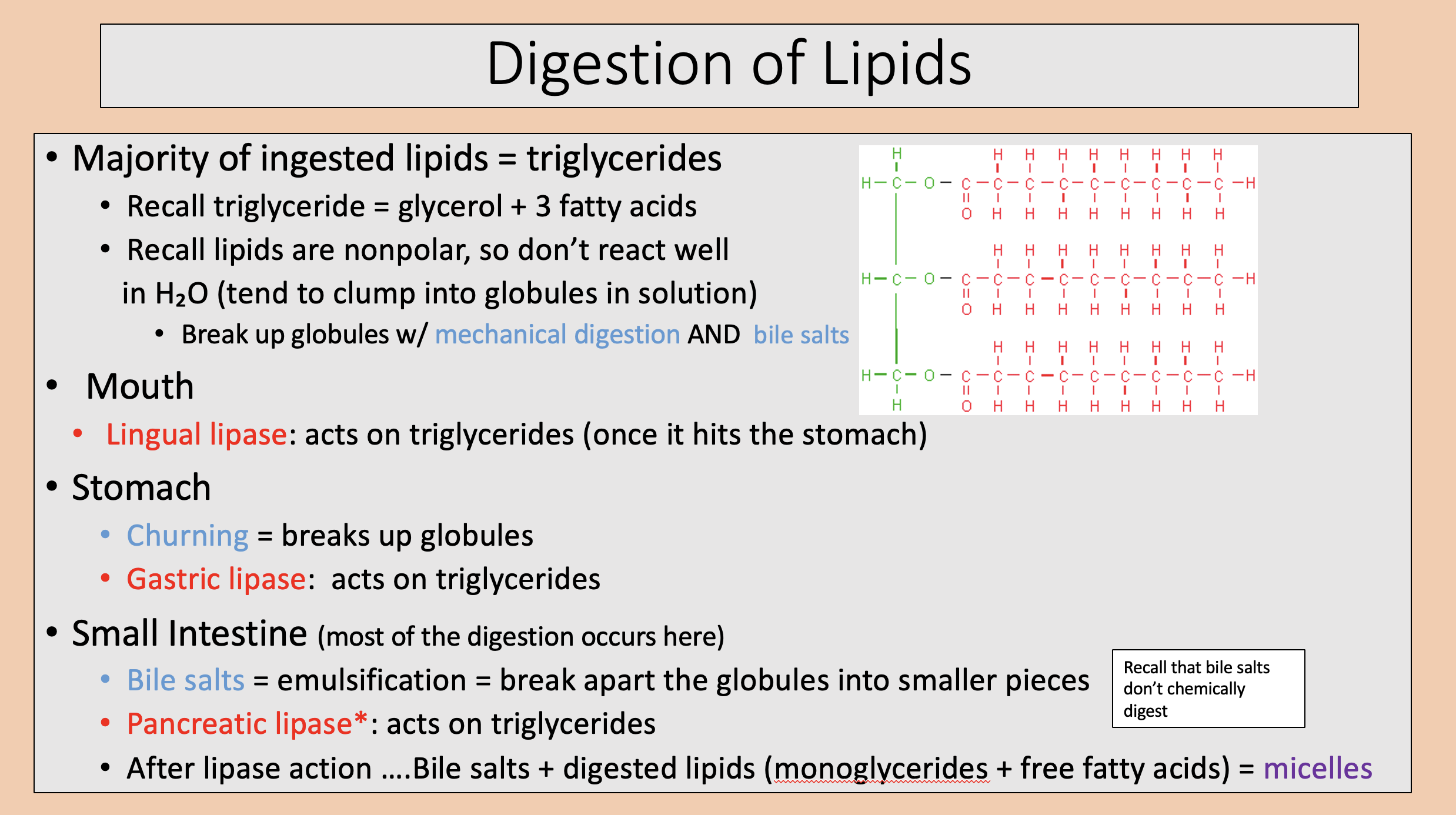
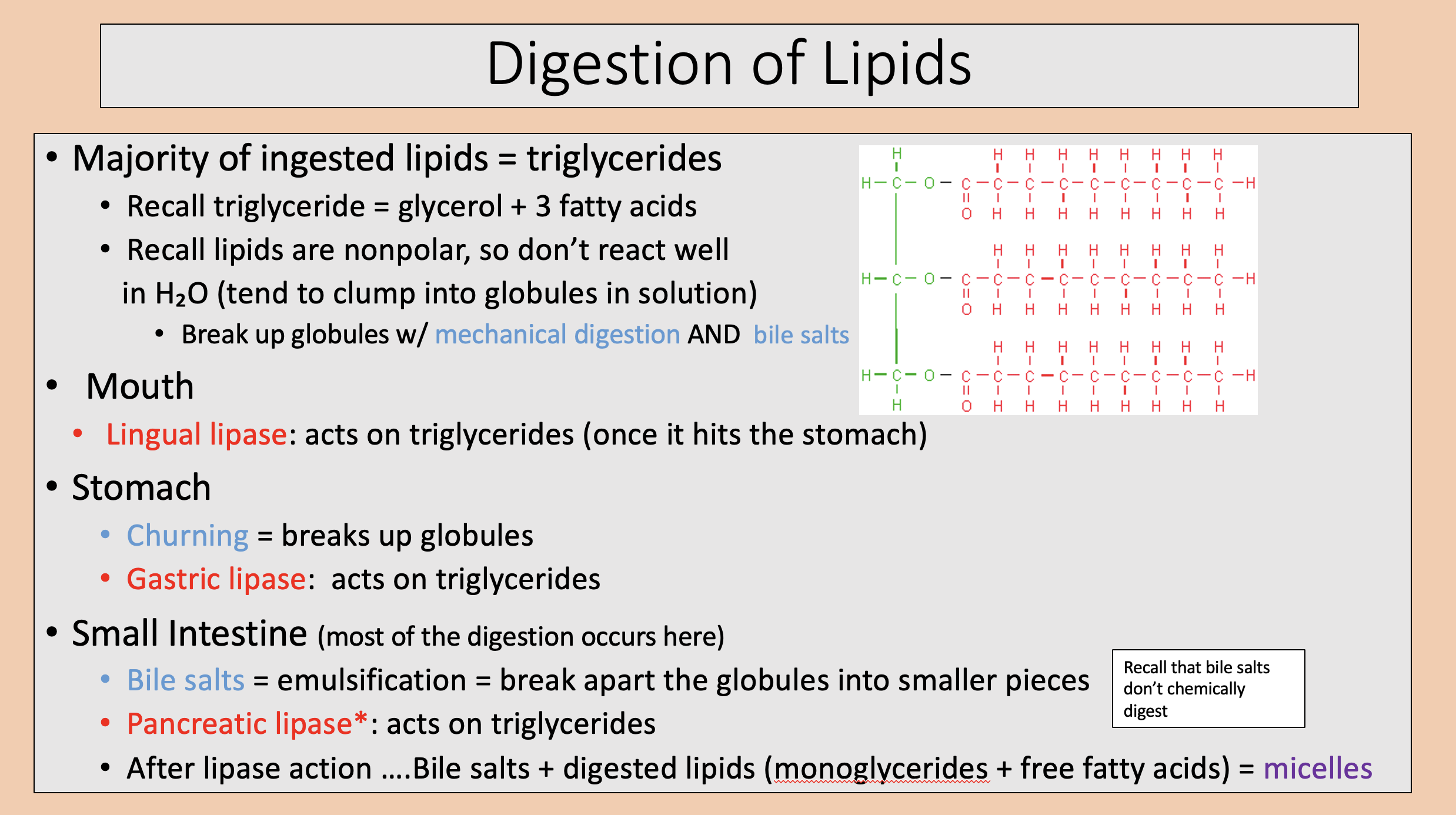
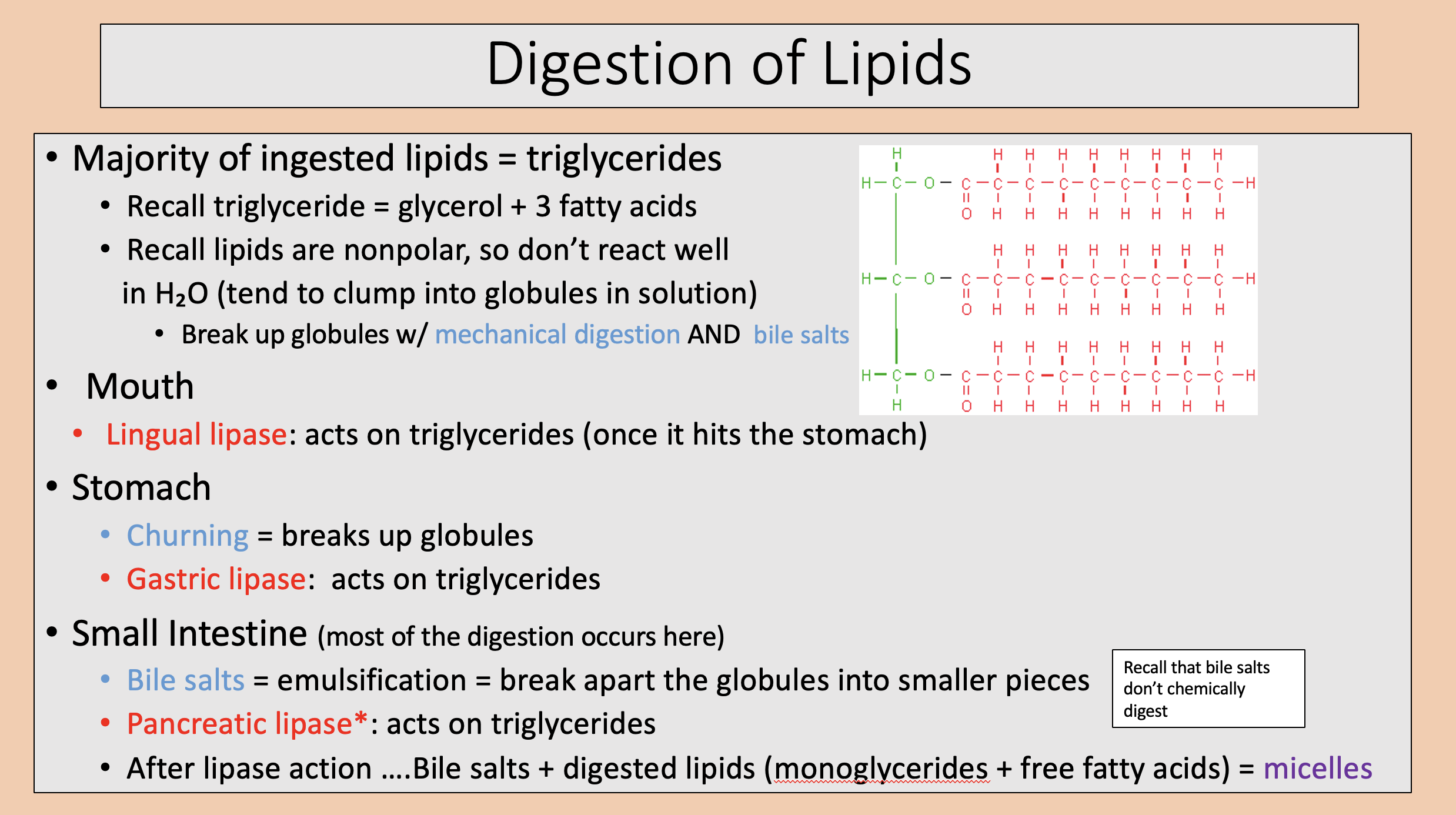
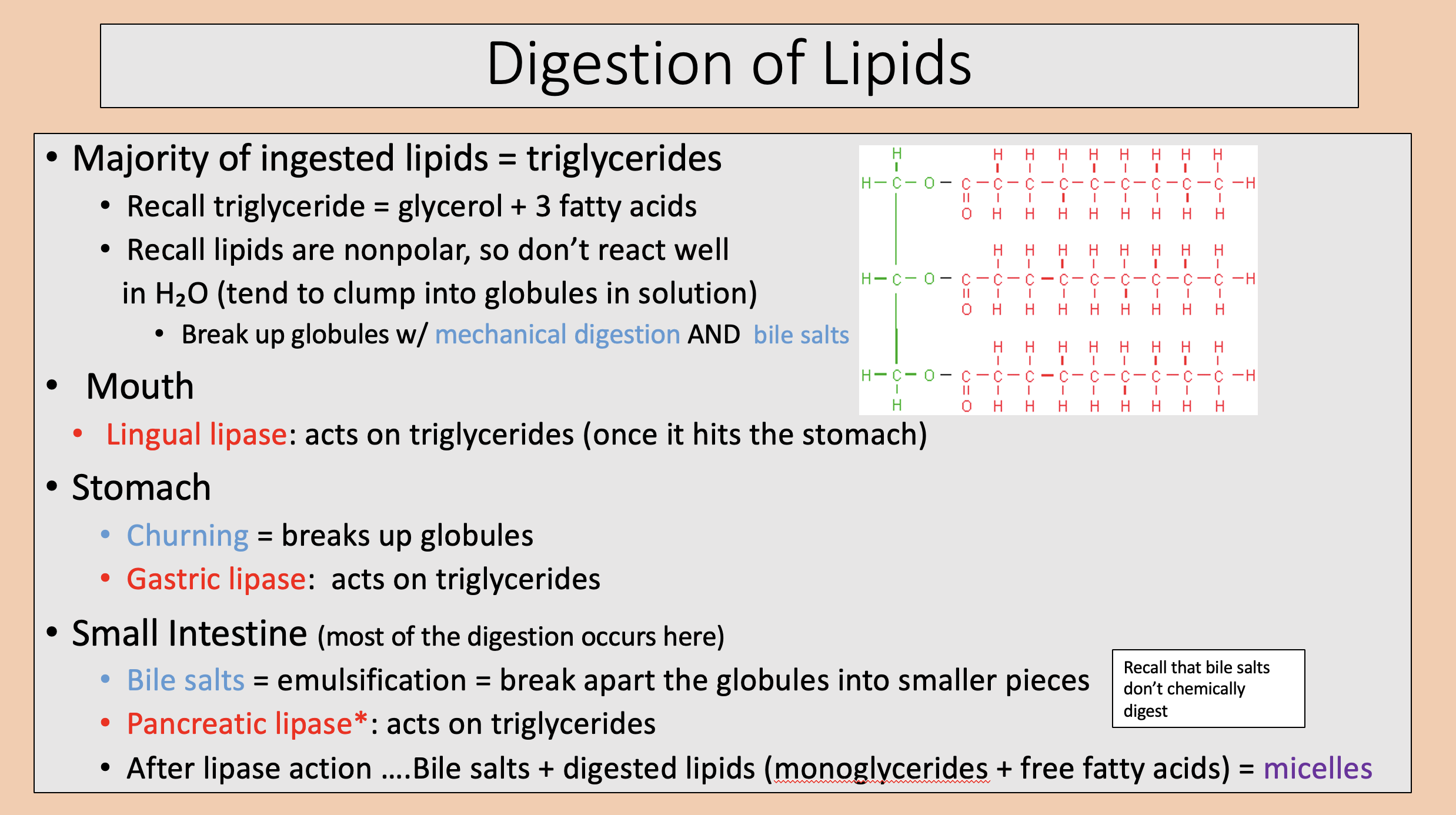
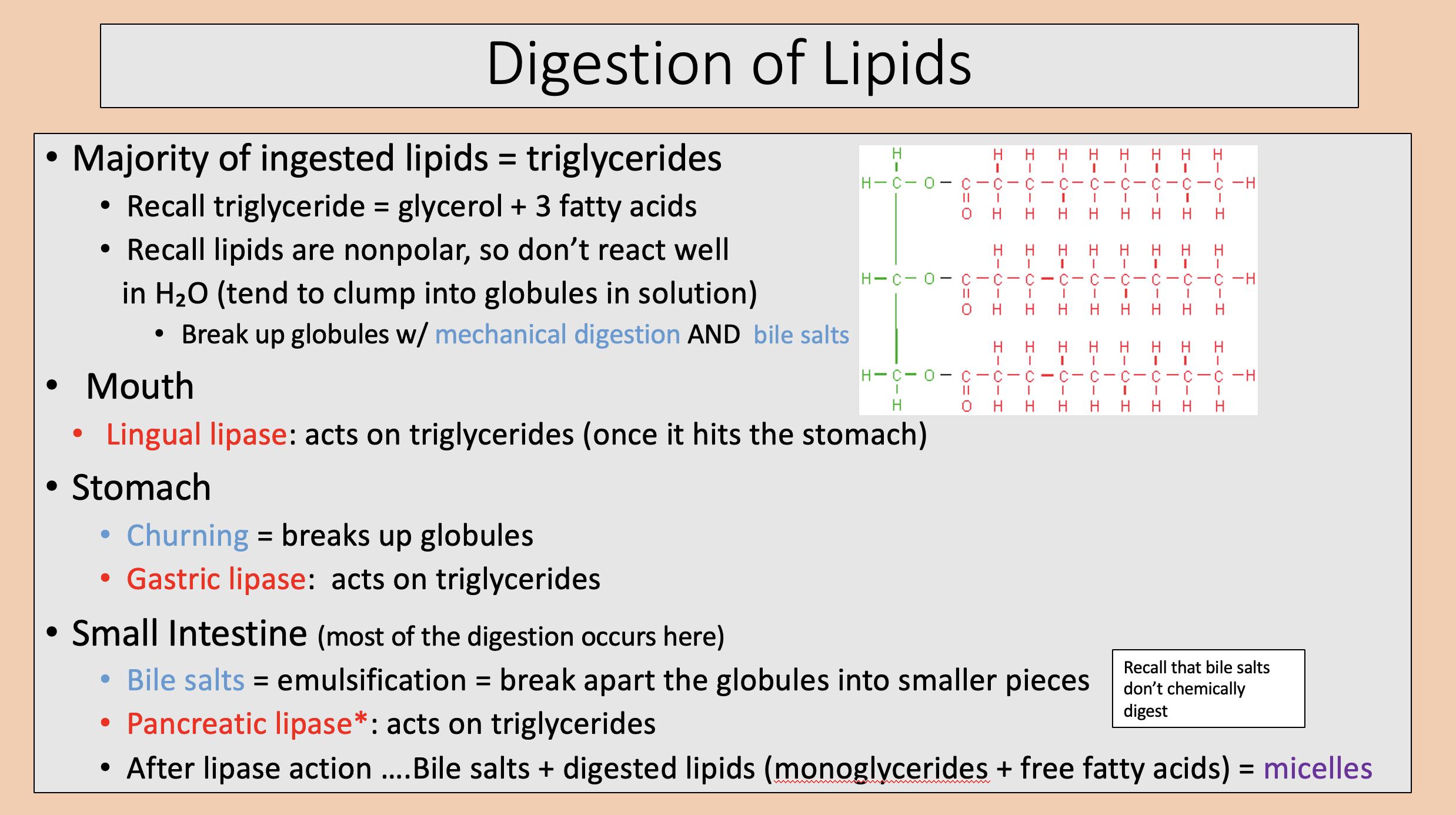
Majority of ingested lipids
triglycerides
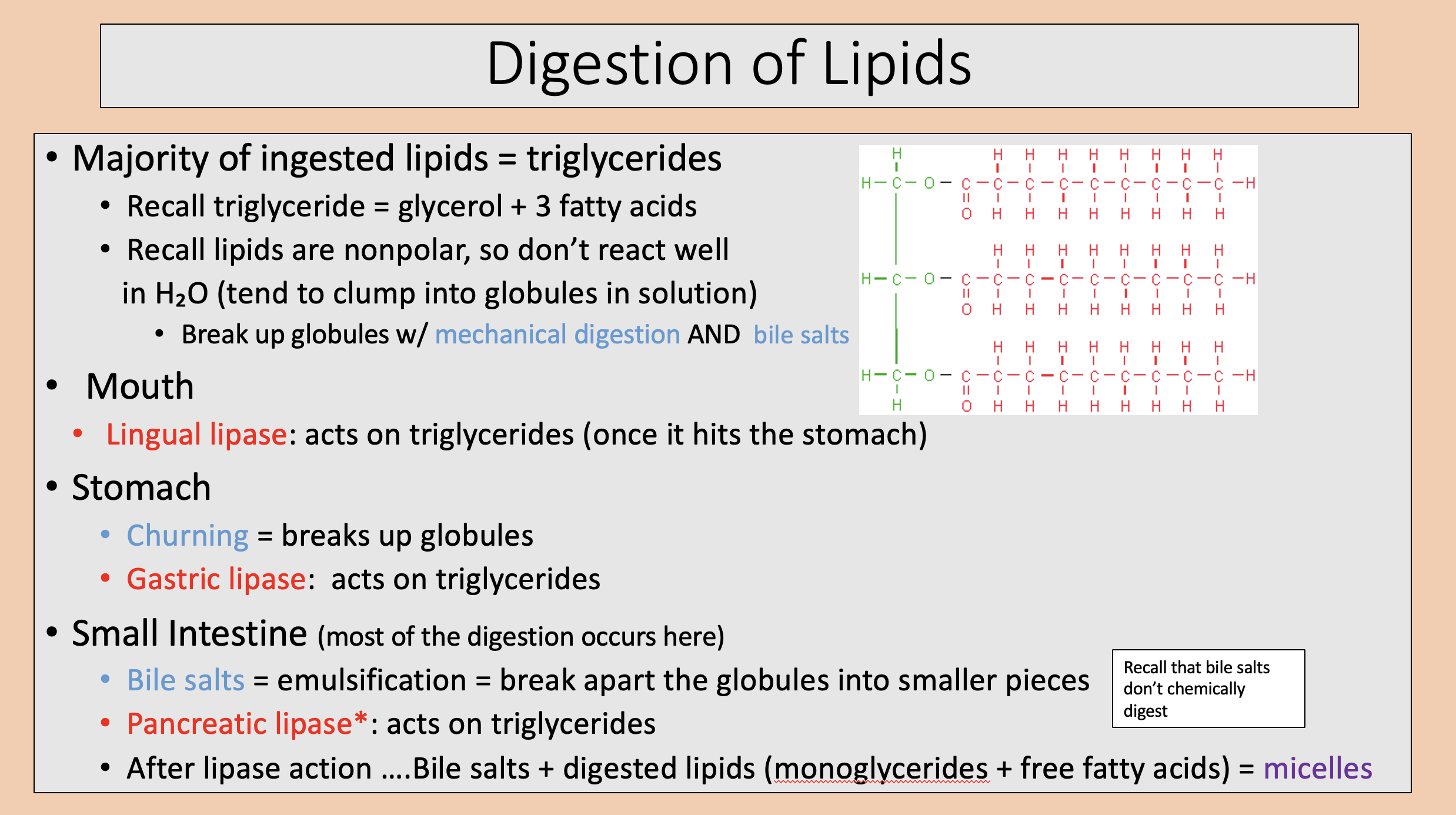
glycerol + 3 fatty acids
triglyceride
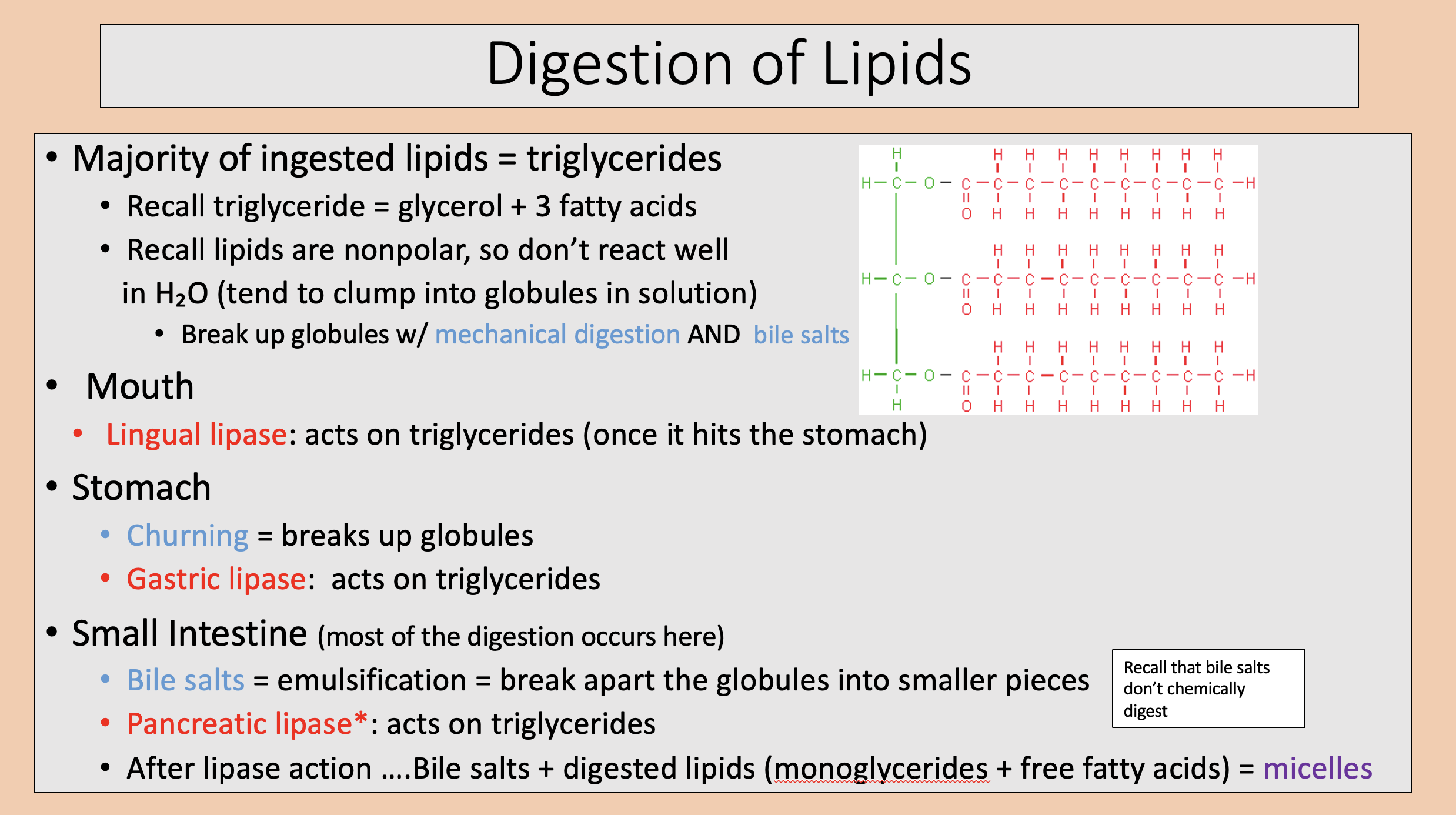
Mouth.
Acts on triglycerides (once it hits the stomach).
lingual lipase
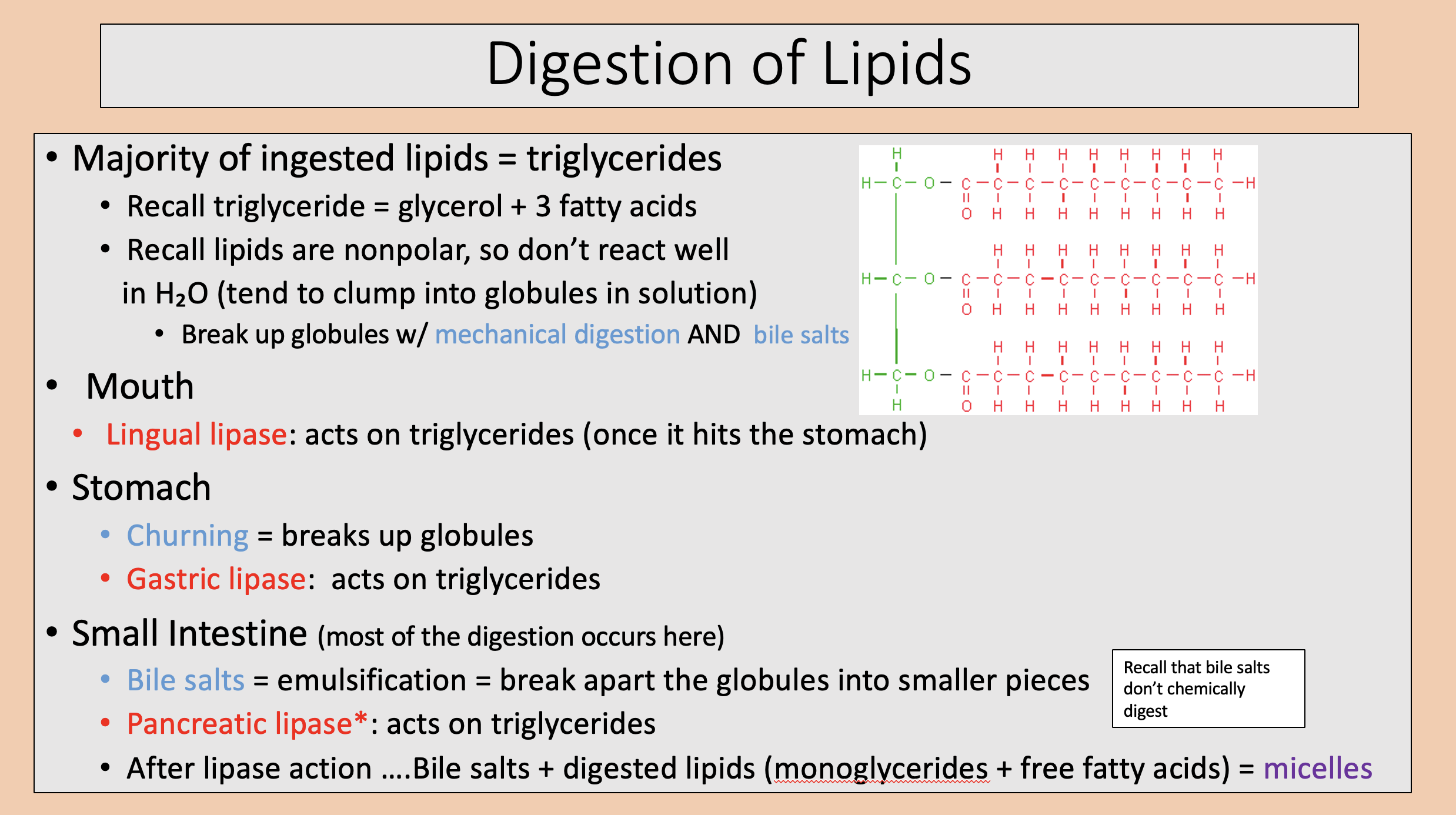
Stomach
churning
gastric lipase
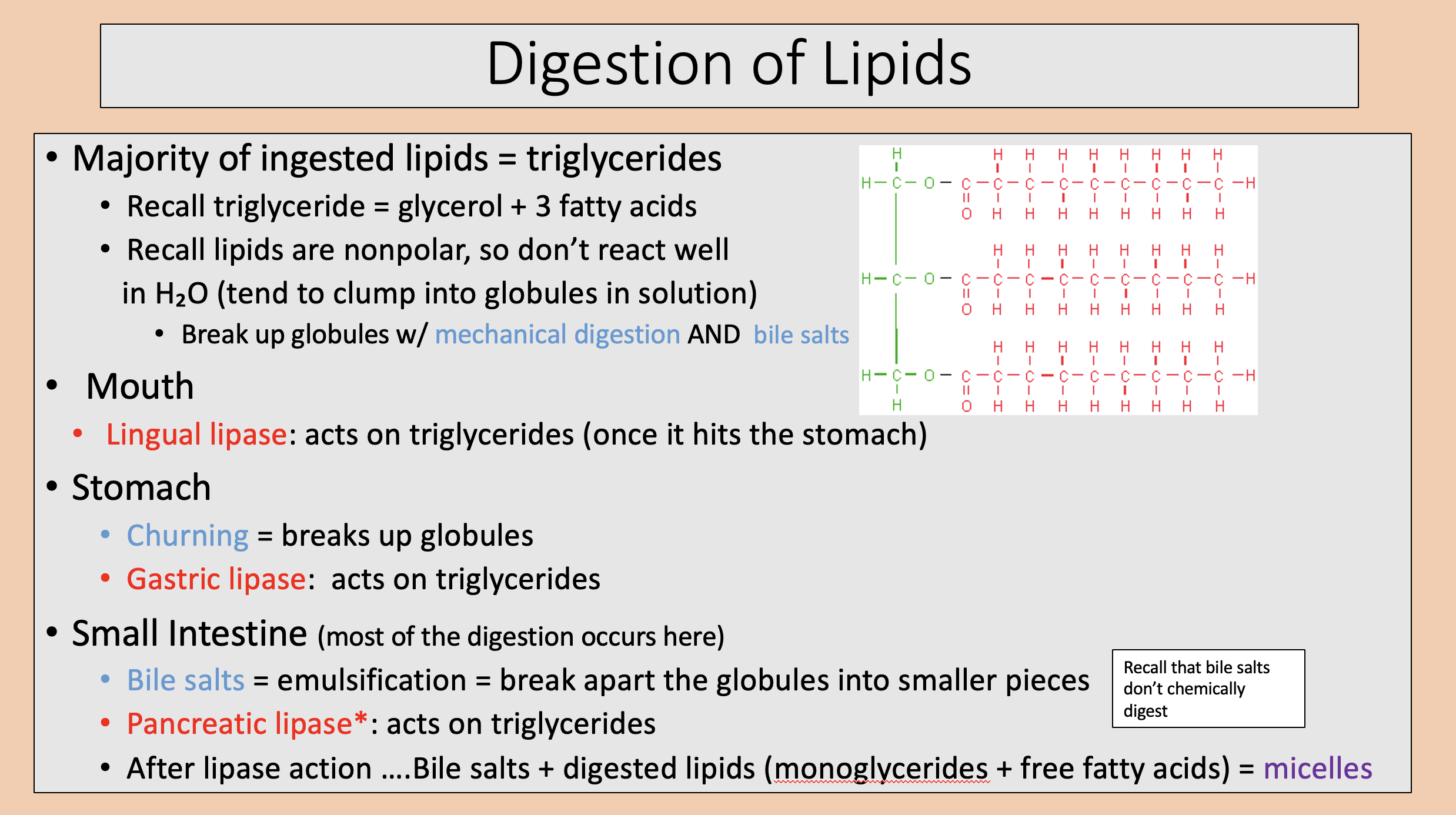
Breaks up globules
churning
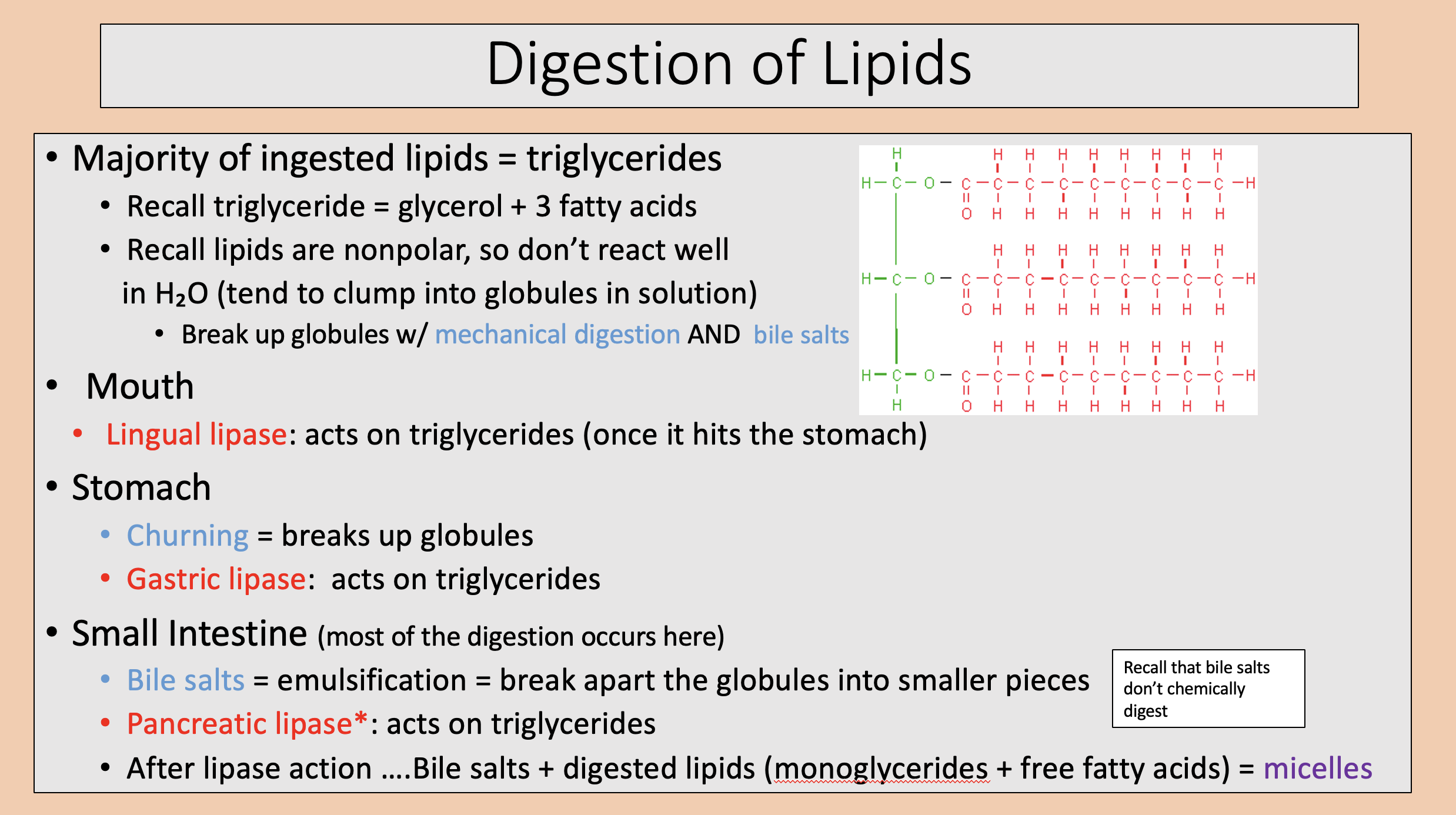
Acts on triglycerides
gastric lipase
Small Intestine (most of the digestion occurs here)
bile salts
pancreatic lipase
micelles
Emulsification = break apart the globules into smaller pieces.
The bile salts do not chemically digest.
bile salts
Acts on triglycerides
pancreatic lipase
After lipase action ....Bile salts + digested lipids (monoglycerides + free fatty acids).
Escort the lipids to the enterocyte.
micelles
The lipid components diffuse across membrane
simple diffusion
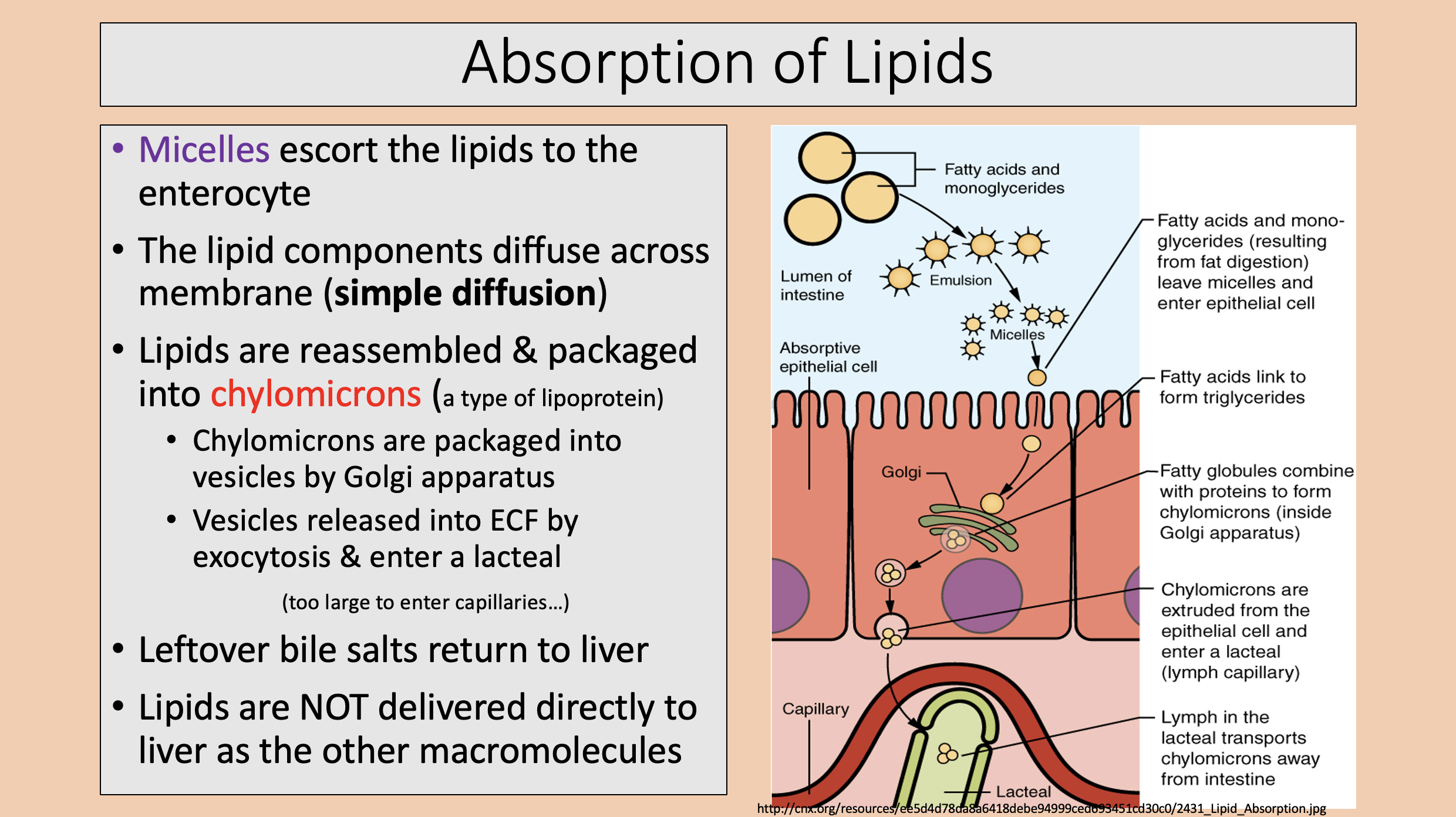
Lipids are reassembled & packaged into.
A type of lipoprotein.
chylomicrons
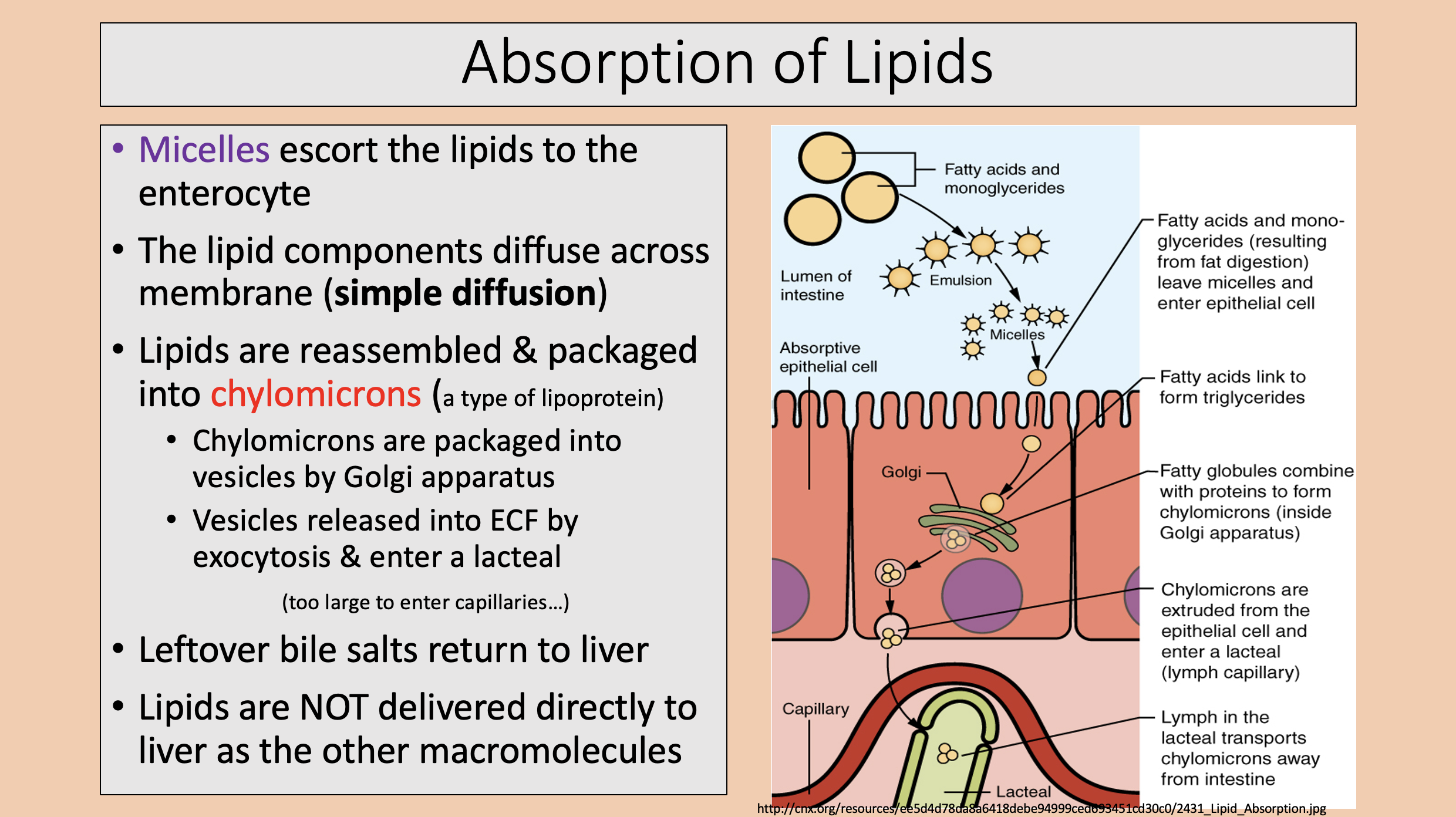
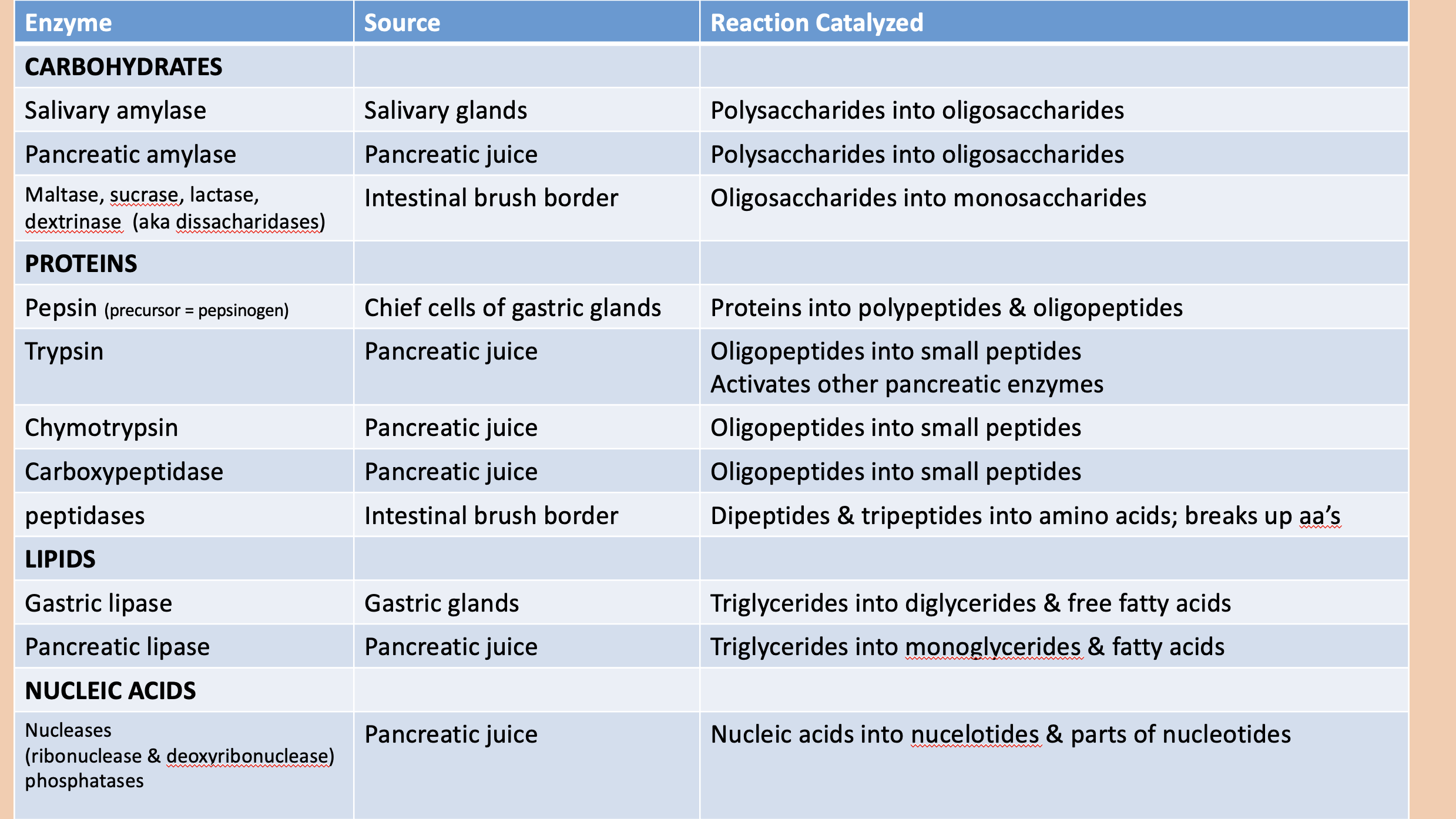
Salivary amylase.
Pancreatic amylase.
Maltase, sucrase, lactase, dextrinase (aka dissacharidases).
carbohydrates
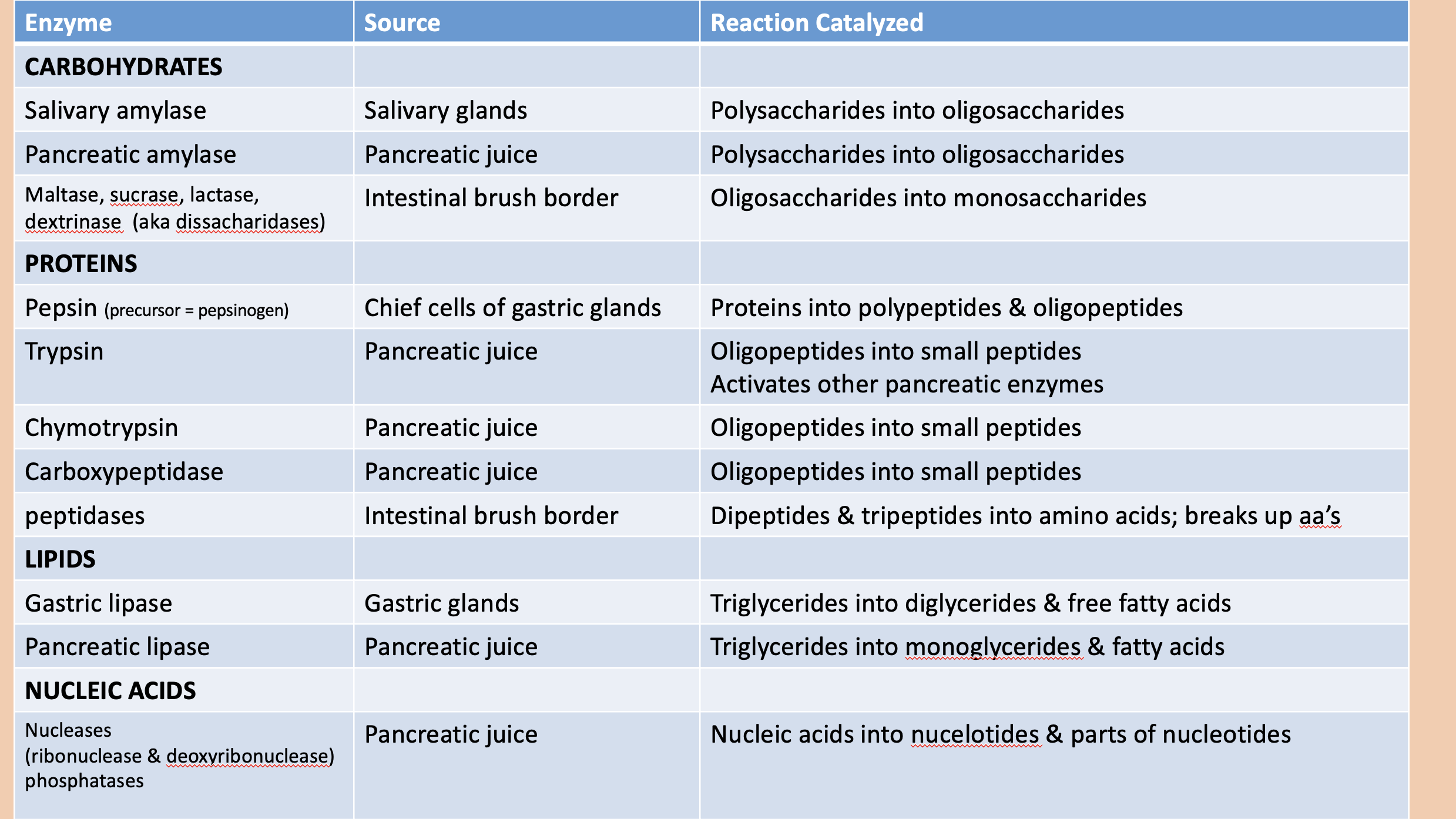
Pepsin (precursor = pepsinogen).
Trypsin.
Chymotrypsin.
Carboxypeptidase.
Peptidases.
proteins
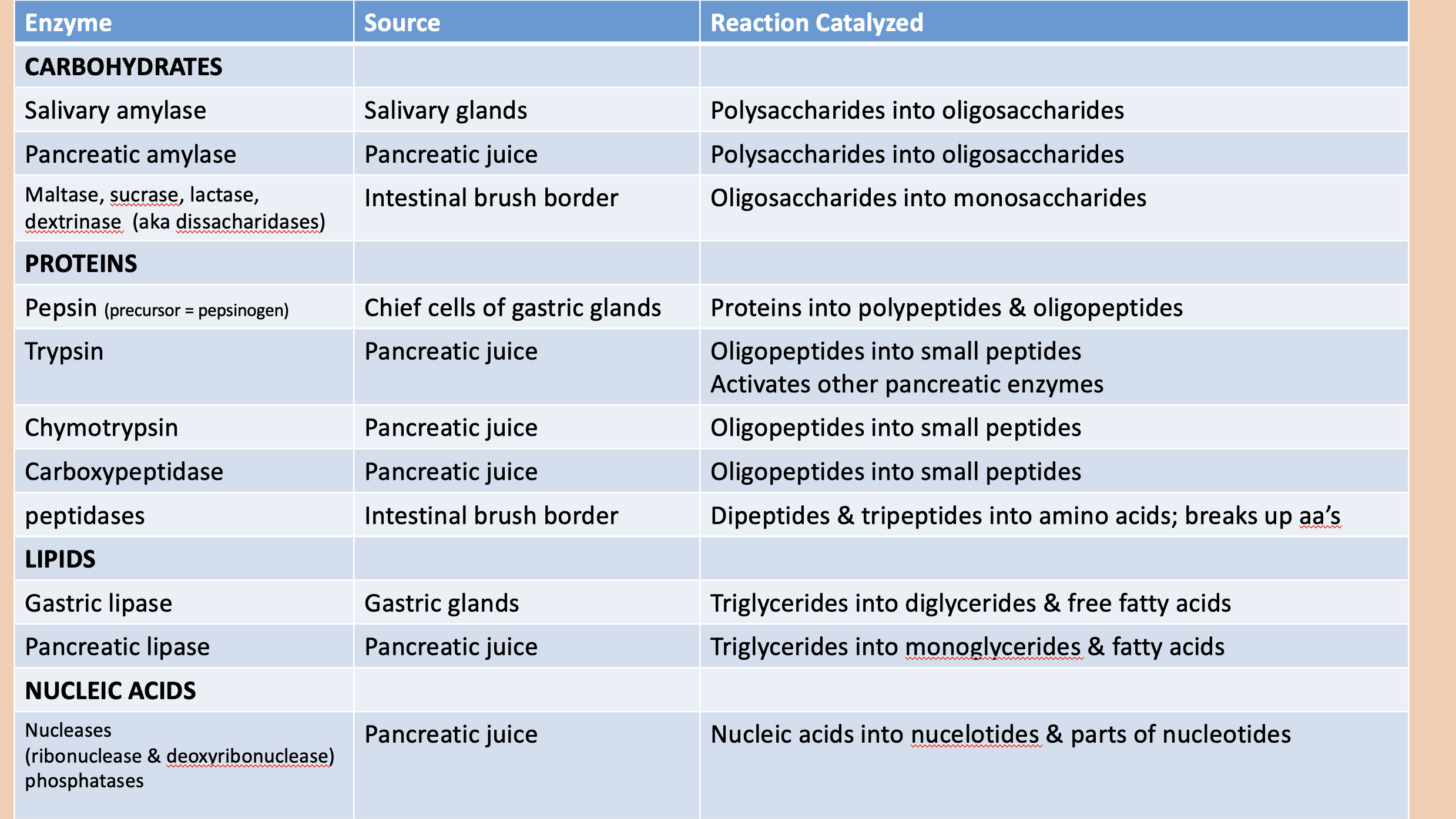
Gastric lipase.
Pancreatic lipase.
lipids
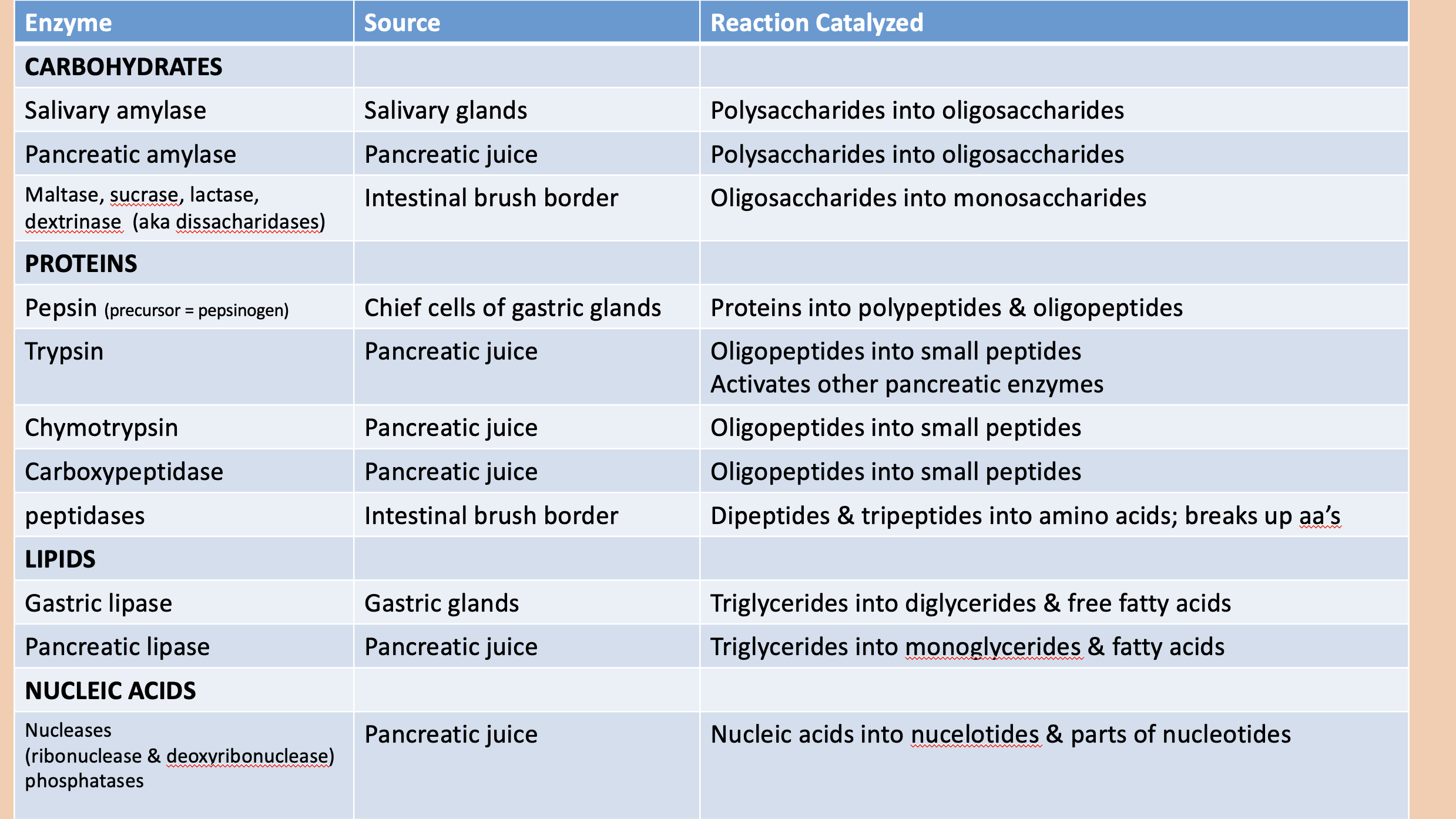
Nucleases (ribonuclease & deoxyribonuclease phosphateses.
nucleic acids
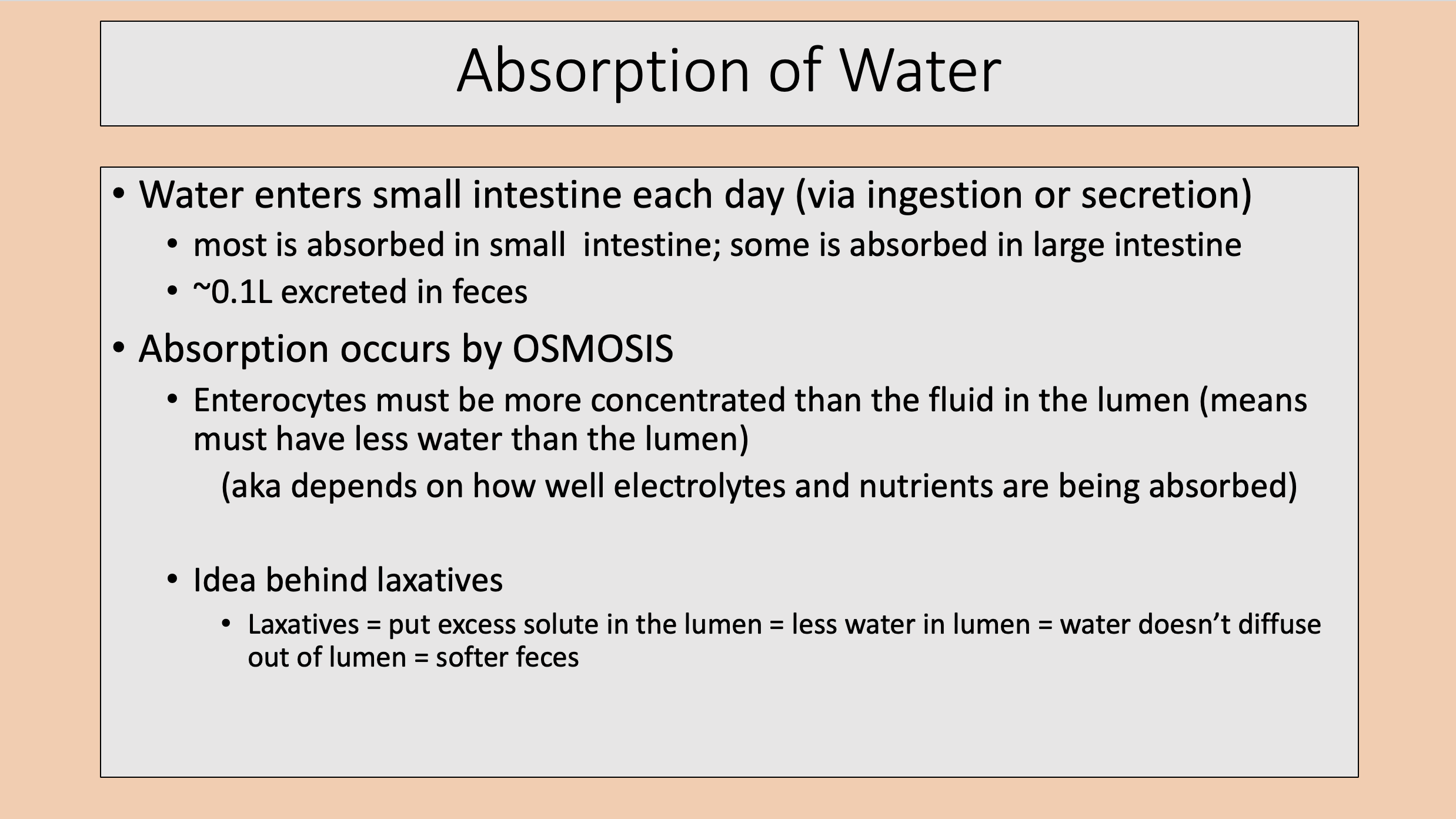
Water enters small intestine each day (via ingestion or secretion).
Absorption occurs by OSMOSIS.
Idea behind laxatives.
absorption of water
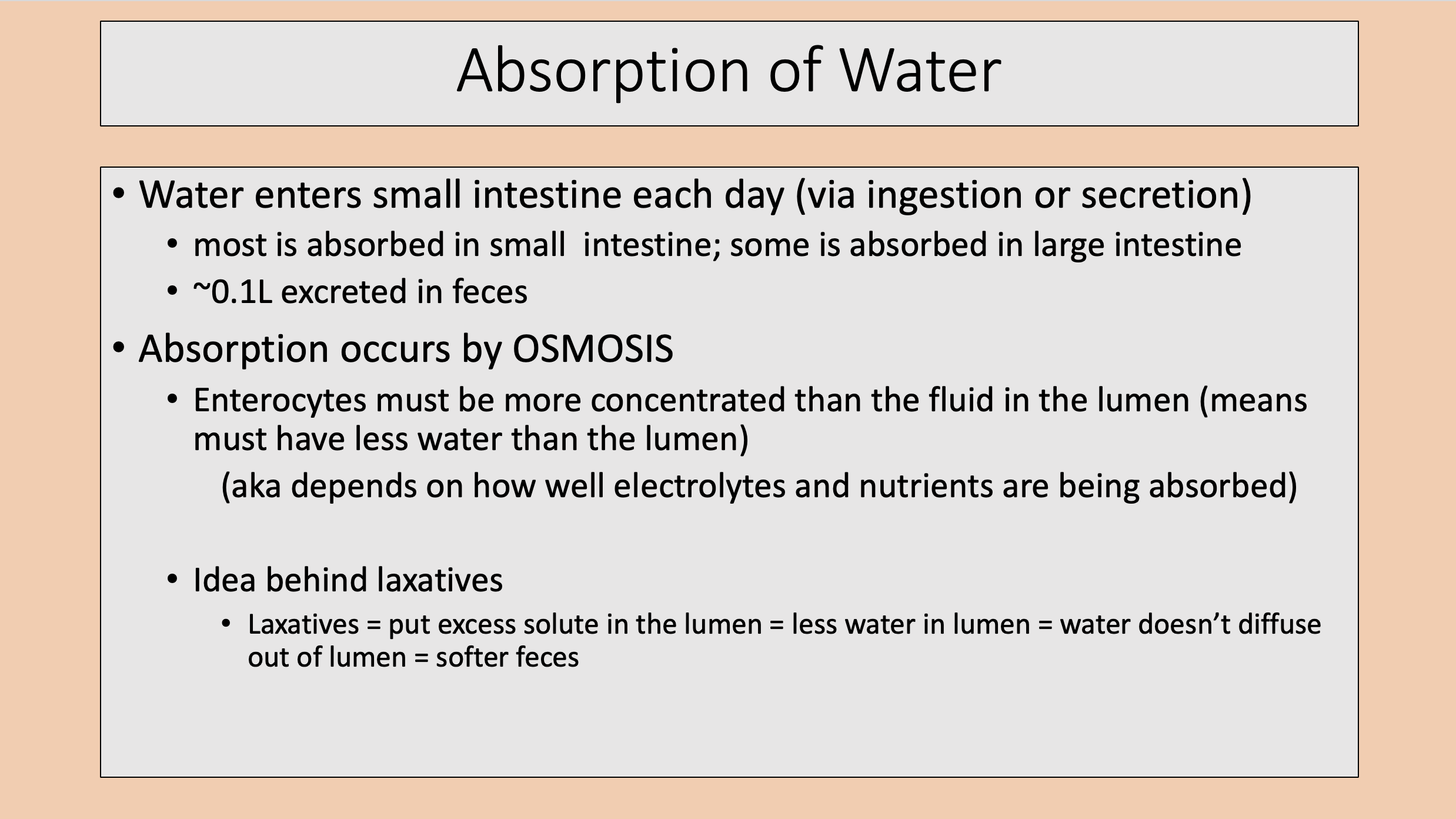
Put excess solute in the lumen = less water in lumen = water doesn’t diffuse out of lumen = softer feces
laxatives
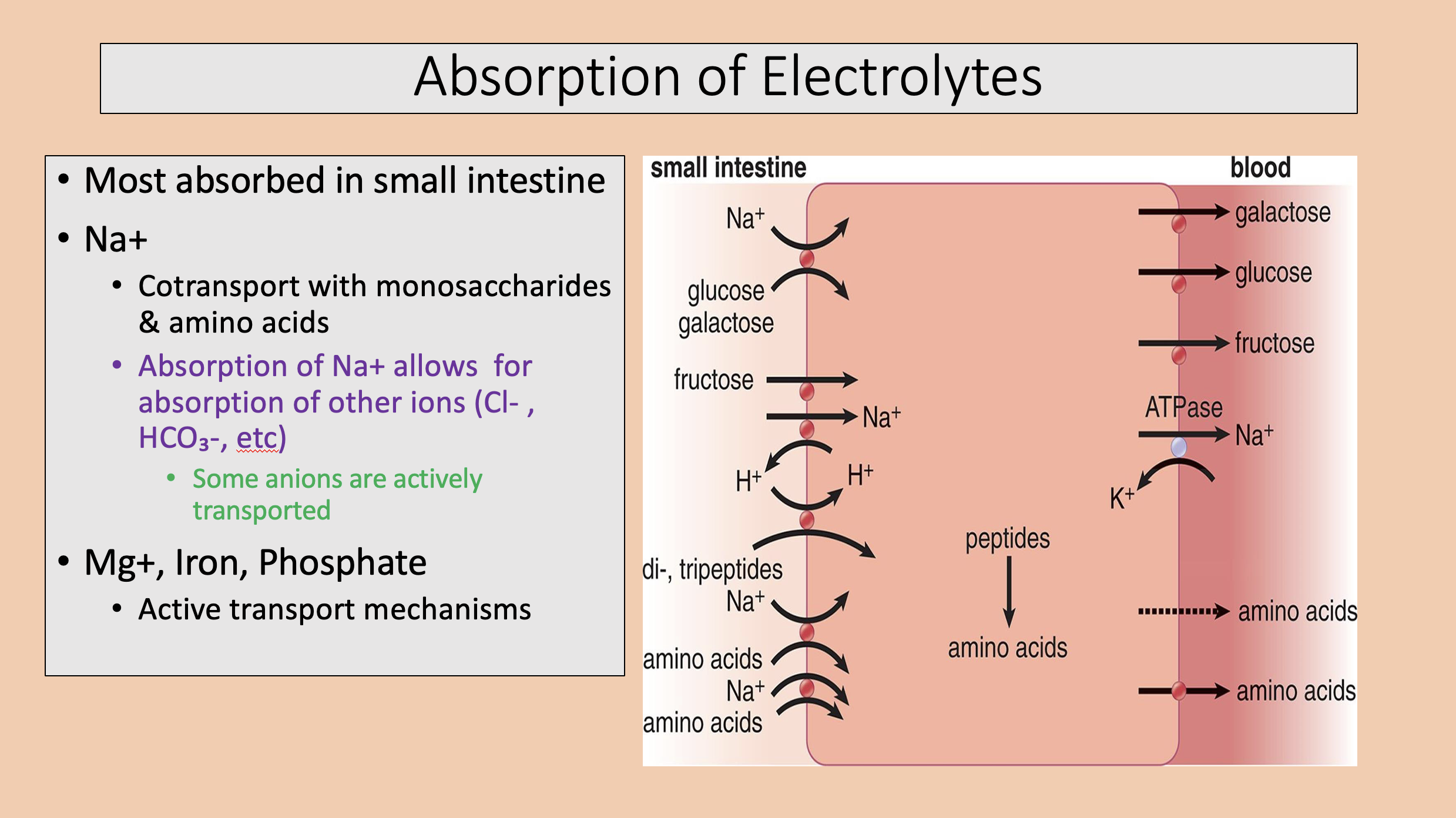
Mg+, Iron, Phosphate
active transport mechanisms
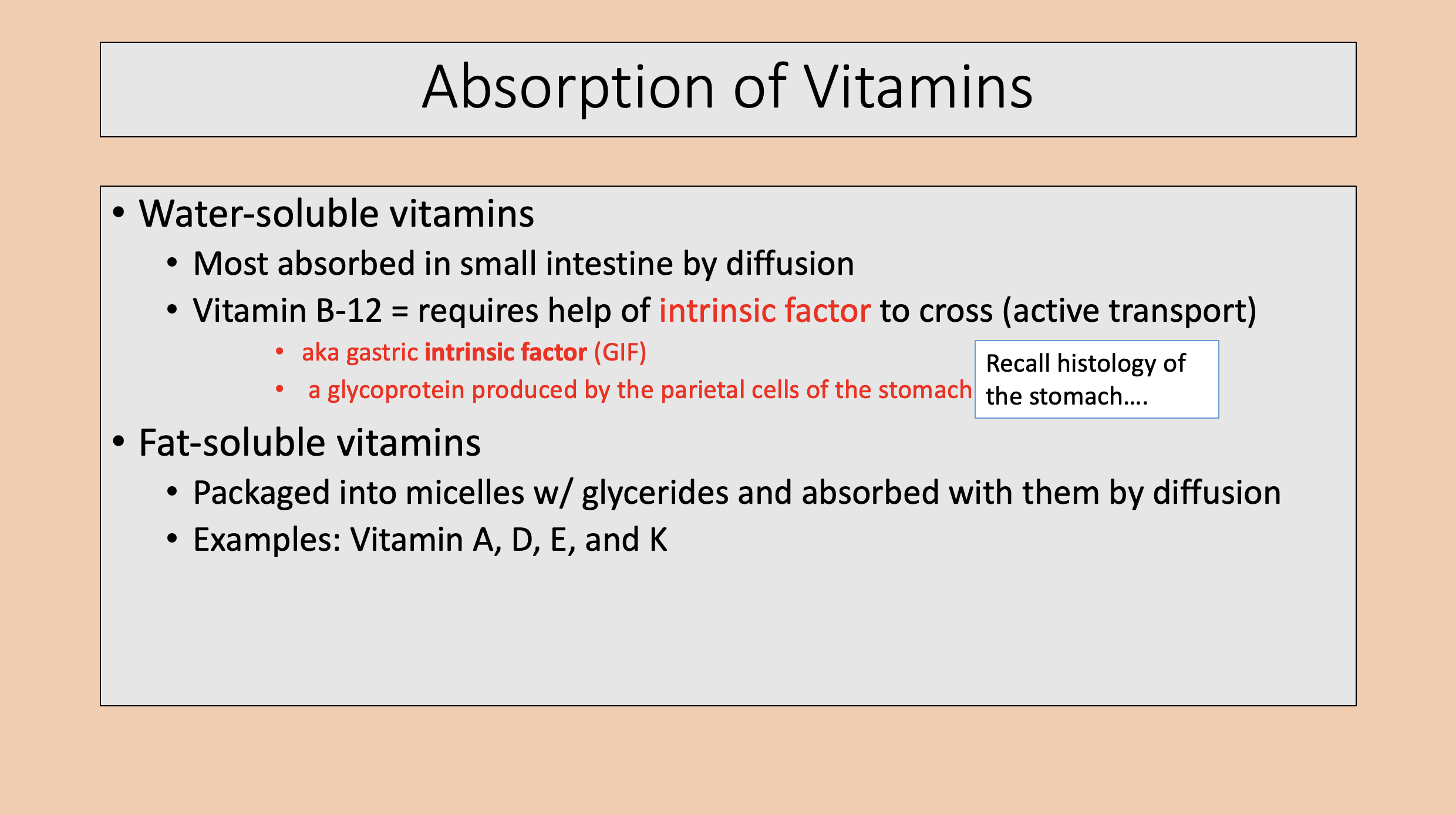
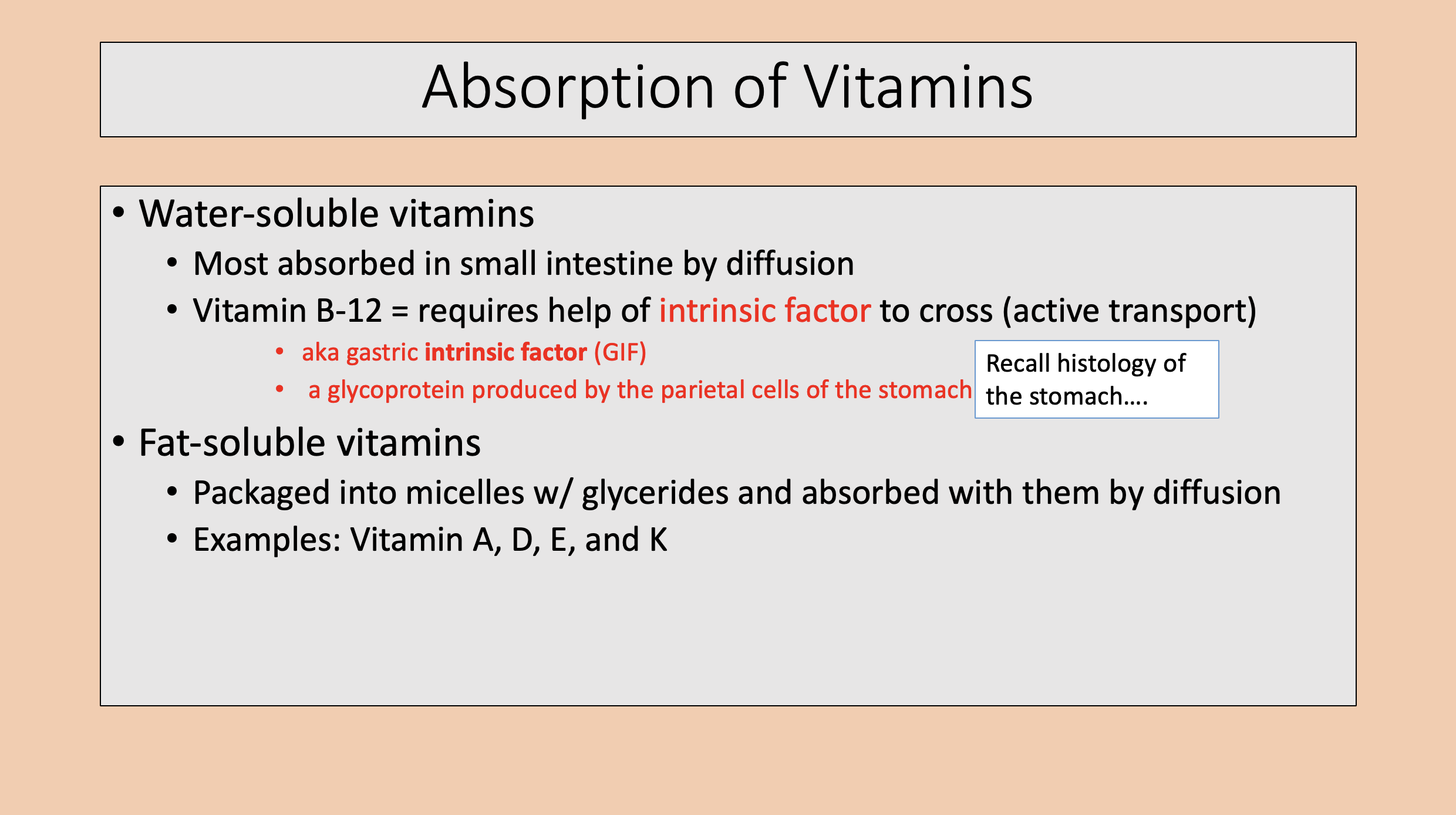
Most absorbed in small intestine by diffusion.
Vitamin B-12.
water-soluble vitamins
Requires help of intrinsic factor to cross (active transport).
aka gastric intrinsic factor (GIF).
A glycoprotein produced by the parietal cells of the stomach.
vitamin B-12
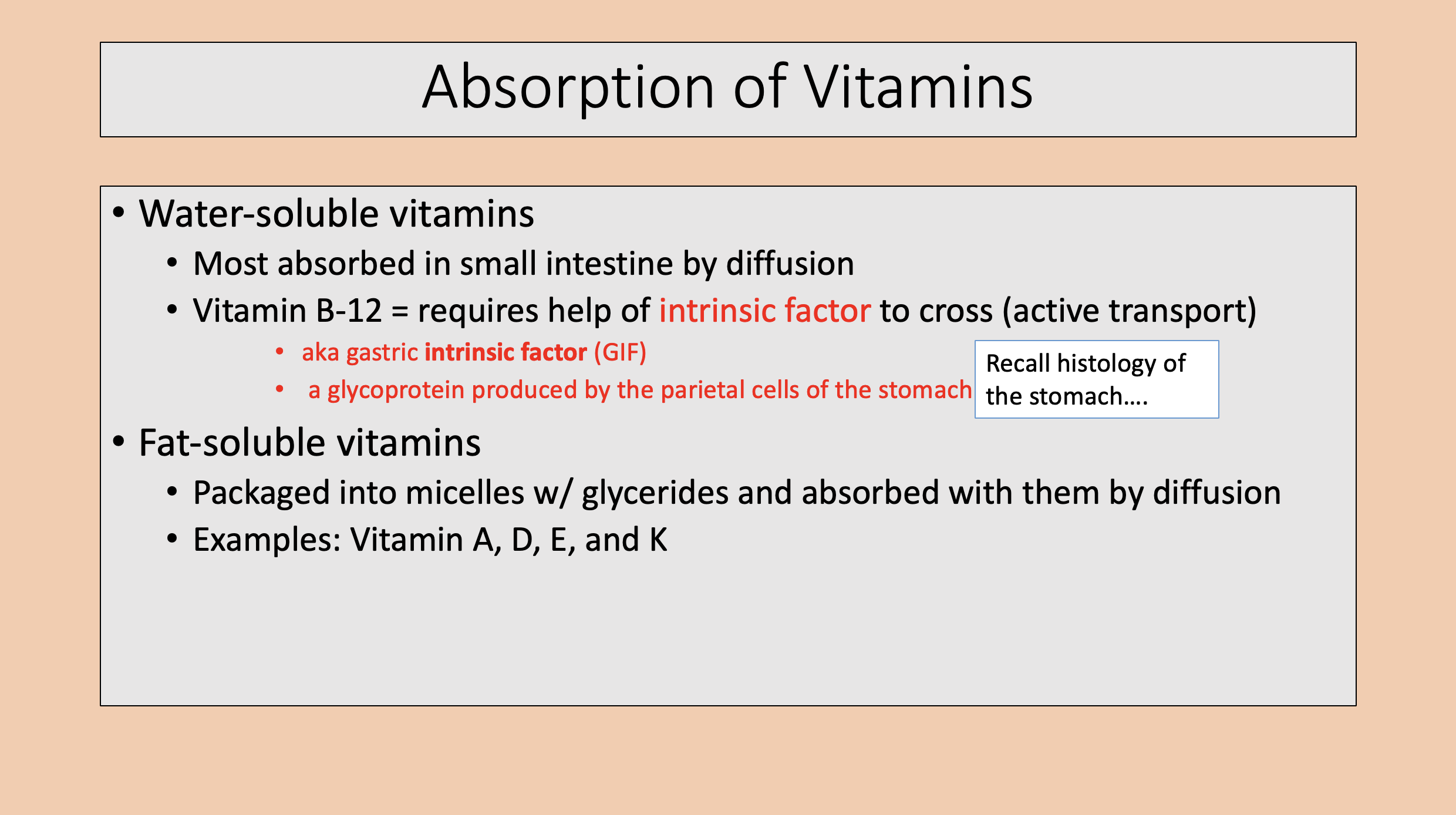
Packaged into micelles w/ glycerides and absorbed with them by diffusion.
Examples: Vitamin A, D, E, and K.
fat-soluble vitamins