Aerostructures worded questions
 Call Kai
 Learn
Learn Practice Test
 Spaced Repetition
 Match
Match Flashcards
 Knowt Play
1/33

There's no tags or description
Looks like no tags are added yet.
Name | Mastery | Learn | Test | Matching | Spaced | Call with Kai |
|---|
No analytics yet
Send a link to your students to track their progress
34 Terms
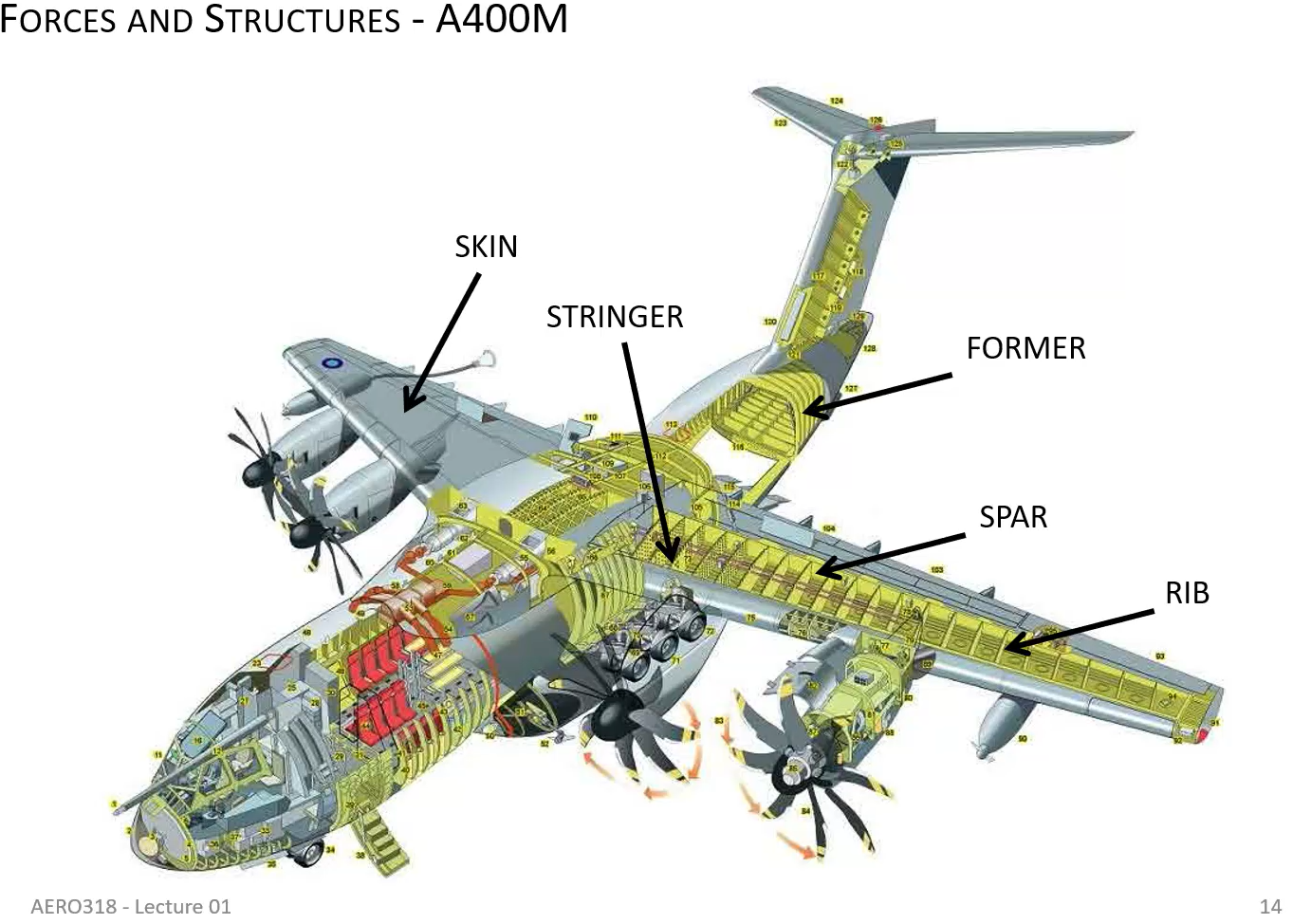
List the basic elements and components of an aeronautical structure.
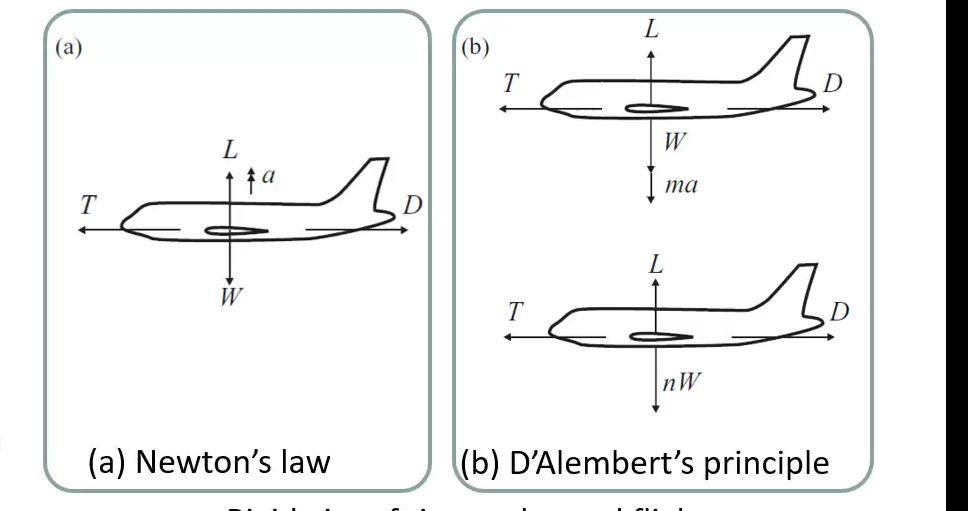
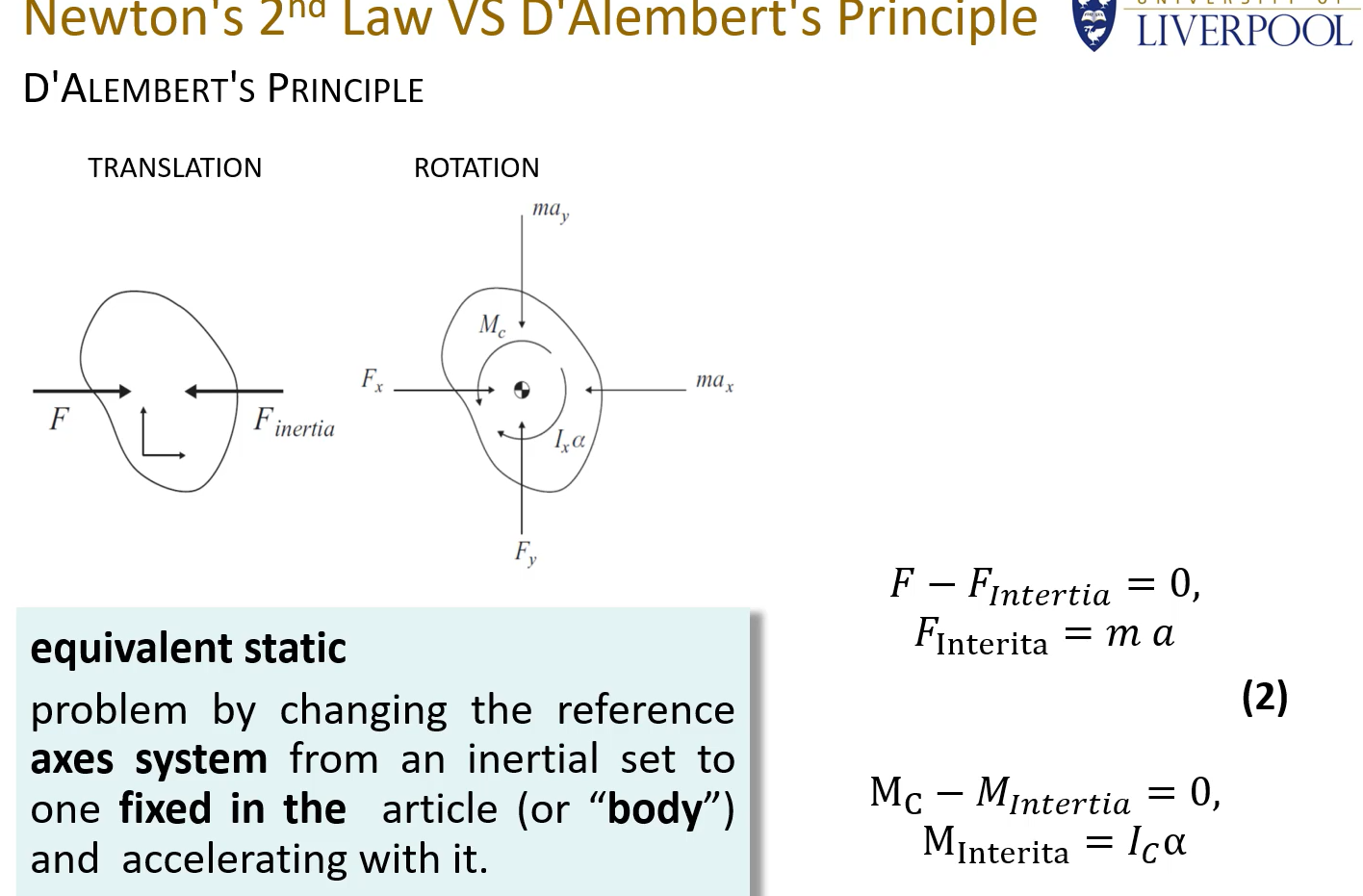
Describe Newton’s 2nd law VS D’Alambert’s Principle.
Define and shortly describe the load factor.
path to link applied load to equilibrium forces
n = total lift/ weight
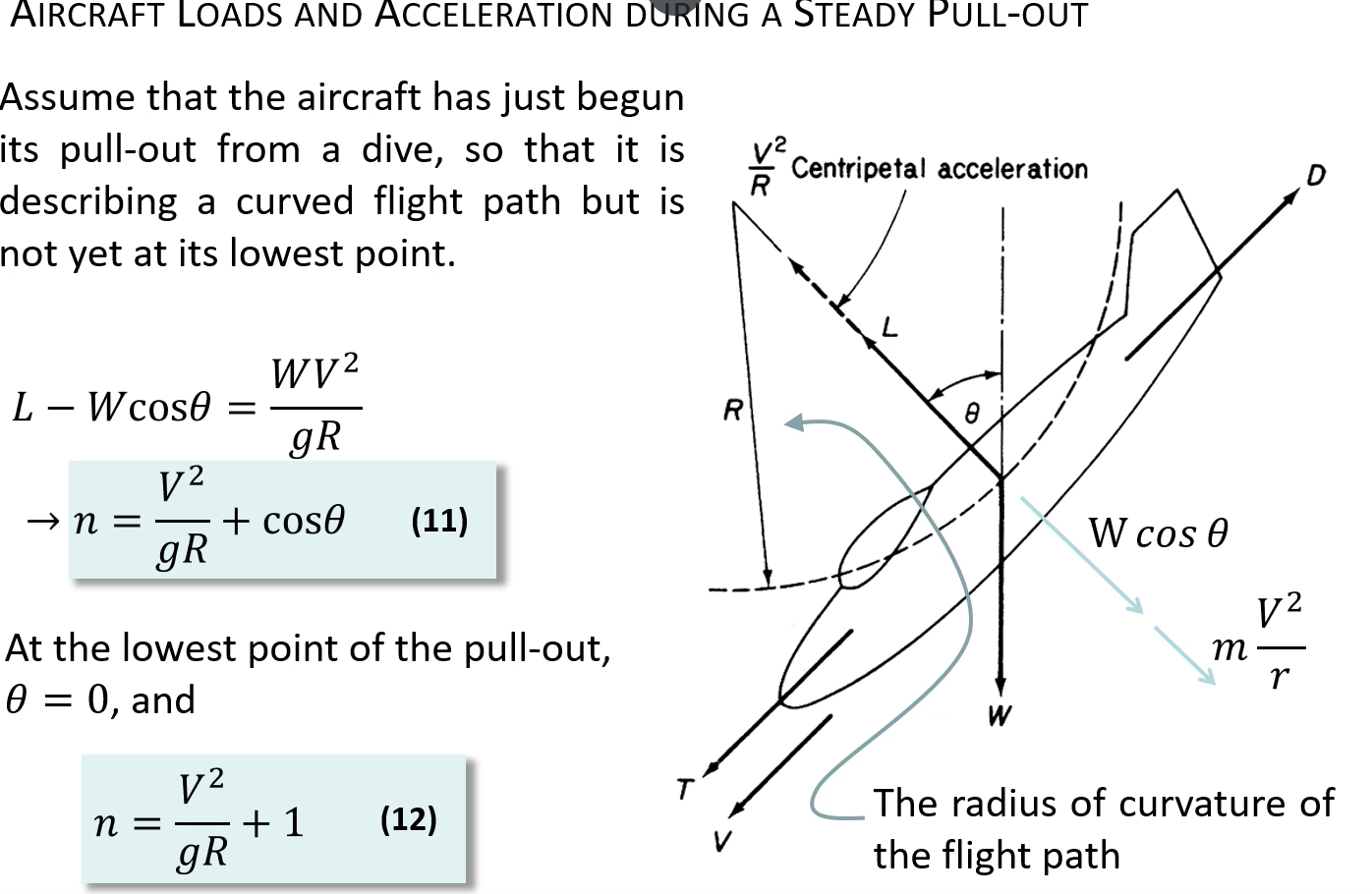
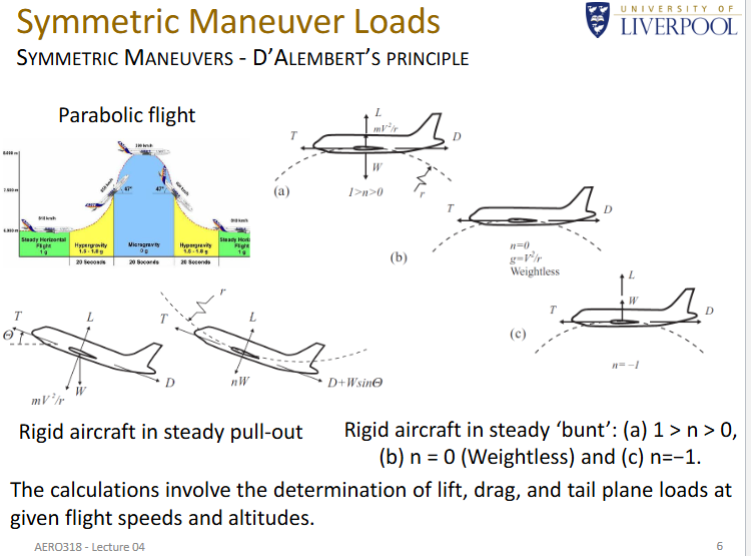
Derive the load factor in a steady pull-out.
load factor = limitations of an aircraft are defined by airworthiness regulations
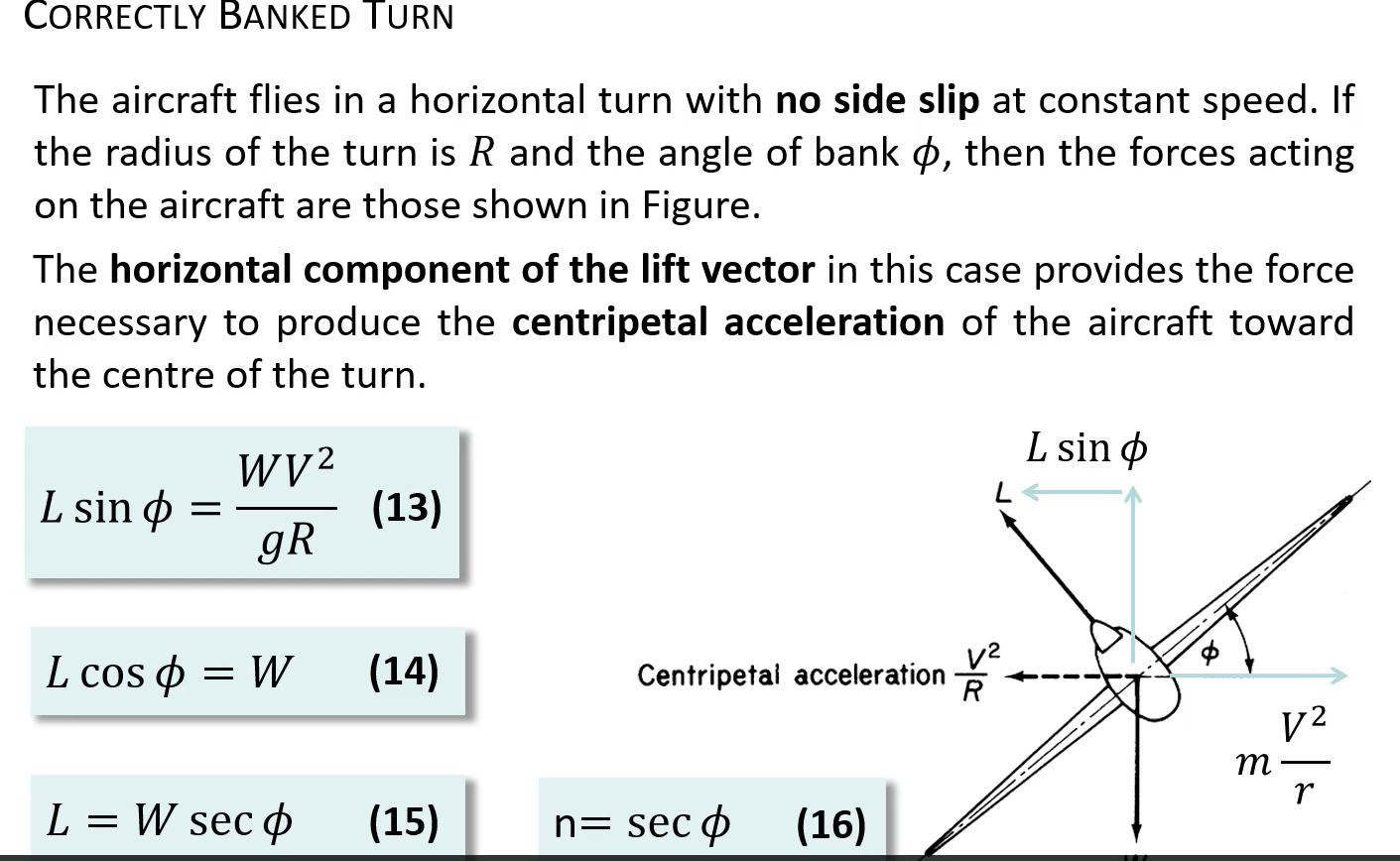
Derive the load factor in a correctly banked turn.
load factor = limitations of an aircraft are defined by airworthiness regulations
An aircraft is performing a parabolic flight to simulate weightlessness. Assuming that the
aircraft is flying at XXX km/h, what is the required radius ‘r’ of the parabolic trajectory?
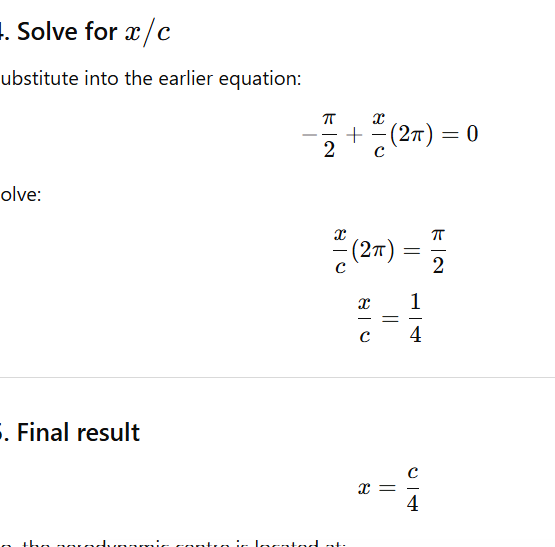
For a subsonic aerofoil, explain the difference between centre of pressure and aerodynamic
centre. Justify, via a derivation, why the aerodynamic centre is located at 25% of the chord.
centre of pressure = The centre of pressure is the point along the chord line where the resultant aerodynamic force (lift + drag combined) effectively acts/ its position chnages with AoA/ as lift chnages CP will move forwards or backwards
aerodynami centre = The aerodynamic centre is the point along the chord where the pitching moment remains constant (does not change) with angle of attack/ for subsomic, it is typicaaly located at 25% of the chord from the leading edge / moment about this point is independant of lift chnages
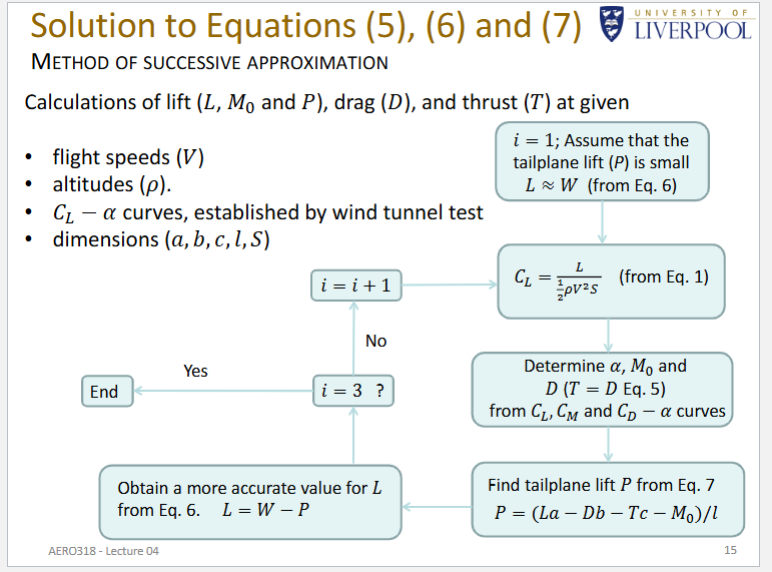
Explain the method of successive approximation and its assumptions.
The method of successive approximation (often called an iterative method) is a way of solving a problem by starting with an initial guess and repeatedly improving it until the solution converges.
Instead of solving an equation directly, you:
Assume an initial solution
Substitute it into the governing equations
Compute a better approximation
Repeat the process until the change becomes negligible
What is the airworthiness and what are the main certification authorities?
airworthiness = measure of an aircraft’s suitability for safe flight.
guarantee to the public that the aircraft is airworthy to some standard
ranges from structural strength to the provision of certain safeguards in the event of crash landing and include design requirements relating to aerodynamics, performance and electrical and hydraulic systems
Federal Aviation Administration (FAA) - European Aviation Safety Agency (EASA)
certification CS-25 (Certification specification for EASA for commercial aircraft , CS-23 (general aviation) FAR-25 (Federal Airworthiness Requirements for FAA)
What are bookcase and rational load cases? In which phases of the aircraft design cycle you
should use one or the other?
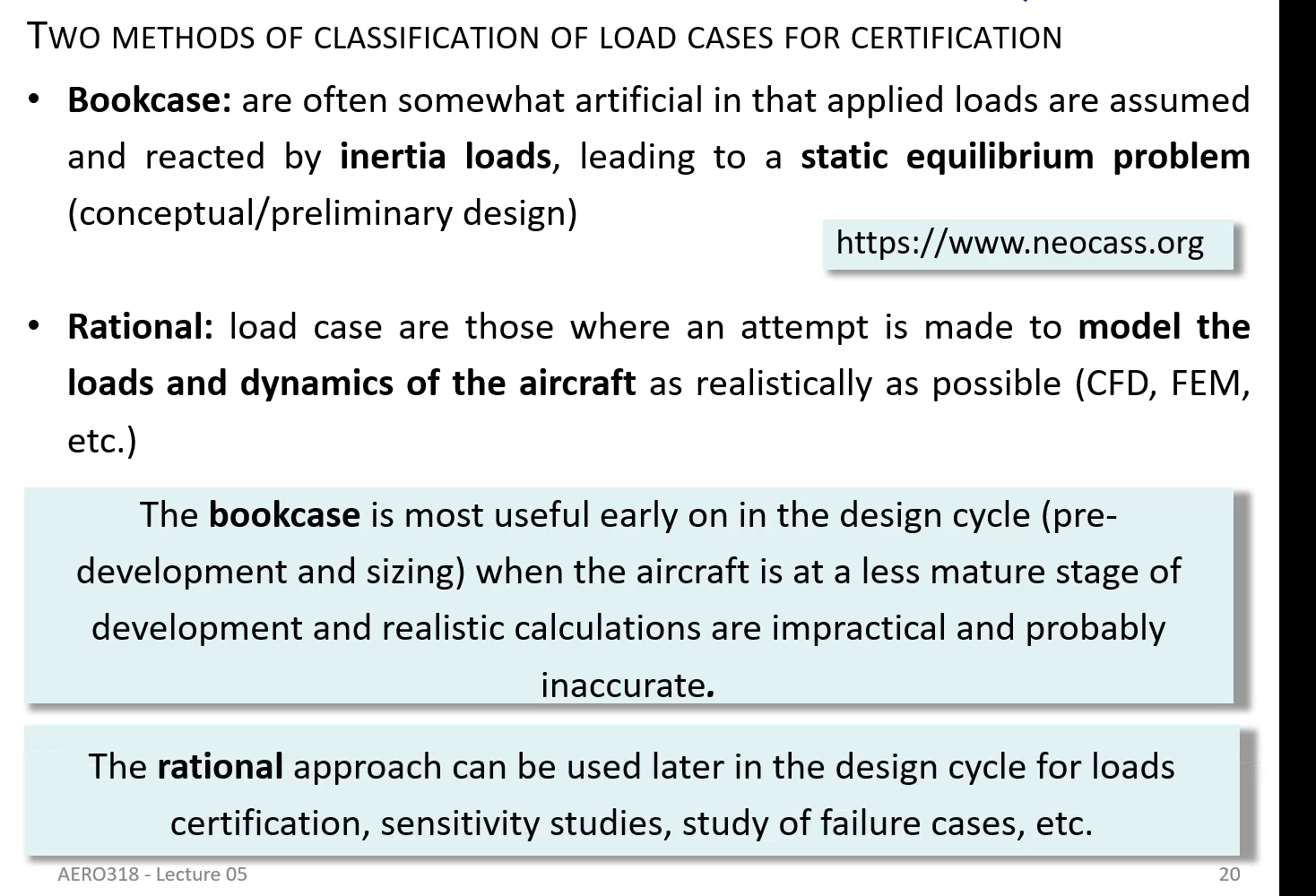
two cases of classification of load cases = bookcase and rational)
bookcase = often artificial in that applied loads are assumed and reacted by inertia loads, leading to a static equilibrium problem (conceptual/ preliminary design)
rational = load case are those where an attempt is made to model the loads and dynamics of the aircraft as realistically as possible (CFD, FEM, etc)
Define ultimate and limit loads.
limit loads = are the maximum loads to be expected in service and which the primary structure needs to support without “detrimental permanent deformation”
ultimate loads = loads that the structure must be able to support without failure. rupture for at least 3 seconds (limit load * 1.5)
(strength requirements are specified in terms of limit load and ultimate loads)
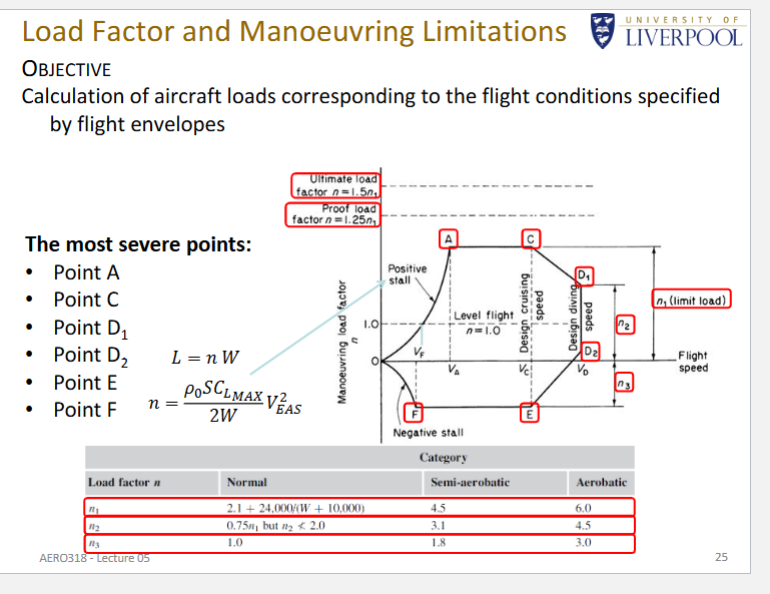
Draw a simplified V-n diagram and highlight the significant velocities.
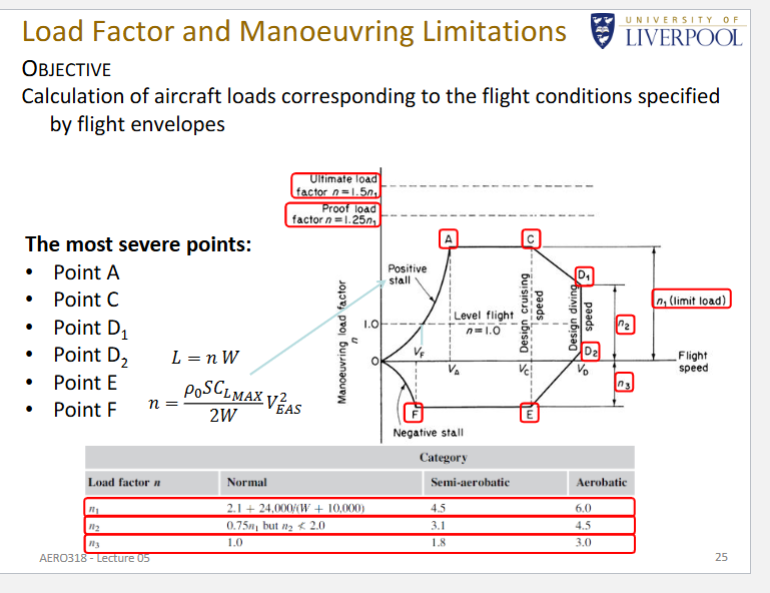
In the manoeuvre flight envelope V-n, why the segment that goes from zero to manoeuvring
speed follows a quadratic trend?
because the load factor depends on lift, and lift depends on the square of velocity.
shows that n is direclty proportional to V²
What are the gust loads and which methods are used to numerically describe them?
The movements of the air in turbulence are generally known
as gusts and produce changes in wing incidence, thereby
subjecting the aircraft to sudden or gradual increases or
decreases in lift from which normal accelerations result.
These may be critical for large, high-speed aircraft and may possibly cause
higher loads than control initiated maneuvers.
2 methods = discrete gust and power spectral
1. Discrete gust: determines the aircraft response and loads due to a
single or “discrete” gust of a given profile.
2. Power spectral: distribution of energy (gust velocity as a large
number of sinusoidal components with different amplitudes) over
the frequency range
Describe the sharp-edged gust.
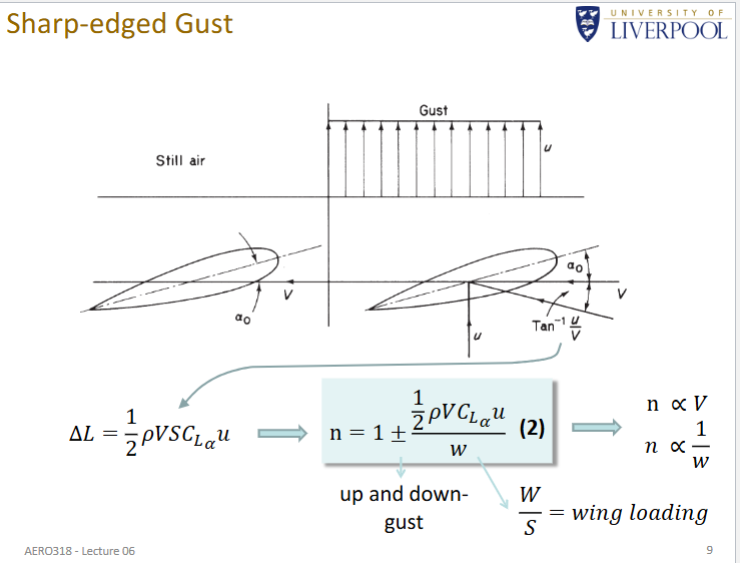
A sharp-edged gust is an idealised gust model used in aerostructures and aeroelasticity to represent a sudden, step change in vertical air velocity encountered by an aircraft.
shapr gust and graded gust the change in tailplane incidence is not
equal to the change in wing incidence,
due to downwash effects at the tail
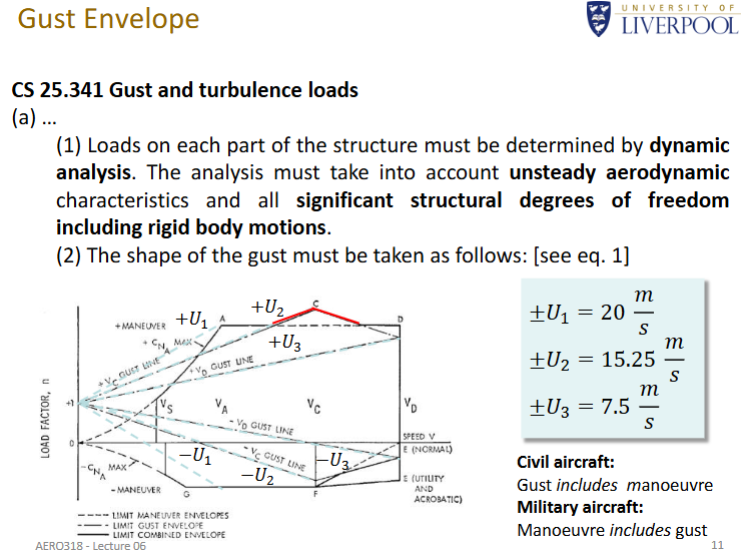
Draw a simplified gust envelope diagram and explain its main features.
linear variation of load factor with speed
systematic positive and negative gust lines
passes n=1 at low speed
dependent on gust intensity
influence of aircraft properties
critical high speeds
intercepts maneuver envelope
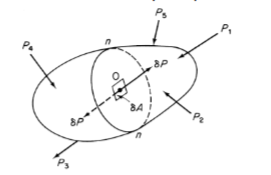
Derive direct and shear stresses from the arbitrary shaped 3-D body represented in Figure
Why the Stress is a tensor? Show it with a simple 2D example.
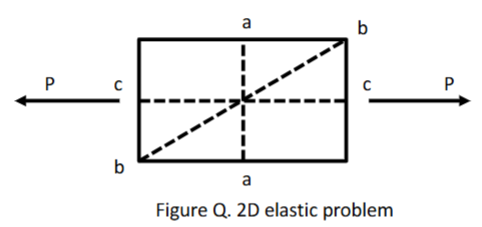
The 2-dimensional elastic body shown in Figure Q is subject to an axial load P. The body is cut
along three planes, ‘aa’, ‘bb’ and ‘cc’.
For each plane, write the direct and shear stresses and cleary identifiy which is maximum and
which is mimumum or if they are equal.
Derive Normal and Shear stresses on an Inclined Plane
What are the principal stresses? Describe them with a sentence, no need of equations
What are related to Direct and Shear strains?
What is the assumption behind the Compatibility Equations?
Are the directions of Principal Stresses and Strains coincident?
What are the equations necessary to solve a 3D elastic problem? And what are the unknowns?
In which set of equations are we introducing the properties of the specific material?
What are the loading conditions/constraints for plane stress & strain?
Define the stress functions.
Define the De St. Venant’s principle.
Define the De St. Venant’s Hypothesis
State the Extended De St. Venant’s Hypothesis