DK Ching VD - Sound
 Call Kai
 Learn
Learn Practice Test
 Spaced Repetition
 Match
Match Flashcards
 Knowt Play
1/56

There's no tags or description
Looks like no tags are added yet.
Name | Mastery | Learn | Test | Matching | Spaced | Call with Kai |
|---|
No analytics yet
Send a link to your students to track their progress
57 Terms
sound
the sensation stimulated in the organs of hearing by mechanical radiant energy transmitted as longitudinal pressure waves through the air or other medium
hertz
the SI unit of frequency
pitch
the predominant frequency of a sound as perceived by the human ear
Doppler effect
an apparent shift in frequency occurring when an acoustic source and listener are in motion relative to each other, the frequency increasing when the source and listener approach each other and decreasing when they move apart
decibel
a unit for expressing the relative pressure or intensity of sounds on a uniform scale from 0 for the least perceptible sound to about 130 for the average threshold of pain
auditory fatigue
physical or mental weariness caused by prolonged exposure to loud noises
sound power
the amount of acoustic energy radiated by a source per unit time, expressed in watts
sound pressure
the difference between the actual pressure at any point in the field of a sound wave and the static pressure at that point, expressed in pascals
sound intensity
the rate at which acoustic energy flows through a medium, expressed in watts per square meter
sound level meter
an electrical instrument for measuring sound pressure levels
acoustics
the branch of physics that deals with the production, control, transmission, reception, and effects of sound
room acoustics
the qualities or characteristics of a room, auditorium, or concert hall that determine the audibility of speech or fidelity of musical sounds in it
sounding board
a structure over or behind and above a speaker or orchestra to reflect the sound toward the audience
reflecting surface
a nonabsorptive surface from which incident sound is reflected, used esp. to redirect sound in a space
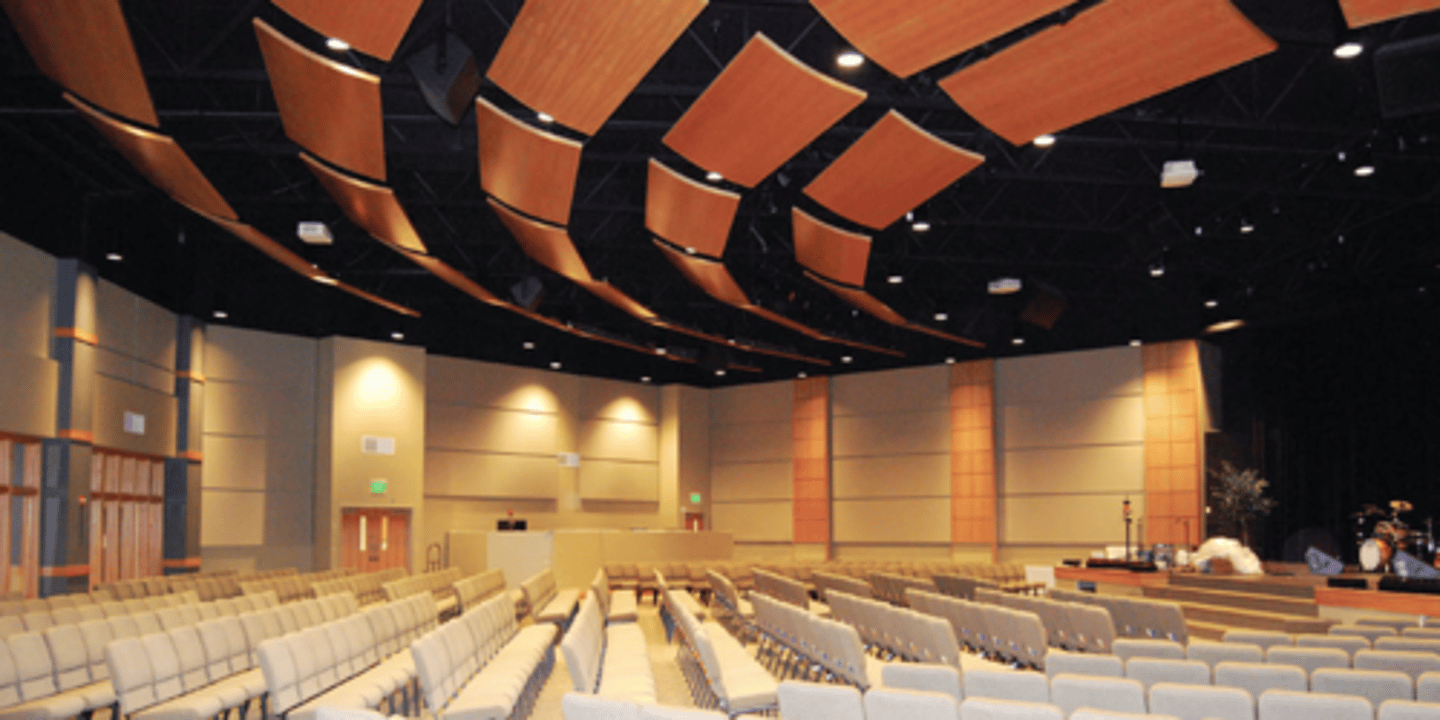
acoustical cloud
one of a number of acoustic panels installed near the ceiling of a concert hall to reflect sound for improving the acoustic quality of music
acoustical analysis
a detailed study of the use of a building, the location and orientation of its spaces, possible source of noise, and the desirable acoustical environment in each usable area
acoustical design
the planning, shaping, finishing, and furnishing of an enclosed space to establish the acoustical environment necessary for distinct hearing
acoustical treatment
the application of absorbent or reflecting materials to the walls, ceilings, and floor of an enclosed space to alter or improve its acoustic properties
diffracted sound
airborne sound waves bent by diffraction around an obstacle in their path
reflected sound
the return of unabsorbed airborne sound after striking a surface, at an angle equal to the angle of incidence
airborne sound
sound radiated directly into and transmitted through the air
live
highly reverberant or resonant, as is an auditorium or concert hall
dead
without resonance, as is a room free from echoes and reverberation
soundproof
impervious to audible sound
resonance
the intensification and prolongation of sound produced by sympathetic vibration
sympathetic vibration
a vibration induced in one body by the vibrations of exactly the same period in a neighboring body
direct sound
airborne sound traveling directly from a source to the listener
attenuation
a decrease in energy or pressure per unit area of a sound wave, occurring as the distance from the source increases as a result of absorption, scattering, or spreading in three dimensions
reverberation
the persistence of a sound within an enclosed space, caused by multiple reflections of the sound after its source has stopped
decay rate
the rate of decrease of sound pressure level after its source has stopped, usually expressed in decibels per second
reverberation time
the time in seconds required for a sound made in an enclosed space to diminish by 60 decibels
echo
the repetition of a sound produced by the reflection of sound waves from an obstructing surface, loud enough and received late enough to be perceived as distinct from the source
flutter
a rapid succession of echoes caused by the reflection of sound waves back and forth between two parallel surfaces, with sufficient time between each reflection to cause the listener to be aware of separate, discrete signals
focusing
the convergence of sound waves reflected from a concave surface
noise
any sound that is unwanted, annoying, or discordant, or that interferes with one's hearing of something
noise reduction
the perceived difference in sound pressure levels between two enclosed spaces, due to the sound-isolating qualities of the separating barrier as well as the absorption present in the receiving room; expressed in decibels
background noise
the sound normally present in an environment, usually a composite of sounds from both exterior and interior sources, none of which are distinctly identifiable by the listener; also called "ambient sound"
white noise
an unvarying, unobtrusive sound having the same intensity for all frequencies of a given band, used to mask or obliterate unwanted sound
interference
the phenomenon in which two or more light or sound waves of the same frequency combine to reinforce or cancel each other
absorption
the interception and conversion of sound energy into heat or other form of energy by the structure of a material, measured in sabins or absorption units
sabin
a unit of sound absorption, equal to one sq.ft. (0.09 sqm) of a perfectly absorptive surface
metric sabin
a unit of sound absorption, equal to 1 square meter of perfectly absorptive surface; also called "absorption unit"
sound isolation
the use of building materials and construction assemblies designed to reduce the transmission of airborne and structure-borne sound from one room to another or from the exterior to the interior of a building
airborne sound transmission
sound transmitted when a surface is set into vibration by the alternating air pressures of incident sound waves
structure-borne sound transmission
sound transmitted through the solid media of a building's structure as a result of direct physical contact or impact, as by vibrating equipment or footsteps
transmission loss
a measure of the performance of a building material or construction assembly in preventing the transmission of airborne sound
flanking path
a path for the transmission of sound other than through a floor, wall, or ceiling assembly, such as along such interconnecting structures as ductwork or piping
plenum barrier
an acoustic barrier erected in a plenum over a partition to reduce sound transmission between adjoining rooms
acoustic mass
resistance to the transmission of sound caused by the inertia and elasticity of the transmitting medium; the heavier and more dense a body, the greater its resistance to sound transmission
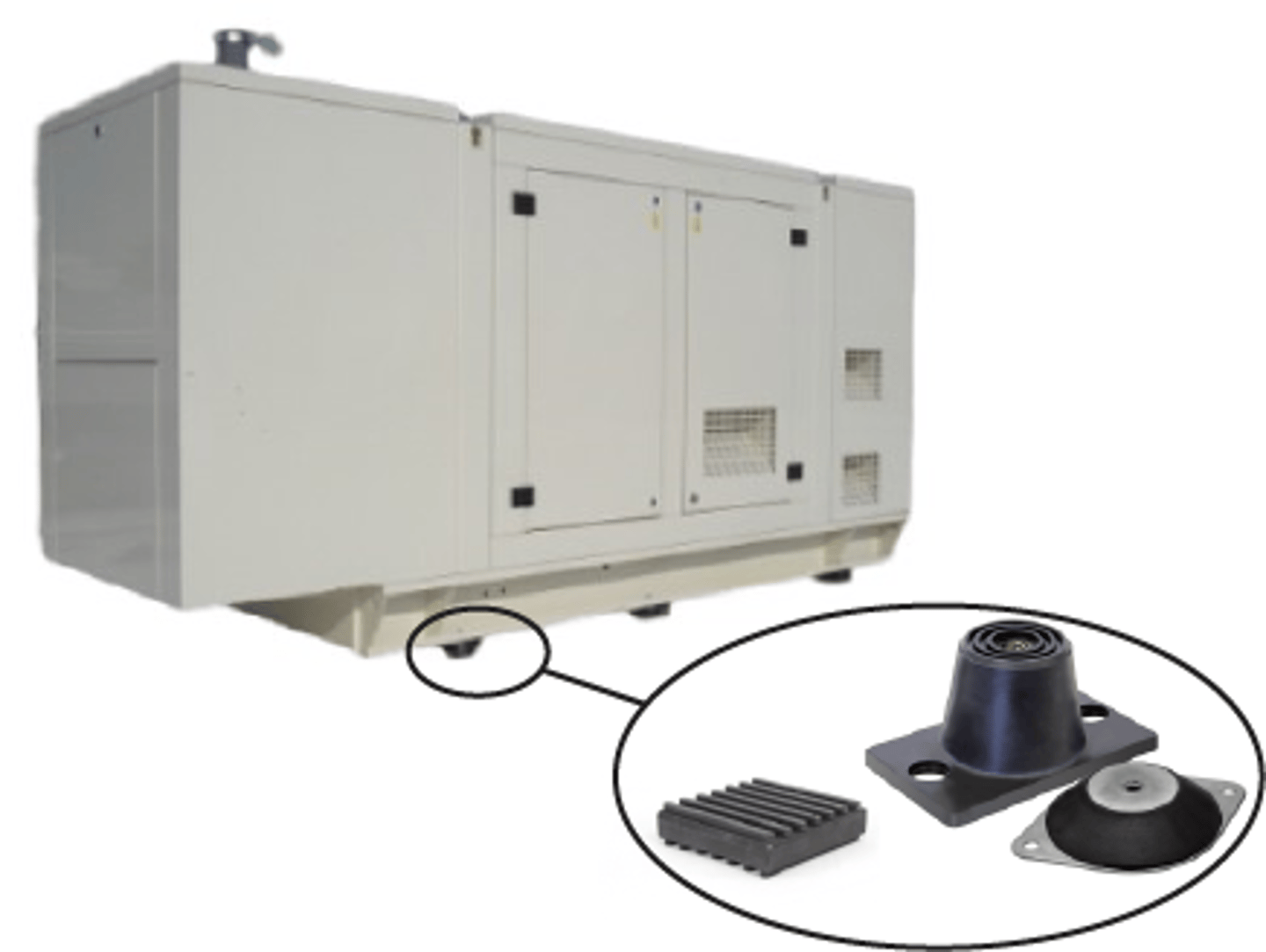
vibration isolator
a resilient base for mechanical equipment, installed to reduce the transmission of vibration and noise to the supporting structure; also called "isolation mount"
inertia block
a heavy concrete base for vibrating mechanical equipment, used in conjunction with vibration isolators to increase the mass of the equipment and decrease the potential for vibratory movement
impact noise
structure-borne sound generated by physical impact, as by footsteps or the moving of furniture
discontinuous construction
any of several construction methods, such as the use of staggered studs or resilient mountings, for breaking the continuity of a path through which structure-borne sound may be transmitted from one space to another
staggered-stud partition
a partition for reducing sound transmission between rooms, framed with two separate rows of studs arranged in zigzag fashion and supporting opposite faces of the partition, sometimes with a fiberglass blanket between
resilient mounting
a system of flexible attachments or supports that permits room surfaces to vibrate normally without transmitting the vibratory motions and associated noise to the supporting structure
resilient channel
a metal channel for the resilient mounting of wallboard to studs or joists, used in sound-isolating construction to reduce the transmission of vibrations and noise
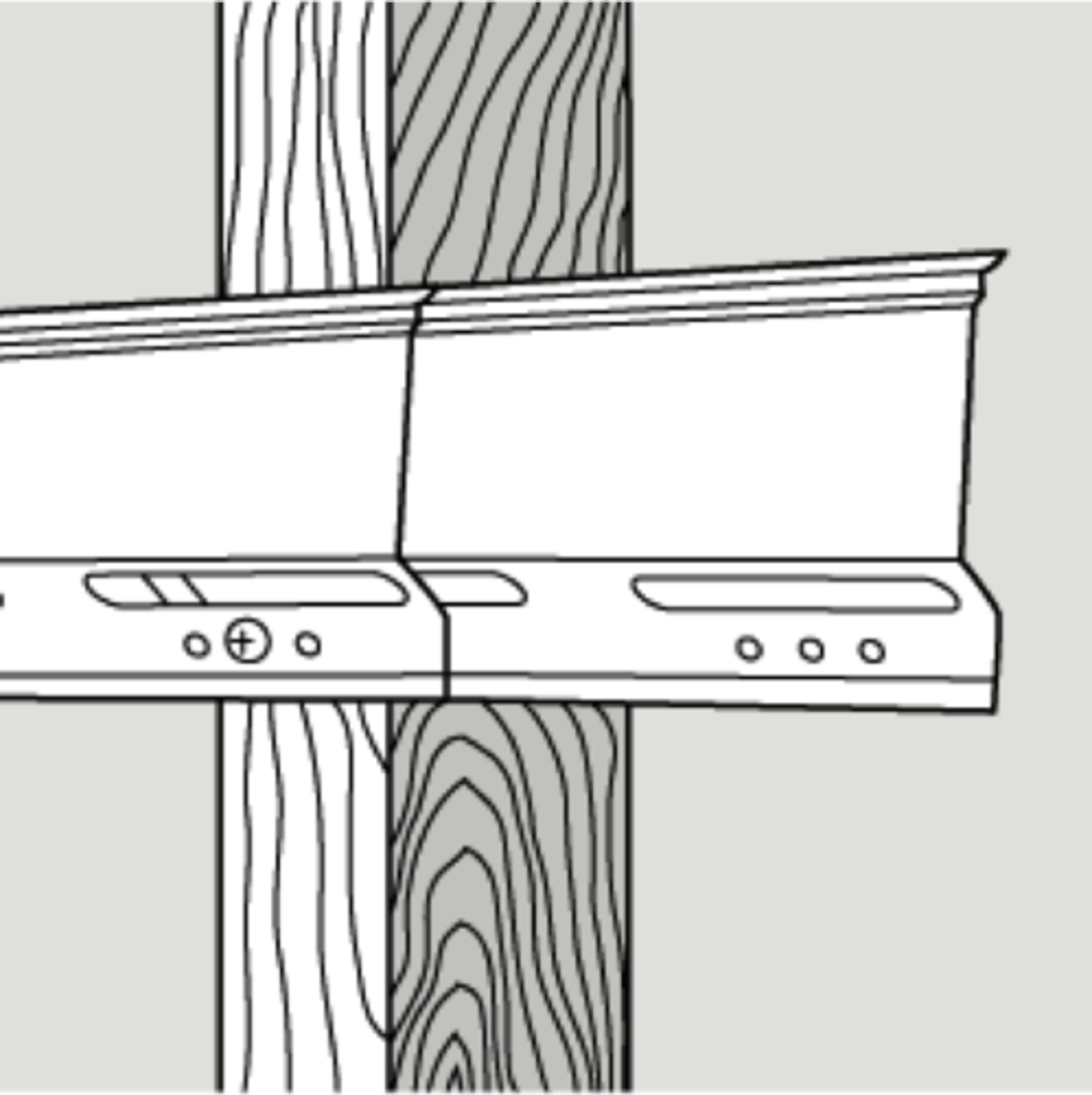
resilient clip
a flexible metal device for the resilient mounting of wallboard or metal lath to studs or joists, used on sound-isolating construction to reduce the transmission of vibrations and noise