Innate immunity
 Call Kai
 Learn
Learn Practice Test
 Spaced Repetition
 Match
Match Flashcards
 Knowt Play
1/42

There's no tags or description
Looks like no tags are added yet.
Name | Mastery | Learn | Test | Matching | Spaced | Call with Kai |
|---|
No analytics yet
Send a link to your students to track their progress
43 Terms
What does the immune systems do?
Recognises there’s a threat - self vs non-self
Deals with that threat - barrier, innate and adaptive systems coordinate
Resolves the response to the threat
Remembers the threat
What are the parts of the immune system?
Barriers
Protect you so the immune system doesn’t have to get into action
Humoral effectors
Anything soluble (molecules, not cells e.g. antibody, complement)
Innate cells such as:
Phagocytes
Killer cells
Granulocytes - cells that pre made chemicals and enzymes to help the response
Adaptive cells
Cells that respond to specific antigens (B & T cells)
Can change their specificity to adapt to a new challenge (B cells)
Cells that co-ordinate the response (helper T cells), and cells that kill (cytotoxic T cells)
Pathogens that infect individuals
Viruses
Bacteria
Fungi
Protozoa
Skin
Largest organ in the body
Thick and dead outer layer
Dry surface
Impermeable (keratin)
Anti microbial secretions
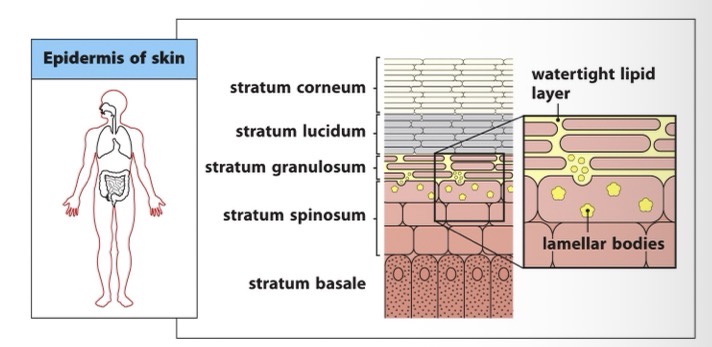
Thing that breach the skin barrier
Frequently acquired
Burns, wounds, bites
Medical
Surgery, needles, cannulas
Inherited issues
Eczema
Internal barriers to infection
Mucosal surfaces e.g. lungs & GI tract
Often only 1 cell thick to allow passage of molecules
Respiratory tract
Conjunctiva
Urinogenital tract
Anus
Alimentary tract
Lungs
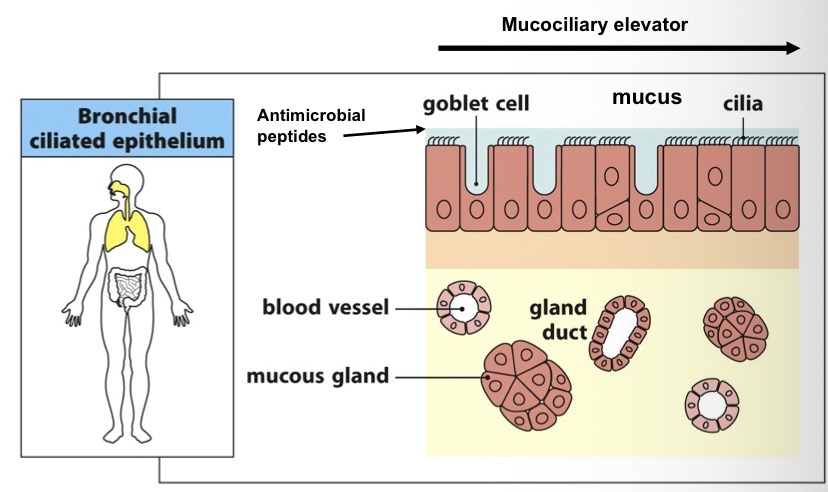
Changes that affect the lungs
Alteration to mucosal flow
Inherited
Cystic fibrosis, primary ciliary dyskinesia (PCD)
Acquired
E.g. smoking
GI tract
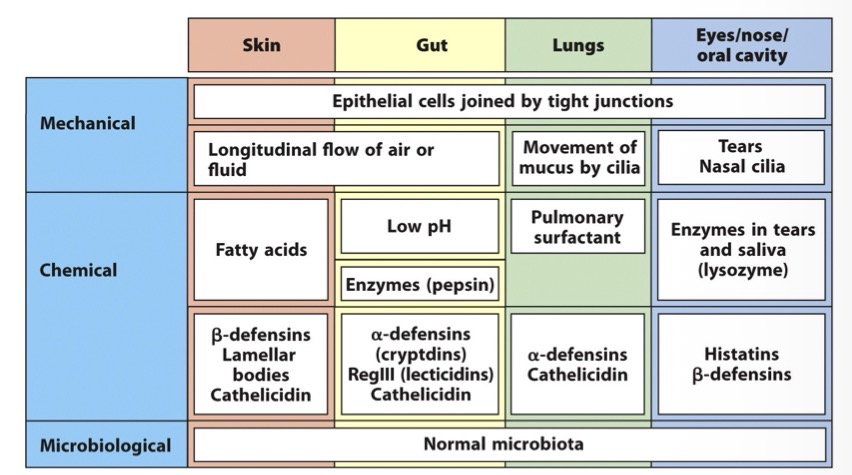
Chemical barriers e.g. stomach acid, bile salts, high pH in the duodenum and jejunum
Physical e.g. mucous, peristalsis
Biological barrier
Commensal bacteria - they are most often disrupted through antibiotics e.g. broad-spectrum antibiotics
Summary of the main physical, chemical & biological barriers of the body
Overview of innate and adaptive immune system
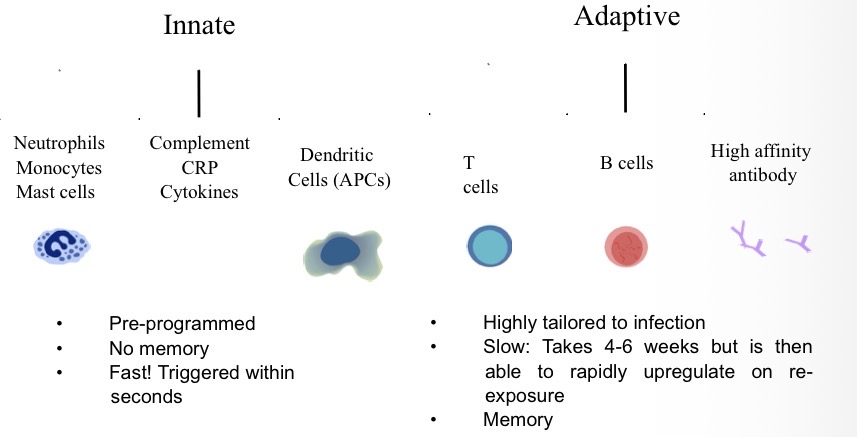
What is the innate immune system compromised of?
Humoral components: plasma proteins, complement, acute phase proteins
Cellular components
Humoral immune system: complement
Present in high conc in plasma & tissue fluids
Produced continuously by the liver
What is the complement system?
Enzyme cascade
Rapid amplification & generation of effector molecules
9 soluble (plasma) pro-enzymes C1-C9
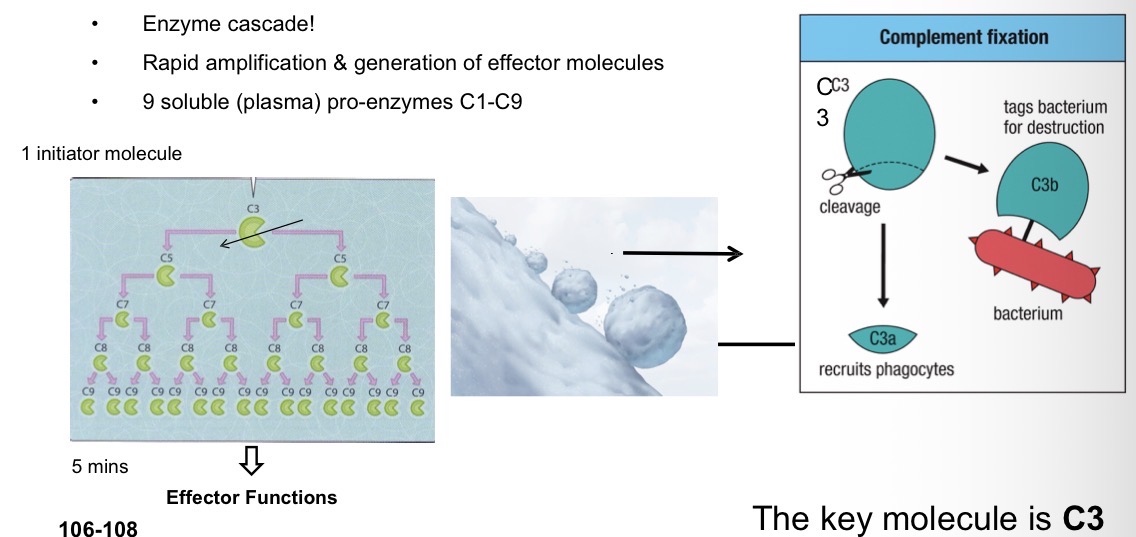
What does complement do?
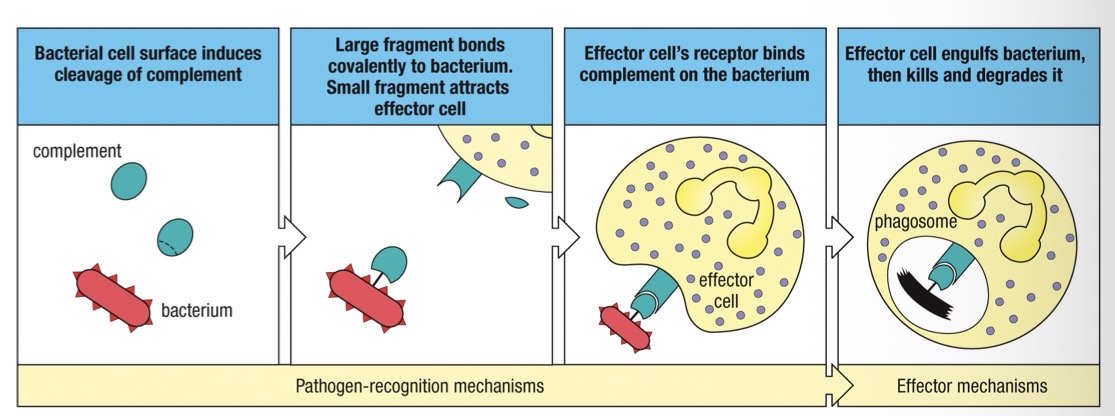
Opsonisation (targeting and improved efficiency of phagocytosis) this is through C3b
Activates cells - inflammation
Many cells have complement receptors for C3a e.g. improves or initiates responses
Mast cell degranulation
Macrophage phagocytosis
Attracts immune cells
(Activates endothelium)
Provides a concentration gradient to follow
Lysis of pathogens - membrane attack complex
Acute phase proteins
Present in low conc in plasma & tissue fluids
Production greatly increased in response to infection
Mannose binding lectin (MBL)
C-Reactive protein (CRP)
How is the complement activated?
Alternative pathway
Lectin pathway
Classical pathway
Haematopoeisis - where immune cells come from
All immune cells derived from bone marrow pre-cursors
Differentiation depends on growth factors
Location of innate immune cells - 2 categories
Sentinel immune cells are in all our body surfaces
Provide an immediate response
Activate our adaptive immune system
Circulating immune cells provide:
Quick ‘back up’
Specialised roles & functions
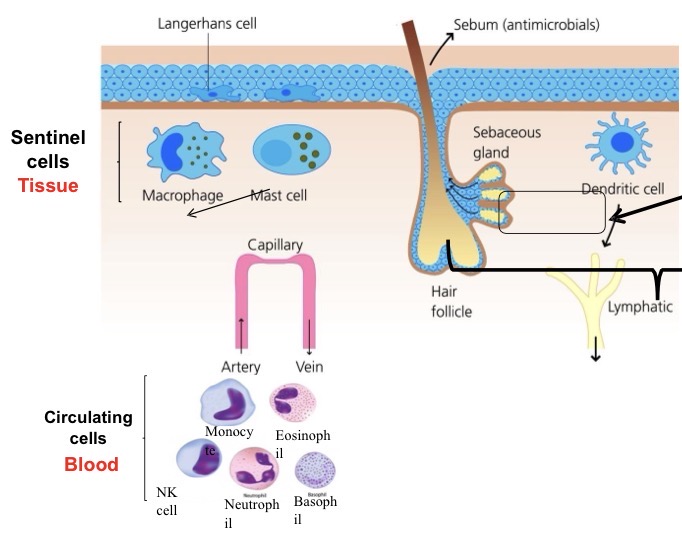
Cells of the innate immune system - different functions
All cells recognise threat - PRRs, DRRs, complement receptors
Some engulf and destroy threat - phagocytes, macrophages, neutrophils
Some use pre-made reagents - granulocytes, neutrophils, mast cells, basophils, eosinophils
Some kill infected cells - NK cells
Many alert and interact with T cells - APCs through MHC, dendritic cells, macrophages/monocytes
3 types of sentinel cells
Mast cells
Macrophages
Dendritic cells
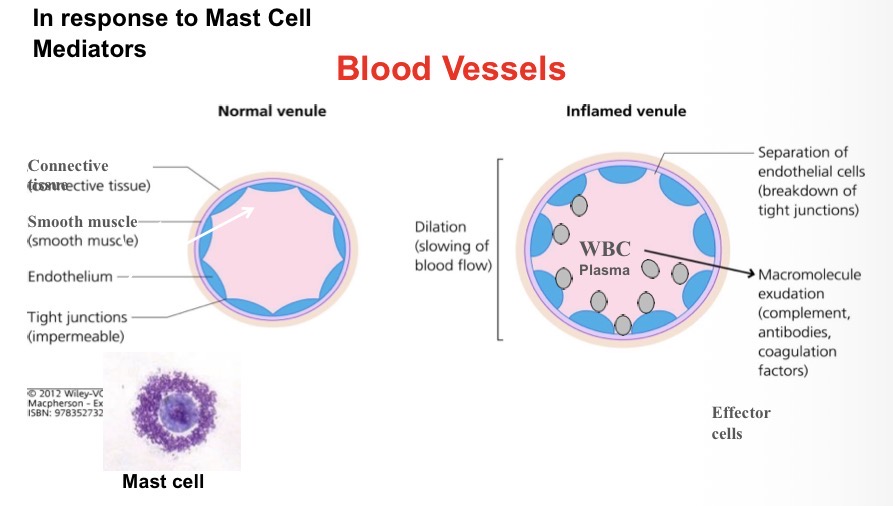
Mast cell function
Produce inflammatory mediators
Contain many granules packed full of histamine and other mediators
Vasodilation and local cell activation
Parasite responses
Immediate release: histamine
Late mediators e.g. prostaglandins and leukotrienes
Vascular changes in acute inflammation
Macrophages - function and how they are activated
Tissue resident phagocytes - kill pathogens
Monocyte differentiate into macrophages when they enter tissues
Activated by:
Complement e.g. C3a
Cytokines
PAMPs
Cytokines and chemokines
Small protein molecules made by cells that change the behaviour of other cells
Act though specific cytokines receptors
Can be pro-inflammatory or anti-inflammatory
Help ‘direct’ an immune response
Chemokines
Type of cytokine
Small chemoattractant proteins that stimulate the migration and activation of other cells especially phagocytes
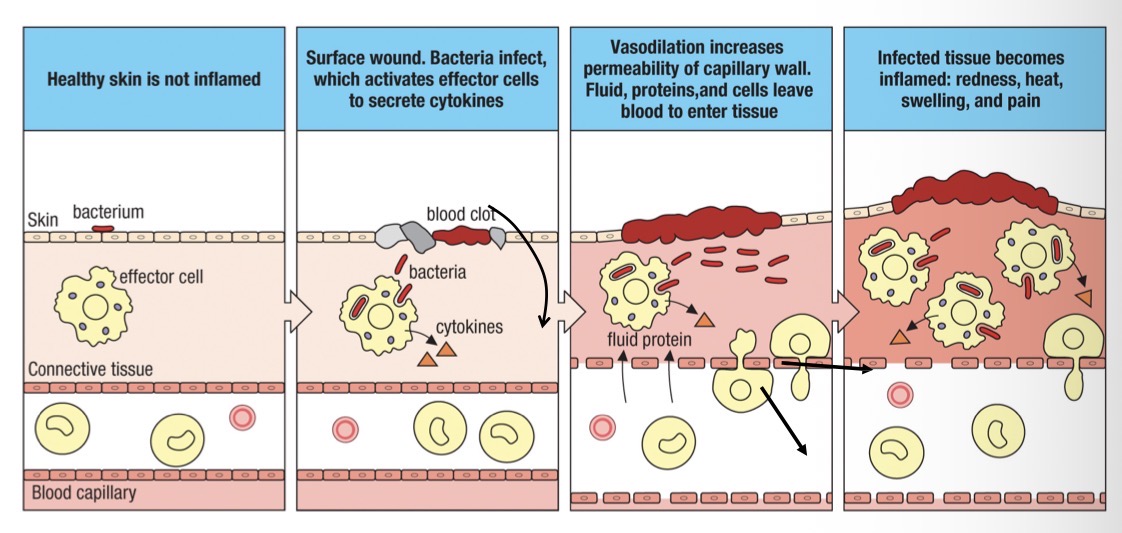
How are the innate and adaptive response joined?
Dendritic cells
Constantly sample the environment
In infection - activated by pathogens (though PAMPs)
Take in antigen, process it and migrate to the nearest lymph node to activate T cells
What type of cells do we need to recruit from the blood?
Neutrophils - quickly infiltrate infected tissue
Highly phagocytise, essential for host protection and innate immunity
Neutrophil netosis - a form of activated eutrophic cell death
Traps and kills microbes
Monocytes - circulate in the blood, enter tissue, mature into macrophages
For a viral response: natural killer (NK) cells - what do they do?
Rapid responses to infected cells and respond to tumour formation
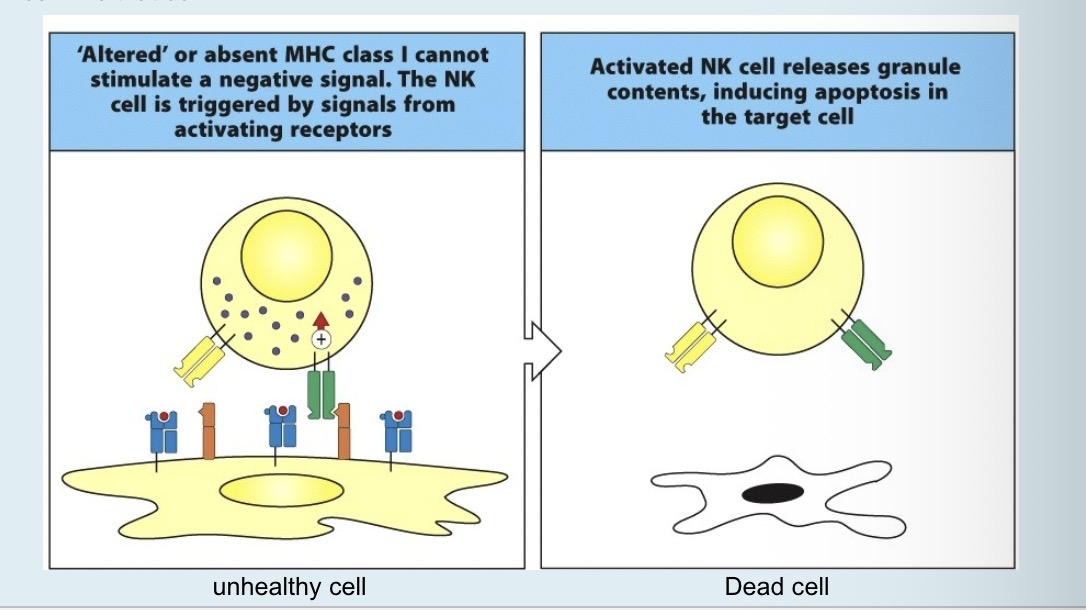
Detect absence of MHC molecules on infected cell surfaces that trigger granule release which induces target cell lysis or apoptosis
For parasite responses
Eosinophils - kill antibody created parasites, release toxic granules
Basophils - immune responses to parasite, similar in function to mast cells
Types of circulating cells
NK cell
Monocyte
Eosinophil
Basophils
Neutrophil
Pathogens recognition
Pattern Recognition Receptors (PRRs) That detect key microbial components
Pathogen-associated molecular patterns (PAMPs)
Greatest expression of PRRs on sentinel immune cells:
Macrophages
Dendritic cells
Mast cells
PRRs are located:
On the cell surfaces
In the cytoplasm
In phagosomes
But all signal to change gene expression
Common pathogen PAMPs
Pathogens have to survive PAMPs
They can be:
Surface structures
Nucleic acids
Metabolic products
Examples:
Viral and bacterial genomes
Fungal sugars
Bacterial cell wall sugars
Flagellin proteins
Surface expressed pattern recognition receptors (PRR) and where they can be found
Example of a surface expressed PRR
Toll like receptor 4 (TLR4)
Toll like receptor 5 (TLR5)
They can be found in endosomes such as phagosomes - endosomal PRR band to internal molecules from pathogens
PRR binding outcomes
Cytokines - inflammation, activate cells
Chemokines - recruit cells
Dendritic cell activation - adaptive response
Anti-bacterial peptides
Interferons - anti viral response
Toll-like receptors (TLRs) - what they are and function
A family of pattern- recognition receptors
Each TLR binds specific pathogen-associated molecular patterns (PAMPs) of viruses, bacteria, fungi and parasites
The activation of TLR and its associated signalling pathway leads to a broad range of inflammatory responses mediated mainly by increased secretion of cytokines and chemokines
PRRs in cell cytosine detects exposed viral genome
All cells have cytoplasmic PRRs
After activation these PRRs trigger transcription and interferon (IFN) production
What do interferons do?
Signals to neighbouring cells to shut down protein production and degrade RNA
Makes neighbouring cells more likely to undergo apoptosis
Attracts immune cells
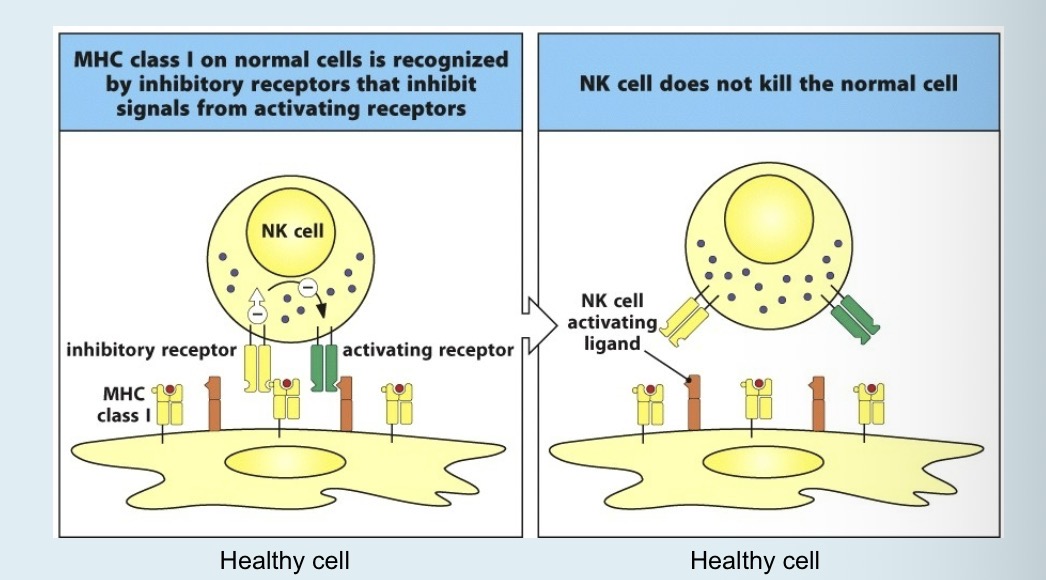
How do NK cells recognise healthy cells?
Normal levels of expression of MHC Class 1 molecules inhibits NK cells from killing healthy cells
How do NK cells recognise unhealthy cells?
Infected or malignant cels don’t express MHC Class 1, only the activators signals is left so the NK cell kills that cell
NK cells can kill virus infected cells that have antibody bound to them
Viruses that have membranes will put their proteins in cell membranes leading to binding so NK cells will kill
Key features of innate immunity
Always present - rapid response
A set repertoire of PRR responses to common pathogen molecules (PAMPs)
No memory response generated
Probably the major pathway by which invading organisms are cleared
How does the adaptive immune system are the innate better?
High affinity antibody:
Faster phagocytosis
Viral and toxin neutralisation
NK cells ADCC improved
T cell helps increase:
Cytokines production
Killing ability of phagocytes
T cell killing:
Reduces viral load