Biology
 Call Kai
 Learn
Learn Practice Test
 Spaced Repetition
 Match
Match Flashcards
 Knowt Play
1/78

Earn XP
Name | Mastery | Learn | Test | Matching | Spaced | Call with Kai | Chat |
|---|
No analytics yet
Send a link to your students to track their progress
79 Terms
Define Movement (MRS H GREN)
ability of an organism or part of n organism to change its position
define respiration (MRS H GREN)
a chemical reaction that occurs in cells and releases energy from glucose
Define sensitivity (MRS H GREN)
ability to detect and respond to changes in the surroundings
Define Homeostasis
maintenance of constant internal environment
Define growth (MRS H GREN)
permanent increase in dry mass
define reproduction
the process of creating new organisms
define excretion
the removal of metabolic waste
define nutrition
the means of obtaining food
function of the nucleus
controls the cell and contains the cell’s DNA
function of the cell membrane
controls what goes into and out of cells
function of cytoplasm
the place where chemical reactions occur
function of ribosomes
site of protein synthesis
what are the 3 plant cell structures not found in animal cells
cell wall
chloroplast
vacuole
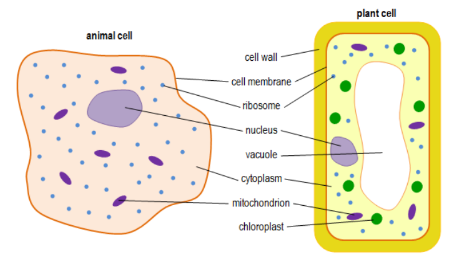
function of cell wall + what its made of
Helps to maintain cell shape and structure (made of cellulose)
function of chloroplast
site of photosynthesis
function of vacuole
contains cell sap and provides support for the cell
how do you convert mm to um
multiply by 1000
image size = ??
actual size x magnification
define organelle
small structure within a cell that caries out a particular function
define cell
the basic building block of life
define tissue
a group of similar specialised cells working together to perform a particular function
define organ
a group of tissues working together to perform a particular function
define organ system
a group of organs working together to perform a particular function
what 2 groups does carbohydrates split into
glucose
starch/glycogen
what is the diagram of the molecules of starch/glycogen
chains of glucose (hexagons)
what is the molecule diagram for glucose
a hexagon
what elements are in glucose (carbohydrates)
Carbon, Hydrogen, Oxygen
what is the function of carbohydrates (glucose/starch/glycogen)
energy
what elements are in starch/glycogen (carbohydrates)
carbon, hydrogen, oxygen
what does the molecule diagram for proteins look like
chain of ovals
what molecule is protein made up of
amino acids
what elements make up protein (amino acids)
carbon, hydrogen, oxygen, nitrogen, sulfur
function of protein
growth and repair
what molecules are lipids made up of
glycerol and 3 fatty acids
what elements are lipids made up of
carbon, hydrogen, oxygen
function of lipids
insulation and energy storage
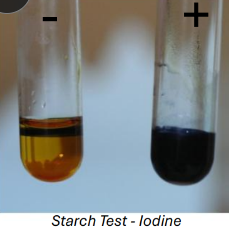
chemical test for starch
test with iodine, no heat required
colour change - brown/orange to blue/black
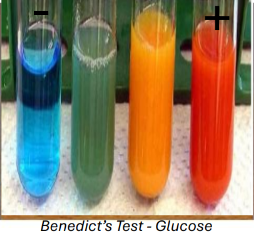
chemical test for glucose
test with benedict’s, heat required
colour change - blue to green/yellow/orange/brick red depends on levels
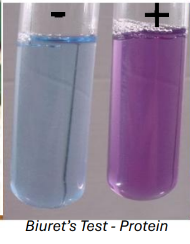
chemical test for protein
test with biurets, no heat required
colour change - blue to lilac
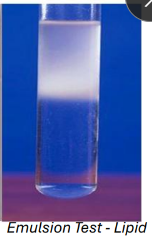
chemical test for lipids
test with ethanol and distilled water, no heat needed
colour change - colourless then forms white emulsion
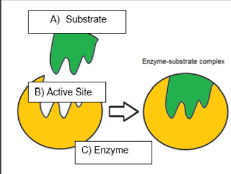
What is an enzyme? (MA)
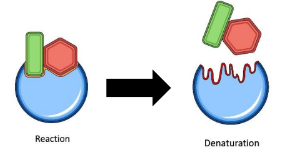
An enzyme is a biological catalyst that speeds up the rate of reaction without being used up. Enzymes have an active site with a specific shape that fits with a complementary substate to form an enzyme-substrate complex.
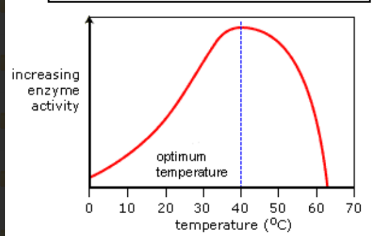
Temperature effect on enzyme activity (0-40*C) (4 points)
enzymes and substrates gain kinetic energy
more frequent collisions between enzyme and substrate
more enzyme-substrate complexes formed
enzyme activity increases up until the optimum temperature
temperature effect on enzyme activity (40-60*C) (4 points)
above optimum temperature the enzyme starts to denature
this causes the active site to change shape the substrate no longer fits and enzyme-substrate complexes cannot be formed
enzyme activity decreases
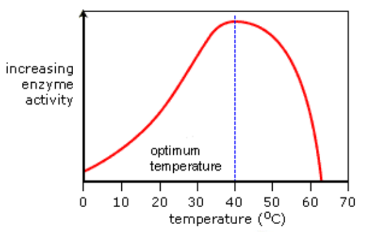
what is 40*C to enzymes and what happens when the temperature rises over it
it is the optimum temperature, enzymes denature over 40*C
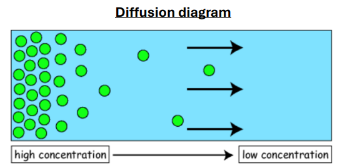
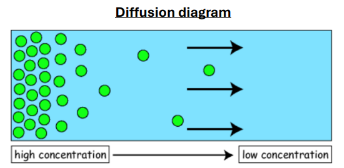
define diffusion
the net movement of particles from an area of high concentration to an area of low concentration
define osmosis
the movement of water from an area of high water potential to an area of low water potential through a partially permeable membrane
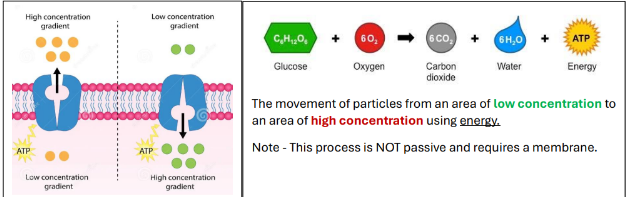
define active transport
the movement of particles from an area of low concentration to an area of high concentration using energy
diffusion is _______ - no ________ is required
passive, energy
what are the four factors affecting the rate of diffusion
surface area to volume ratio (SA:vol)
diffusion distance
temperature
concentration gradient
how does SA:vol ratio affect the rate of diffusion
the larger the cube, the smaller the SA:vol ratio. Diffusion is slower in big organisms
how does diffusion distance affect the rate of diffusion
the larger the cube, the bigger the distance for particles to travel. Diffusion is slower in big organisms.
how does temperature affect the rate of diffusion
the colder the temperature, the slower the particles move. Diffusion is slower in cold temperatures.
How does concentration gradient affect the rate of diffusion
the smaller the difference in concentration, the slower the particles travel. Diffusion is slower when a shallow concentration gradient is present.
how to find volume
base x height x length
how to find surface area
area of one face x number of faces
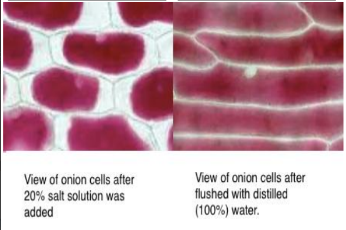
Explain what has happened in the diagram (MA) (5 points)
there is a higher water potential inside/outside of the cell
water moves from the area of high water potential inside/outside of the cell, to an area of low water potential inside/outside the cell
across a partially permeable membrane
the cell gains/loses mass
the movement of water is called osmosis
is active transport passive?
no - it requires a membrane
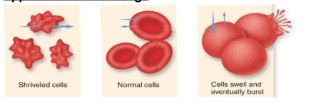
Why do animal cells burst when placed in solutions with a high water potential, but plant cells do not?
Animal cells have no cell walls, plant cells do.
When placed in solutions with a high water potential, the water moves from the area of higher water potential to to the area with a lower water potential through the partially permeable membrane.
The cell expands as water enters and the cell becomes turgid
(water is moving out of cell the water leaves and cell becomes flaccid)
once too much water has entered, the cell bursts
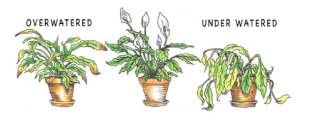
Waterlogged soils do not contain much oxygen. Why then does the overwatered plant look unhealthy?
Active transport requires energy in the form of ATP to be able to move particles from low to high concentration.
The ATP comes from aerobic respiration that takes place in the mitochondria of plant root cells.
Oxygen is required for aerobic respiration to occur.
Define respiration
A chemical reaction that occurs in cells and releases energy from glucose.
Define alveoli
the air sacs in the lungs where gases diffuse between the air in the lungs and the blood in the capillaries.
Aerobic respiration word equation
Glucose + oxygen → carbon dioxide + water
aerobic respiration chemical equation (balanced)
C6 H12 O6 + 6 O2 → 6 CO2 + 6 H20
anaerobic respiration equation (in animals)
glucose → lactic acid
anaerobic respiration (in plants and fungi)
glucose → ethanol + carbon dioxide
Respiration does not produce energy but what does it do with energy?
Releases it in the form of ATP
what can energy in the form of ATP be used for (4 points)
active transport
muscle contraction
keeping warm
building large molecules from smaller ones (e.g. making proteins from amino acids)
what are the 4 key differences between Aerobic and anaerobic respiration
Anaerobic respiration requires oxygen, anaerobic does not
aerobic respiration releases more energy than anaerobic respiration
aerobic respiration occurs in the mitochondria whilst anaerobic respiration occurs in the cytoplasm
aerobic produces carbon dioxide and water whilst anaerobic respiration produces lactic acid (in animals) or ethanol and carbon dioxide (in plants/fungi)