World Biome
 Call Kai
 Learn
Learn Practice Test
 Spaced Repetition
 Match
Match Flashcards
 Knowt Play
1/43

There's no tags or description
Looks like no tags are added yet.
Name | Mastery | Learn | Test | Matching | Spaced | Call with Kai |
|---|
No analytics yet
Send a link to your students to track their progress
44 Terms
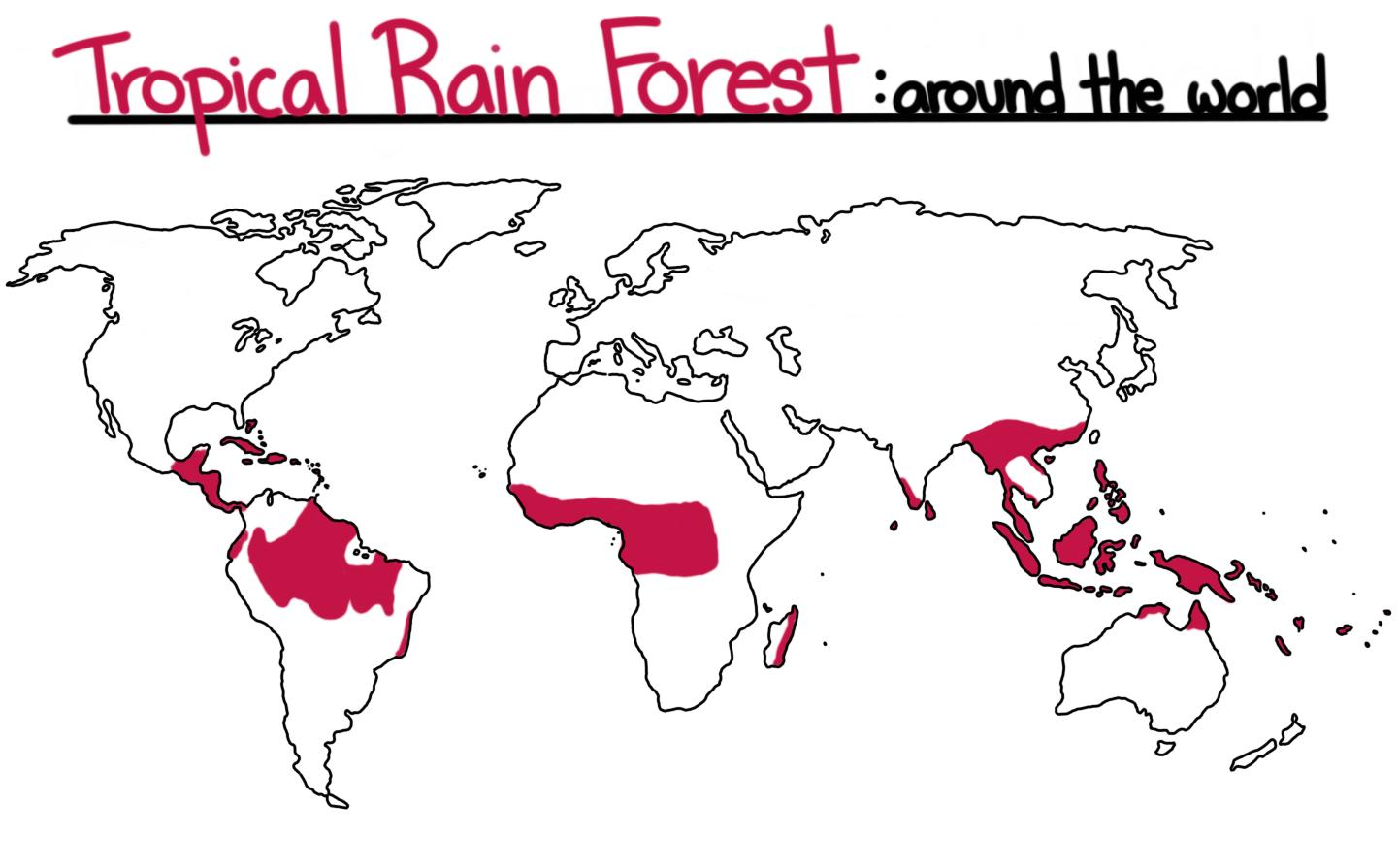
Tropical forest biome
Mostly located between 10oN and 10oS of the Equator
Latin America (56%) e.g Amazon and Orinco Basin
Western Africa ( 18%) e.g Congo Basin
S.E Asias islands and mainland (25%)
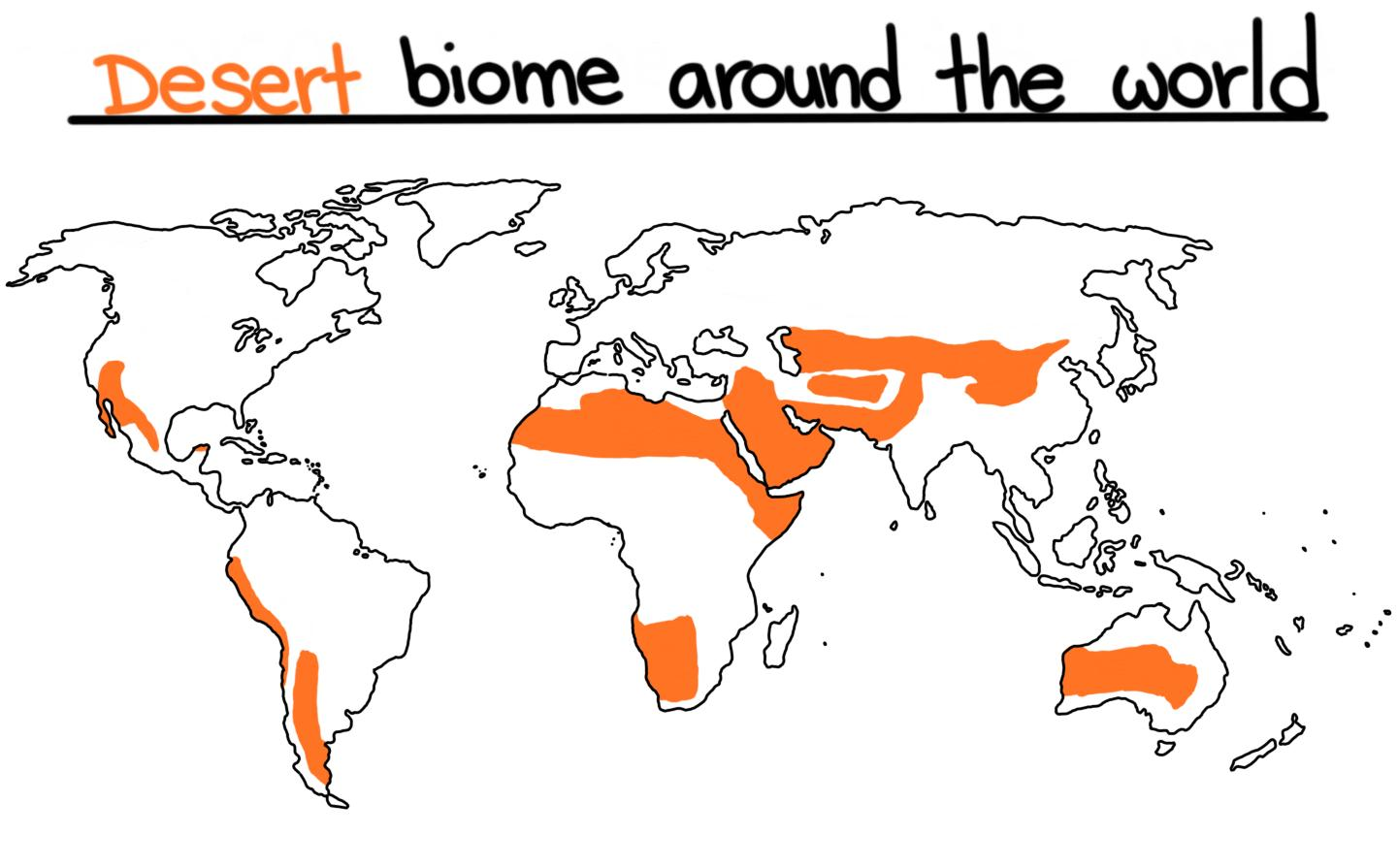
Hot desserts
Located 20°- 30°N and S of the Equator
Cover 12% of the land surface
Confined to western side of continents
Northern Hemisphere
North Africa- Sahara Desert - largest hot desert
East of the Sahara - desert runs through Saudi Arabia, Iran and Pakistan
North America - Mexican, Mojave and Colorado Deserts
Southern Hemisphere
S America - Atacama Desert
S Africa - Namib and Kalahari Desert
Australia - Great Australian Desert
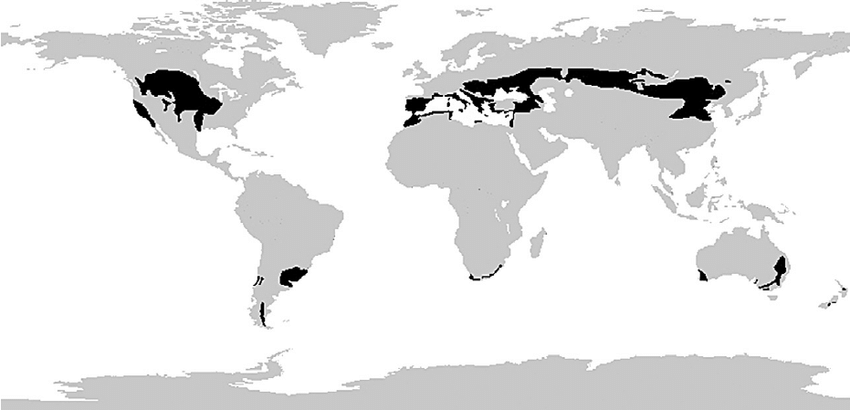
Temperate grassland biome
Covers 7% of the land surface
mid-latitude Northern Hemisphere and Southern Hemisphere.
Northern Hemisphere
30°N- 50°N centre of continents
Prairie Grasslands - USA and Canada
Steppe Grassland - Russia, Ukraine, Kazakhstan, Mongolia and China
Southern Hemisphere
30°S-40°S on the eastern side of the continents
Argentina, SE Australia and South Africa
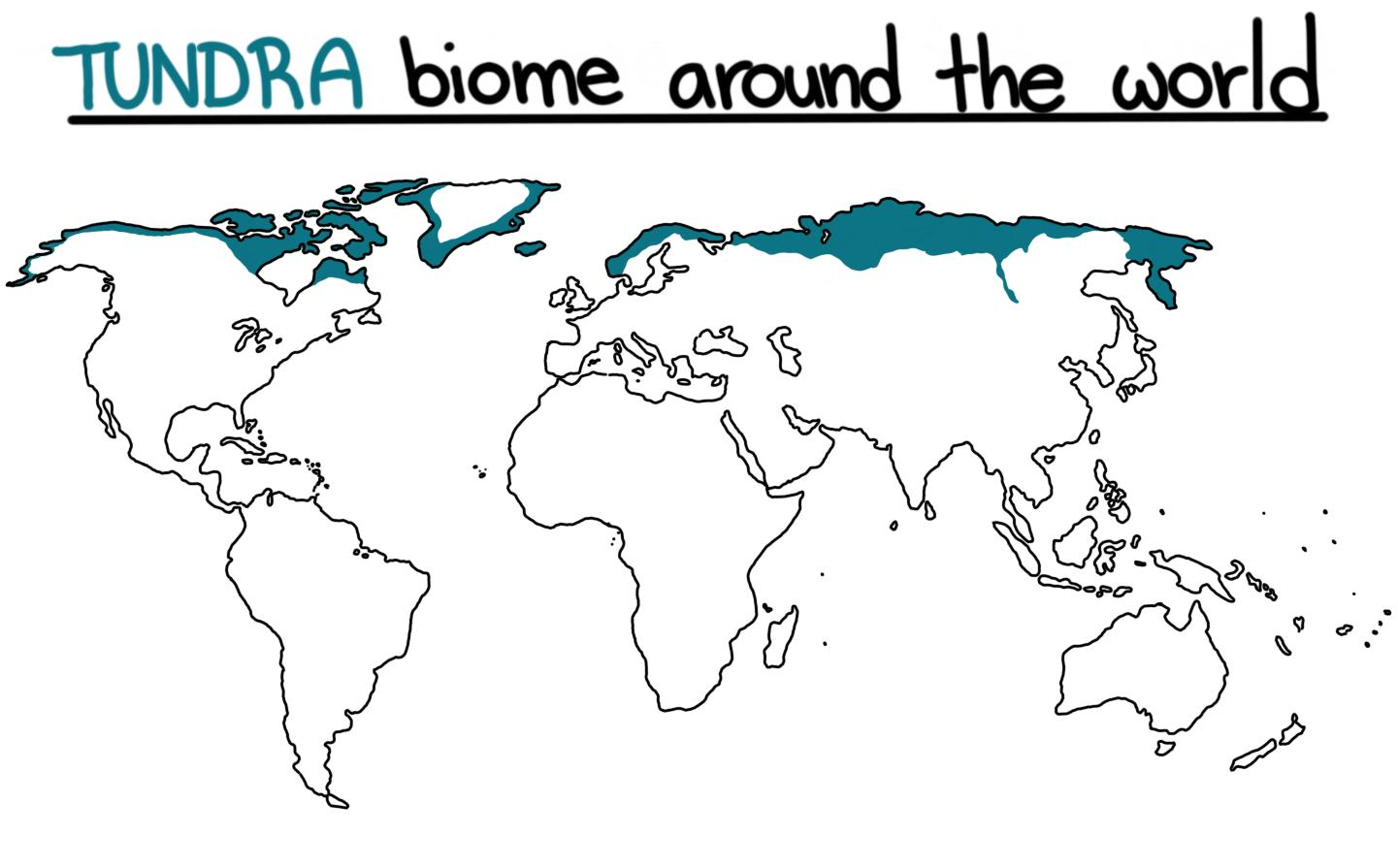
Tundra biome
Found in extreme high latitudes 50°N to 70°N
• North Alaska, Greenland, north of Canada, Northern Scandinavia, Northern Russia
Temperate grassland temperature + range
Summer - hot at around 20°C
Winter - very cold at around -10°C
Very high at 30°C
Annual precipitation grassland and distribution
Low - 400mm to 800mm
Most precipitation falls in summer months.
Winters much drier.
What is the soil in temperate grasslands
Mollisol
Deep dark topsoil characteristics explained (A horizon)
Black/dark brown very fertile
annual dieback of deep grass roots adds large amounts of dead organic matter (mull humus)
Calcium rich loess parent material weathers and adds to soil quickly in hot summer months.
High fertiiity causes
Nutrient rich-ideal for agriculture:
August -decomposed organic matter
minimal leaching precipitation only slightly exceeds evapotranspiration in summer
Calcium nodules in lower A/C horizon
White lumps of calcium carbonated:
Calcium from weathered loess + its soluble so upward movement by capill
Poorly developed horizon
Horizon blend together:
Constant alternation of leaching in summer from snow (down) and capillary action (upward). Soil mixing by fauna (earthworms, bacteria etc) because alkaline pH and climate is good.
Clay/ loam texture
Granular and well-structured
Weathering of calcium rich loess
Leaching definition
Downward movement of dissolved minerals through soil by rainwater, removing nutrients from upper layers when precipitation > evapotranspiration.
Leaching on grasslands
When & Why (Temperate Grasslands):
Spring snowmelt: Low temperature → low evapotranspiration.
Summer rainstorms: Intense rainfall → precipitation exceeds evapotranspiration.
Impact on Mollisol/Chernozem:
Slight leaching of calcium from A horizon.
Slightly acidic pH when leaching dominates.
Capillary action definition
Upward movement of water through soil pores when evapotranspiration > precipitation.
Capillary action in grasslands
When & Why (Temperate Grasslands):
Summer: High temperature (~20°C) + low rainfall → dry upper horizon → upward water movement.
Impact on Mollisol/Chernozem:
Calcium nodules form in lower A horizon (brought up from parent material).
pH ~6–7 (calcium maintains neutral conditions).
Poorly defined horizons / absent B horizon due to alternating mild leaching and capillary action, and active soil fauna mixing soil.
Breakdown of organic matter
Climate Influence:
Short growing season, cold winters (-10°C) → grasses die back.
Spring warming → active decomposers break down organic litter.
Impact on Mollisol/Chernozem:
High fertility – nutrients from decomposed grasses returned to soil.
Deep, dark A horizon – annual dieback adds organic matter; forms mull humus (black/brown colour).
Weathering of parent material
Climate Influence:
Rapid weathering of loess (lime/calcium-rich) during warm, wet summers.
Impact on Mollisol/Chernozem:
Calcium nodules in lower A horizon (from loess).
Neutral pH (~7) – calcium acts as a base, neutralising acidity.
Poorly defined horizons – calcium maintains neutral pH → active fauna → well-mixed soil.
Tundra biome temperatures + range
Winter - bitterly cold with average temperature of-25°C. Temperature is below 0°C for 6-10 months.
Summer - mild with temperatures of 4°C to 15°C
Large (up 40°C)
Annual precipitation + distribution
130 to 250 mm per year (very low)
All months
Precipitation type in summer and winter
Winter - snowfall
Summer - rainfall
What is the soil in the tundra biome
Gelisol
Permafrost
Subsoil is permanently frozen called permafrost
Summer top 50cm of soil thaws when temp rises
Waterlogged topsoil in summer
Low temp - little evaporation summer water buildup , freezes in colder months.
Little downward movement of water in summer thaw of 50cm because of permafrost
Roots
Permafrost stops deep rooted plants/ trees to grow. Instead lichens, sedges and dwarf shrubs have adaptions to survive
Acidic pH 4.5
dead organic matter - (mor humus) produces acidic, lichen also excrete acids in summer
Peaty undecomposed dead organic matter
Decomposers aren’t active extremely low temps, acidic conditions, waterlogged soils. Accumulation of DOM
Infertile
Low input of nutrients - little precipitation (250mm per year)
Input to soil from weathering of rock is limited due to the permafrost.
Very little biomass litter produced due to:
Harsh climate - short growing season of 2 months
Soil permafrost layer 50cm below surface (restrict root development)
Acidic , waterlogged topsoil in summer restricts plant growth
Slow decomposition of dead organic matter due to low temperatures, acidic and waterlogged conditions few decomposition
No distinct layers/ horizons
Topsoil frozen in winter- subsoil - permafrost
Few soil organism due to low temp; acidity, waterlogging
Dark brown/ black to blue/grey
Dark brown - high partially DOM.
Soil lacks oxygen bcus of water-logging iron in soil becomes deoxygenated and it gives it a blue/ grey colour
Low in nutrients
Very little biomass because of climate
The rate of decomposition is very slow Bcus pH
What is the climate change case study
The actual and potenital impact of climate change/ gobal warming on
the tundra biome - Alaskan Tundra
Thawing of permafrost actual abiotic impacts
Permafrost in Alaskan tundra melting for past 50 years - temp increases , rise of 4oC at 1m depth and 2.5oC at 20m deep.
Transportation - roads built on permafrost subside, since 1980s 100 days less travel permitted on permafrost
Thawing of permafrost potential
End of century near surface permaforst almost lost entirely
70% of land vulnerable to subsidence, maintain infrastructure cost up to $6 billion more by 2030.
Drilling of oil easier
Greenhouse gases released when partially decomposed organic matter thaws - starting to break down
Melting of Glaciers actual abitoic impacts
Alaskan glaciers lose 75 billion tonnes of ice each year
More open water in northen areas, in rural alaska cant travel along frozen rivers travel gettind difficult
Increases coastal erosion: alaskas north slope lost 1.5m of coastline annualy to sea erosion since 1950
Melting of Glaciers potential abitoic impacts
disapear by end of century
this will Coastal erosion- threaten villages and infrastructure increase hard engineering for coastlines
e.g Kivalina isolated community of 400 people may relocate cost of $100 million due to coastal erosion.
New sea routes north america for mining oil, increased risk of pollution
poorer water quality actual abiotic impacts
mercury and other chemical pollutants released when permafrost melts - soil erodes.
e.g the Bering Strait becomes acidic
Pooer water quality potential abiotic impacts
Chukchi and Bering seas expected to become acidic
Lakes and wetlands actual abiotic imapcts
Last 50 years in south of alaska where warmer area covered by lakes decreased due to high evapotranspiration
Lakes and wetlands potential abiotic change
increase lake areas
increased wildfires actual abiotic impacts
Summers warmer drier more thunderstorms, larger fires in 2000s since 1940 records, fire in 2007 release carbon dioxide equivalent to which absorbed by tundra over 25 years.
increased wildfires potential abiotic impacts
areas affected by wildfires predicted triple by end of century. fire risk increase as evaportrasnpiration high reduce water avaiable
Actual biotic impact on animals
Species at risk - Pacific walruses, beardes seals. Pacific walruses forced to crowd on Chukchi Sea shoreline bcuc less floating ice in summer.
Land animals e.g caribou, musk oxen struggle for food due to northward expansion of scrub. Caribou rely on lichen in winter which take 50-100 years to recover after burning. Carbiou food source for bears and wolves.
Some speicies thrive in cliamte change e.g Black Brent geese increasing feed on salt-tolearnt vegetation that thrive as permfafrost thaws, coastline erodes adnd salt walter forms.
Potenital biotic impact on animals
permafrost thaws and alters size of lake which disrupts habitats of migratory birds
warming increase jelly fish so decline in fish stocks