Econ Test

5.0(2)
Studied by 3 people
call kaiCall Kai
learnLearn
examPractice Test
spaced repetitionSpaced Repetition
heart puzzleMatch
flashcardsFlashcards
GameKnowt Play
Card Sorting

1/63

encourage image

There's no tags or description

Looks like no tags are added yet.

Last updated 6:10 PM on 3/5/25
Name
Mastery
Learn
Test
Matching
Spaced
Call with Kai

No analytics yet

Send a link to your students to track their progress

64 Terms

1
New cards
Sole Proprietorship
owned and controlled by one person; oldest and most common type of business
2
New cards
Partnerships
Require little financial capital to start and operate; shares responsibility between two people
3
New cards
Corporations
Legally distinct from their owners and are treated as if they were individuals (can own land, hire workers, make contracts, pay taxes, be sued and sue, make and sell products)
4
New cards
Franchisees
Enterprise that uses an original company's name to sell goods and services; requirement to uphold parent company standards
5
New cards
Cooperatives
businesses owned collectively by their members
6
New cards
Nonprofits
Provides goods and services with particular goals in mind (typically surrounding education, healthcare, etc.)
7
New cards
What 3 things should be considered when measuring GDP?
Final output (only the final result of a resource), Current year (only new, no used items), Output produced within national borders
8
New cards
What are the three main causes of inflation?
when governments print more money, cost-push (companies charge more), demand-pull (caused by shortage)
9
New cards
What are the 2 ways to measure inflation?
Consumer price index (change in the price of products), producer price index (change in the price of things bought by producers)
10
New cards
Know how to draw a diagram of a business cycle
expansion (going up) > peak (at the top of the curve) > contraction (going down) > trough (at the bottom of the curve)
11
New cards
Gross Domestic Product (GDP)
the total dollar value of all final goods and services produced within a country during one calendar year
12
New cards
Nominal GDP
GDP expressed at current prices of the period being measured
13
New cards
Real GDP
GDP adjusted for price changes
14
New cards
Price Index
a set of statistics that allows economists to compare prices over time
15
New cards
Economic growth
increasing the standard of living; competing in the Global Market; Domestic Resources
16
New cards
Increasing Productivity
Technological advances, capital deepening, educated and skilled labor force
17
New cards
Economic Challenges
Unemployment, inflation, poverty and income distribution
18
New cards
Unemployment
frictional, structural, seasonal, cyclical
19
New cards
frictional unemployment
when workers are moving from one job to another
20
New cards
structural unemployment
occurs as a result of changes in technology or in the way the economy is structured
21
New cards
seasonal unemployment
fluctuations in employment based on seasons (agriculture, retail)
22
New cards
cyclical unemployment
resulting from recessions and economic downturns
23
New cards
Aggregate level
total amount of goods and services produced throughout the economy
24
New cards
Aggregate demand
total amount of spending by individuals and businesses throughout the economy
25
New cards
inflation
increase in the average price level of all products in an economy
26
New cards
deflation
decrease in the average price level of all goods and services in an economy
27
New cards

What are the five economic goals of the Government? (short answer)

Regulating business, providing public goods, promote economic wellbeing, stabilizing the economy, moderate the business cycle
28
New cards
What ways does the Government Regulate Business + *what are some key examples of organizations that help and how? (short answer)*
Prevents abuses (OHSA, EEOC), protects consumers (FDA, CPSC, FTC, FCC), limits negative externalities (EPA, NRC), promotes competition
29
New cards
How does the Government provide public goods?
fix the costs, shared responsibility (departments and commissions), privatization
30
New cards
Privatization
Government selling contracts or private businesses fill gaps in the market
31
New cards
How does Government regulation affect the economy? (short answer)
Price level (Price or production cost increase), Services, Profit, Productivity
32
New cards
What institutions exist in the US Financial Institutions?
Commercial banks, Savings and Loan Associations, Mutual Savings Banks, Credit Unions
33
New cards
How many districts are in the Federal Reserve?
12
34
New cards
How is the Federal Reserve set up?
5 key functions -> 3 key entities -> 1 US Central Bank
35
New cards
What types of tax systems are there?
Proportional Taxes (Flat tax), Progressive Taxes (larger % to wealthy; vice versa), Regressive Taxes (larger % to poor; vice versa)
36
New cards
What tax system does the US have?
Progressive Taxes
37
New cards
How does the Government collect taxes?
Income, corporate income, social security, property, sales
38
New cards
Commercial Banks
lend money, deposits, transfers, other banks, individuals
39
New cards
Savings and Loan Associations
Established to lend money and accept deposits; credit cards and insured deposits
40
New cards
Mutual Savings Bank
Serve who wished to make small deposits that large commercial banks did not want to handle
41
New cards
Credit Unions
Employees of large businesses and institutions and members of large labor unions often belong to credit unions
42
New cards
Revenue tariffs
raise money for the government
43
New cards
Protective tariffs
restrict the number of foreign goods sold in a country
44
New cards

Diminishing Marginal Utility

describes the decline of satisfaction overtime with each additional unit of product

45
New cards

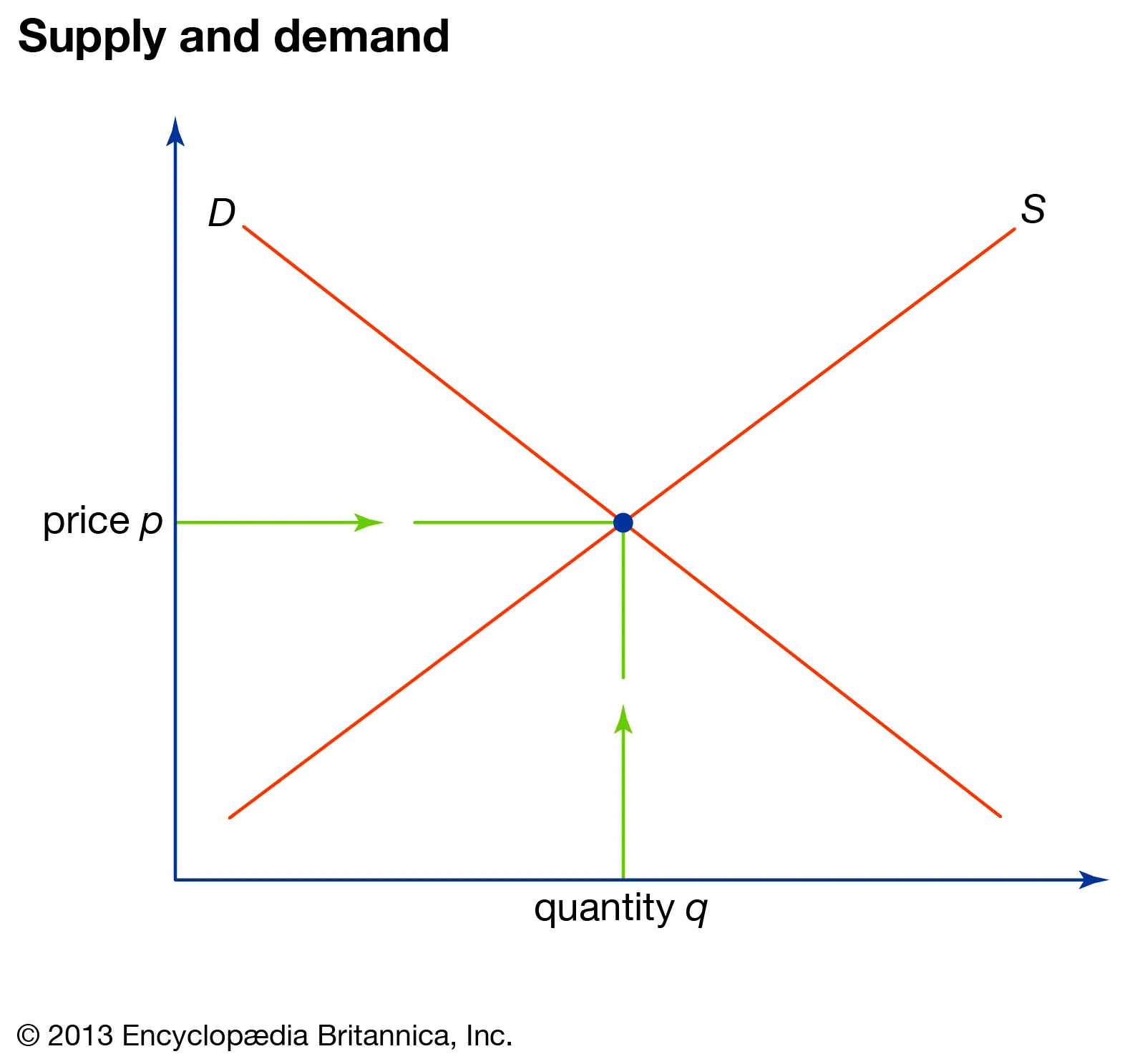
market equilibrium

a situation that occurs when the quantity supplied and the quantity demanded for a product are equal at the same price

46
New cards

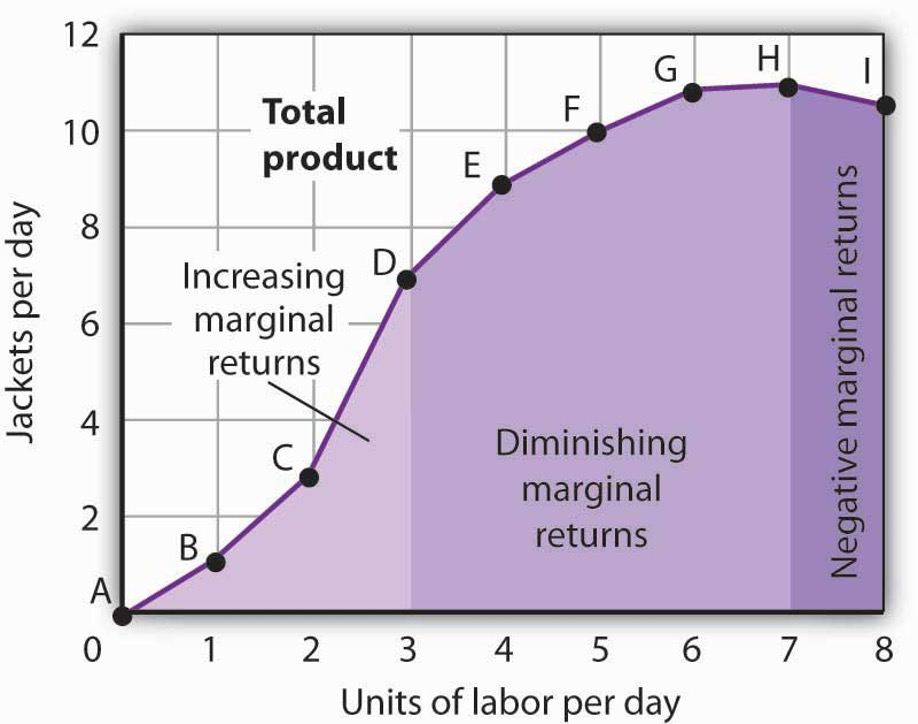
Total Product

all of the product a company makes in a given period of time with a given amount of input

47
New cards

Marginal Product

the change in output generated by adding one more unit of input

48
New cards

Be able to draw this graph (marginal)

49
New cards

Be able to draw this graph (equilibrium)
50
New cards

Quantity demanded

amount of a good or service that a consumer is willing and able to by at each particular price during a given time period

51
New cards

Demand

amount of a good or service that a consumer is willing and able to by various price points during a given time period

52
New cards

Law of demand

income effects, substitution effect, and diminishing marginal utility

53
New cards

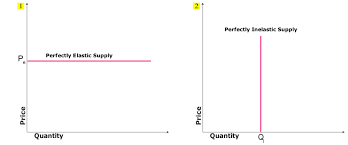
Perfect elasticity or inelasticity

54
New cards

in order for a good to be considered “in demand” a consumer must be _____ and ______ to buy the good or service

Willing and able

55
New cards

What are the four economic systems and describe

Market, command, mixed, traditional

56
New cards

What are the four facts of production

Human Resources, natural resources, capital resources, and entrepreneurship

57
New cards

Economics

the study of the choices that people make to satisfy their needs and wants

58
New cards

Relationship between price and supply

As price goes up, supply goes up

59
New cards

in order for a natural resource to be considered a factor of production, what must it be considered?

scarce

60
New cards

what are the three questions economic systems and society must answer

what, how, and for whom

61
New cards

relationship between price and demand

as price goes up, demand goes down

62
New cards

supply

the quantity of goods and services that producers are willing and able to offer at various possible prices during a given time period

63
New cards

When considering to buy clothing, you only have enough money to purchase either the shirt or the pants. You make the decision to purchase the shirt. In this scenario, the pants are considered a(n)...

Opportunity cost

64
New cards

Externalities, public goods, and instability are all part of the Price System and are considered...

Market Failures