Biology Final Exam Study Guide
 Call Kai
 Learn
Learn Practice Test
 Spaced Repetition
 Match
Match Flashcards
 Knowt Play
1/55

There's no tags or description
Looks like no tags are added yet.
Name | Mastery | Learn | Test | Matching | Spaced | Call with Kai |
|---|
No analytics yet
Send a link to your students to track their progress
56 Terms
Nucleus
command center of the cell, contains DNA
Mitochondria
generates ATP energy through cellular respiration
Ribosomes
synthesize proteins, either float freely in the cytoplasm or attack to the endoplasmic reticulum
Endoplasmic Reticulum
Network of membranes - Rough ER has ribosomes and synthesizes proteins
Golgi Apparatus
modifies sorts, and packages proteins
Cytoplasm/Cytosol
The jelly-like fluid that supports organelles and gives the cell shape
Cytoskeleton
Network of protein fibers structurally supporting the cell
Cell Membrane
a selectively permeable barrier that controls the movement of substances in and out of the cell
Cell Wall (JUST PLANTS)
rigid outer layer of cellulose providing structural support and protection
Chloroplasts (JUST PLANTS)
contains chlorophyll and converts sunlight into sugar through photosynthesis
Central Vacuole (JUST PLANTS)
massive storage sac holding water and nutrients, exerts internal pressure (tugor) to keep the plant upright
Centrosomes (JUST ANIMALS)
structures used during mitosis
Lysosomes (JUST ANIMALS)
waste disposal units containing digestive enzymes to break down old cell parts and foreign invaders
Microfilaments/Microtubules
Structures that are part of the cytoskeleton (microtubules also play an important role in mitosis)
Lipid bilayer
makes up the cell membrane and gives it a flexible structure and a strong barrier
Selectively permeable
cell membranes are selectively permeable, meaning that some substances can pass through it and others can’t - small, uncharged, nonpolar substances have an easy time passing through
homeostasis
the state of relatively constant internal physical and chemical conditions - cells maintain this by regulating the movement of molecules and other substances from one side of the membrane to the other
Diffusion
the process by which particles move from an area of higher concentration to an area of lower concentration (passive transport)
Passive transport
the movement of molecules across the cell membrane without using cellular energy
facilitated diffusion
large/charged molecules diffuse across the membrane through special protein channels (passive transport)
Aquaporins
water channel proteins that allow for the diffusion of water through the cell membrane
Osmosis
the diffusion of water through a selectively permeable membrane (either through an aquaporin or directly through the cell membrane). During this process, molecules move from an area of higher concentration to an area of lower concentration until equilibrium is reached.
Isotonic solutions
two solutions that are of the same strength
Hypertonic solutions
solutions that are above strength compared to the solution on the other side
Hypotonic solutions
solutions that are below strength compared to the other side
Osmotic pressure
the force produced by the net movement of water in or out of a cell, and it can cause an animal cell in a hypertonic solution to shrink and one in a hypotonic solution to swell - in plant cells, osmotic pressure can cause changes to the size of the central vacuole
Active transport
the movement of materials against a concentration difference which requires energy
Protein pumps
These transport ions and small molecules through the membrane via active transport
Endocytosis (Bulk Transport)
the process of taking material into the cell by infolding of the cell membrane - the pocket that results breaks loose from the cell membrane and forms a vesicle/vacuole within the cytoplasm
Phagocytosis (Bulk Transport)
a form of endocytosis where extensions of cytoplasm surround a particle and package it within a food vacuole and then engulf it
Exocytosis (Bulk Transport)
a process to release large amounts of material, when the membrane of the vesicle/vacuole fuses with the cell membrane, forcing the contents out of the cell
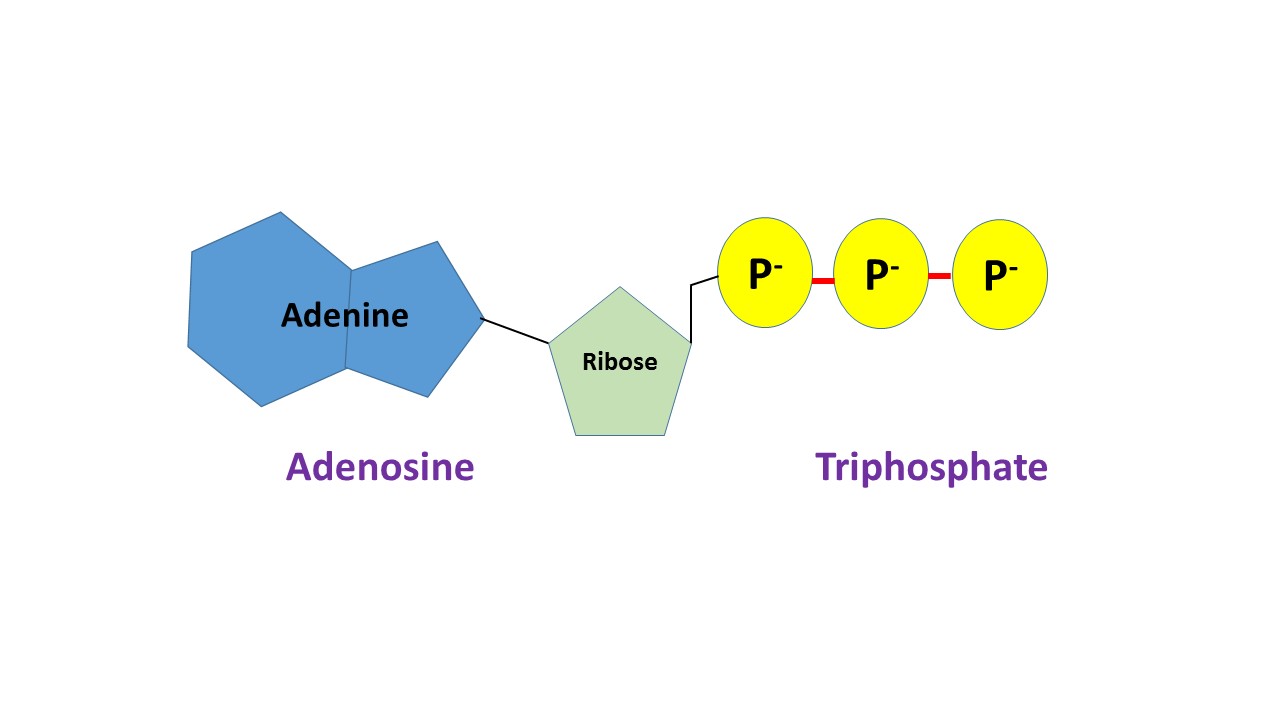
ATP
an important compound that stores and releases energy - used for active transport, cell movement, light, and other processes
Chlorophyll
a pigment used by plants to capture the energy from sunlight
Thylakoids
saclike chlorophyll containing membranes that are inside the chloroplast and arranged in stacks
Grana
stacks of thylakoids inside chloroplasts
Stroma
the fluid portion of the chloroplast outside of the thylakoids
electron carrier
a compound that can accept a pair of high-energy electrons and transfer them from the chlorophyll, along with most of their energy, to another molecule
NADP+/NADPH
NADP+ is one of the carrier molecules, which is converted into NADPH after accepting and holding 2 electrons and a hydrogen ion - after conversion, the NADPH carries the electrons elsewhere in the chloroplasts
Photosynthesis Formula
Carbon Dioxide + Water + Sunlight → Sugars + Oxygen (6CO2 + 6H2O + Sunlight → C6H12O6 + 6O2)
light-dependent reactions
the first set of reactions in photosynthesis that occur in the thylakoids and convert ADP into ATP and NADP+ into NADPH
light-independent reactions
the second set of reactions in photosynthesis, where the ATP and NADPH build high-energy sugars from carbon dioxide, and these reactions take place in the stroma of the chloroplast
Cellular Respiration Formula
oxygen + glucose → carbon dioxide + water + energy (6O2 + C6H12O6 → 6CO2 + 6H2O + energy)
3 stages of cellular respiration
glycolysis (anaerobic), the Krebs cycle (aerobic), and electron transport chain (aerobic)
Aerobic
A process that requires oxygen
Anaerobic
A process that doesn’t require oxygen
fermentation
a process of glycolysis combined with a pathway that happens when there’s no oxygen present - fermentation releases ATP from food molecules
alcoholic fermentation
carried out by yeast - formula: pyruvic acid + NADH → alcohol + CO2 + NAD+
lactic acid fermentation (when does it happen?)
in humans, during brief periods of a lack of oxygen, ATP is often produced through this process, with muscle cells often doing this during bursts of activity
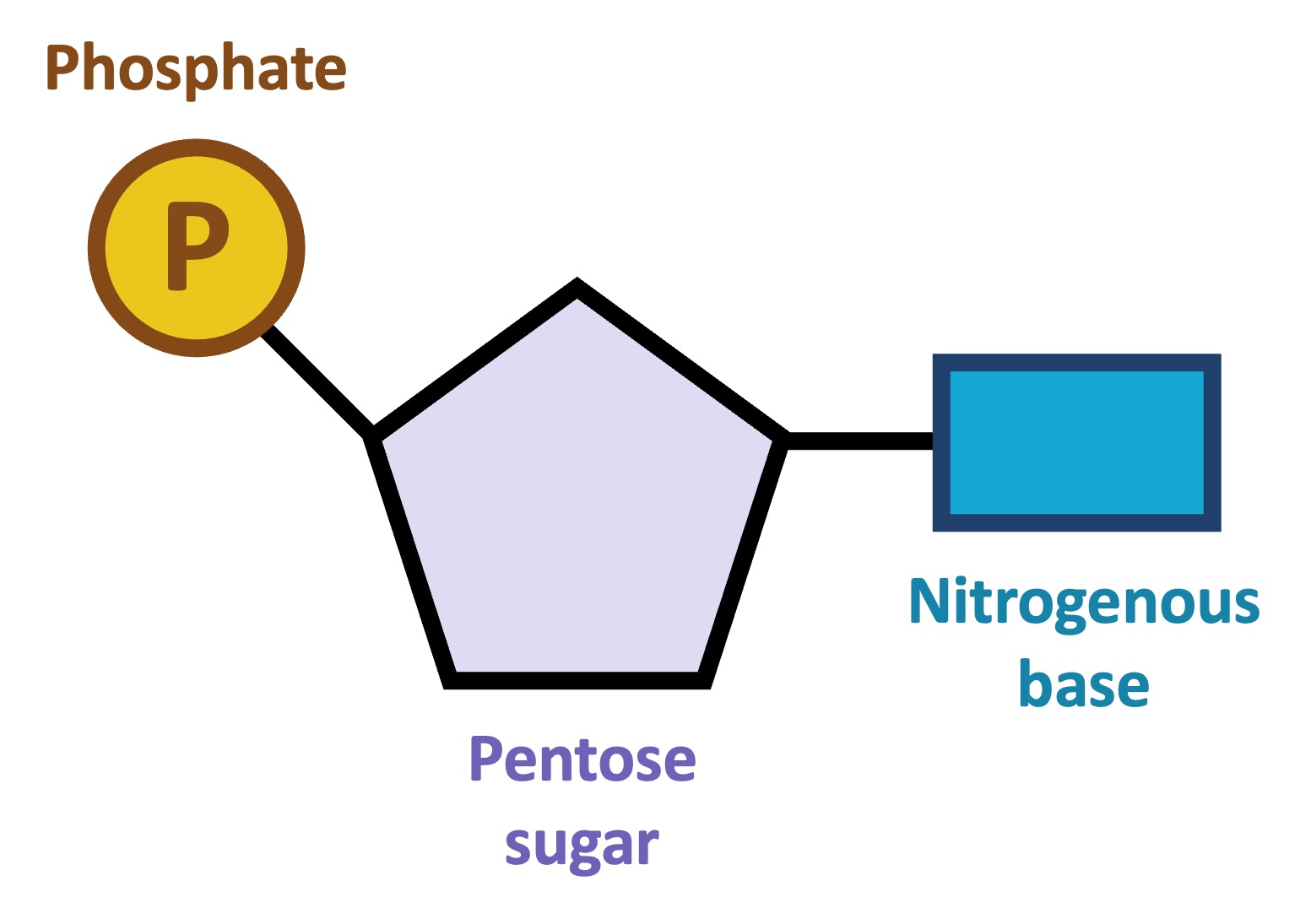
Nucleotides
the monomers of nucleic acids
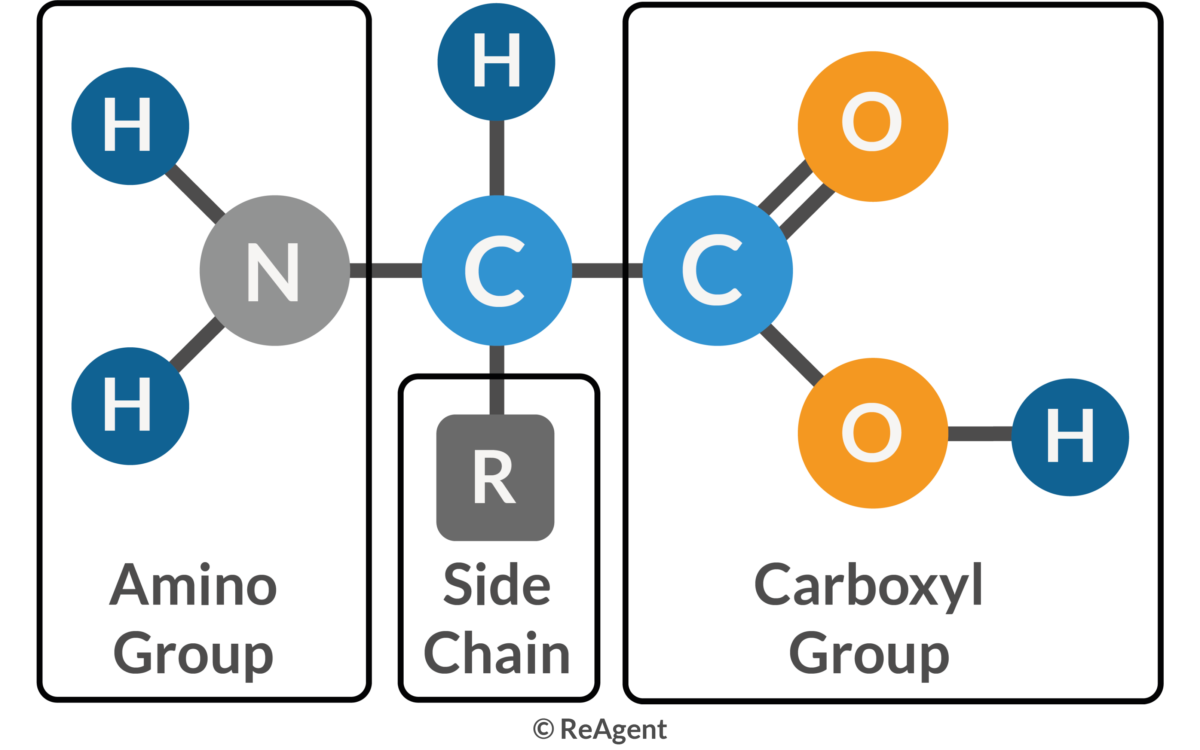
amino acids
the monomers of proteins
peptide bonds
the covalent bonds between amino acids - they form through dehydration synthesis, where a water molecule is released as the amino acids form a bond
polypeptides
chains of amino acids - proteins are made of folded polypeptide chains
nitrogenous bases
DNA is made up of 4 nitrogenous bases: A-T and G-C, which are bonded through hydrogen bonds. In any sample of DNA, the percentage of each base will be the same as its pair
DNA replication
during synthesis, replication occurs, where the 2 strands of each DNA molecule separate and 2 new strands are synthesized following the rules of base pairing
DNA replication enzymes
during replication, enzymes “unzip” a DNA molecule by breaking the hydrogen bonds between base pairs and unwinding the strands. Then, DNA polymerase joins nucleotides to synthesize a new complementary strand of DNA
Replication in prokaryotic vs. eukaryotic cells
prokaryotic: in most cells, replication starts from a single point and proceeds in 2 directions until the entire chromosome is copied
eukaryotic: in most cells, replication might begin at hundreds of places on the DNA molecule, proceeding in both directions until each chromosome is completely copied