PE Paper 1 : Applied anatomy and physiology
 Call Kai
 Learn
Learn Practice Test
 Spaced Repetition
 Match
Match Flashcards
 Knowt Play
1/110

There's no tags or description
Looks like no tags are added yet.
Name | Mastery | Learn | Test | Matching | Spaced | Call with Kai |
|---|
No analytics yet
Send a link to your students to track their progress
111 Terms
During exercise CO2 in the blood will increase.
Describe how an increase in blood CO2 impacts the redistribution of blood.
(3)
• (Increased CO2 levels/acidity/decrease in pH) detected by chemoreceptors. (1)
• Messages sent to the medulla (oblongata) / vasomotor centre. (1)
• Increased sympathetic impulses / decreased parasympathetic impulses. (1)
• Vasodilation / increased blood flow to the working muscles/skin/heart. (1)
• Precapillary sphincters relax to allow more blood through. (1)
• Vasoconstriction / decreased blood flow to the non-essential organs/non-working muscles. (1)
• Precapillary sphincters contract causing to allow less blood through. (1)
Analyse how regular participation in exercise can decrease the likelihood of a stroke.
(3)
• The elasticity / condition of the arteries is maintained whichensures blood flow to the brain remains constant. (1)
• Reduced cholesterol (LDL) / atheroma / fatty deposits / plaque which prevents blockages in blood vessels (leading to the brain) / ischemic stroke. (1)
• A decrease in blood pressure which prevents damage to blood vessels (leading to the brain) / haemorrhagic stroke. (1)
Describe the role of the sympathetic and parasympathetic nervous systems in the regulation of heart rate.
(3)
• Medulla/cardiac control centre sends impulse to the Sino-atrial node (SAN)/pacemaker. (1)
• Sympathetic nervous system increases heart rate. (1)
• Sympathetic impulses travel down the sympathetic/accelerator nerve. (1)
• Parasympathetic nervous system decreases heart rate. (1)
• Parasympathetic nervous systems travel down the vagus nerve. (1)
If endurance events take place in warm conditions, cardiovascular drift can occur.
Analyse how cardiovascular drift may result in lower levels of performance.
(3)
• Athletes will sweat reducing the plasma volume of blood. (1)
• Blood becomes more viscous/thicker which reduces venous return. (1)
• Due to Starling’s law stroke volume/ejection fraction will decrease. (1)
• As stroke volume/ejection fraction decreases heart rate increases to maintain/increase cardiac output. (1)
• Having a higher heart rate at a lower than normal intensity increases the athlete’s rate of perceived effort/the performer mentally thinks they are working harder than they are. (1)
Explain the role of the atrioventricular node in the cardiac conduction system.
(3)
• Receives impulse from sinoatrial node/SAN (1)
• Delays (transmission of) impulse (1)
• To allow ventricular filling/enable the atria to fully contract (1)
• Sends impulse down septum/through bundle of His/to purkinje fibres (1)
Define A-VO2 diff (1)
• Difference between oxygen content of arterial and venous blood (1)
• Difference in oxygen content of arterial and venous blood leaving and returning to the heart (1)
Describe how cardiovascular drift can occur after 10 minutes of steady state exercise in a warm environment.
(3)
• An individual will sweat/lose some fluid/water (1)
• Some blood can be redirected to the skin for heat loss (1)
• Increase viscosity of blood/decrease in blood plasma volume (1)
• Can lead to a reduction in venous return (1)
• Leads to reduced stroke volume (1)
• Starling’s Law referenced in correct context (1)
• Heart rate will increase to maintain cardiac output (1)
State one long-term effect of smoking regularly on the structures of a runner’s respiratory system.
(1)
• Carbon monoxide binds to haemoglobin in the lungs rather than oxygen (1)
• Constricts the bronchioles (1)
• Damaged cilia (1)
• Reduction in number/damaged alveoli (1)
Explain how smoking regularly would impact the performance of the runners in the marathon.
(2)
• Reduced gaseous exchange in the lungs/oxygen transport to the muscles (1)
• This decreases the athlete’s ability to utilise oxygen in energy production/work aerobically (1)
• This means they have less energy for their activity/slower time/fatigue quicker (due to working anaerobically) (1)
Outline two ways an active lifestyle can reduce the risk of heart disease.
(2)
• Decrease in cholesterol/LDL/fat in coronary arteries (1)
• Lower blood pressure (1)
• Stronger heart/cardiac hypertrophy/higher stroke volume (1)
Describe how heart disease can result in a heart attack.
(2)
• Hardening of coronary arteries/build-up of plaque/cholesterol/fat in the coronary arteries/atherosclerosis/arteriosclerosis (1)
• Causes blockage/blood clot (1)
• Limiting the supply of oxygen to the heart/angina (1)
Which one of these is a fitness benefit of regular participation in low intensity continuous training, such as jogging?
(1)
B
Which receptor is responsible for detecting a change in blood pressure?
(1)
Baroreceptor
Which of the following statements accurately describes Starling’s law of heart?
(1)
C
Identify two factors that cause the Bhor Shift?
(1)
Increase in carbon dioxide
Increase in temperature
State the correct order of the cardiac conduction system?
(1)
SA Node > AV Node > Bundle of His > Purkinje Fibres
Describe how the body redistributes blood to the skeletal muscles during exercise
(4)
Chemoreceptors detect change in blood pH/acidity due to exercise
Medulla oblongata controls the blood flow
Increased sympathetic nervous impulses at pre-capillary sphincters to cause vasoconstriction at non-essential organs
Decreased sympathetic nervous impulses at pre-capillary sphincters to cause vasodilation at working muscles
State one positive effect that high density lipoproteins have on the body
(1)
Remove excess cholesterol
Reduce the risk of heart disease
Protect artery walls against LDL
Describe the Bhor Shift
(2)
Occurs as a result of increased Co2 in the blood
Bhor shift is when an oxyhaemoglobin dissociation curve shifts to the right
Haemoglobin has a lower affinity for oxygen at working muscles
Gives up more oxygen more readily/easily
Describe three mechanisms that support venous return
(3)
Skeletal muscle pump : increased contraction of muscles press nearby veins to squeeze blood back to the heart
Respiratory Pump : increased breathing rate will alter / change pressure in thoracic cavities to assist blood back to the heart
Suction Pump of heart : more blood pumped out of the heart, so more blood then drawn/forced back in
Pocket valves : prevents backflow by closing and help shunt blood back to the blood
Describe how the cardiac conduction system causes the heart to contract
(3)
SA-node sends an impulse/electrical signal through the walls of the atria
Spreads as a wave of excitation
This causes atrial systole / atria contraction
Impulse then passes down the bundle of His to the purkinje fibres in the walls of the ventricles
This causes ventricular systole / ventricular contraction
Explain how and why the components of cardiac output differ for a trained performer
(3)
Trained athlete would have a lower resting heart rate of below 60bpm / bradycardia
The trained athlete has a higher resting stroke volume
Regular training of trained performer leads to cardiac hypertrophy
This means a trained performer will have stronger heart / more forceful contraction
Describe how the skeletal muscles during pump and valves work together to return blood to the heart
(3)
Skeletal muscles contract compressing the veins
This squeezes / forces blood back to the heart Suction Pump
Valves prevent the back flow of blood
When blood has been squeezed through, valves close
Where is myoglobin found in the body AND what its role during exercise (2)
Found within the muscles
Stores / supplies / carries oxygen
Explain the causes of this change to the oxyhaemoglobin dissociation curve and the effect that this change has on oxygen delivery to the muscles (4)
Increase in blood temperature
Increase in blood CO2
Increase in blood acidity
Bhor Shift occurs
Resulting in less saturation / reduced affinity of haemoglobin with oxygen
Increase in oxygen release / oxyhaemoglobin dissociation to muscles / muscles to receive more O2

Use the image to explain the term cardiovascular drift (3)
Cardio-vascular drift starts after 10 minutes
Heart rate increases leading to more beats and decreased stroke volume / ejection fraction
Fluid lost as sweat
Reduced plasma
Reduced venous return
Due to Starling’s Law, cardiac output also increases due to more energy needed to cool the body/sweat

Calculate the cardiac output for the untrained performer at point D in the table above (2)
120 × 100
= 12,000ml/min OR 12L/min
Explain how the role of adrenaline on heart rate prior to and during a 400m race (3)
Anticipatory rise happens prior to the race
Maintains increased heart rate during race
Adrenaline to the SA-node
Increased activity/firing at the SA node
Explain the importance of haemoglobin for a long distance runner (3)
Important for oxygen transport in the blood / carry oxygen to the working muscles
Allows endurance athletes to work aerobically
Increased red blood cells increases aerobic capacity / stamina
Delays fatigue / OBLA / prevents build-up of lactic acid

State the term used to describe the increase in heart rate labelled A and name the hormone that causes this increase in heart rate (2)
Adrenaline
Anticipatory Rise
Identify one possible effect of high cholesterol levels on health (1)
Increases risk of cardiovascular disease / heart attack / stroke
Define the terms health AND fitness (2)
Health : The complete social, mental and physical well-being and not just the absents of disease or infirmary
Fitness : The ability to meet the demands of the environment without fatigue
Other than diet, explain how two different lifestyle choices can have negative impact on health (2)
Smoking : reduces oxygen transport / causes lung cancer
Lack of exercise : obesity / heart disease / mobility issues
Alcohol drugs : damages liver / heart disease / cancer
Lack of sleep : fatigue / stress
Suggest how improved fitness, brought about by regular training, may benefit the health of an individual (2)
Reduces weight
Strengthens heart/reduces chance of heart attack
Improved social / mental well-being
Which lung volume will be lower during exercise than at rest (1)
Inspiratory reserve volume
Expiratory reserve volume
State the definition of expiratory reserve volume (1)
Volume of air that can be forcibly expired after a normal breath
Describe how an increase in carbon dioxide in the blood during exercise would lead to an increased breathing rate (3)
Chemoreceptors detect increase in Co2 levels/acidity levels within the body
This sends signals to the respiratory centre within medulla oblongata to control breathing rate
Medulla oblongata then sends signals down the phrenic nerve to the inspiratory muscles
This causes the external intercostal muscles and the diaphragm to contract quicker, leading to an increased breathing rate and depth
Stretch receptors detect increase in stretch from external intercostal muscles and sends signals to expiratory centre
Medulla oblongata then sends signals down the intercostal nerve to the expiratory muscles
This causes the internal intercostal muscles and abdominals to contract quicker, leading to an increased rate of expiration
Define the term ‘Tidal Volume’ (1)
Volume of air breathed in OR out with each respiratory cycle

Consider how oxygen and carbon dioxide move between the alveoli and the blood capillary.
Refer to the diagram in your answer (4)
Diffusion is the net movement of particles from an area of high concentration to an area of low concentration
Alveolus has a higher partial pressure of oxygen at p02 = 144mmHg
Capillary has a lower partial pressure of oxygen at pO2 = 40mmHg
Causes oxygen to diffuse across gradient into one-cell thick capillary
Oxygen binds to haemoglobin within red blood cell
Capillary has higher partial pressure of CO2 at pCO2 = 46mmHg
Alveolus has a lower partial pressure of OC2 at pCO2 = 40mmHg
Causes CO2 to diffuse across gradient into alveolus

What would the effect on the spirometer trace for lung volume A of a period of continuous running (2)
Higher and lower peaks
Separation of breathes get closer
Explain why minute ventilation needs to increase as the intensity of exercise gets harder.
(3)
• To allow the athlete to breath in more O2. (1)
• To allow the athlete to remove more CO2. (1)
• To increase gas exchange at the alveoli / fully saturate haemoglobin. (1)
• Delivers more oxygen to the working muscles / meets increased demand for oxygen. (1)
• To allow the performer to continue to respire aerobically / prevent anaerobic respiration. (1)
• Delay fatigue / delay OBLA / limit lactate accumulation. (1)
Describe how an increase in carbon dioxide in the blood during exercise would lead to an increased breathing rate.
(3)
• Increased blood acidity/decreased blood pH. (1)
• Detected by chemoreceptors. (1)
• Impulse sent to the respiratory centre/medulla. (1)
• Increased impulses to respiratory muscles to contract faster. (1)
The graph below shows a spirometer trace.
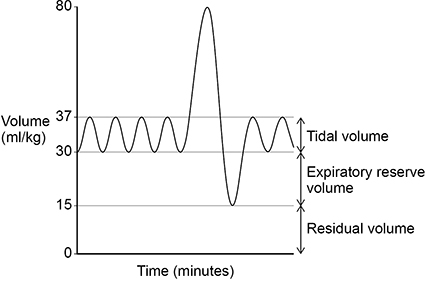
Explain how and why a period of continuous exercise would impact the lung volumes in the graph above.
Tidal volume
Expiratory reserve volume
Residual volume
(3)
• (Tidal volume) would increase as performer needs more oxygen to working muscles (1)
• (Expiratory reserve volume) decreases due to the increase in tidal volume (1)
• (Residual volume) will stay the same as if it decreased the lungs would be at risk of collapse/not affected by continuous exercise (1)
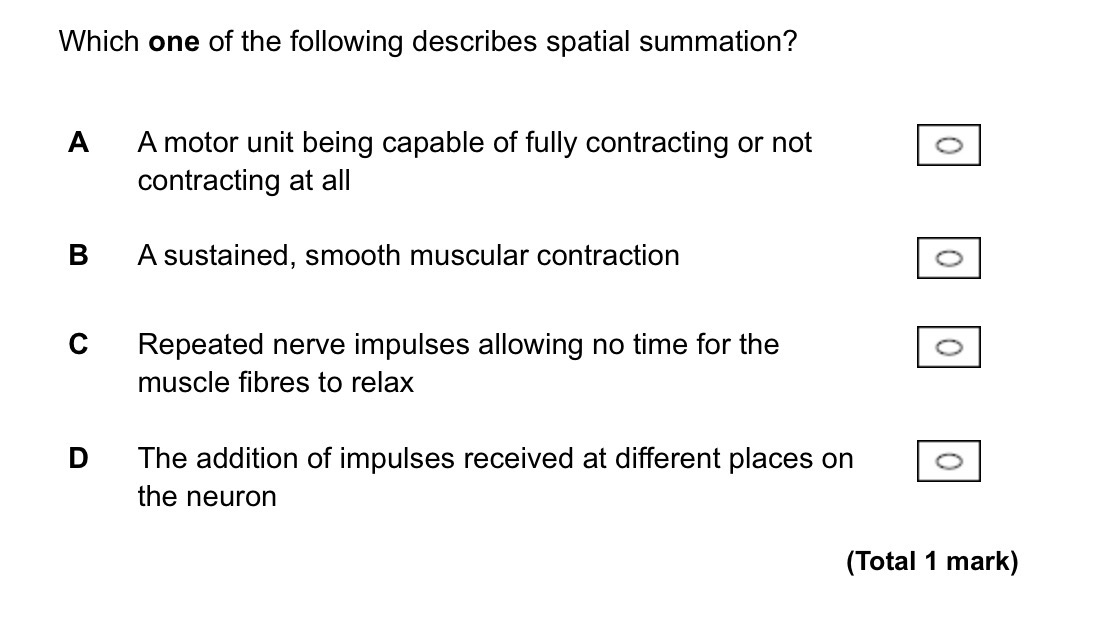
D

Which type of summation is shown in the graph below (1)
C

Which of these are characteristics of a type 1 muscles fibre (1)
A
State two structural characteristics of fast glycolytic muscle fibres (2)
Large motor unit size
Mitochondrial density if low
Myoglobin content is low
Capillary density is low
High amount of aerobic enzymes
Explain how two functional characteristics of fast glycolytic muscle fibres will support an athlete during a 100m race (2)
High speed of contraction will allow the athlete to generate a fast start
High levels of force generated will allow the athlete to push out against the blocks at the start of the race with more force
High anaerobic capacity will allow the athlete to maintain force production throughout the race to achieve maximal speed / maintain momentum throughout 100m race
Explain the role of muscle spindles and Golgi tendon organs in proprioceptive neuromuscular facilitation (4)
Muscle Spindles
Detect an increase in muscle length
Send a message to nervous system
During PNF the muscle spindles will initiate a stretch reflex
Prevents overstretching
Golgi-tendon Organs
Detect increased tension in a muscle
Send inhibitory signals to cause autogenic inhibition which overrides stretch reflex
Causes muscle to relax
Suggest how PNF could improve the performance of the hurdler (2)
The hurdlers improved range of movement / flexibility would allow them to clear the hurdles with more ease
The hurdlers improved range of movement / flexibility would allow them to improve stride length to generate more power / velocity
The hurdlers improved range of movement / flexibility would support the hurdler to generate a more fluid stride pattern
PNF may help to minimise the risk of injury, allowing them to continue training and performing
State three characteristics of the fast glycolytic muscle fibre type (3)
Large motor neurone size
High PC stores
High glycogen stores
Low mitochondrial density
Low myoglobin content
Low capillary density
High myosin ATPase / glycolytic enzyme activity
Low aerobic capacity / High anaerobic capacity
High force production
Explain how the characteristics of fast twitch glycolytic muscle fibres are suited to producing ATP anaerobically during powerful contractions (2)
High PC stores : increased energy source for ATP production via the ATP-PC system
High glycogen stores - increased energy source for ATP production via the lactate anaerobic system
High myosin ATPase activity - increased enzyme activity for ATP production within the ATP-PC system
Explain how wave summation allows a gymnast to gain the required height (3)
Wave summation allows the gymnast to produce a more powerful contraction
Muscle is stimulated again before it is relaxed
Gymnast will be able to apply greater force to adjust the height achieved to match the requirements of the technique performed
How can a performer vary the strength of muscular contractions to ensure that the skill is completed correctly (4)
Sends information to the brain
Compares information to long term memory to ensure correct force applied / past experiences
More units recruited for larger force
Spatial summation - rotating frequency of the impulse to motor units to delay
Titanic for powerful contraction
Outline how the following characteristics of capillaries allow for efficient gaseous exchange
one cell thick
large surface area
narrow diameter
(3)
(One cell thick) : Allows for quicker pathway of diffusion
(Large surface area) : More opportunity for gaseous exchange to occur as more area covered
(Narrow diameter) : Single file line to slow down passage of blood and increase saturation of haemoglobin
D
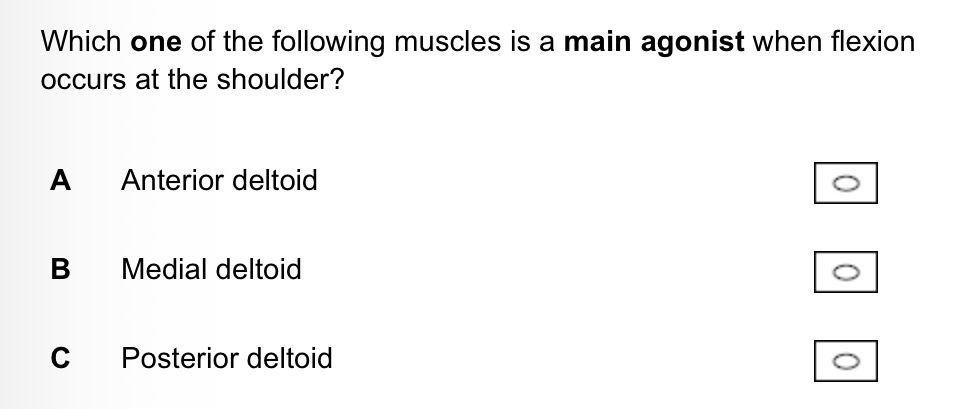
A
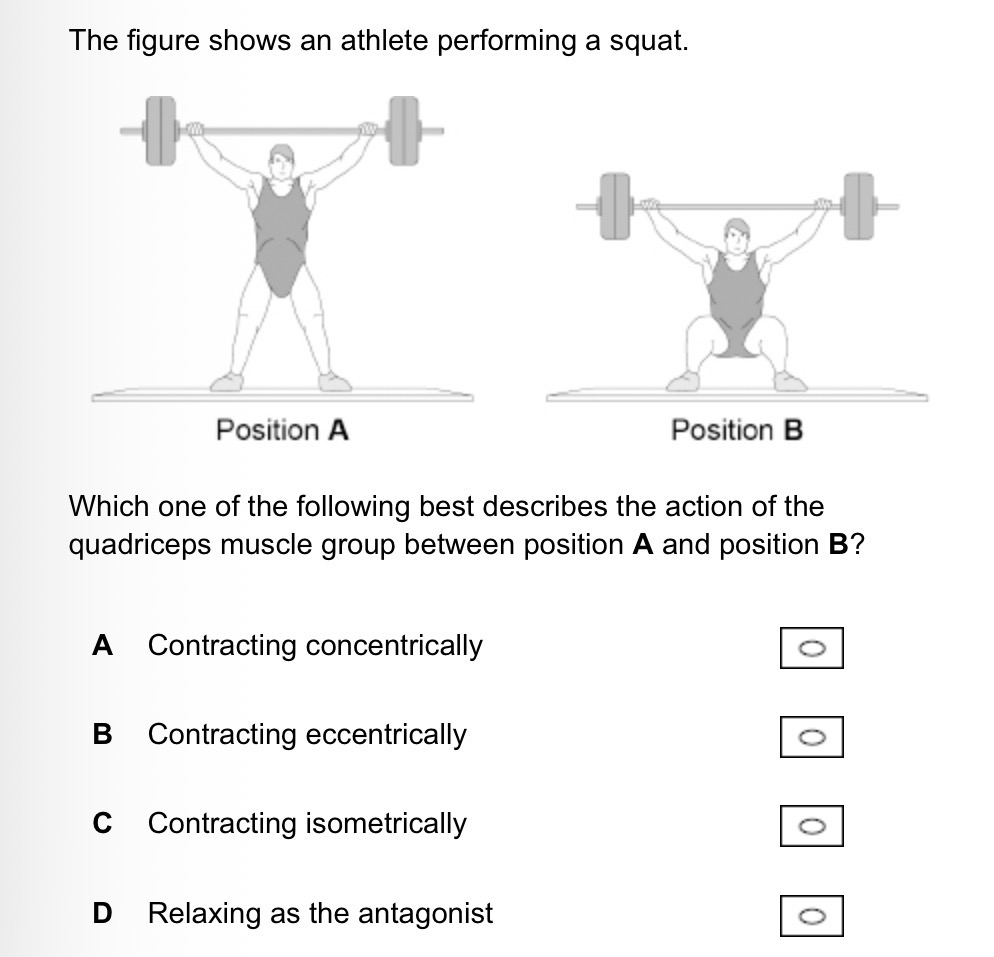
B
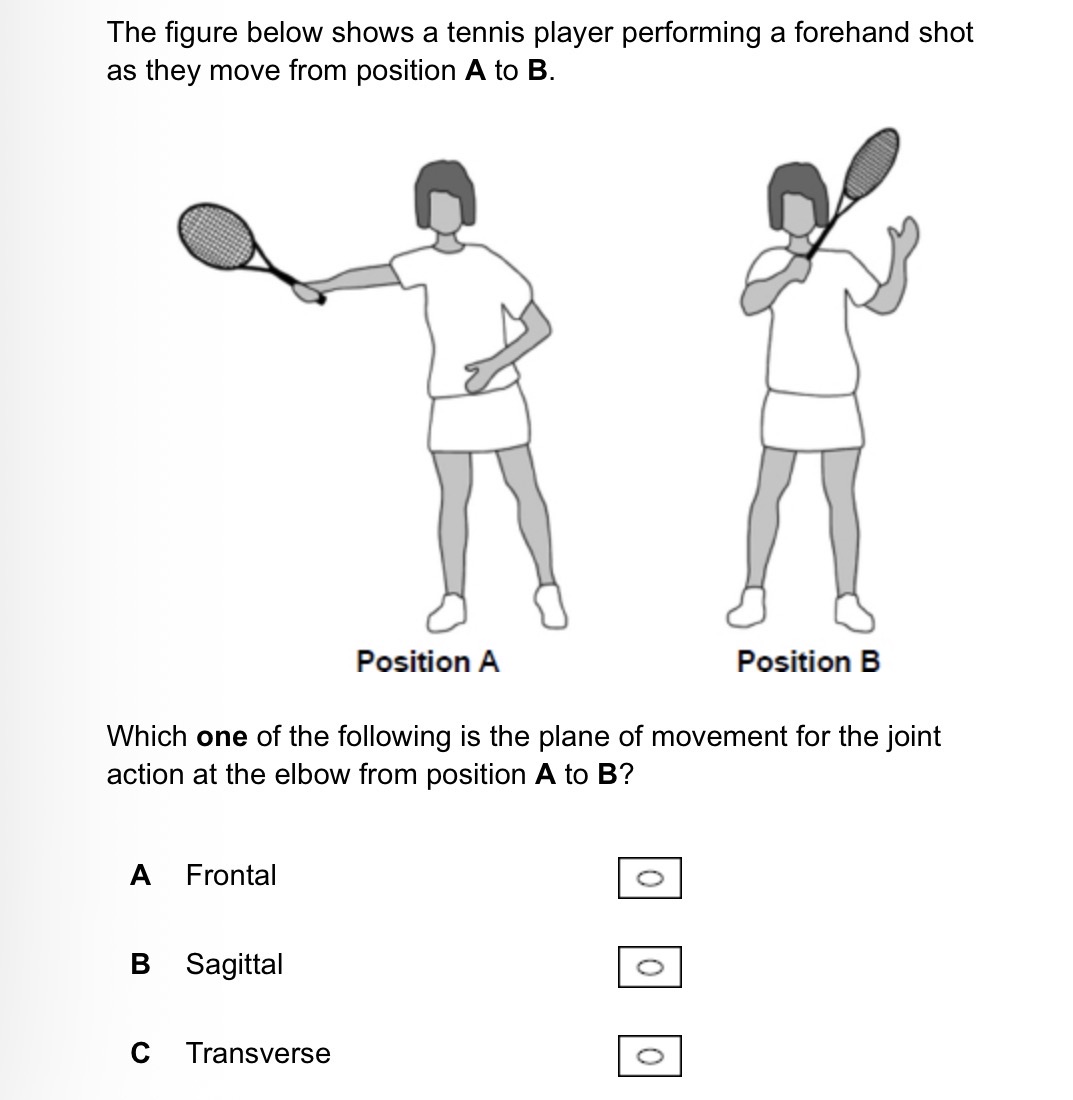
B
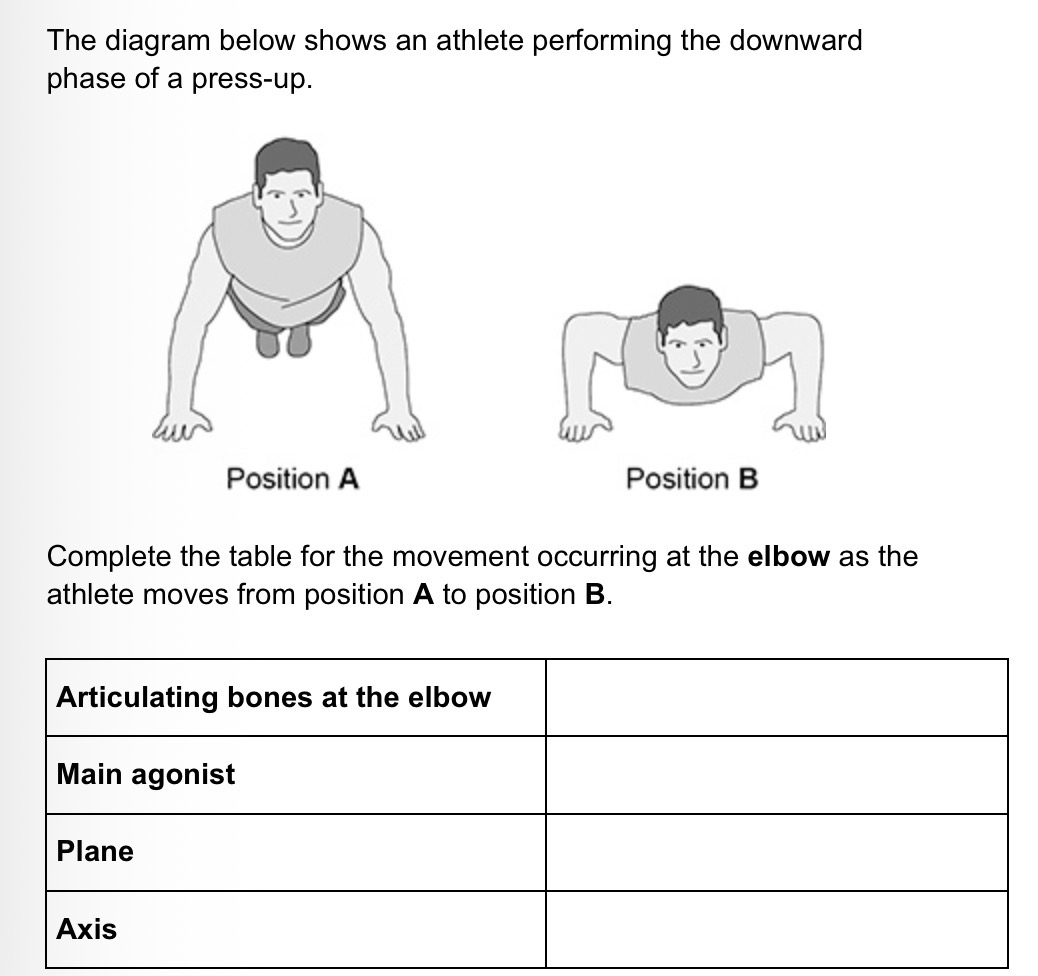
(Articulating bones at the elbow) : Humerus, radius, ulna
(Main agonist) : Triceps
(Plane) : Sagittal
(Axis) : Transverse
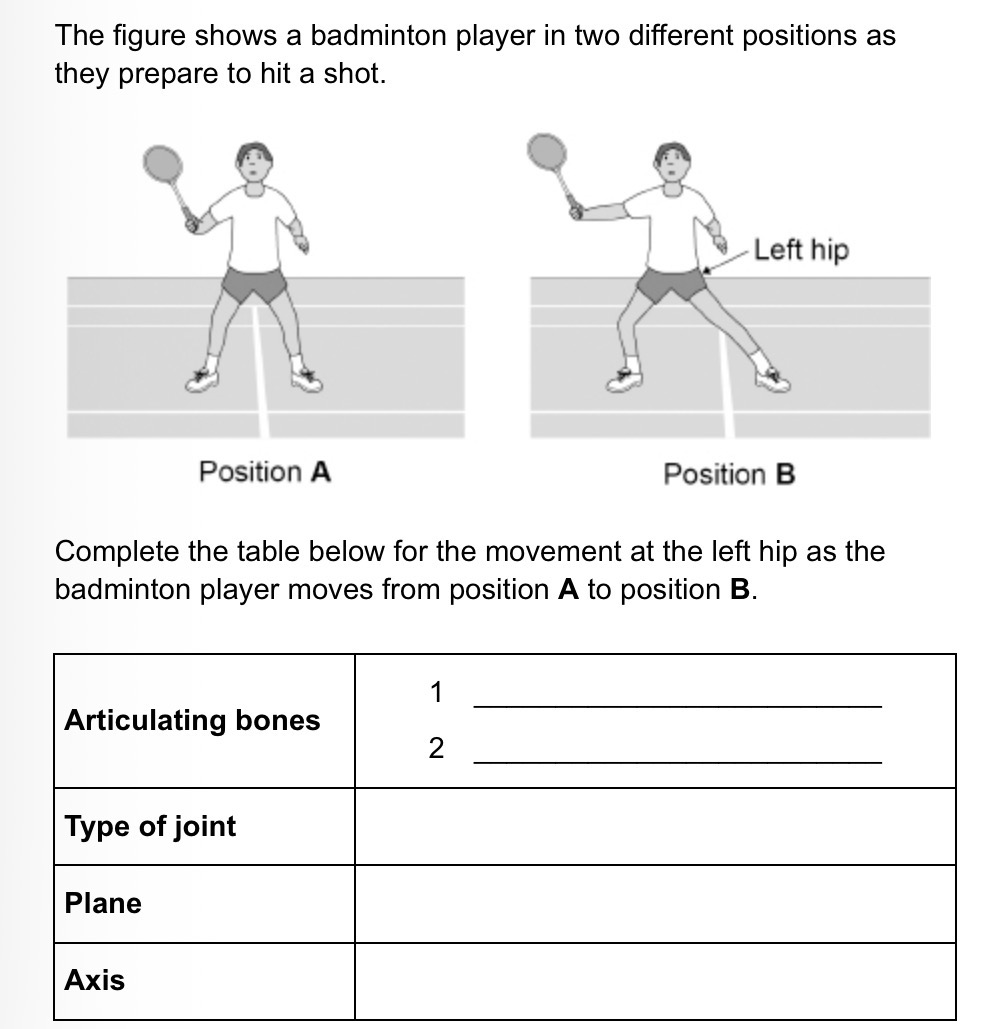
(Articulating bones) : Pelvis and femur
(Type of joint) : Ball and socket
(Plane) : Frontal
(Axis) : Sagittal

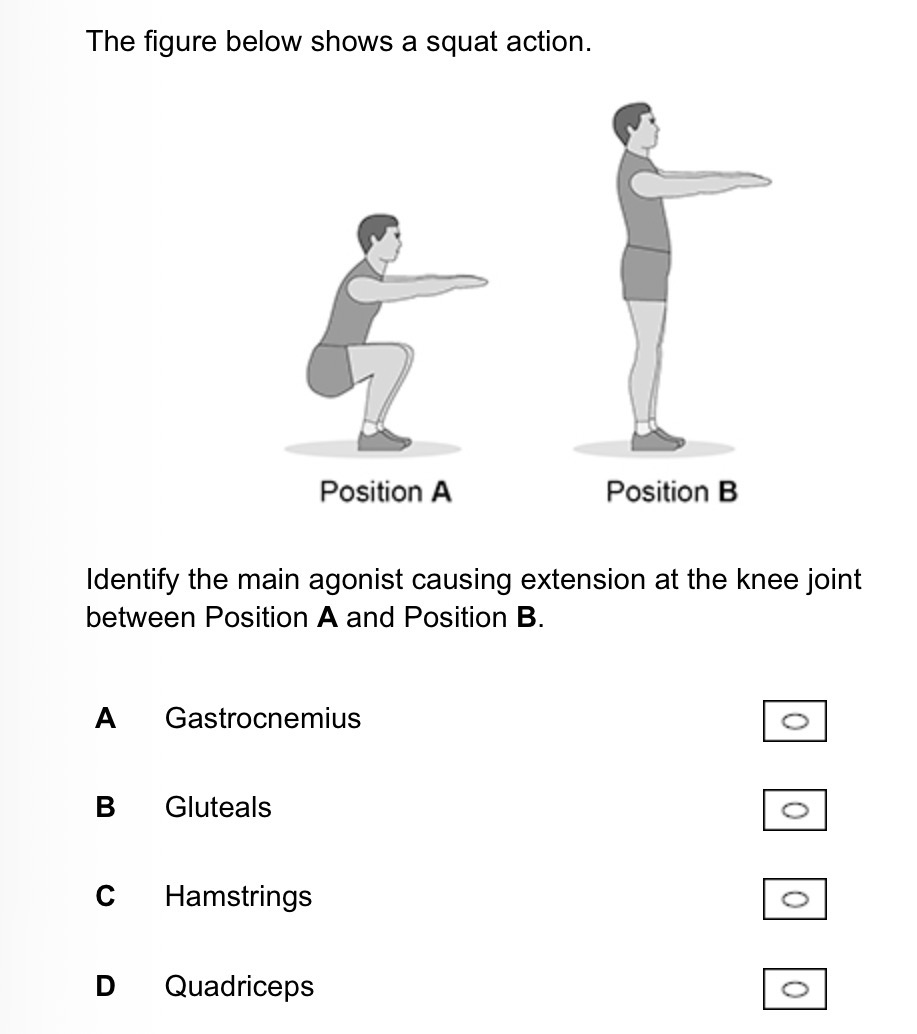
Identify the main agonist causing extension at the knee joint between position A and position B
(1)
D

Which one of these muscles causes horizontal abduction at the hip (1)
B

C

Sagittal plane
Transverse axis

(Agonist) : Pectorals
(Plane) : Transverse
(Axis) : Longitudinal Axis

Right ankle
(Joint action) : Plantar-flexion
(Main agonist) : Gastrocnemius
(Antagonist) : Tibialis Anterior
Right knee
(Joint action) : Extension
(Main agonist) : Quadriceps
(Antagonist) : Hamstrings
Identify the type of joint. the joint action and the main agonist at the leading ankle, as an athlete clears a hurdle (3)
(Type of joint action) : Hinge
(Joint action) : Plantar-felxion
(Main agonist) : Gastrocnemius
State the plane and the axis around which hip flexion takes place (2)
(Plane) : Saggital
(Axis) : Transverse

(Articulating bones) : Femur + Tibia
(Joint action) : Extension
(Main agonist) : Quadriceps

(Joint action) : Horizontal flexion / adduction
(Main agonist) : Pectorals major

(Joint action) : Extension
(Main agonist) : Triceps

a) State the names of the bones forming the shoulder joint
b) State the name of the type of joint found at the shoulder
c) Identify the name of the joint action and main agonist at the shoulder
(4)
(a) : Scapula and humerous
(b) : Ball and socket
(c) : Flexion + Rear Deltoid

a) Identify the correct term for each of the movements A and B shown
b) State the plane and axis involved in these movements
(4)
(a) : a = Adbuction + b = Adduction
(b) : Plane = Frontal + Axis = Saggital

State the joint action involved at the hip AND ankle of the take-off leg as the performer leaves the board
Extension
Plantar Flexion

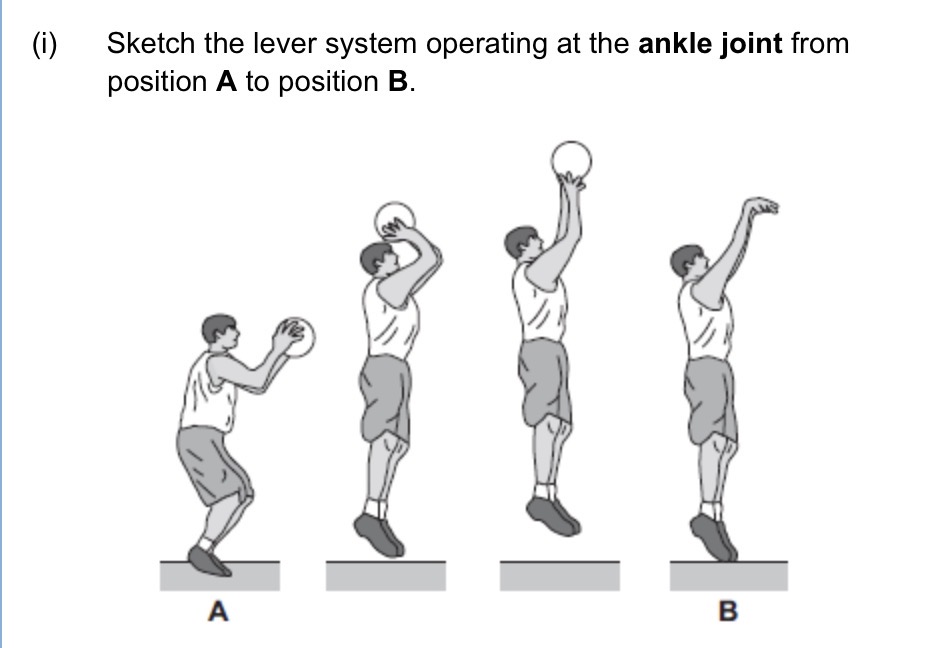
Name, sketch and label the lever system operating at the ankle of the take-off foot (3)
Second Class
Name, sketch and label the lever system operating at the elbow when extension occurs (3)
First class lever
Name, sketch and label the lever system operating at the hip when flexion occurs (3)
Third Class Lever
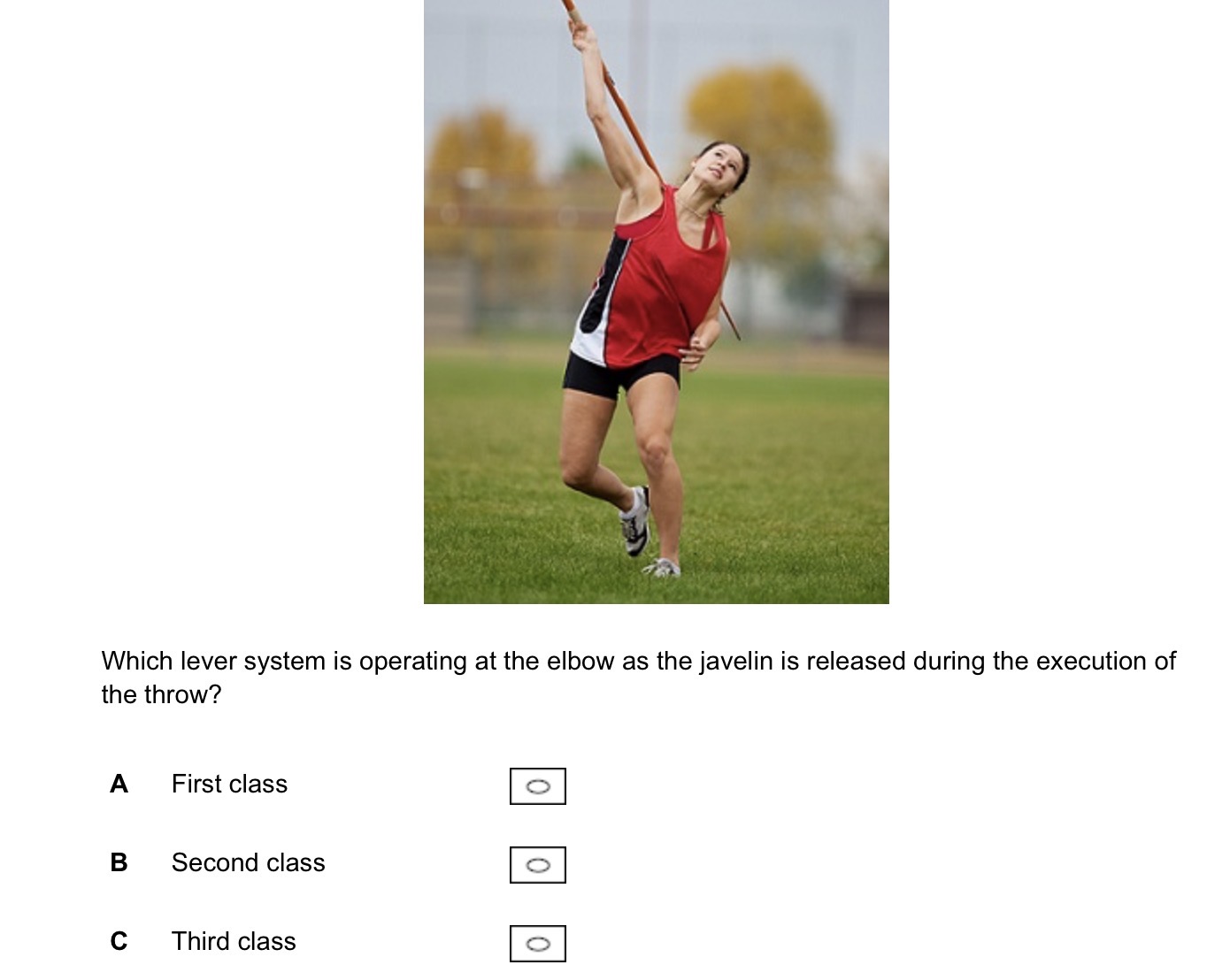
A
The photograph below shows an athlete performing the long jump.
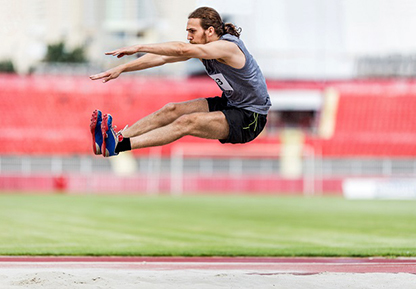
In the photograph, a third-class lever is operating at the hip to allow flexion.
Explain the mechanical advantage of the third-class lever operating at the hip for the athlete.
(2)
AO1
(mechanical advantage) Large range of movement / resistance or load can be moved quickly (1).
AO3
By moving the legs forwards in front of them / flexing at the hip / lifting their legs higher to allow them to jump further / so legs are thrown forwards quickly to gain forwards movement and jump further (1).
The ankle operates as a lever as an athlete pushes off the ground to clear a hurdle.
Identify the class of lever operating at the ankle and explain the mechanical advantage of the class of lever for the athlete.
(3)
Second class lever system (1)
Longer effort / force arm (1)
Therefore, the hurdler provides minimal effort to generate height to clear the hurdle (1)
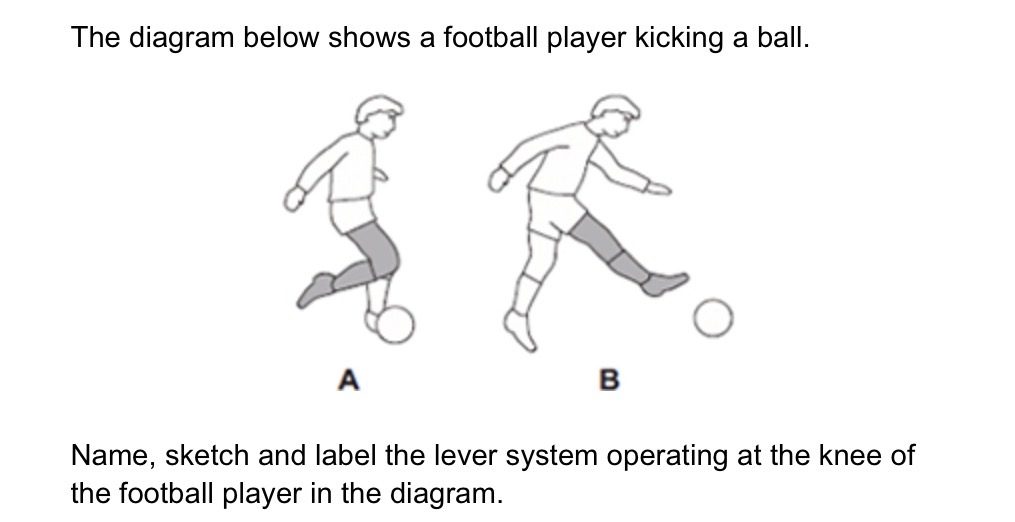
Third class lever system
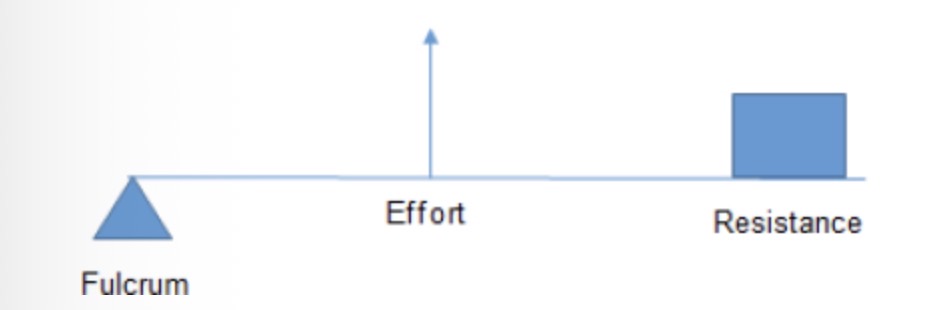
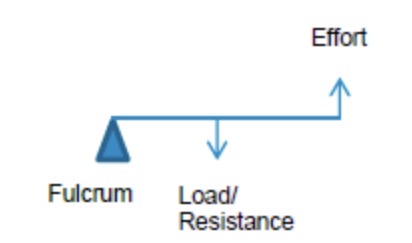
Second class lever
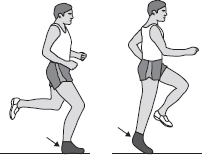
The figure below shows the drive phase of the leg action while running.
Position A Position B
State one mechanical advantage and one mechanical disadvantage of the lever system that is being used at the right ankle as the runner in the figure above moves from Position A to Position B.
(2)
Advantages
Larger forces generated / longer force / effort arm
Easy to move heavy / large weight
Disadvantages
Limited range of movement
Limited / reduced speed of movement
The image below shows the movements involved as a player throws the ball on to the field of play during a game of rugby.
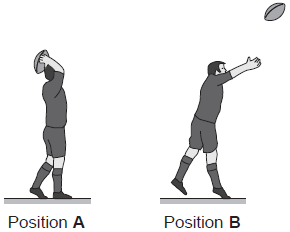
Sketch and label the lever system operating at the elbow during the movement from Position A to Position B.
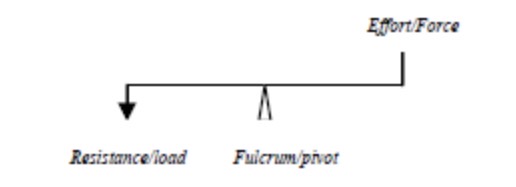
First Class Lever
The figure below shows how a gymnast pushes up from a headstand to a handstand.
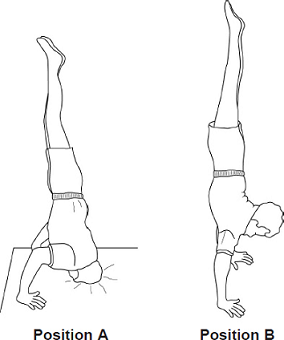
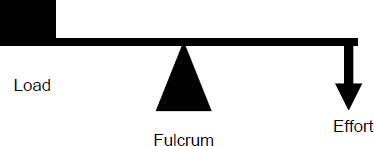
Name, sketch and label the lever system that is operating at the elbow during the movement from A to B.
First class / order / lever / system;
Correctly labelled – fulcrum / pivot; effort / force; load / resistance / weight;
Correct order – Fulcrum / pivot in middle.
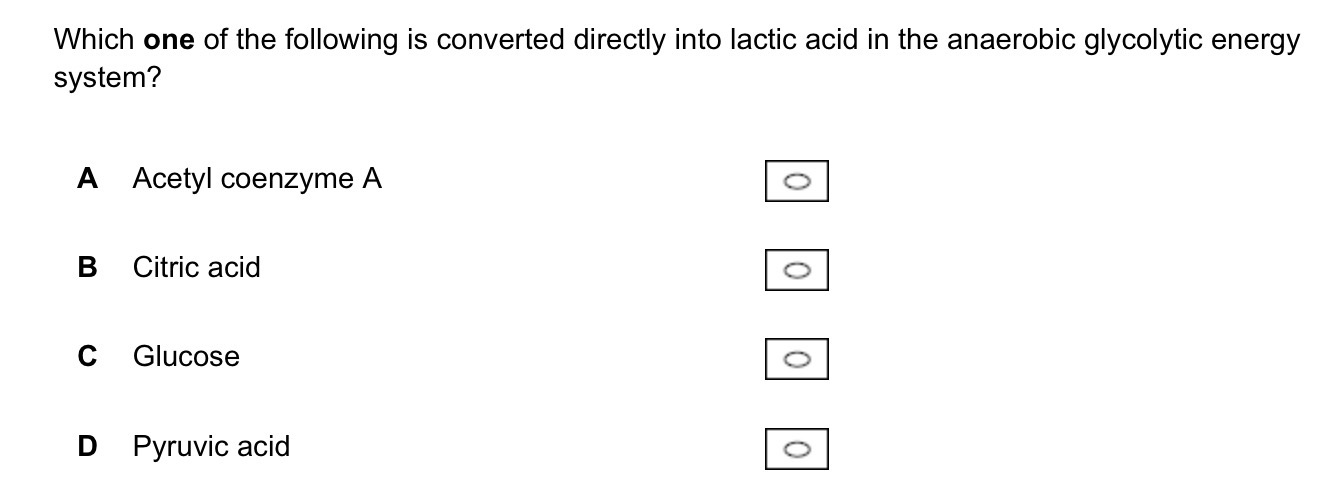
D
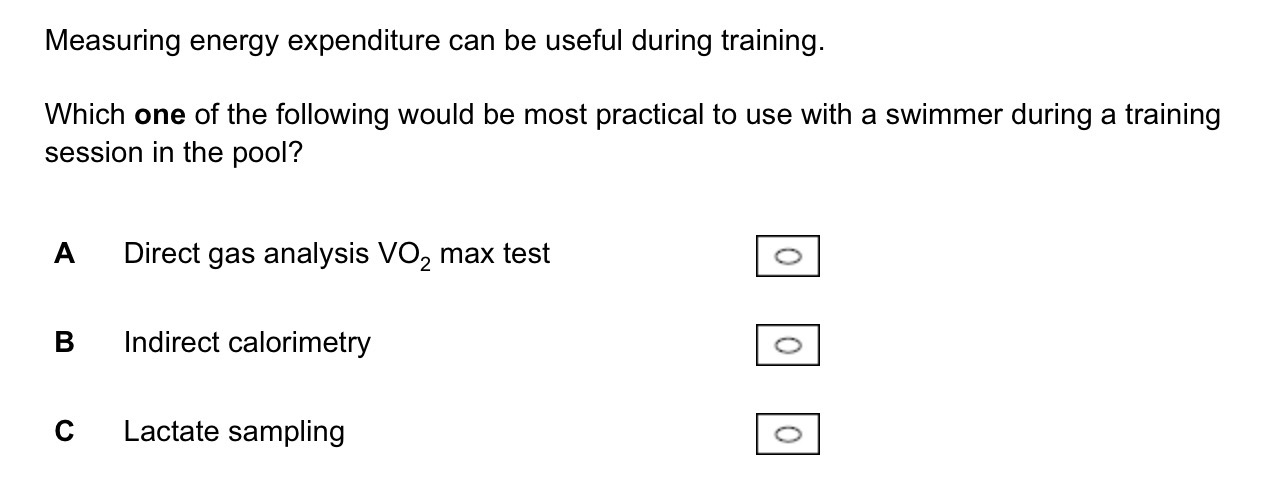
C
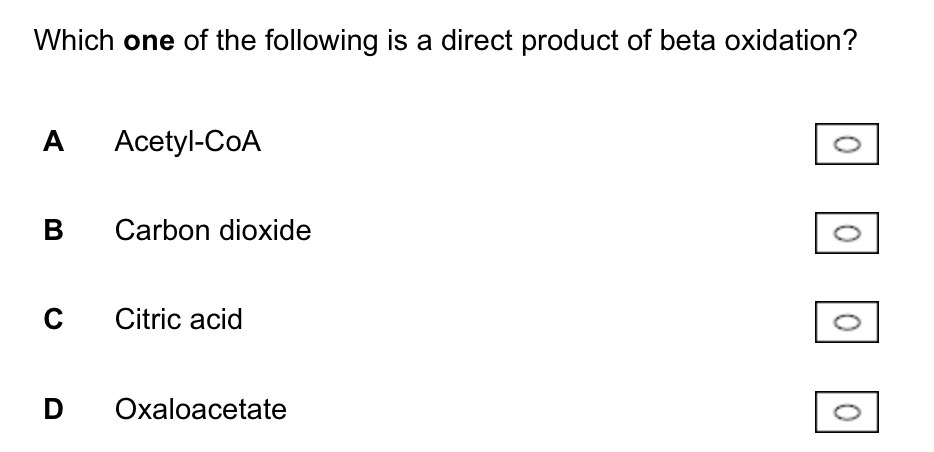
A
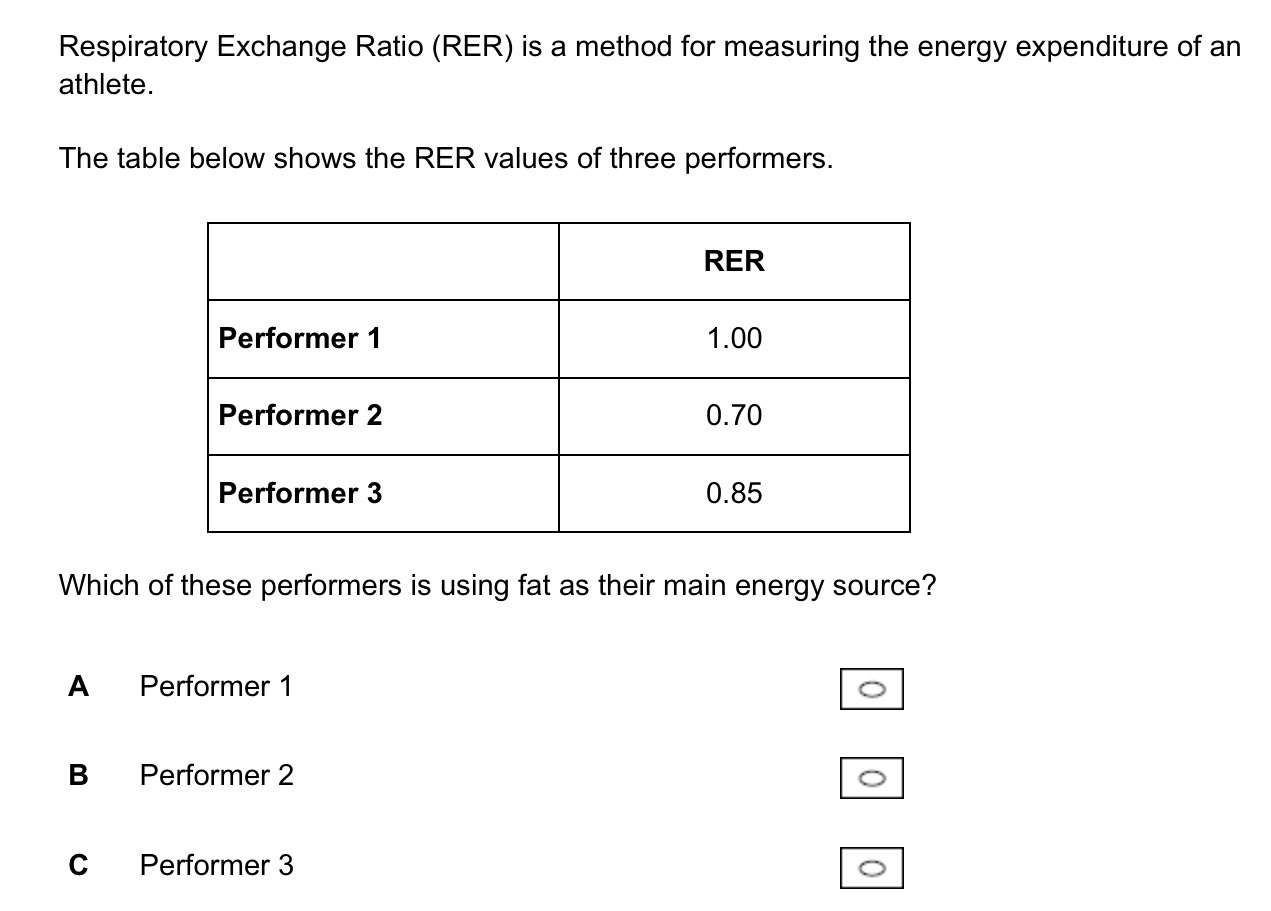
B
amateur boxing match consists of three rounds. Each round lasts 3 minutes.
There is a 1-minute break between each round.
Analyse the role of excess post-exercise oxygen consumption (EPOC) during the match and its impact on the performance of the boxer as the rounds progress.
(3)
• EPOC will occur during breaks to repay oxygen debt/as they have worked anaerobically. (1)
• (Fast/alactic component) Some ATP/PC will be resynthesised allowing the boxer to perform explosively/anaerobically/at high intensity in subsequent rounds. (1)
• PC stores will not be fully resynthesised resulting in the increased use of the anaerobic glycolytic system/production of lactic acid/fatigue. (1)
• Some re-saturation of myoglobin with oxygen will delay the build-up of lactic acid/fatigue. (1)
• (Slow/lactic component) Not enough time/oxygen to remove lactic acid so it will build up causing fatigue/decreased performance. (1)
Training can increase an athlete’s maximum A-VO2 diff.
Analyse how the body systems adapt to allow this.
(3)
• Increased oxygen content in arterial blood due to more red blood cells/haemoglobin/oxygen carrying capacity of the blood (1)
• Increased gas exchange at the muscle due to increased capillarisation/increases blood supply/surface area (1)
• Increased gas exchange at the muscle due to more myoglobin which has a greater affinity for oxygen than haemoglobin so pulls more oxygen into muscle/can store more oxygen in muscle (1)
• Increased gas exchange at the muscle due to larger/more numerous/more efficient mitochondria allowing for more oxygen to be used in a muscle cell so less returned to venous blood (1)
Runners in the London Marathon will mainly use the aerobic energy system during their race.
Name and describe the three key processes involved in the aerobic energy system when using glucose as an energy source.
• Glycolysis – glucose broken down into pyruvate/pyruvic acid (1)
• Krebs/citric acid cycle – oxidation of acetyl-coenzyme-A/citric acid (1)
• Electron transport chain – transfer of electrons down a carrier chain/hydrogen is oxidised (1)
Describe the process of ATP resynthesis in the mitochondria (4)
Breakdown of pyruvic acid
Converted to acetyl CoA
Krebs cycle
Oxidation of citric acid
Production of CO2
Produces 2 molecules of ATP
Electron Transport Chain
Water is formed through hydrogen combining with oxygen
Produces 34 molecules of ATP
Explain the term VO2 max and its relationship to aerobic performance (2)
Vo2 max : Maximum volume of oxygen that can be utilised by the working muscles per unit of time
Higher Vo2 max means the greater the endurance capacity of the performer / performer can work at higher intensity for longer / delayed OBLA
Outline the advantages and disadvantages of the ATP-PC system
Advantages
Energy released quickly
ATP/PC resynthesised quickly
No waste products
Disadvantages
Limited PC stores
High intesnity exercise can only be completed for brief period of time / 8-10 seconds
Full recovery takes up to 2-3 minutes
What is the effect on ATP and PC stores of short periods of high intensity exercise followed by recovery periods lasting up to 30 seconds? Justify your answer (3)
ATP/PC levels decrease
Insufficient stores don’t fully recover / not enough ATP or PC resynthesised in 30 seconds
(during exercise) ATP/PC supplying energy
(during exercise) PC breakdown for ATP resynthesis
(during recovery) ATP/PC resynthesied during rest
Explain how an increase in VO2 max aids the performance of a player during extended and periods of high intensity exercise (3)
VO2 Max : the maximum volume of oxygen utilised per unit of time
More oxygen available means lactic acid broken down quickly / prevents build up of lactic acid
OBLA delayed at higher percentage of VO2 Max
Increased oxygen carrying capacity / more red blood cells carry oxygen to the muscle

A : Oxygen Deficit
Occurs when not enough oxygen present at the start of exercise to supply enough ATP aerobically
B : EPOC
Volume of oxygen consumed during recovery
Fast EPOC : Resynthesis of myoglobin with oxygen
Slow EPOC : Removal of lactic acid
Explain how energy is provided, allowing the athlete to complete the shot put (3)
Stored ATP broken down by ATPase
Releases energy for movement to complete shot put
PC breakdown to creatine and phosphate
Energy used to resynthesis ATP