chapter 22 prokaryotes: bacteria and archaea
 Call Kai
 Learn
Learn Practice Test
 Spaced Repetition
 Match
Match Flashcards
 Knowt Play
1/25

There's no tags or description
Looks like no tags are added yet.
Name | Mastery | Learn | Test | Matching | Spaced | Call with Kai |
|---|
No analytics yet
Send a link to your students to track their progress
26 Terms
prokaryotes
-first organisms on earth ~3.5-3.8 BYA
-millions of species (named or not), found everywhere
-live on and in every other living organism
-most benign and many essential to all life
-the size of prokaryotic cells led to their being undiscovered for most of human history
two technology strands that allows study for microbes
-microscopy for visualization
→electron microscopes allowed the study of cell substructure
-infectious disease investigations
history of microbiology
-german physician Robery Koch is credited with discovering the techniques for pure culture. including staining and using growth media
growing prokaryotes in the lab
-culture medium
-pure culture
culture medium
-contains all the nutrients needed by the target microorganism, can be liquid (broth) or solid
→after an incubation time at the right temperature, there should be evidence of microbial growth in the culture medium
pure culture
a laboratory culture containing a single species of microorganism
Robert Koch
-proposed four postulates to prove a casual relationship between a microorganism and an individual
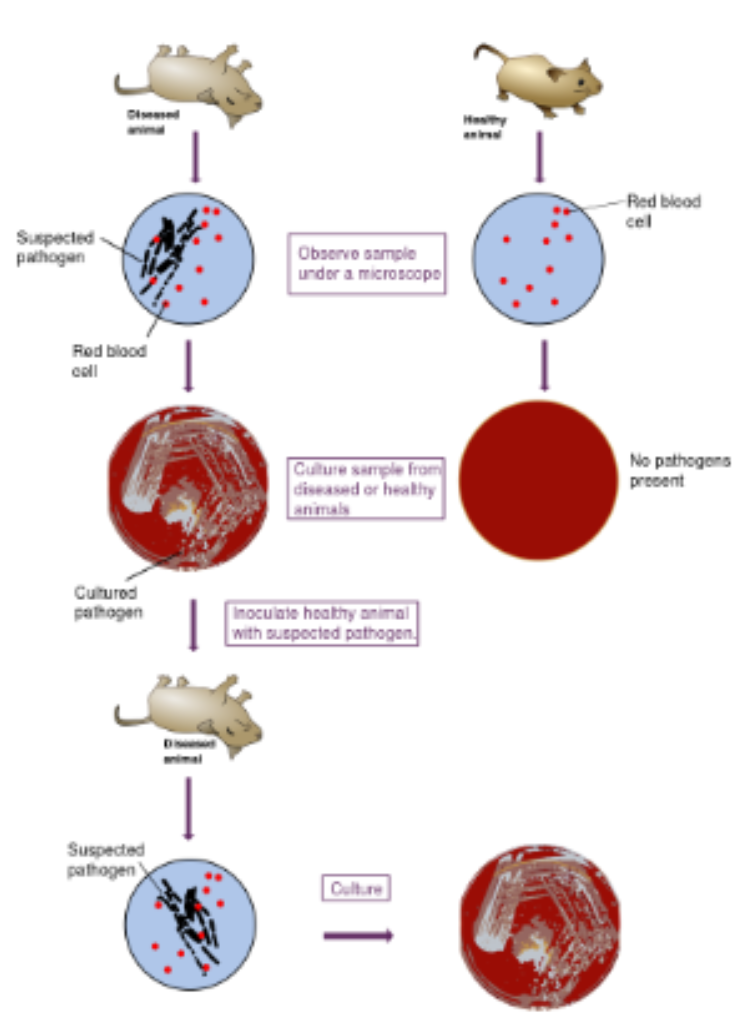
Koch’s postulates:
the microorganism must be found in abundance in all organisms suffering from disease, but should not be found in healthy organisms.
the microorganism must be isolated from a diseased organism and grown in pure culture
the cultured microorganism should cause disease introduced into a healthy organism
the mircoorganism must be reisolated from the inoculated, diseased experimental host and identified as being identical to the original specific causative agent
prokaryote structure: cell size
-prokaryotic cells (0.1-5.0 um in diameter) are significantly smaller than eukaryotic cells (10-100 um diameter)
-the predominantly single-celled organisms of the domains Bacteria and Archaea are classified as prokaryotes
prokaryote structure-Shape
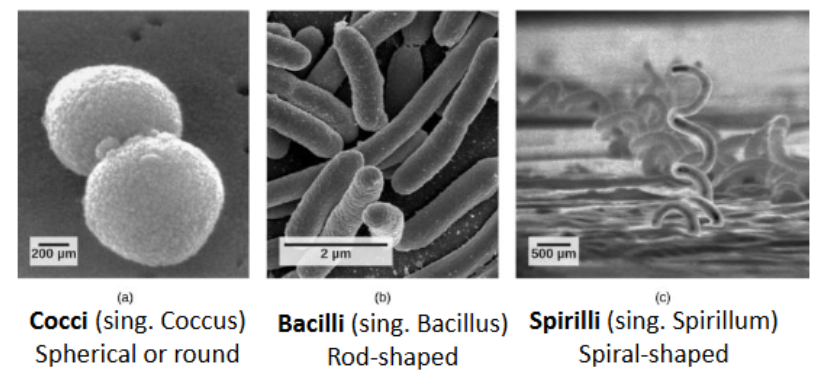
-many different shapes, but most fall into 3 main:
cocci
bacilli
spirilli
prokaryotes structure 2
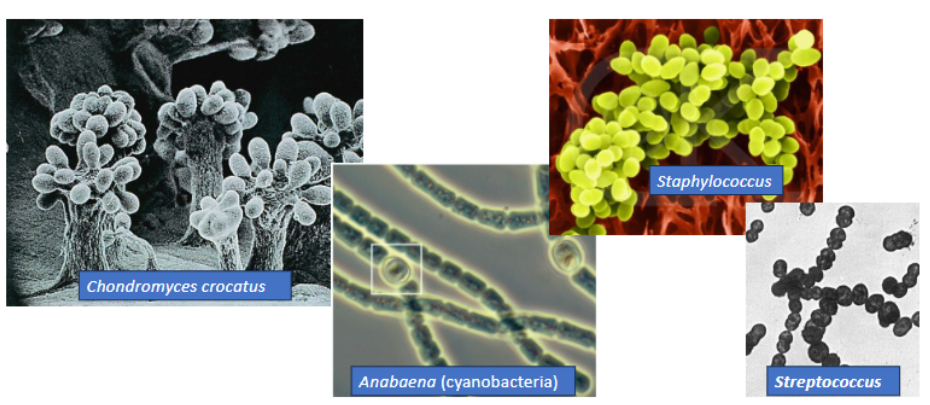
often occur in characteristic aggregates (pairs, chains, tetrads, clusters, etc)
cell structure
-all cells have four common structures:
the plasma membrane
the cytoplasm
the double stranded DNA genome
ribosomes
the plasma membrane
functions as a barrier for the cell and separates the cell from its enviornment
the cytoplasm
a complex solution or organism molecules and salts inside the cell
double-stranded DNA genome
the informational archive of the cell
ribosomes
sites of protein synthesis
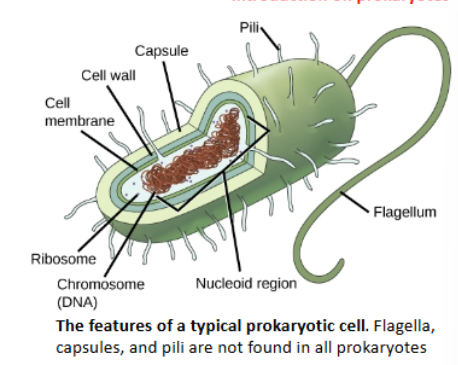
for prokaryotes:
-almost all have a cell wall
-many have capsule or slime layer
-some have hairlike pili: fimbriae or sex pilus
-many have flagellum
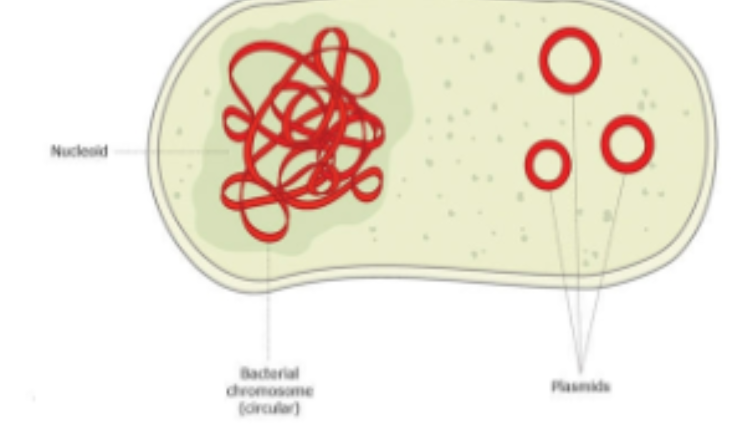
-may have plasmids
-NO membrane-bound organelles
→no nucleus: DNA in nucleoid
→ribosomes “free”
-no microtubules
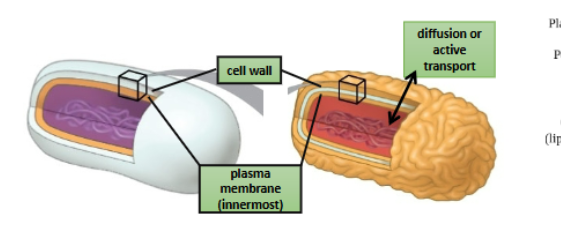
cell wall
-almsot all pro have cell wall
-lies outside plasma membrane
-protects and prevents cell lysis (rupture)
-bacteria: w/ peptidoglycan (PG)
-archea: w/ other structural polysaccharides (do not have peptidoglycan)
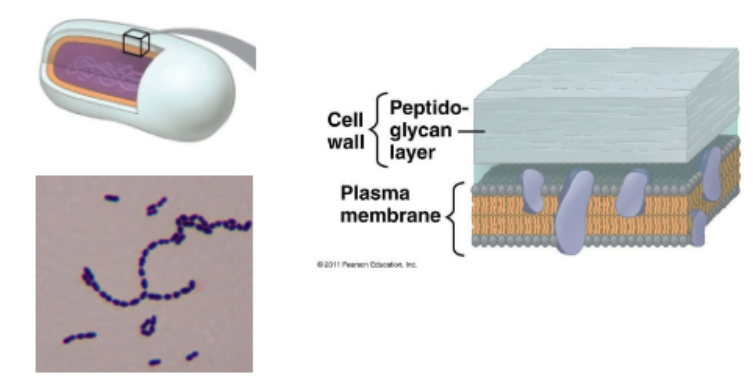
gram positive bacteria
-gram-stain reflects cell wall type
-gram positive +: bacteria w/ thick PG layer
-stains purple in Gram stain
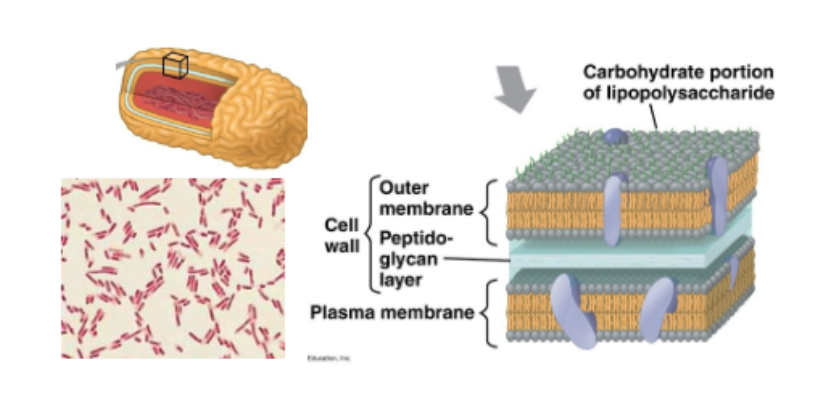
gram negative bacteria
-gram negative: bacteria with thinner PG layer plus outer lipid bilayer membrane
-pink in gram stain; outer lipopolysaccharide layer often toxic, resists drugs and immune system
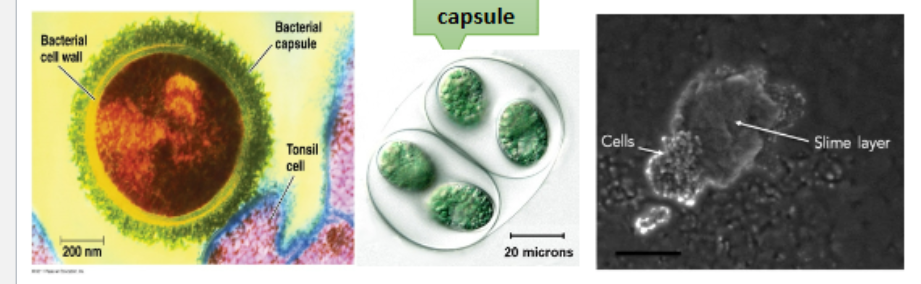
capsule or slime layer
-many pro have
-sticky carbs and proteins secreted outside cell wall
-adheres (glues) cells together or to surface
-resists attack from immune system
-holds in moisture
fimbriae
-some have hair-like protein called fimbriae (short pili)
-helps cells stick to surfaces and each other
sex pilus
-many form sex pilus (pl. pili) pulls two bacteria cells together for DNA transfer (conjugation)
-forms mating bridge
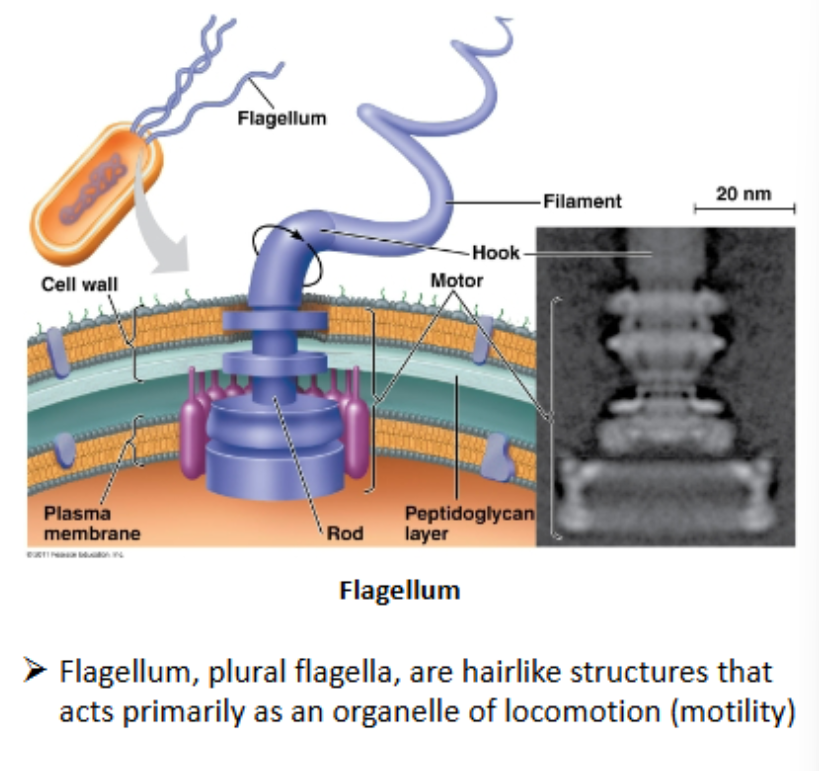
flagellum
-not homologous to eukaryote flagellum
-allows movement!
Movement
-many are capable of movement (motility)
-taxis=movement directed toward or away from (+ or -) stimulus
-chemotaxis: chemical
-phototaxis: light
-geotaxis/magnetotaxis: gravity, towards something
plasmids
-extra tiny DNA ringss w/ few genes
-replicated independently
-not essential for life, but add diversity
→e.g. drug resistance genes