BIOL 2160- LSU EXAM 1
 Call Kai
 Learn
Learn Practice Test
 Spaced Repetition
 Match
Match Flashcards
 Knowt Play
1/204

There's no tags or description
Looks like no tags are added yet.
Name | Mastery | Learn | Test | Matching | Spaced | Call with Kai |
|---|
No analytics yet
Send a link to your students to track their progress
205 Terms
Physiology
Function, Form dictations function, how a molecule is shaped determine the job that is does.
Anatomy
Structure
Physiological Organization
Molecules, Cells, Tissue, Organs, Organ Systems
Organ System Examples
Cardiovascular, Gastrointestinal
Organ Examples
heart, liver
Tissue Examples
Nervous tissue, muscle tissue
Cells Examples
Neurons, Epithelial Cells
Molecules Examples
ATP, water, neurotransmitter receptors
Neurons/Nervous Tissue
Specialized for sending and receiving information (motor neurons, cortical interneurons, etc)
Muscle Cells/ Muscle Tissue
Specialized for contraction, must contract to survive
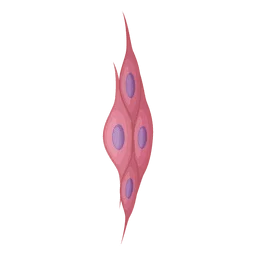
Smooth Muscle cells
only found in the heart
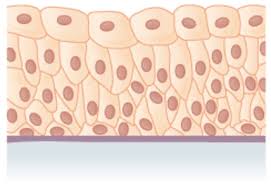
Epithelial cells/ epithelial tissue
found on organs, glands, and lining body cavities (mouth, nose, ears, etc)
used for exchange
makes up the boundary between one area and another
makes up most of the skin
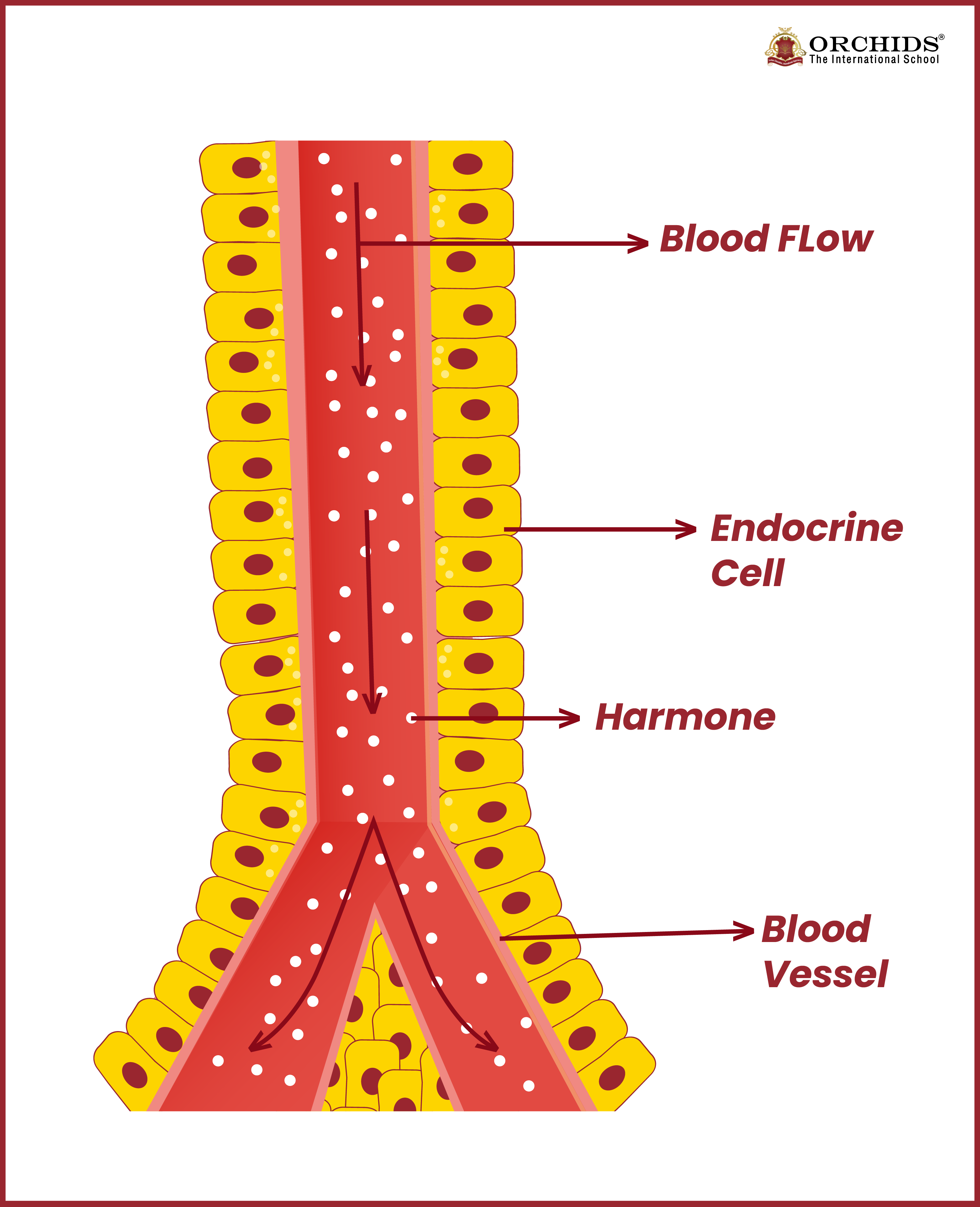
Endocrine Glands
Secrete molecules, (usually hormones) directly into the blood stream. i.e. pancreatic and thymus glands
secrete into a capillary (bloodstream)
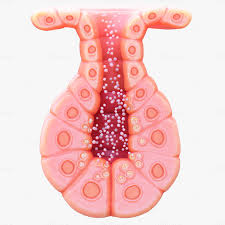
Exocrine Glands
Utilize a duct. secrete molecules into a body cavity, or to the exterior of the body. i.e. stomach, salivary, seat glands
Connective tissue cells
Characterized by very few cells and lots of extracellular materials (water, salts, and proteins)
ex: bone cells, blood cells, fat cells, fibroblasts, bone cartilage, tendons, and ligaments
Homeostasis
Ability to maintain a relatively stable internal environment despite fluctuations in the external environment; essential for survival and function of all cells
What does deviation from homeostasis indicate?
Disease
How is homeostasis most often accomplished?
Negative feedback
Negative Feedback
Involves returning internal conditions to a "set point"
Negative Feedback Loop
Helps return internal conditions to a set point when they deviate too far outside of an acceptable range. Input and Outpoint are opposites.
What is an example of the negative feedback loop?
Shivering when you get cold
Negative Feedback Sensors
In the body, detects change and sends information to the integrating
found in skin
Negative Feedback Integrating Center
Assesses change around a set point; the integrating center then sends instructions to effector
usually not the brain, but not always
Negative Feedback Effector
Makes appropriate adjustments to try and return the body to its set point
the sweat glands; take orders from the integrating center
Regulated variable
Any internal condition that must be monitored and maintained within the system, "normal levels"
Example of negative feedback
Increase in glucose induces a decrease in glucose, returns system to set point
insulin and glucagon
these are antagonistic effectors; a hormone that lowers your blood sugar and a hormone that raises your blood sugar
Why do people shiver with fever?
Fever is physiological response, involves changing body temperature, set point has changed
Antagonistic Effectors
these do the exact opposite of each other, but work together to keep conditions stable
homeostasis is often maintained by these that move conditions in opposite directions
maintains dynamic constancy; conditions within a certain normal range
Positive Feedback
Moves conditions further away from a set point. The input and the output in a positive feedback loop are the SAME.
Positive Feed example
uterine contractions during child birth; release of oxytocin causes the uterus to contract and this pushes the baby’s head against the cervix, activating stretch receptors that signal to the hypothalamus; resulting in more oxytocin release, which results in stronger contractions
Atom
basic smallest unit of all forms of matter; retains the physical and chemical properties of the element
everything living/nonliving is made of this
made up of subatomic particles (neutrons, protons, and electrons
Electron Orbitals
3-D space around the nucleus of an atom where an electron will be found
Chemical behavior of atom
Determined by the number of electrons in the outermost electron shell
Reactive
Atom with incomplete electron shell is ______
Inert, not chemically active
Atom with full electron shell is ____
(found on far right column on periodic table)
how does a reactive atom fill its valence shell?
Will try to fill vacancy or get rid of extra electrons so outer shell is full by interacting with other atoms which may result in two atoms forming a chemical bond
Chemical bond
Attraction that holds two atoms together; happens because of 2 or more elements are trying to fill up their outer electron orbital
Molecule
Two or more atoms held together by chemical bonds; smallest unit that retains the physical and chemical properties of a compoound
When does an ion form?
When an atom has an almost empty or a almost full outer electron shell
What is an anion?
Negatively charged atom or molecule, it gained an electron (more electron than protons)
What is a cation?
Positively charged atom or molecule, it has lost an electron (more protons than electrons)
Covalent Bond
Formed when two atoms share pairs of electrons
Nonpolar Covalent Bond
electrons spend equal time near each nucleus, covalent bond in which the sharing of the electron pair is EQUAL, same charge on both nuclei
Polar Covalent Bond
Covalent bond in which the sharing of the electron pair is UNEQUAL, electrons spend more time near the larger nucleus
Electronegativity
atom's ability to attract and hold electrons. Indication of how much positive charge is in the nucleus. assigned a numerical value. the higher the number, the more electronegative an atom is
What happens to atoms with higher electronegativity?
Atoms with higher electronegativity have more positively charged nucleus, holds onto electron pair more strongly than atoms with significantly lower electronegativity
2.2
Hydrogen EV
2.6
Carbon EV
3.0
Nitrogen EV
What bonds are atoms next to each other compared to atoms separate by one?
Non-polar compared to polar
Hydrogen Bond
Formed by the charge attraction when a (H) hydrogen atom which is covalently bonded to one atom is attracted is attracted to a second atom
polar covalent bond
bond between hydrogen and oxygen in a SINGLE water molecule is a ______
hydrogen bond
bond between hydrogen and oxygen in SEPARATE water molecules is a _____
strong
polar covalent bonds are _____
Hydrophilic
Describes property of having an affinity for water
What hydrophilic substances easily dissolve in water?
Polar and ionic
hydrophobic
nonpolar substances
describes the property of NOT having an affinity for water
Why do hydrophobic molecules clump together in water?
Because of hydrophobic interaction
Why doesn't oil dissolve in water?
The non polar oil molecules cannot form hydrogen bonds with the polar water molecules
in-depth: oil doesn’t have a charge and for something to dissolve in water, it has to form hydrogen bonds with water, hence the charge
What are the four basic types of biomolecules?
Carbohydrates, Lipids, Proteins and Nucleotides
Carbohydrates
Monosaccharides that contain carbon, hydrogen, and oxygen in a 1:2:1 ratio, ring structure, amin purposes: short-term energy
What is glycogen?
Energy storage molecules in humans, used for quick energy and is metabolized when blood sugar levels drop
Where is glycogen stored?
Skeletal muscle and liver of humans
when blood glucose levels are high → short term energy and depleted within a week
Carb-loading
Process of increasing the amount of glycogen stored in the body prior to a race or competition
(think of michael phelps)
What is the depletion phase in carb-loading?
A week or two prior to competition, intense exercise and a no-carb/ high protein diet
What is the loading phase in carb-loading?
A couple of days before competition, no intense exercise, eating as many carbs as you can take in
How is fat burned in human body?
Blood glucose is metabolized first. Afterwards, glycogen reserves are metabolized…then fat
Why does glycogen dissolve in water?
It is polar. Each ounce of glycogen has as many as four ounces of water attached to it
(think of water weight)
What is fat?
Non polar, it has no water attached to it
What are lipids?
Usually hydrophobic (insoluble in water) and consist of non polar hydrocarbon chains and rings
What is a saturated fat?
Solid at body temperature. they have no C=C bonds. they are saturated with hydrogens (lard, grease, fat)
What is an unsaturated fat?
Liquid at body temperature, have at least one C=C bond. (Olive Oil, Vegetable Oil)
healthier; liquids in the bloodstream are less likely to clog arteries
What fat is less likely to clog arteries based on consistency?
Unsaturated fat-Not very dense when moving through body
chewy
cookies that have lots of saturated fats are ____
crunchy
cookies that have unsaturated fats are ______
Phospholipids
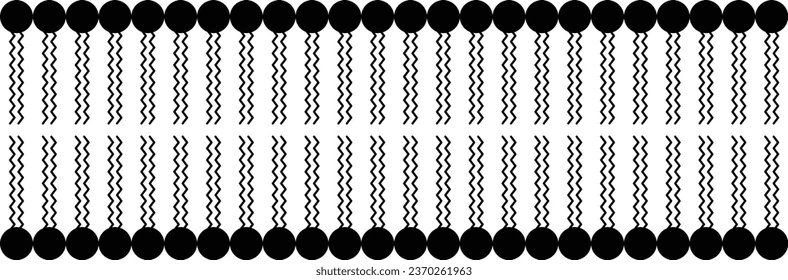
Two fatty acids and phosphate groups attacked to glycerol backbone, are dominant component of cell membranes, and contain hydrophilic (polar) and hydrophobic (nonpolar) regions
Phospholipid Bilayer
Hydrophilic head, phobic tails i.e. laundry detergent (polar and non-polar)
Steroids
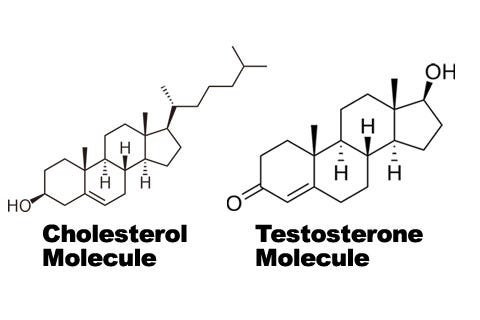
Three 6 carbon and one 5 carbon rings, mostly nonpolar, many function as HORMONES (estrogen, testosterone, cholesterol) 98% of the time its 4 rings
Proteins
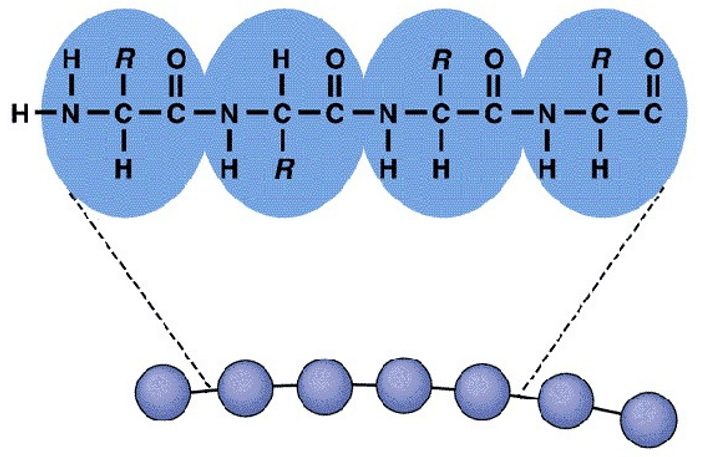
Composed of multiple amino acids (amino acid polymers)
sequence of amino acids is determined by DNA through processes of transcription and translation (gene expression)
Amino Acid
Composed of an amino group, a carboxyl group, and a functional group or R group (sidechain)
What does 20 R groups mean?
20 different amino acids
What do the R groups give amino acids?
Different properties such as polar and non polar
primary, secondary, tertiary, and quaternary
levels of protein structure
what structure do all proteins have and what do they sometimes have?
always primary secondary, and tertiary; sometimes quaternary
Primary Structure
Amino acid sequence
Secondary Structure
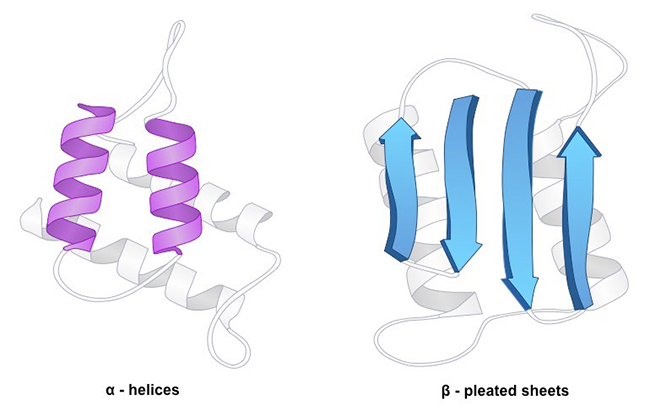
Every twist, fold, helix, topographical feature in the protein
Tertiary Structure
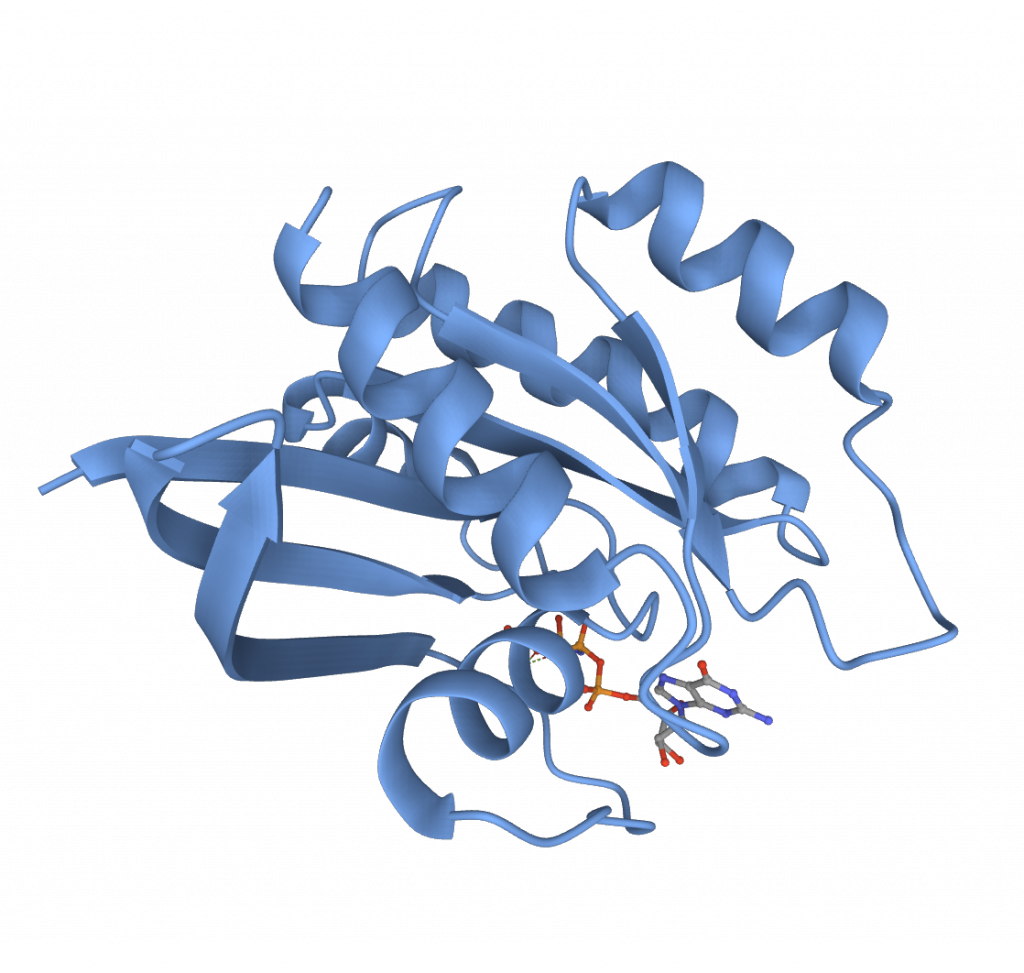
3D shape of protein; function; protein folded up as whole
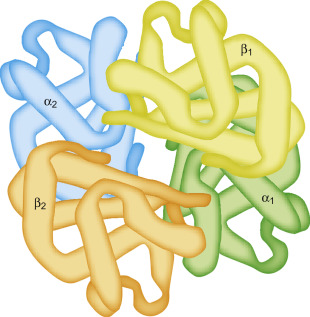
Quaternary Structure
Chain of amino acid to peptide to several proteins stuck together
Nucleotides
Composed of a 5-carbon sugar, one or more phosphate groups and a nitrogenous base
What 2 categories do the nitrogenous bases fall into?
Pyrimidine and Purine
What is pyrimidine?
One carbon ring, Cytosine ( C ) and Thymine ( T ) in DNA
What is purine?
TWO carbon rings, Guanine (G) and Adenine (A) in DNA
What are the possible bases?
Pyrimidines- C,T,U
Purines- A, G
what is the difference between DNA and RNA?
5 carbon sugar
in DNA, sugar is deoxyribose
in RNA, sugar is ribose
DNA Structures
AT and GC, TA and CG- Sugar phosphate backbones, and complementary base pairings
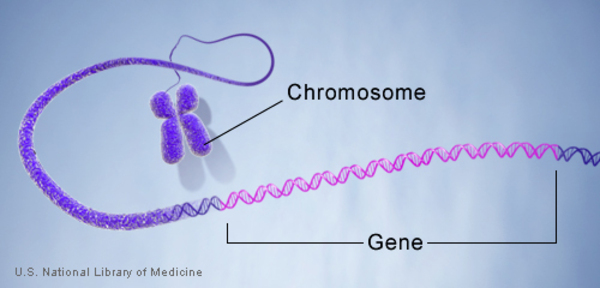
Gene
Length of DNA that codes for a specific protein
Gene Expression
Converting DNA into proteins (transcription and translation)
What is Transcription?
DNA -> RNA, occurs in nucleus
happens first; think of a book you check out, but can make a copy of it
What is Translation?
RNA -> protein, occurs in cytoplasm on the ribosome