Green synthetic rout to Sildenafil
 Call Kai
 Learn
Learn Practice Test
 Spaced Repetition
 Match
Match Flashcards
 Knowt Play
1/20

There's no tags or description
Looks like no tags are added yet.
Name | Mastery | Learn | Test | Matching | Spaced | Call with Kai |
|---|
No analytics yet
Send a link to your students to track their progress
21 Terms
Sildenafil
= Viagra
Intended use
In the search for new cardiovascular medication, new inhbitors for PDE (phosphodiesterase) were screaend
drugs like zaprinast weren’t succesful enough
Sildenafil was teste
showed not potent along with ‘side effects’
it was rapidly trialed and gave good results (physical and psychological)
commericalized fast
Becasue of the rapid growth in sales of sildenafil, the environmental efficiency of its synthessis has been immediately considered
goal of sildenafil
aim = inhibition of PDE5
there are 7 different types of PDE5 in the body
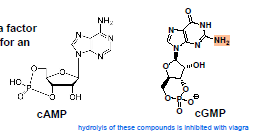
3 of them are able to selectively hydrolyse cGMP to GMP or cAMP to AMP
therefore selectivity is often more important than potency
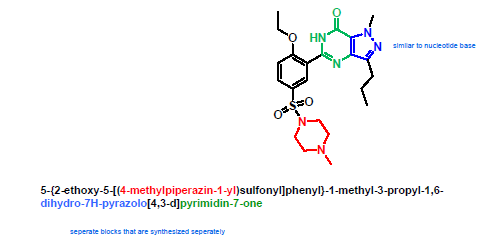
the structure of the sildenafil should be similar to that of the enzyme substrates (cGMP and cAMP)
PDE5 can be found in several parts of the human body
vascular and visceral smooth muscle are the ones responsible for erection
How Sildenafil works
during sexual stimulation, NO is released in the erectile tissue of the penis
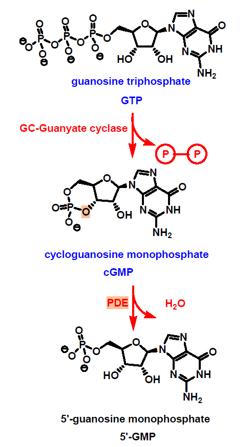
NO activates GC (guanylate cyclase) which converts GTP in cGMP
cGMP causes relaxation of the smooth muscle in th blood vessels of the erectile tissue allowing more blood flow causing erection
normally, cGMP is broken down into GMP by the PDE5
In men with erectile dysfunciton, the NO/cGMP signaling patway may be weak or not sustained for long engough
the little cGMP produced will be broken down to quickly = insufficient smoot muscle relaction and bloodflow
sildenafil inhibits PDE5 preventing cGMP breakdown allowing cGMP to accumulate longer to maintain smooth muscle relaxation
—> sildenafil does not directly cause eraction, sexual stimulation is still needed
other facts
Sildenafil is much more selective for PDE5 over the other PDE enzymes
except only 10 fold selectivity better than PDE6 which is located in the retina
this can cause abnormalities in color vision
also inhibition of PDE5 in other parts of the body (than the vascular and visceral smooth muscle) can cause side effects
Substituent at
position 3 substituent (propyl) is supposed to mimic the ribose part of cGMP
position 5’ (sulfonamide) is supposed to mimic the phosphate bond
this is on the other side of the molecule compared to cGMP
however the structure of the molecule allows it to fit well anyway
Intermediate A: initial route and problems:
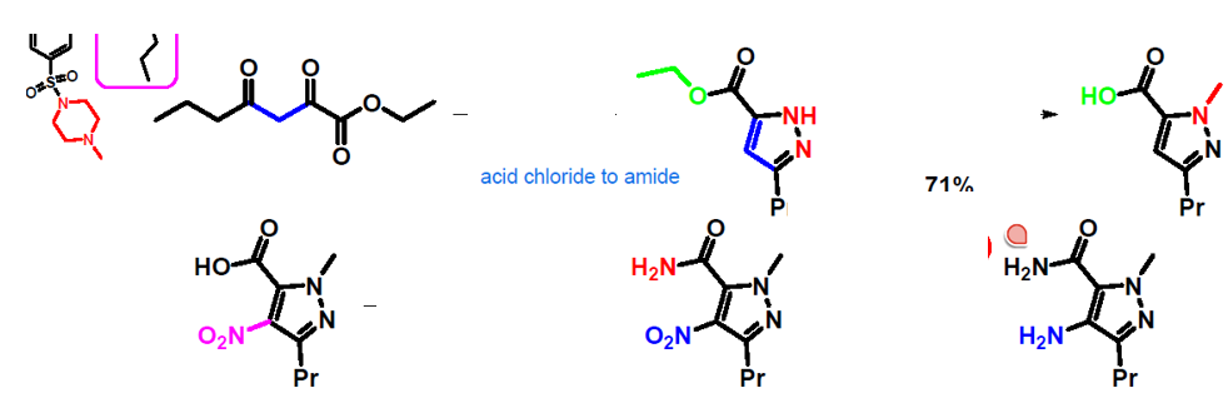
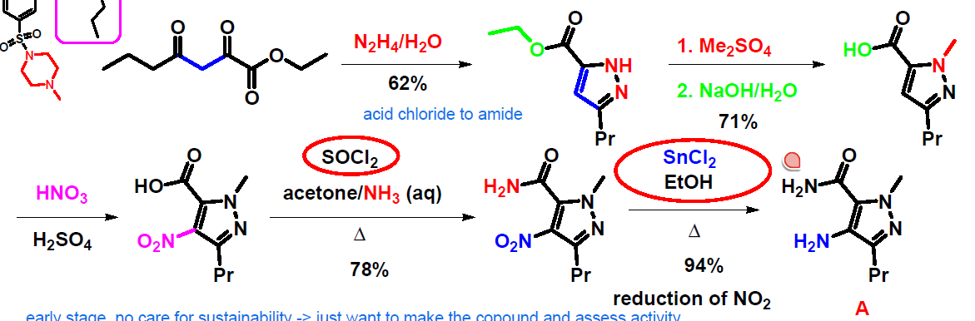
Problems
hydrazine
explosive
Me2SO4
carcinogenic
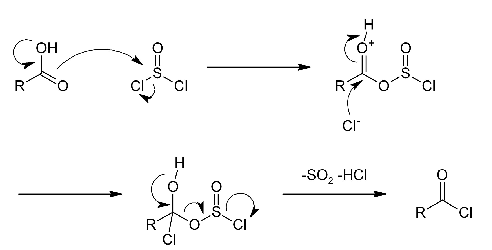
SOCl2
corrosive and toxic
reacts violently with water producing toxic/ corrosive gasses: HCl and SO2
used in large excess as reactant and solvent
SnCl2 =
toxic heavy metal
poor atom economy: reducing agent that only delivers electrons, Sn and Cl are wasted
expensive: need stoichiometric amounts
but justified
other reductions were not efffective, especially hydrogenation
large excess of thionyl chloride led to inclusion of traces of sulfur that cause catalyst poisoning needed for hydrogenation
Quick fixes
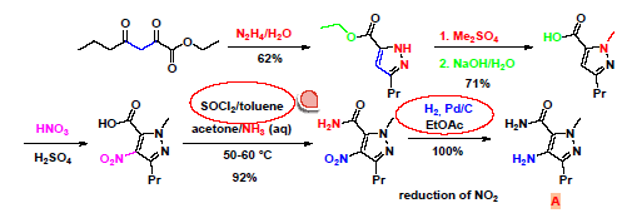
Only use stoichiometric amounts of SOCl2 and use toluene as a reaction medium
this improved yield of amide formation
This also allowed the use of catalytic hydrogenation in the second step
improved yield of reduction
only water as by product (much better AE)
both catalyst and solvent can be recovered
EtOAc is a sustainable solvent
acyl chloride formation mechanism
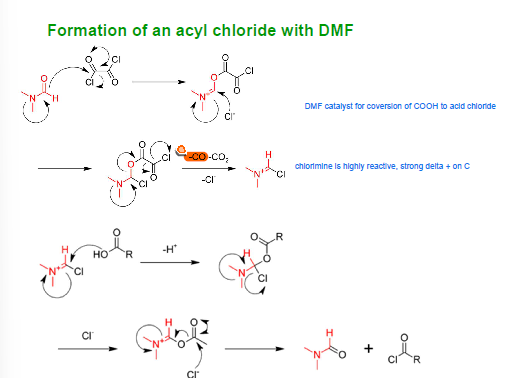
acyl chloride foramtion with DMF
release of gas —> drives equilibrium to the right
however: CO is toxic, and cannot see or smell it so dangerous
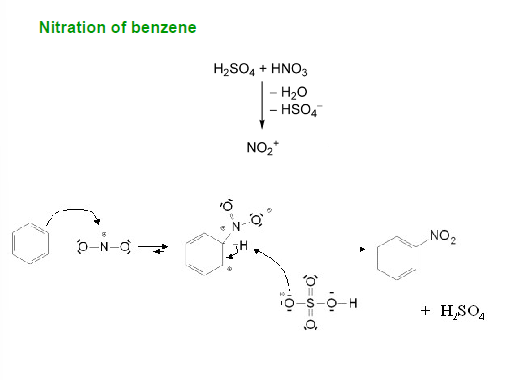
nitration of benzene
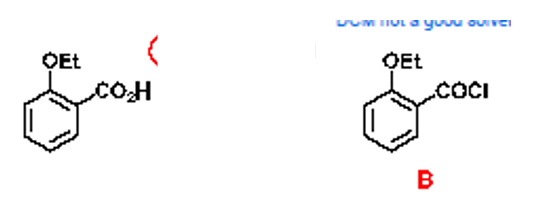
Intermediate B: initial route and problems and quick fixes
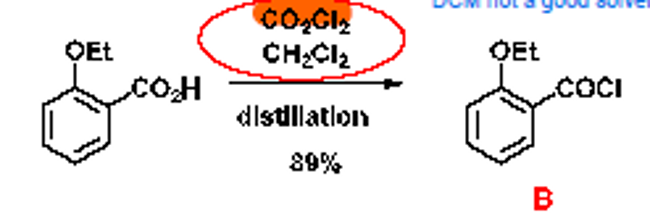
uses oxalyl chloride in DCM
DCM
chlorinated solvent and considered carcinogenic
oxalyl chloride
releases CO which is a toxic gas
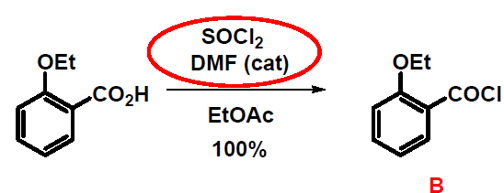
Quick fix
replace with SOCl2 with DMF cat
increases yield to quantitative
avoids elimination of CO
EtOAc much better solvent
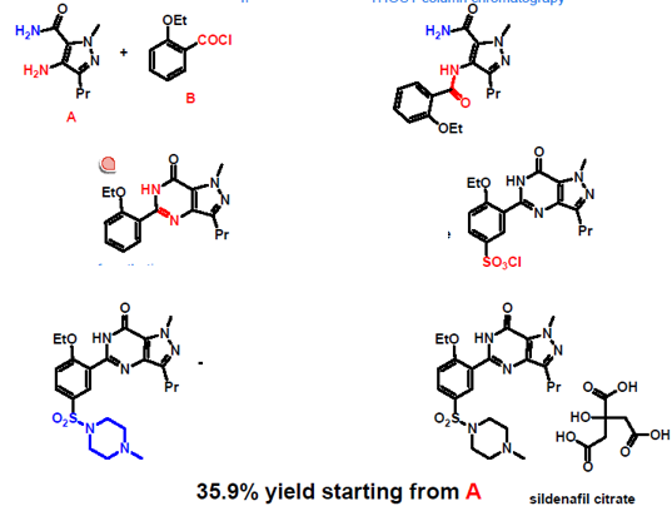
Combining A and B: initial route
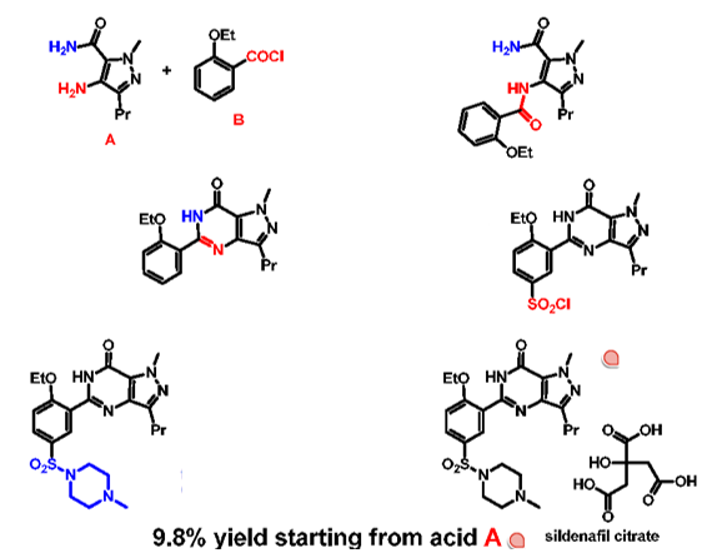
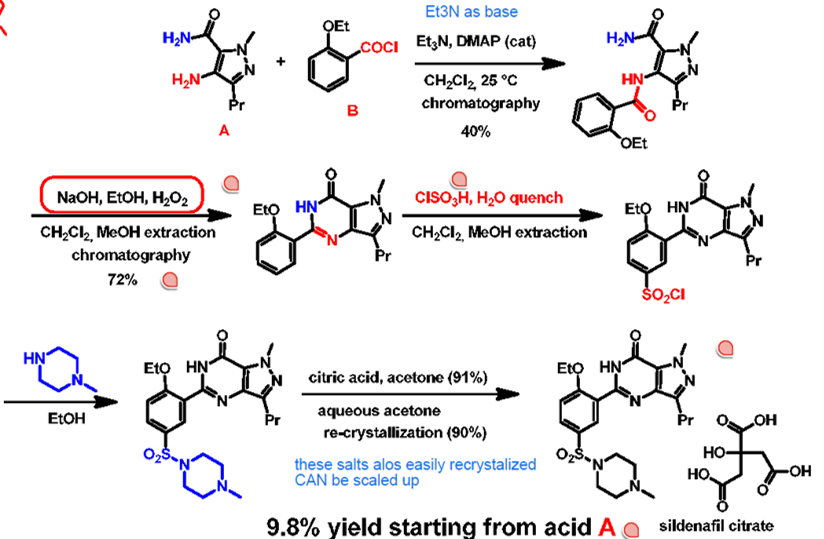
amide formation
low yield: likely due to low nucleophilicity of the amine by the é-poor pyrazole ring
DCM as solvent
requires chromatography —> cannot be scaled up
ring closure
challenging step but reasonable yield: would expect low reactivity due to low nuc of amide N and low electrophilicity of amide carbonyl, but intramolecular so feasible
H2O2 usually acts as oxidant but here as H-bond donor (stronger than h2o because 2 electron withdrwing oxygens)
increases electrophilicity of the amide carbonyl
requires workup (a lot of organic and aqueous waste) and chromatography —> no scale up
DCM as solvent
chlorosulfonation
low yield
large volumes of acidic aqeous waste that needs to be neutralized
chance of hydrolysis during quench
DCM is needed because of FG sensitivity
piperazine introduction
ok
salt formation
amine (from piperazine) is turned into a salt using citric acid
the ammonium salts are easier purify by recrystalization in aquous acetone and easier to handle, , scale up, formulate and suitable as a pharmaceutical solid
also protonation of the amine reduces electron density and nucleophility of the N making it less prone to oxidation (eg by air) or side reaction
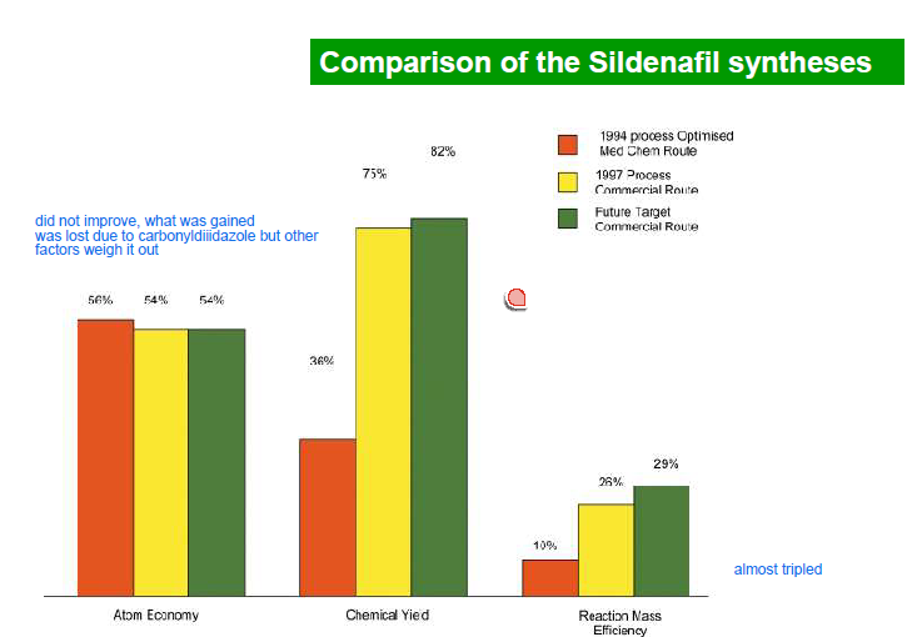
Overal 10% yield starting from intermediate A
—> not great for scale-up
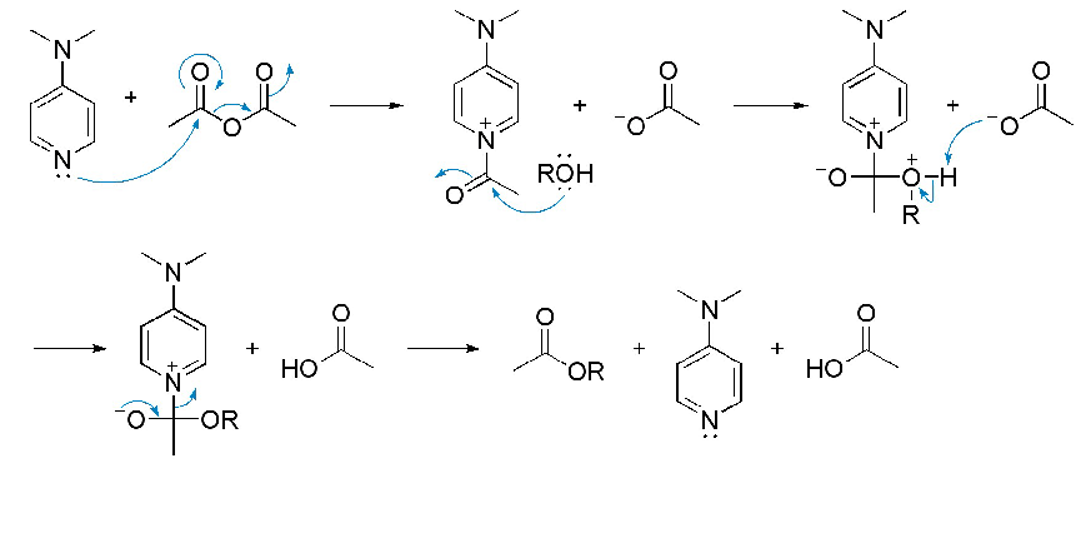
role of DMAP
DMAP attacks on the acid chloride and the amine attacks on the formed DMAP intermediate
Combining A and B: Quick Fixes
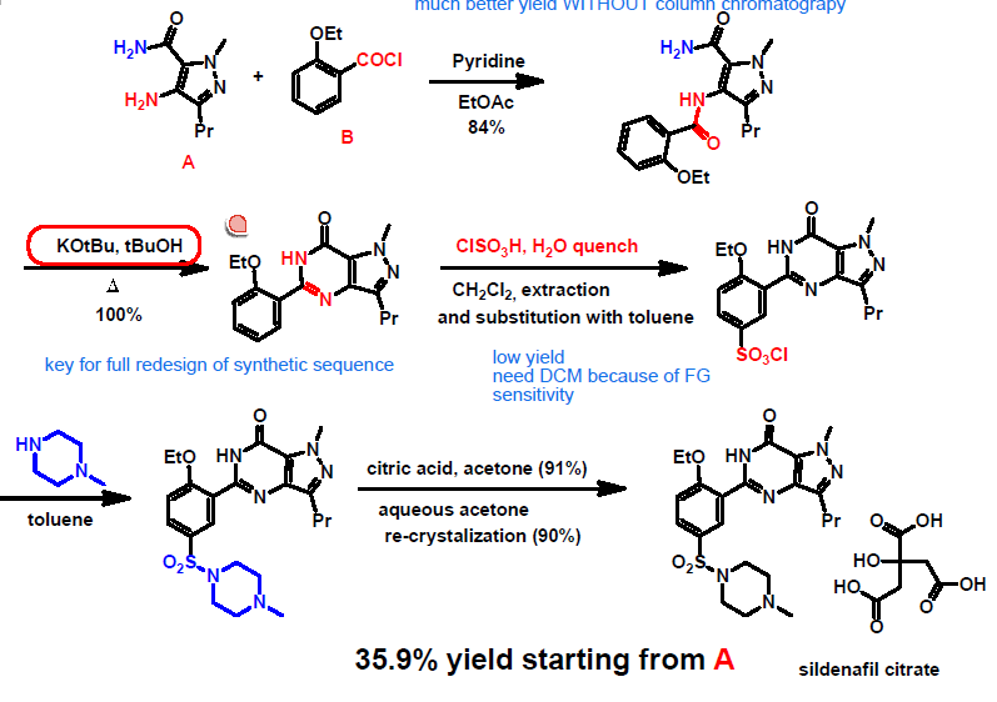
Amide formation
replaced DMAP and DCM by pyridine and EtOAc
much better solvents
higher yield
no need for column chromatography
ring closure
stronger bases under water free conditions
quantitative yield
no column required
chlorosulfonation
still low yield
large volumes of acidic aqeous waste that needs to be neutralized
chance of hydrolysis during quench
DCM for FG sensitivity
The reaction is quenched with water.
The product is extracted with dichloromethane CH2Cl2.
The DCM solution is then subjected to solvent exchange, meaning DCM is removed/replaced by toluene. because not isolated and needed for next step
piperazine formation
toluene instead of ethanol
salt formation
same
36% yield starting from A = much better
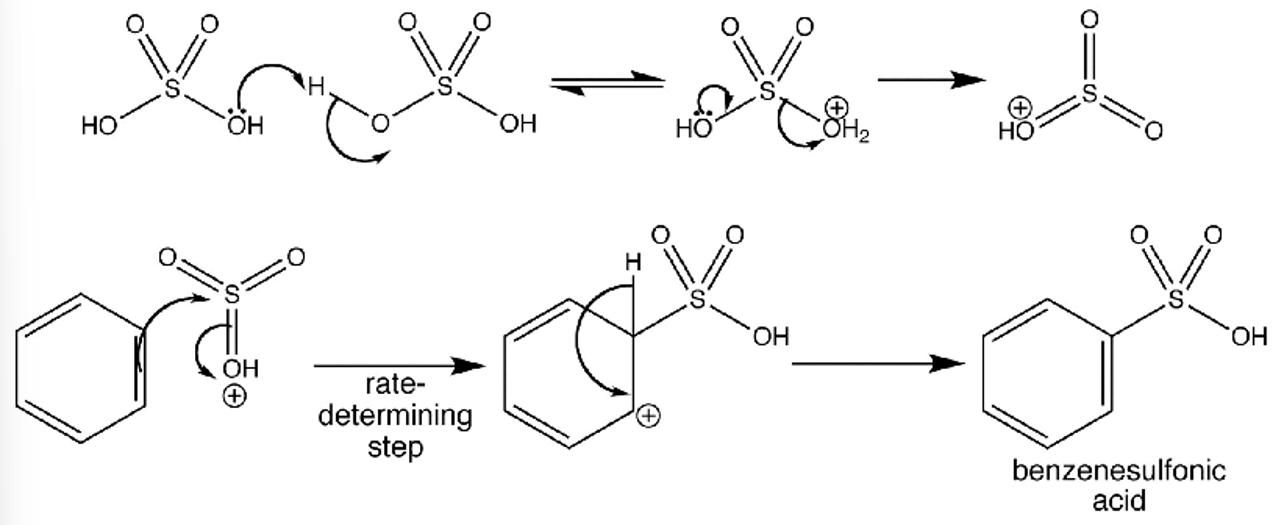
chlorosulfonation and chlorosulfon(yl)ation
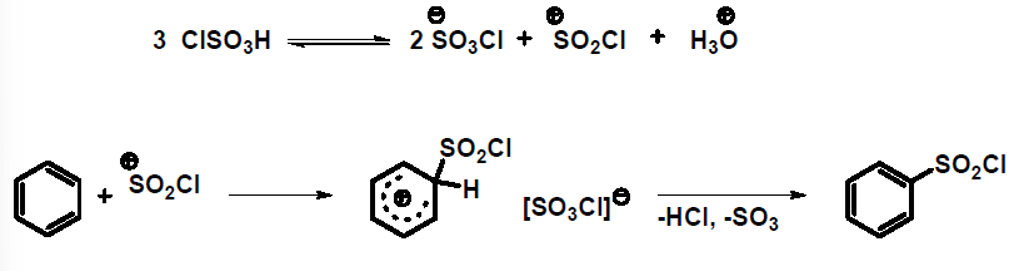
problems with current synthesis
current synthesis is completely linear
cleanest reaction is in the middle of the synthesis (cyclization)
chlorosulfonylation
uses SO3HCl which is highly toxic and corrosive
produces SO3 which is also toxic and corrosive
and this is used at then end of the sequence = higher chance of toxic impurities in final product
toward an environmetnal (economical synthesis)
solutions:
move clean cyclization to the end
move toxic chlorosulfonylation to the beginning and follow up with piperazine reaction befor connecting with A
the environmental issues associated with scale up of the chloro sulfonylation have been reduced by moving it to the beginning of the synthesis
a lot of acidic aqueous waste that needs to be neutralised
increased level of hydroylisis during quench
this allows isolation of a very clean final product
further toxic impurites can be removed ruing subsequent purificiaton steps
the is allows a convergent synthesis
not all functional groups need to survive each step
Commercial route of Sildenafil
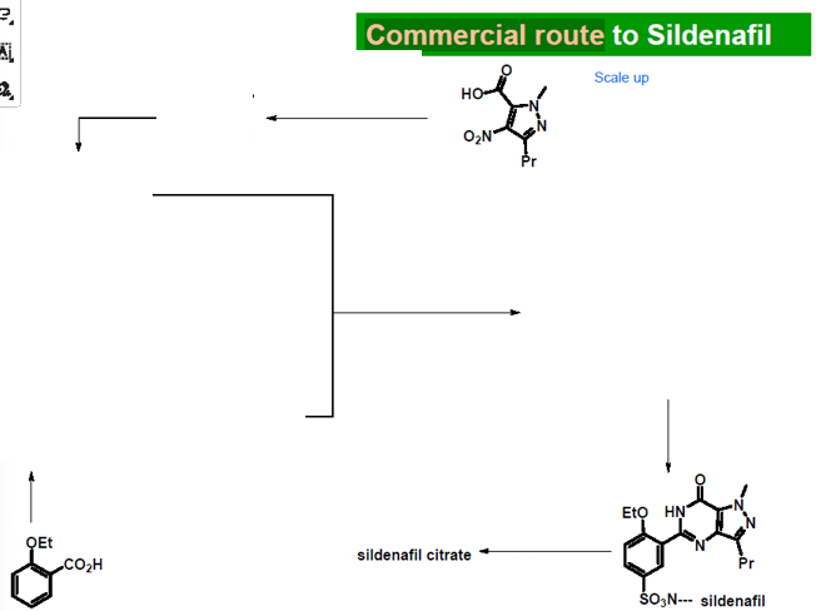
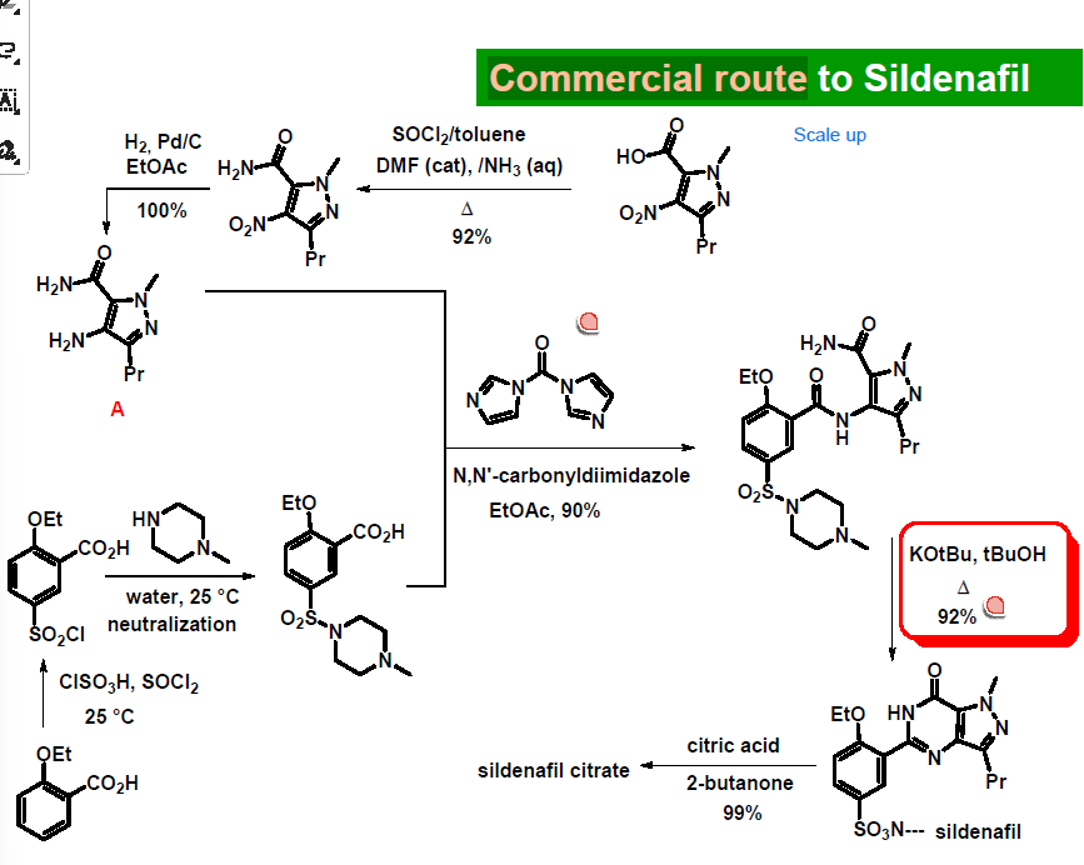
Intermediate A
only need stoichiometric amount of SOCl2 by using toluene as solvent
toluene can also be recovered and reused, minimizing solvent waste
stoichimetric amount of SOCl2 allows hydrogenation in Ethylacetate
high AE
Sulfonamide
cholorosulfonylation has been conducted in the presence of SOCl2 to ensure the presence of sulfonylchloride for the reaction with methyl piperazine
2-ethoxy benzoic aic also has a low melting point
it can therefore be used melted, so we can reduce the amount of chlorosulfonic aicd and thionyl chloride and no organic solvent because no problmes of solubilization
quench of the reaction is combined withe methylpiperazine coupling in heterogenous conditions
pH of the final solution can be adjusted to precipitate the product, isolate it via filtration avoiding the need of any organic solvent (that would be needed for extraction)
Thus no organic solvent is need for the preparation of the sulfonamide
Coupling reaction
several conditons were screened including acylchloride formation with SOCl2 and oxalyyl chloride but went with CDI
Although CDI cost is very high, it’s chosen for several reasons:
allows clean and trustable chemical step
allows combination of several chemical steps
nitro reduction by hydrogentation
also conducted in EtOAc
COOH activation
which previously required oxalyl chloride in DCM
after quick fix: SOCl2 with DMF (cat) in EtOAc
amine acivation = amide formation
which previously required DMAP in DCM
after quick fix pyrdine in EtOAc
allows EtOAc to be the only solvent used
simpler recovery of solvent and minimize energy use
minimize the emmision of volatile organic compounds (VOC)
because no Ethylchloride can be formed anymore because no SOCl2 (or oxalyl chloride) is used anymore that could react with EtOAc
would be the case if coupling would still occur through SOCl2 (for COOH activation)
these are difficult to prevent spreading in the environment and bad because halogenated
allows for a good yield of 90% which has been optimized to 96%
disadvantages
High cost
poor atom economy: because all atoms of the reagent are lost
—> but this is overruled by massive number of other advantages
cyclization
‘clean’ cyclization can be performed under ‘highly concentrated’ conditions allowing waste to be minimized
add the end of the process, water is added and the pH is adjusted to induce precipitation so sildenafil can be isolated by filtration
sildenafil free base becomes poorly soluble and precipitates$
Salt formation
using citric acid with 2-butanone
high yield and purity
no recrystalization anymore because separated by filtration after cyclization
Overal yield = 75%
CDI mechanism
N,N-carbonyldiimidazole = staab’s reagent
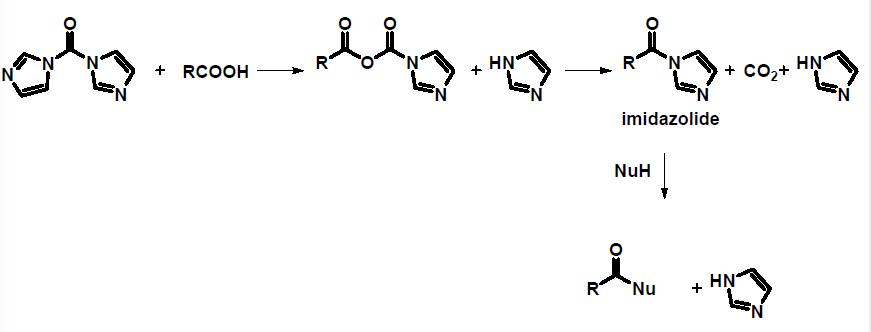
Solvent optimization
Much less solvents
no halogenated solvents or highly volatiles solvents anymere = less emissions
solvents can be recovered:
toluene and EtOAc are recovered since the commerical route has been established
Further optimization
no more tBuOH
soluble in water and therefore hard to recover
2-butanone has also been optimized for recovery
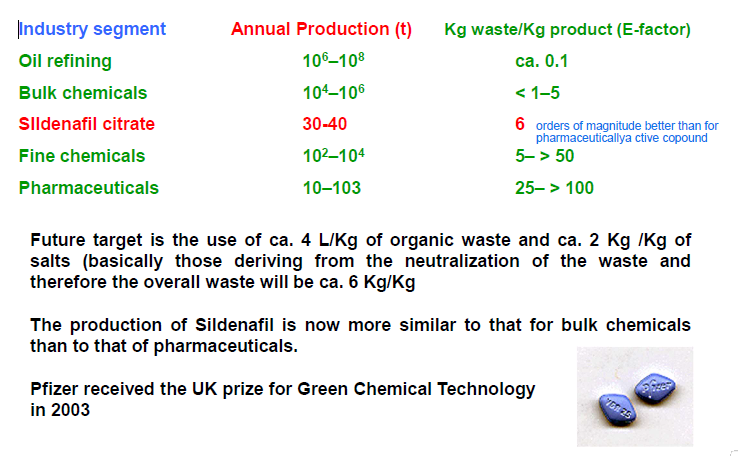
1300 to 7 L/kg (future target = 4L/kg)
E-factor and impact atom economy