micro chapter 15 unit four
 Call Kai
 Learn
Learn Practice Test
 Spaced Repetition
 Match
Match Flashcards
 Knowt Play
1/63

There's no tags or description
Looks like no tags are added yet.
Name | Mastery | Learn | Test | Matching | Spaced | Call with Kai |
|---|
No analytics yet
Send a link to your students to track their progress
64 Terms
bone marrow
where are blood cells created?
in the bone marrow
Neutrophils and B cells mature in marrow
where do white blood cells mature?
thymus
where do T lymphocytes mature?
bone marrow and thymus
what are the two primary lymphoid organs?
secondary lymphoid organs
where mature WBC’s travel
organs include
lymph nodes
spleen
tonsils
adenoids
appendix
lymph nodes
spleen
tonsils
adenoids
appendix
what are examples of secondary organs?
specialized, highly specific immune defense that develops after exposure to pathogens, vaccines, or foreign substances
matures through life
memory
specific invaders
may take a week or more to develop after first exposure
what is adaptive immunity?
Cellular (Cell-mediated) Immunity(adaptive immune response)
deals with antigens residing within a host cell (virus, intracellular parasite)
Humoral Immunity (adaptive immune response)
works to eliminate ANTIGENS that are extracellular (bacteria, toxins, viruses in blood)
T- helper cells
act as intermediates between immune cells
T-cytotoxic cells
release cytokines responsible for killing infected cells
T lymphocytes
Cellular immunity is added by…
cellular immunity response
t- helper cells→ activated by macrophage→ TH releases cytokines→ more macrophages
MHC I
surface protein
found on all nucleated cells (every cell EXCEPT RBC)
antigens
Infected cells present foreign molecules
cytokines that direct the infected cell to undergo apoptosis
t cytotoxic cells release…
humoral immune response
characterized by the production of ANTIBODIES that bind to specific ANTIGENS found on the surface of foreign cells
antigen
antigens create antibodies
antibody generator
can induce the production of antibodies against it
epitope
specific region of the antigen at which an antibody binds
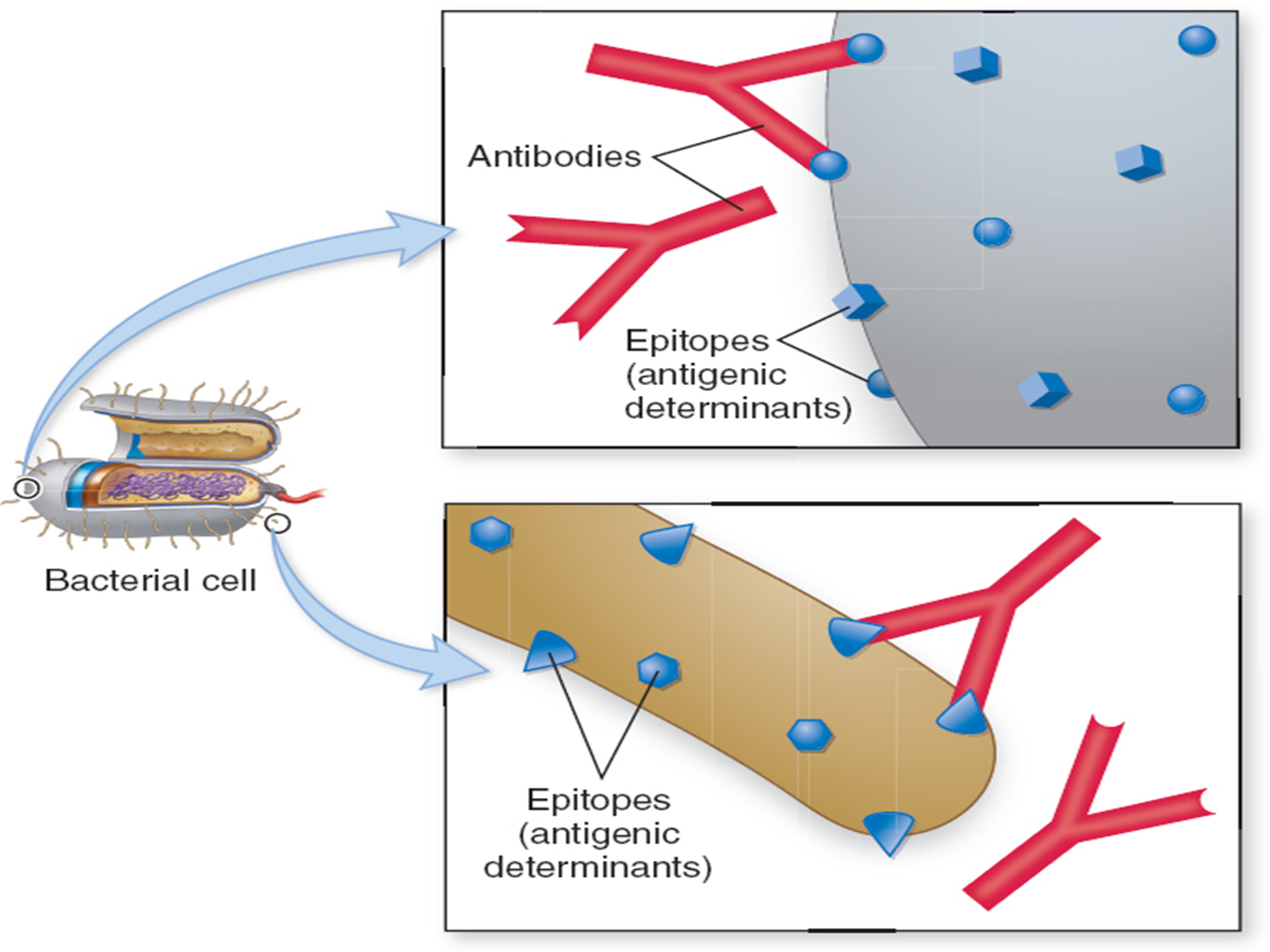
Proteins and polysaccharides
induce stronger ANTIGEN responses than lipids and nucleic acids
Antibodies
also called immunoglobulins, are Y-shaped proteins that participate in the Humoral Immune Response
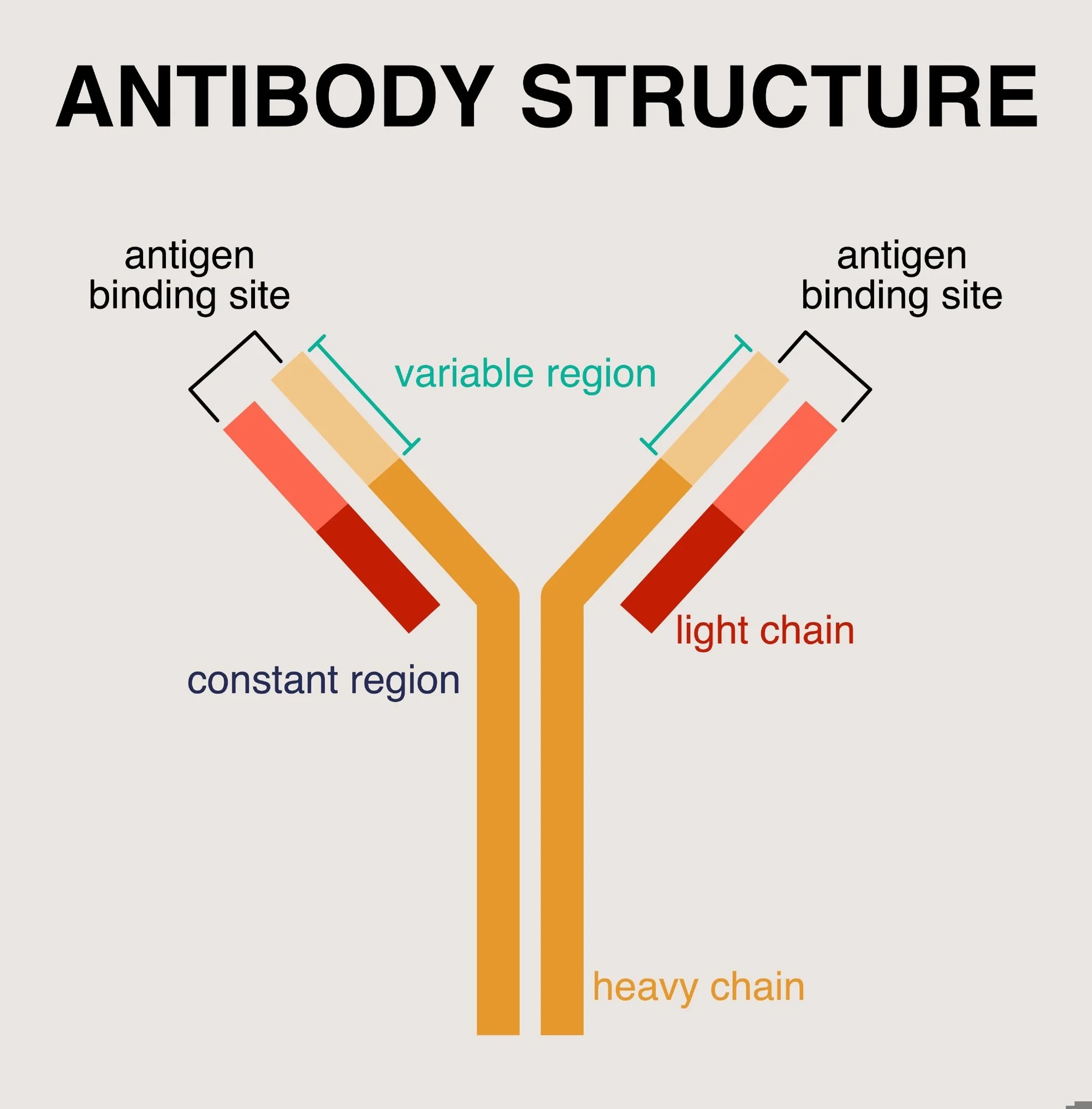
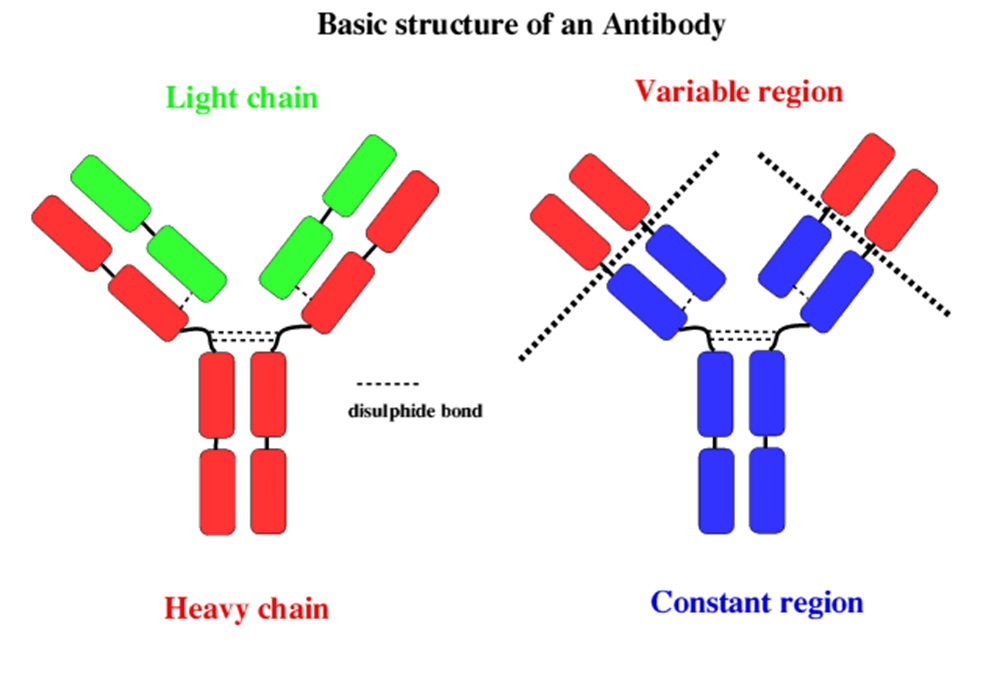
two heavy chains and two light chains
each chain = polypeptide
Antibodies are composed of
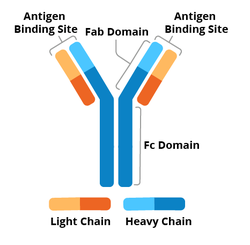
Fab region
identical arms of the Y-shape of antibody
Fc region
the stem of antibody
Variable regions
__ is the site at which the antibody binds to an antigen.
This region is unique for each B cell
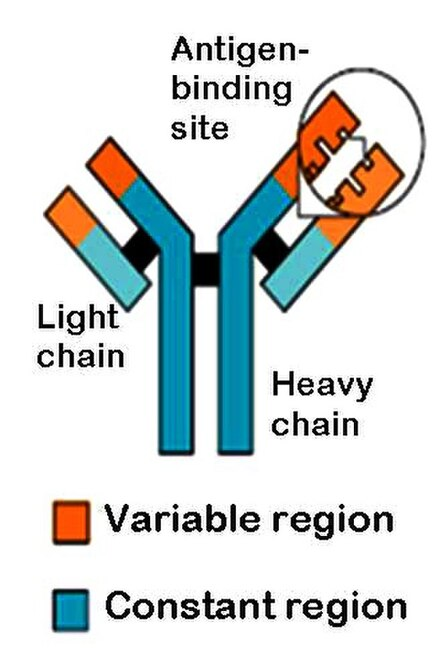
Constant region
__ determines the biological activity of the antibody. In other words, it determines what happen after the antibody binds to the antigen.
five antibodies
IgA
IgD
IgE
IgG
IgM
IgA
Secreted into mucus, tears, and saliva, providing mucosal immunity. Also found in breast milk, protecting the intestinal tract of breast-fed infants.
IgD
Found on the surface of dormant B cells. Involved in the initiation of the antibody response.
IgE
Binds at its Fc region to mast cells and basophils, allowing for the detection of parasites and other antigens. Involved in allergic reactions.
IgG
Most abundant class in the blood and tissue fluids. Only antibody capable of crossing the placenta, providing protection to the developing fetus.
Activities include: neutralization, immobilization, agglutination/precipitation, opsonization, complement system activation, and antibody-dependent cellular cytotoxicity.
IgM
__ is a pentamer (5 Y-shaped antibodies joined together at their Fc regions). First antibody produced during primary immune response. Has the same functions as IgG.
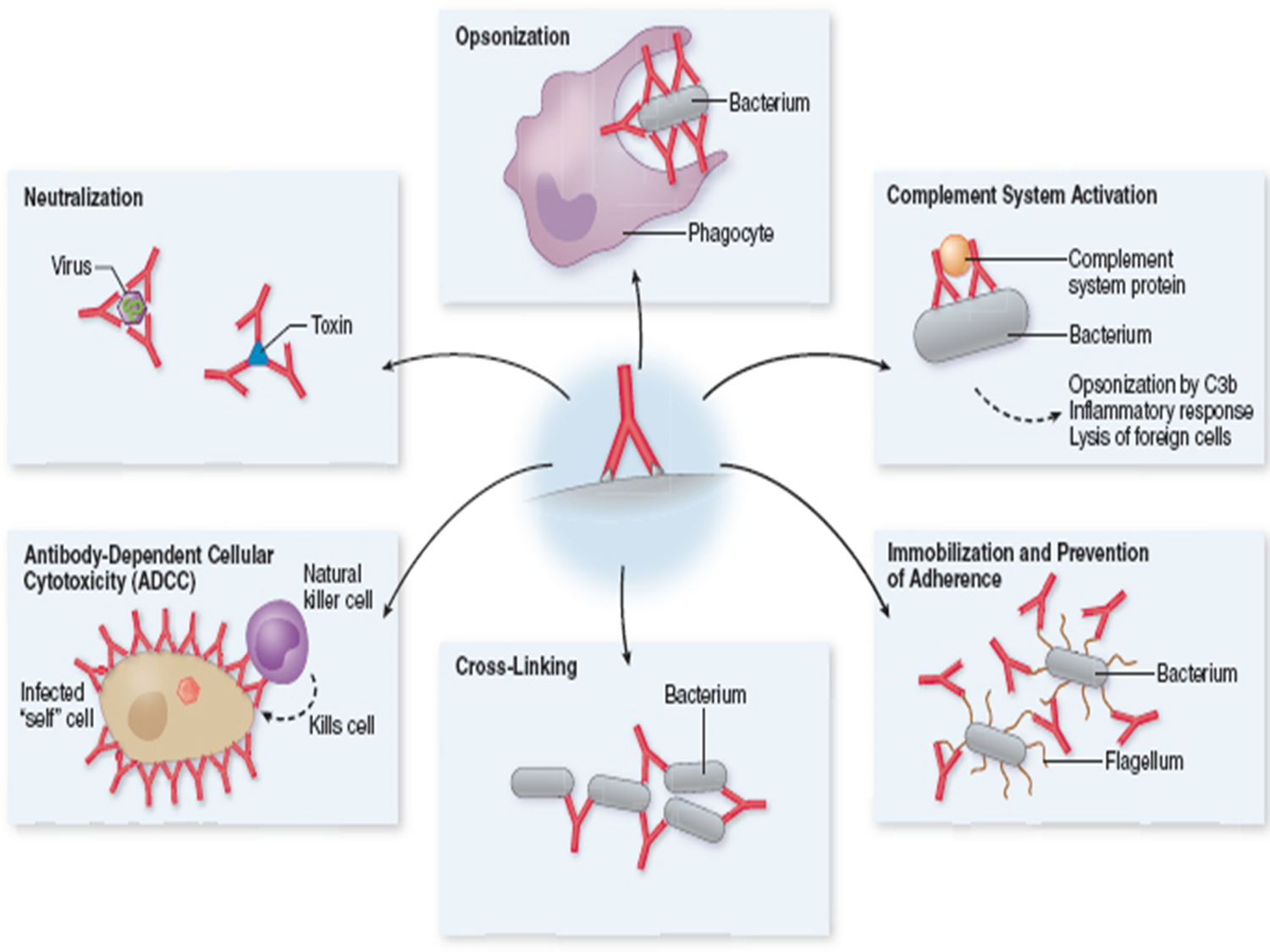
Neutralization (antibody function)
a toxin or virus is prevented from interacting with a cell when antibodies coat it
Immobilization (antibody function)
antibodies can prevent movement of a bacteria by binding to the flagella or pili on the cell surface.
Agglutination/Precipitation (antibody function)
bacteria or viruses are clumped together in antibody-antigen complexes
Opsonization
facilitated phagocytosis
organisms that have antibodies bound to their surface are easily recognized and consumed by macrophages
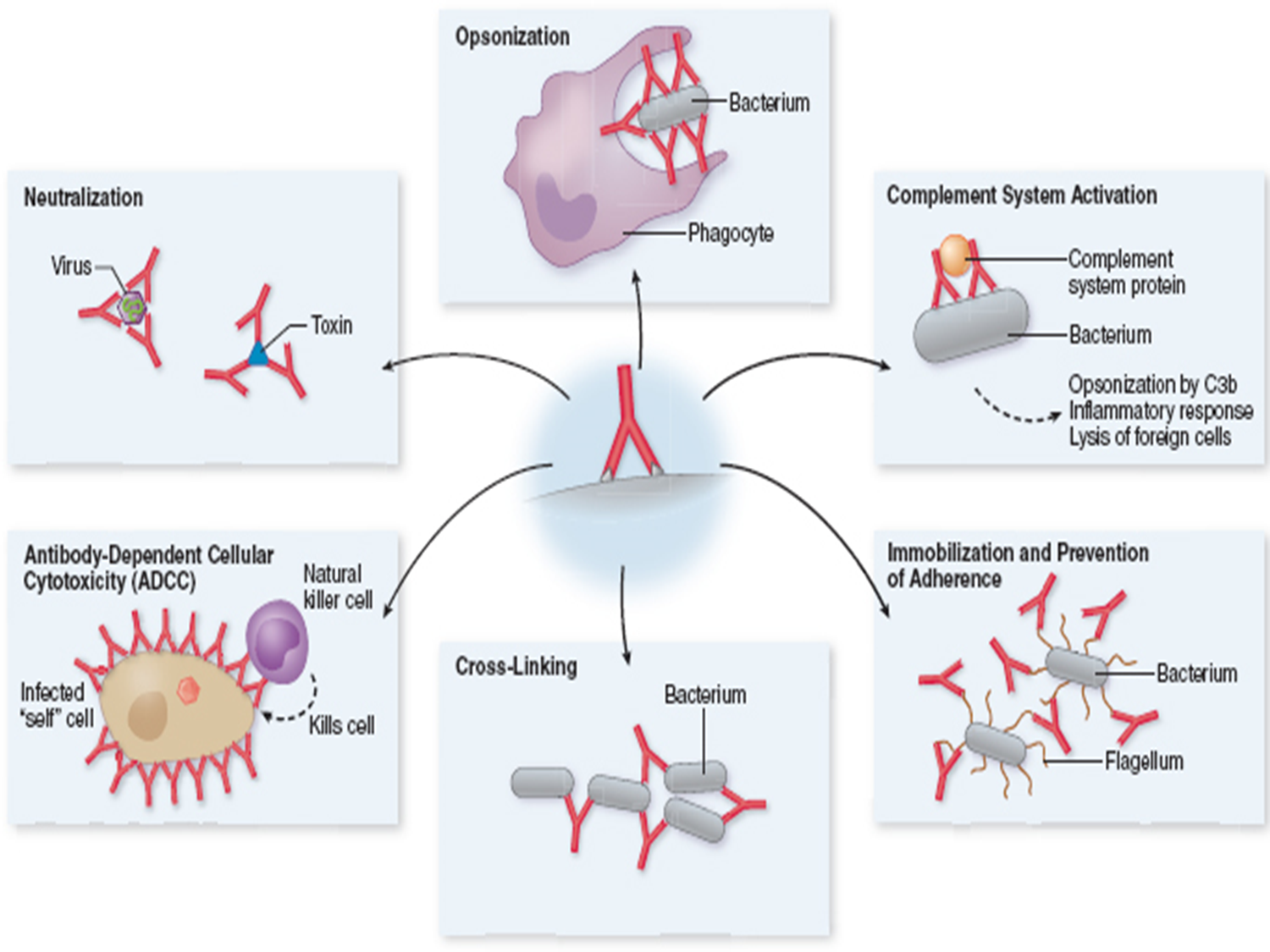
Complement system activation
complement proteins are activated by the presence of antibody-antigen complexes.
Recall that complement stimulates the immune response
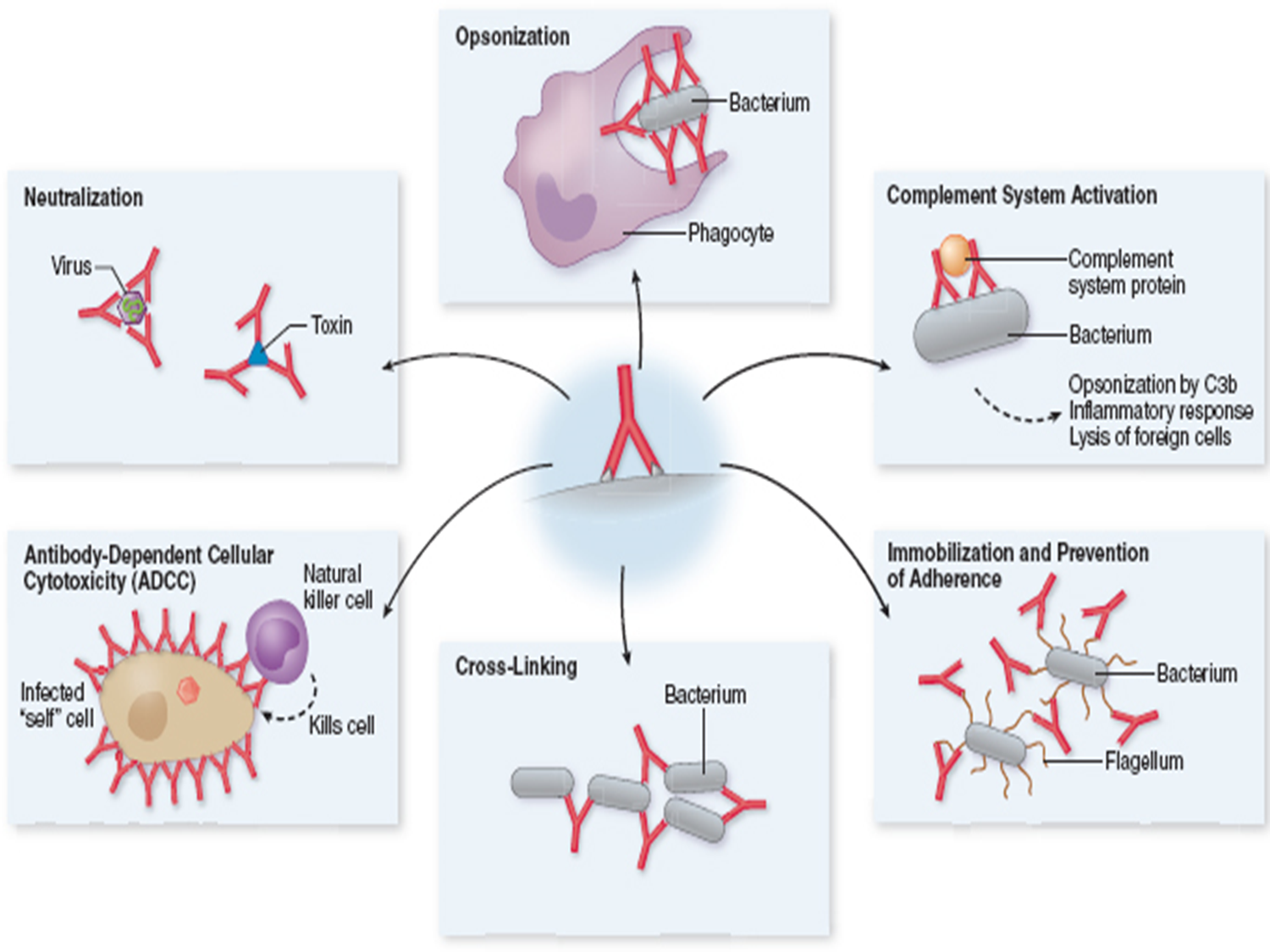
Antibody-dependent cellular cytotoxicity (ADCC)
human cells are targeted and destroyed by natural killer cells when antibodies are attached to them.
Antigen Presenting Cell (APC)
surface protein
only cells in the body that express MHC II
macrophage, dendritic cell, B cell
what are the three APCs (antigen presenting cell)
innate immune response
macrophages are activated and begin phagocytizing foreign cells→ cells are digested and antigens are presented on the surface of the macrophage
Plasma Cell
cell type responsible for manufacturing and secreting antibodies.
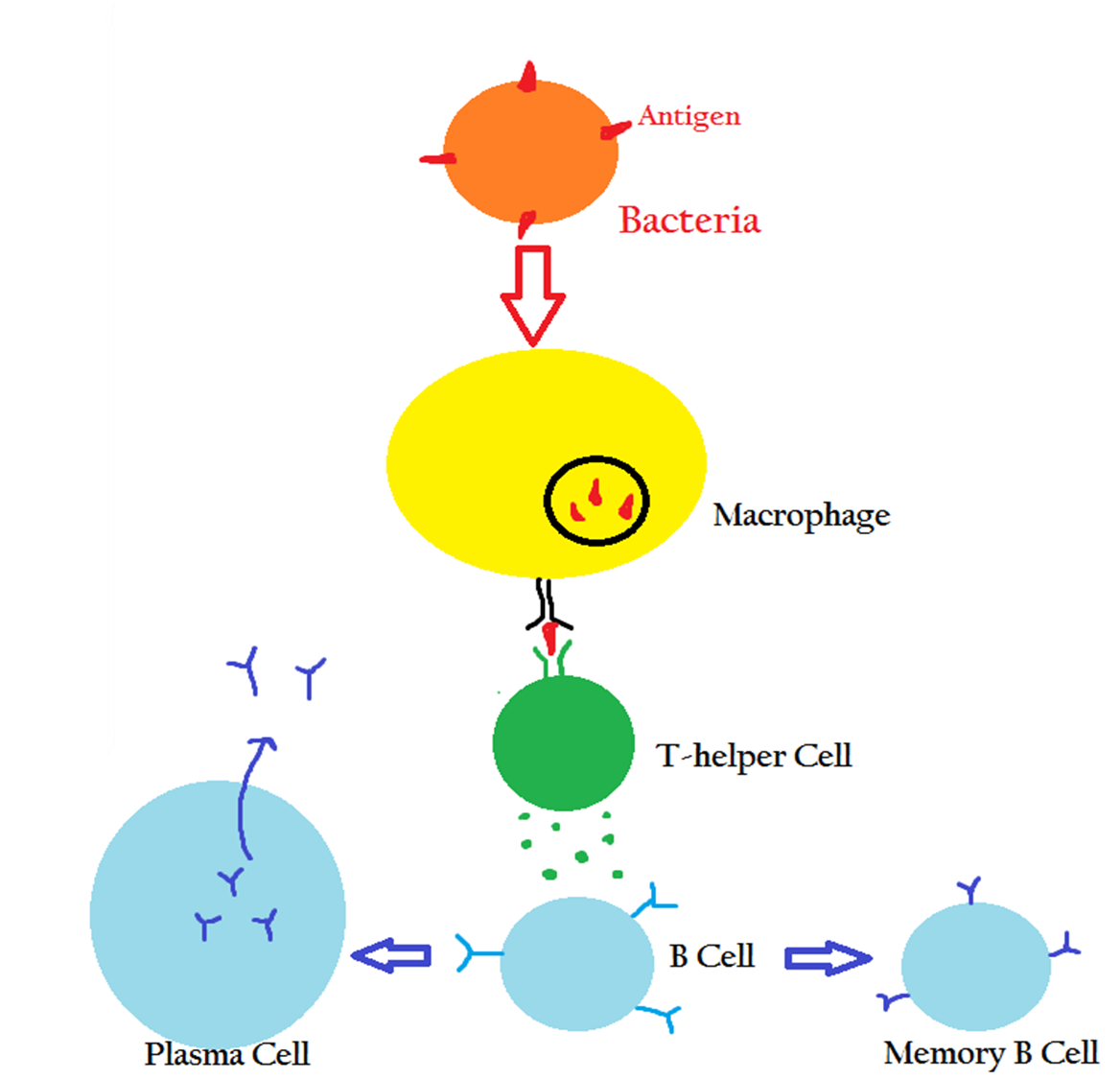
Memory B Cell
permanent (long-life) cell that exists for initiating future immune responses against the same antigen
specific T-helper (Th )
have receptors for the specific antigen
antigens presented by the macrophage activate…
Th cell
locates a specific B cell that expresses antibody against the presented antigen
B cell is activated through the release of cytokines from the Th cell.
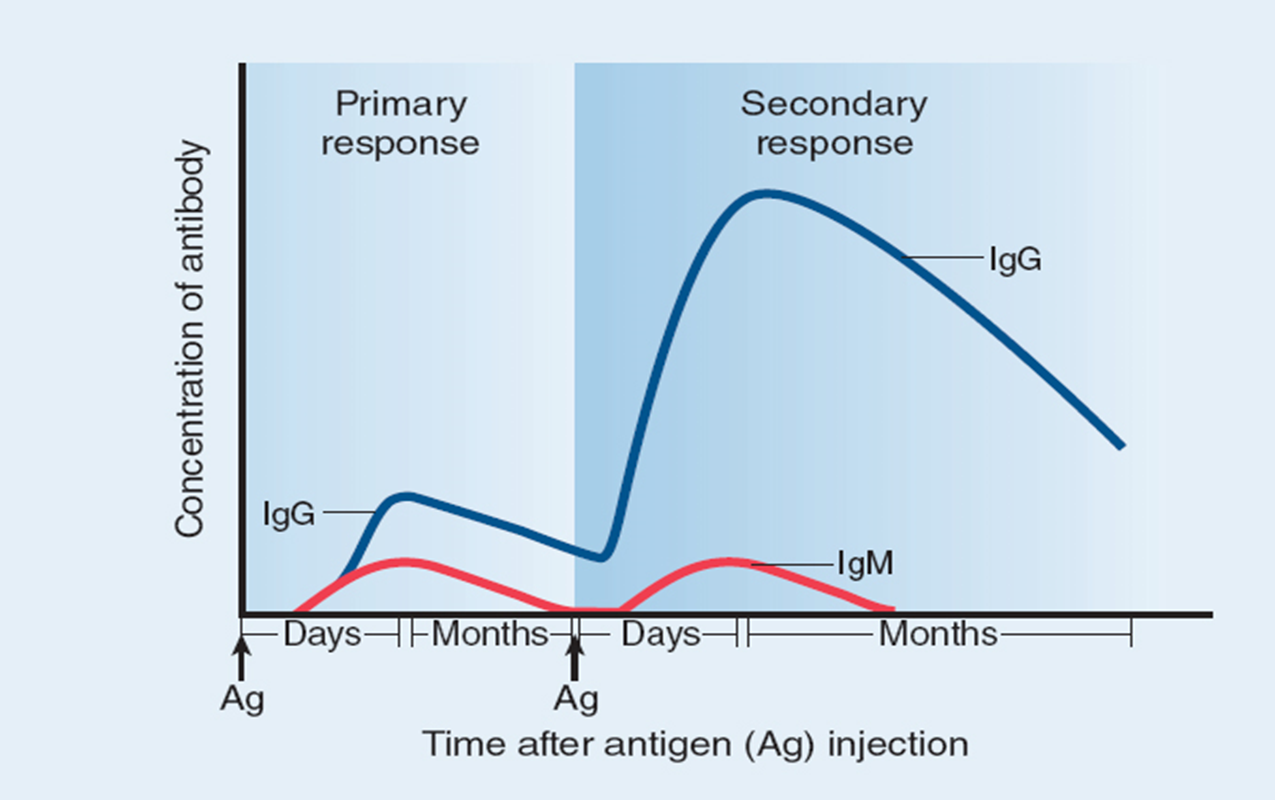
primary immune response
first time the immune system is exposed to an organism
IgM is the first antibody produced
plasma cells are able to undergo class switching and produce increasing quantities of IgG
As the infection is resolved, the concentration of IgM returns to zero while IgG remains in small quantities
secondary, or anamnestic immune response
second exposure to the same antigens (on the same strain of organism)
Memory B cells respond to second encounter with antigen
More cells are available to respond to the antigen
Because of class switching, IgG is produced from the beginning of the immune response, and IgG levels are significantly greater than during the primary response.
Overall, the response is faster and stronger
T-independent immunity
a branch of the adaptive immune system where B cells produce antibodies against pathogens without requiring help from T cells
Simple antigens with repeating epitopes (polysaccharides)
Only IgM is secreted (No class switching)
No anamnestic response (no “memory”)
No processing by antigen presenting cell required
T-dependent
___ immunity is a form of adaptive immune response where B lymphocytes require assistance from helper T cells to produce high-affinity antibodies against antigens, typically proteins.
T-independent antigens
activate B cells without any stimulation from T cells, these are generally polysaccharides
Affinity maturation
form of natural selection that occurs among proliferating B cells, effectively fine-tuning the ability of the antibody to bind to the antigen.
rate of mutation of antibody genes in very high among activated B cells
autoreactive antibodies (antibodies that attack human cells)
bacterial antigens with similar structure to host antigens
can cause
Rheumatic Fever following streptococcal infection (strep throat)
Guillain-Barre syndrome following Campylobacter jejuni infection