20 - HEENT
 Call Kai
 Learn
Learn Practice Test
 Spaced Repetition
 Match
Match Flashcards
 Knowt Play
1/105

There's no tags or description
Looks like no tags are added yet.
Name | Mastery | Learn | Test | Matching | Spaced | Call with Kai |
|---|
No analytics yet
Send a link to your students to track their progress
106 Terms
What are some common complaints that indicate a head exam?
- headache (primary (tension, cluster, migraine) or secondary (subarachnoid hemorrhage, meningitis))
- head injury
- URI
- dizziness
What is important information to obtain when someone c/o a headache?
- history (OPQRST, emphasis on onset and timing)
- any change from prior headaches?
- hx of migraines (confirmed diagnosis, prior imaging)
- ROS (nausea/vomiting, prodrome, dizziness, aura, fever, vision changes)
What are red flag warning signs for headaches?
- progressively severe, over 2-3 month period
- sudden onset "thunderclap" or "worst headache of life"
- new onset after age 50 years
- aggravated and relieved by change of position
- precipitated by valsalva maneuver or exertion
- presence of cancer, HIV infection or pregnancy
- recent head trauma
- change in pattern from past headaches
- lack of a similar headache in the past
What are red flag physical exam signs for headache?
- papilledema
- neck stiffness
- focal neurologic deficits
What is important information to obtain when someone c/o a head injury?
- (+/-) LOC
- MOI (speed, height of fall, airbags)
- helmet/protective gear
What is important information to obtain when someone c/o an URI?
- (+/-) fever
- altered mental status
What is important information to obtain when someone c/o dizziness?
- (+/-) lightheadedness
- (+/-) dizziness
- ataxia
Indications for head exam
- head trauma
- AMS or confusion
- rash
- headache
- car accident
- infections/infestations
- pediatric examinations
- strokes
- intoxicated patient
- seizures
- overdose
- sinus infections
How many bones is the skull composed of?
seven bones (two frontal, two parietal, two temporal, one occipital)
How are the cranial bones used in documentation?
used to describe regions
What are major landmarks on the face?
- palpebral fissures
- nasolabial folds
What CNs innervate the facial muscles?
- CN V
- CN VII
What are the additional anatomy and landmarks on the face?
- temporal artery
- parotid time
- danger triangle
What features do we inspect on the head?
- hair
- scalp
- skull
- face
- skin
What are we assessing for hair?
- quantity
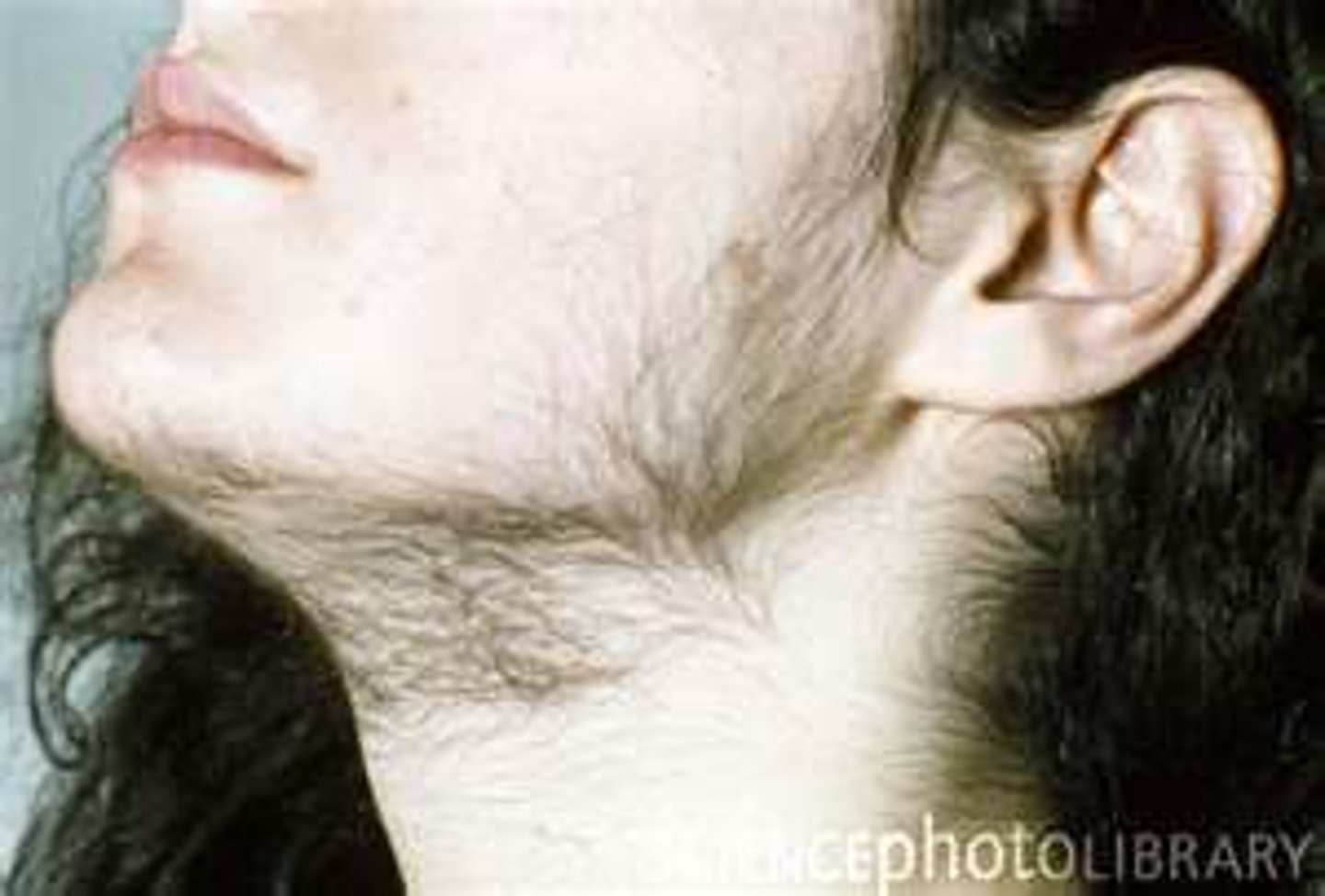
- distribution (i.e., hirsutism)
- texture (i.e., coarse/thin)
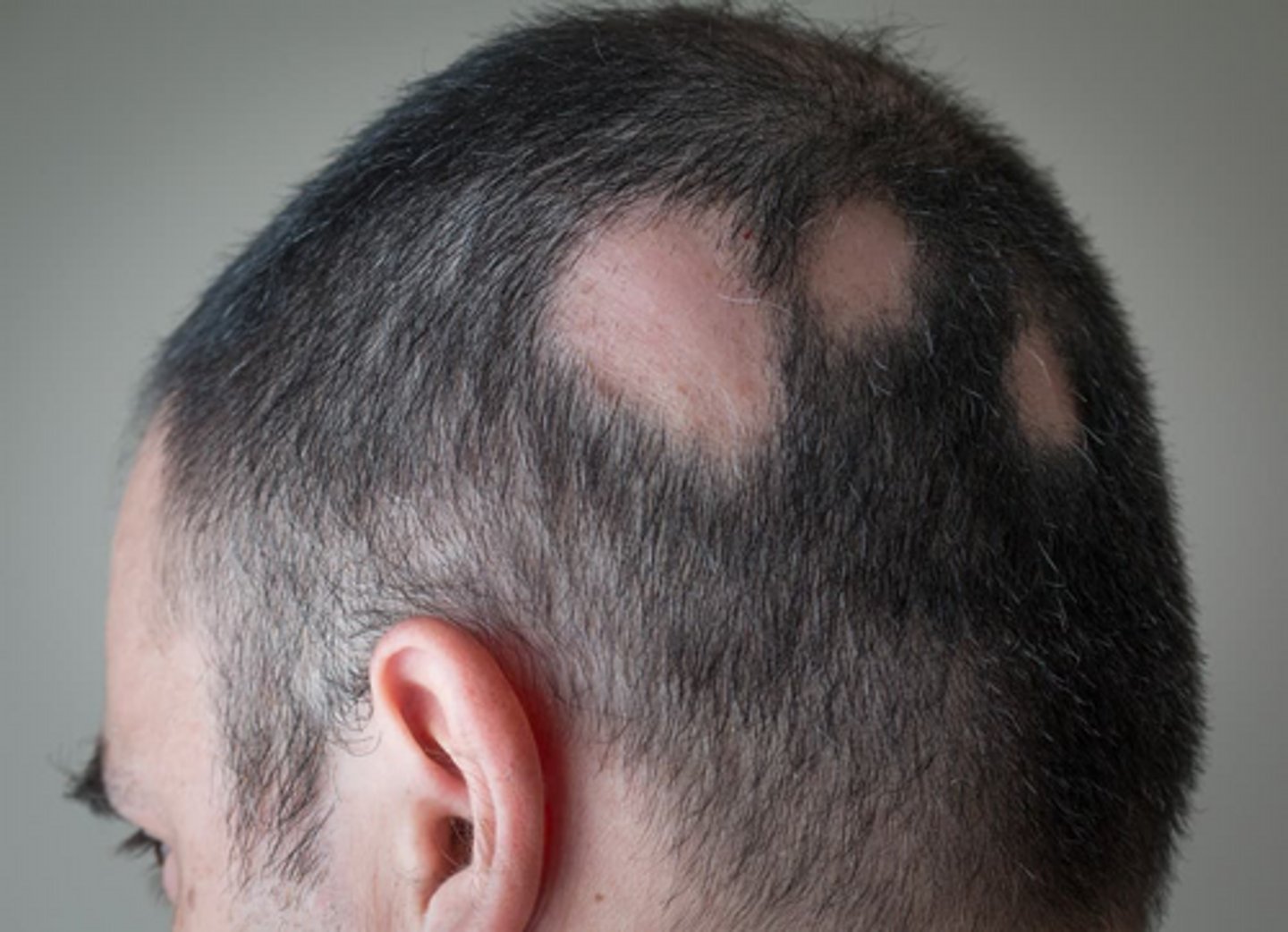
- patterns of loss (i.e., male pattern balding, patches)
Alopecia Atriata
Hirsutism
What are we assessing for scalp?
- scaling
- nodules/masses
- nevi
- lesions
- temporal artery
What are we assessing for the skull?
- size
- contour
- deformities
- tenderness
- masses
- depressions
- sutures/fontanelles
- trauma
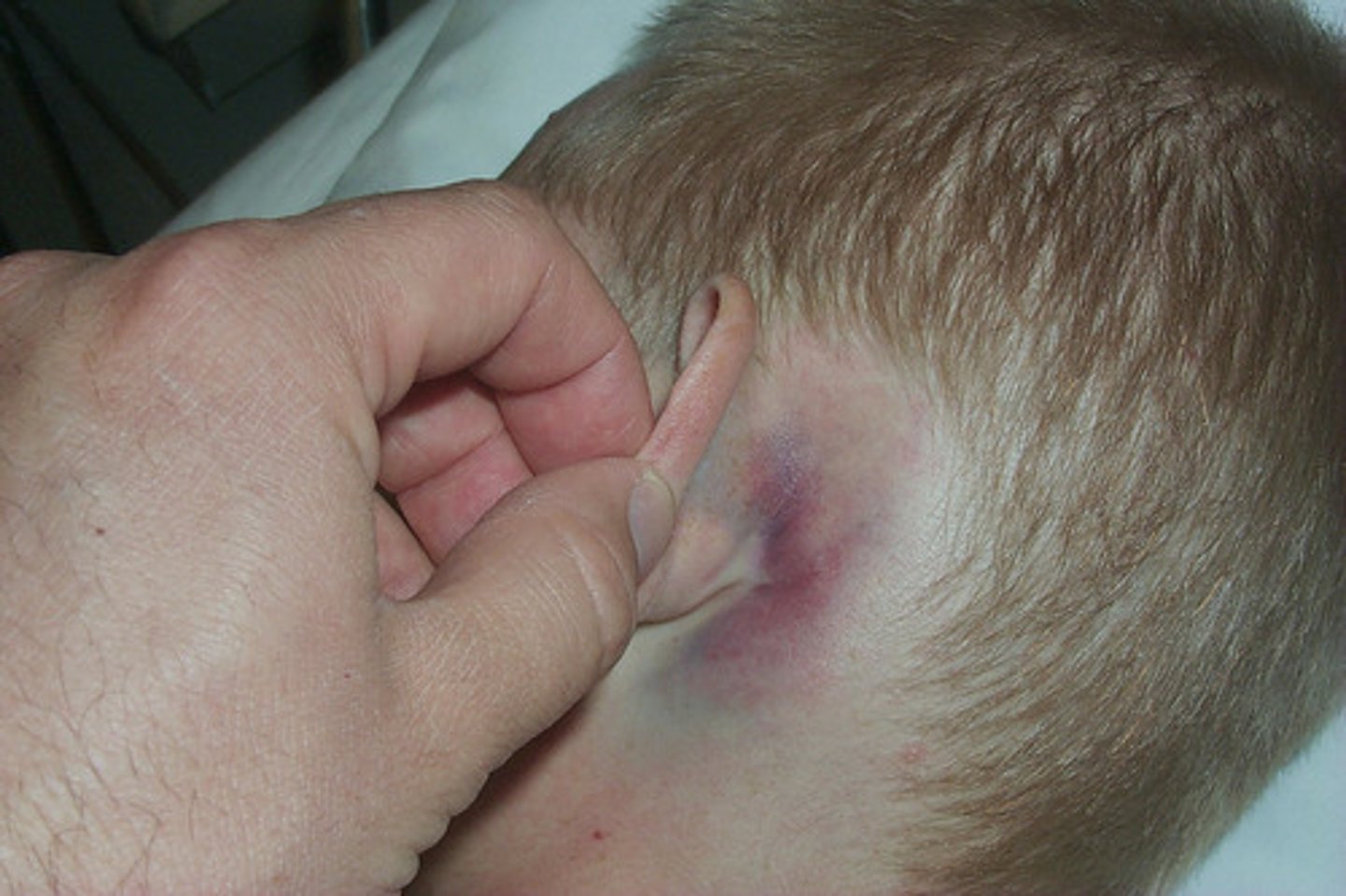
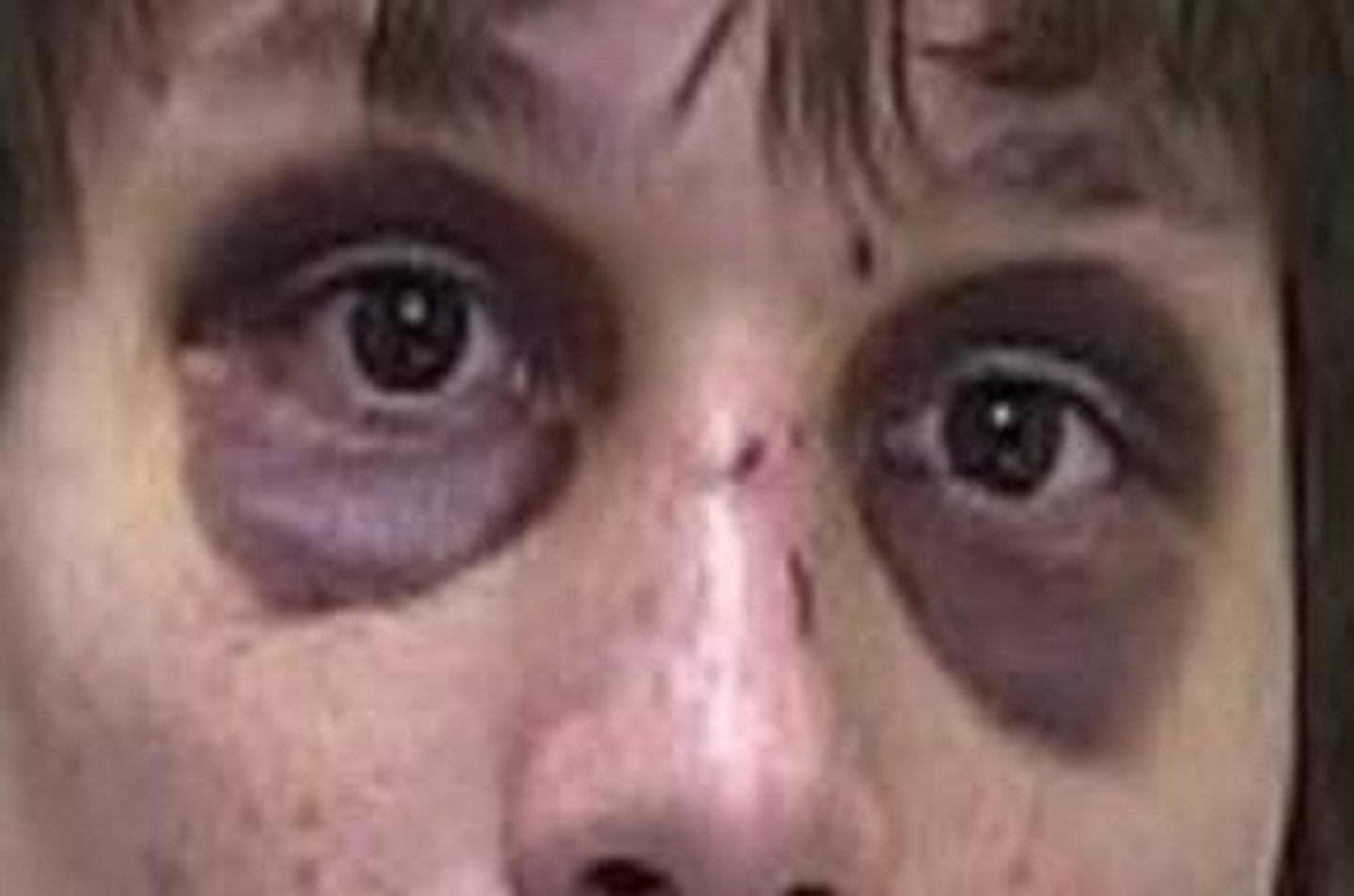
What are the signs of a basilar skull fracture?
- battle sign
- racoon sign
battle sign
racoon sign
What are we assessing for the face?
- facial expressions/contours
- asymmetry
- involuntary movements
- edema
- masses
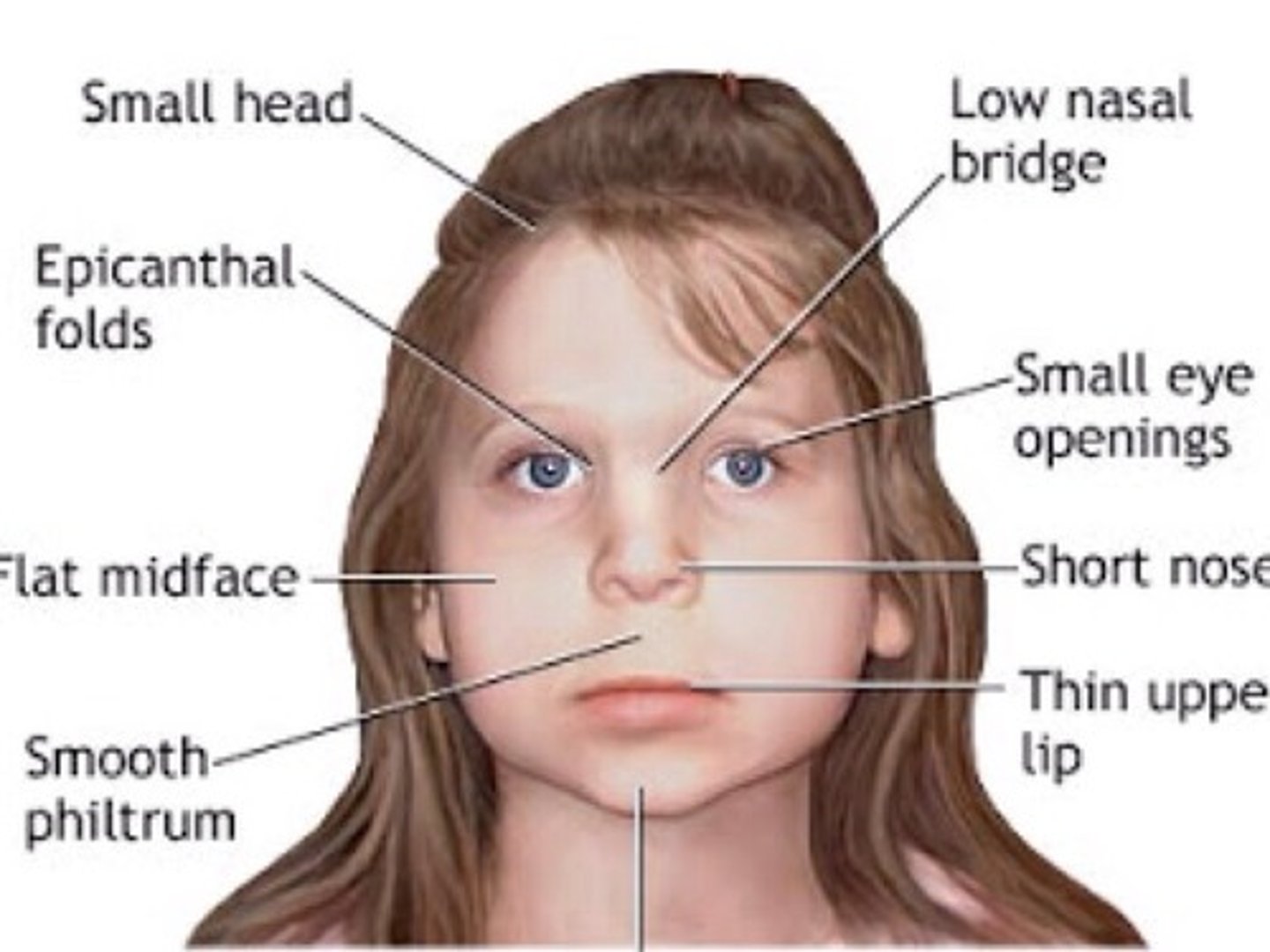
- look for syndromic facies
What are we assessing for skin?
- pigmentation
- texture
- hair distribution
- lesions
What areas of the face should be palpated?
- temporal arteries
- TMJ space
- salivary glands
Temporal artery assessment
- assess for thickening, hardness, or tenderness
- scalp tenderness and necrosis/jaw claudication
TMJ space assessment
non-tender, normal ROM
salivary gland assessment
- Parotid glands are usually non-tender, non-palpable
- assess Stenson's duct in the mouth
What is the exception for percussing the face?
evaluating for hypocalcemia (Chvostek sign and Trousseau's sign)
Chvostrek sign
percussion on the masseter muscle may produce a hyperactive masseteric reflex
Trousseau's sign
carpospasm with inflation of BP cuff
What is a reason for auscultating the face, and what does it suggest?
Bruit, highly suggestive of a vascular abnormality associated with temporal arteritis
Facial palsy
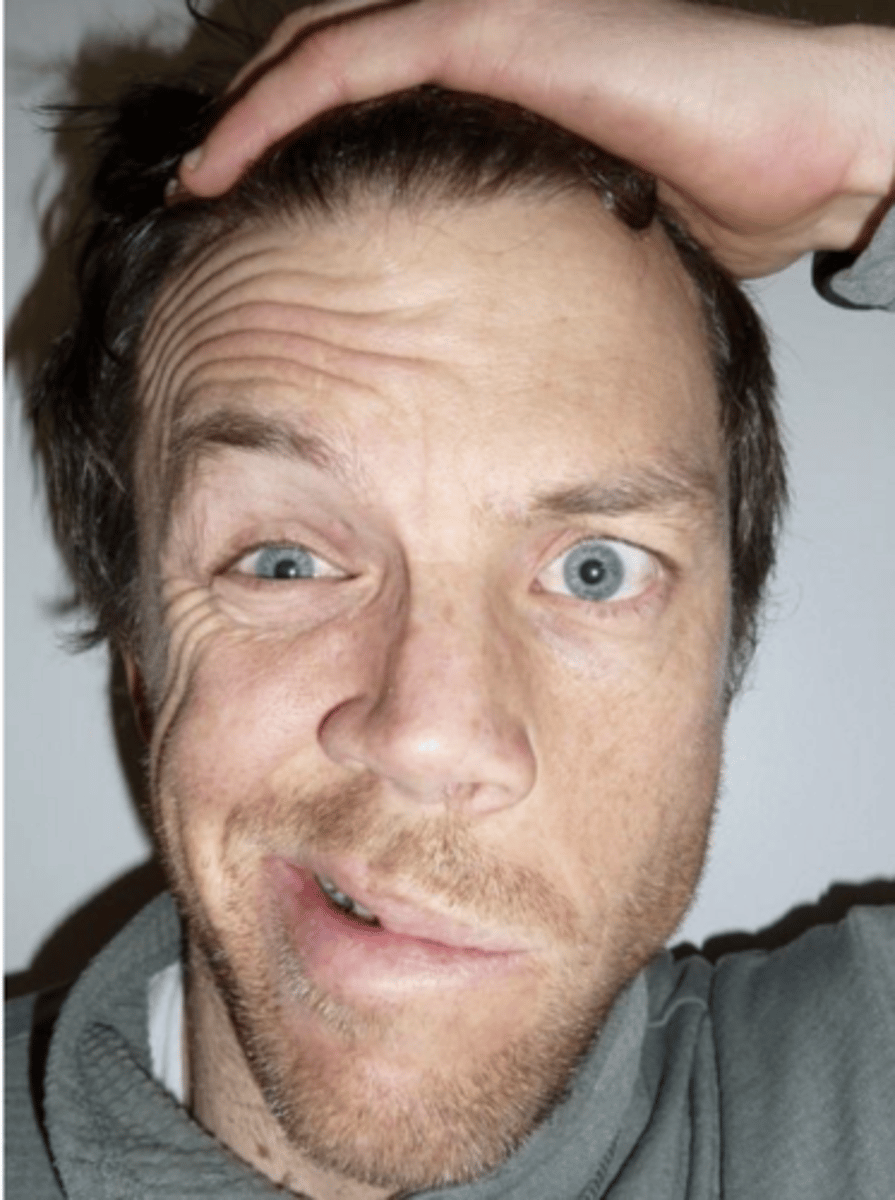
Hippocratic Facies
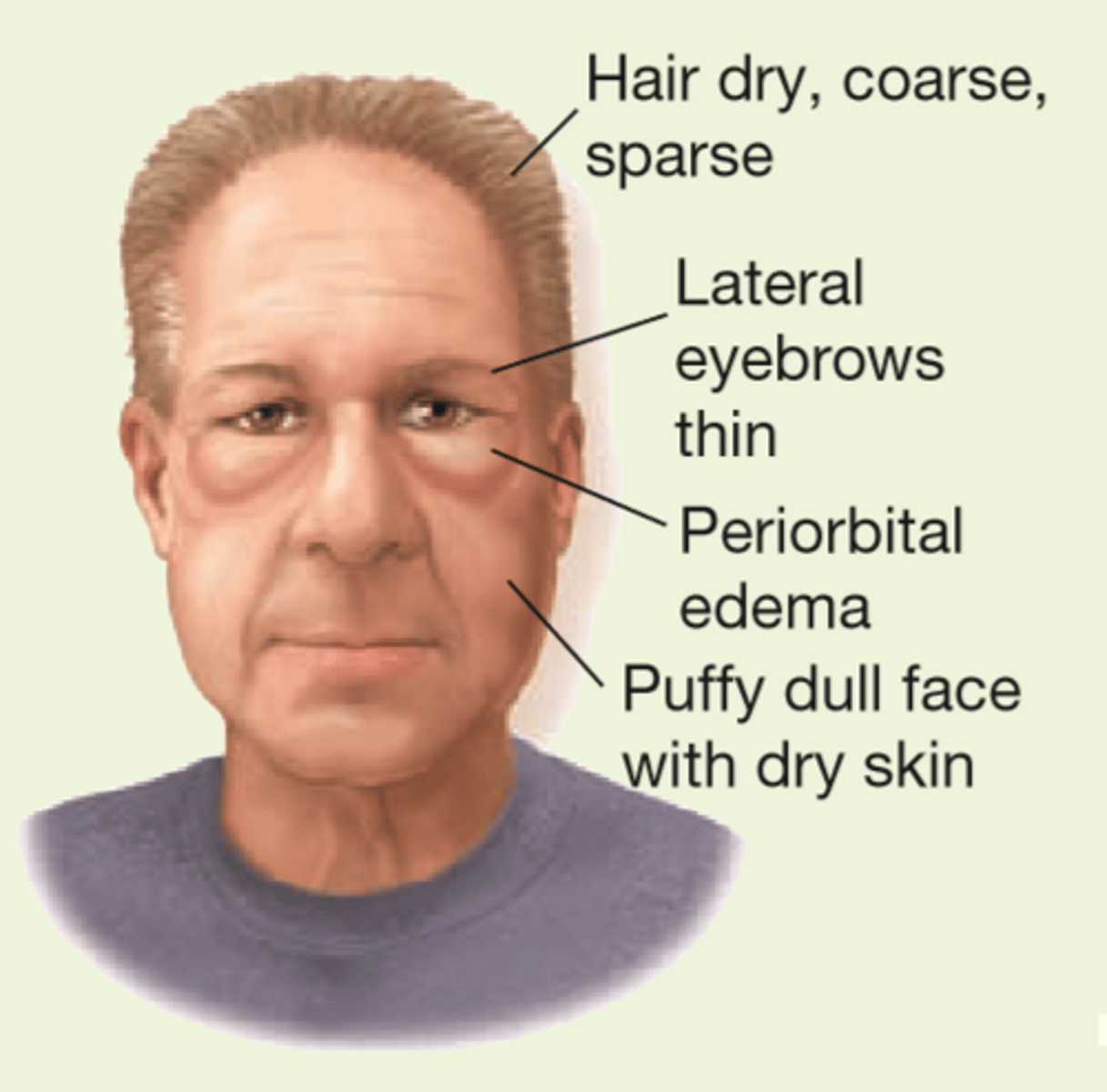
Myxedema Facies
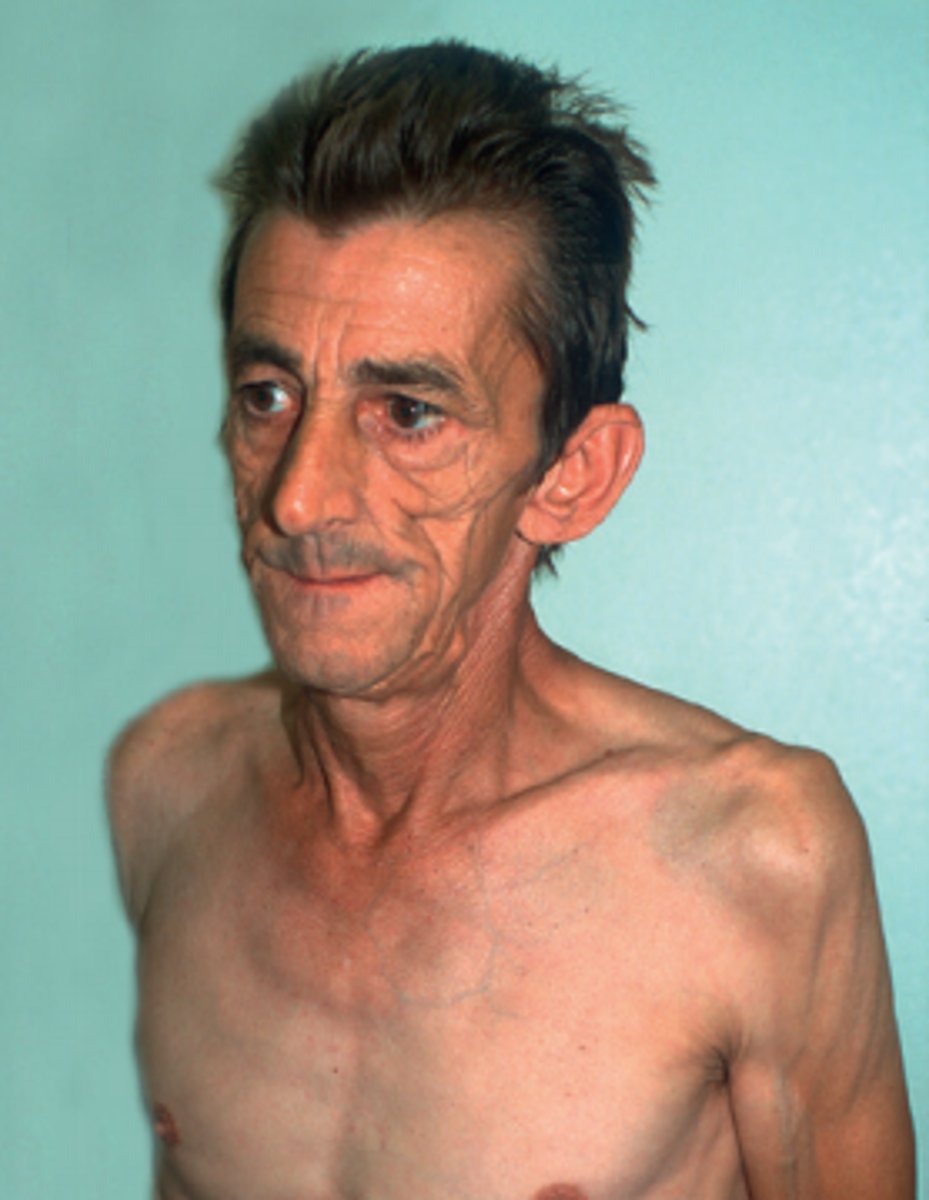
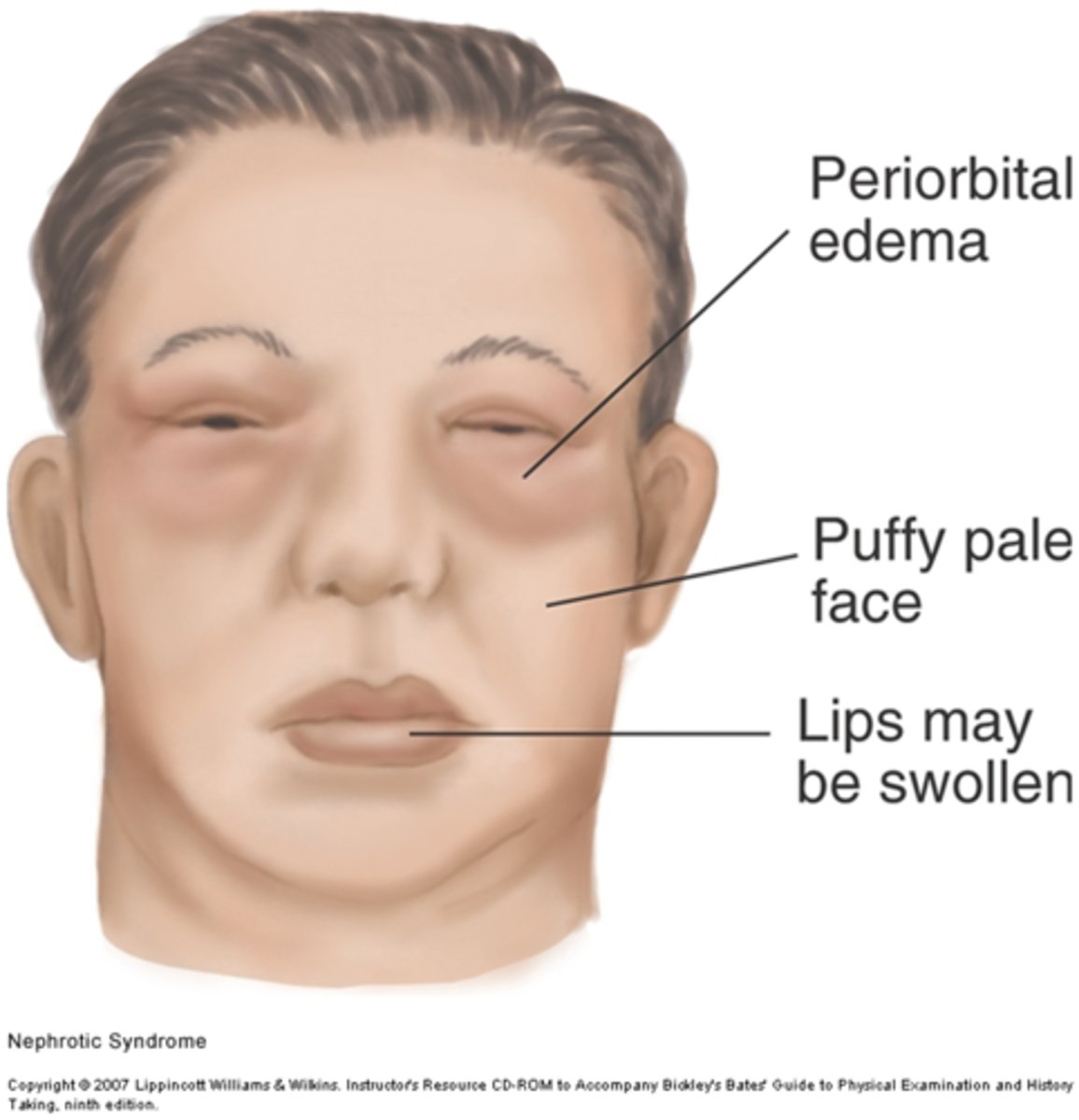
Nephrotic Syndrome Facies
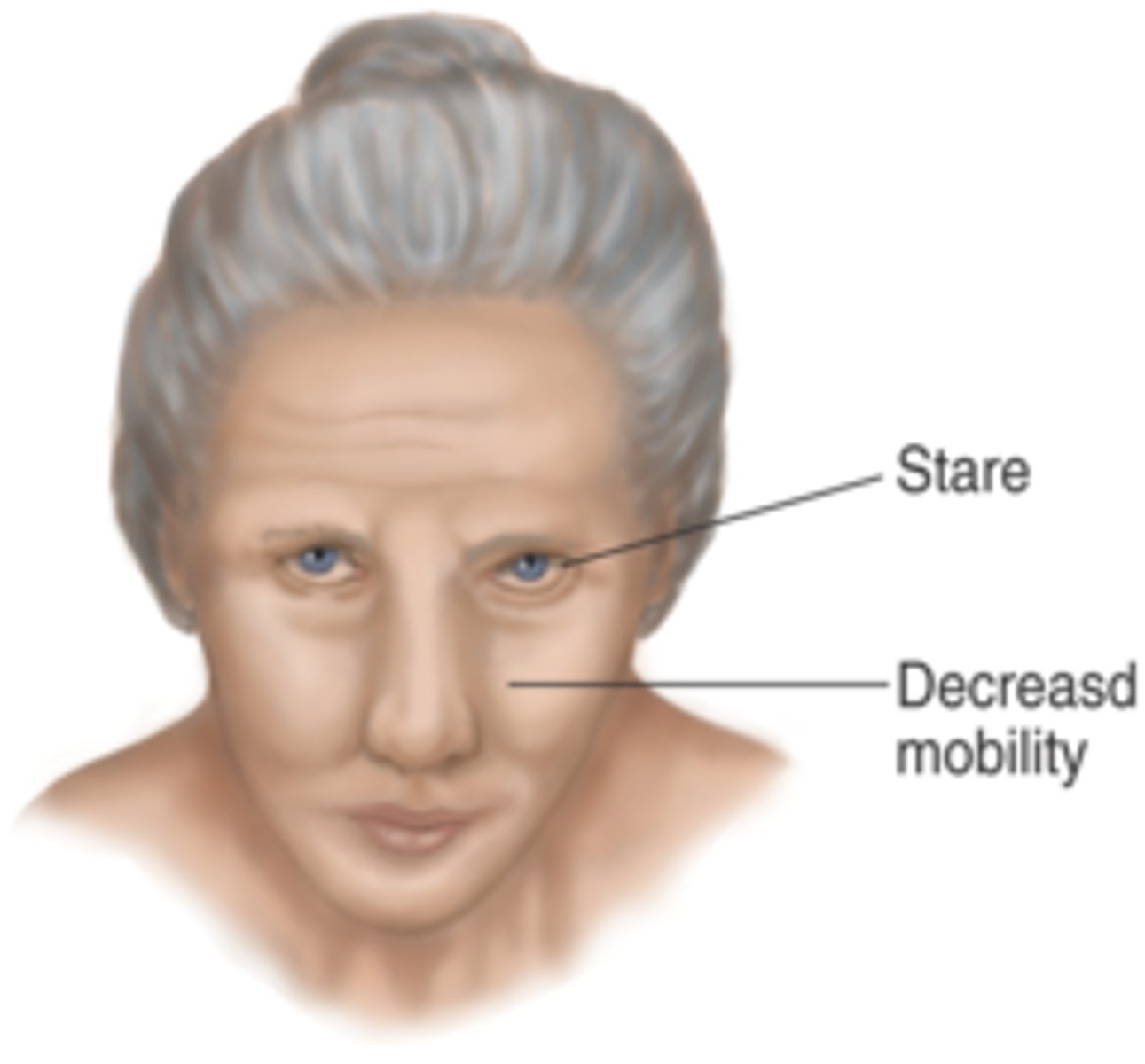
Parkinson's Masked Facies
What information should be obtained in a neck exam?
- HPI (OPQRST)
- ROS (swollen masses, swollen lymph nodes, difficulty moving the neck, numbness/tingling to arms or legs)
What information should be obtained if someone c/o a stiff neck?
- history (neck injury/strain/head injury - numbness, paresthesia, weakness)
- associated swelling
- fever
- character
- predisposing factors
- efforts to treat
What are some thyroid complaints? (history)
- changed temperature preference
- swelling of the neck
- change in texture or hair, skin, or nails
- emotional instability
- increased prominence of eyes (exophthalmos)
- tachycardia/palpitations
- menstrual changes
- change in bowel habits
- medications: thyroid preparations
What are some thyroid complaints? (family history)
- thyroid dysfunction
- thyroid cancer
What history questions should you ask about enlarged lymph nodes?
- character
- associated local and systemic symptoms
What PMHx questions should you ask about enlarged lymph nodes?
- TB
- Blood transfusions
- Autoimmune conditions
- Malignancy
What family history questions should you ask about enlarged lymph nodes?
- malignancy
What social questions should you ask about enlarged lymph nodes?
- IVDA
- sexual history
- travel
Indications for a neck exam
- sore throat
- neck pain
- car accident
- trauma
- fatigue
- weight loss/gain
- prep for central lines
- hx of active cancer
- hx of HIV
- neck masses
- voice changes
Anterior triangle (location and contents)
location: medial border of SCM, mandible and midline of neck
contents: airway, major vasculature, nerves, and gastrointestinal structures
Posterior triangle (location and contents)
location: trapezius muscle, SCM, and clavicle
contents: spine and musculature
Great vessels in the neck (and their relation to the SCM)
deep to SCM: carotid artery and internal jugular vein
superficial to SCM: external jugular vein
What other structures are in the neck?
- trachea
- thyroid gland
What MSK components are present in the neck?
- cervical vertebrae
- ligaments
- sternocleidomastoid muscles
- trapezius muscles
What is the function of salivary glands?
produce saliva
What are the salivary glands?
three paired glands
- parotid gland (anterior to ear, above mandible)
- submandibular gland (medial to mandible at angle of jaw)
- sublingual (anterior in floor of mouth)
What do the salivary glands drain into?
Stenson's duct and Warton's duct
Lymph nodes
discrete structures surrounded by a capsule composed of connective tissue
How are lymph nodes examined
regionally (neck, axillary, groin), superficial and deep
Functions of the lymph system
- conserves fluid and plasma leakage from capillaries
- defends body against infection
- removes damaged cells from circulation
Thyroid function
- ductless gland that secretes hormones
- regulates growth and development through rate of metabolism
Thyroid (location and structure)
location: above suprasternal notch
structure: two lobed and isthmus
What does an examination of the neck include?
- external inspection
- lymph nodes
- thyroid
What does an external inspection of the neck include?
- symmetry
- alignment of trachea
- movement of hyoid bone and cartilage with swallowing
- fullness at base of neck (thyroid)
- fullness at posterior neck (buffalo hump)
- masses, webbing, and skinfolds
What does palpation of the neck include?
- tracheal position/alignment (space between trachea and SCM similar bilaterally)
- traceal tug (suggests presence of aortic aneurysm (with pulse), can be seen with respiratory distress (with breaths))
- crepitus (trauma)
What lymph nodes are palpated?
- preauricular
- posterior auricuar
- occipital
- tonsillar
- submandibular
- submental
- anterior cervical
- posterior cervical
- supraclavicular
What is being assessed during the lymph exam?
- size (length and width, typically small <2cm, >1cm supraclavicular is concerning for metastasis)
- consistency (soft/rubbery = normal, rubbery can be a sign of lymphoma, hard is concerning for malignancy)
- tenderness
- delimination (discrete or matted together)
- mobility (fixed nodes are typically malignant)
- skin changes (erythema, induration, drainage, skin breakdown)
Lymph exam technique
- use pads of index and middle fingers
- gentle rotary motion to move the skin over the underlying tissue
- pt should be relaxed with neck flexed slightly forward
- ask patient to rotate toward the side you are examining to relax the SCM to feel the nodes deep to it
- hook fingers around the SCM to feel nodes in the deep cervical chain
- follow a logical sequence to not miss a group
- roll test
Roll test (lymph nodes)
lymph nodes will be able to roll in 2 directions (muscles and arteries cannot do that)
How does a normal lymph node feel?
small, mobile, discrete, and non tender
Indications of tenderness on lymph exam
tender = classically infectious or inflammatory
non-tender + enlarges = clasically malignant
What should you do if you find an enlarged or tender lymph node?
- re-examine the areas that drain into the nodes
- Examine all other regions for generalized lymphadenopathy
How do you tell the difference between a submandibular gland and a lymph node?
The node is round, smooth, and smaller than a gland. The gland is larger, lobulated, and has an irregular surface)
Virchow's node
enlarged supraclavicular node on the left (concern for underlying abdominal or thoracic malignancy)
What should we inspect the thyroid gland for?
- enlargement
- surgical incisions
- rise and fall with swallowing
What lighting is helpful for a thyroid inspection?
tangential lighting
How do you palpate the thyroid?
- place fingers of both hands - posterior approach
- index fingers just at or just below the cricoid cartilage
- ask the patient to slightly flex their neck forward to relax the SCM
- ask the patient to sip and swallow water
- feel for the thyroid isthmus rising under fingertips
- displace the trachea to the right with fingers of the left hand
- with the right hand, palpate laterally for the right lobe of the thyroid in the space between the displaced trachea and SCM
- repeat to examine the left lobe
What components should we assess for during palpation of the thyroid?
- size (goiter = twice normal size)
- shape
- consistency (soft, firm, hard)
- tenderness
- nodules
What are the indications for auscultation of the neck?
- thyroid enlargement (auscultate over thyroid for bruits)
- stridor (auscultate over trachea)
- carotid stenosis (auscultate over carotids for brutis)
Goiter
enlargement of the thyroid gland
Causes of goiter
- lack of dietary iodine
- high levels of TSH
- Graves' disease
- Hashimoto's thyroiditis
- multinodular or solitary thyroid nodule
- thyroid cancer
- pregnancy
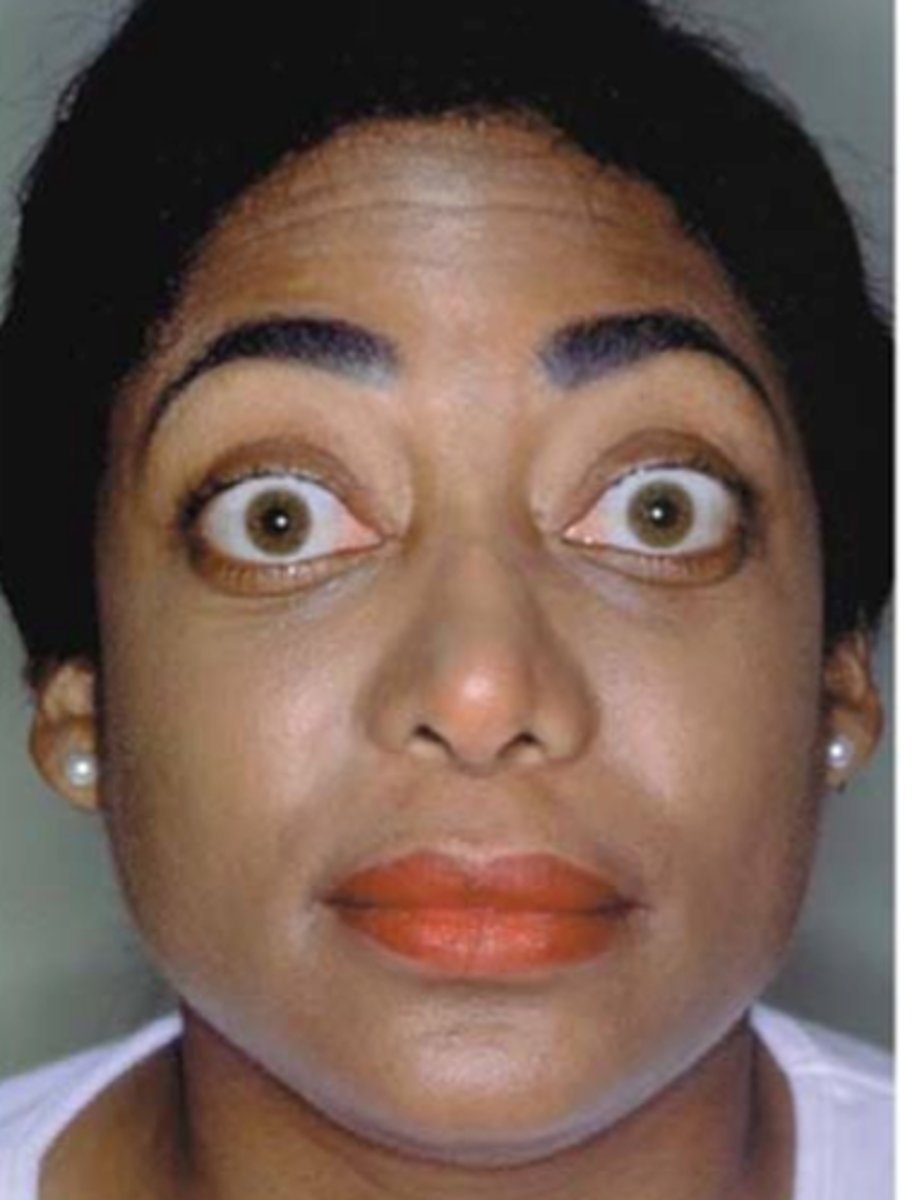
Graves disease
autoimmune antibodies to thyroid-stimulating hormone receptor, leading to overactive thyroid
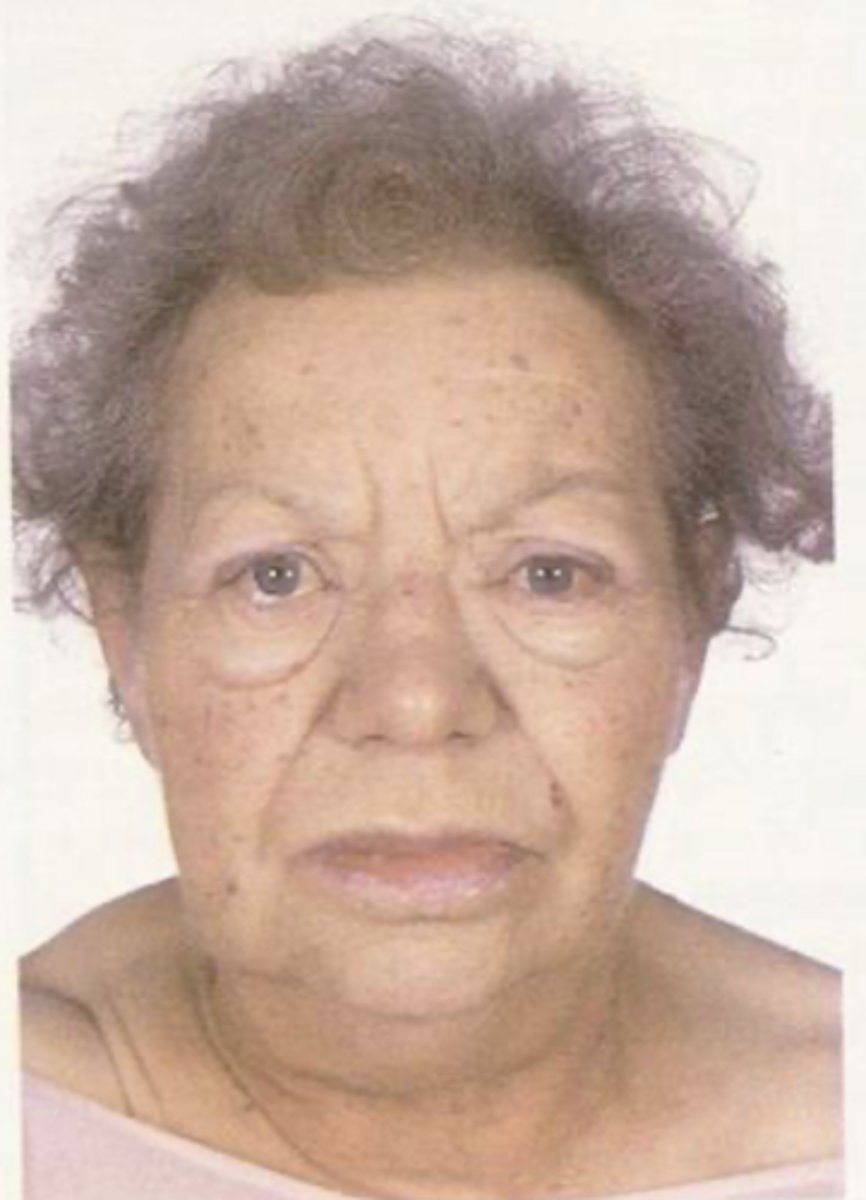
Hashimoto disease
autoimmune antibodies against thyroid gland, often causing hypothyroidism
Hyperthyroid
Hypothyroid
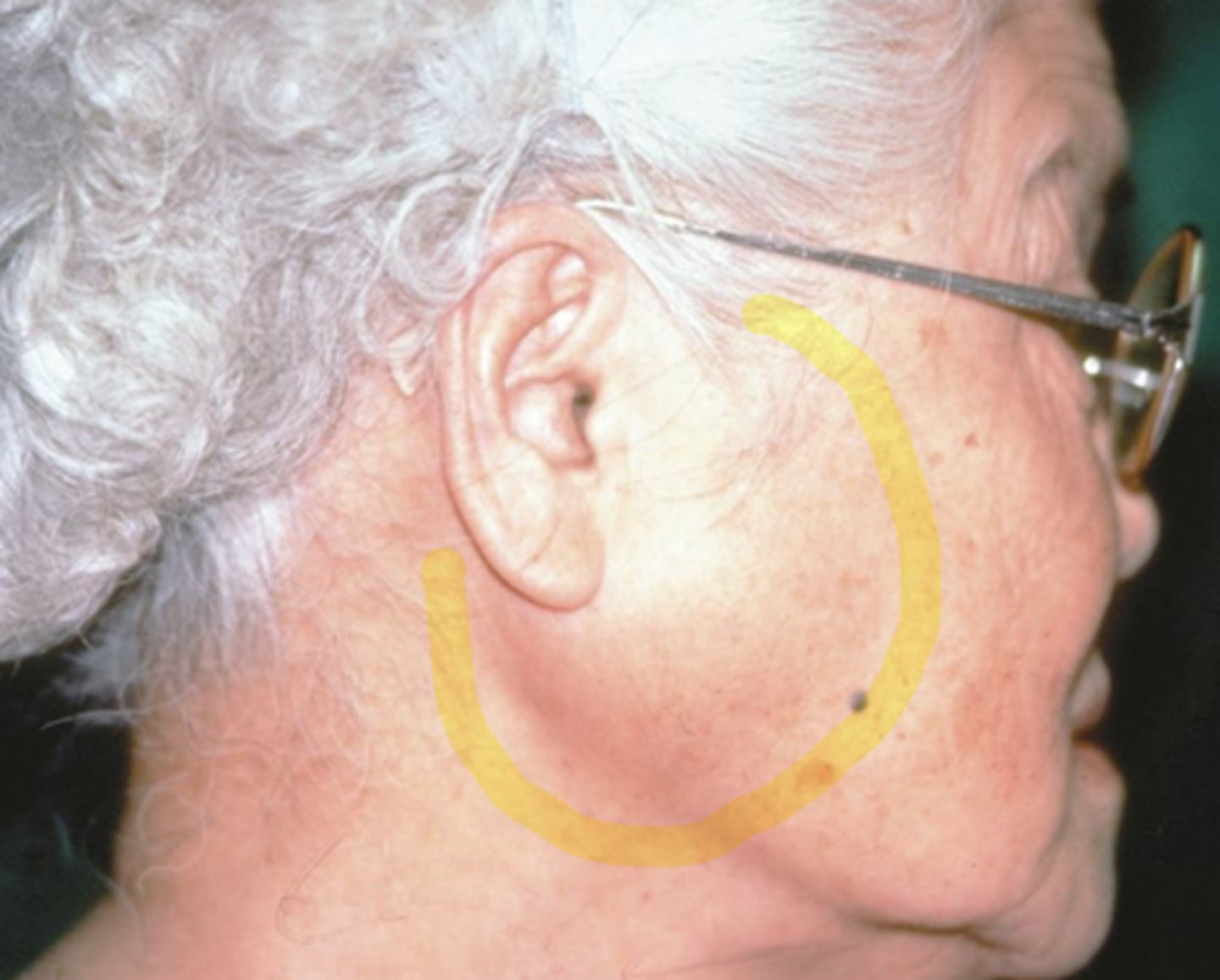
Parotid enlargement
Lymphadenopathy
enlarged lymphs nodes
Lymphedema
edematous swelling due to excess accumulation of lymph fluid in tissues caused by inadequate lymph drainage
Lymphangitis
inflammation of the walls of lymphatic vessels, red streaks in skin
Thyroglossal duct cyst
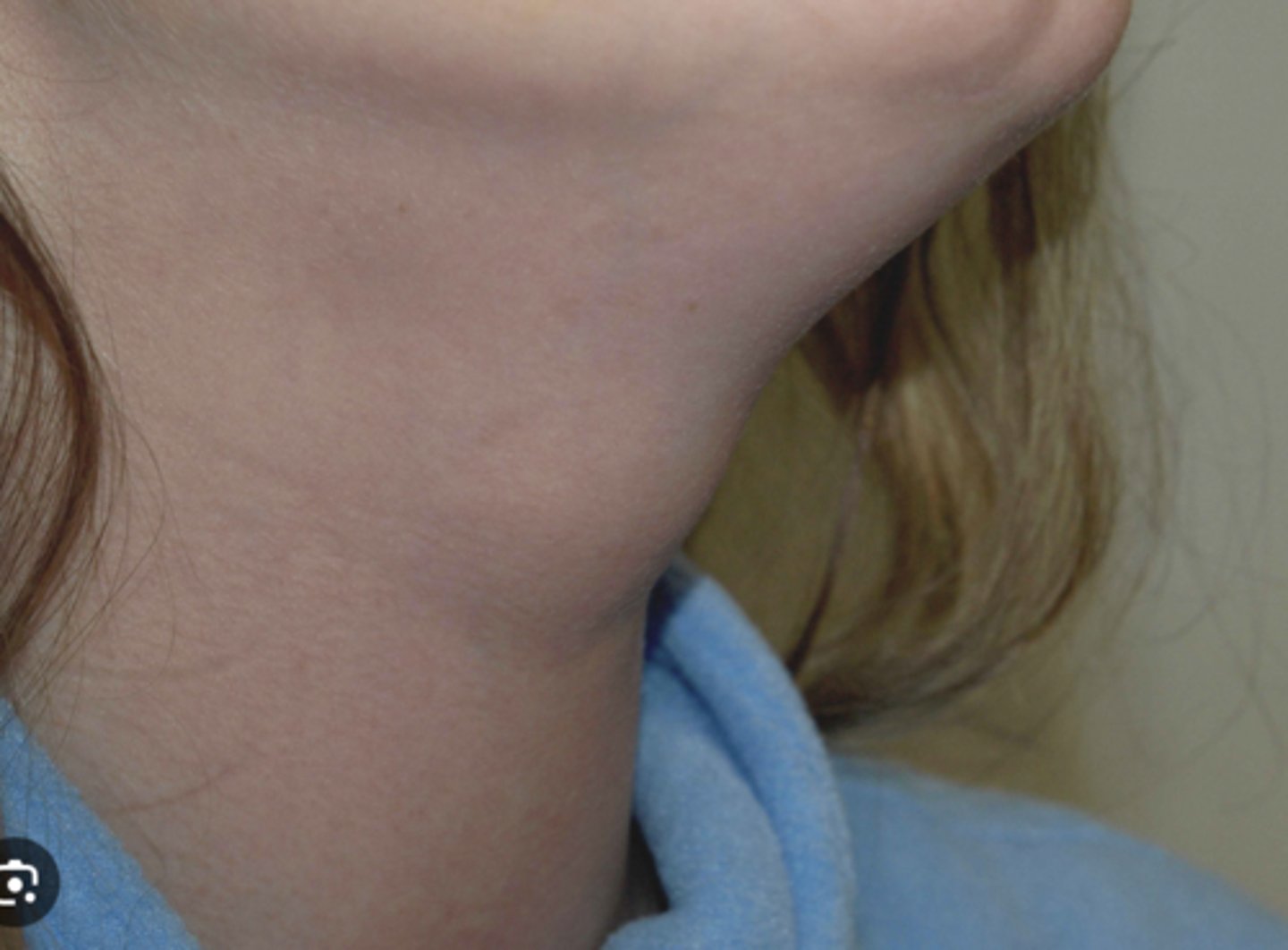
Neck cysts
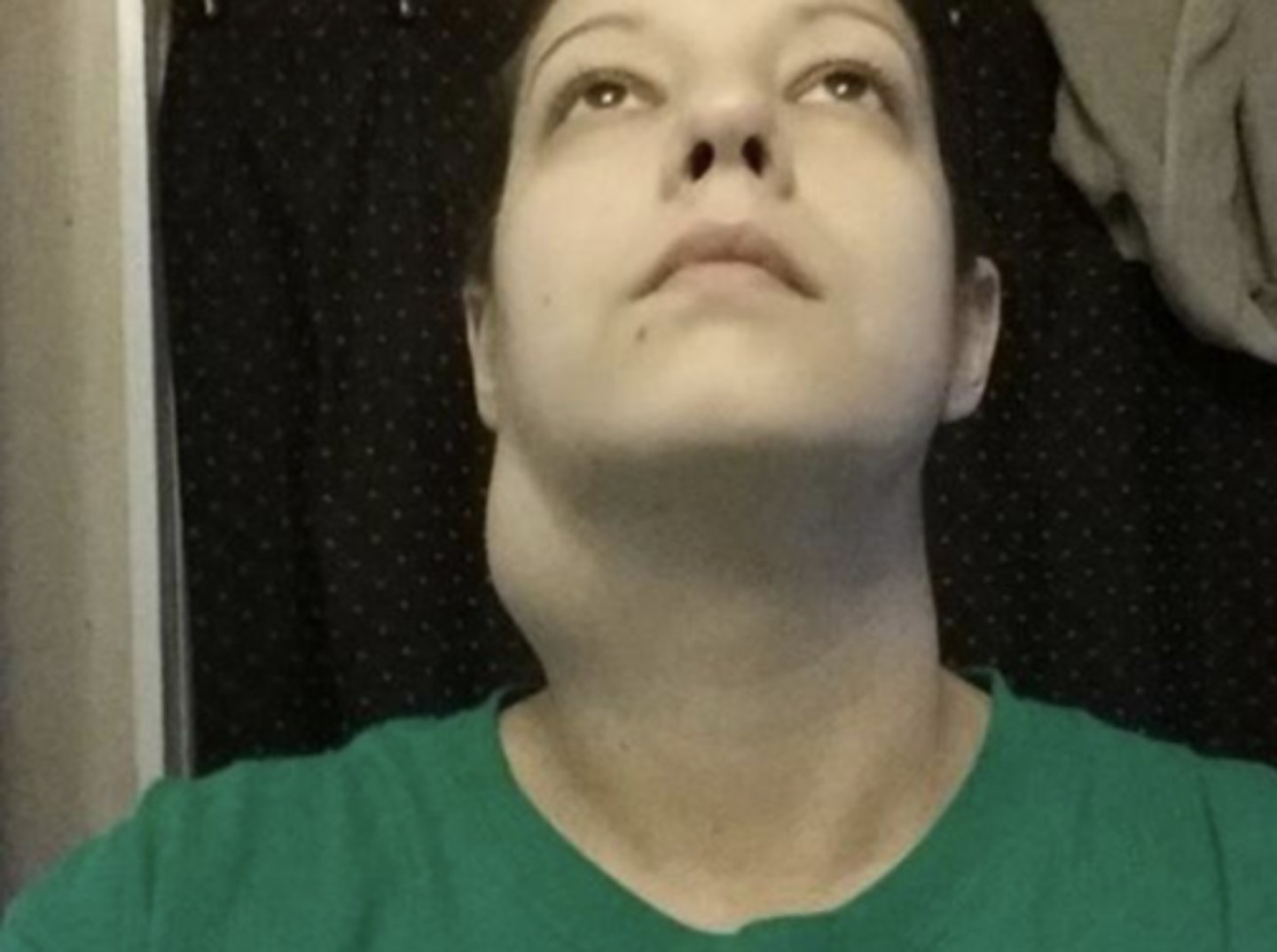
Torticollis (wry neck) causes
- birth trauma
- tumors
- trauma
- cranial nerve palsy
- muscle spasms
- infection
- drug ingestion
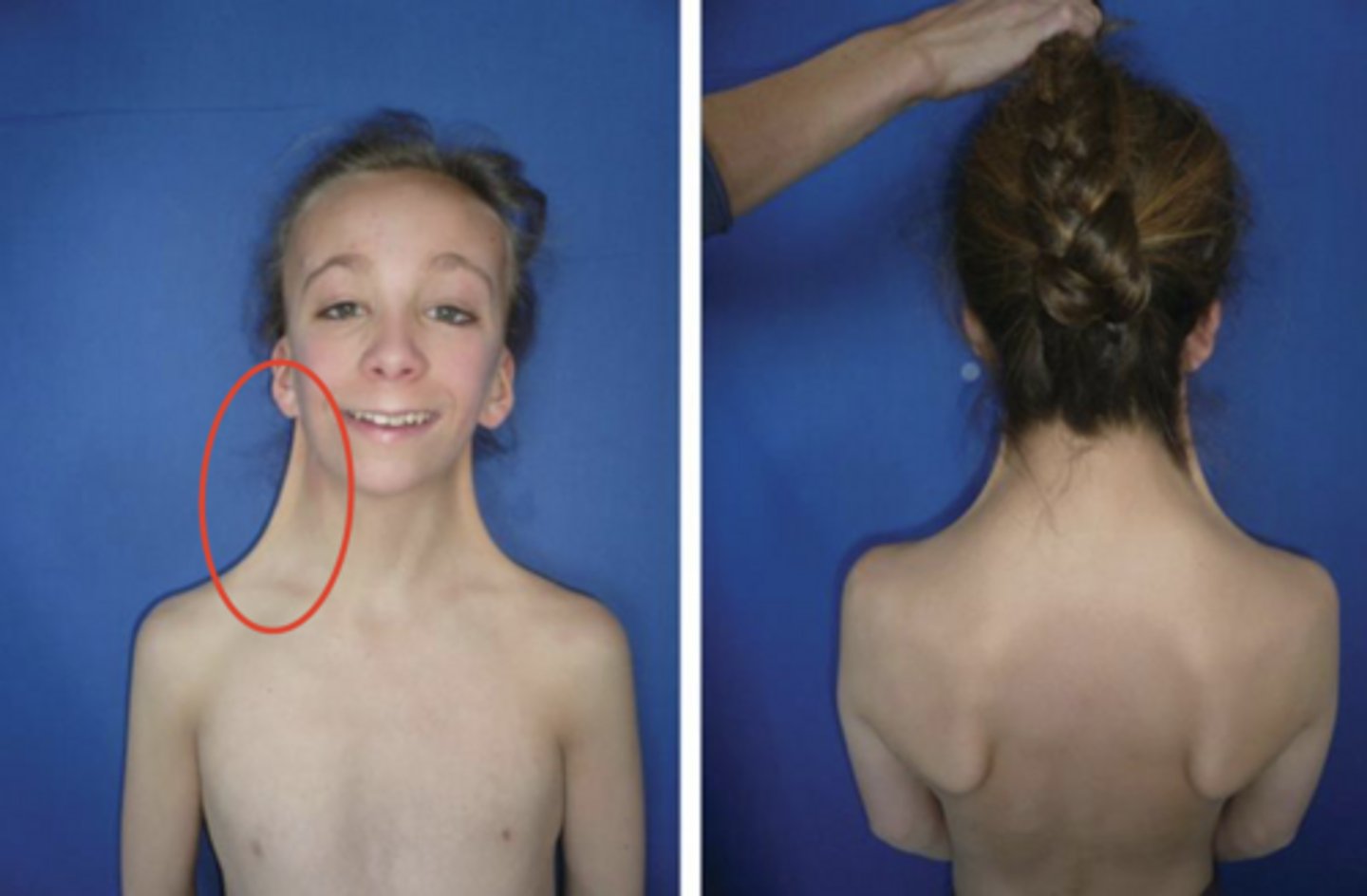
Webbed neck
When is a webbed neck classically seen?
Turner Syndrome (45, X)
What is found on a physical exam in someone with Turner Syndrome?
- short stature
- webbed neck
- developmental delay
- wide space nipples
What does a head circumference reflect (infant)?
rate of growth of the brain and skull
How does the head compare to the body length and weight of a newborn?
1/4 of body length, 1/3 of body weight
What do sutures feel like in an infant?
ridges
What do fontanelles feel like in an infant?
soft concavities
When does the anterior fontanelle close?
between 2 and 24 months (90% between 7 and 19 months)
When does the posterior fontanelle close?
by 2 months
Facial characteristics of Down Syndrome
- small, rounded head
- flattened nasal bridge
- oblique, upward slanted palpebral fissures
- prominent epicanthal folds
- low-set ears
- prominent tongue
- brushfield spots on the iris
Fetal alcohol syndrome