Ear Structure, Hearing & Equilibrium - Lab 30-31
 Call Kai
 Learn
Learn Practice Test
 Spaced Repetition
 Match
Match Flashcards
 Knowt Play
1/44

Earn XP
Description and Tags
Anatomy and Physiology Lab
Name | Mastery | Learn | Test | Matching | Spaced | Call with Kai |
|---|
No analytics yet
Send a link to your students to track their progress
45 Terms
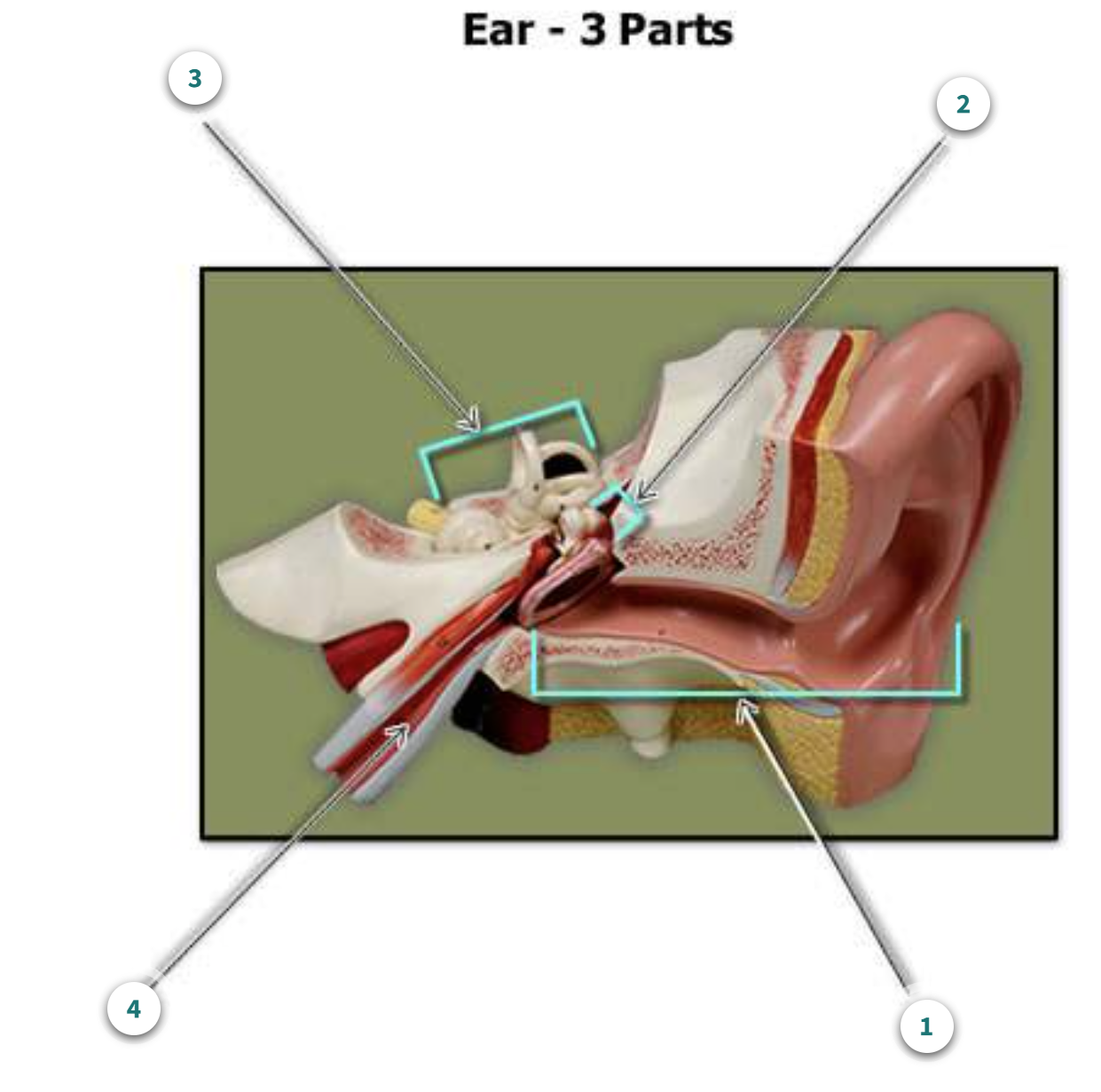
What is 1?
Outer ear
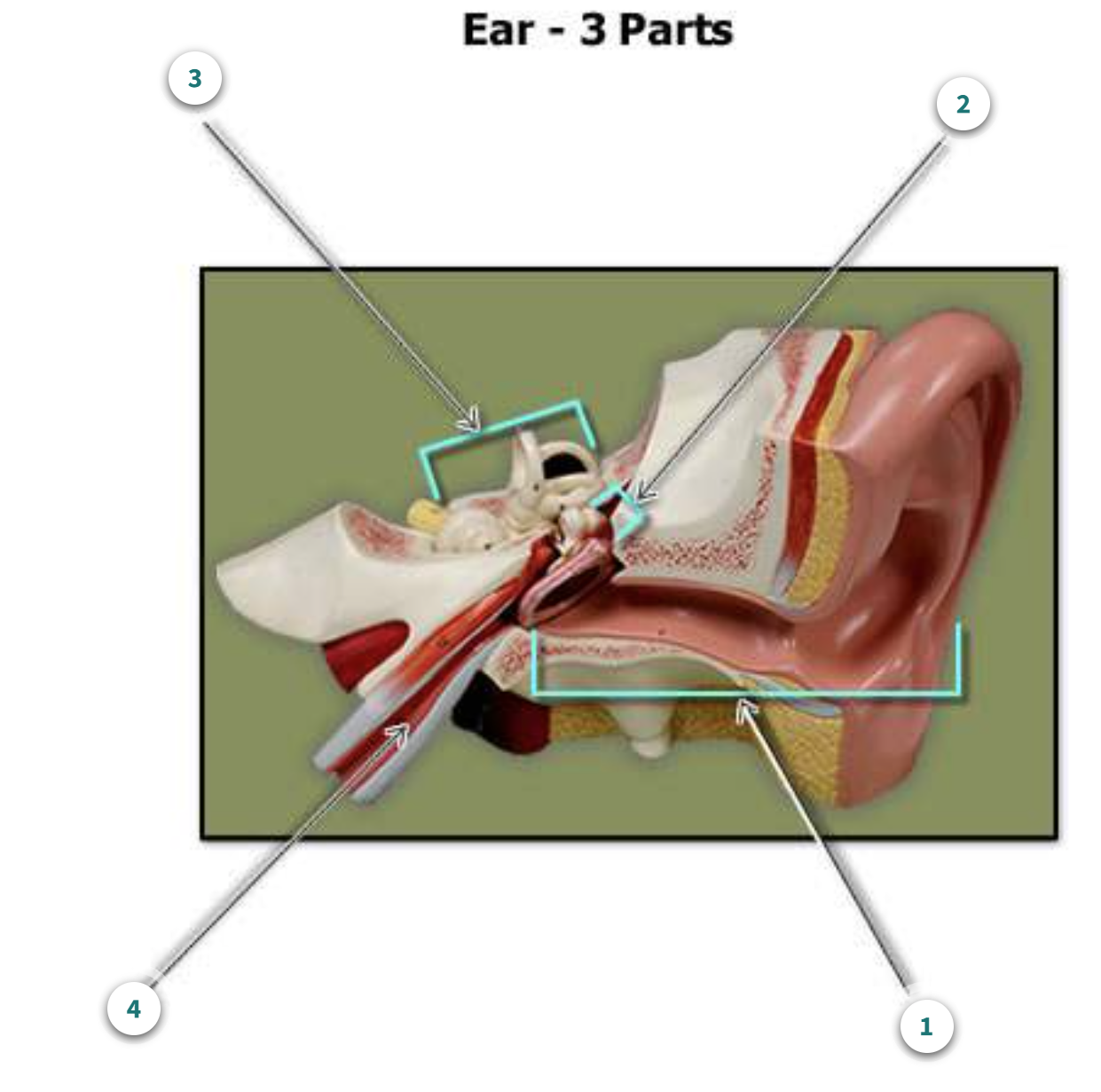
What is 2?
Middle ear
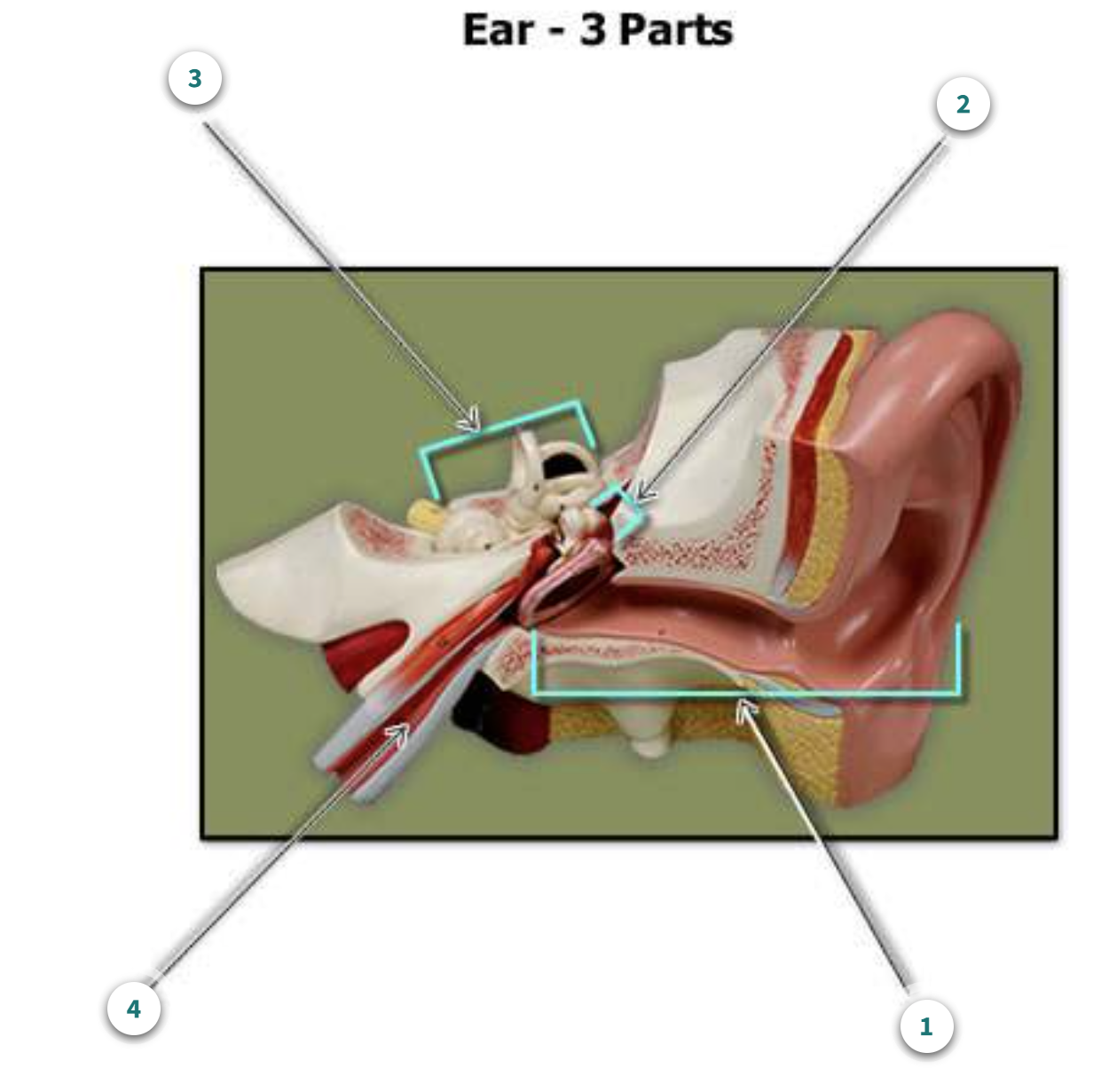
What is 3?
Inner ear
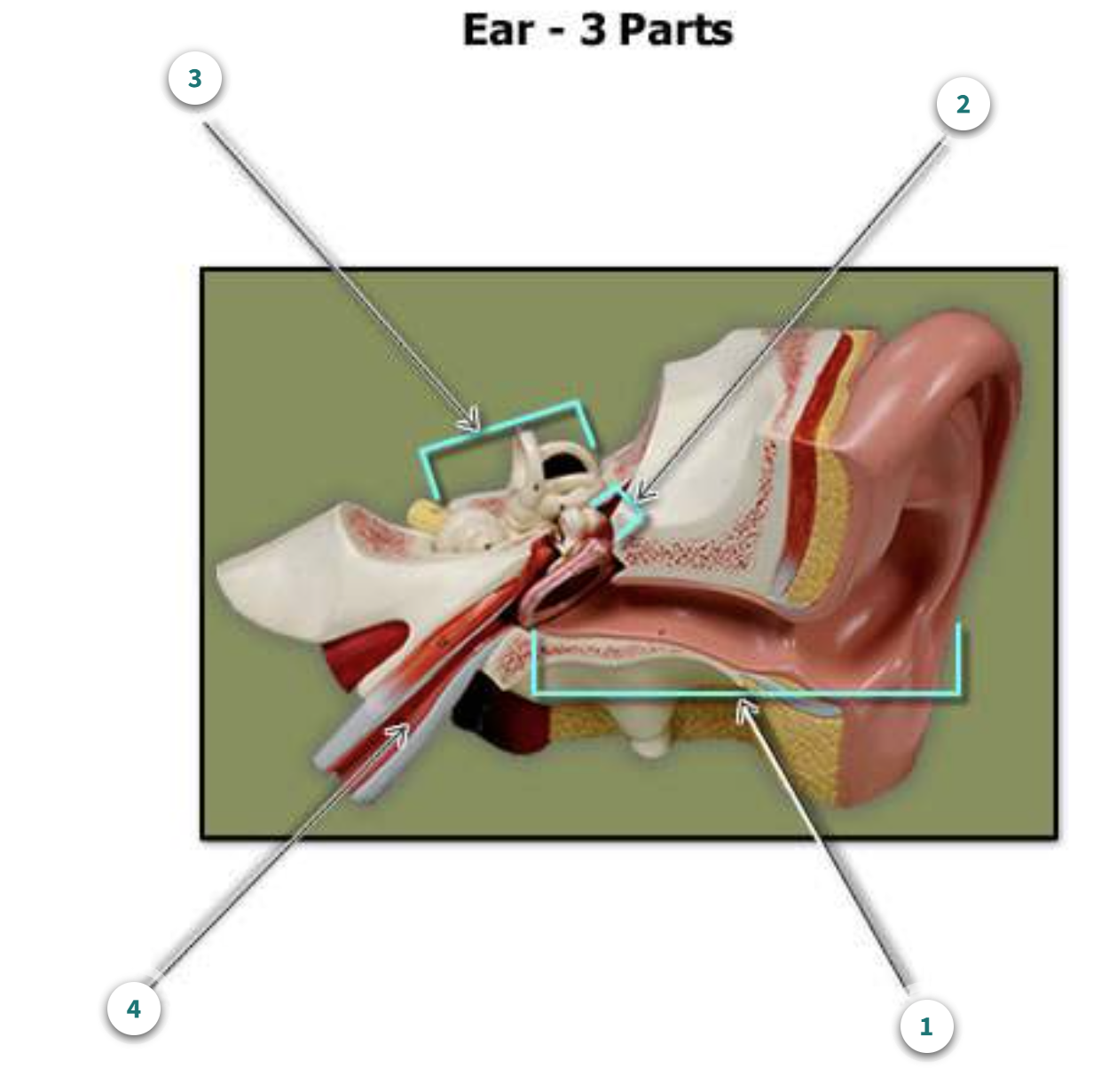
What is 4?
Eustachian/Auditory tube
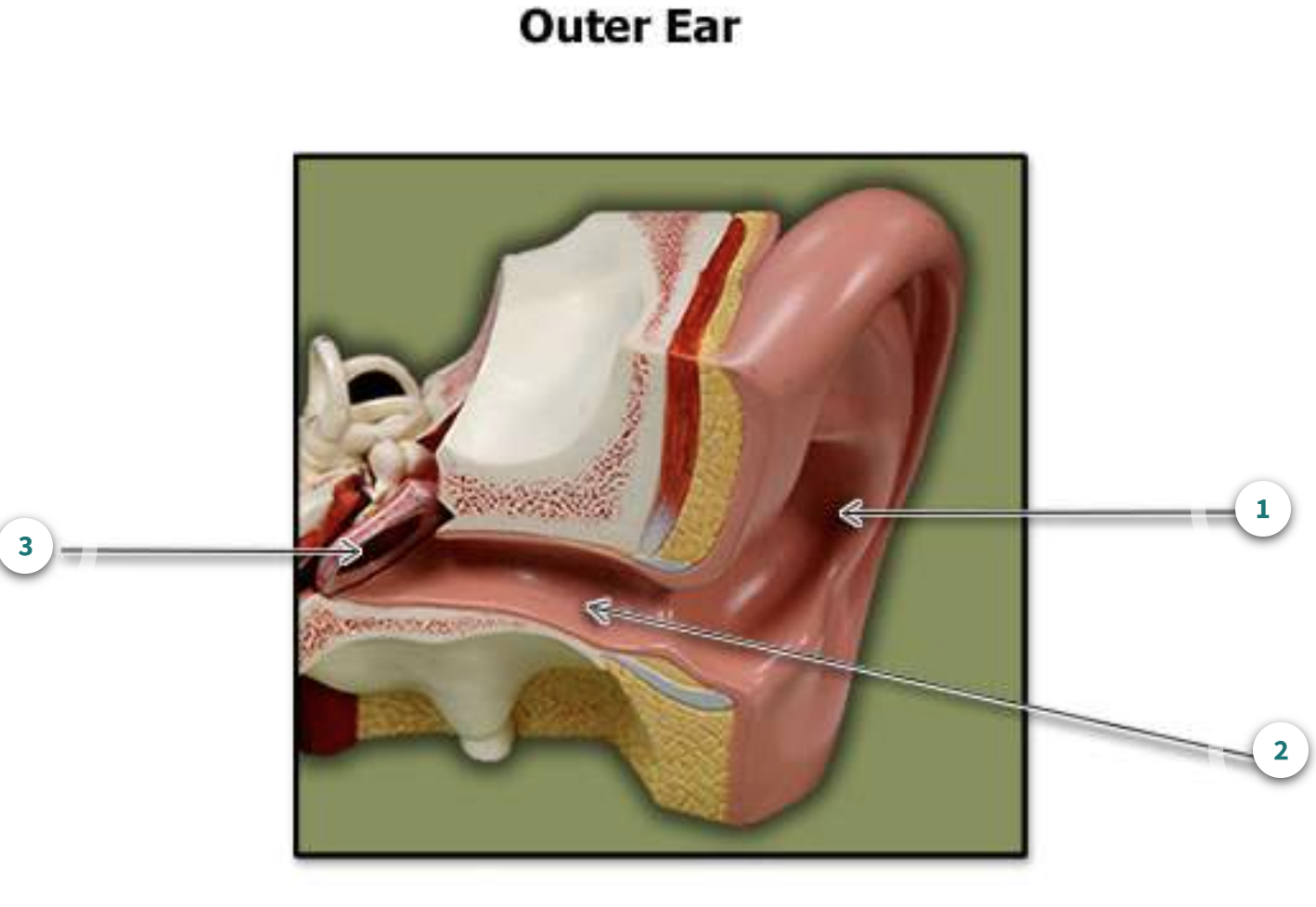
What is 1?
Auricle/Pinna
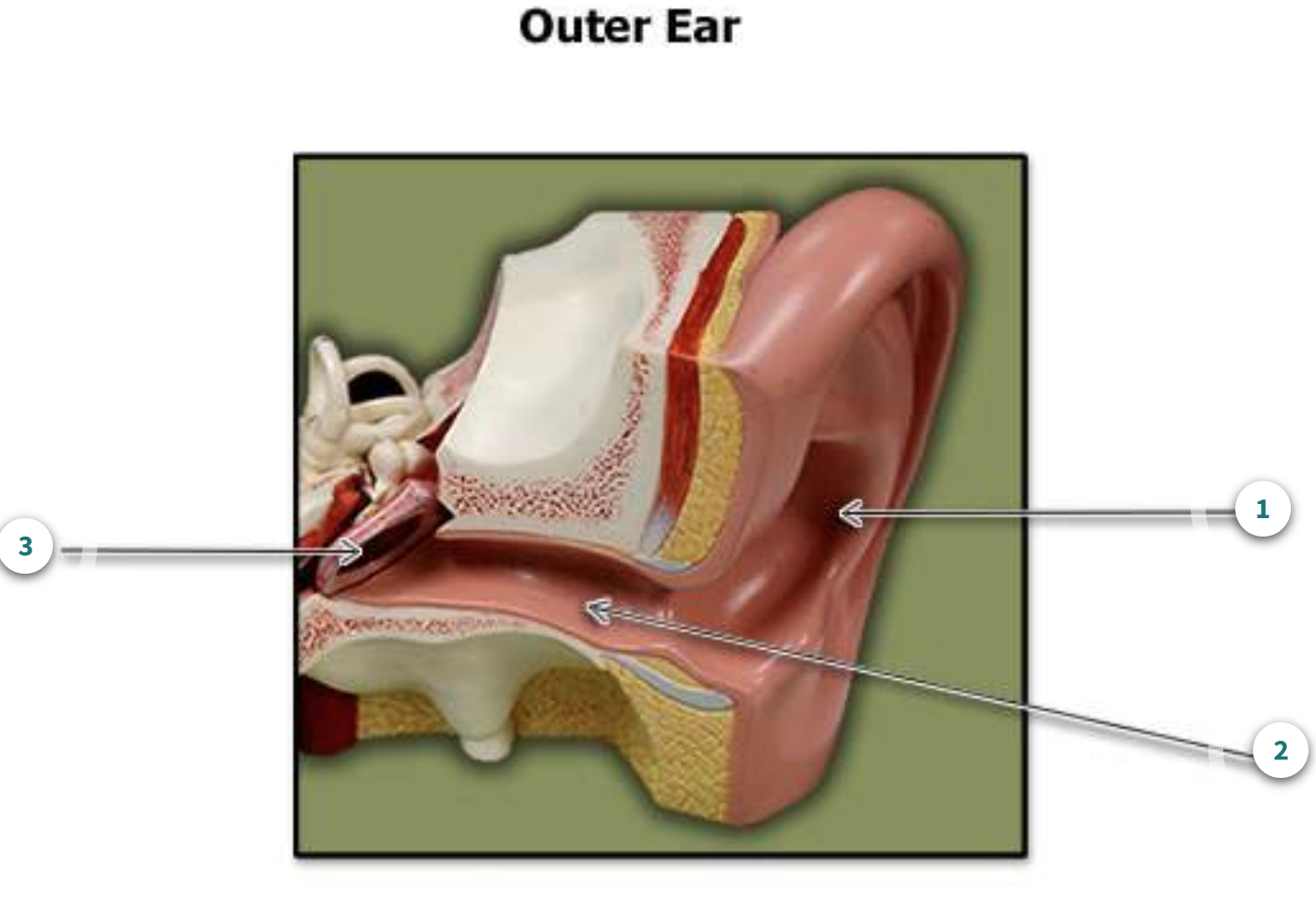
What is 2?
External auditory canal
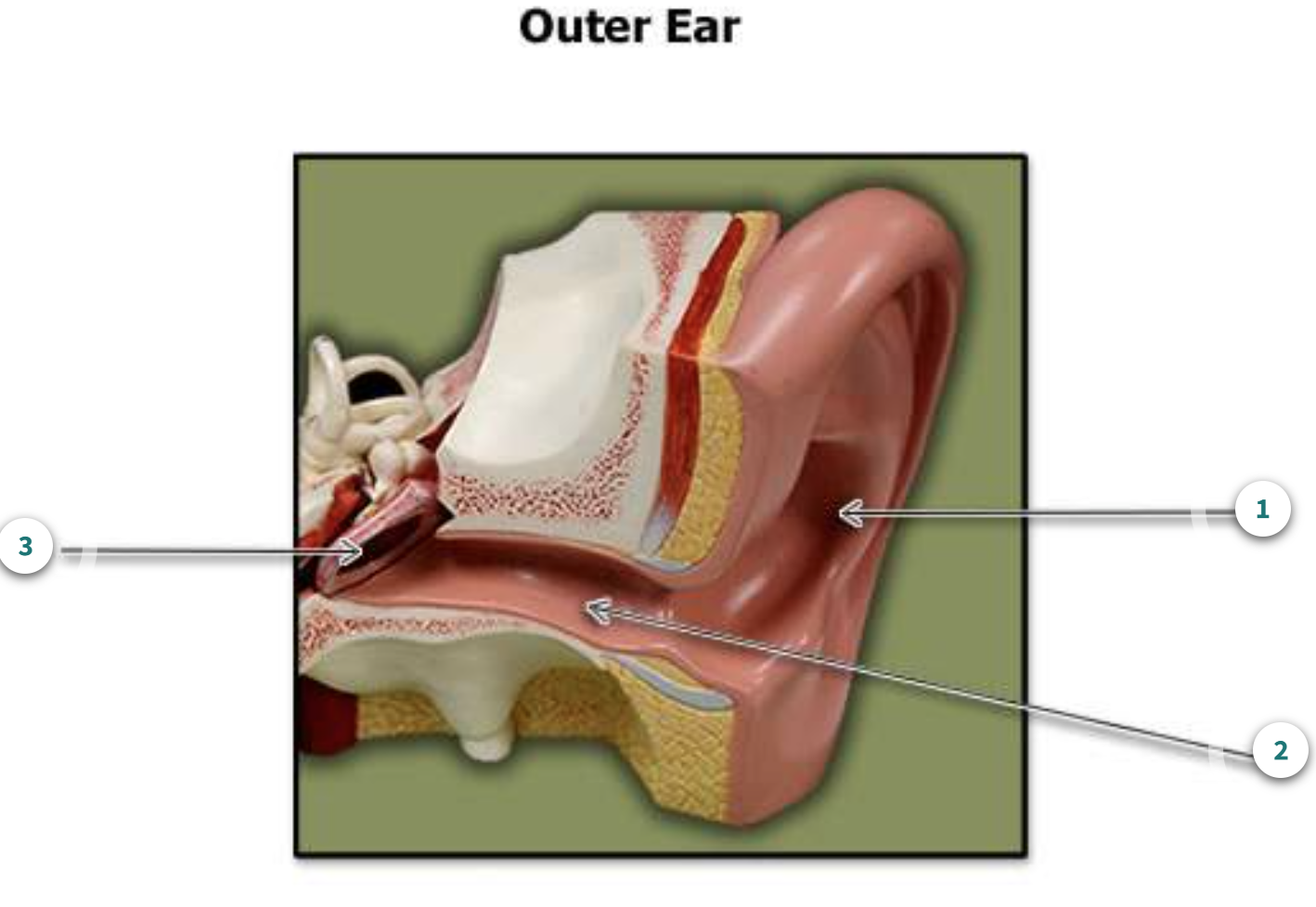
What is 3?
Tympanic membrane
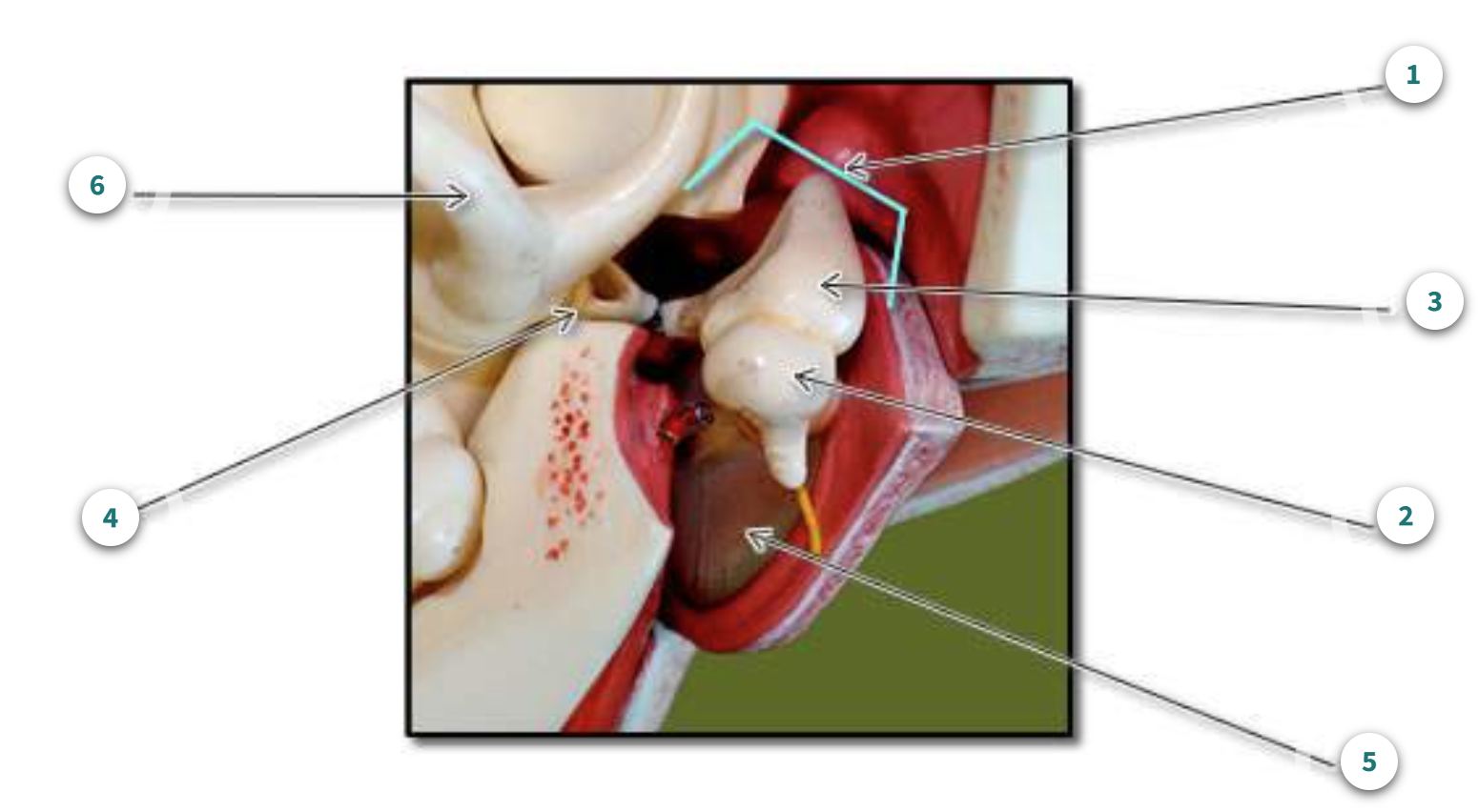
What is 1?
Middle ear cavity/Tympanic cavity
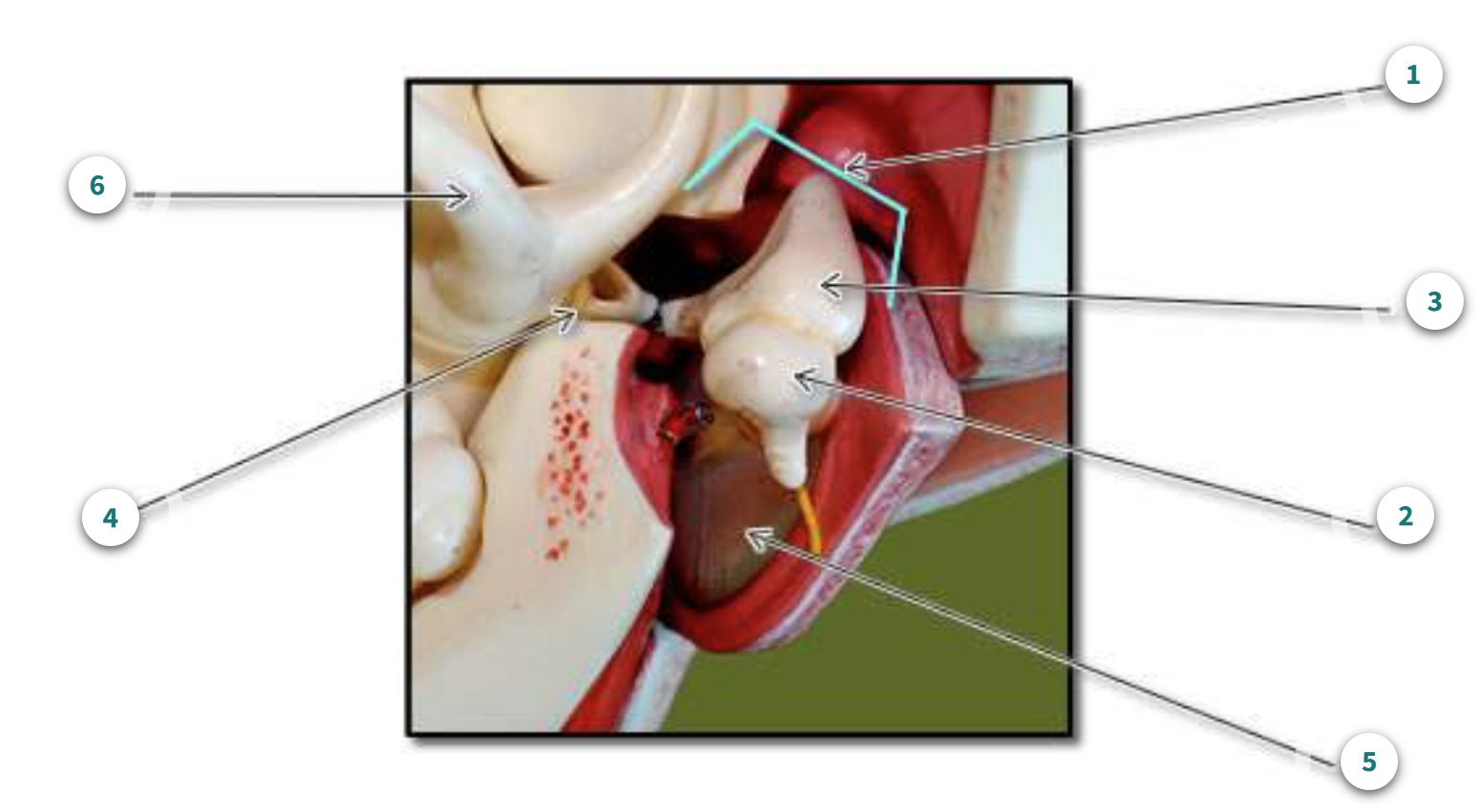
What is 2?
Malleus
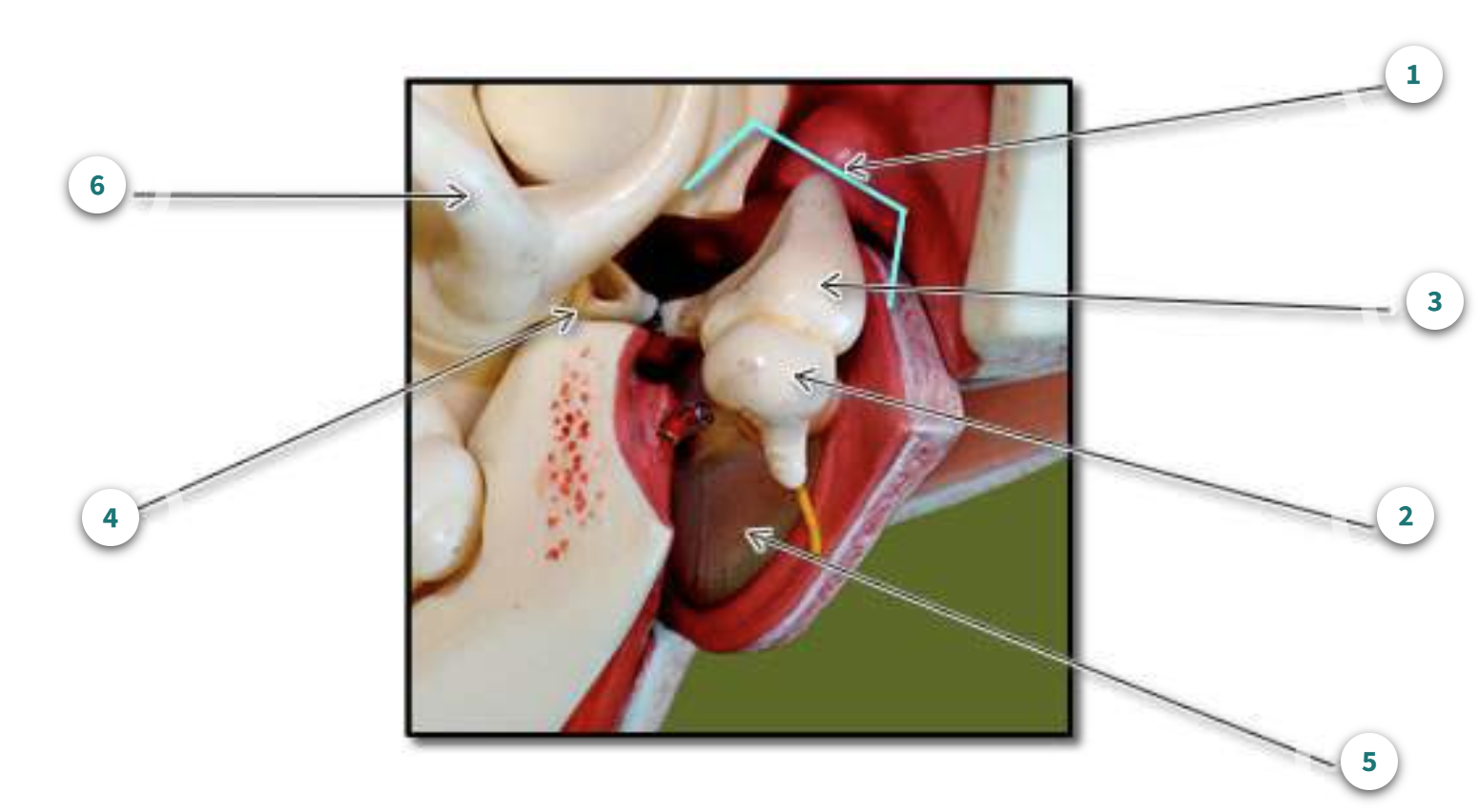
What is 3?
Incus
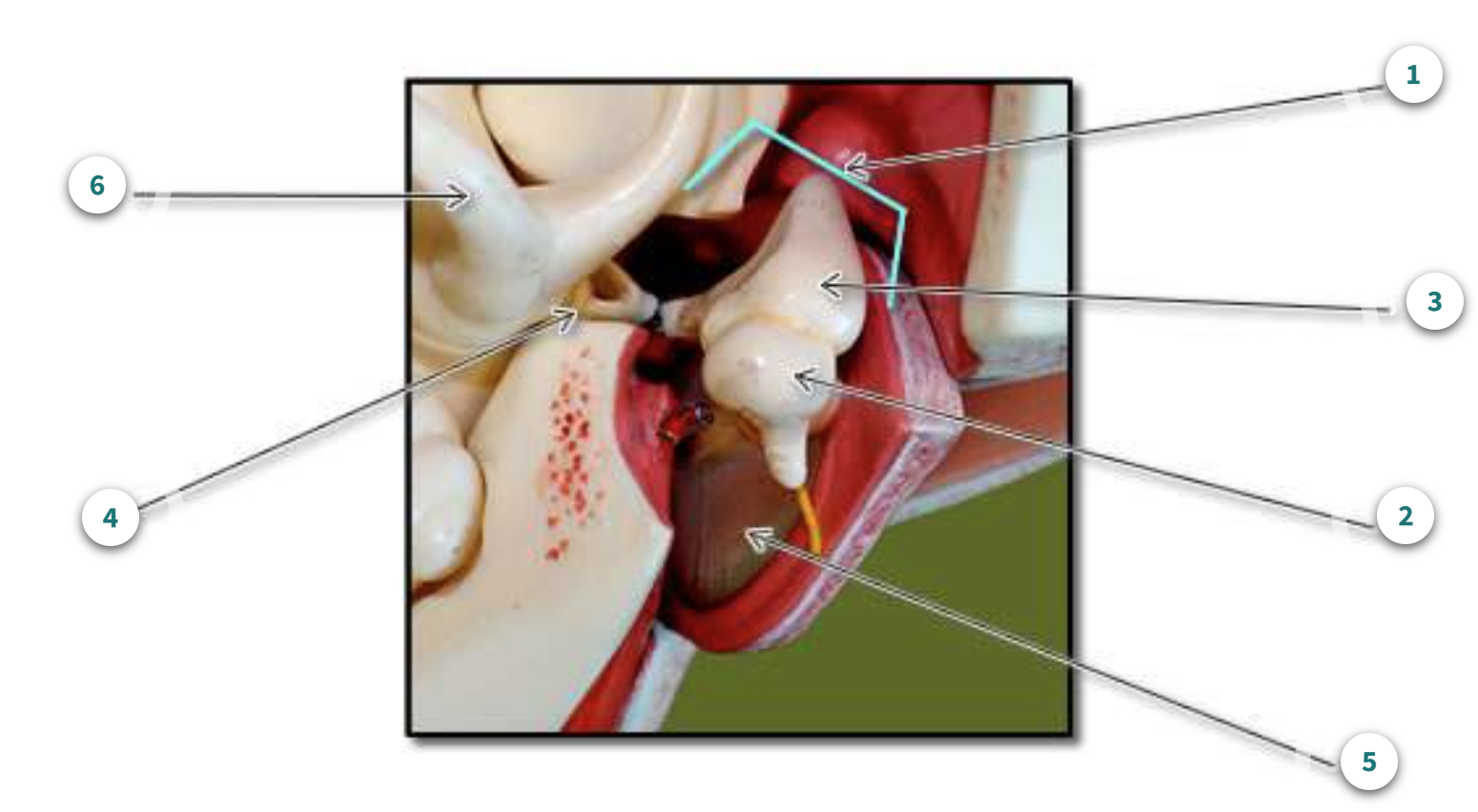
What is 4?
Stapes
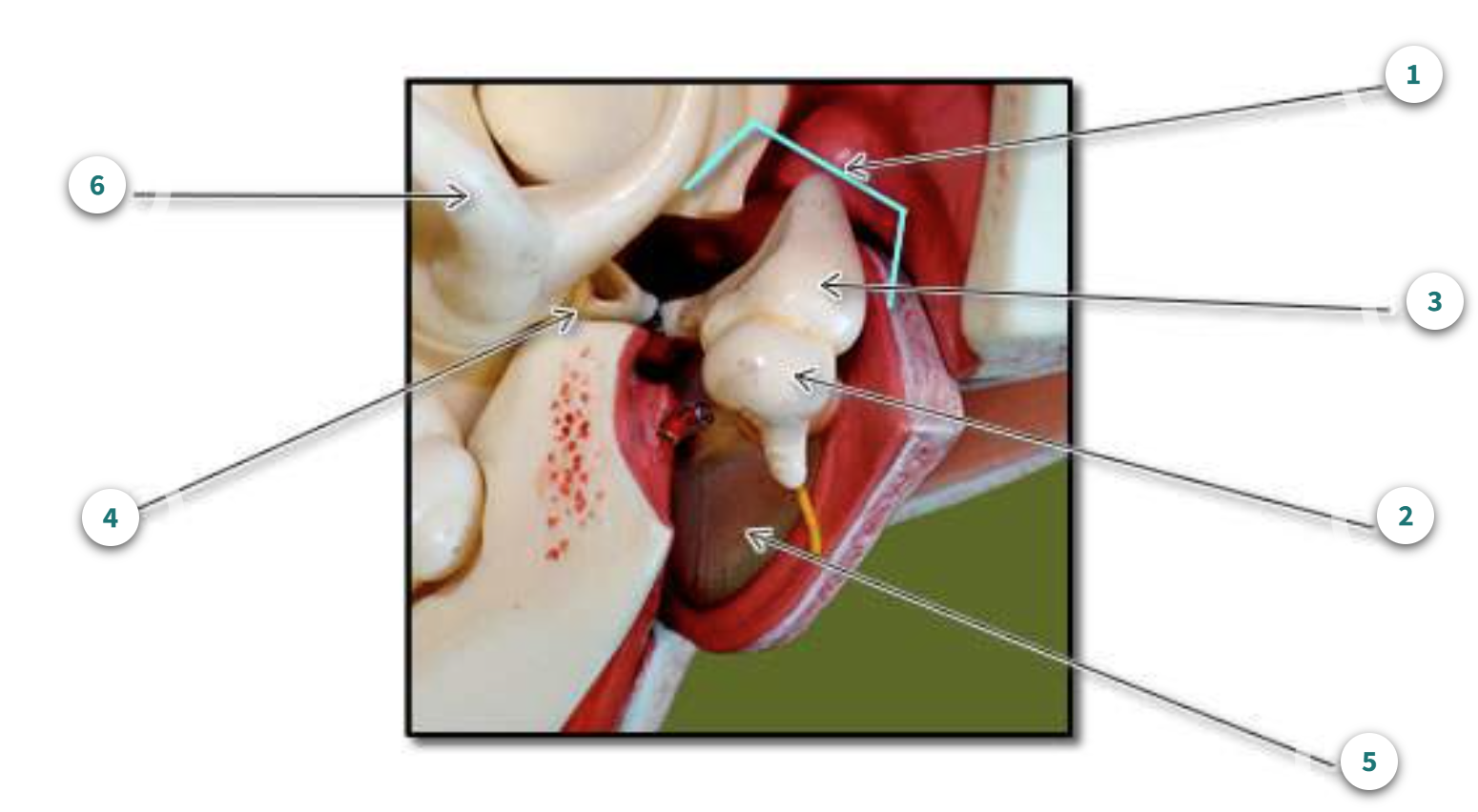
What is 5?
Tympanic membrane
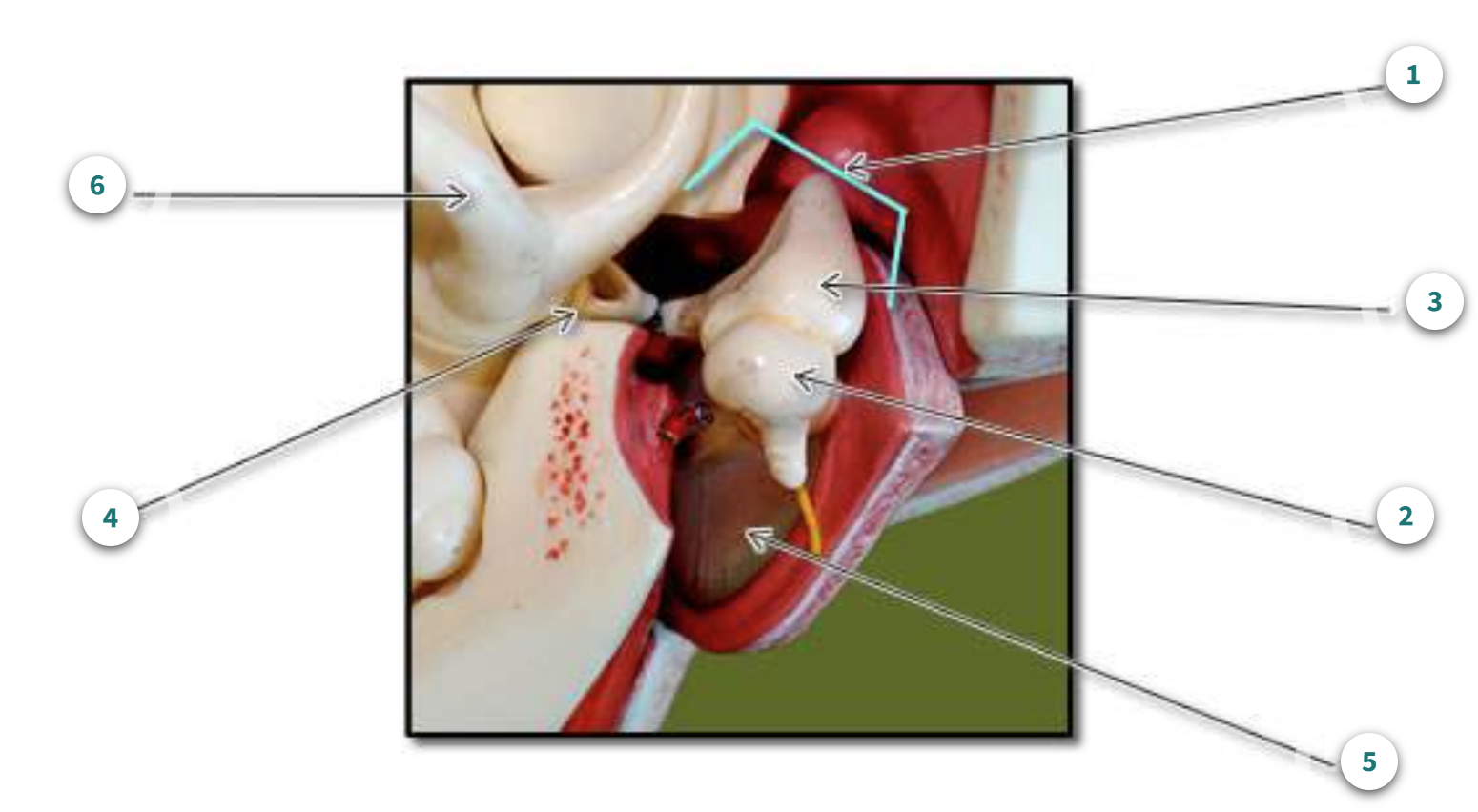
What is 6?
Inner ear
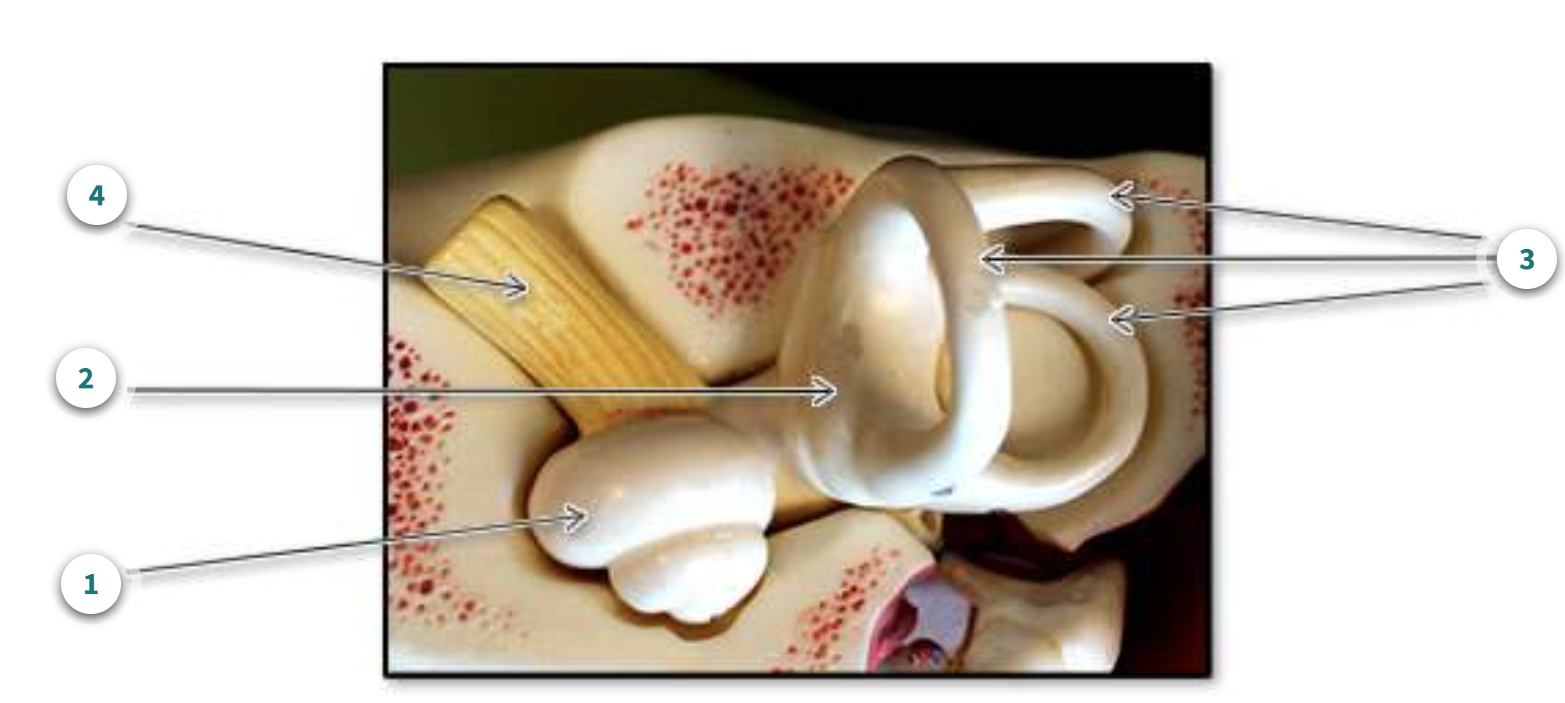
What is 1?
Cochlea
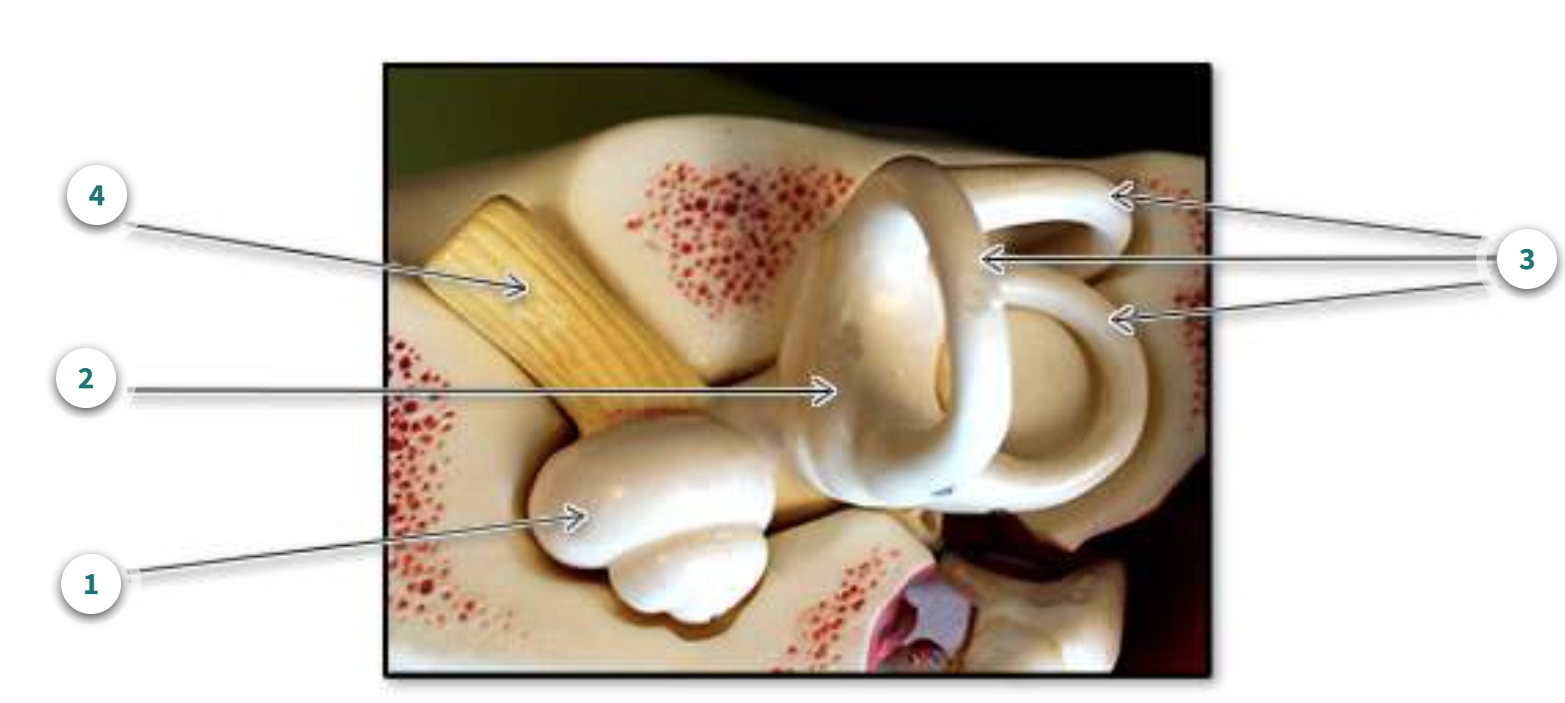
What is 2?
Vestibule
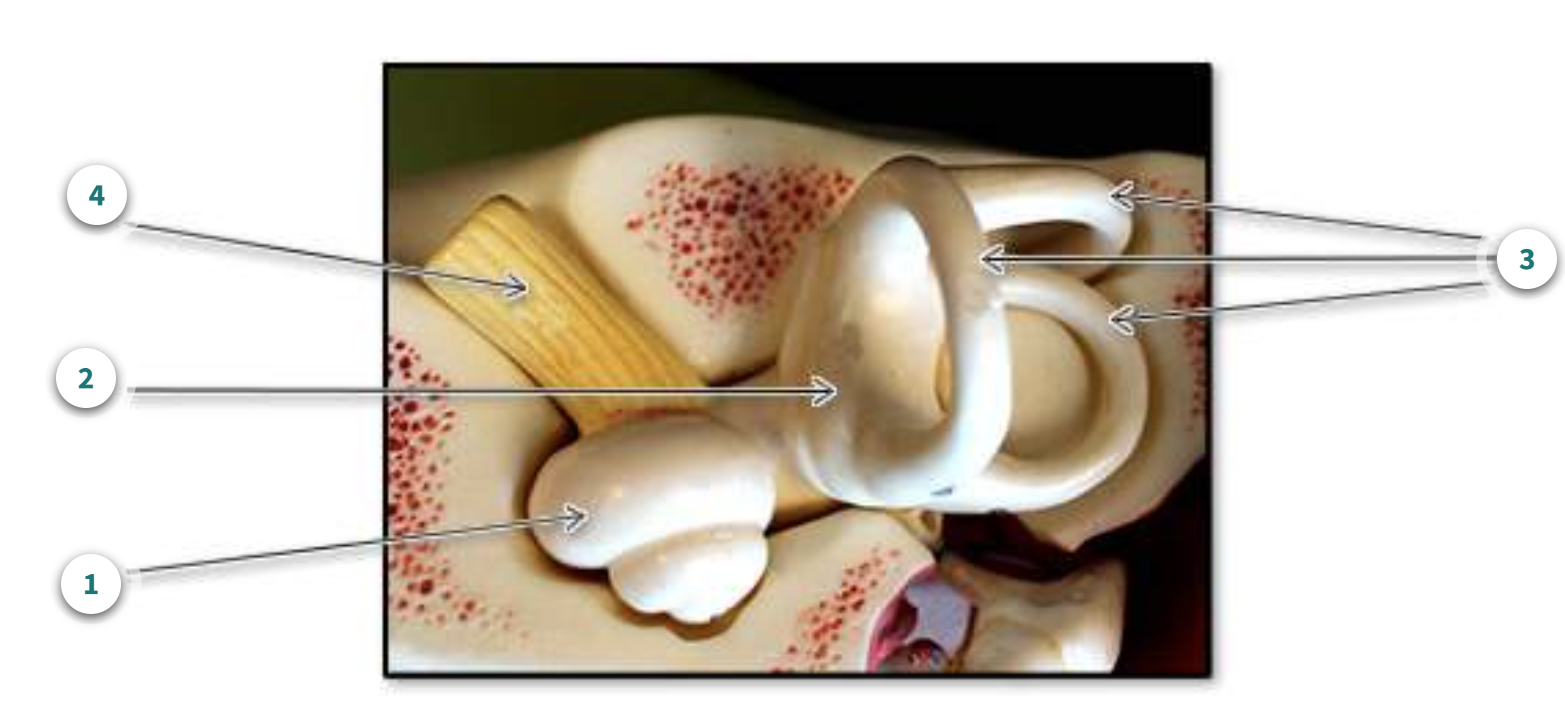
What are 3?
Semicircular canals
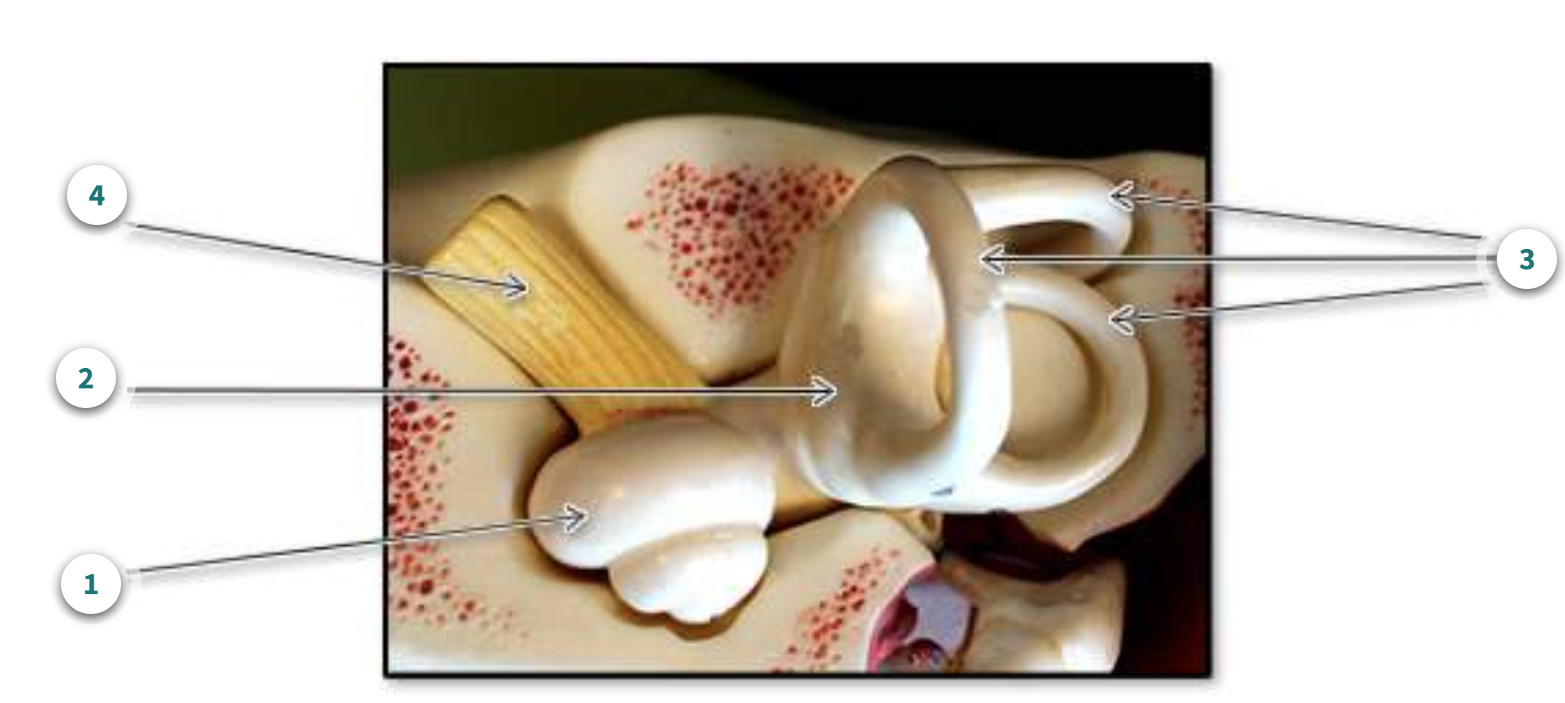
What is 4?
Vestibulocochlear nerve
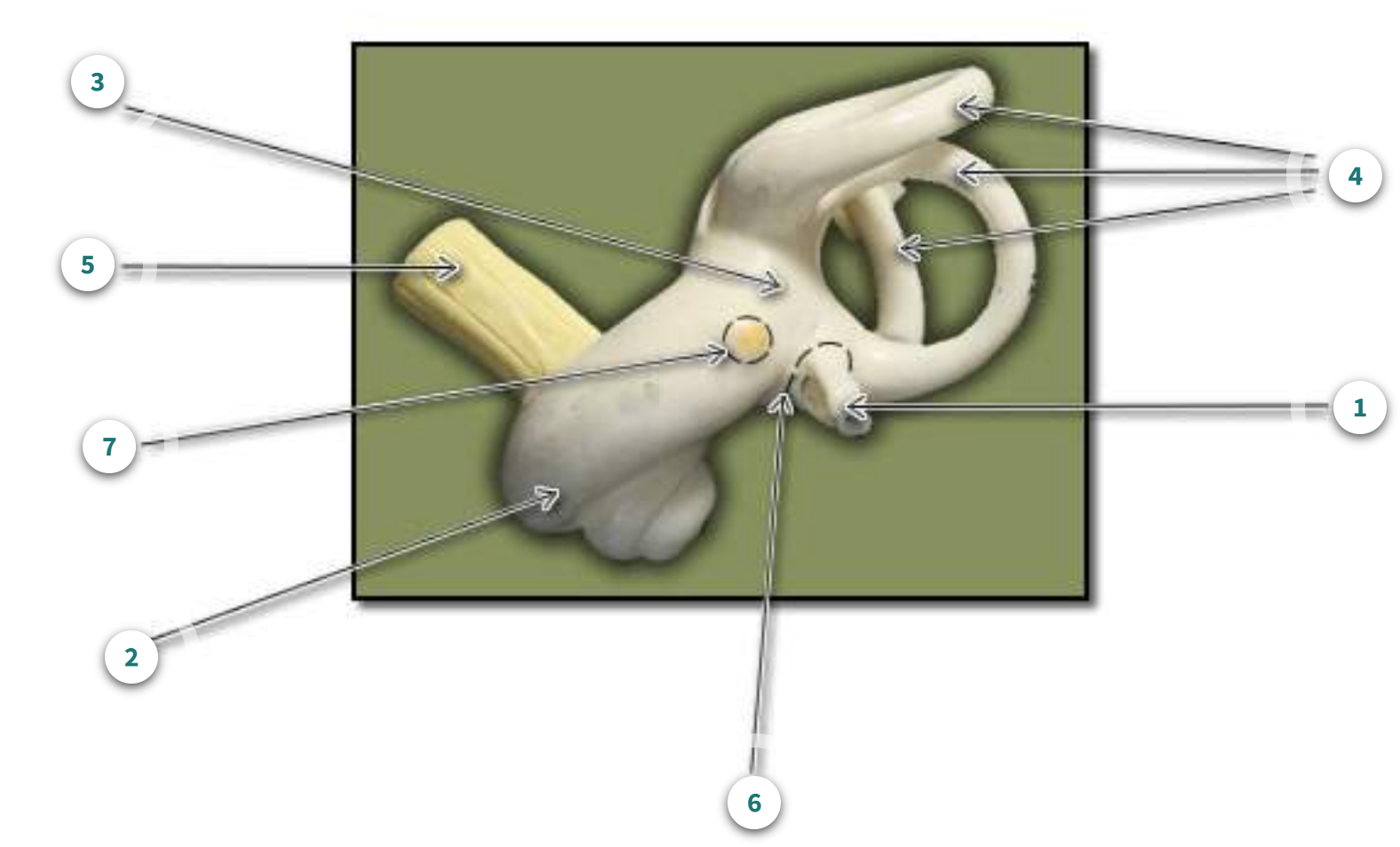
What is 1?
Stapes
What is 2?
Cochlea
What is 3?
Vestibule
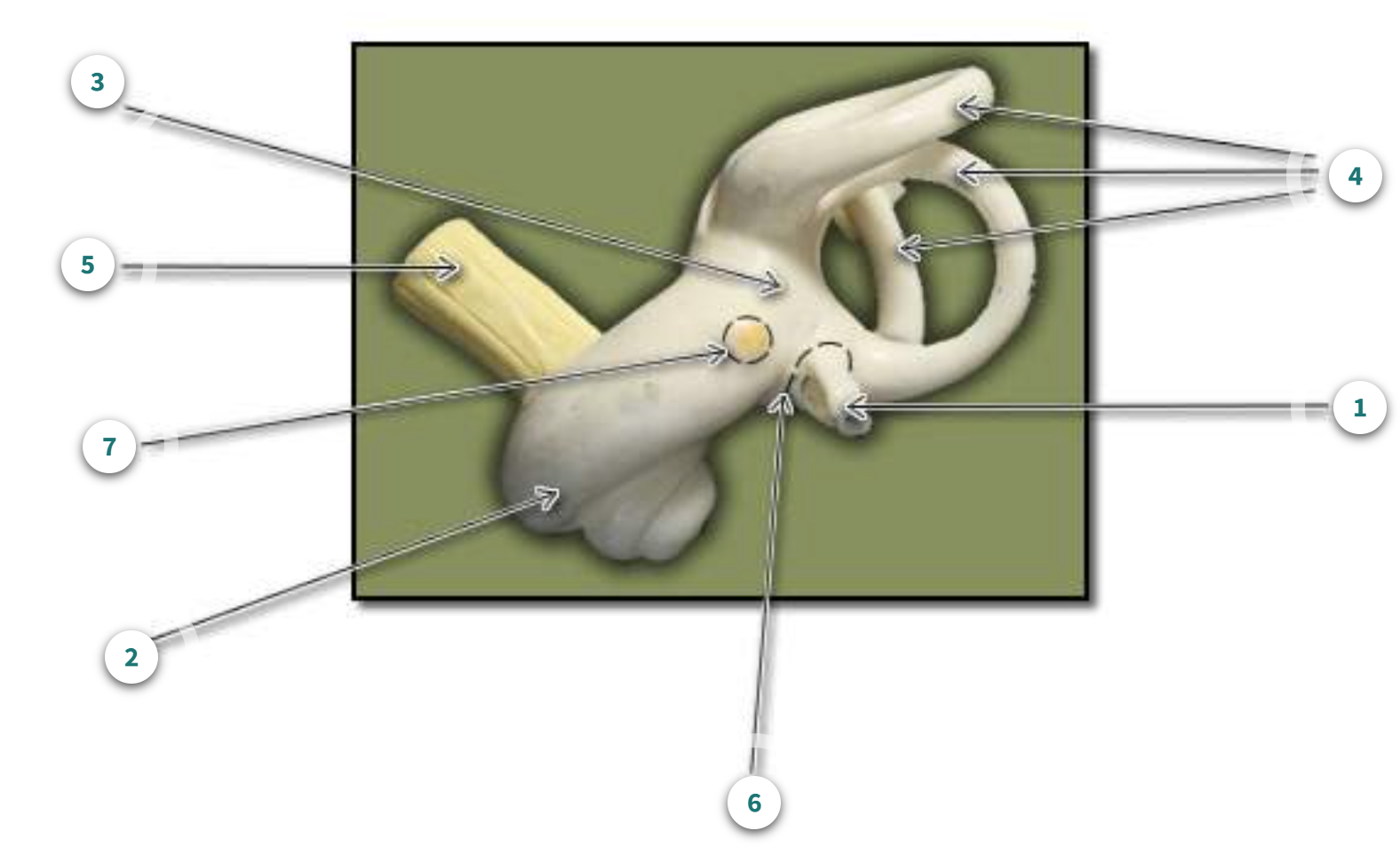
What are 4?
Semicircular canals
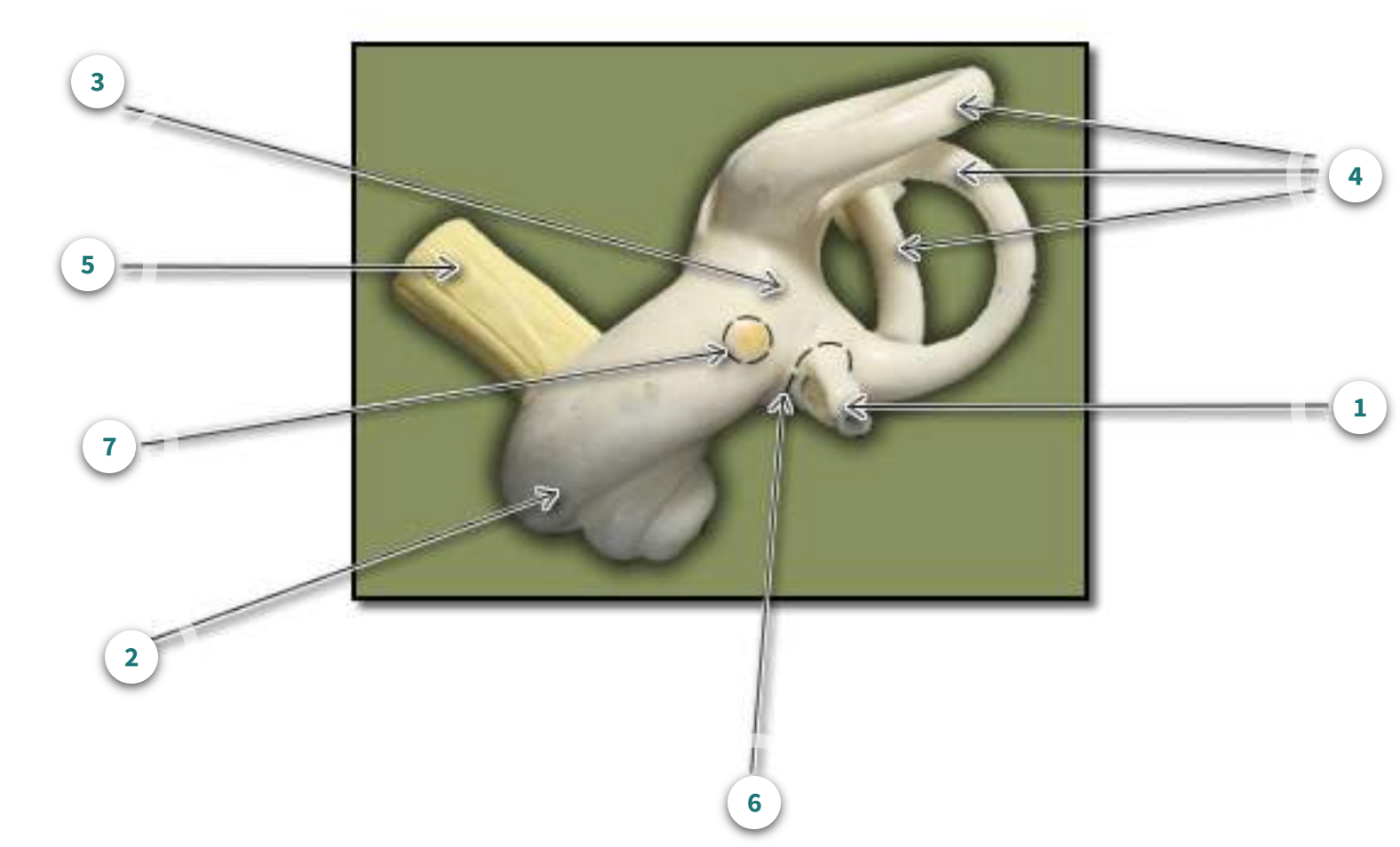
What is 5?
Vestibulocochlear nerve
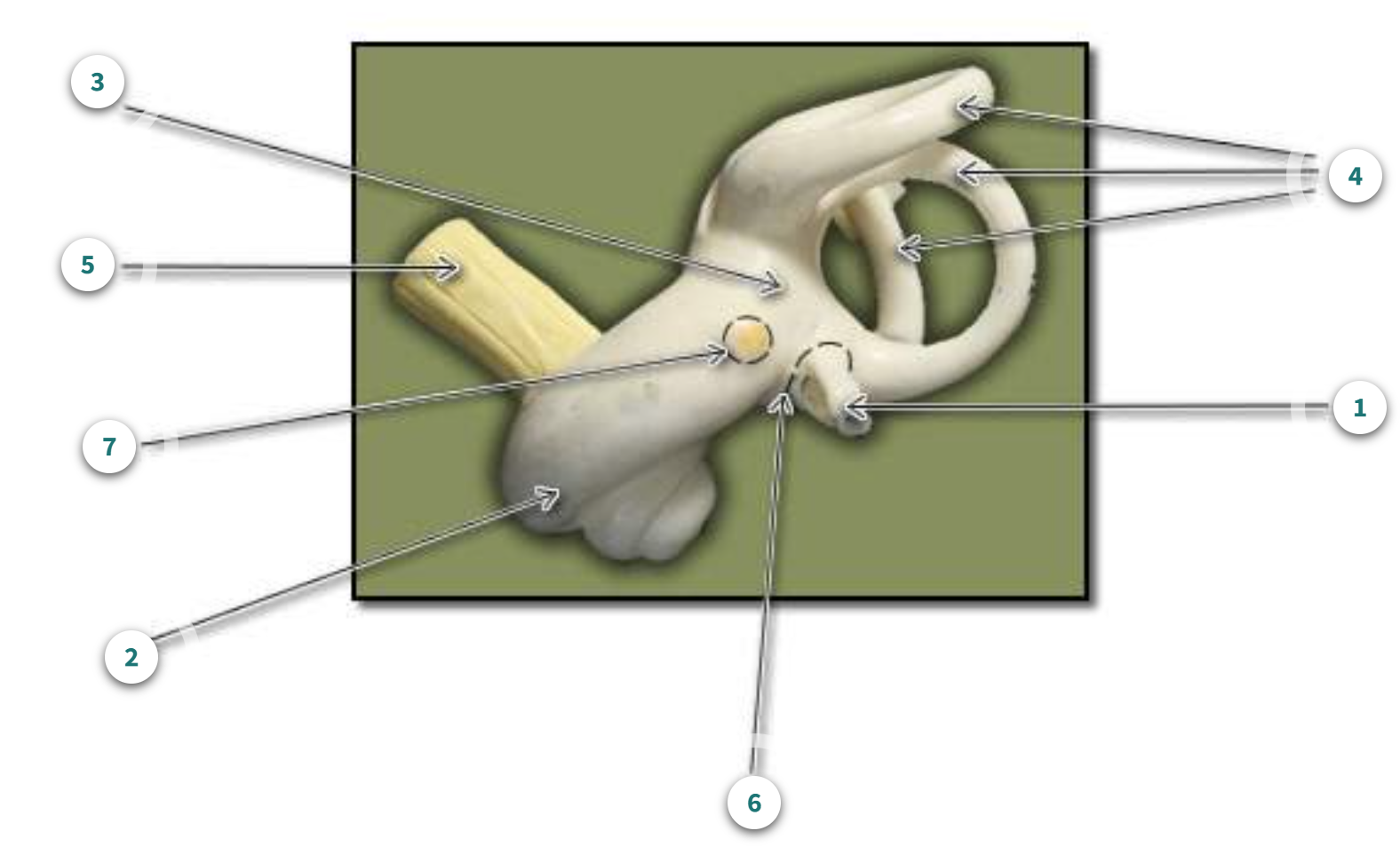
What is 6?
Oval window
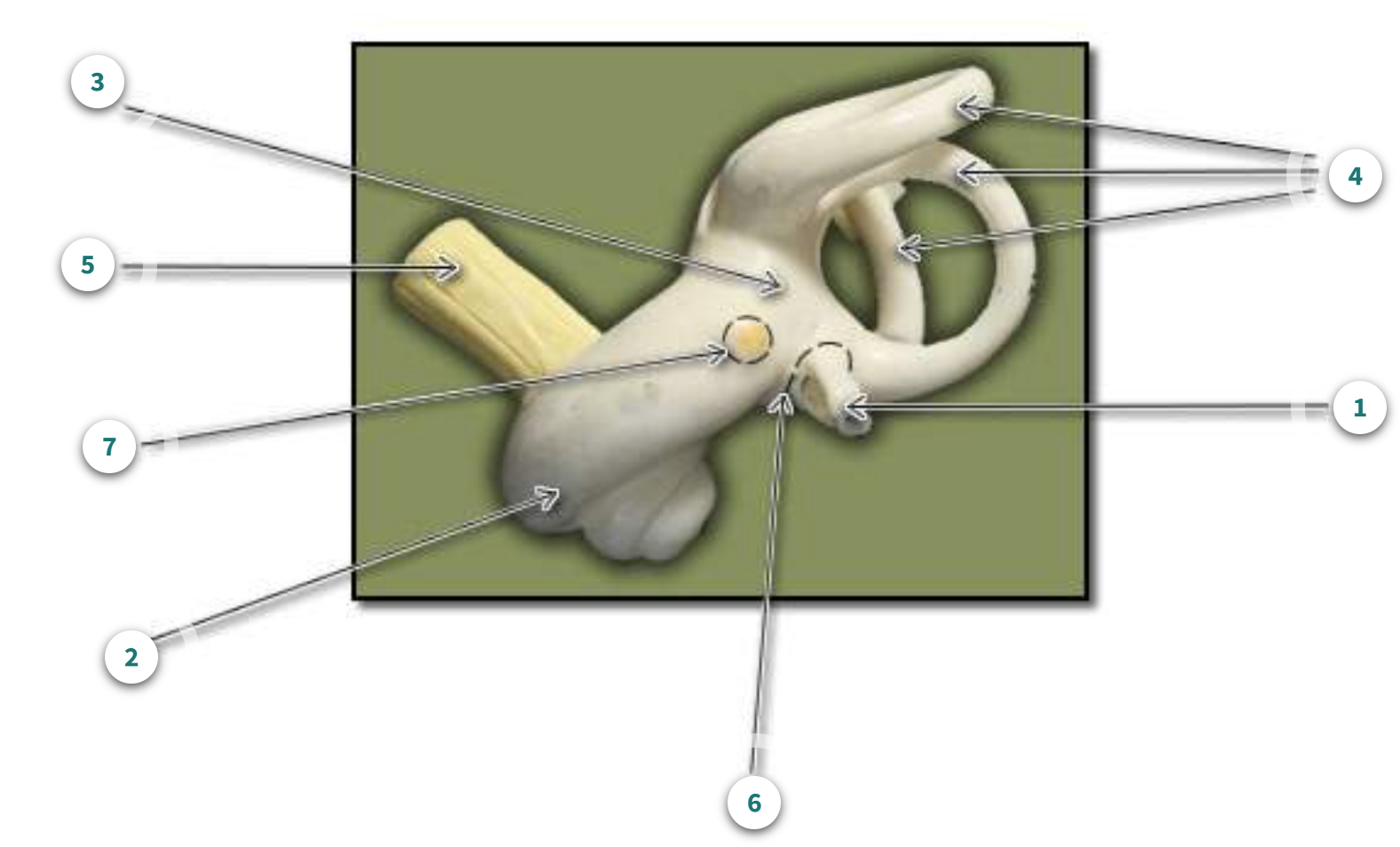
What is 7?
Round window
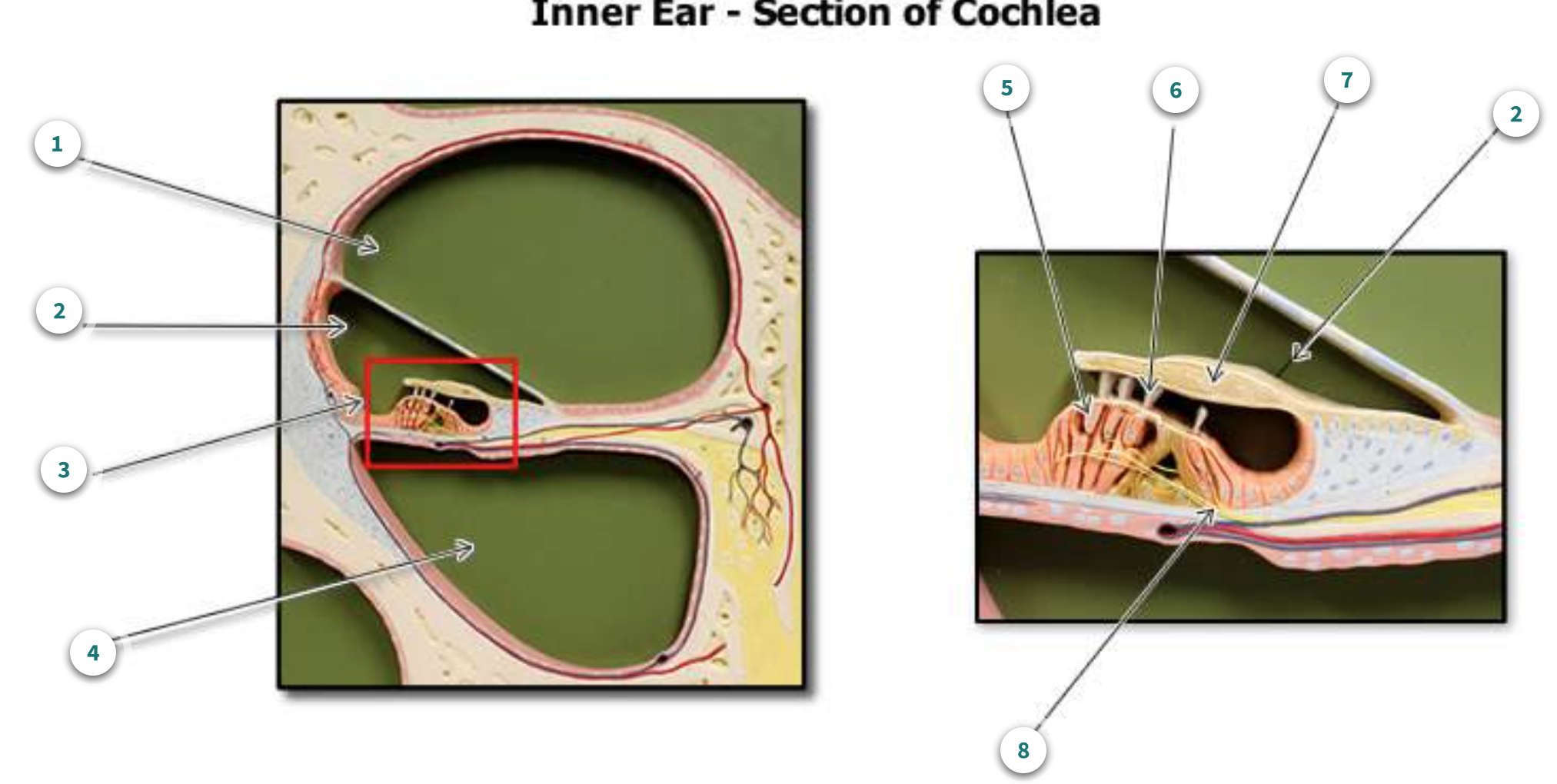
What is 1?
Scala vestibuli
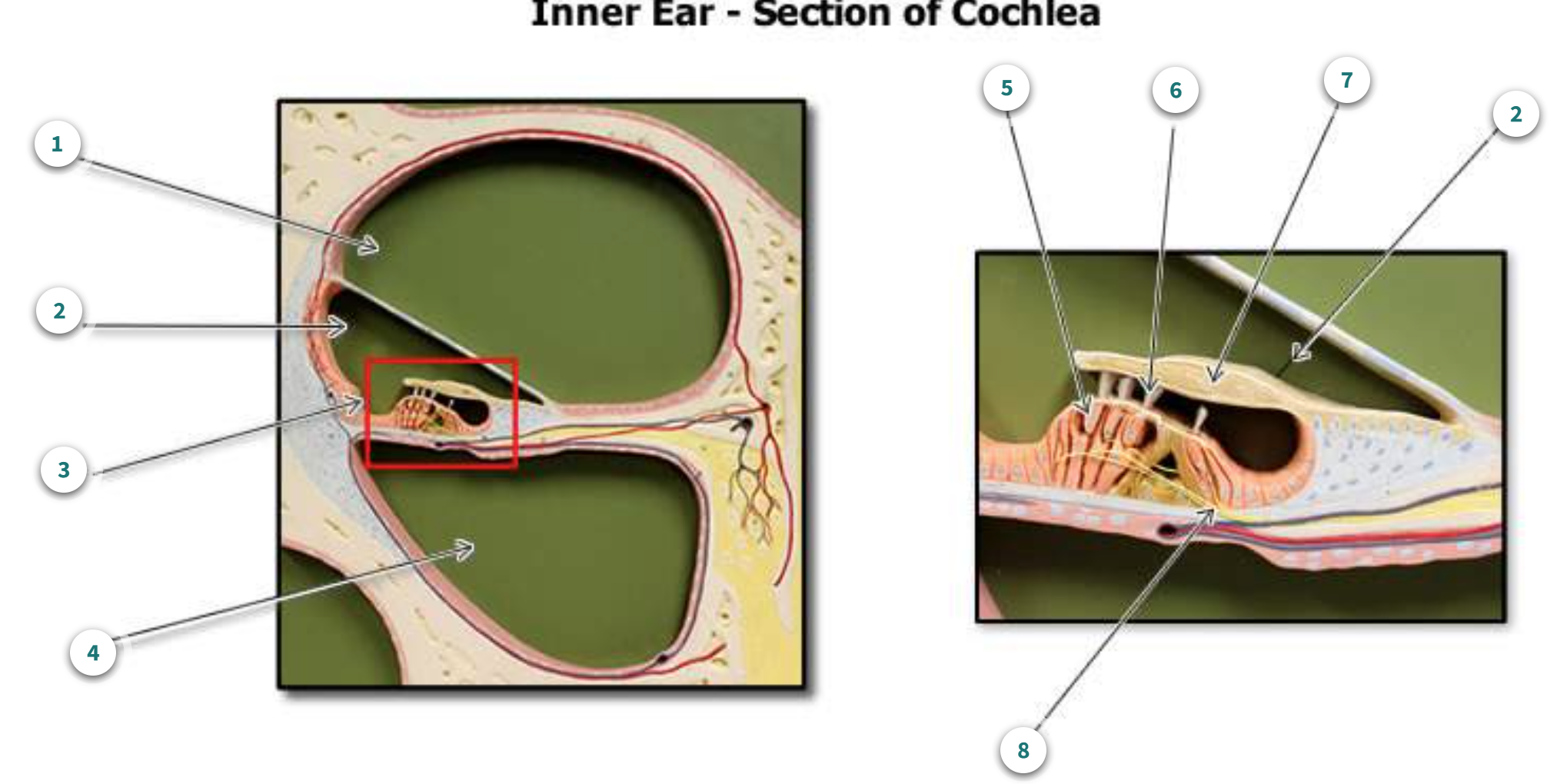
What is 2?
Cochlear duct/Scala media
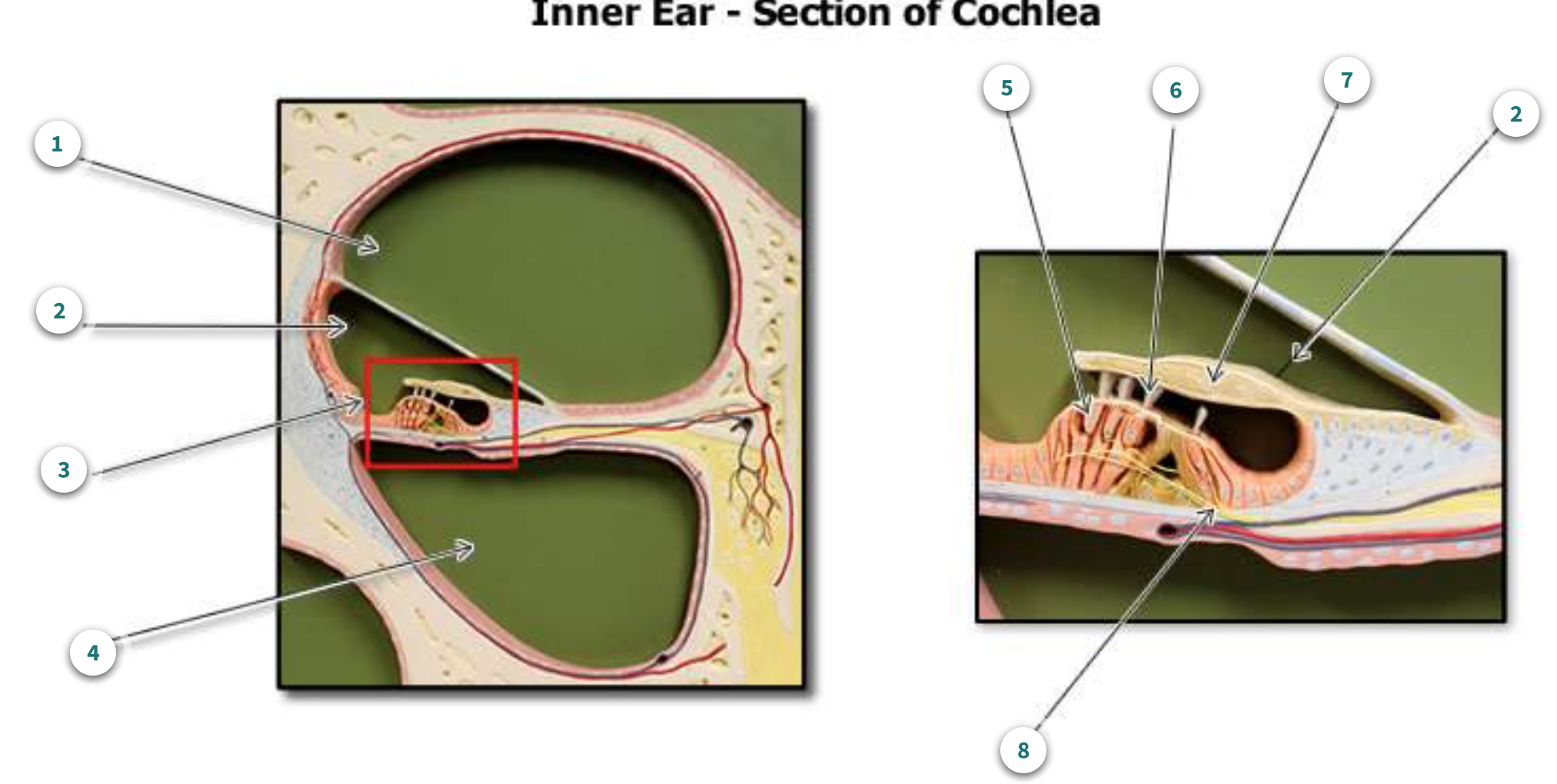
What is 3?
Spiral organ/Organ of corti
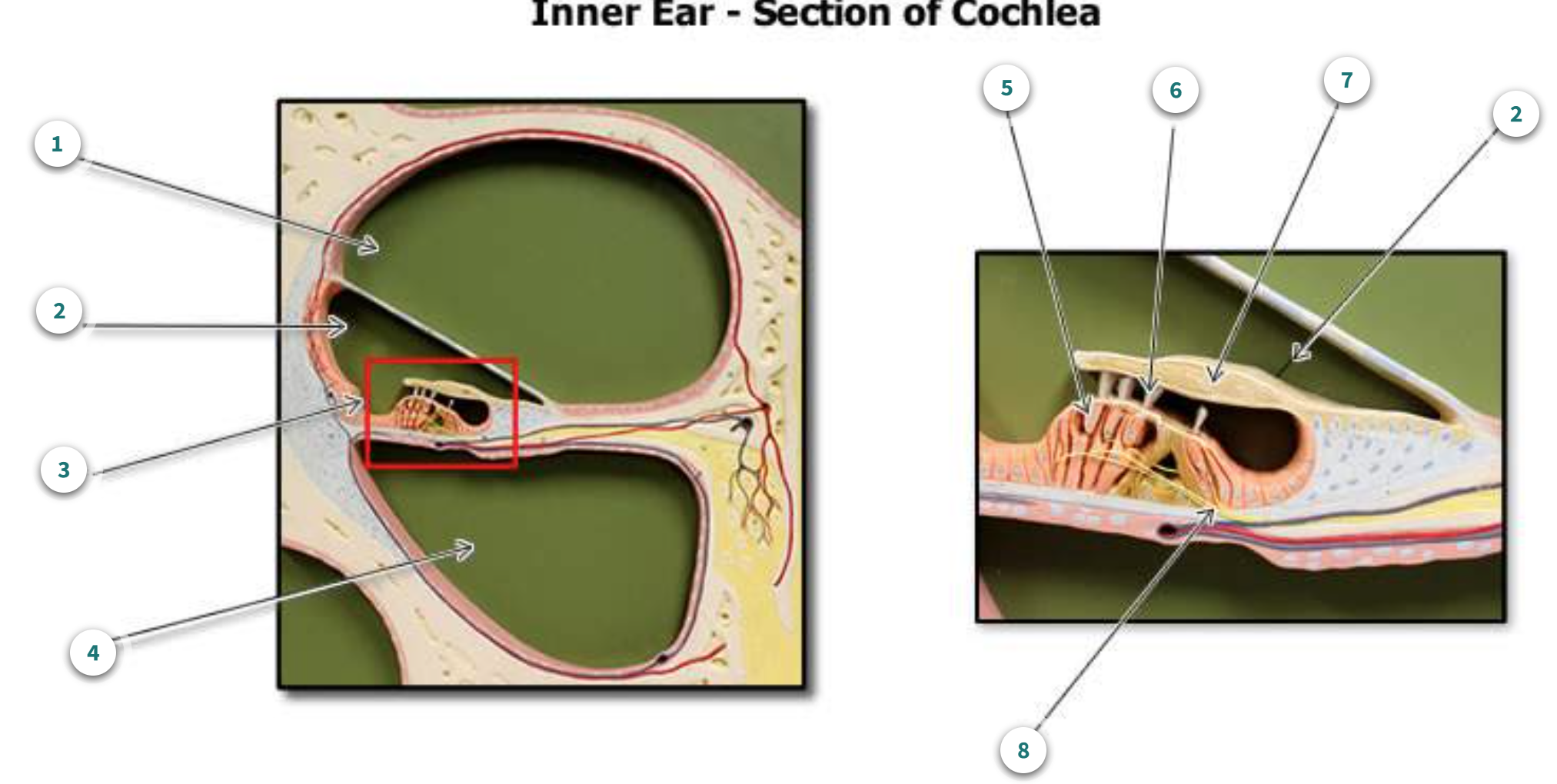
What is 4?
Scala tympani
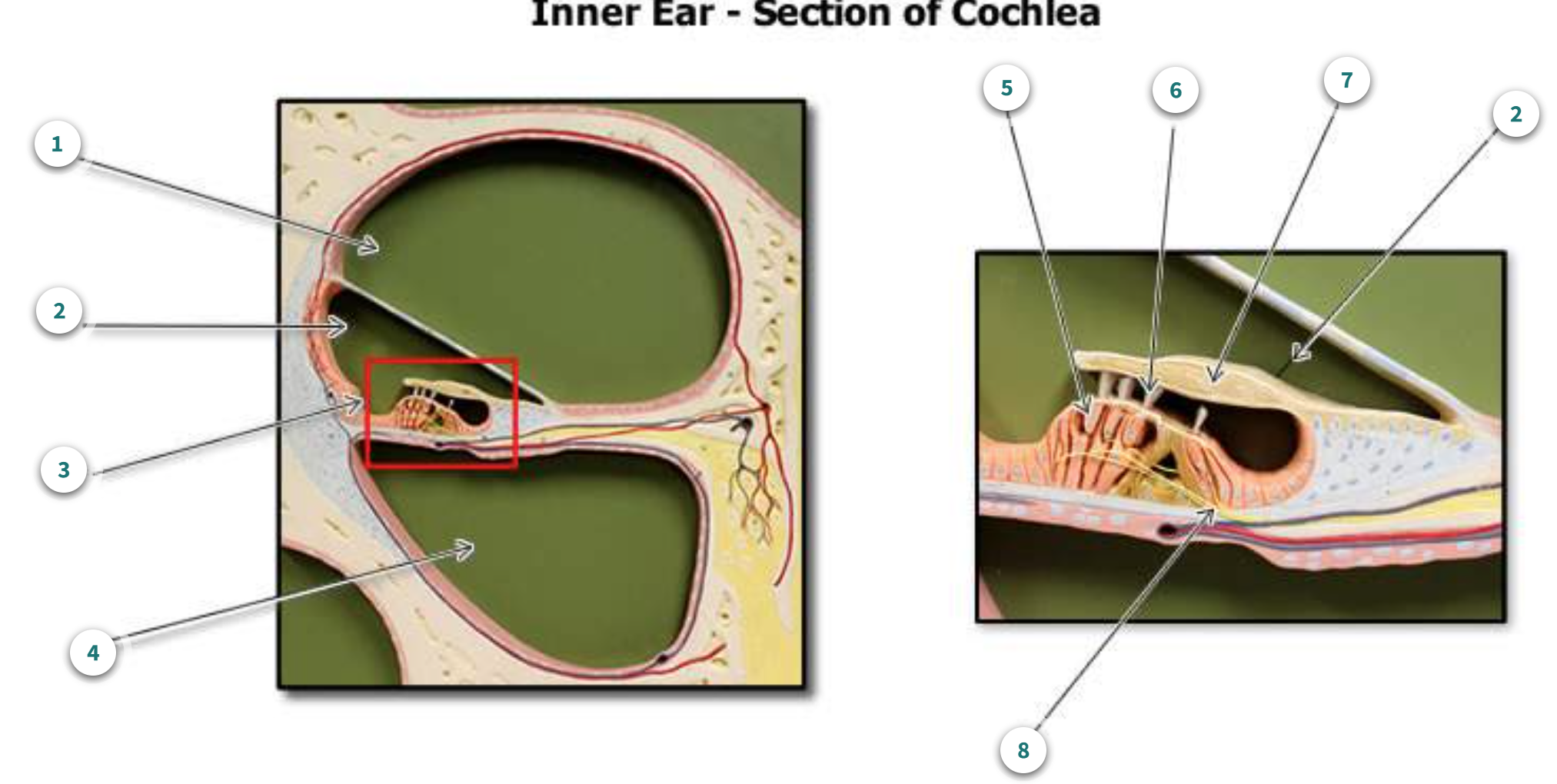
What is 5?
Hair cells
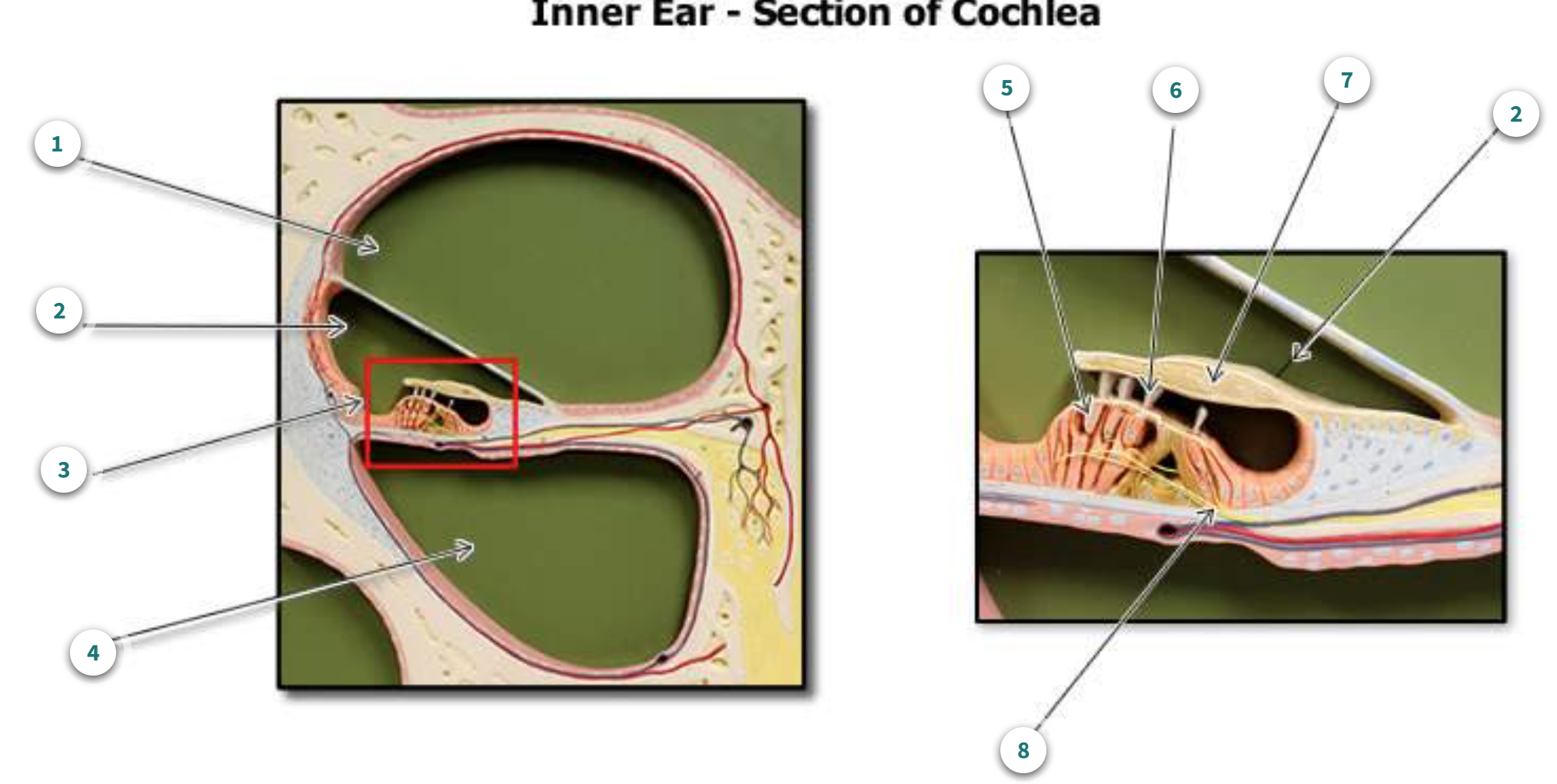
What is 6?
Stereocilia
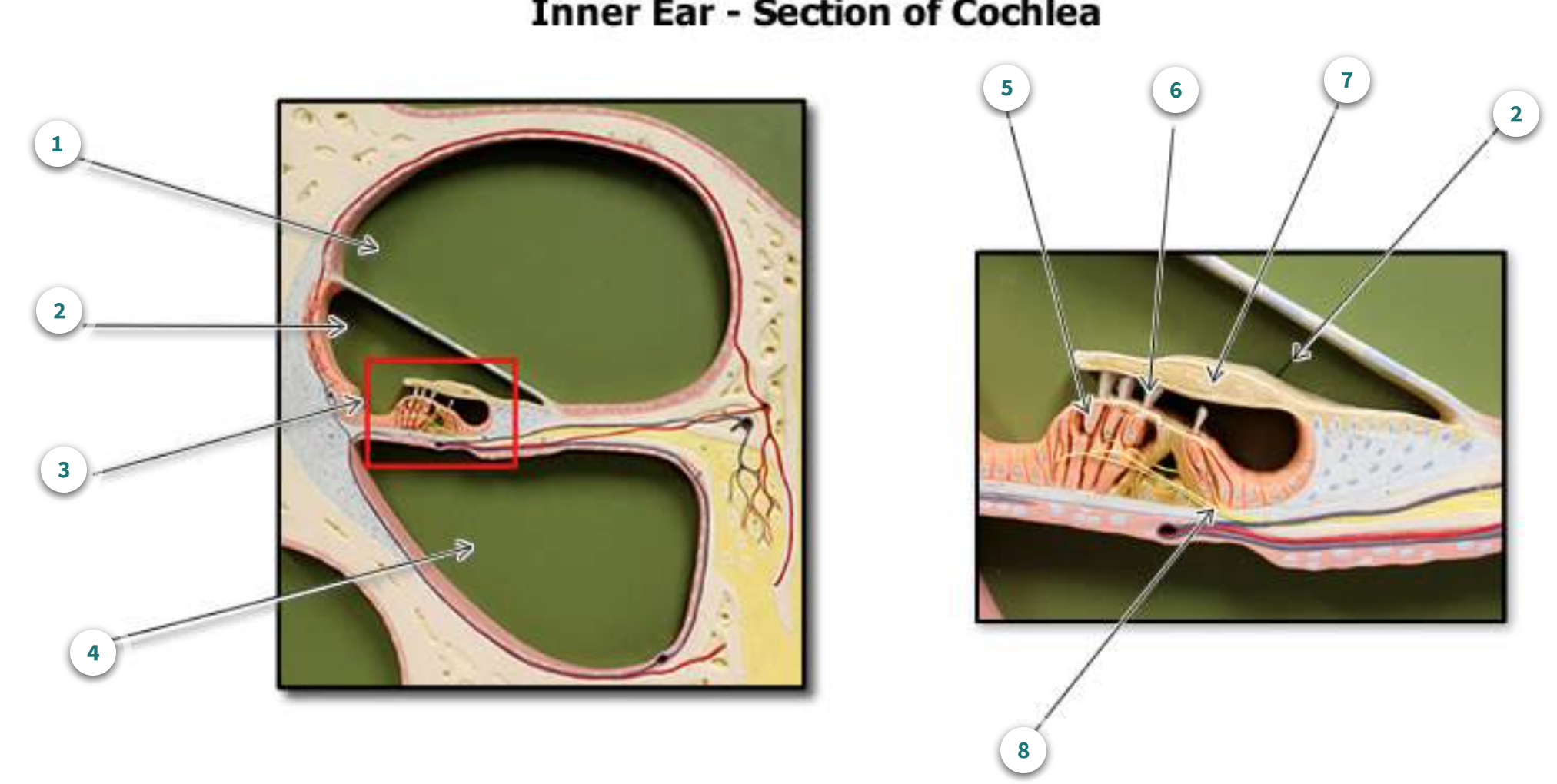
What is 7?
Tectorial membrane
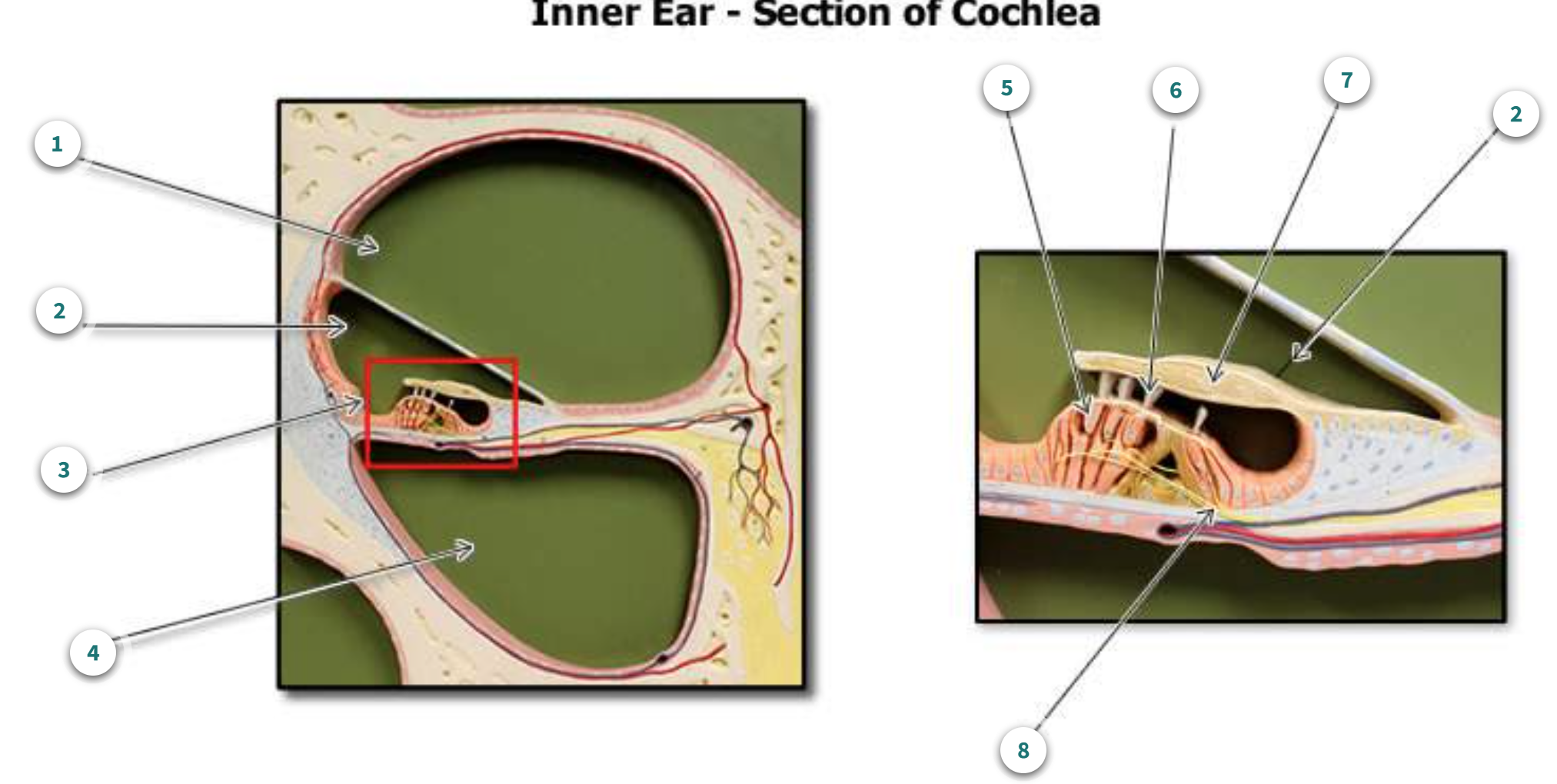
What is 8?
Nerve fibers
collects sound waves
Auricle (Pinna)
carries sound to the eardrum
External auditory canal
vibrates when sound hits it
Tympanic membrane (eardrum)
the three tiny bones that amplify sound
Ossicles
the first to receive vibrations from the eardrum
Malleus
passes vibrations along
Incus
sends vibrations to the inner ear
Stapes
pushes vibrations to inner ear
Oval window
equalizes air pressure
Eustachian tube
converts sound into nerve signals
Cochlea
helps with balance and head position
Vestibule
detects head movement
Semicircular canals
sends hearing and balance signals to the brain
Vestibulocochlear nerve