Ecology Ch. 14 Competition Model Experiments
 Call Kai
 Learn
Learn Practice Test
 Spaced Repetition
 Match
Match Flashcards
 Knowt Play
1/18

There's no tags or description
Looks like no tags are added yet.
Name | Mastery | Learn | Test | Matching | Spaced | Call with Kai |
|---|
No analytics yet
Send a link to your students to track their progress
19 Terms
What are pairwise interactions?
Interactions between pair of organisms
What are the 7 pair wise interactions?
Predation (+, — )
herbivory (+, —)
parasitism (+, —)
competition ( —, —)
amensalism (—, 0)
commensalism (+, 0)
mutualism (+, +)
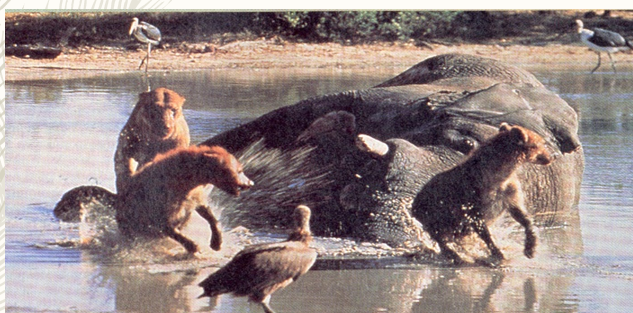
What type of pairwise interactions is competition?
A (negative, negative) interaction that occurs when organisms of the same of different species compete over a common resource that is in short supply.
What are the six types of competition?
Intraspecific-within species
Interspecific- between species
Exploitative is indirect — species simply consume or deplete a shared resource, and the effect on competitors happens through the resource itself. (possible test question)
Interference is direct — one organism actively prevents another from accessing a resource, regardless of how abundant that resource is.
symmetric- equal impact on both competitors
asymmetric - unequal impact on competitors
NOT EXCLUSIVE
What are traits of competitoin?
Intraspecific competition is stronger than interspecific competition
Competition is mostly asymmetric
What is the niche concept?
Grinnell’s (1917) definition - Role of the organisms in the community
Hutchinson (1957) - tolerance range for environmental variation
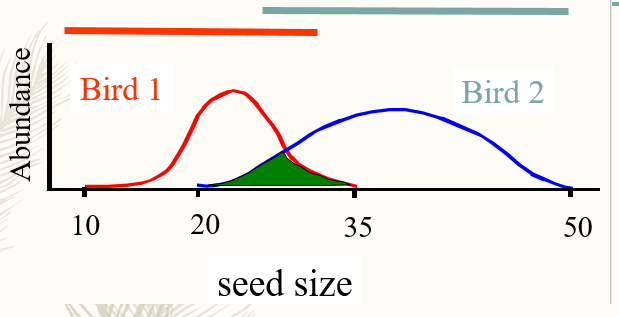
Fundamental niche- activity range for all tolerance variables
Realized Niche- includes biotic factors
What is niche overlap?
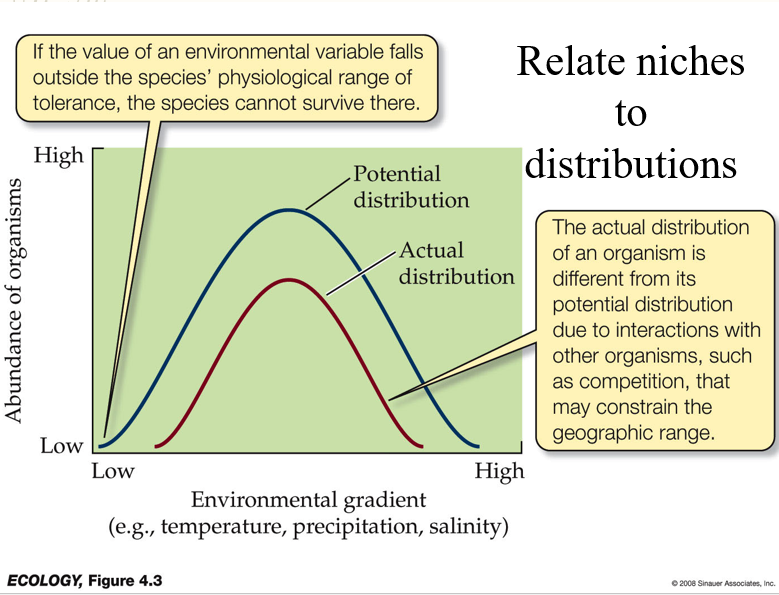
Occurs when two niche’s of individuals overlap. If overlap is a limiting resource, competition occurs.
Bird 1 has more overlap
Bird 2 has more range
Bird 1 will be more affected by the niche overlap if Bird 2 can outcompete Bird 1.
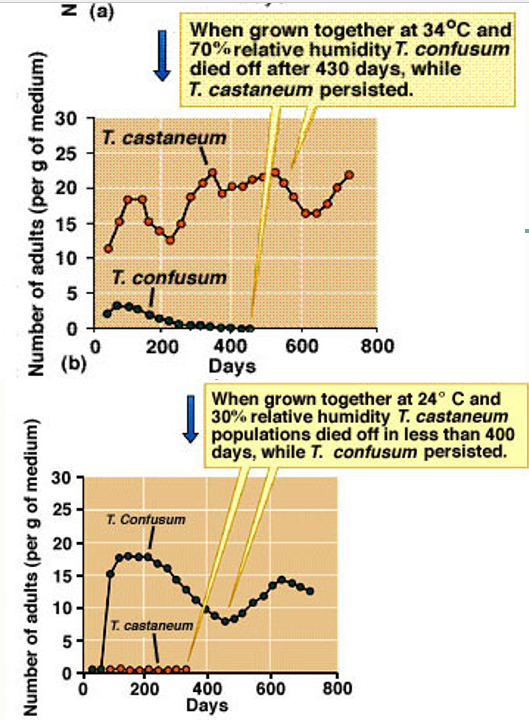
What is the competition exclusion principle?
Proposed by Gause in 1934.
It states that two species or populations cannot inhabit the same niche because one will consistently out-compete the other. Dominant competitor will drive weaker competitor to extinction
Coexistence requires different niches
When the two individuals that feed on the same thing in different ways are bred together, one of them is driven to extinction. (Being driven to extinction is an important part of competitive exclusion)

What is the difference between competition and amensalism?
What is Tansley’s Bedstraw experiment?
G. sylvestre and G saxatile ( two species of bedstraw would only grow on specific soil)
One would only be found on basic soil, while one would only be found on acidic soil.
Even when the other plant was transplanted, it would slowly return to being only one type of plant.
Example of competitive exclusion principle.

What is the environmental impact on competition?
What is the Connell 1961 experiment?
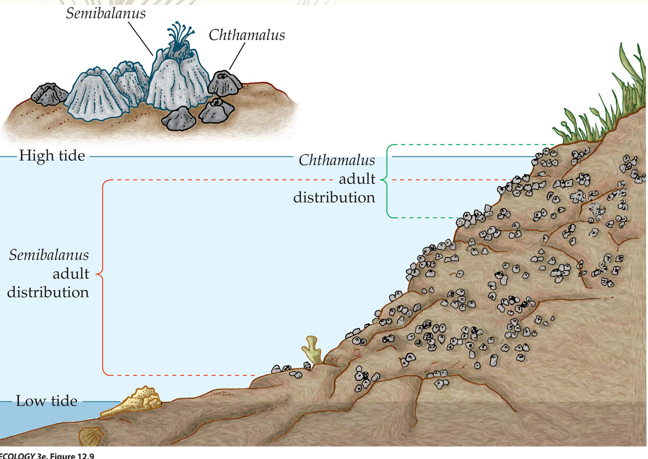
Both of them want to be in the lower intertidal area, but Semibalanus and Cthalmalus don’t overlap
Semibalanus is found in the lower intertidal area while Cthamalus was found in the higher intertidal area.
Regardless of manipulation, Balanus competitively excludes Cthamalus.
Cthamalus has a tolerance refuge from Balamus because it has has higher desiccation resistance
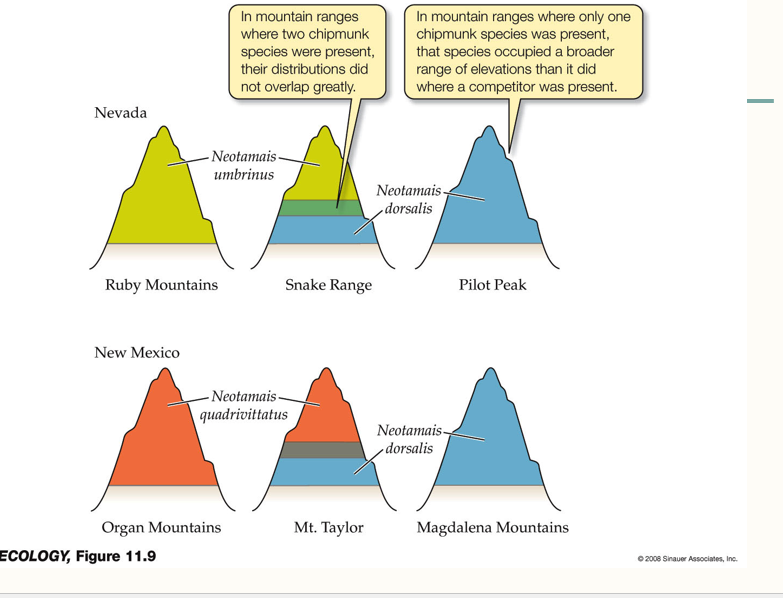
How is Chipmunk distribution on mountains an example of the competitive exclusion principle?
What are the ways species coexist?
niche partitioning/character displacement
Predators can suppress dominant competitors
Disturbance- reset
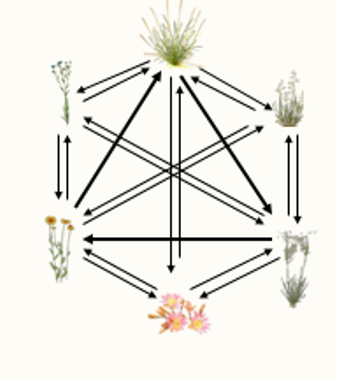
Competitive networks
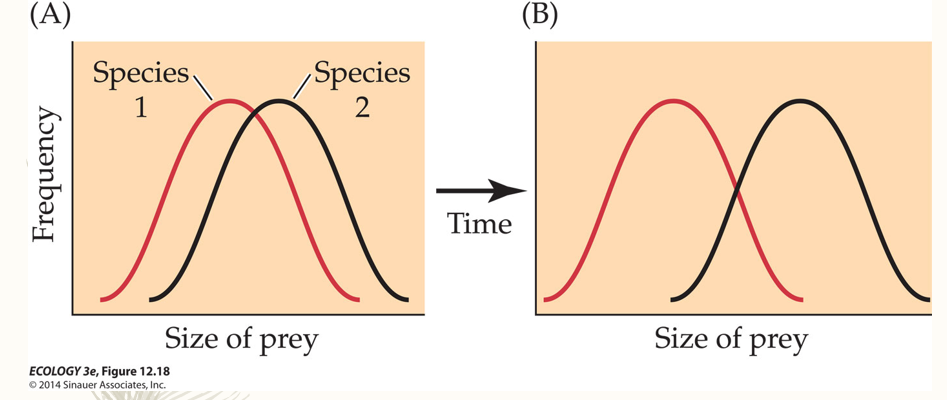
What is niche partitioning?
Occupy different parts of a niche
Niche partitioning occurs through adaptive radiation, favored by evolution, divergence.
How does a predator suppressing a dominant competitor allow coexistence in a niche?
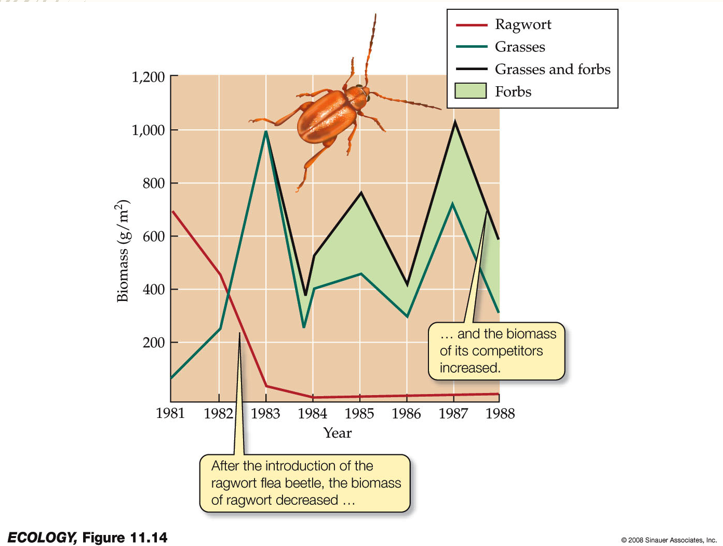
What is disturbance?
like physical disruption that resets competitive hierarchies before exclusion completes, maintaining diversity.
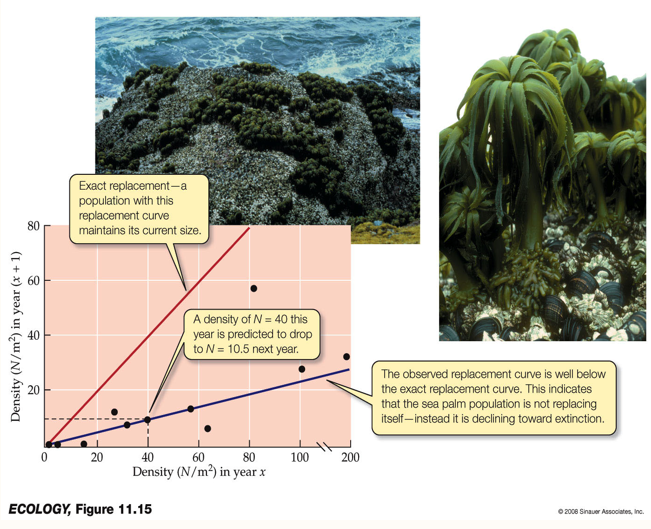
What are competitive networks?
In hierarchical/transitive communities, an external force is needed to maintain diversity.
But in non-transitive competitive networks (A beats B, B beats C, C beats A), diversity can be maintained internally without any outside intervention.
Picture equal transitive community
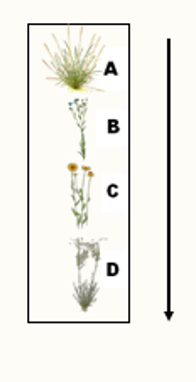
What happens when everyone has roughly equal competitive ability?