Anatomy & Physiology: Exam 1
 Call Kai
 Learn
Learn Practice Test
 Spaced Repetition
 Match
Match Flashcards
 Knowt Play
1/121

There's no tags or description
Looks like no tags are added yet.
Name | Mastery | Learn | Test | Matching | Spaced | Call with Kai |
|---|
No analytics yet
Send a link to your students to track their progress
122 Terms
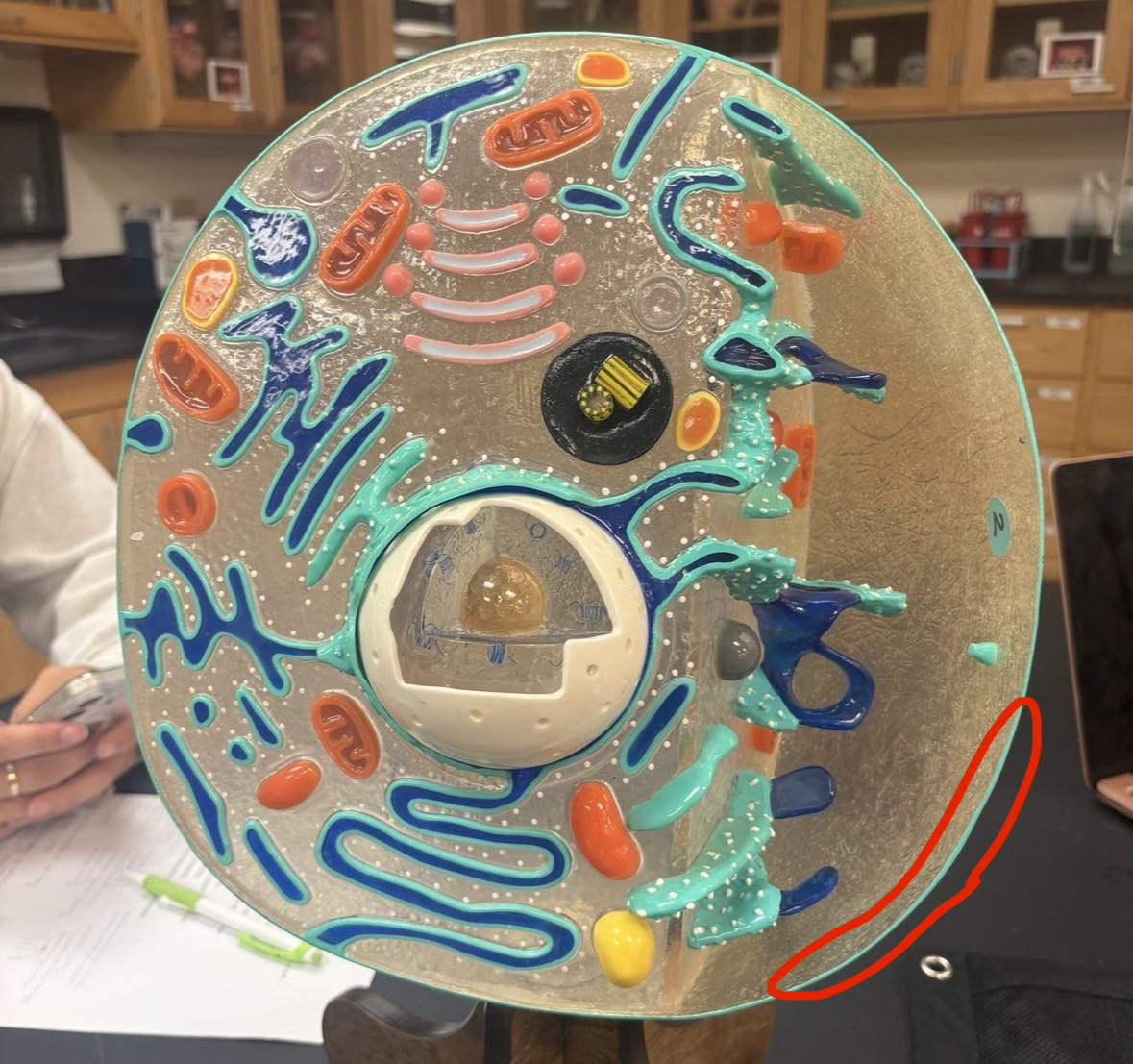
Label the part of the cell
Cell membrane (phospholipid bilayer)
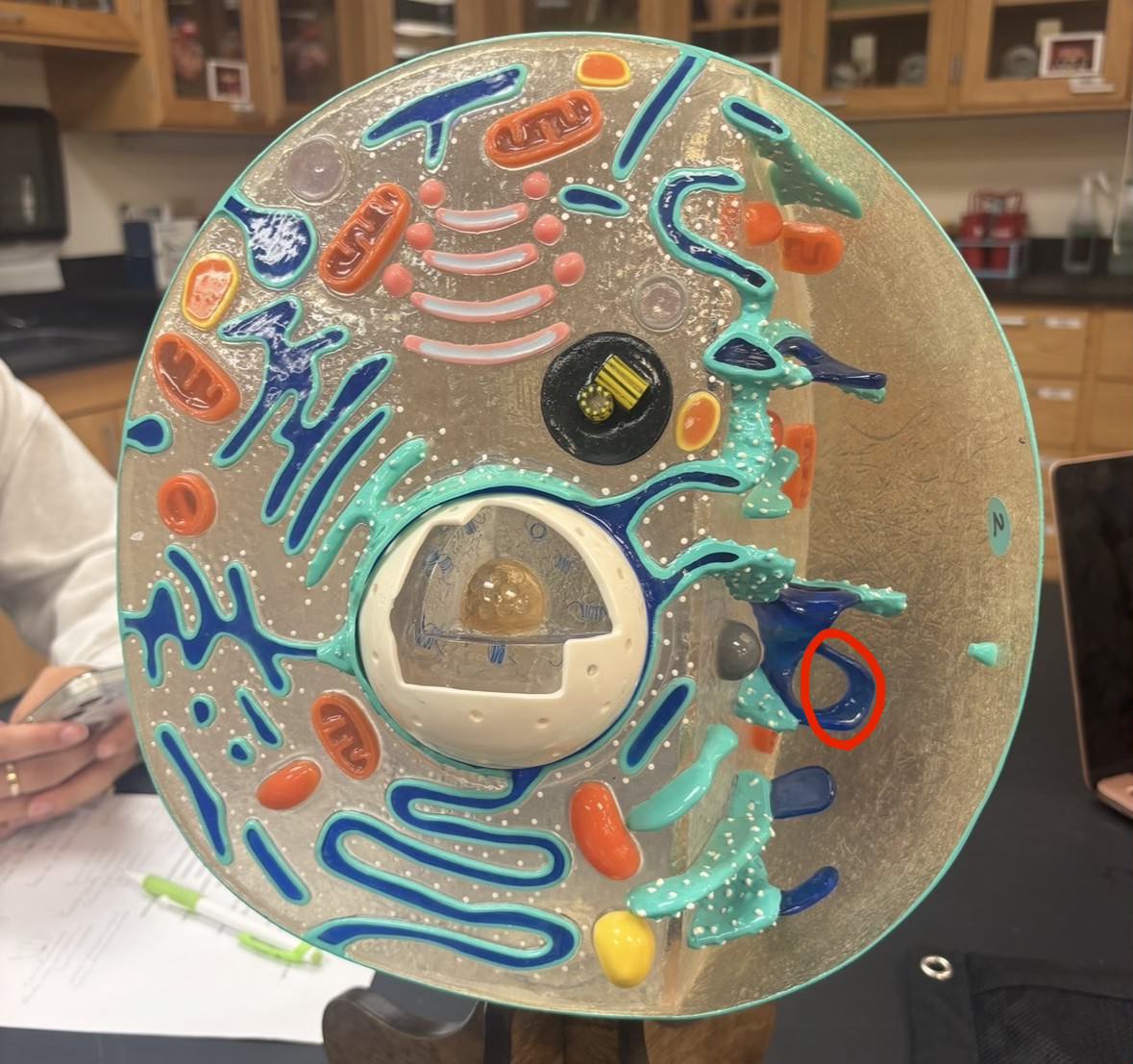
Label the part of the cell
Smooth endoplasmic reticulum
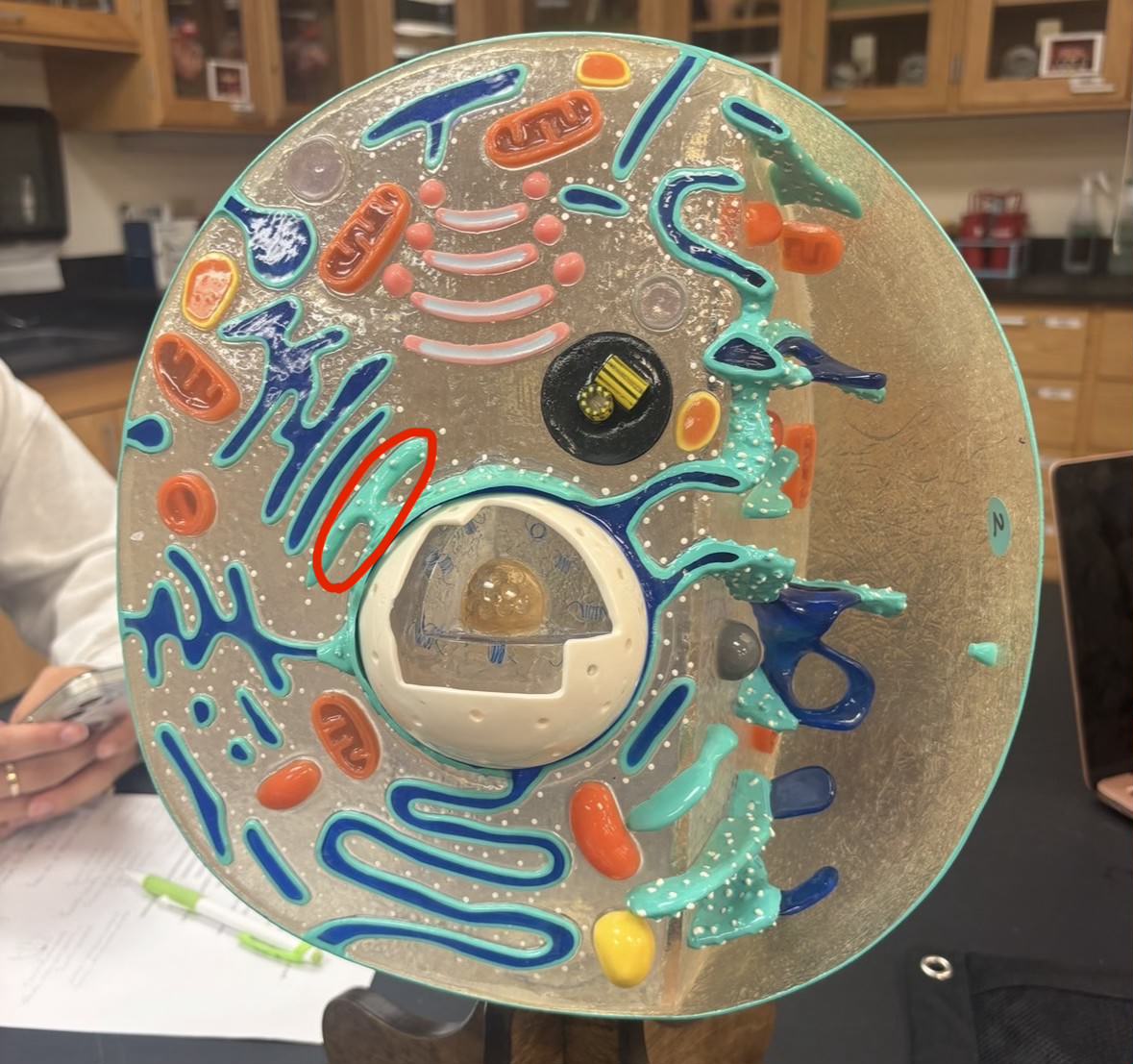
Label the part of the cell
Rough endoplasmic reticulum
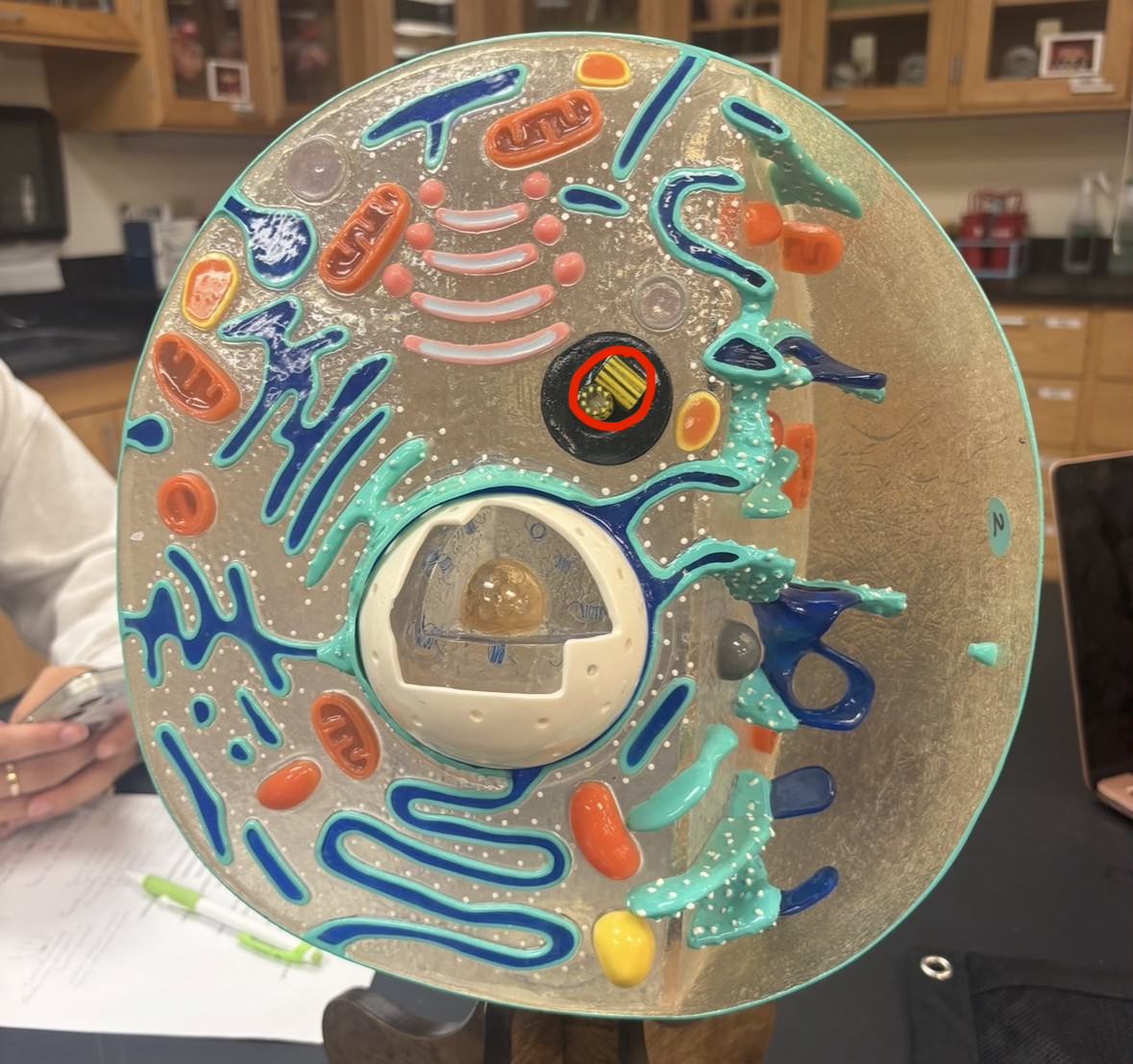
Label the part of the cell
Centriole(s)
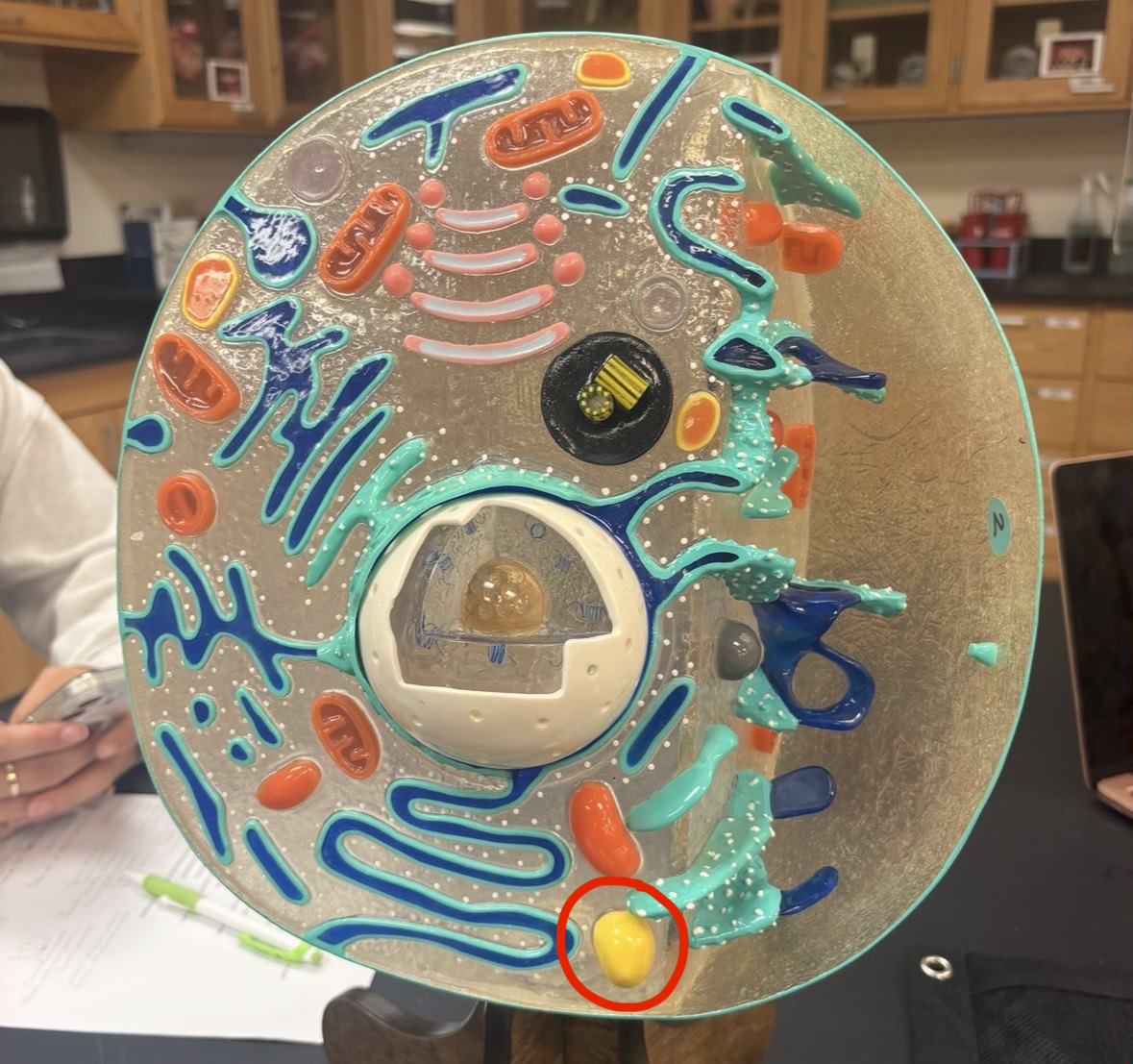
Label the part of the cell
Lysosome
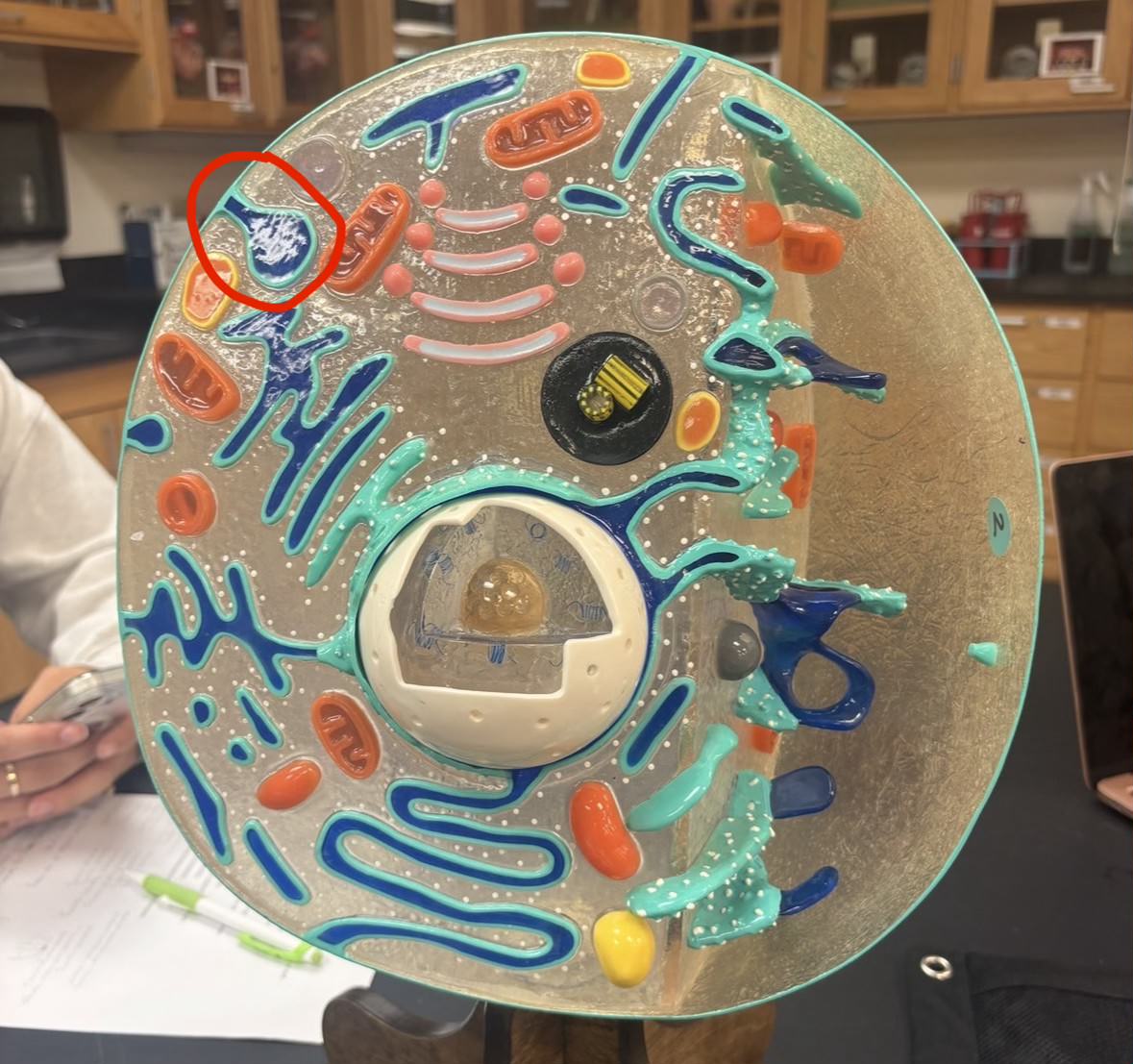
Label the part of the cell
Secretory vesicle
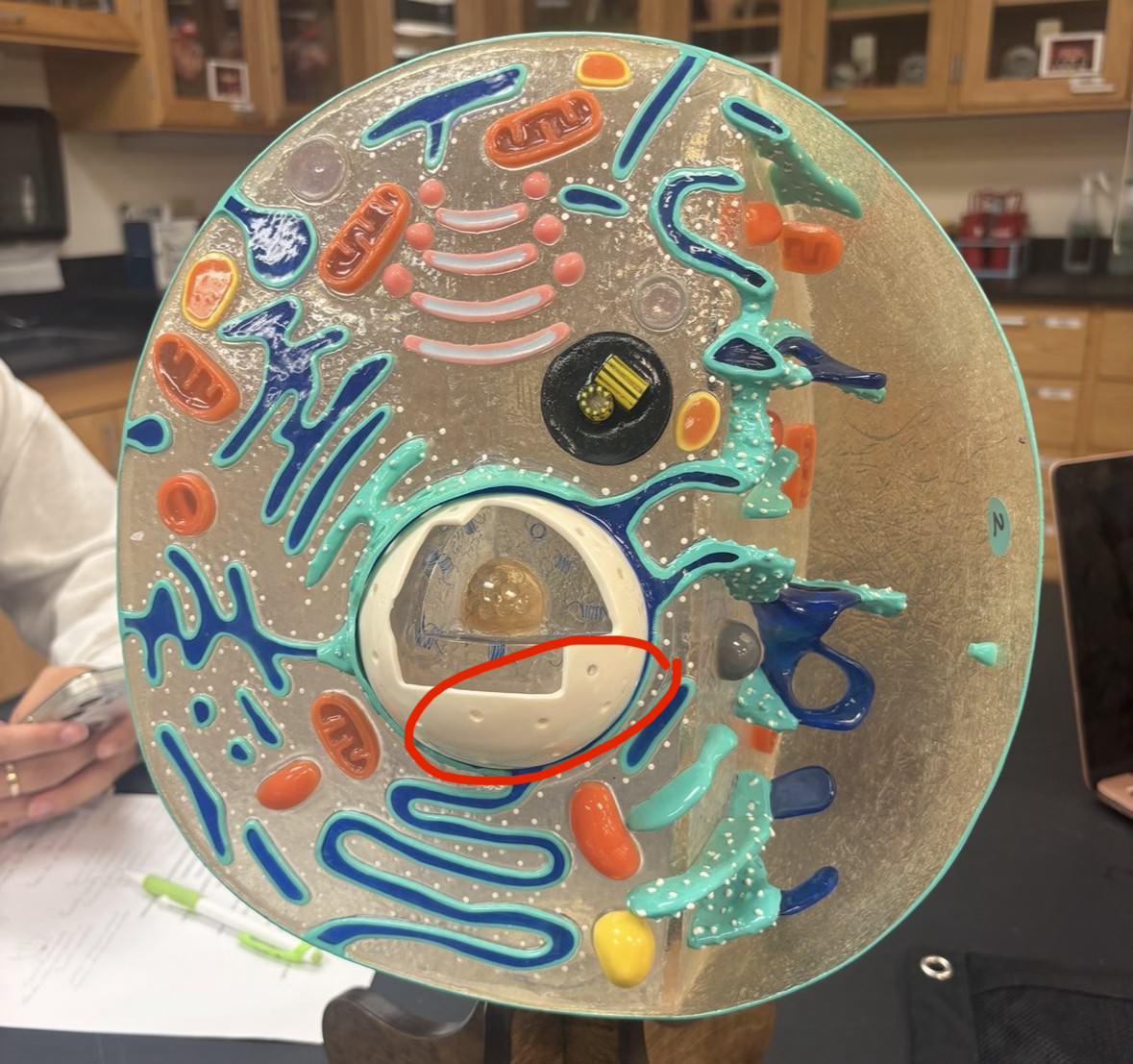
Label the part of the cell
Nuclear envelope
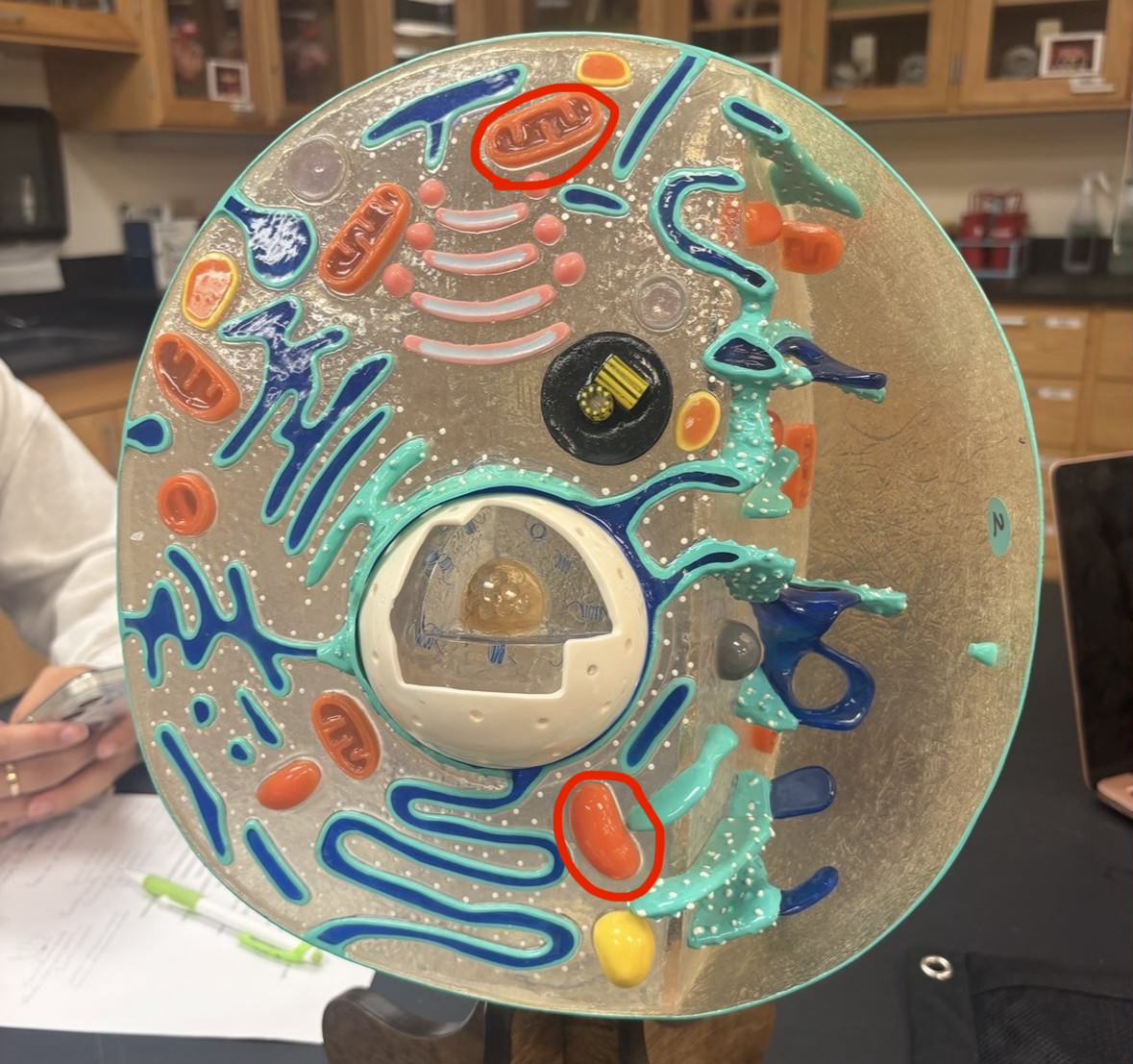
Label the part of the cell
Mitochondria
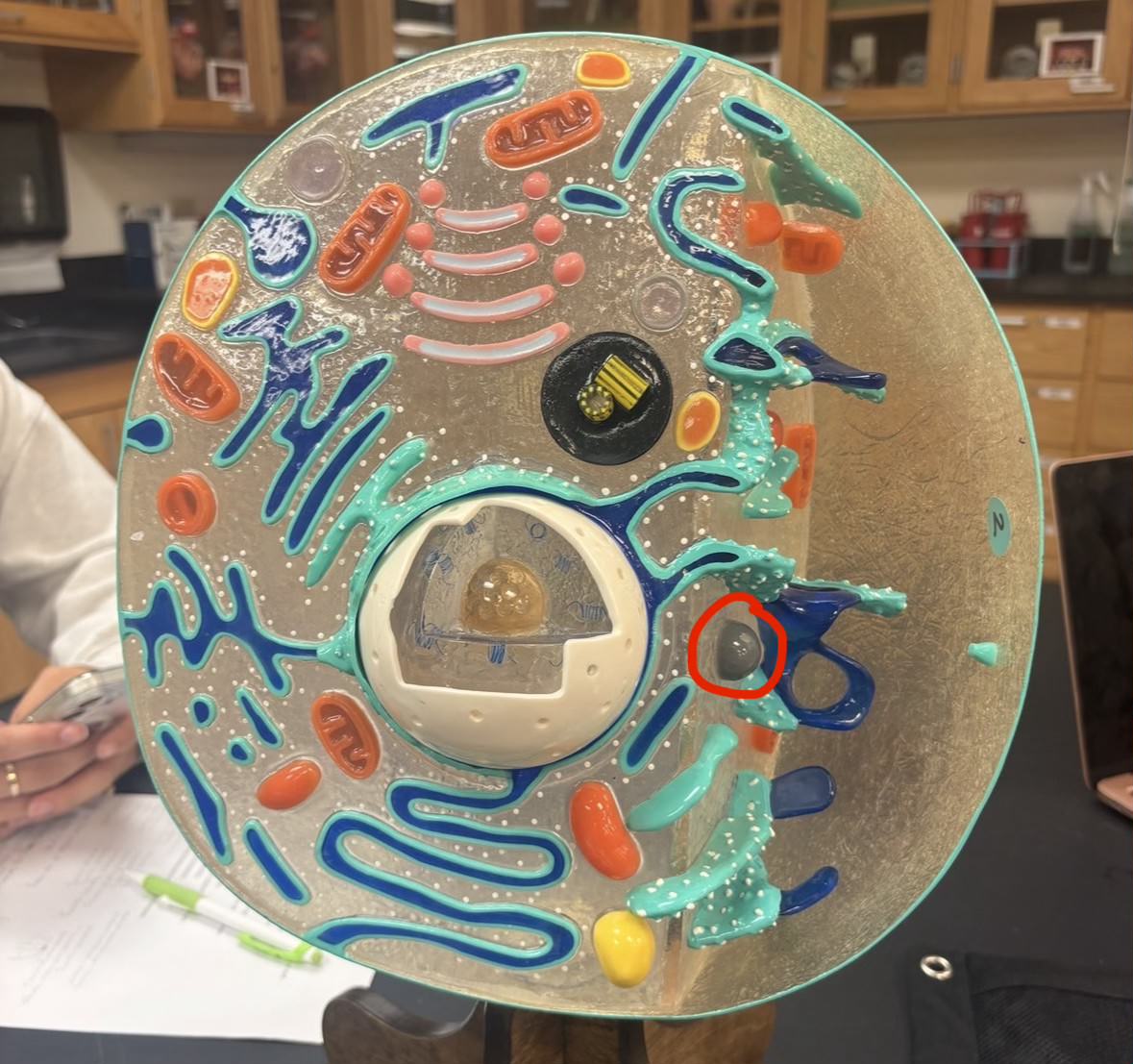
Label the part of the cell
Peroxisome
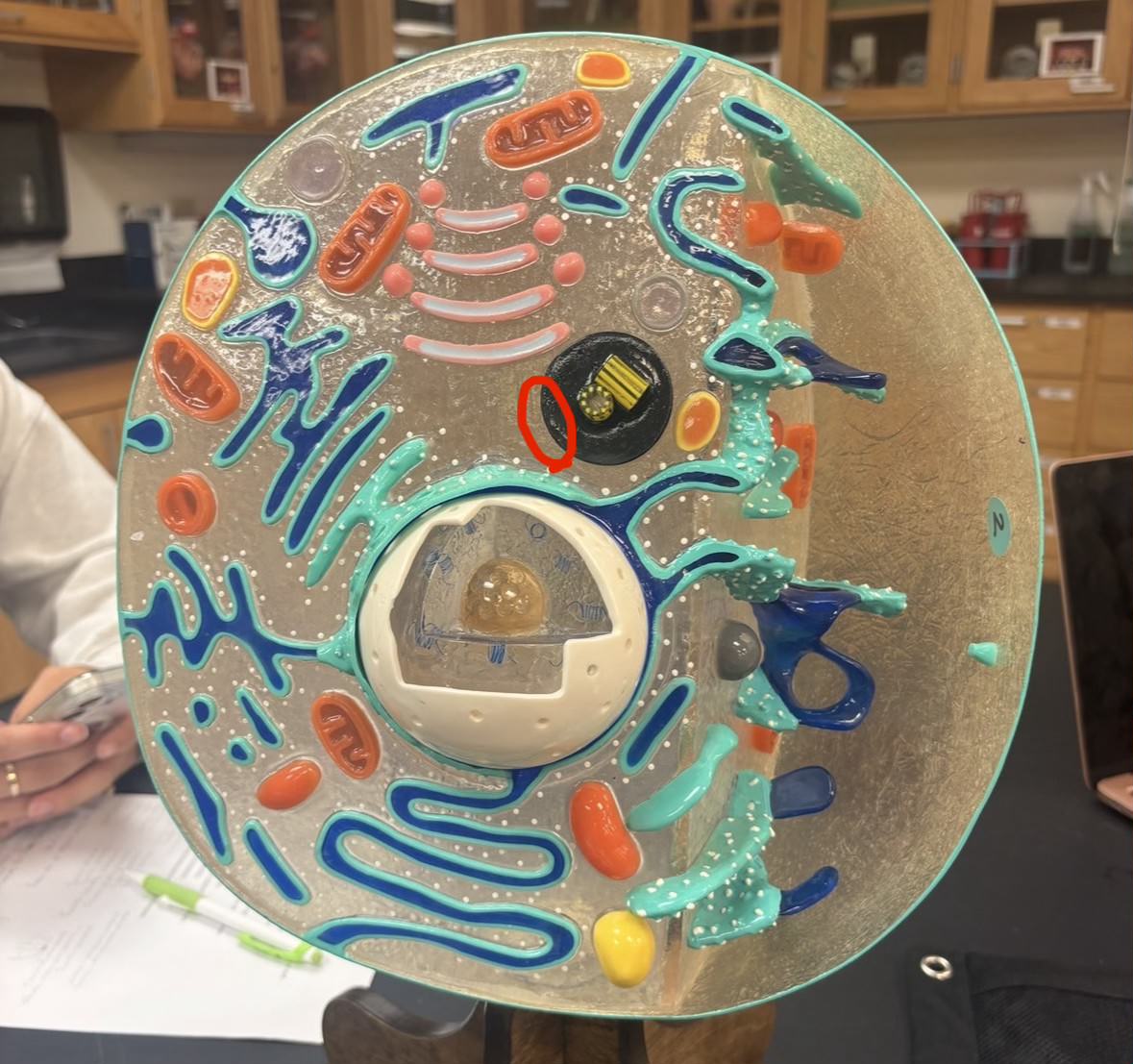
Label the part of the cell
Centrosome
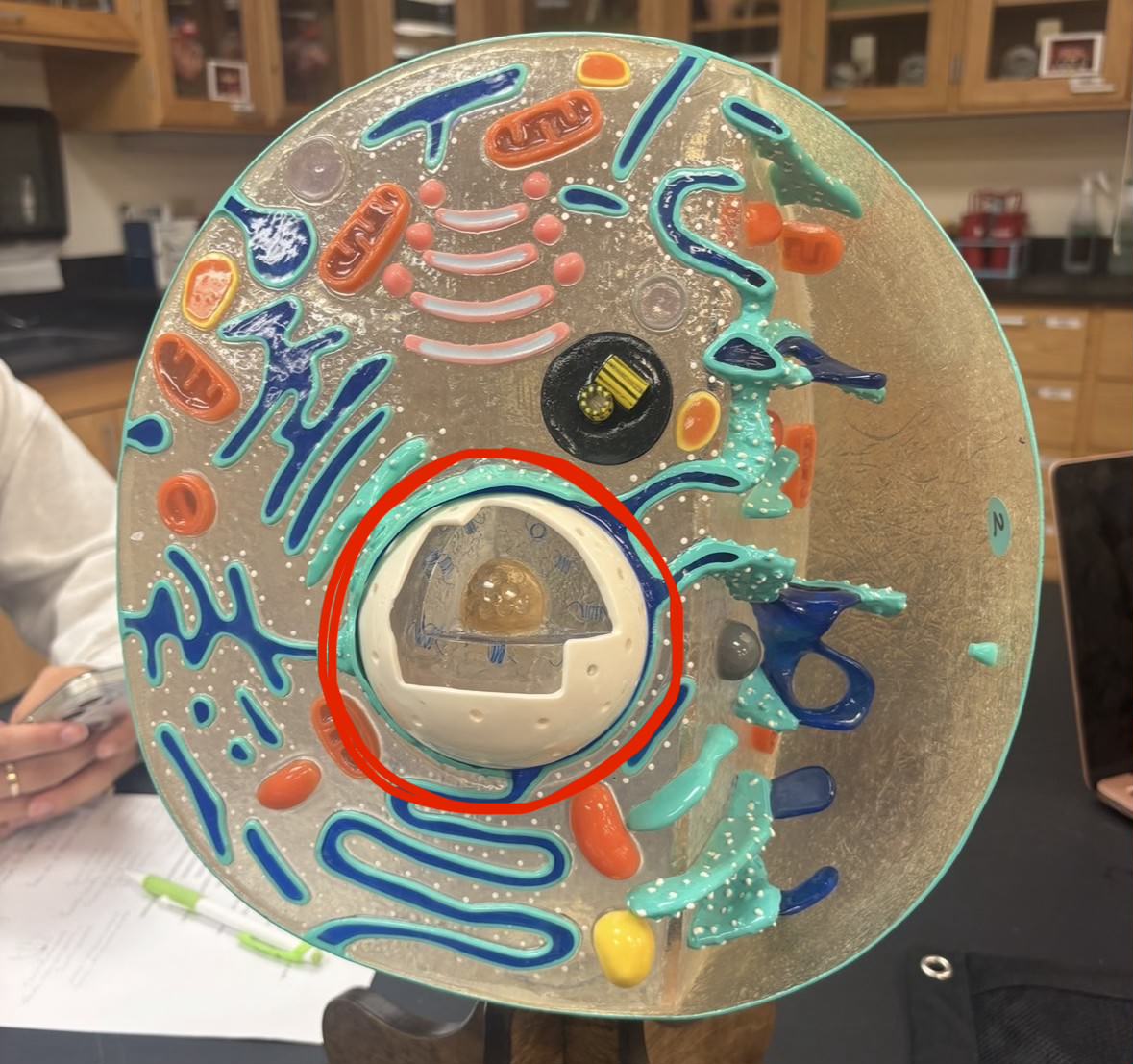
Label the part of the cell
Nucleus
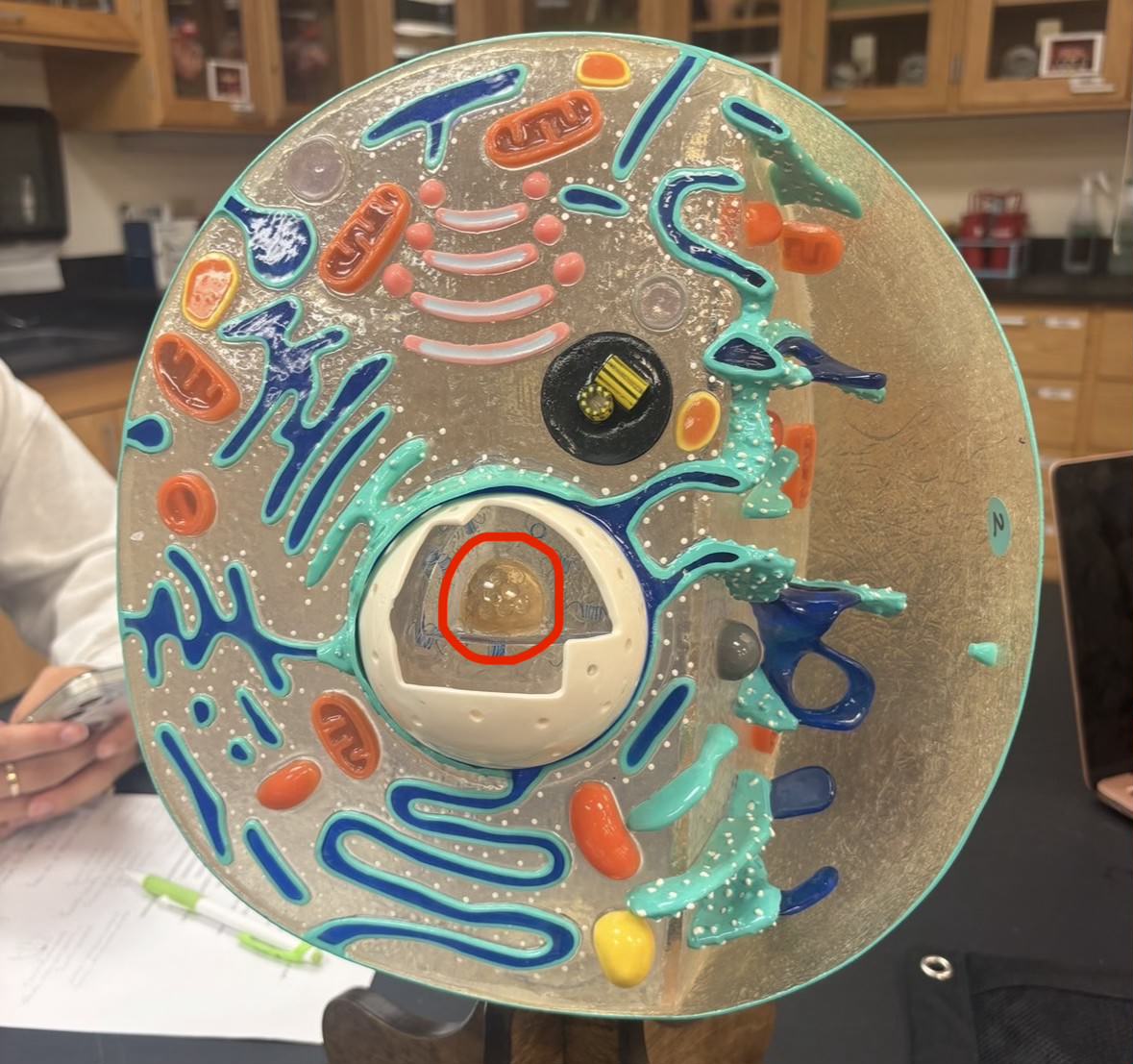
Label the part of the cell
Nucleolus
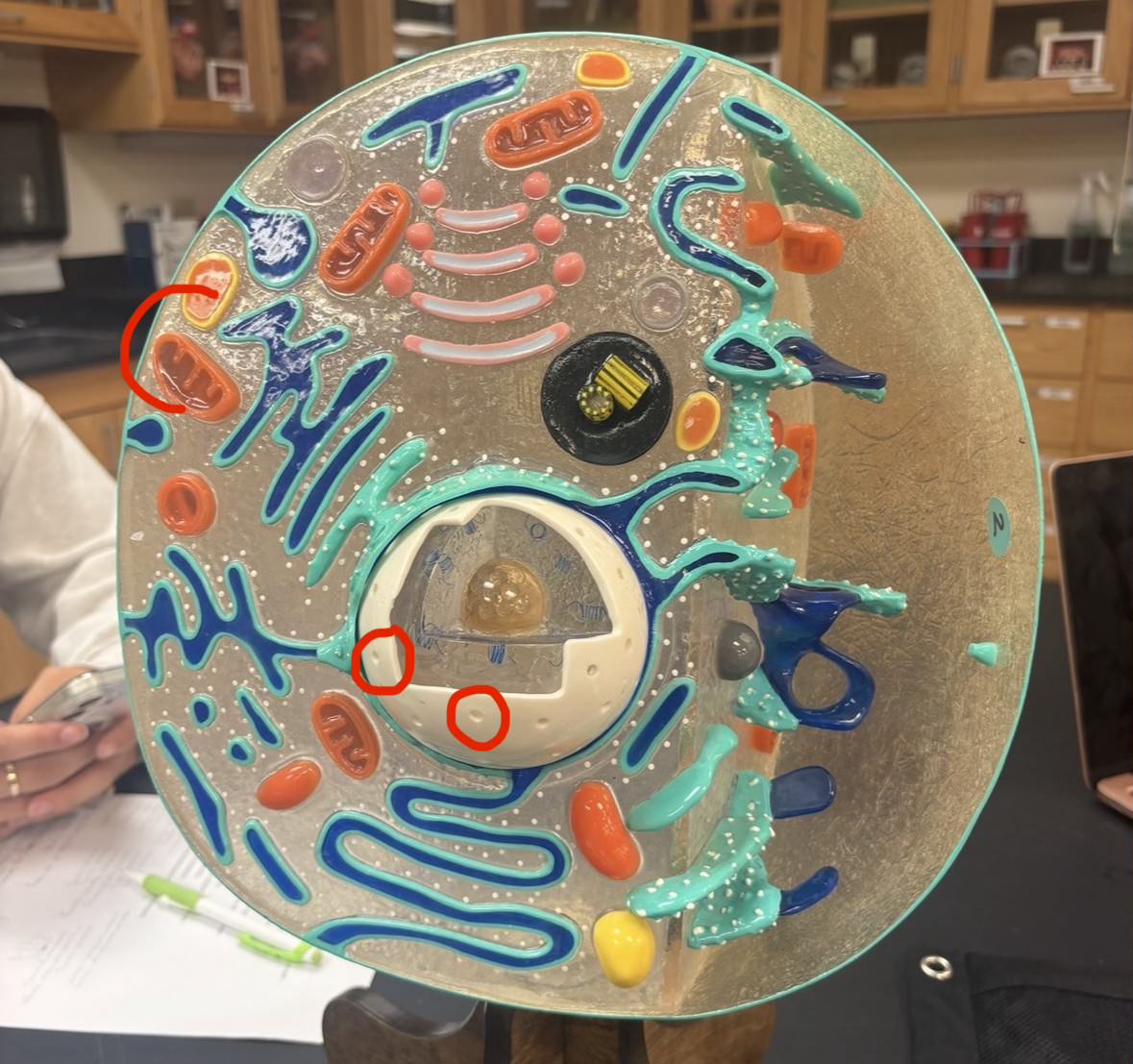
Label the part of the cell
Nuclear pores
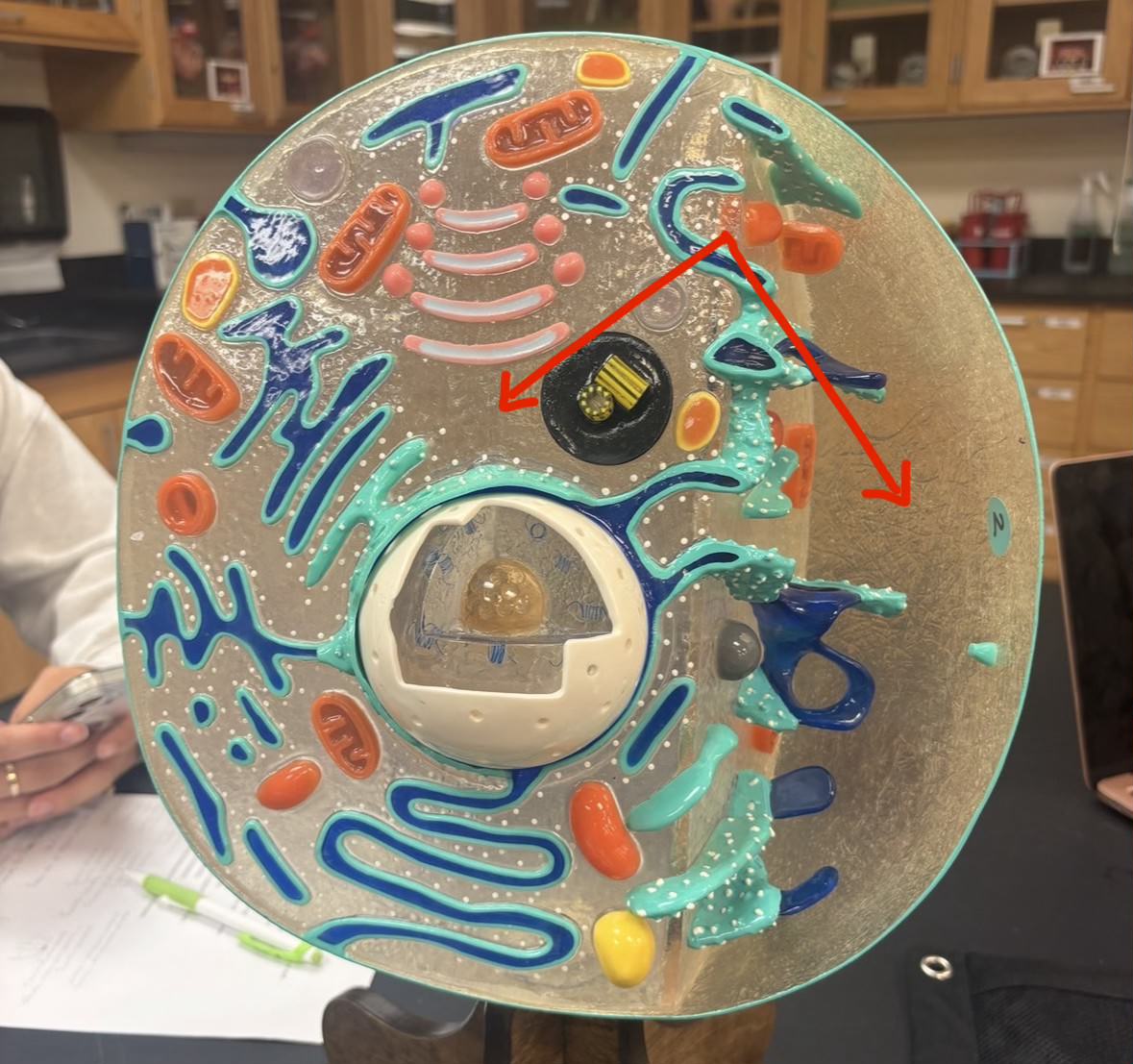
Label the part of the cell
Cytosol
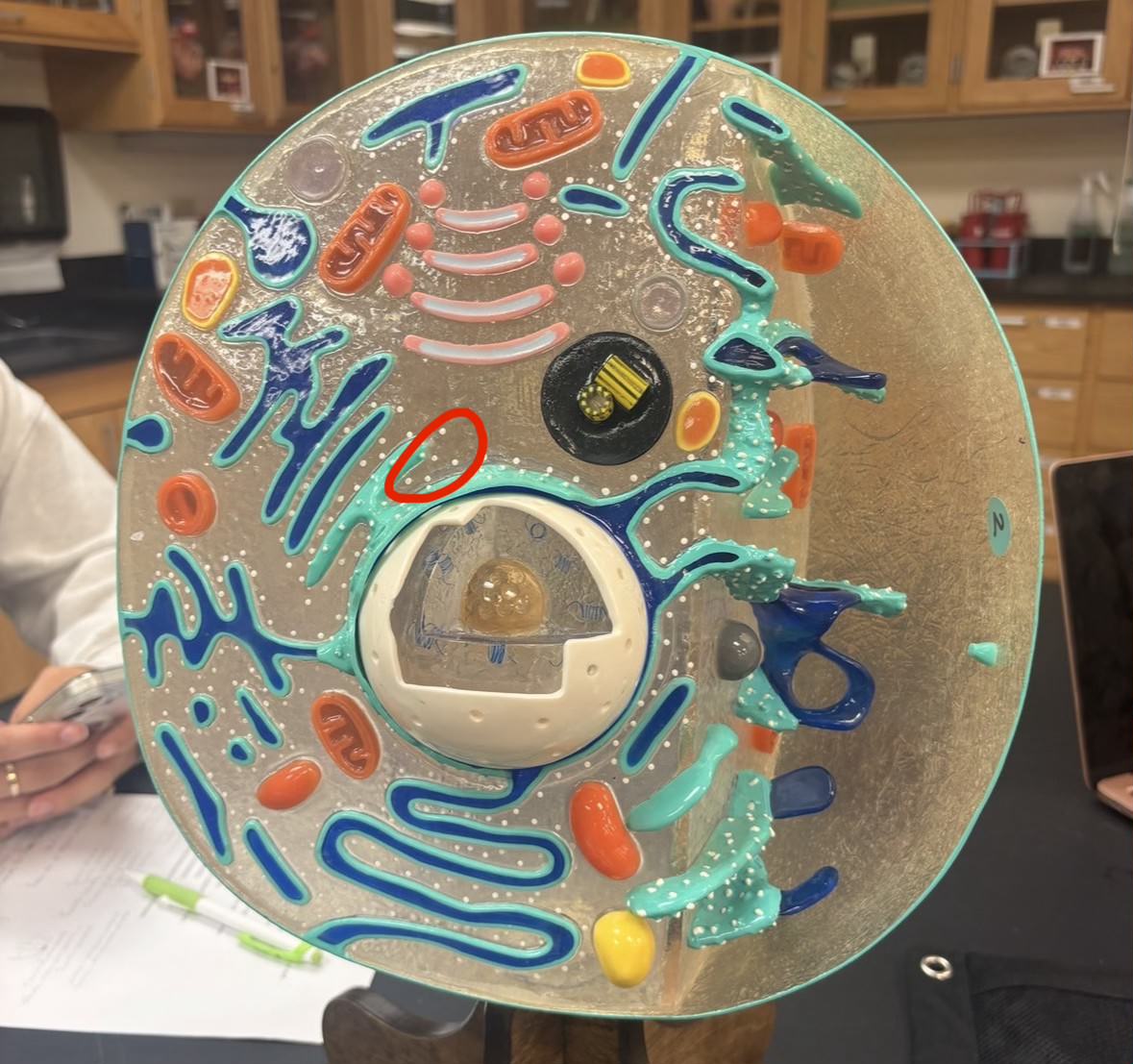
Label the part of the cell
Ribosome(s)
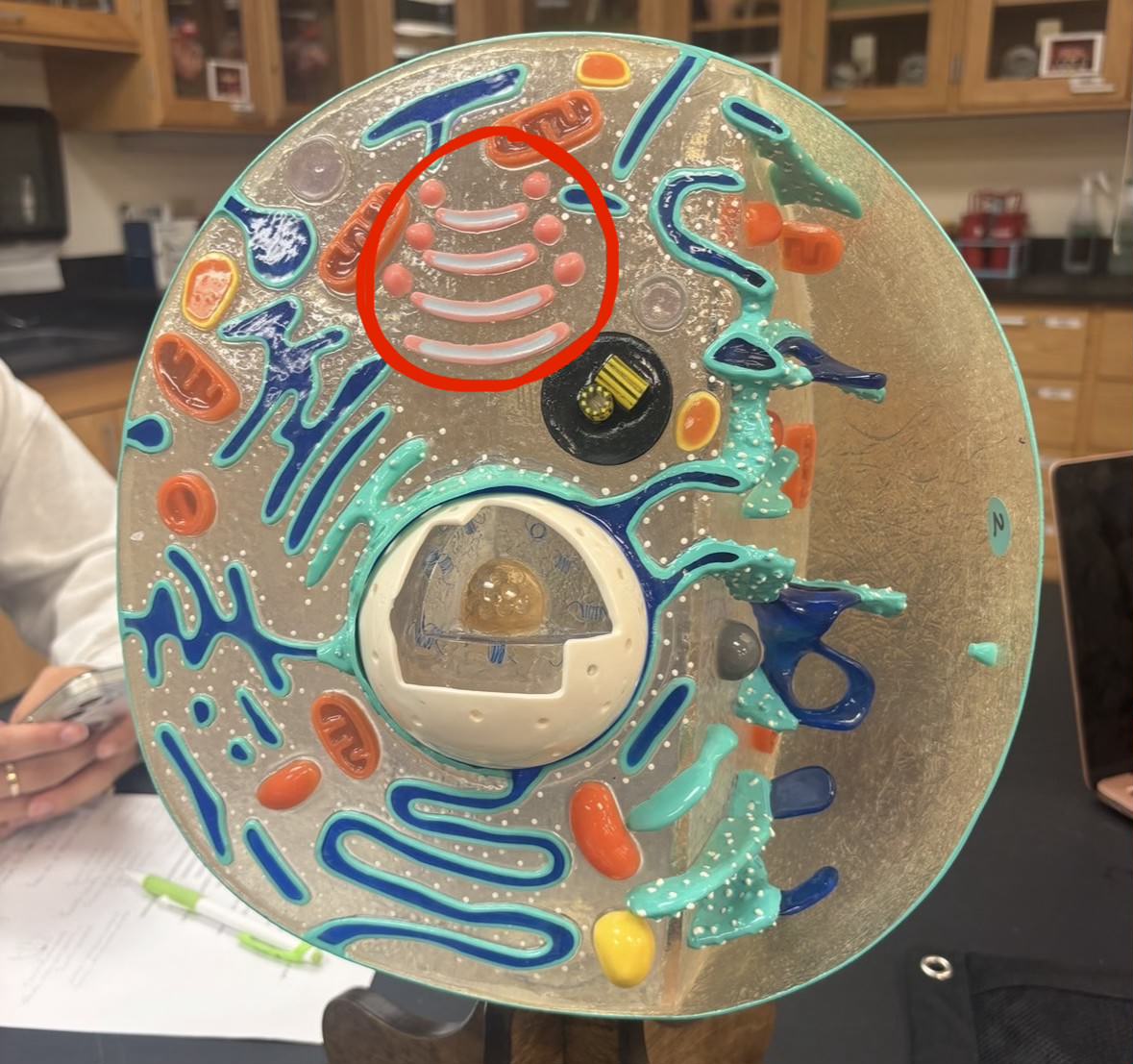
Label the part of the cell
Golgi complex
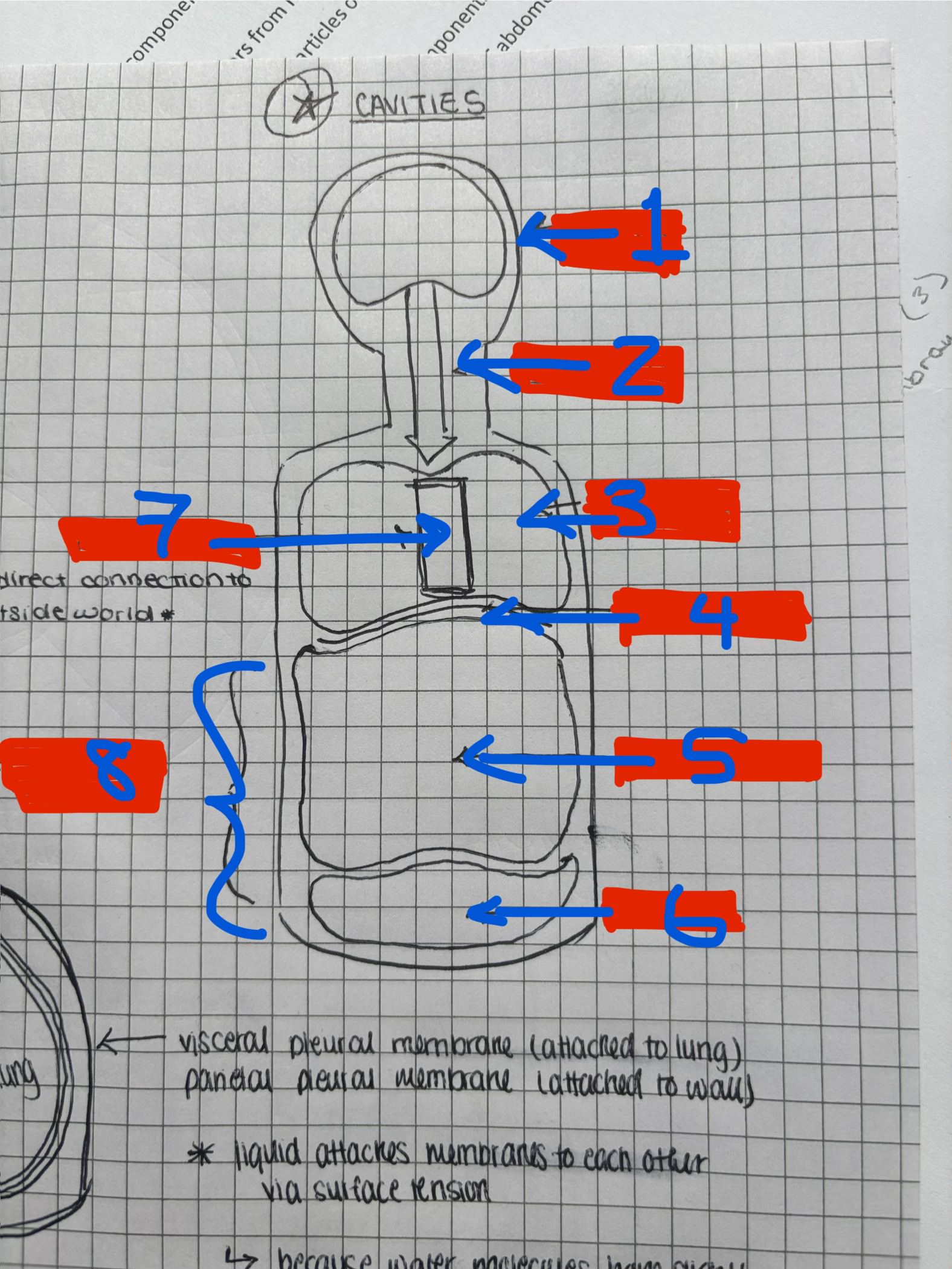
Label 1
Cranial cavity
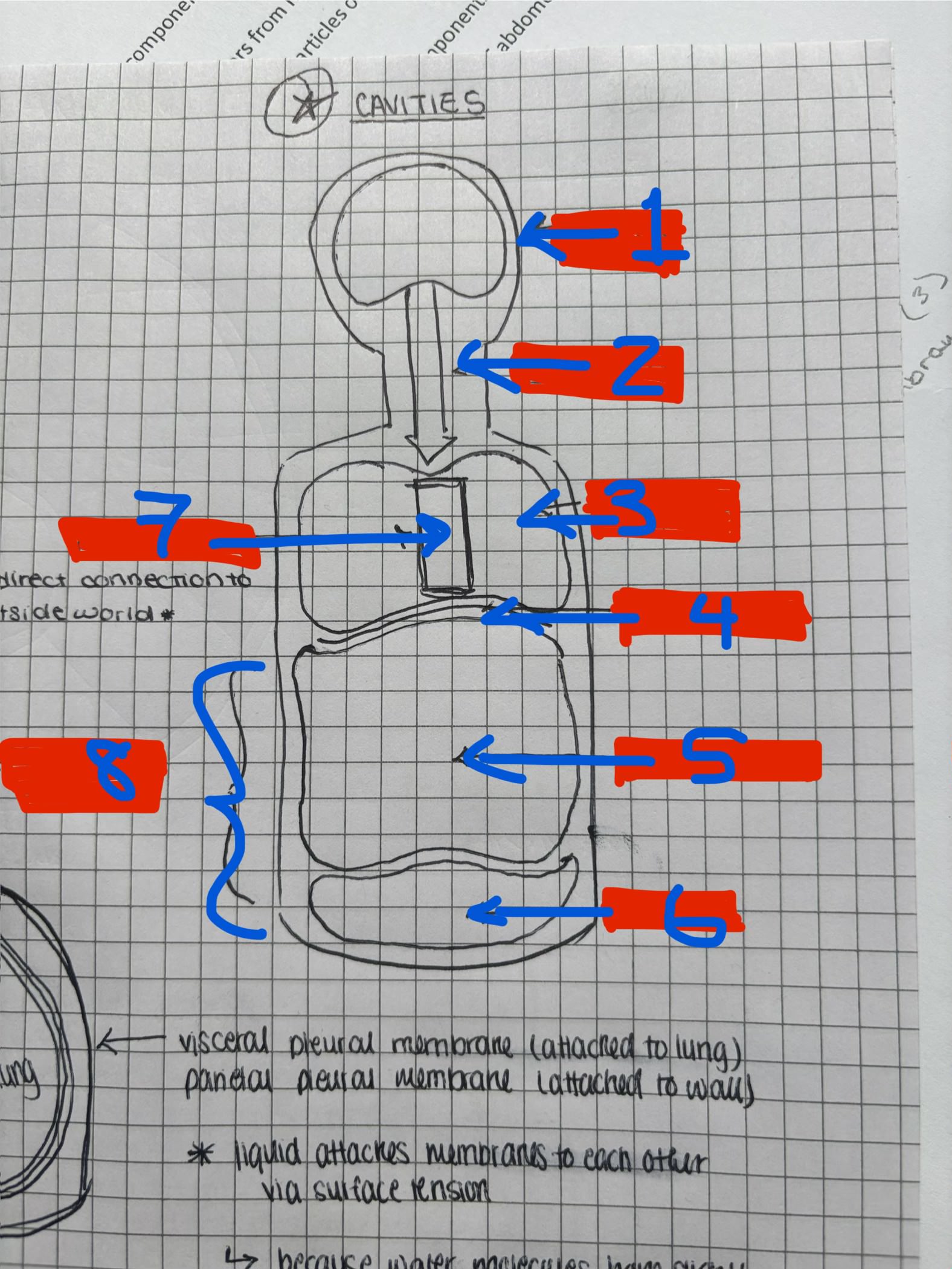
Label 2
Vertebral cavity
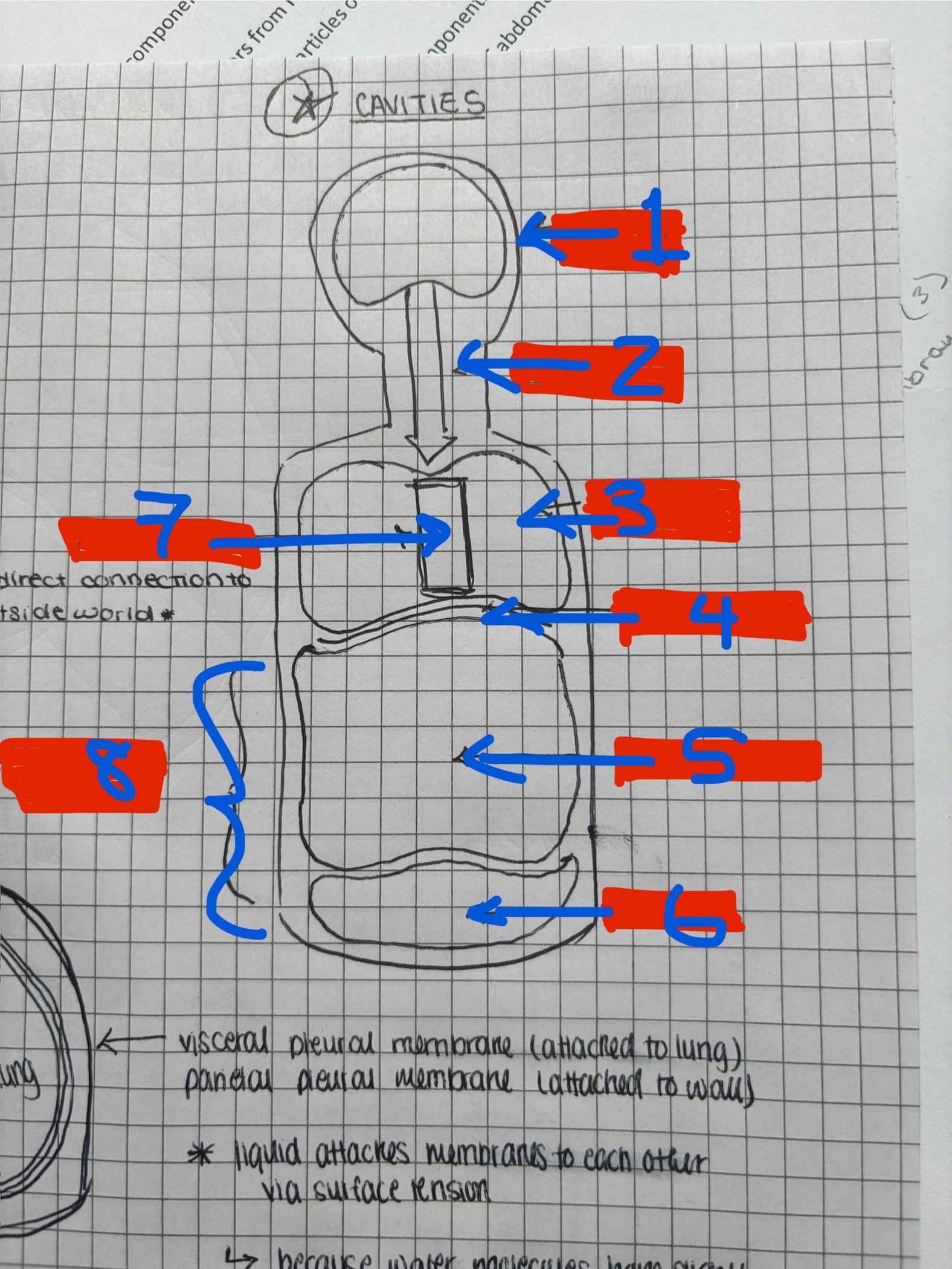
Label 3
Thoracic cavity
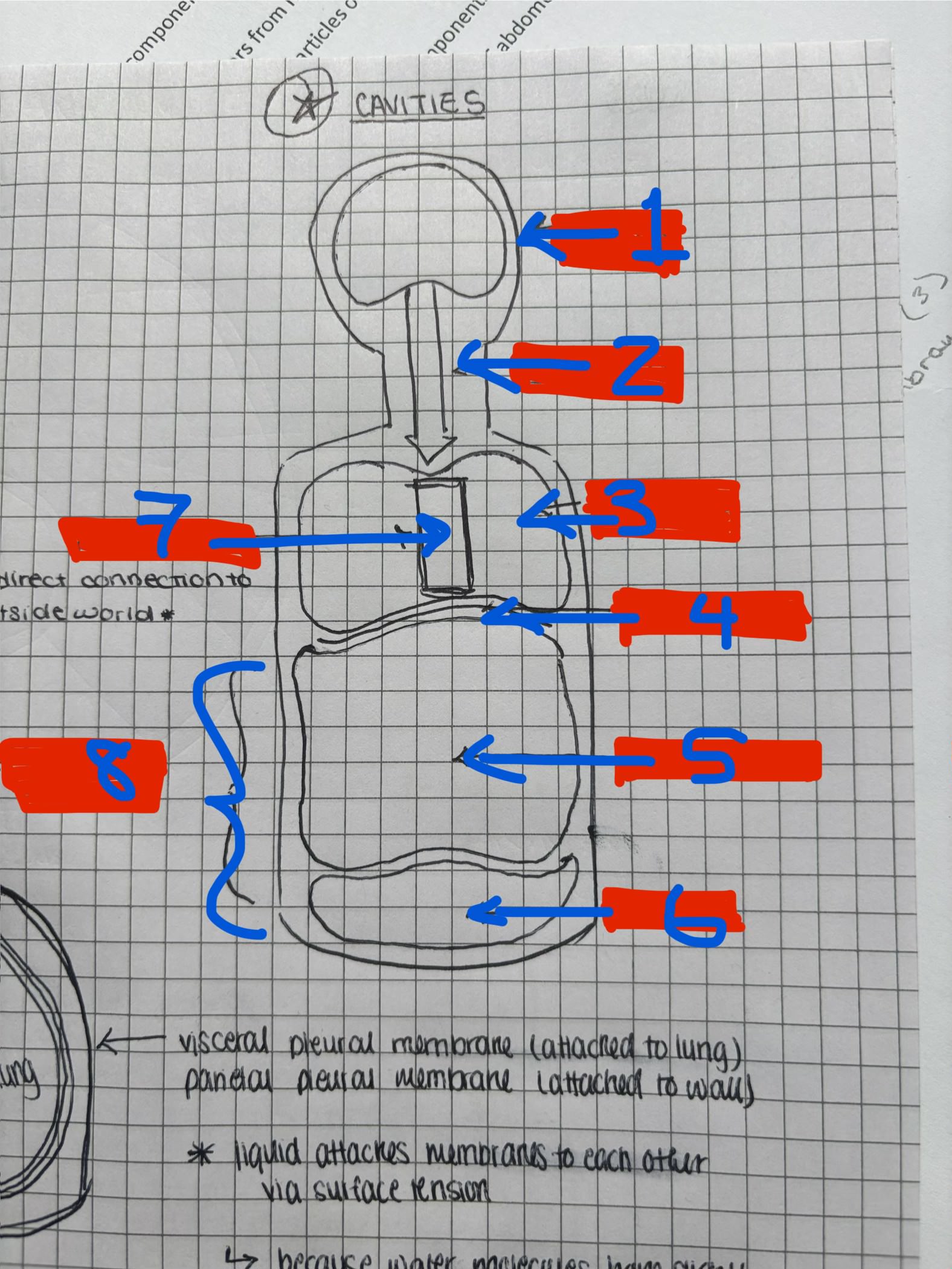
Label 4
Diaphragm
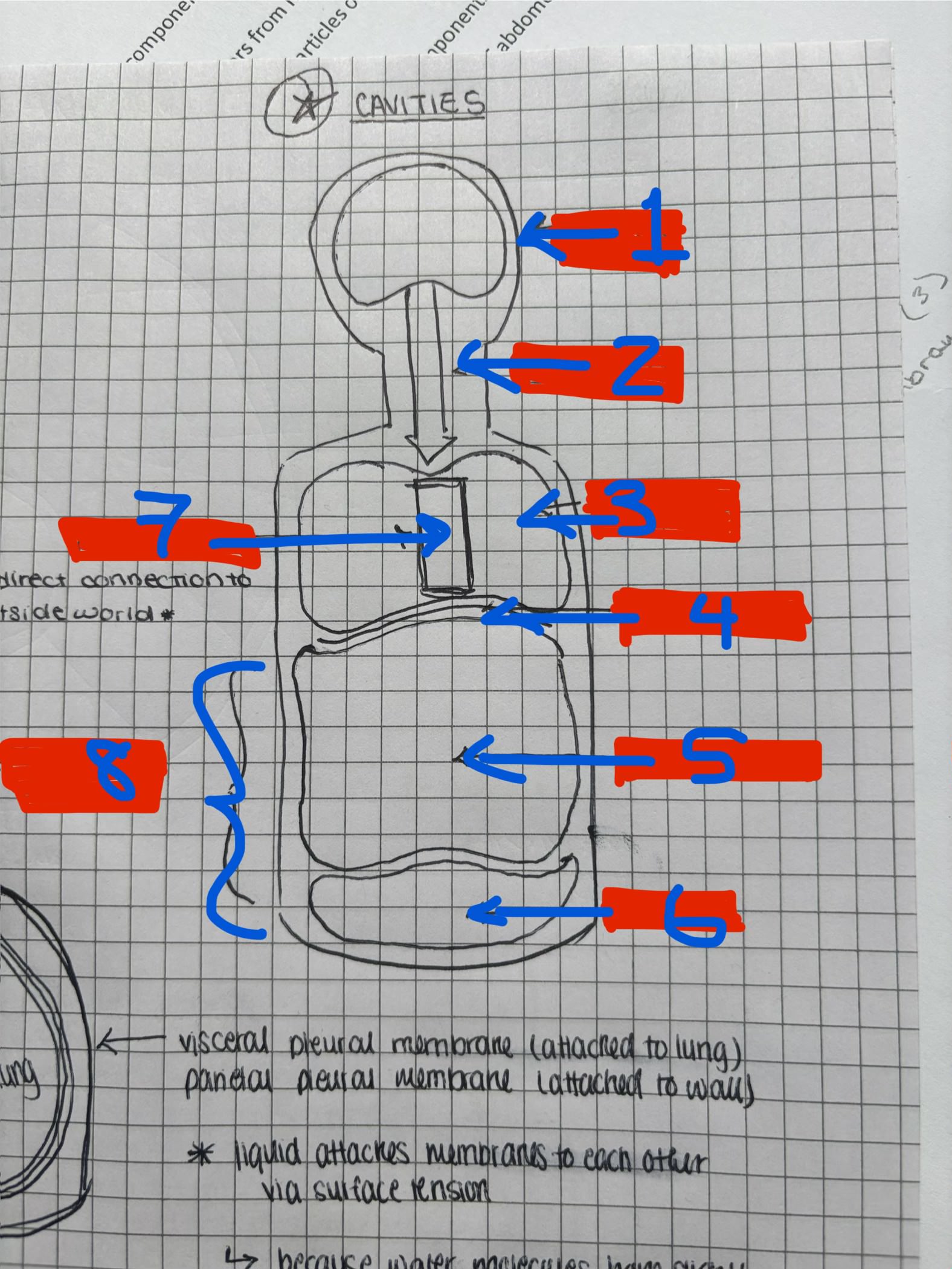
Label 5
Abdominal cavity
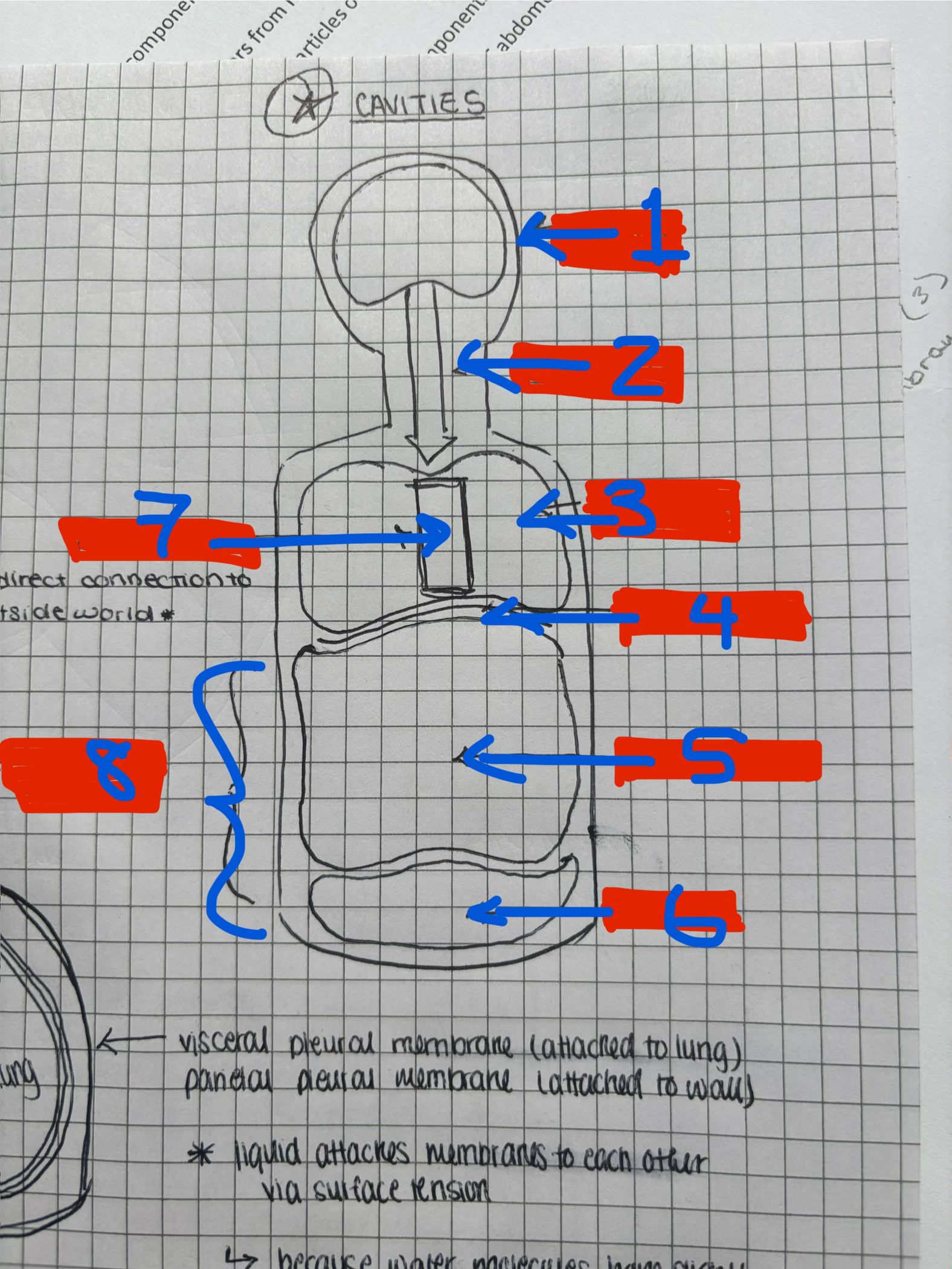
Label 6
Pelvic cavity
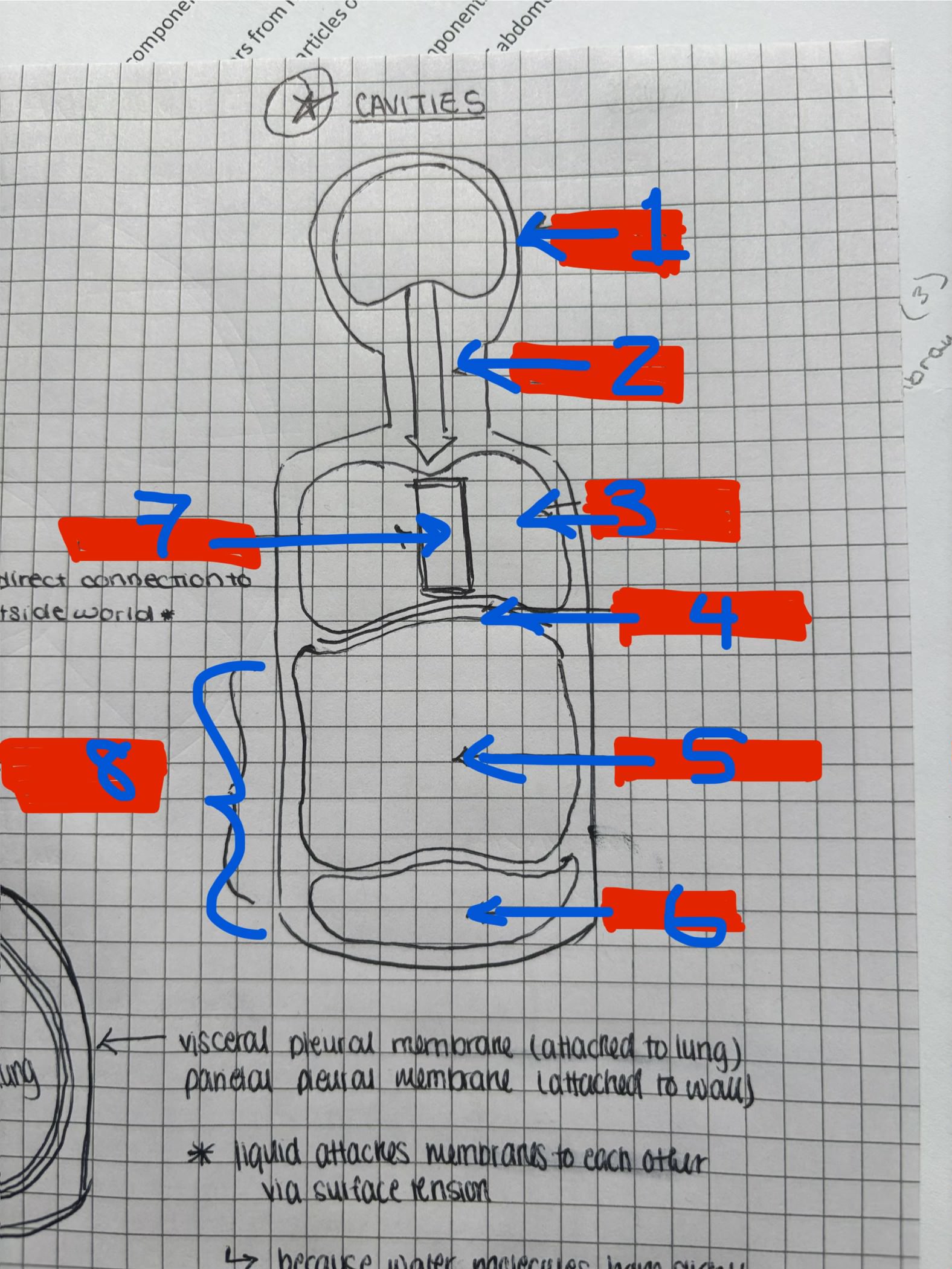
Label 7
Mediastinum
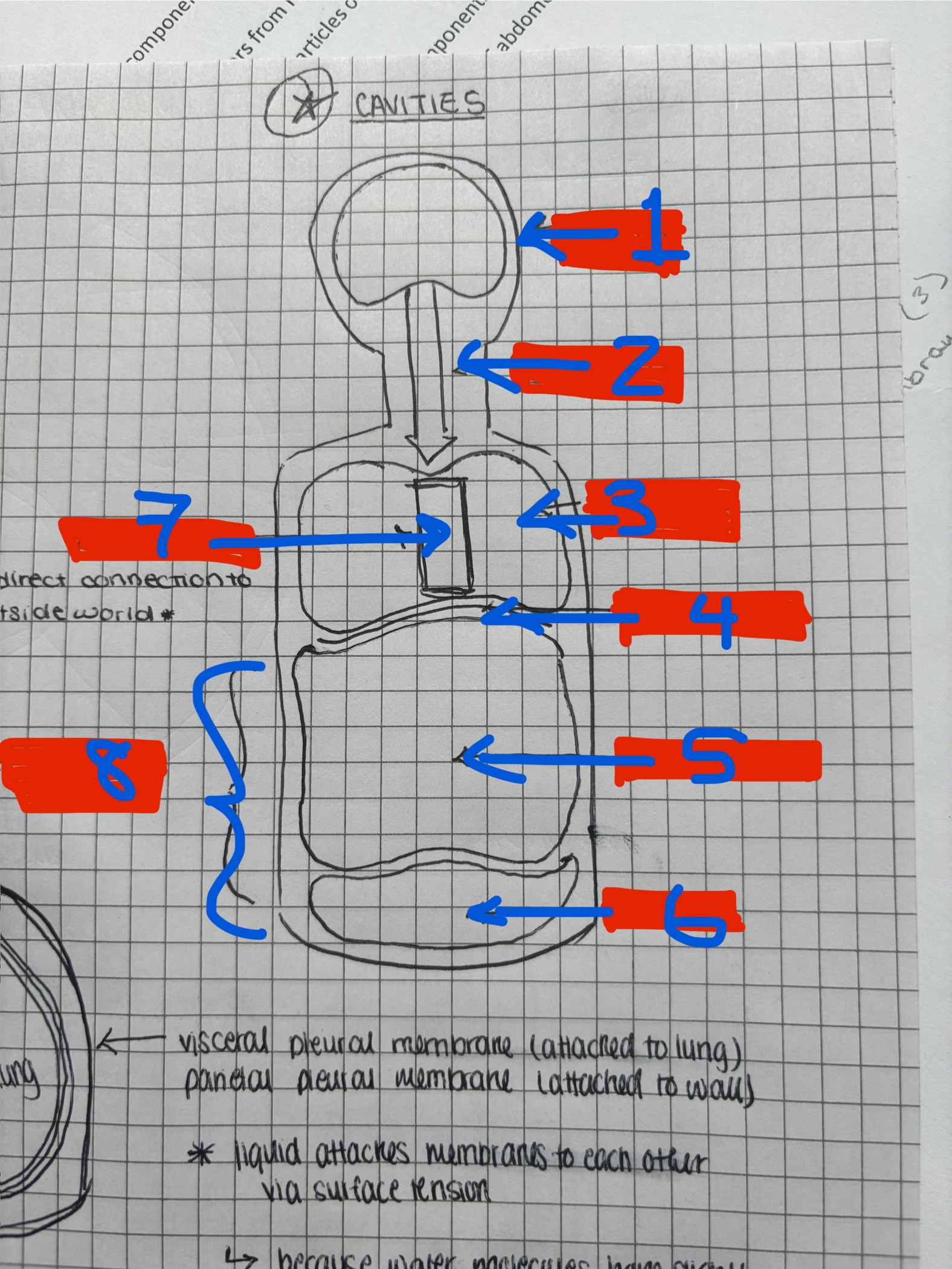
Label 8
Abdominopelvic cavity
Layers of the lungs (in to out)
1- Visceral pleural membrane
2- Parietal pleural membrane
Layers of the heart (in to out)
1- Endocardium
2- Myocardium
3- Epicardium
Right
Dexter
Left
Sinister
Proximal is the ___
Beginning
Distal is the ___
End
List the levels of organization
Atoms, molecules, organelles, smooth muscle cells, smooth muscle tissue, organs, organ system, organism
What differentiates organs?
They are made up of at least 2 different types of tissue
The purpose of the digestive system
Take in nutrients, break them down, and eliminate unabsorbed matter (feces)
The purpose of the respiratory system
Take in oxygen and eliminate carbon dioxide
The purpose of the cardiovascular system
Distribute oxygen and nutrients via the blood to all body cells and deliver waste and carbon dioxide to disposal organs
The purpose of the urinary system
Eliminate nitrogenous wastes and excess ions
The purpose of the integumentary system
Protect the body as a whole from the external environment
What comprises the integumentary system?
Hair, skin, nails
What comprises the skeletal system?
Bones, joints
What comprises the muscular system?
Skeletal muscles
What comprises the nervous system?
Brain, nerves, spinal cord
What comprises the endocrine system?
Pineal gland, pituitary gland, thyroid gland, thymus, adrenal gland, pancreas, ovary/testis
What comprises the cardiovascular system?
Heart, blood vessels
What comprises the lymphatic system?
Red bone marrow, thymus, lymphatic vessels, thoracic duct, spleen, lymph nodes
What comprises the respiratory system?
Nasal cavity, pharynx, larynx, trachea, bronchus, lung
What comprises the digestive system?
Oral cavity, esophagus, liver, stomach, small intestine, large intestine, rectum, anus
What comprises the urinary system?
Kidney, ureter, urinary bladder, urethera
What comprises the male reproductive system?
Prostate, penis, testis, ductus deferens, scrotum
What comprises the female reproductive system?
Mammary glands, ovary, uterus, uterine tube, vagina
Elements of A feedback system are:
Stimulus, receptor, input, control center, output, effector, response
The purpose of a negative feedback system:
To maintain homeostasis, the variable should change in a direction opposite to the initial change. (Returning to ideal value)
EXAMPLES of a negative feedback system
Overheating, fever
The control center
Hypothalamus
The purpose of a positive feedback center
To enhance the original stimulus to magnify further responses. The change results in a direction that is the same as the stimulus.
EXAMPLES of a positive feedback system
A cut, childbirth
Right hypochondriac organ(s)
liver, gallbladder
Epigastric organ(s)
stomach
Left hypochondriac organ(s)
diaphragm, spleen
Right lateral organ(s)
ascending colon
Umbilical organ(s)
transverse colon, small intestine
Left lateral organ(s)
Descending colon
Right inguinal organ(s)
cecum, appendix
Pubic organ(s)
Urinary
Left inguinal organ(s)
sigmoid colon
Solution
particles are very tiny and do not settle or spread light (mineral water)
Colloid
particles are larger and scatter light (jello)
Suspension
particles are very large, may settle, and spread light (blood)
Ion
An atom with a positive or negative charge created by the gain or loss of electrons
Isotope
Atoms that have the same amount of protons and electrons however, have a differing amount of neutrons
Three types of bonds
Covalent, ionic, hydrogen
Covalent bonds
Are the strongest. Form when electrons are shared either equally or unequally (H2O)
Ionic bonds
Are formed when electrons are lost/gained (NaCl)
Hydrogen bonds
Intramolecular bonds formed when hydrogen bonds (already covalently linked to another atom) are attracted to another atom.
Types of chemical reactions are
synthesis, decomposition, exchange
A synthesis reaction
small particles bond together to make more complex molecules (amino acids into proteins)
Decomposition reaction
larger molecules are broken to create smaller, less complex molecules (glycogen into glucose molecules)
Exchange reaction
bonds are both made and broken (ATP and glucose into ADP and glucose-phosphate)
Decomposition underlies all ___ processes in body cells
catabolic
Acid
a substance that releases hydrogen ions
Base
a substance that accepts hydrogen ions
pH represents
how acidic or basic a substance is
pH scale (high to low)
alkalic/basic, 7 is neutral, acidic
EXAMPLE of an acidic bodily fluid
HCl in your stomach to digest food and kill microbes
EXAMPLE of a alkalic bodily fluid
pancreatic juice to neutralize stomach acid before entering small intestine
A hypertonic solution
Has HIGHER solute concentration outside of the cell
A hypotonic solution
Has LOWER solute concentration outside of the cell
An isotonic solution
has the SAME solute concentration inside and outside of the cell
The percentage of water in blood/plasma is __ %
99.1
all epithelial tissue is ___
avascular
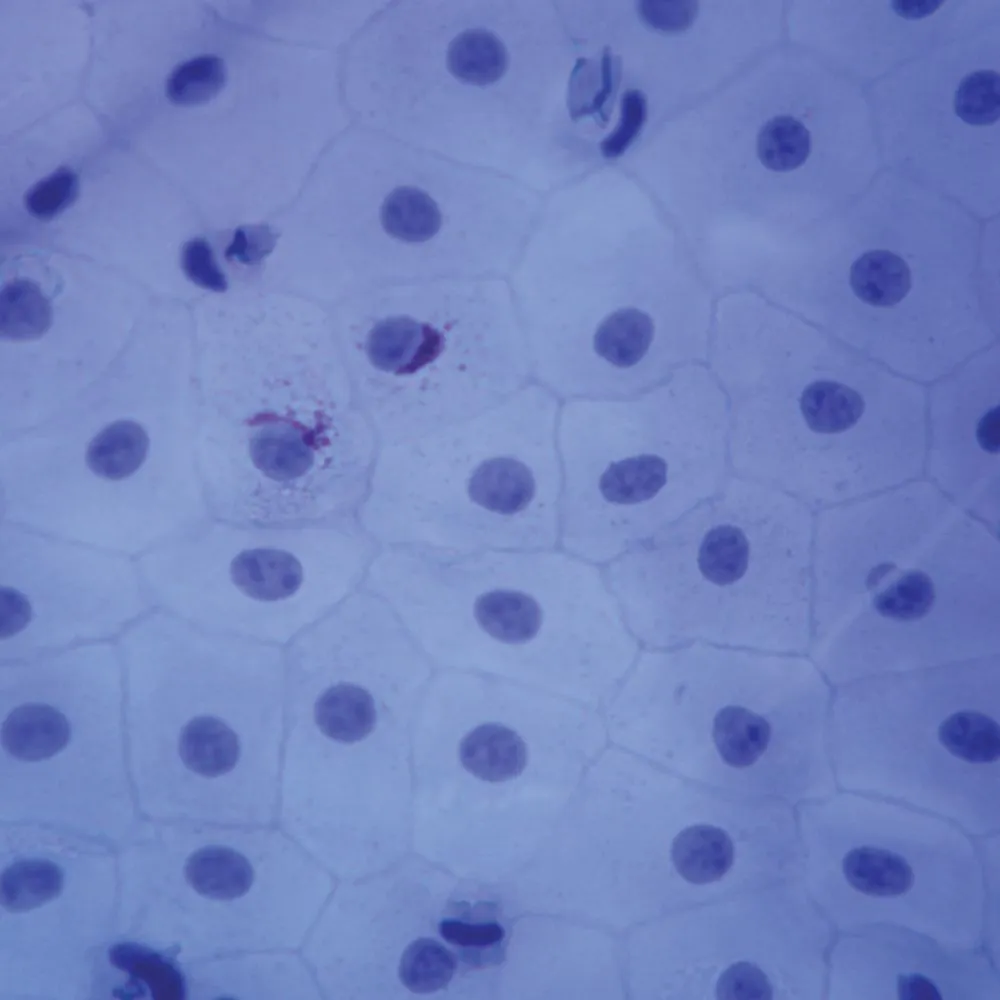
1- what do you see
2- where can it be found
Simple squamous epithelium, found in alveoli and is the innermost lining of blood vessels
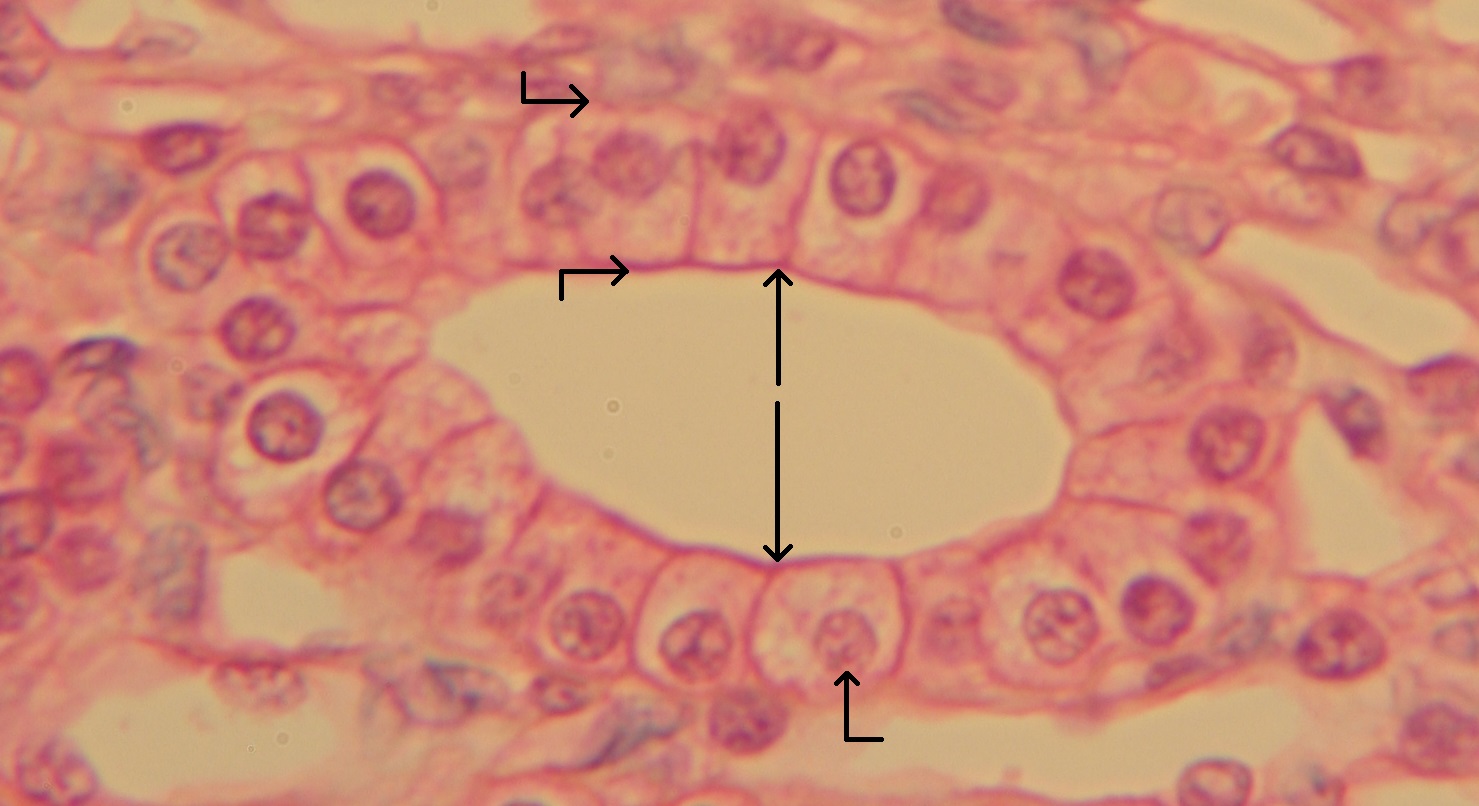
1- what do you see
2- where can it be found
simple cuboidal epithelium, found in the thyroid and kidneys
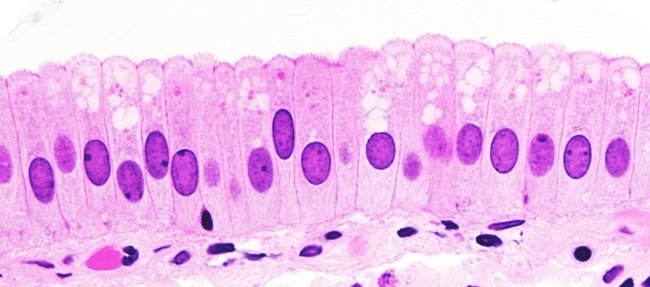
1- what do you see
2- where can it be found
non ciliated simple columnar, small intestine
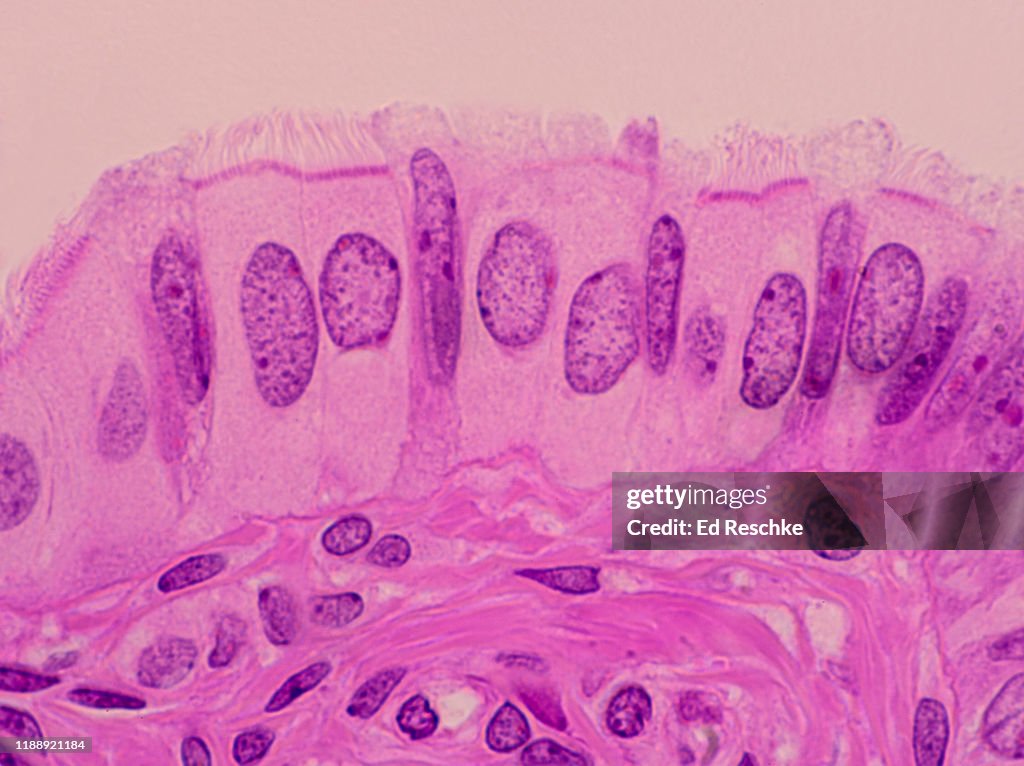
1- what do you see
2- where can it be found
ciliated simple columnar, trachea or fallopian tubes
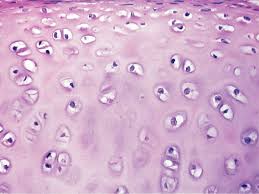
1- what do you see
2- where can it be found
hyaline cartilage, trachea
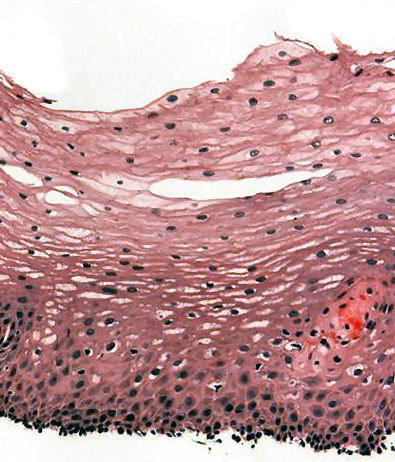
1- what do you see
2- where can it be found
stratified squamous keratinized epithelium, top layer of the skin
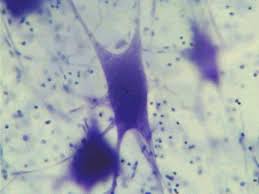
1- what do you see
2- where can it be found
neuron, brain or spinal cord
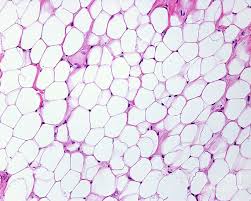
1- what do you see
2- where can it be found
adipose tissue, subcutaneous fat
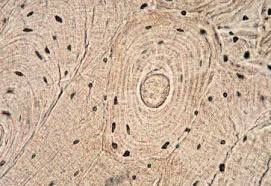
1- what do you see
2- where can it be found
compact bone, all bones
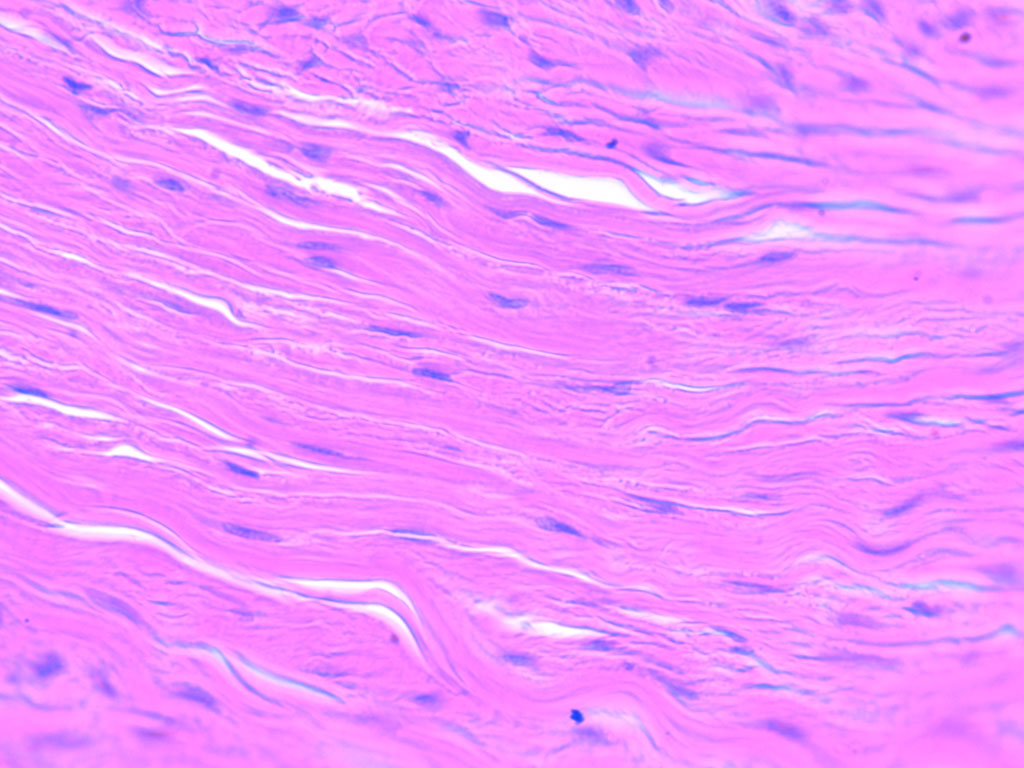
1- what do you see
2- where can it be found
dense regular connective tissue, tendons and ligaments
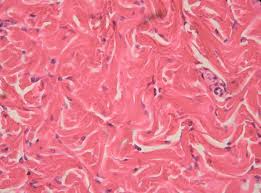
1- what do you see
2- where can it be found
dense irregular connective tissue, dermis of skin