2. Emotion and Perception/Attention
 Call Kai
 Learn
Learn Practice Test
 Spaced Repetition
 Match
Match Flashcards
 Knowt Play
1/27

There's no tags or description
Looks like no tags are added yet.
Name | Mastery | Learn | Test | Matching | Spaced | Call with Kai |
|---|
No analytics yet
Send a link to your students to track their progress
28 Terms
What is involved in the attentional blink task?
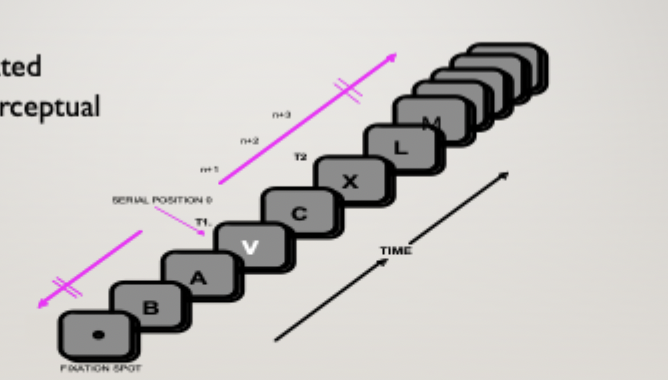
a serial attention task
attentional blink is an attention-related impairment in perceptual encoding
single task: ppts look at series of stimuli and are asked “what letter is the white letter?
dual task: “what letter was the white letter and was there an x in the sequence?”
when the x is located can tell us about attention and emotion
What do the results of the attentional blink paradigm tend to show for single and dual task?
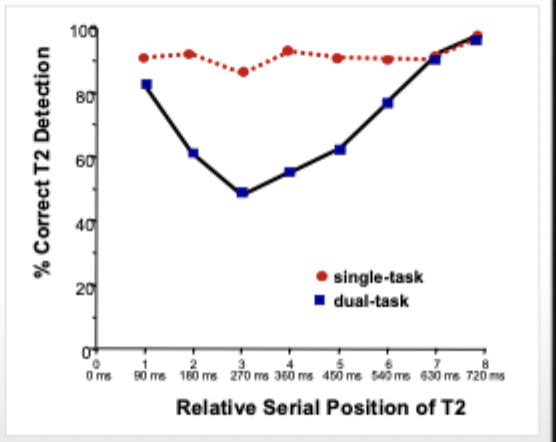
around half a second after the target stimulus, people’s attention gets worse
What is involved in using the attentional blink with emotive words?
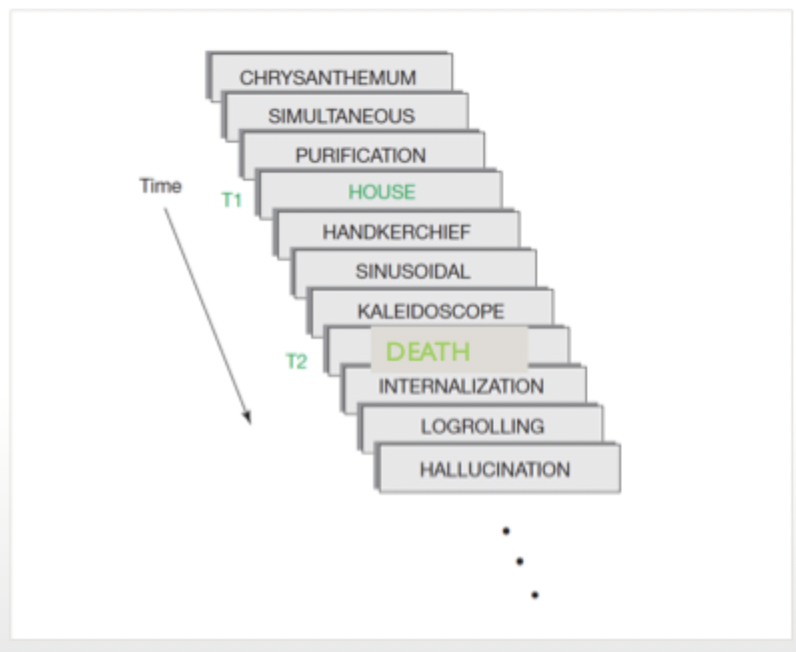
participants told to ignore black words and report the 2 green words
15 word presented each for 130ms
early lag was less than 4 items between T1 and T2. Late lag was more than 4 items
What do typical findings using an emotional attentional blink paradigm show?
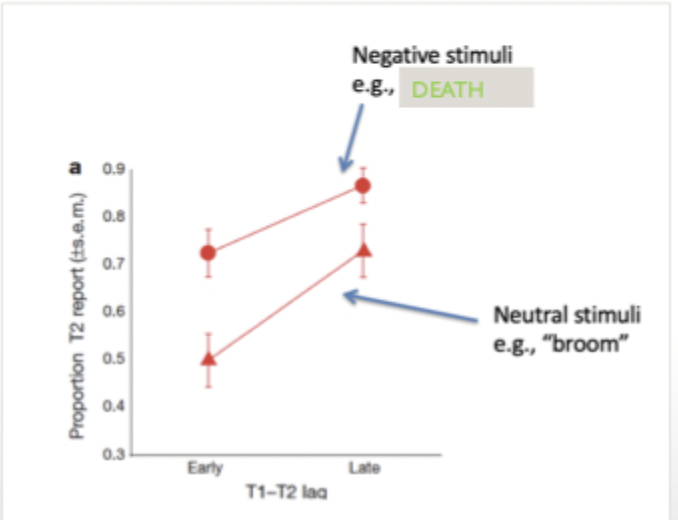
control participants show reduced attentional blink effects when the second stimulus is emotional
rapid pre-attentive processing of emotion facilitates perceptual processes
What is found using the emotional attentional blink paradigm, comparing controls and individuals with bilateral amygdala damage?
controls matched for neutral performance (red triangles) demonstrate advantage for emotional stimuli (red circles)
data of patient with bilateral amygdala damage showed no difference between emotional (circle) and neutral (triangle) stimuli.
What is found in an attentional blink study investigating how moral and emotional content captures attention?
distinctly moral words (e.g. church, holy, pure)
distinctly emotional words (e.g. weep, sad, afraid)
moral-emotional words (e.g. hate, shame, ruin)
neutral words (e.g. chair desk)
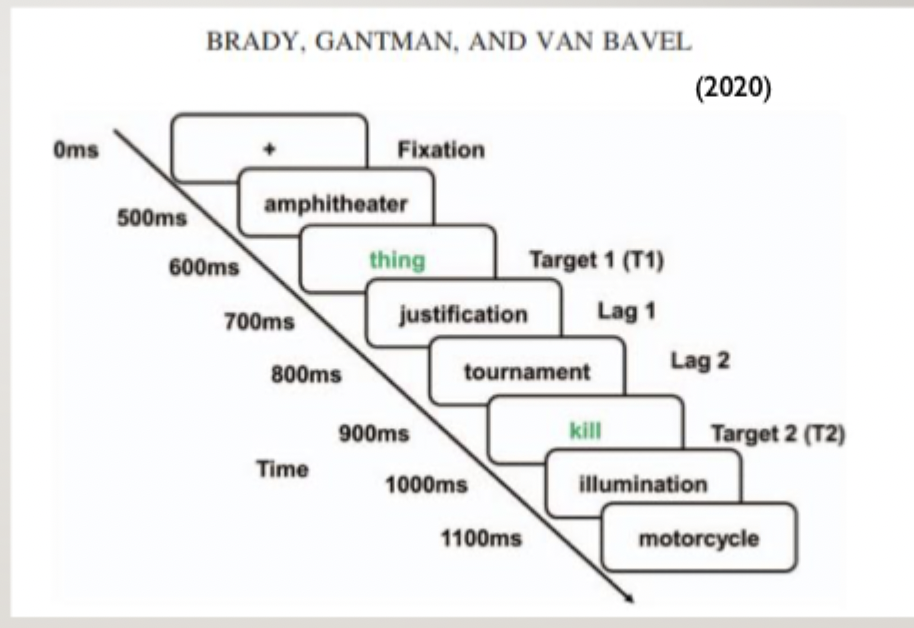
all experimental conditions showed a significant reduction in the attention blink compared to neutral words
suggesting that they capture attention to a greater extent than neutral words
What was found regarding attentional capture in an ecologically valid blink task?
similar design as study 1 but identifying 2 blue hashtags on tweets
findings replicate study 1
suggest tweets that include words relate to both morality and emotion are prioritised in visual attention,
partly explaining why moral and emotional tweets go viral > because they stand out
What was found in a third study regarding how attentional capture is associated with online sharing?
analysed a large dataset containing Twitter conversations about contentious political topics of gun control, same-sex marriage and climate change
more likely to be retweeted with moral/emotional content
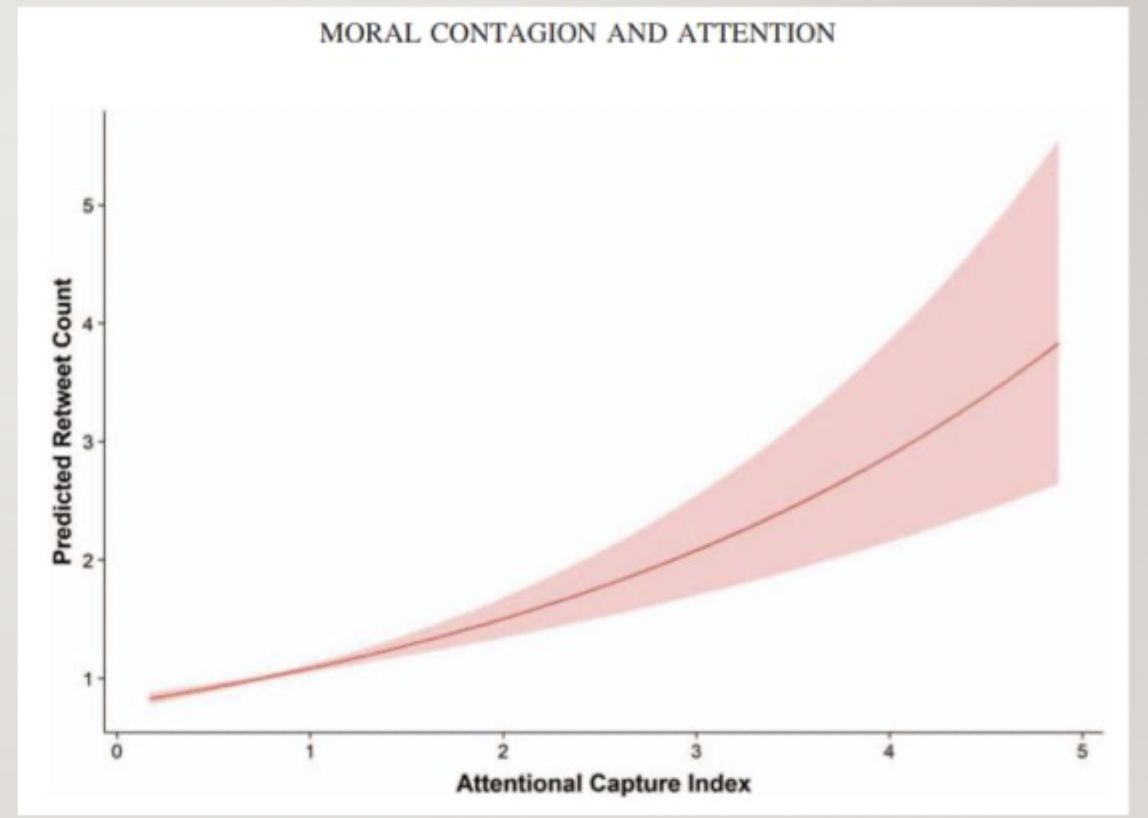
In sum, what have attentional blink studies shown?
high level semantic processes such as word recognition can take place unconsciously in a rapid sequence
the amygdala is important for emotional word processing
the emotional and moral content of tweets facilitates conscious detection
What has been found using the stroop task to investigate how emotional words capture attention?

has been found that emotional words disrupt naming the ink
How can the emotional stroop be used in clinical issues?
we can measure effects of specific phobias
e.g. a person with a fear of snakes would be especially impaired by words such as “venom”, “fangs”, “snake”
an automatic measure of the clinical issues a patient may have, rather than relying on self report
What has been found regarding a pop-out effects in visual search tasks of emotional stimuli suggests emotion can capture attention?
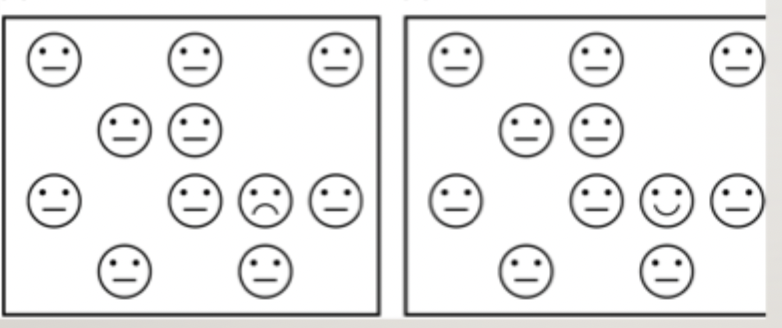
there have been some mixed results, but overall there is evidence that emotional, especially angry faces, do capture attention
What was find showing spiders and flowers?
people are much more likely to detect a spider amongst flowers rather than a flower amongst spiders
What is discussed regarding how live creatures capture our attention?
it may be that we view all objects than can move as potentially threatening
things that move capture our attention more
What is the purpose of the Posner cueing task? And what is the standard finding?
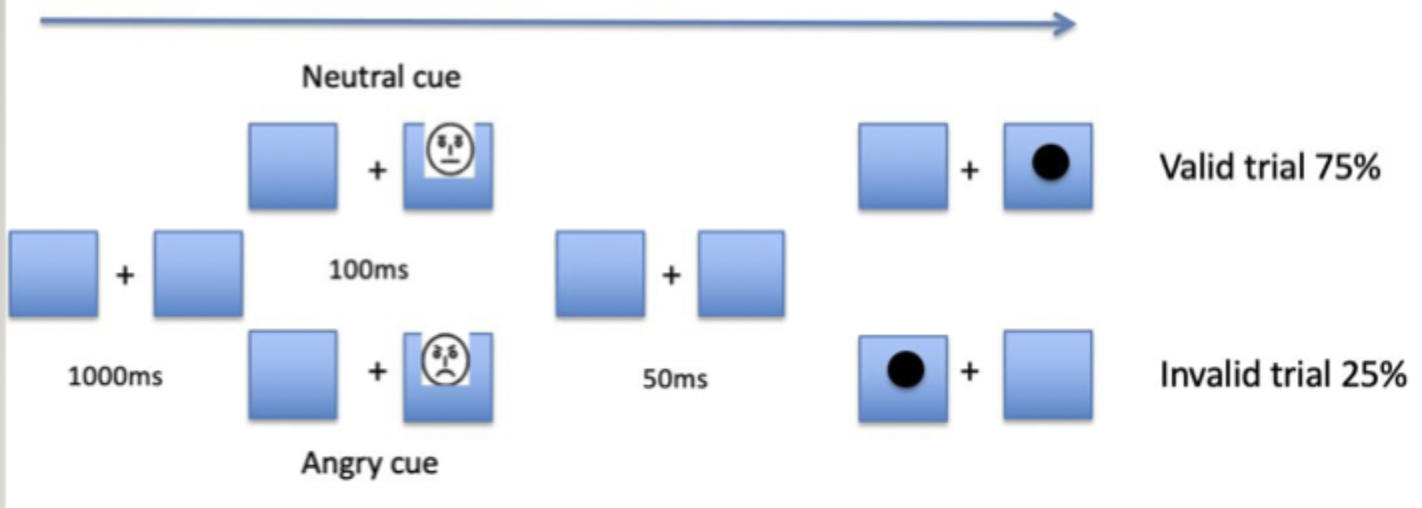
assesses an individuals ability to perform an attentional shift
faster reaction time to detect a target onset when it is cued
What is found when emotional stimuli is used in the posner cuing task?
no evidence for emotion to facilitate strategic orienting when valid cues were predictive and intervals short
detect stimulus onset: emotion has no effect
detect target in clutter: emotion enhances
when attention is oriented to an angry face, it is harder to withdraw
response to the target was slowed when previously attending to an angry face and now have to orient to opposite side of the screen
How has it been illustrated that anxiety can influence the interpretation of ambiguous stimuli?
ambiguous words were spoken and people had to interpret them
those with anxiety perceived the negative meaning, such as “die” rather than “dye" and “pain” rather than “pane”
similar effects are observed with ambiguous sentences
What is involved in mood manipulation?
a person’s mood state can be changed via drugs or therapy
however, there are also subtle changes to the environment that can change mood
e.g. fragrance can make people feel more relaxed or alert
What was found regarding attention, fragrance and mood?
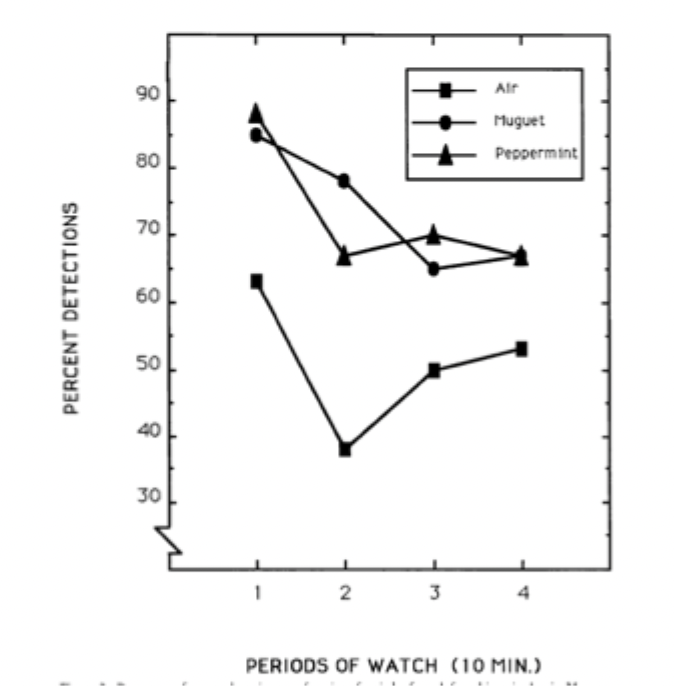
study examined whether manipulating mood via fragrance could facilitate such demanding attention tasks
used two positive fragrances: peppermint (alerting), lily (relaxing), and control (air)
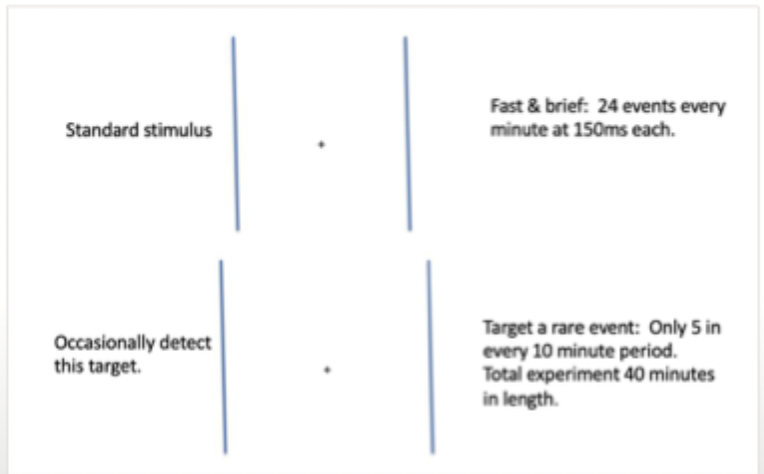
participants sniffed fragrances every 30 seconds for 40 minutes during a vigilance task
a pleasant fragrance can improve performance on a vigilance task
The emotion of disgust and perception of others SS
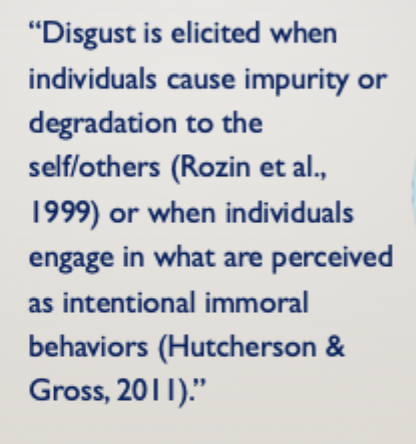
What is involved in the relationship between insula and social cognition/dehumanisation?
some people are disgusted by people such as drug addicts and the homeless
increased insula activation
reduced social cognition (medial prefrontal cortex) associated with dehumanisation
What is discussed regarding moral amplification through heightened emotions (disgust)?
the emotion of disgust can lead to moral amplification of wrongness judgements, e.g. sex before marriage, abortion, support for gay marriage etc
meta-analysis by landy and goodwin showed these effects are small
inducing disgusting odours or disgusting tastes showed the most reliable amplification effects compared to disgusting videos or pictures, or remembering something disgusting
What is seen studying how attention influences emotions with chimpanzees?
researcher first makes eye contact with chimpanzee
then looks up and over to the left
the chimpanzee understands the social meaning of the eye gaze and looks where the researcher looks
What are different patterns of communication in dogs, wolves and pigs?
dogs will look towards human faces when seeking food, wolves do not
dogs have been selectively bred to cooperate with humans during social interactions
pigs are also very socially intelligent like dogs, and also look for eye contact to communicate with humans
What did Baron-Cohen find regarding attention and liking in children?
ask 4 year olds what sweets do you think charlie likes
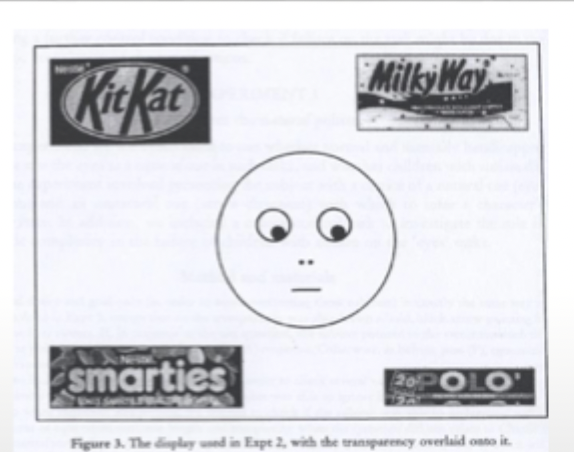
children will say polos because the image is looking at them
How might attention influence emotion?

it is possible for attention to change how we feel about a stimulus
when our attention is repeatedly oriented towards an object by another person, we start to like the object more
What is the main argument os Zadra and Clore’s “Emotion and Perception: the role of affective information”
emotion provides valuable information that helps guide perception
people perceive the world partly through the lens of how they feel
What is the mood as information theory?
people unconsciously use feelings as information when making judgements