6.1 DNA and RNA Structure
 Call Kai
 Learn
Learn Practice Test
 Spaced Repetition
 Match
Match Flashcards
 Knowt Play
1/12

There's no tags or description
Looks like no tags are added yet.
Name | Mastery | Learn | Test | Matching | Spaced | Call with Kai |
|---|
No analytics yet
Send a link to your students to track their progress
13 Terms
Rosalind Franklin
discovered double helix shape of DNA
Chargaff
discovered that A=T and C=G
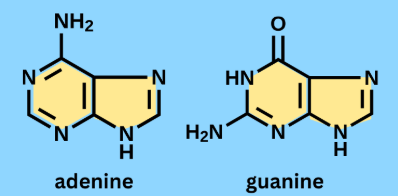
Purines
double ring structure
A and G
adenine and guanine
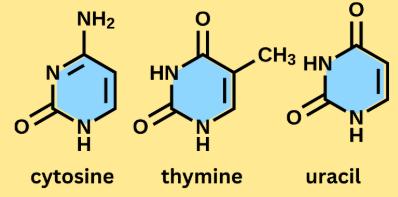
Pyridimines
single ring structure
C, U, T
cytosine, uracil, and thymine
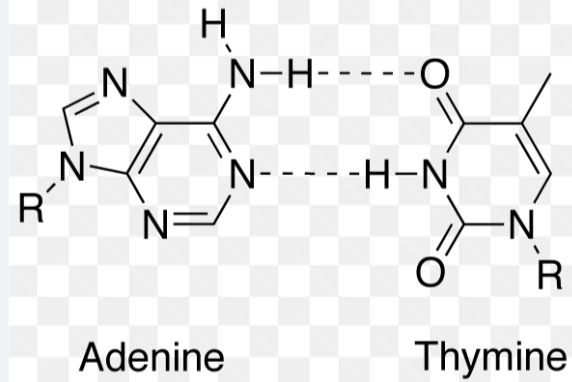
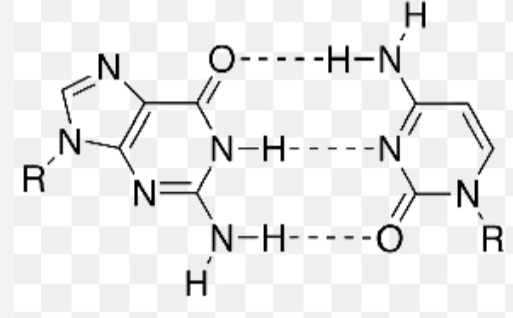
A and T
2 hydrogen bonds
C and G
3 hydrogen bonds
Watson and Crick
combined findings of Franklin (helix shape) and Chargaff (base pairing) to create the first 3D, double helix model of DNA
DNA structure
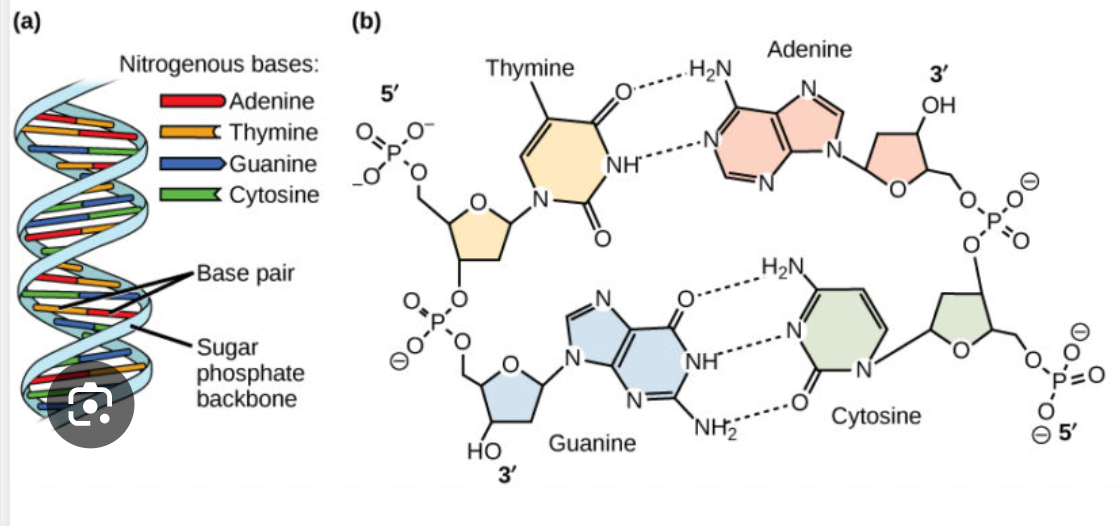
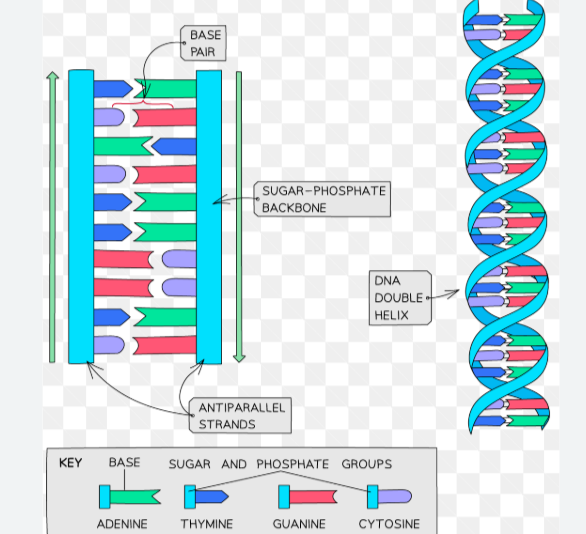
double stranded helix
-sugar phosphate backbone
-nucleotides pairing in the center
antiparallel
-one strand runs 5’ to 3’, the other strand runs in the opposite, upside-down direction 3’ to 5’
-5’ end has the free phosphate group
-3’ end has the free hydroxyl group
DNA function
primary source of heritable information
genetic information is stored in and passed from one generation to the next through DNA
exception: RNA is the primary source of heritable information in some viruses
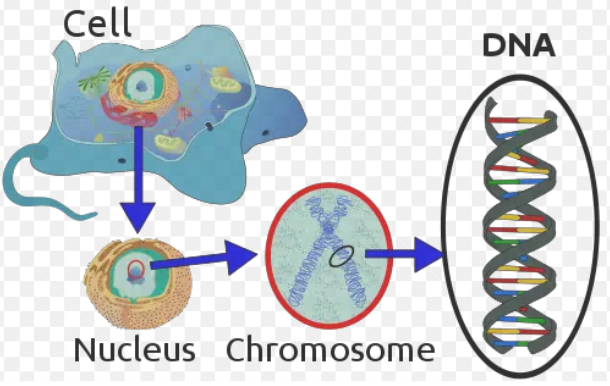
Eukaryotic DNA
DNA found in nucleus
linear chromosomes
Prokaryotic DNA
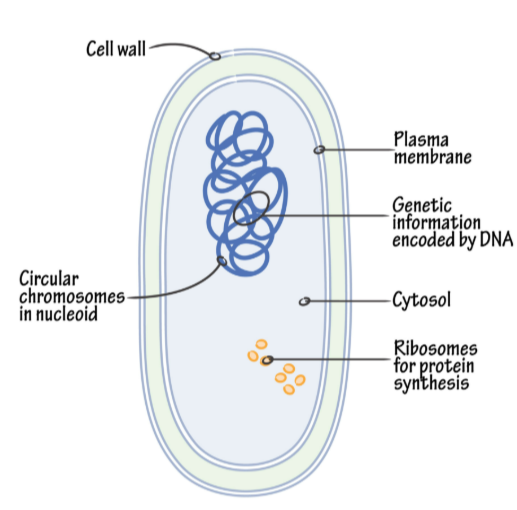
DNA is in nucleoid region
chromosomes are circular
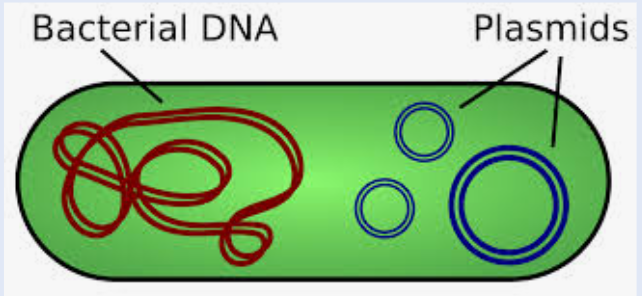
contain plasmids
Plasmids
small, circular DNA molecules that are separate from the chromosomes
replicate independently from the chromosomal DNA
primarily found in prokaryotes, but found in some eukaryotes
contain genes that may be useful to the prokaryote when it is in a particular environment, but may not be required for survival ex. virus being able to go undercover in someone’s body and not being targeted
can be manipulated in laboratories
-plasmids can be removed from bacteria, then a gene of interest can be inserted into the plasmid to form recombinant plasmid DNA
-when the recombinant plasmid is inserted back into the bacteria, the gene will be expressed
bacteria can exchange genes found on plasmids with neighboring bacteria
-once DNA is exchanged, the bacteria can express the genes acquired(sexual)
-helps with survival of prokaryotes
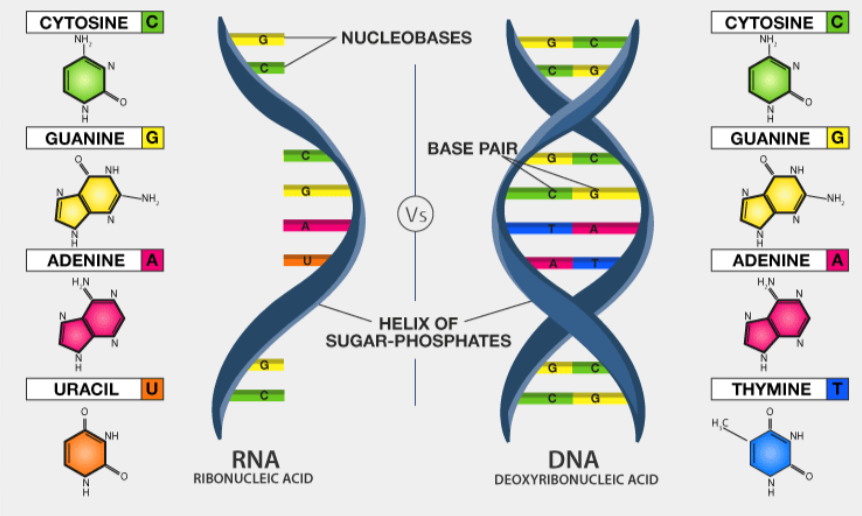
RNA vs. DNA
RNA:
ribonucleic acid
single stranded
ribose
A=U
C=G
DNA:
deoxyribonucleic acid
double stranded
deoxyribose
A=T
C=G