Endocrine - L1 part 1 - Principles + Hypothalamus
 Call Kai
 Learn
Learn Practice Test
 Spaced Repetition
 Match
Match Flashcards
 Knowt Play
1/34

There's no tags or description
Looks like no tags are added yet.
Name | Mastery | Learn | Test | Matching | Spaced | Call with Kai |
|---|
No analytics yet
Send a link to your students to track their progress
35 Terms
what are the 5 classifications of hormones?
1. polypeptide hormones
2. protein hormones
3. thyroid hormones
4. steroid hormones
5. amines
give examples of each hormone classification:
1. polypeptides = oxytocin, ADH
2. proteins = insulin, GH
3. thyroid = thyroxine (T3), triiodothyronine (T4)
4. steroid = cortisol, estrogen, testosterone
5. amines = catecholamines --> epinephrine, norepinephrine
* some hormones are derivatives or metabolites of a single _____________ (give an example)
amino acid
ex - thyroid hormone + epinephrine from tyrosine, melatonin from tryptophan
describe how in each of these hormones are delivered/ used:
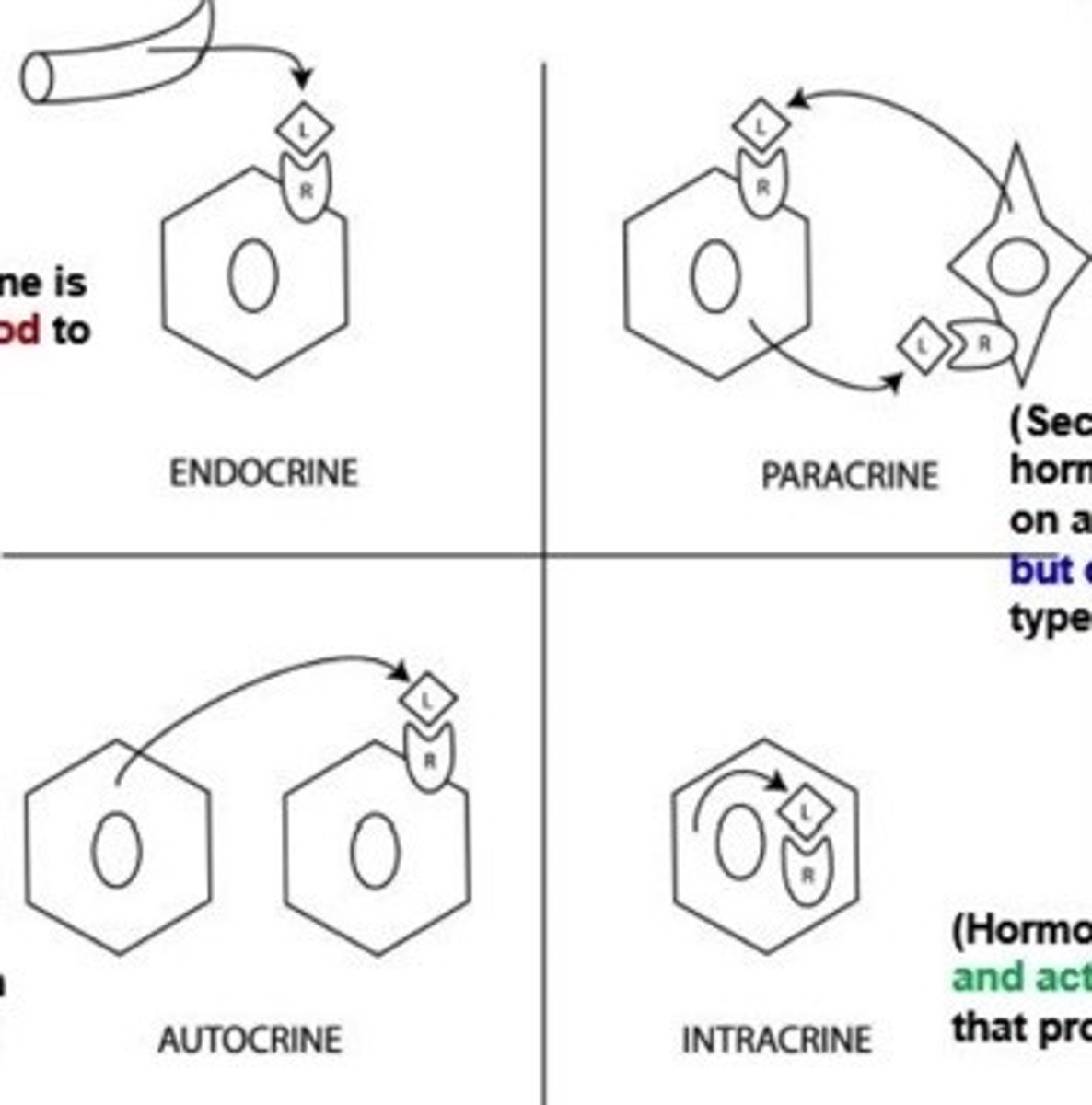
endocrine, paracrine, autocrine + intracrine
endocrine = delivered to target tissues via blood circulation
paracrine = acts on adjacent but DIFFERENT cell types
autocrine = acts on the same cell that produced it or an identical one
intracrine = stays + acts in the cell that produced it
hormones target cells that have a specific receptor, which may be in one of 2 places:
in the plasma membrane or inside the cell (cytoplasm or nucleus)
plasma membrane receptors have 3 possible characteristics:
1. be coupled to a G protein = this facilitates production of soluble second messengers
2. have tyrosine kinase activity (enzyme receptor)
3. be an ion channel (ligand-gated channel)
hormones are considered [first / second] messengers
first
the hormone-receptor complex may act through one of many mechanisms, including... (there's more than just these 3)
1. production of soluble second messengers (via G-protein coupling)
2. activation of tyrosine kinases
3. regulation of ion channels
(basically the different types of receptors previously discussed)
when a plasma membrane receptor is coupled to a G-protein, what is produced?
production of a soluble second messenger, such as cAMP or inositol triphosphate
how is cAMP produced in plasma membrane receptor signaling?
1. hormones transmit their signals by activating G proteins = stimulates adenylate cyclase to produce cAMP
2. cAMP goes on to activate protein kinases that phosphorylate proteins
**hormones are acting as first messengers to produce the second messenger, cAMP**
what are some hormones that can signal to produce cAMP via G protein coupling?
glucagon, epinephrine, LH, FSH
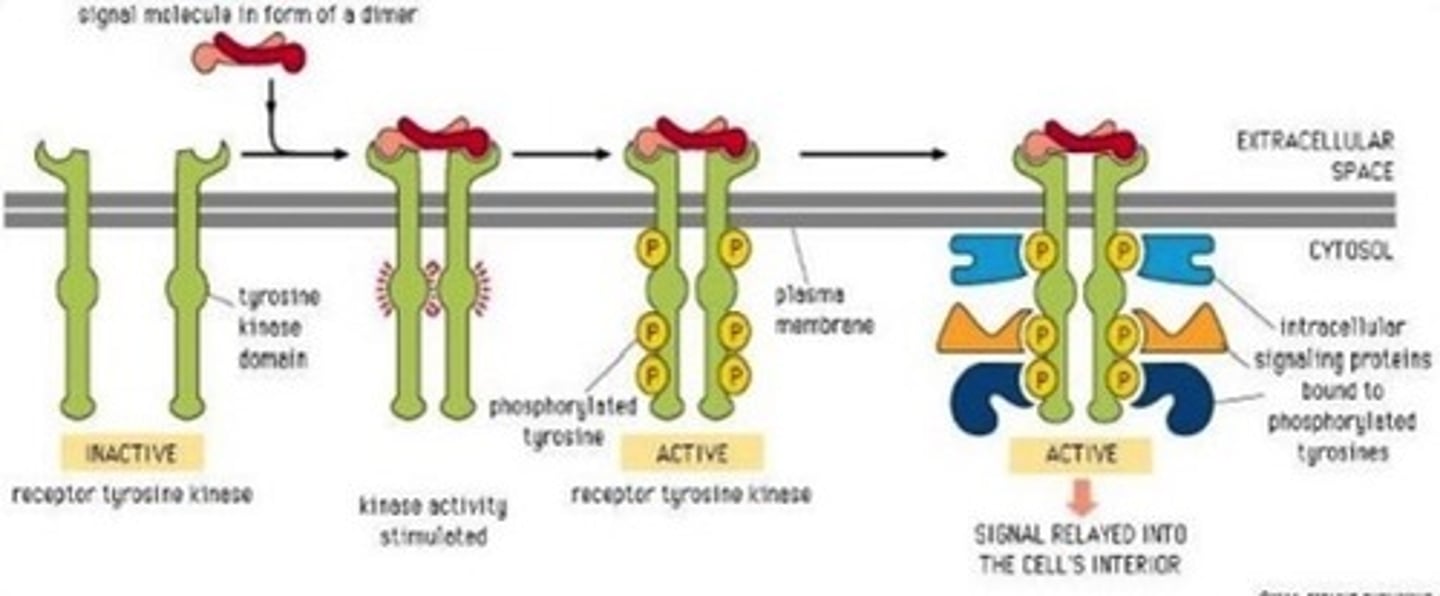
when hormones bind to tyrosine kinases, what happens?
1. tyrosine kinase receptors are activated
2. tyrosine residues of the receptor are then phosphorylated
3. this allows several proteins to bind to this phosphorylated receptor
what are hormone examples that activate tyrosine kinases?
insulin,
growth hormone (GH)
when hormones bind to ligand-gated ion channels, what happens?
the ion channels open and enhance transmembrane ion transport
- several changes occur in cell function
note: some ion channels open in response to voltage channels as well
what is an example of a hormone that binds to a ligand-gated ion channel
epinephrine
what are examples of hormones that can enter the cytoplasm or nucleus to bind to their specific receptors? What complex can this form?
estrogen,
testosterone,
progesterone,
thyroid hormone,
calcitriol
--> the 'hormone-receptor complex'
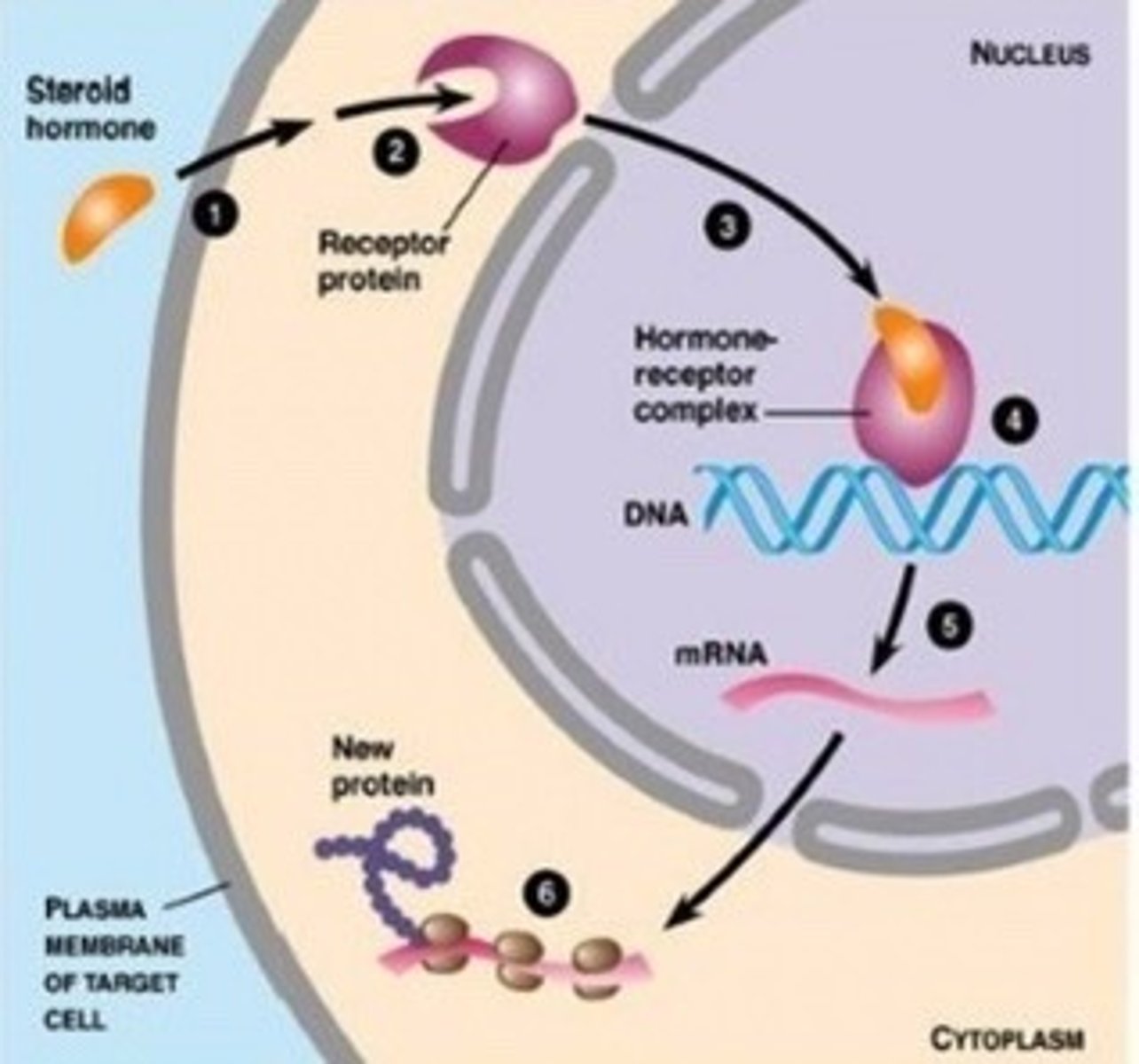
in the nucleus, the 'hormone-receptor complex' regulates what?
the transcription of genes
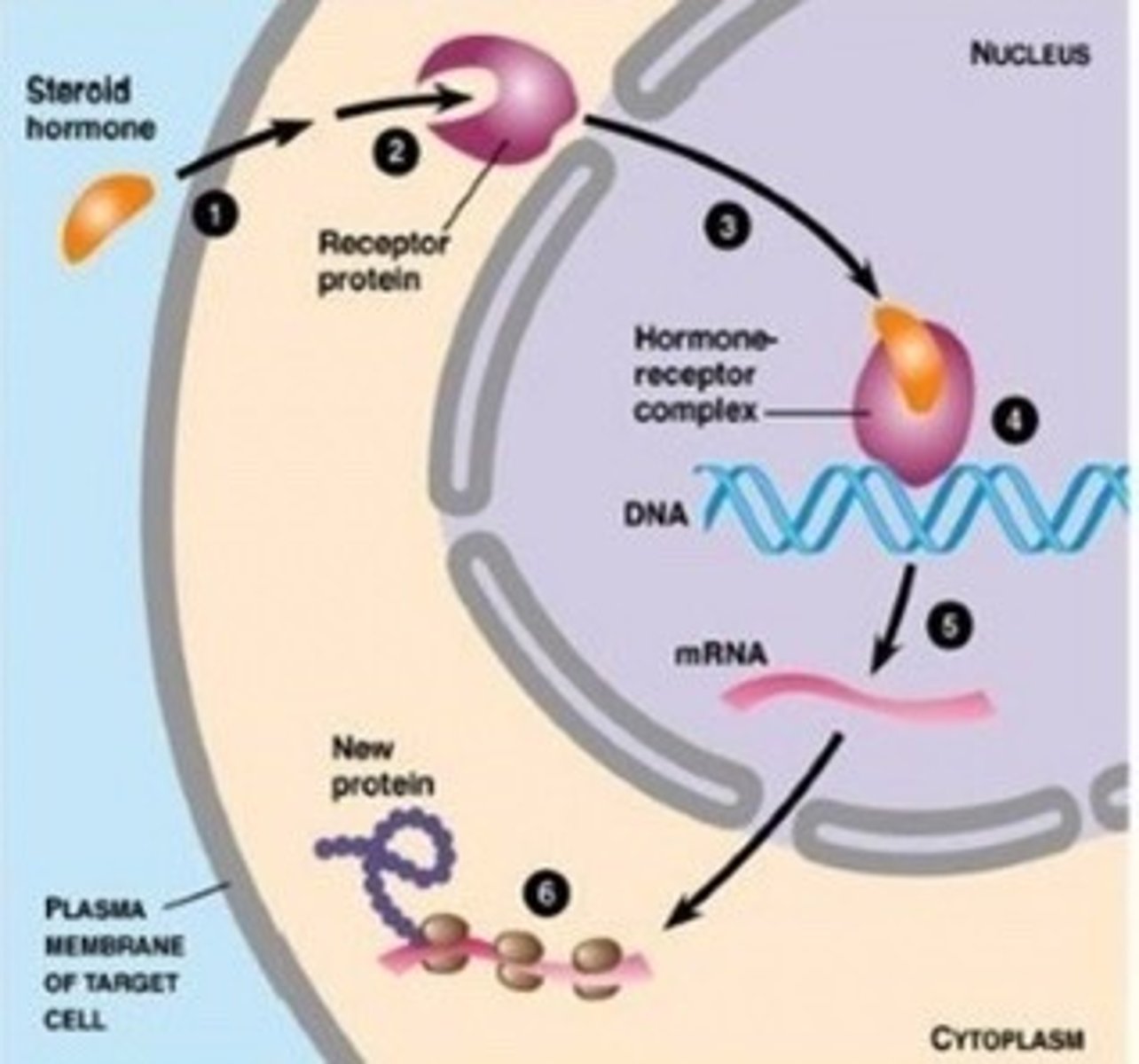
hormones that have __________ receptors also signal via the plasma membrane, and therefore have plasma membrane receptors
nuclear
hormones that have nuclear, and therefore also plasma membrane receptors, have [long/short] term effects
trick question, they have BOTH:
short term (via nuclear receptors)
+ long term effects (via PM receptors)
lipid-soluble hormones are transported in blood bound to ___________
proteins, such as globulins + albumins
what are examples of lipid-soluble hormones?
thyroid hormone,
vitamin D,
steroid hormones
(also mentioned = cortisol, estrogen, progesterone, testosterone)
where are transport proteins (ex. albumin) produced in the body?
liver
what types of hormones, like catecholamines, circulate in the blood UNBOUND to proteins?
hydrophilic hormones
**this is the correction to the mistake he had made that he mentioned**
* explain the general process of protein hormone synthesis
(know locations of each step! they are starred)
1. DNA transcribed to mRNA
2. mRNA is translated into a 'preprohormone', is now in the ER *
3. the signal peptide is removed, and is now a prohormone
4. the prohormone is processed in the golgi * to form = a mature hormone
5. the final hormone is packaged into granules or vesicles *
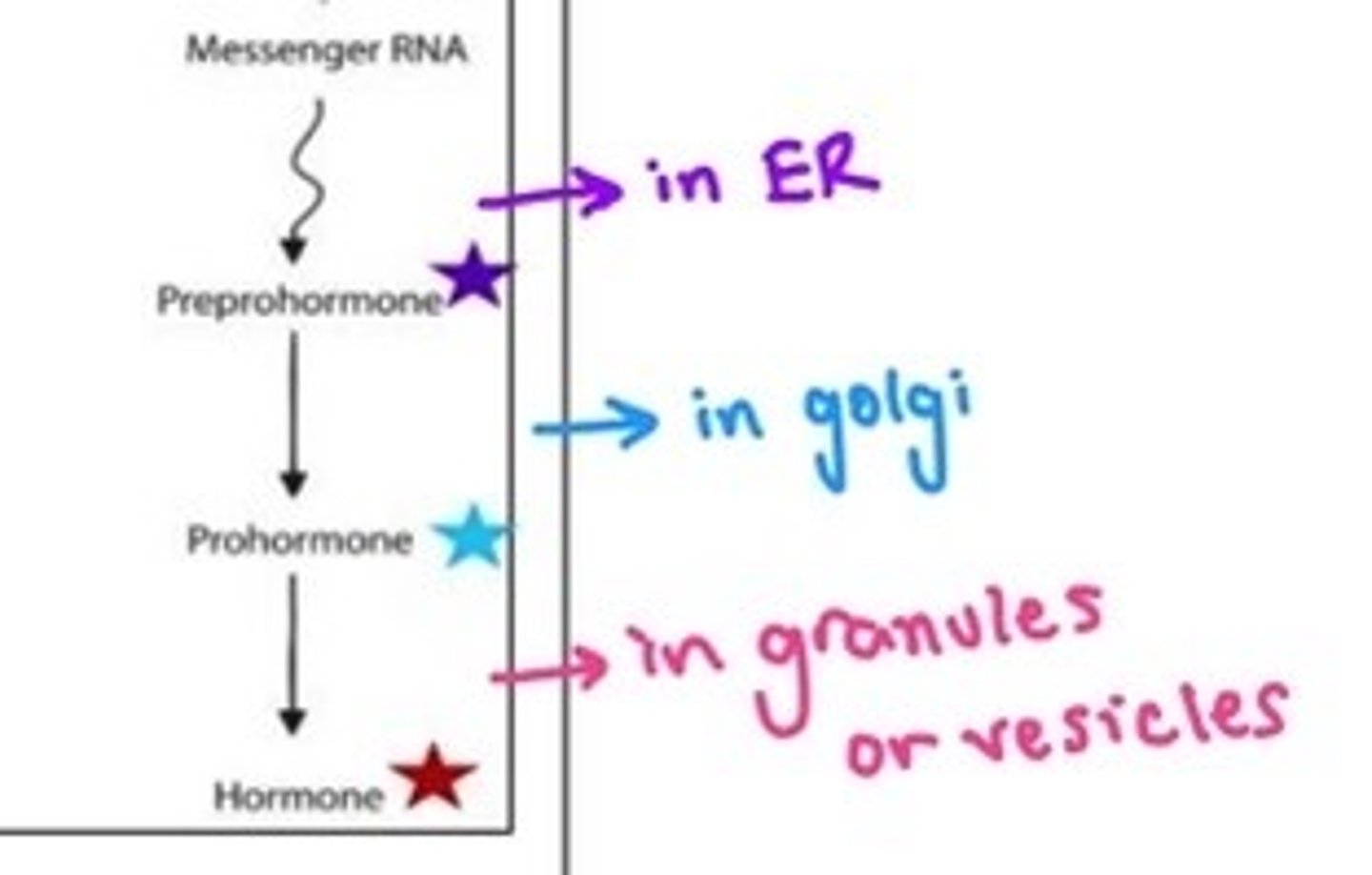
what are common techniques used to determine concentrations of hormones?
involve using specific antibodies = immunoassays (most common)
can also use:
bioassays, colorimetric assays, liquid chromatography, mass spectrometry
the concentration of a hormone is influenced by its _______________
MCR (metabolic clearance rate)
- basically how long it takes for a hormone to be 'cleared' from blood plasma
what are the 3 factors that MCR (metabolic clearance rate) is dependent on?
1. binding to target cell receptors + transport proteins
2. degradation + half-life of hormone
3. excretion of: degradation products or intact hormone --> in bile or urine
where are hormones typically inactivated/ degraded?
liver + kidneys (liver wants to extract things)
how are hormones degraded in the liver?
lipophilic degradation products are conjugated with acids in the liver
what is the formula for MCR (metabolic clearance rate)?
[rate of disappearance] / [plasma hormone concentration]
= plasma clearance (mg / min)
![<p>[rate of disappearance] / [plasma hormone concentration] </p><p>= plasma clearance (mg / min)</p>](https://knowt-user-attachments.s3.amazonaws.com/995ac90d-df0e-4735-adaa-ef678dce2f83.jpg)
the __________ of a hormone is a measure of its effectiveness in inducing a response in its target
potency
what 3 factors influence the potency of a hormone?
1. receptor affinity = how tightly it binds
2. hormone efficacy = how well it activates target response (the level when it induces a measurable effect)
3. half-life of a hormone (inactivation/ degradation + elimination)
what are measurements of 'Half-maximal Concentration' used for?
to compare sensitivities of targets to chemicals that have similar effects
what determines the 'responsiveness' of a hormone?
the magnitude of the tissue's response to the -> maximum concentration of a hormone
what determines the 'sensitivity' of a hormone?
the concentration of a hormone required to attain a 'half-maximal' response from a tissue
ex. a low sensitivity is seen because a higher concentration is needed