Unit 2: Basic Neurology for SLHS
 Call Kai
 Learn
Learn Practice Test
 Spaced Repetition
 Match
Match Flashcards
 Knowt Play
1/79

There's no tags or description
Looks like no tags are added yet.
Name | Mastery | Learn | Test | Matching | Spaced | Call with Kai |
|---|
No analytics yet
Send a link to your students to track their progress
80 Terms
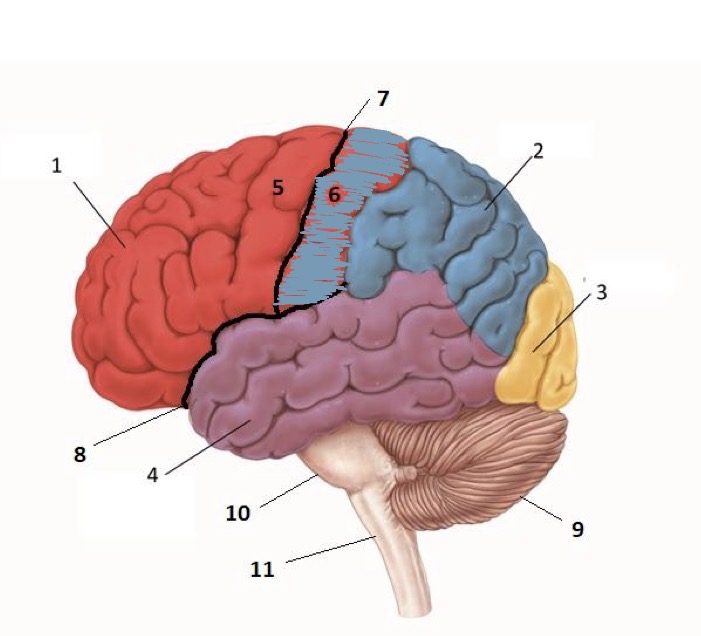
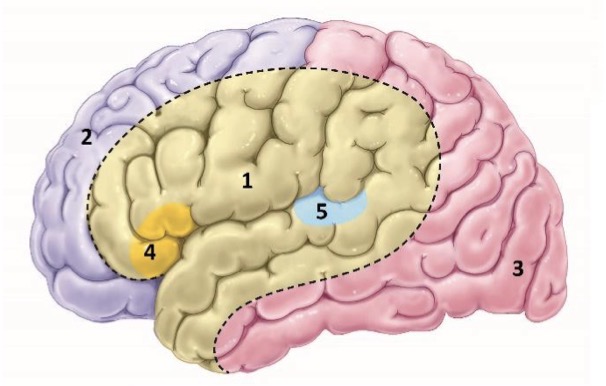
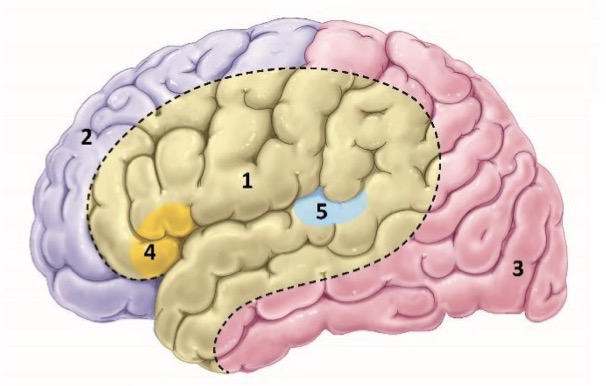
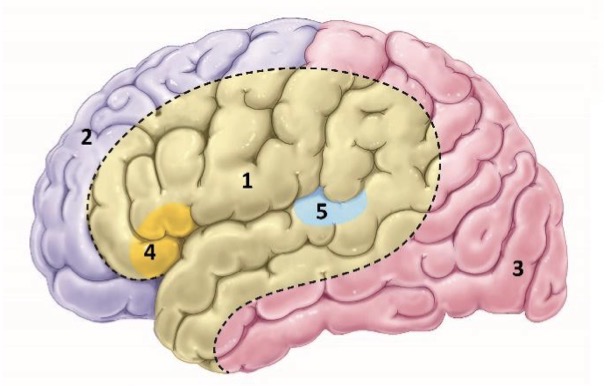
What is 1
Frontal Lobe
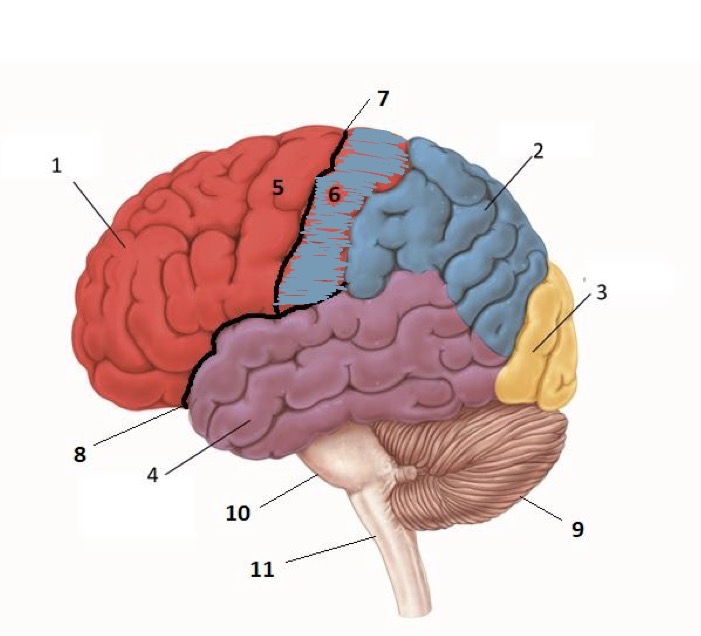
What is 2?
Parietal Lobe
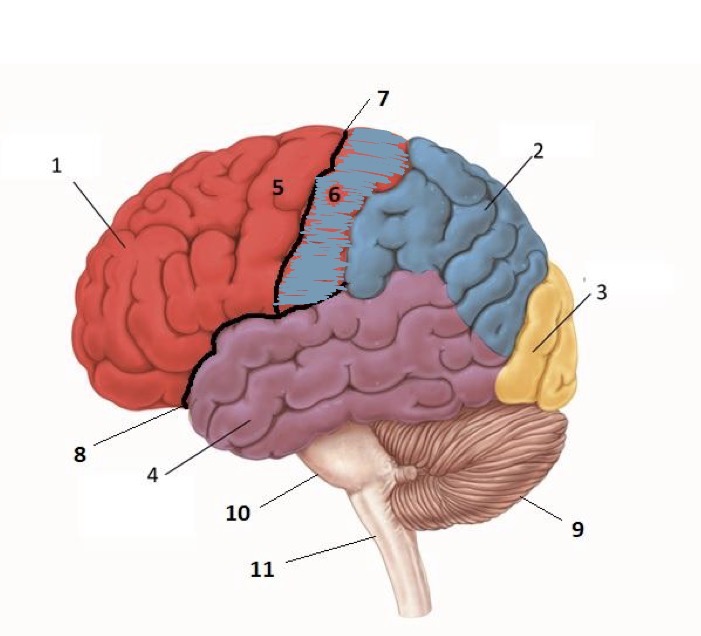
What is 3?
Occipital Lobe
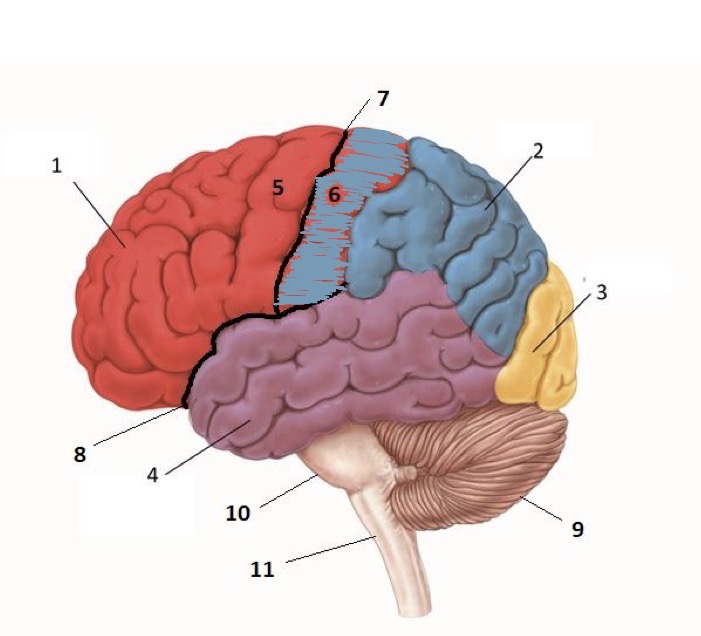
What is 4?
Temporal Lobe
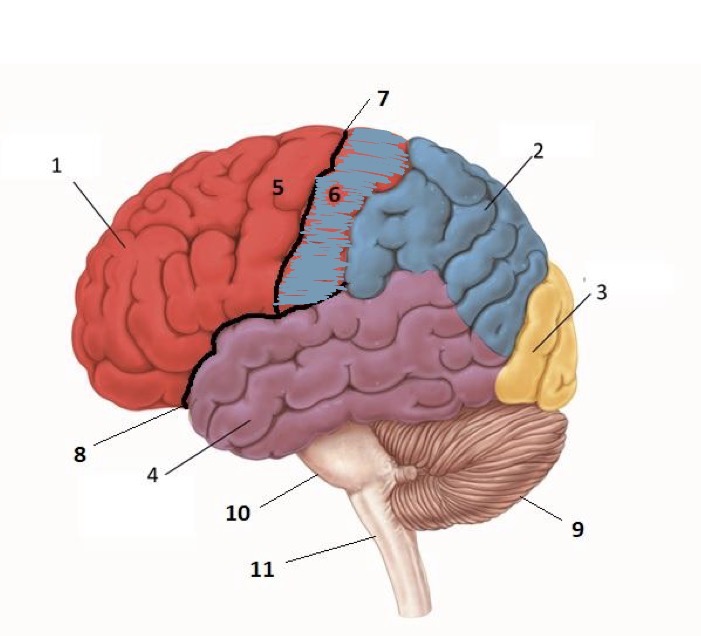
What is 5?
Pre-central Gyrus - Primary Motor Strip
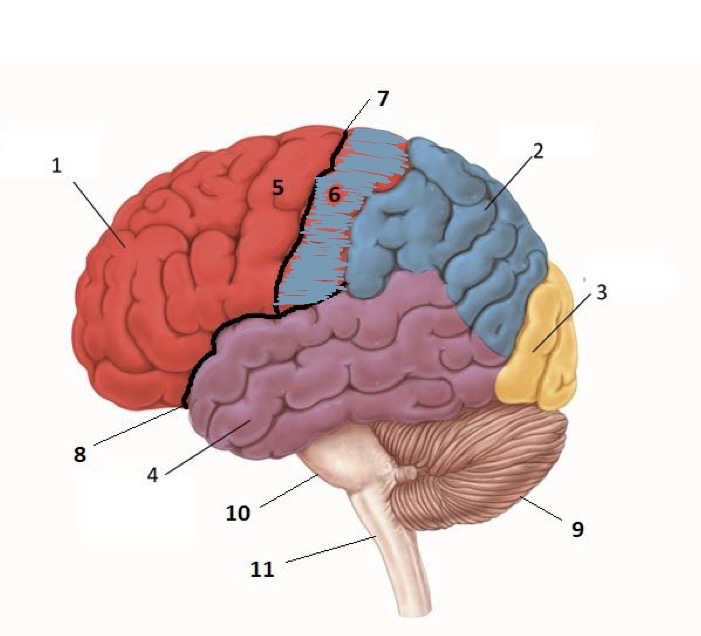
What is 6?
Post Central Gyrus - Somatosensory
What is the frontal lobe responsible for?
Gross motor movements
What is the pre-frontal cortex (part of the frontal lobe) responsible for?
Planning, organization, executive decision-making, problem solving, reasoning, judgement
What is the parietal lobe responsible for?
Sensory information (touch, pressure, pain, temperature)
What is the occipital lobe responsible for?
Receiving and interpreting visual information
What is the temporal lobe responsible for?
Processing auditory information, memory formation, and declarative memories
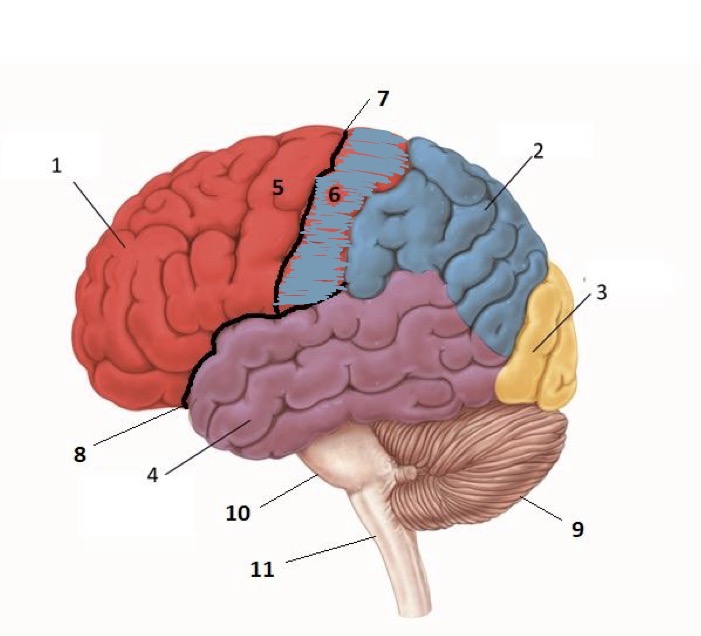
What is 7?
Central Sulcus/Fissure of Rolando
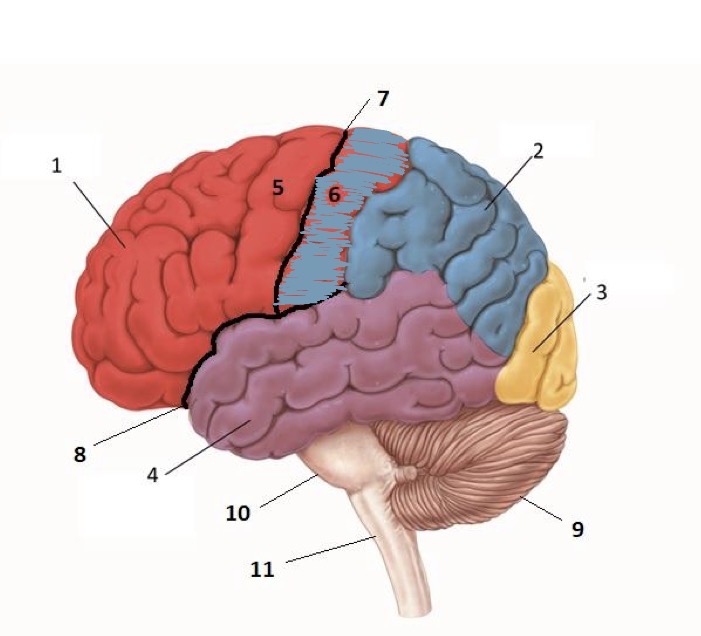
What is 8?
Lateral Fissure/Sylvian Fissure
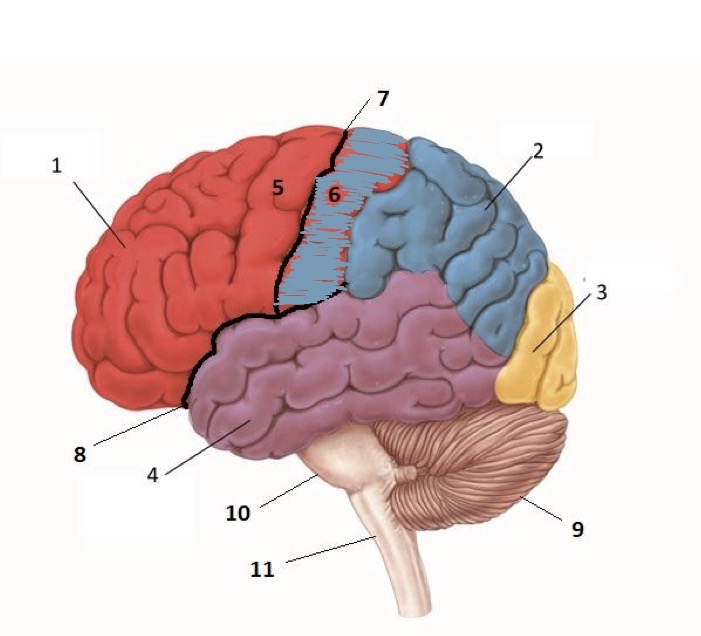
What is 9?
Cerebellum
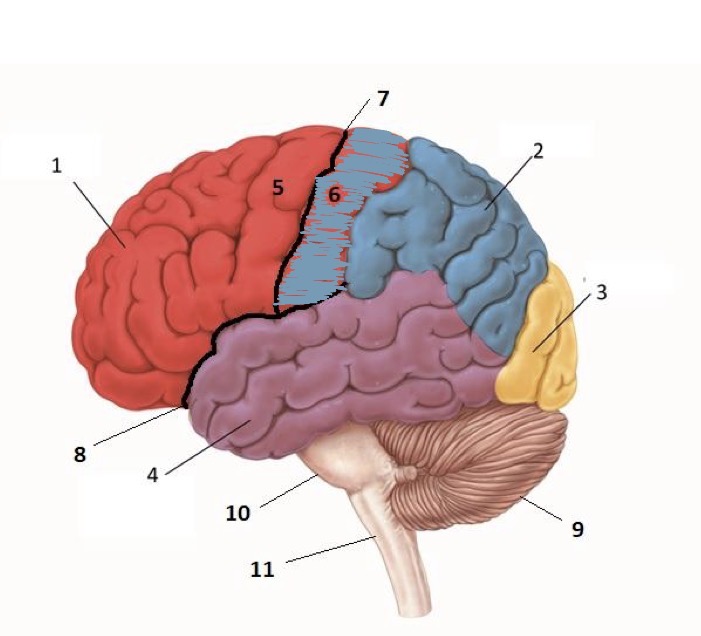
What is 10?
Pons
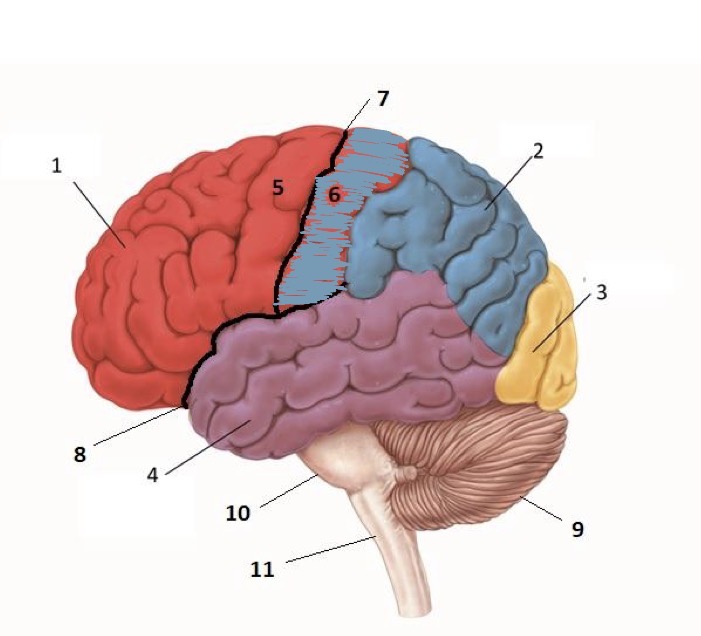
What is 11?
Brainstem (midbrain, pons, medulla)
What basal ganglia disorder has to do with hypokinetic movement?
Parkinson’s Disease
What basal ganglia disorder has to do with hyperkinetic movement?
Huntington’s Disease
What is CN 1?
Olfactory
What is CN 2?
Optic
What is CN 3?
Oculomotor
What is CN 4?
Trochlear
What is CN 5?
Trigeminal
What is CN 6?
Abducens
What is CN 7?
Facial
What is CN 8?
Vestibulocochlear
What is CN 9?
Glossopharyngeal
What is CN 10?
Vagus
What is CN 11?
Accessory
What is CN 12?
Hypoglossal
What is the olfactory nerve responsible for?
Smell
What is the optic nerve responsible for?
Vision (sense of light)
What is the oculomotor nerve responsible for?
Eye movement and pupil constriction
What is the trochlear nerve responsible for?
Eye movement
What is the trigeminal nerve responsible for?
Movement of jaw, sensation in face, scalp, and teeth, mastication muscles
What is the abducens nerve responsible for?
Eye movement
What is the facial nerve responsible for?
Muscles of facial expression, anterior 2/3 of the tongue, salivation
What is the vestibulocochlear nerve responsible for?
Hearing and balance (sense of equilibrium)
What is the glossopharyngeal nerve known for?
Movement of pharyngeal muscles, salivation, and taste on posterior 1/3 of tongue
What does “glossal” mean?
Tongue
What is the vagus nerve responsible for?
Elevates the velum, movement of vocal folds, and sensation and movement of heart, lungs, larynx, pharynx, and GI tract
What is the accessory nerve responsible for?
Movement of neck and shoulder muscles
What is the hypoglossal nerve responsible for?
Movement of the tongue
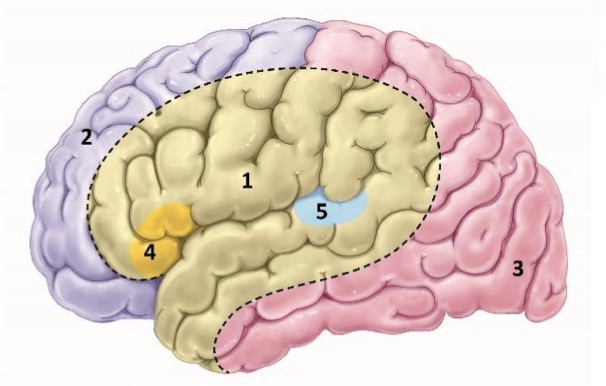
What is area 4?
Broca’s Area
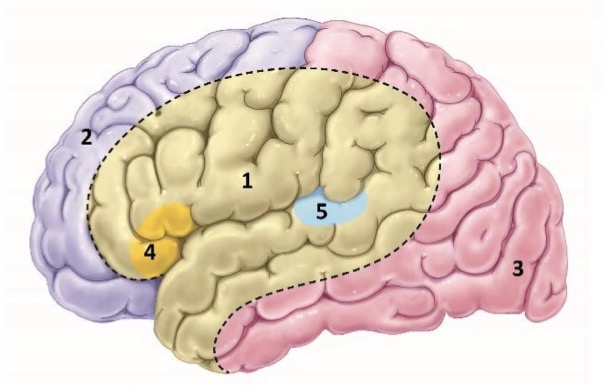
What is Area 5?
Wernicke’s Area
What is Wernicke’s area responsible for?
Language comprehension
What is Broca’s Area responsible for?
Language production
What type of aphasia may occur due to damage to Broca’s Area?
Non-fluent aphasia
What type of aphasia may occur due to damage of Wernicke’s Area?
Fluent aphasia
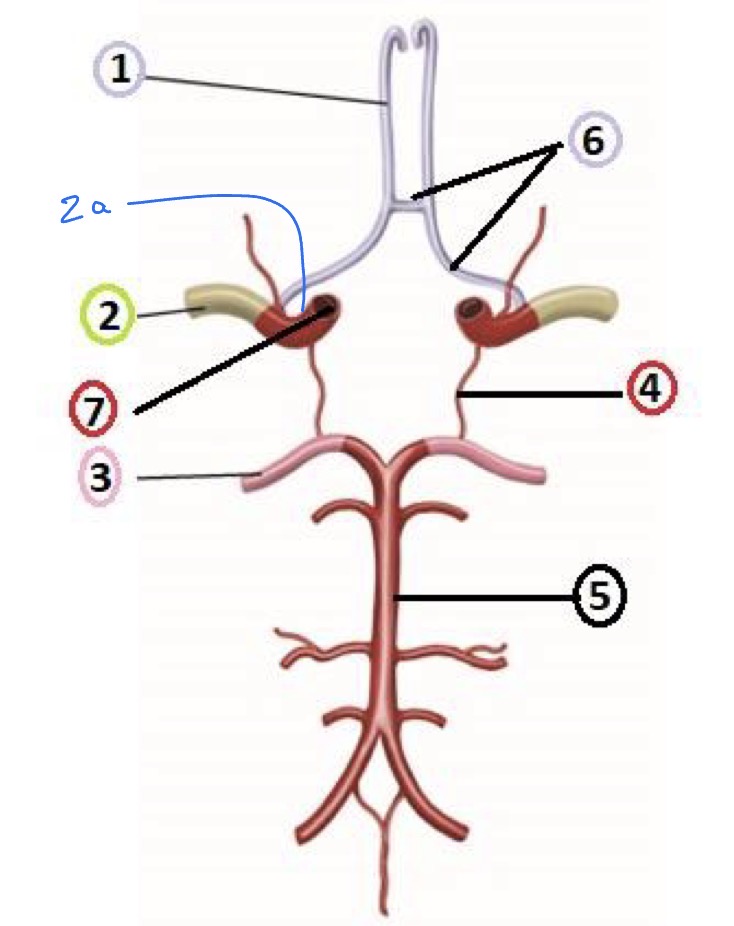
What is 1?
Anterior Cerebral Artery (ACA)
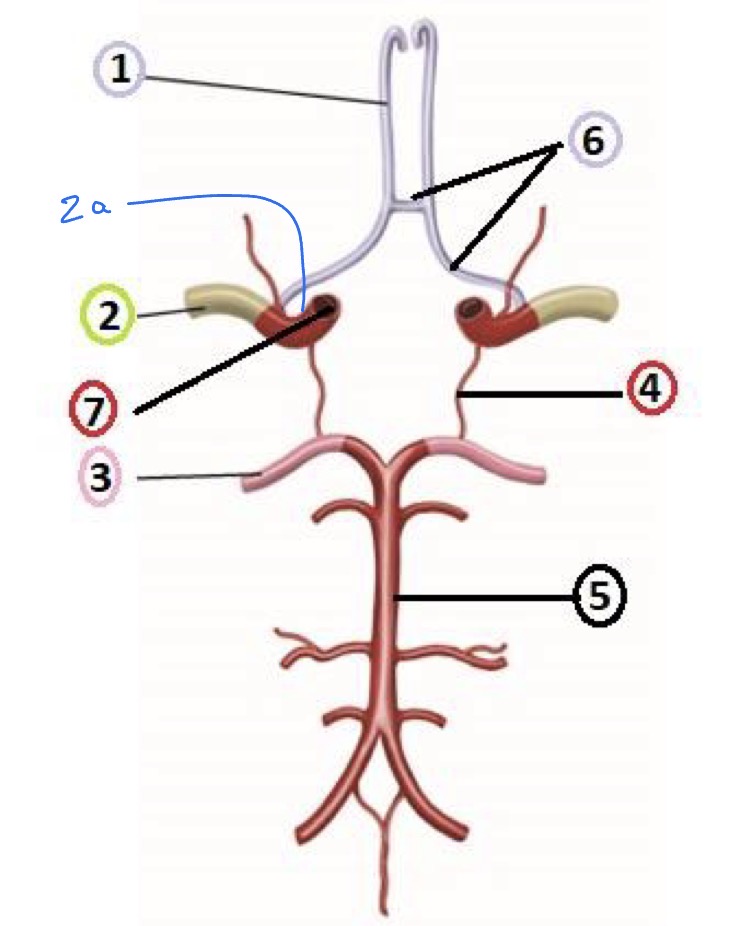
What is 2?
Middle Cerebral Artery (MCA)
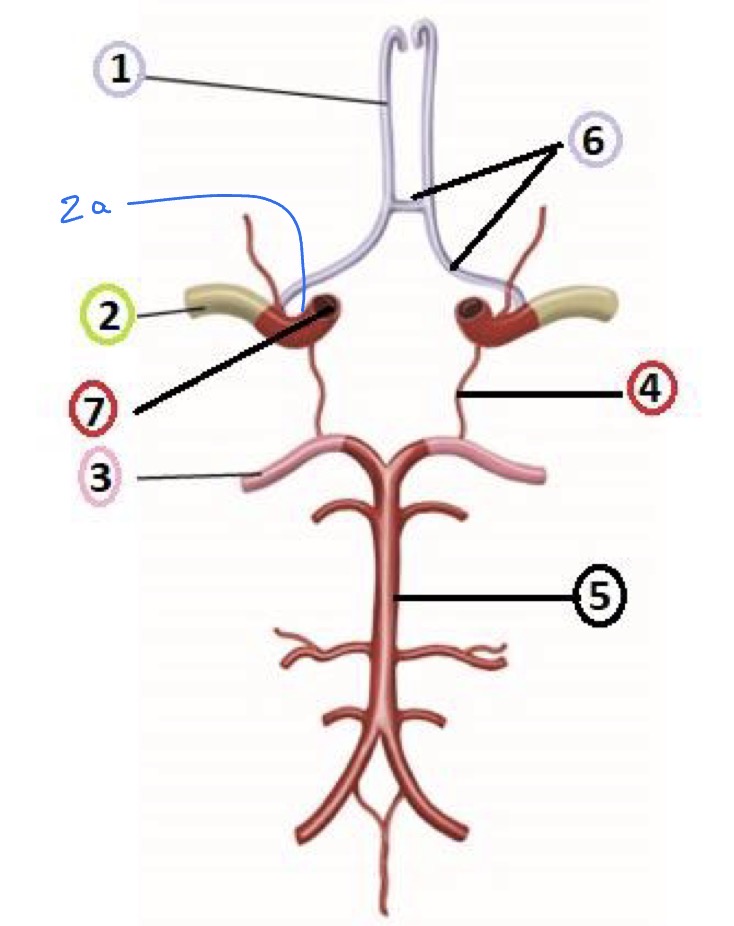
What is 7?
Internal Carotid Artery
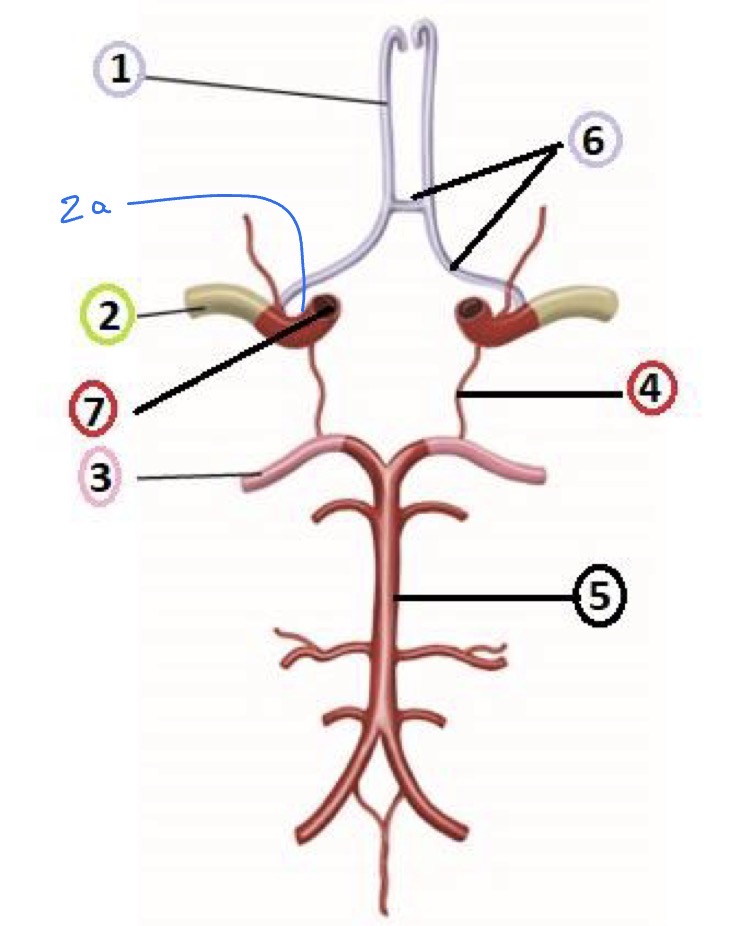
What is 3?
Posterior Cerebral Artery (PCA)
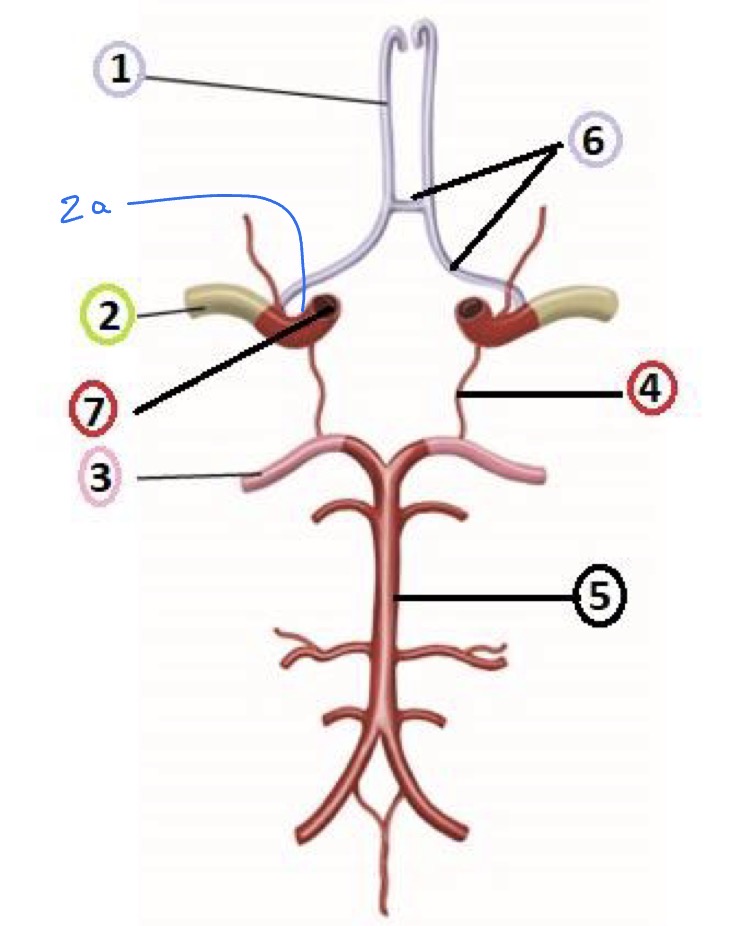
What is 4?
Posterior Communicating Artery
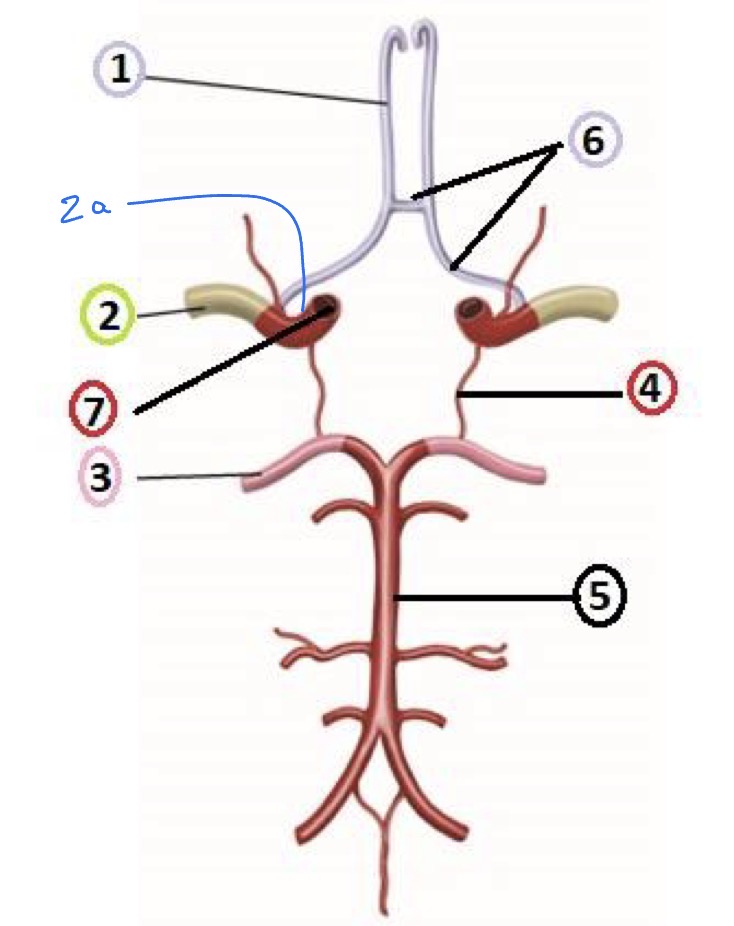
What is 5?
Basilar Artery
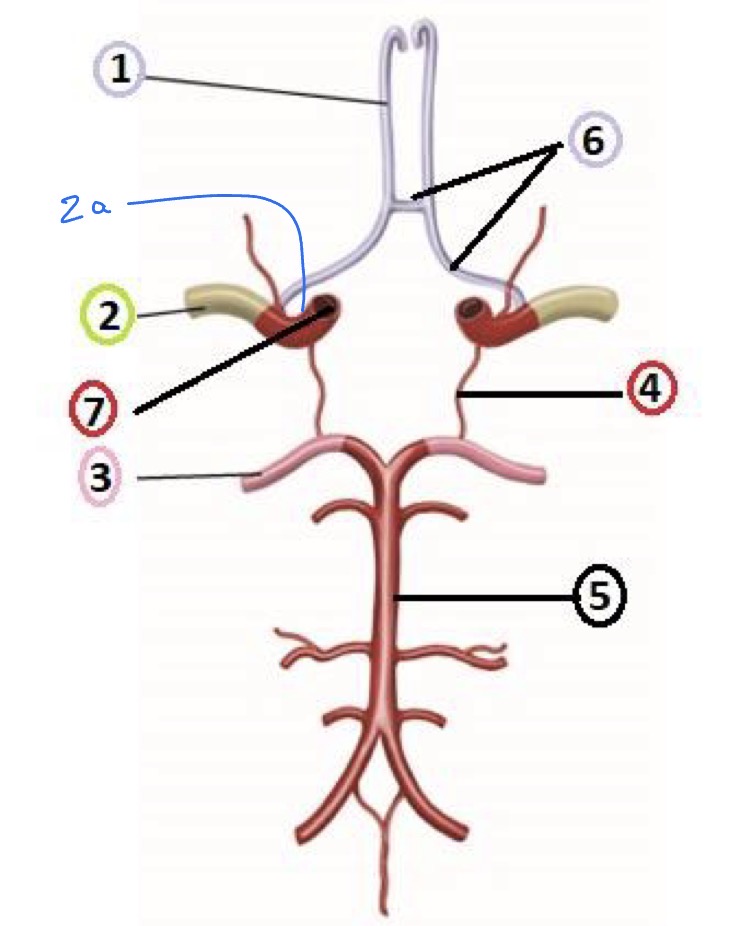
What is 6?
Anterior Communicating Artery
What blood flow distribution is 1?
The MCA
What blood flow distribution is 2?
ACA
What blood flow distribution is 3?
PCA
What is the top layer of meninges?
Dura Matter
What is the middle layer of meninges?
Arachnoid Matter (spiderwebby)
What is the deepest layer of meninges?
Pia Matter
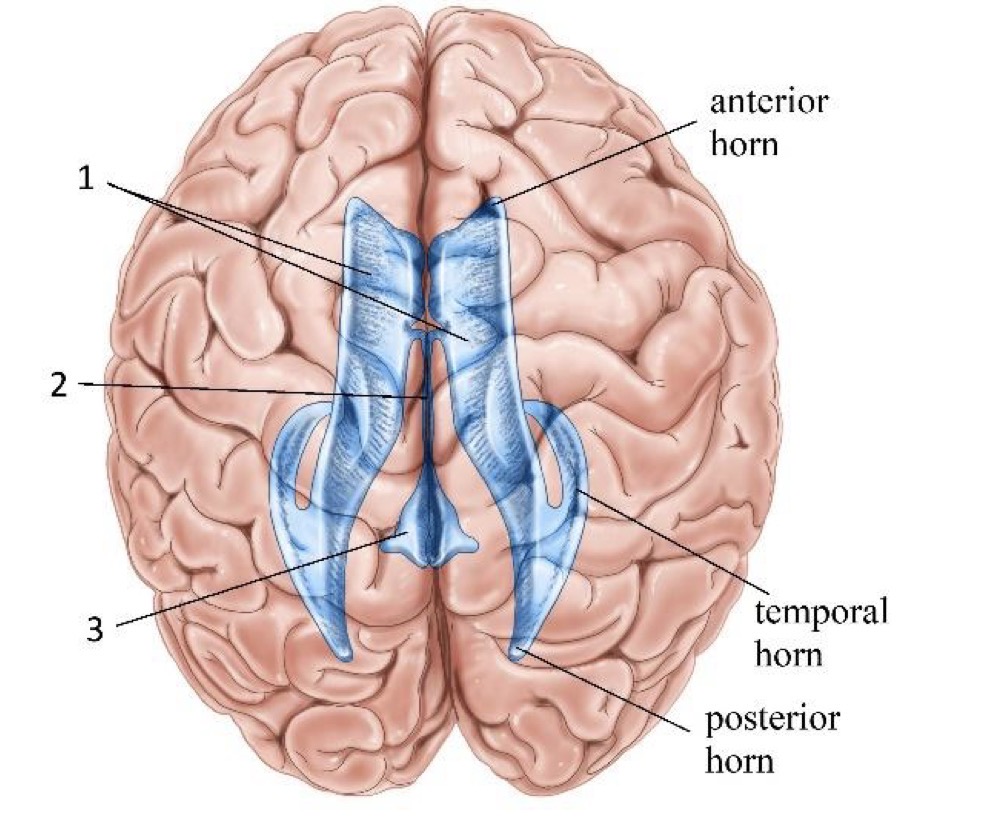
Which ventricle is 1?
Lateral Ventricles
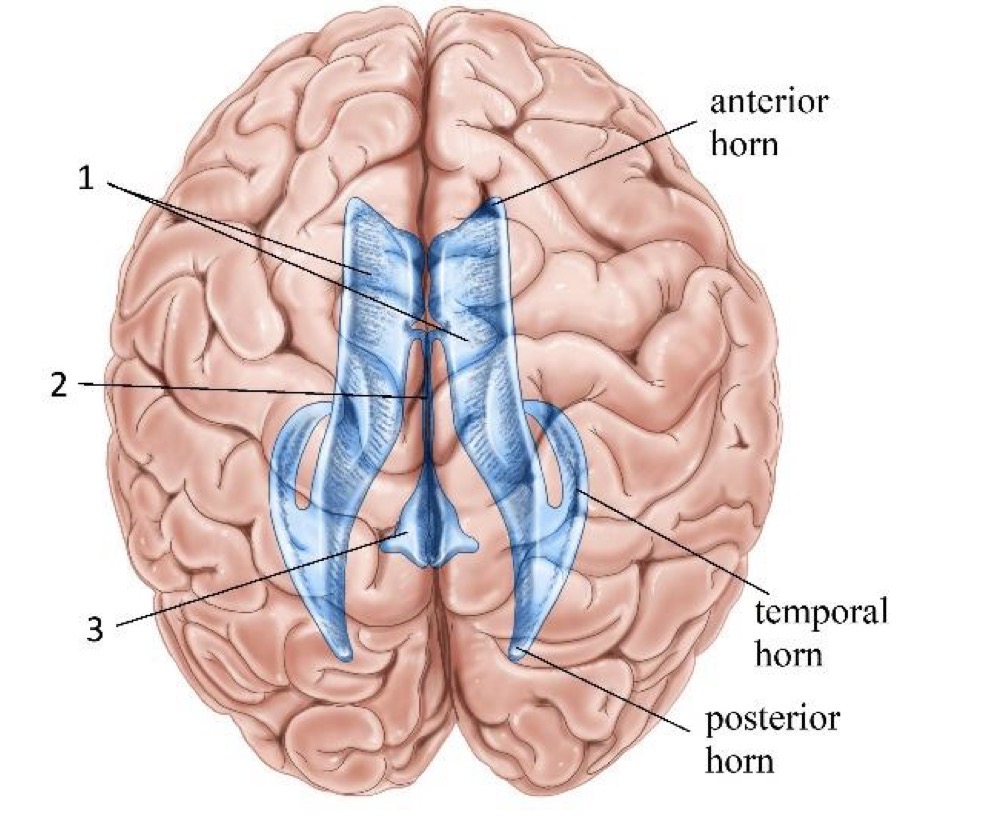
Which ventricle is 2?
Third Ventricle
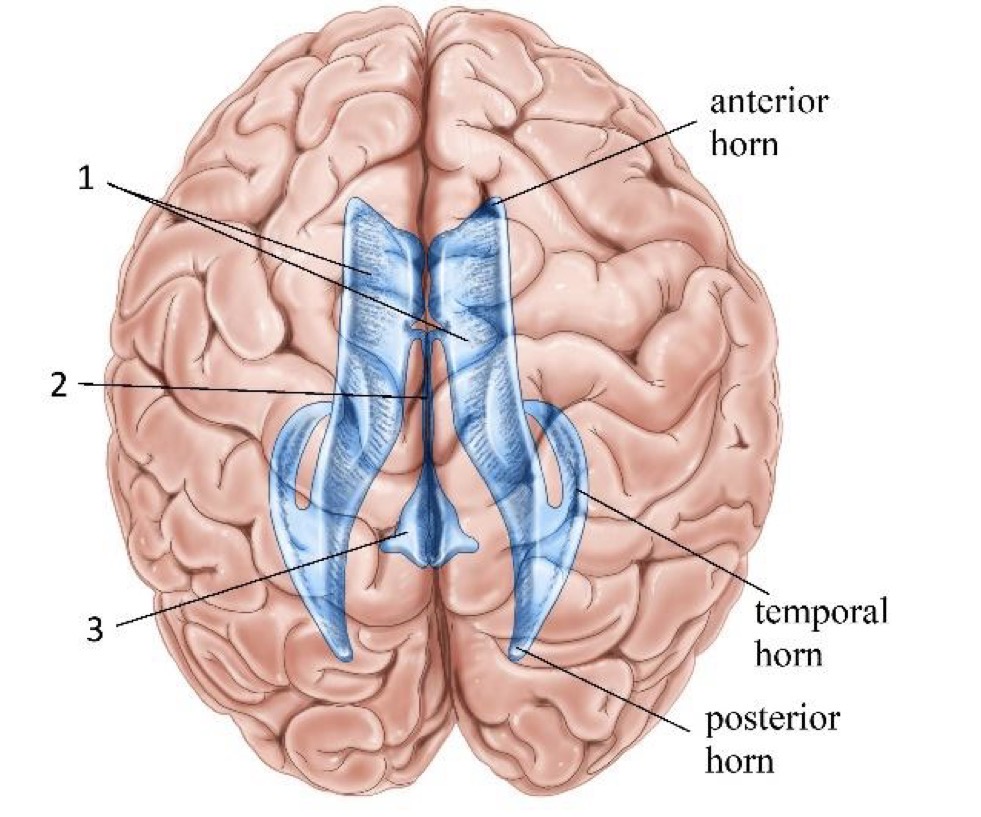
Which ventricle is 3?
Fourth Ventricles
What are the functions of CSF?
bouancy, spatial buffering, excretion of waste, providence of nutrients
What nerves are part of the corticobulbar tract?
motor signals that exit through the brainstem
Describe a motor tract
Motor strip to UMN (travels down) cross over at medulla pyramids to LMN to neuromuscular junction to muscle
Which parts of the brain are associated with movement disorders?
Basal Ganglia or cerebellum
Describe a sensory pathway
Skin receptor to PAN (peripheral afferent neuron) to CAN (central afferent neuron) to sensory strip
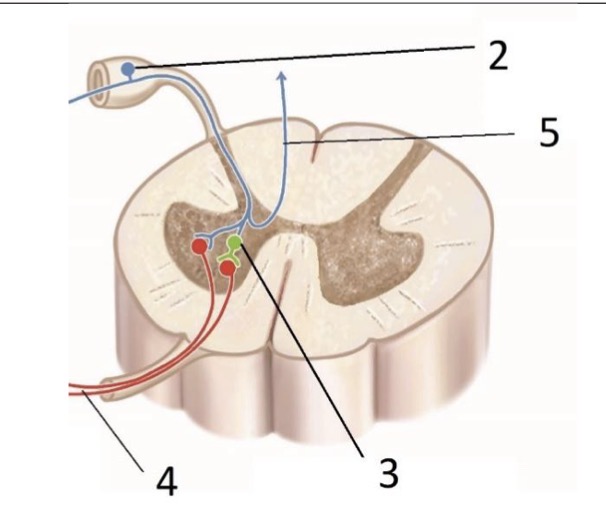
What is 2?
Sensory nerve
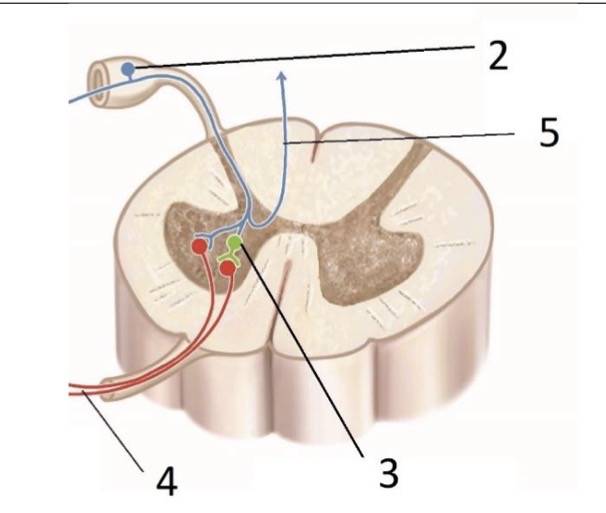
What is 3?
Interneuron
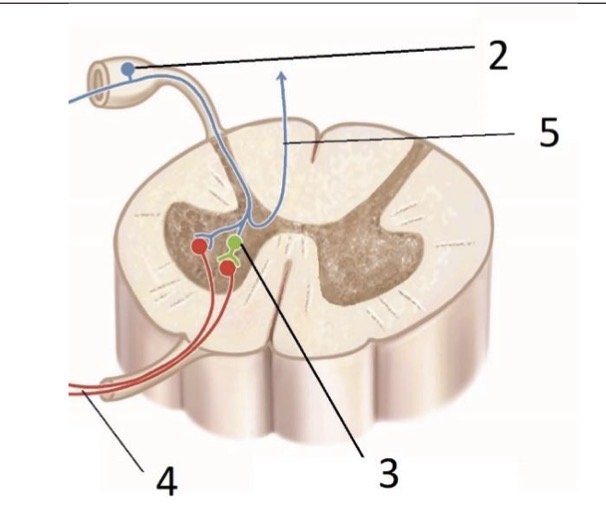
What is 4?
LMN
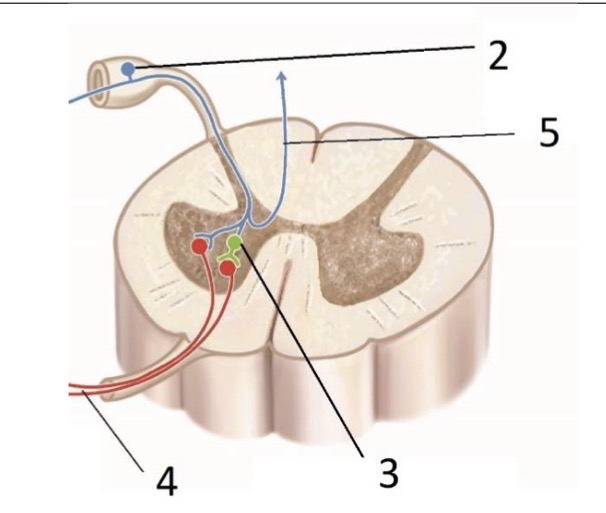
What is 5?
CAN - goes to brain to modulate
What are the two motor tracts?
Corticobulbar and corticospinal
What are the two sensory pathways?
Medial leminscus and anterolateral
What does the medial lemniscus pathway process?
Touch and vibration
What does the anterolateral pathway process?
Deep pain and temperature
What may hyperactive reflexes be indicative of?
UMN damage - decreased modulation
What may less active reflexes be indicative of?
LMN damage