nutritin ans 230 new material for final
 Call Kai
 Learn
Learn Practice Test
 Spaced Repetition
 Match
Match Flashcards
 Knowt Play
1/58

There's no tags or description
Looks like no tags are added yet.
Name | Mastery | Learn | Test | Matching | Spaced | Call with Kai |
|---|
No analytics yet
Send a link to your students to track their progress
59 Terms
The 7 Feed Classifications
1. Dry Forages and Roughages
2. Pasture and Silage
3. Energy Feeds
4. Protein Feeds
5. Minerals
6. Vitamins
7. Additives
Energy Feeds (What do they consist of, what % of CP , CF, & CW)
Starches and fats (All cereal grains & sorghums)(By product feeds)
< 20% CP, <18% CF or < 35% CW
may be ensiled
Carbonaceous
Protein/N Supplements % of CP required
At least 20% CP
Plant protein sources examples
Soybean Meal
Cottonseed Meal
Corn Gluten Meal
Brewer’s Dried Grains
Animal protein sources examples
meat & bone meal
Fish meal
Whey protein
Poultry meal
Fibrous Feeds; dry forages & roughages
Fresh, dried or ensiled
Includes the leaves, stems and stalks
Used to describe the whole plant
Pasture, hay and silage
Low in energy (per unit weight) due to high CW
Forgaes: pasture
• Must be fenced
• Used while actively growing
• Harvested by livestock
• ‘GreenChop’
Forages: silage
• Ensiled forage
• Corn, Alfalfa, Grass
% DM in hay
82-85%
% of DM in high-moisture silage
At most 30%
% of DM in medium-moisture silage
30-40% DM
% of DM in low-moisture silage
40-60% DM
haylage, baleage, wilted
When is hay harvested and how is it preserved
Hay is harvested during growing period and preserved by drying.
Main objective of hay (moisture content & why)
• Reduce moisture content to 15 – 18%.
• Low moisture retards enzymatic and microbial degradation during storage.
Steps of making hay (1-6)
Mowing
Macerate
Tedding
Raking
Bailing
Hauling & stacking
Making hay: step 1
Mowing
cut hay at the right time.
3-5 days of sunny weather.
Mower conditioner - cuts the grass and feeds it through rubber rollers that crimp, or condition, the grass. The crimping process breaks the stalk open, allowing the moisture to better evaporate. The mower conditioner drops the grass in windrows.
Making hay: step 2
Macerate - “Super Condition”
Crimps forage every 1/8 inch (mower crimps every 4 inches)
Dries faster
Making hay: step 3
Tedding
Takes hay out of windrows and spreads flat across the field.
Allows forage to dry faster.
Making hay: step 4
Raking
Usually takes 3-4 days to dry.
Raking moves forage back into windrows, or to turn over the drying windrows.
It is then ready to be picked up by the baler
Making hay: step 5
Bailing
watch moisture content
Making hay: step 6
Hauling and Stacking
Bales are loaded onto wagons and hauled to a storage location.
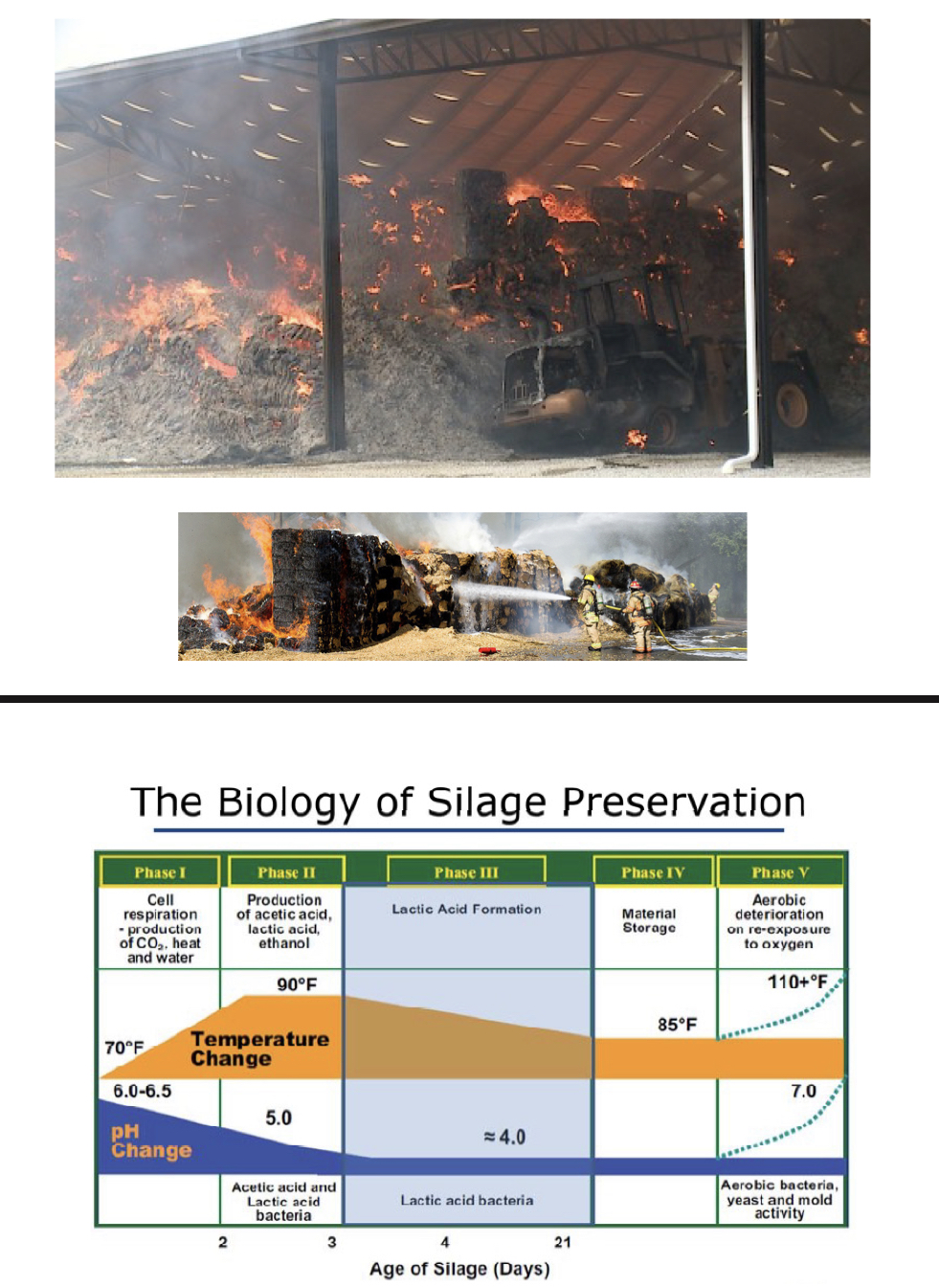
Spontaneous combustion of hay
Moisture causes bacteria to grow
How can feed be stored
Bunker silos
Tower silos
Pressed or ag bags
Nutrient loss during hay preparation (respiration, raking/bailing, storage, feeding, remaining)
Respiration 5 - 10%
Raking/Baling 10 to 15%
Storage 5 to 10%
Feeding 5 - 10%
55-70% Remaining
What determines forage quality?
Palatability
smell, feel and taste & texture
Nutrient content
chemical analysis
Digestibility
Animal Performance
Intake
How much will the animals eat?
Anti-quality factors of forage
tannins, nitrates, alkaloids, mycotoxins
species, time of year, environment
What determines animal performance in regards to forage
- final test of forage quality
- nutrient content, digestibility and intake
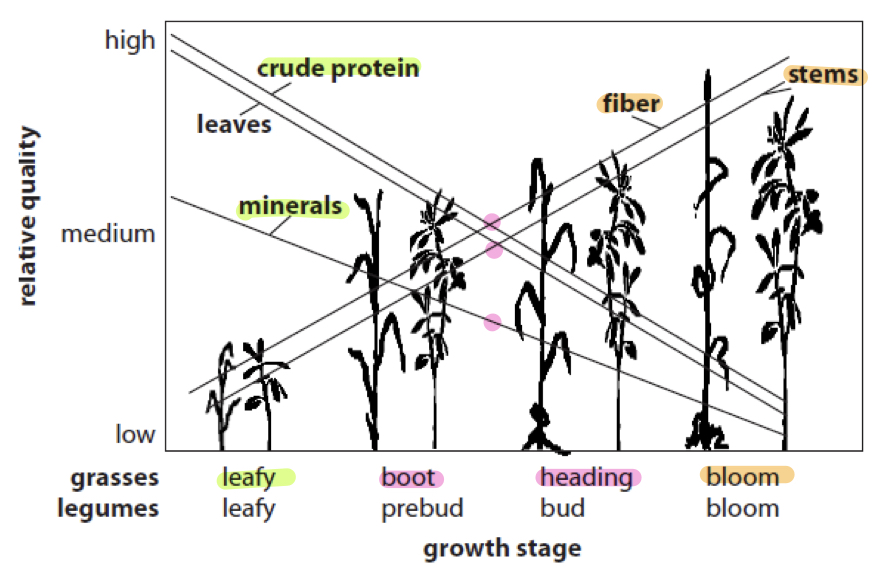
how plant maturity affects CP, minerals, & fiber intake
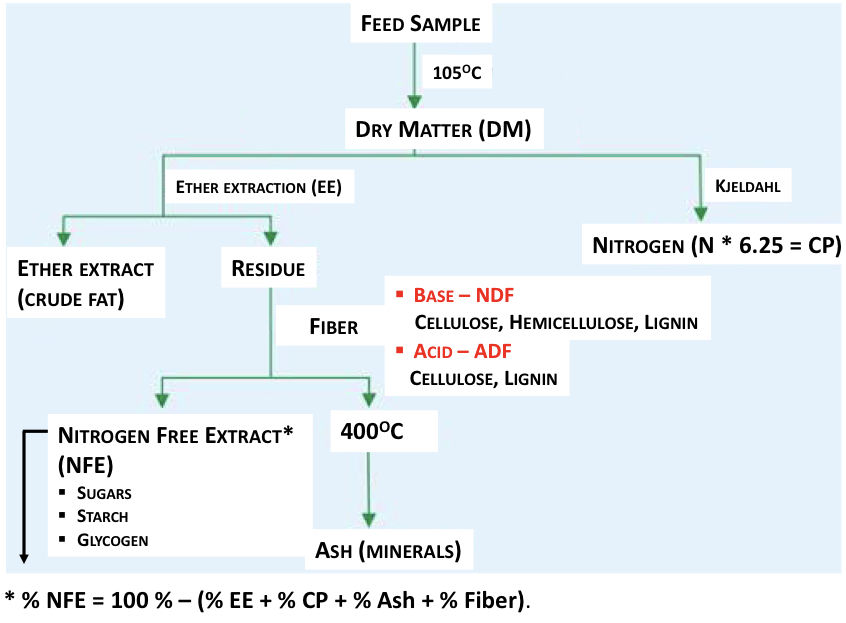
What does crude fiber contain
Cellulose & a portion of lignin
What does ADF contain
Cellulose & lignin
What does NDF contain
Hemicellulose, cellulose, & lignin
What are the cell wall contents
Non-fibrous carbohydrates (simple sugars, starches, & fructosans), proteins, & lipids
What is the protein in forages comprised of?
True protein & NPN compounds
How much I the global feed ind. worth in 2026
$460.32 billion
IMPORTANCE OF ACCURATE FEED ANALYSIS
Feed costs and Production.
Animal Nutrient Requirements.
Safety and Food Quality.
Efficiency and Animal Health.
Environment.
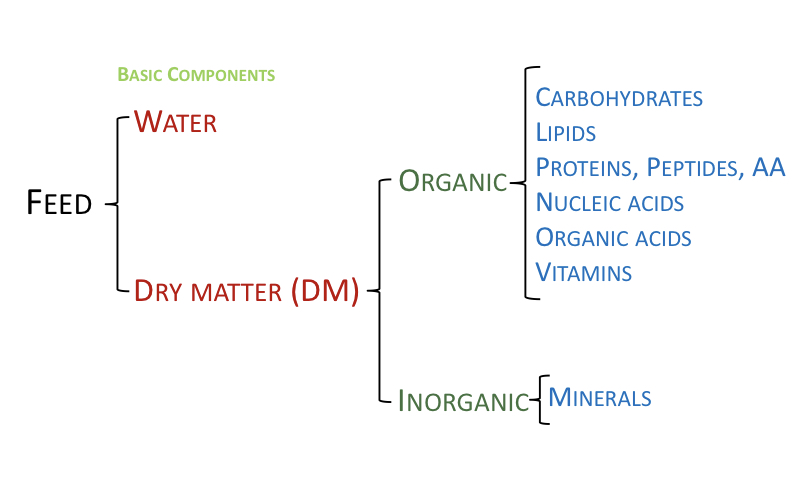
Composition of feedstuff (chart)
Proximate analysis & van soest detergent system
Total Digestible Nutrients (TDN) formula
% = (0.50 x %Fiber) + (0.90 x %NFE) + (0.75 x %CP) + (2.25 x 0.90 x %EE)
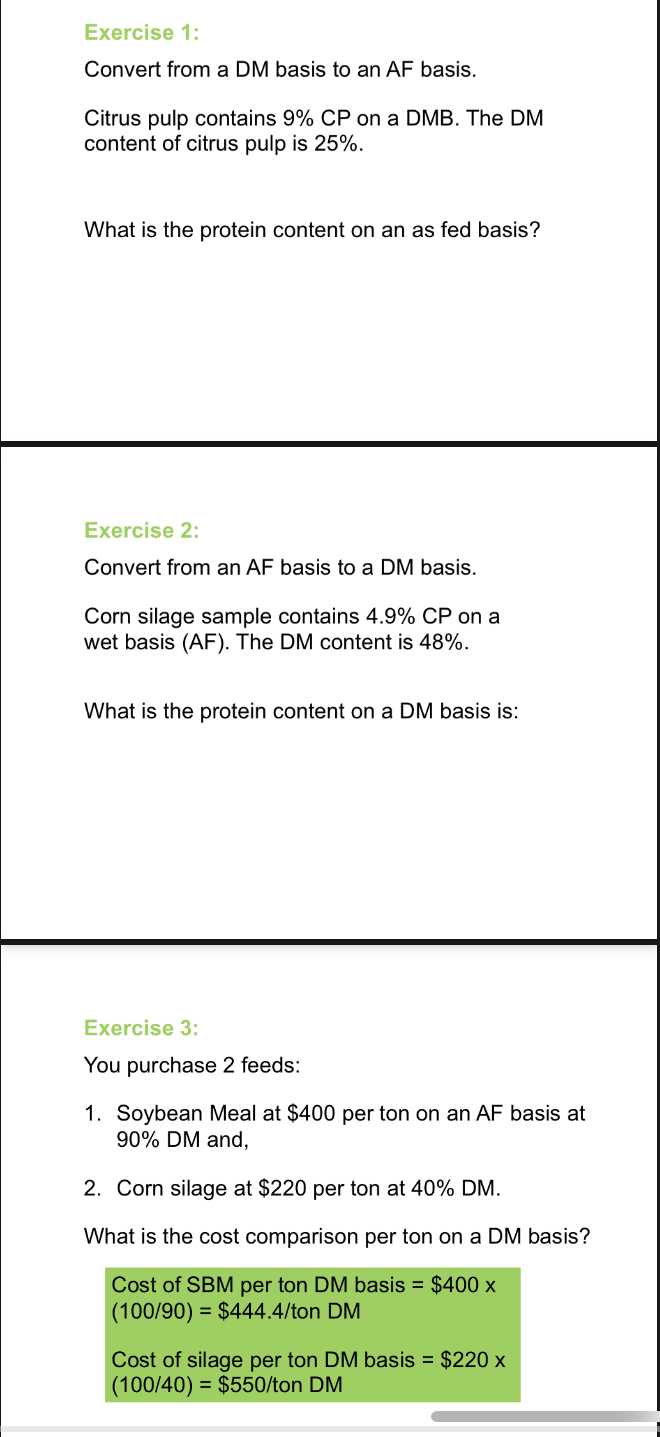
AF vs DM for concentration
The concentration of a nutrient is greater when expressed on a 100% dry matter basis.
Math practice
Dog vs cat diet classification
Dog: omnivore (more developed cecum)
Cat: obligate carnivore (less developed cecum)
Dog vs cat intestinal length
Dog: Longer intestinal length, BS ratio (6:1)
Cat: smaller intestinal length, BS ratio (4:1)
Dog vs cat stomach anatomy
Dog: Distinct proximal and distal compartment
Cat: Uniform gastric mucosa
Cat vs dog absorptive capacity (SI)
Dog: lower
Cat: higher
Dog vs cat SA:BW ration
Dog: lower ratio
Cat: higher ratio
Why do Dog and Cat’s saliva differs from humans?
lack salivary amylase
Dog oral digestion (how many teeth?)
Dogs tend to swallow with minimal chewing.
have 12 incisors and 4 canine
Dogs have more premolars & molars
Dogs have 42 permanent teeth
Cat oral digestion (how many teeth?)
12 incisors and 4 canine
30 permanent teeth
What kind of diet do Cats tend to select for?
low starch diet
Dog vomiting
common in dogs. Effective defense mechanism to expel toxins from the gut.
How dogs vs cats prefer to eat
Dogs are “meal” feeders. Cats tend to be “snack” feeders.
How can dogs expand their stomachs for storage?
Proximal stomach in dogs capable of expansion for temporary storage.
What enzyme does cats rely on
Pepsin (for collagen digestion)
how come dogs can adapt to high lvls of starch more rapidly than cats?
Pancreatic amylase – 3x higher in the dog than the cat. Hence dogs adapt to high levels of dietary starch more rapidly than cats.
Cats exhibit lower activity of the brush border enzymes. Hence cats can only tolerate starch levels up to 4 g/kg bodyweight before diarrhea results; dogs can consume up to 2.5 times that level without any side-effects.
Variability in feeding dogs
Due to drastic size differences
Maintenance energy requirements may range from 110 to ~4,000 kcal/d.
Energy use correlated with surface area.
Surface area per unit weight decreases with size.
Energy requirements and Metabolic BW – BW0.67-0.88
Variability in feeding cats
Energy requirements less variable
Breed differences in cats much smaller
Weight ranges 3 – 10 kg
Growth curves consistent
Individual energy reqs may vary by 50% or more above or below average reqs.
How does neutering affect the amount of calories needed by cats & dogs?
Reduces calories need by 25% for digs & 24-33% in cats
Glucokinase In cats?
Glucokinase & Hexokinase in cats?
Glucokinase is virtually absent
Hexokinase has optimal activity at low glucose
concentrations. (Phosphorylated & metabolized for energy)
This is consistent with high protein and low carb diets. (Carnivores)
Bc carbs normally become glucose in non-carnivores