RP10a: Preparing a pure organic solid and testing its purity
 Call Kai
 Learn
Learn Practice Test
 Spaced Repetition
 Match
Match Flashcards
 Knowt Play
1/16

There's no tags or description
Looks like no tags are added yet.
Name | Mastery | Learn | Test | Matching | Spaced | Call with Kai |
|---|
No analytics yet
Send a link to your students to track their progress
17 Terms
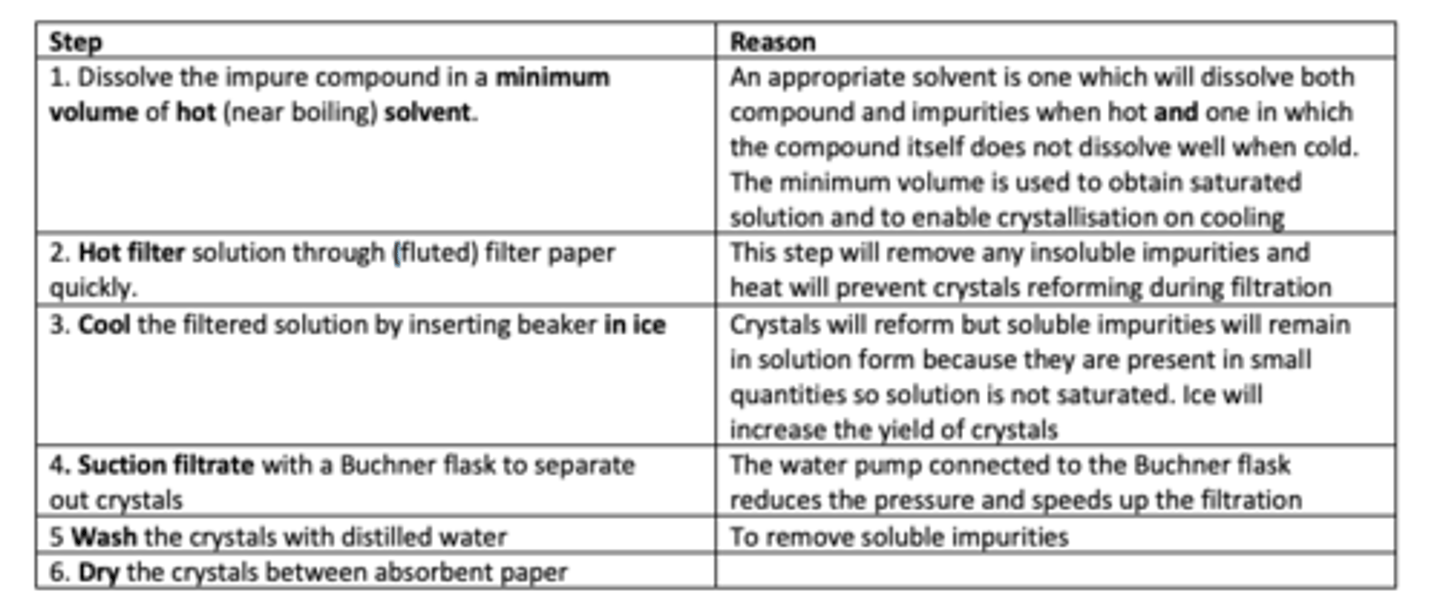
What is the overall method of recrystallisation in this method i.e. part a? (6)
What is the overall method of measuring melting point in this method to determine purity i.e. part b? (2)

What is the first step in recrystallisation? (1)
Dissolve the impure compound in a minimum volume of hot (near boiling) solvent
Why is a minimum volume of hot solvent used in recrystallisation? (2)
- To obtain a saturated solution.
- To enable crystallisation on cooling.
Why should the solution be filtered hot through fluted filter paper? (1)
To remove any insoluble impurities and prevent crystals from reforming during filtration
How is the solution cooled after filtration in recrystallisation? (1)
By inserting the beaker in ice
Why is the recrystallised solution cooled in ice? (2)
- To encourage crystal formation.
- Soluble impurities remain in solution as they are present in small quantities
How are crystals separated from the filtrate? (1)
By suction filtration using a Buchner flask
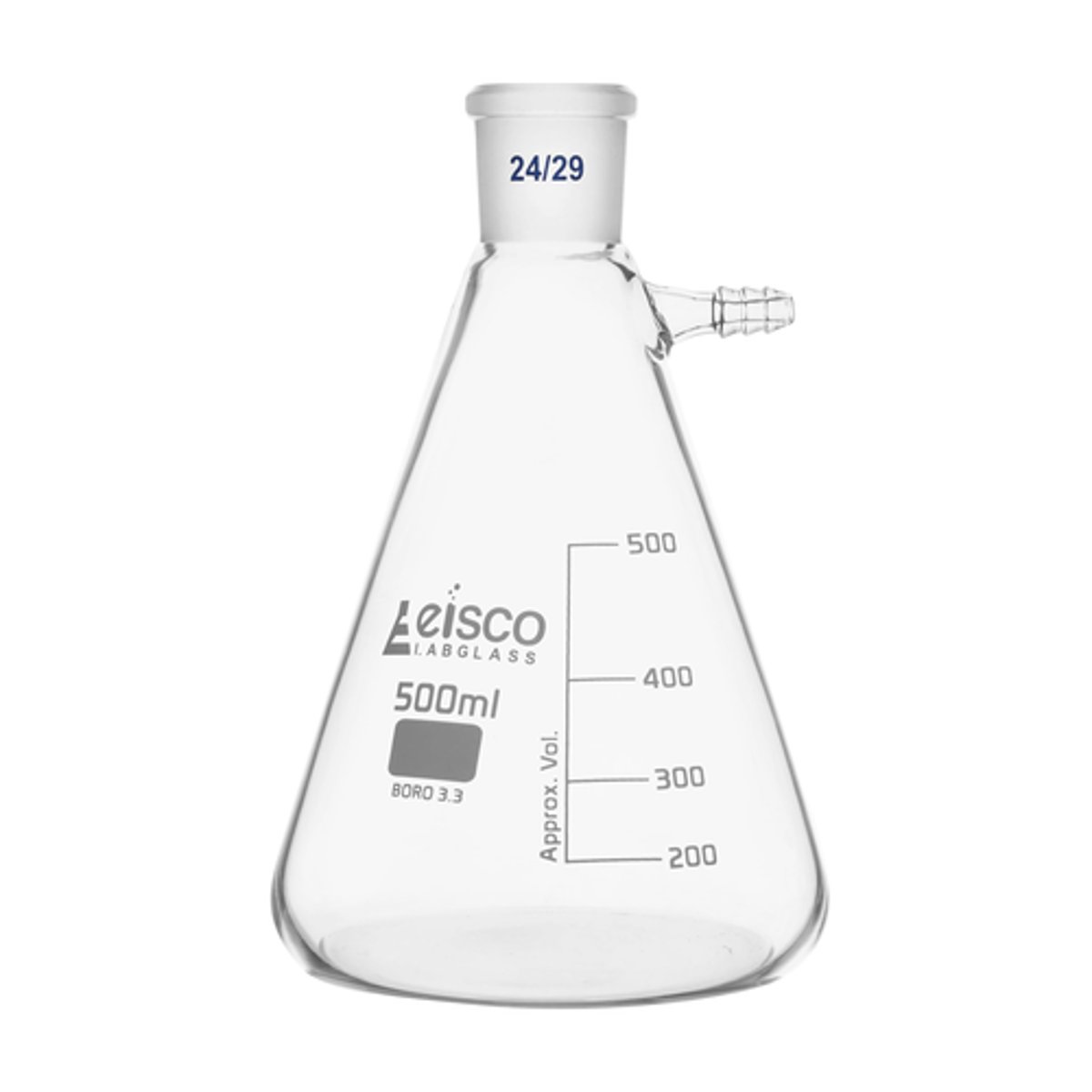
Draw a diagram of a Buchner flask (3)
Why is suction filtration used in recrystallisation? (1)
It reduces pressure and speeds up the filtration
How are the recrystallised crystals washed? (1)
By washing with distilled water
Why are the recrystallised crystals washed with distilled water? (1)
To remove soluble impurities
How are recrystallised crystals dried? (1)
By drying between absorbent paper
What are possible sources of yield loss during recrystallisation? (3)
- Loss of crystals during filtering and washing.
- Product staying in solution after recrystallisation.
- Side reactions.
How is melting point measured to determine purity? (2)
- Place a small amount of the sample in a capillary tube.
- Heat slowly near the melting point
What are the characteristics of a pure sample's melting point? (1)
A pure sample has a sharp melting point at the same value as in data books
How do impurities affect the melting point? (2)
- Impurities lower the melting point.
- The sample melts over a range of several degrees Celsius.