NRSC 2270- Serotonin
 Call Kai
 Learn
Learn Practice Test
 Spaced Repetition
 Match
Match Flashcards
 Knowt Play
1/59

There's no tags or description
Looks like no tags are added yet.
Name | Mastery | Learn | Test | Matching | Spaced | Call with Kai |
|---|
No analytics yet
Send a link to your students to track their progress
60 Terms
90-95 of serotonin
in the gut in enterochromaffin cells
other name for serotonin
5HT
is a monoamine in the class of indoleamine
serotonin cannot
cross BBB so it must be made
serotonin pathway
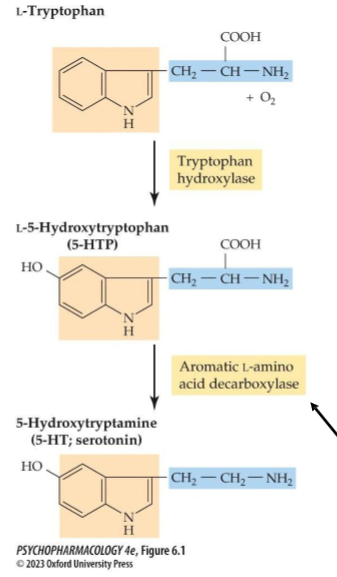
side effect of increased serotonin
stomach upset
types of trp hydroxylase
tph1 and tph2
tph1
gut and elsewhere
tph2
cns
trp competes with large aa
for transport across BBB
ratio between trp and aa competitors determines wheter
serotonin synthesis is stimulated in the brain. elevated levels of serotonin does not mean elevated brain level because trp is not getting to the brain
rat inject
injection of trp raises 5ht levels but high protein diet does not
most proteins contain more competitor aa than trp
increases plasma serotonin levels can be achieved naturally with a high carb low protein diet to push ratio toward increased trp which may not dramtically effect brain levels of 5ht
may be due to insulin ablity to stimulate the uptake amino acids from bloodstrea except for trp
serotonin vesicles
vmat 2
terminal serotonin autoreceptors
1b and 1d
somatodendritic serotonin autoreceptors
1a in raphe nuclei
Sert
serotonin is removed by sert
what catalyzes serotonin
mao-a to 5HIaa
5hiaa
5hydroindoacetic acid, breakdown product of 5ht
used as indirect measure of the acitivity of serotonergic neurons
5HT
release via indirect agonist
PCA
indirect agonist of serotonin
depletion of brain serotonin and neurotoxicity
not in clinical use
fenfluramine
fen phen
reverses SERT and disrupts vesicular storage. massive release of serotonin which causes vasoconstriction and cardiac events
MDMA
ecstasy, molly
indirect agonist
hemostatic agent
produces strong feelings of empathy and social lubricant.
MDMA has a high affinity to
SERT (lesser extent for NET and DAT)
may also have direct effects on several 5HT receptors
how does MDMA stimulate serotonin efflux
via sert, mdma stimulates 5ht efflux from synaptic terminals via a reverse transport mechanism and blocking vmat 2
ssri and mdma
block mdma ability in vitro to bind sert and stimulate 5ht release
schedule 1 drug
mdma and therapy for ptsd
the treatment may have meaningful advantage and greater compliance over available medications for ptsd
MDMA as a DA neurotoxin
toxic levels of MDMA can cause it to have neurotoxicity effects and developed malignant hyperthermia
causes reduced 5ht density in the forebrain fibers
sert ko mice
exhibit an array of behavior and phsyioogical abnoramlities resulting from chronic enhancement of serotonergic activity
serotonin syndrome
severe toxicity associated with different combos of sertonergic drugs
combining maoi with OTC meds can cause this toxicitiy
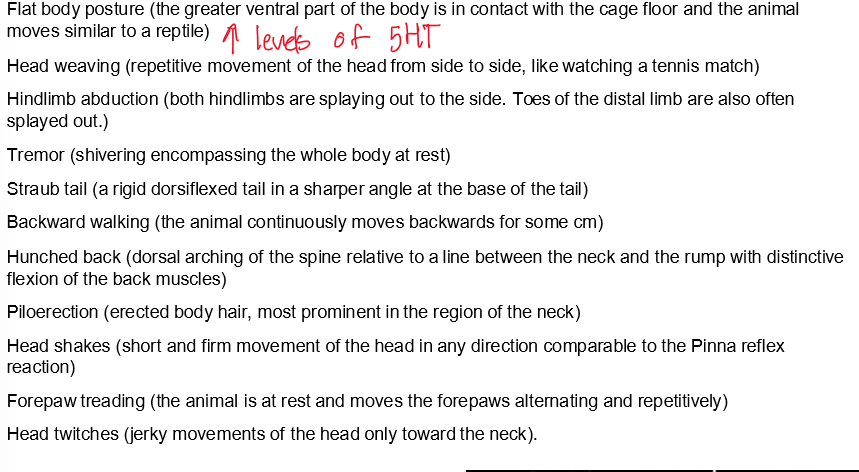
clinical trademarks of serotonin syndrome in humans
cognitive effects, autonomic, somatic effects
cognitive effects
headache, agitation, hypomania, mental confusion, hallucinations, coma
autonomic effects
shivering, sweating, hyperthermia, vasoconstriction, tachycardia, nausea, diarrhea
somatic effects
myoclonus (muscle twitching), hyperreflexia (manifested by clonus), tremor
serotonin syndrome in mice
cell bodies of the serotonic system
dorsal and median raphe nuclei and has proections to the neuronal axis
how many receptors subtypes are for 5HT
14 receptors divided into 7 families
metabotropic (most)
5-HT 1A receptors (GI)
in forebrains mainly hippocampus
post synaptic receptors
raphei nuclei (brain stem)—> somato dendritic autoreceptors
5ht1a
post synaptic and autoreceptor
Gi mechanism
reduce cAMP by inhibiting adenylyl cyclase
increase opening of K+ channels hyperpolarization
5ht 1a receptor
5ht 2a receptors (Gq)
affects phospholipase C which activates PKC
highly expressed in cortex in striatum and in nucleus accumbens
activate the phosphoinotiside in second messenger system (PLC)
LSD
hallucinogen
psilocybin (acid)
due to stimulation of 5ht2A receptors
ketanserin
antagonist that reduces the effects of acid and LSD reducing hallucinogenic effects
5ht and schizo
treatment of schizo is via 5ht receptor antagonist
atypical or 2nd generation
5ht2a receptor anatagonists
clozapine (clozaril)
risperiodone (risperdal)
antagonize 5ht2a receptors and D1 and D2 family of receptors
have more pronounced 5ht antagonism than DA antagnism
used to treat schizo with fewer EPS movement disorders
migraine and 5ht release
abnormal dilation of brain vessels causes migraine headaches
triptans
5ht 1b/1d agonist which causes constriction of blood vessed to reduce migraines
sumatriptan (imitrex)
zolmitriptan (zomig)
may also reduce central 5 ht release by stimulating terminal 5 ht autoreceptors
5ht and aggression
tph2 ko
brain aeas involved in aggression receive substatial serotonergic innervation and express several 5ht receptor subtypes
IED
intermittent explosive disorder
premature stop codon in 5ht 2b
increased impulsivitiy and novelty seeking in 5ht 2b ko mice
sidis
sudden infant death
to test this they mutated mice with a lmx1b ko which is a TF for 5HT
significant problems with thermoregulation could not maintain body temp in cold conditions
frequent long lasting episodes of apnea in very young mice
these mice no longer have serotonergic cells
doi
2a and 2b agonist which rescues mutant phenotype
5ht and anxiety
ssri’s are the most common treatment for several anxiety disorders.
efficacy can be prevented by trp depletion
tested with 5ht 1a ko mice
buspar (buspirone)
to treat anxiety by increasing 1A activity
defiency in 5ht1a receptor
loss of this during critical development period may give rise to early onset anxiety issues
5ht1b or 5ht2c receptor
agonist reduce food intake and promote weight loss in rodent models of obesity
appetite circuit within the arcute and paraventricular nuclei of hypothalamus is shown
5 ht released from drn to mrn
projections to the arcute nucleus exerts an anorexigenic effect by dual mechanisms
stimulation of pomc neurons through 5ht2c receptors
suppression of the npy/agrp neurons through 5ht 1b receptors
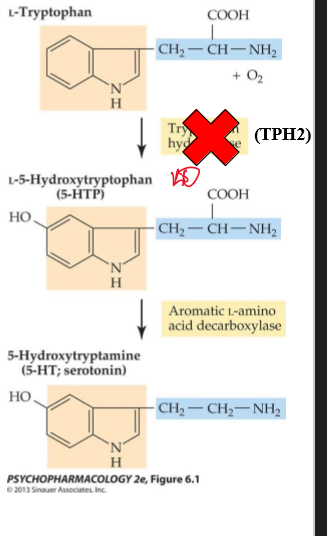
blocking 5ht by inhibiting tph2
increased marble diggining
serotonin hypothesis of depression
idea that depression is due to low levels of serotonin but this is not always true
evidence for serotonin hypothesis for depression
low 5hiaa levels found in brains of sucide victims
trp depletion of unmedicated patients in remission causes a relapse in depression symptoms
depressed mood in healthy subjects who have a family history of depression
increased density of postsynaptic 5ht2 receptors with people with umedicated mood disorders
antidepressants and 5ht acute
antidepressant increase 5ht by blocking reuptake by ssris or tca or inhibiting maois
antidepressants and 5ht chronic
downstream changes include hippocampal neurogenesis and functional remodeling of corticolimbic circuits
stress and antidepressant treatment on bdnf
chronic antidepressant treatment not only alters monoamine transmission but also bdnf.
protects neuron from further damage and may help repair those damaged