MIRRORS/OPTICS
 Call Kai
 Learn
Learn Practice Test
 Spaced Repetition
 Match
Match Flashcards
 Knowt Play
1/29

There's no tags or description
Looks like no tags are added yet.
Name | Mastery | Learn | Test | Matching | Spaced | Call with Kai |
|---|
No analytics yet
Send a link to your students to track their progress
30 Terms
law of reflection
incident/reflected ray + normal in same plane
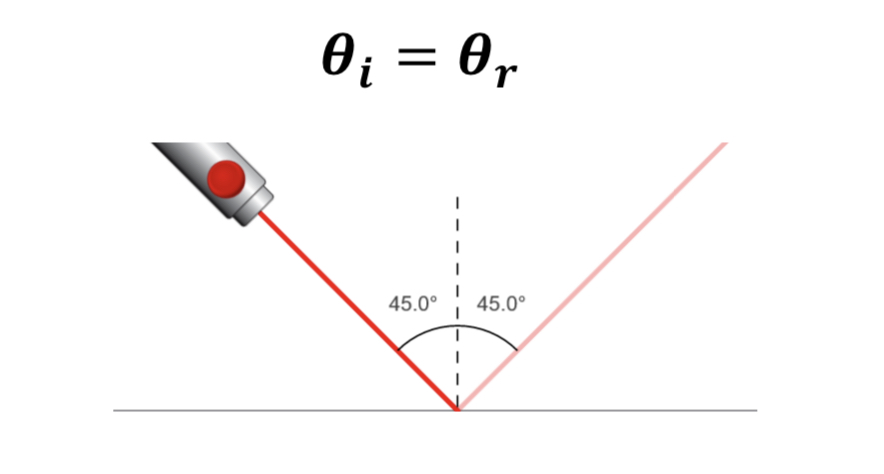
angle incidence = angle reflection
describe rays in specular reflection
reflected rays parallel to eo
virtual image
none of rays emanate from image, behind mirror
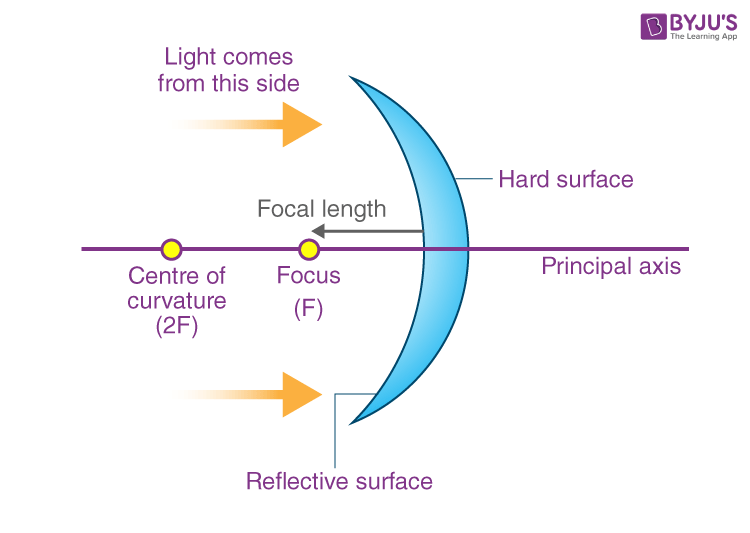
concave mirror
inside surface of spherical mirror polished
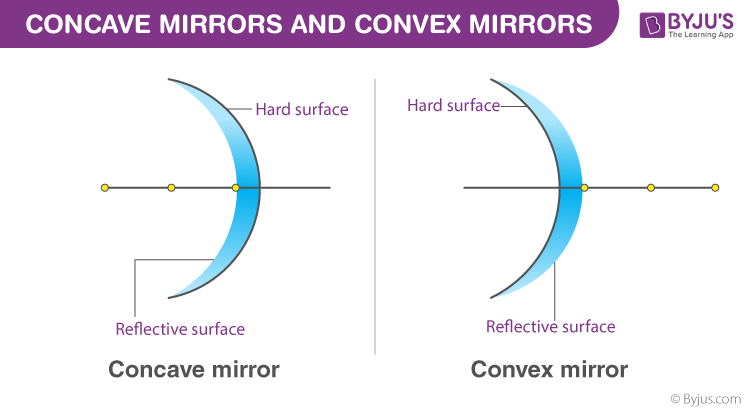
convex mirror
outside surface of spherical mirror polished
principal axis
straight line thru center and midpoint of mirror
where are lightrays near + parallel to principal axis reflected
from concave mirror, converge at focal point. f = r/2 (R = RADIUS OF CURVATURE OF MIRROR)
focal length
distance between focal point and mirror
describe image produced by object between focal point and concave mirror
(real/virtual, size, upright/inverted)
enlarged, upright, virtual
virtual image produced by convex mirrors
reduced, upright
speed of light in vacuum
3 x 10^8
how does light travel thru materials vs. in vacuum
material is slower
index of refraction definition
ratio of speed of light in vacuum/in material. n = c/v
how does refracted ray bend away from normal
light passing thru medium of larger refractive index gets into one of smaller
A diverging/concave lens always forms
(real/virtual, size, upright/inverted)
an upright, virtual, diminished image.
image formation by convex mirror is always
(real/virtual, size, upright/inverted)
virtual, diminished, upright
what do rays do when paraxial lightrays strike convex mirror
paraxial → alongside axis
lightrays → parallel to axis
💡 (where do they originate + formula)
diverge/reflect outward, however, originate from focal point.
f = -R/2
variable representation: f, d0, di, m
focal length, object distance, image distance, magnification
sign conventions for lenses
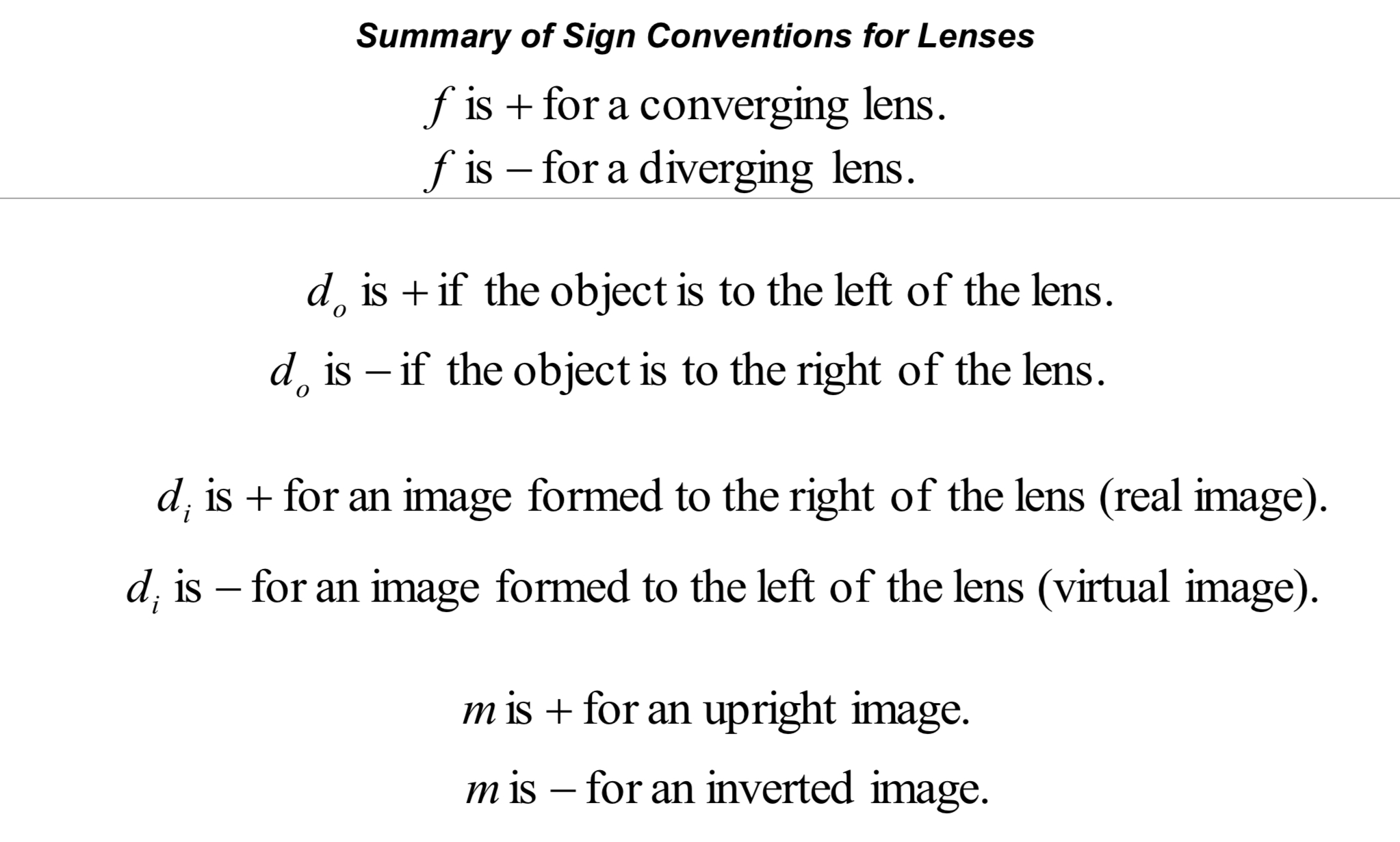
convex = converging
concave = diverging
lens vs. mirror
mirror bounces light off surface (reflection)
lens allows light to pass through it, bending the light in the process (refraction)
sign conventions for mirrors
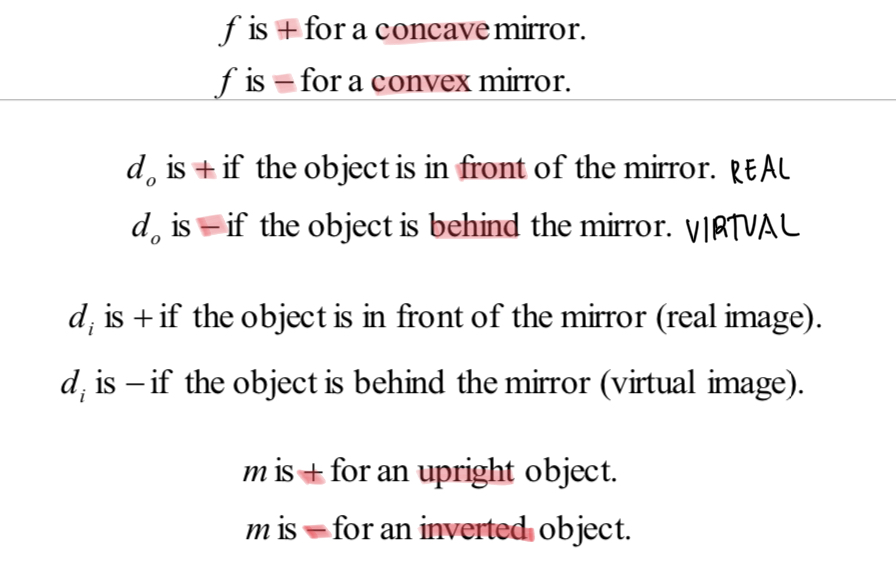
object in front = real
object behind mirror = virtual
snell law refraction
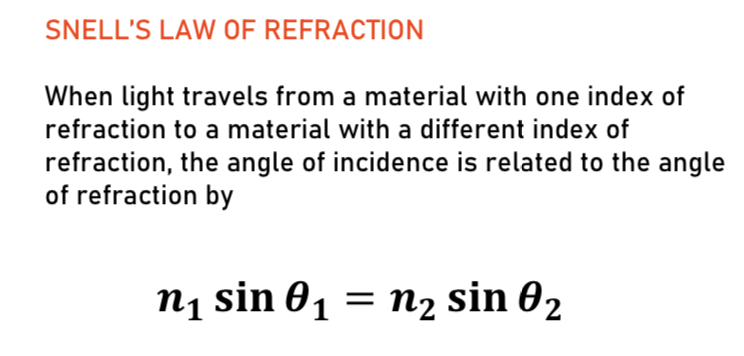
image characteristics of concave mirror
between mirror and focal point
between C (radius curvature) and focal point
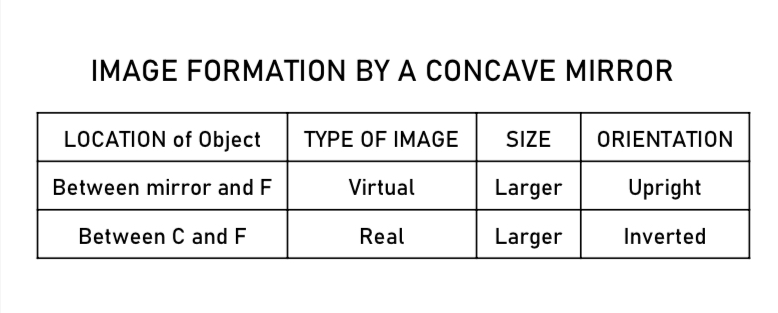
concave vs. convex mirror and lens visual + formulas
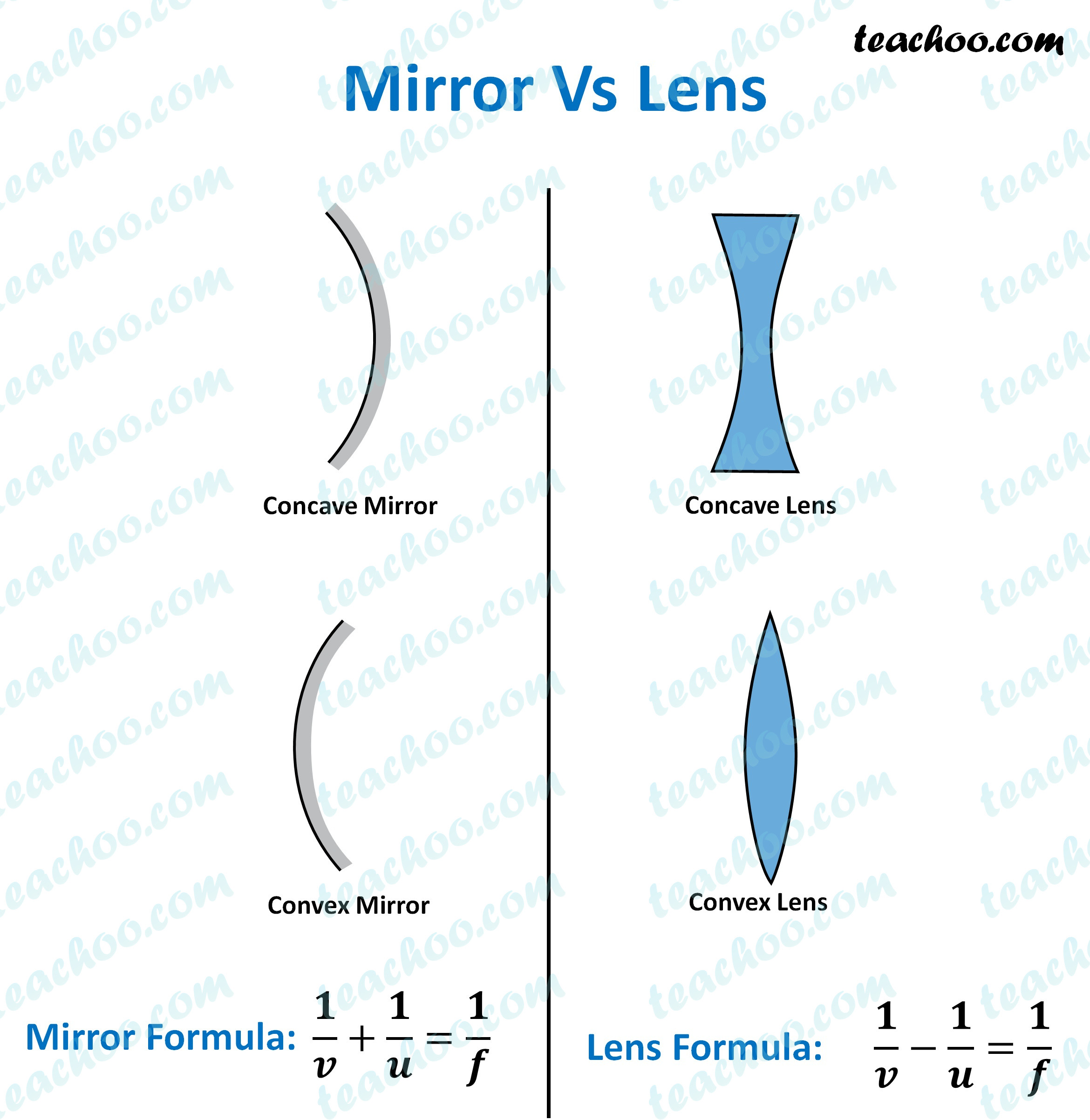
mirror: +
lens: -
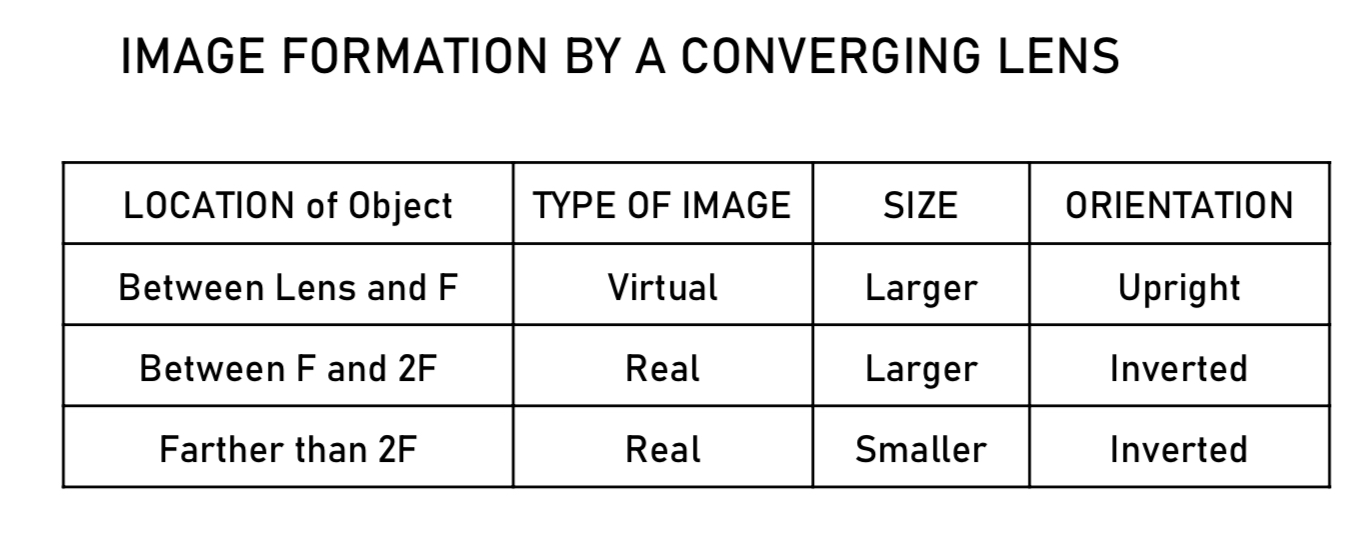
image characteristics of converging/convex lens
between lens and F
between F and 2F
farther than 2F
3 properties of your image in the mirror
upright
same size
image as far behind mirror as u are in front
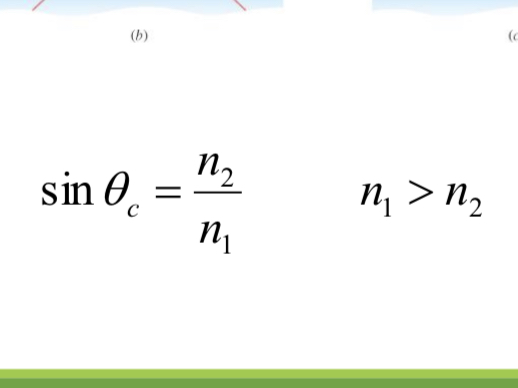
critical angle formula
mirror equations (magnification and 1/f)
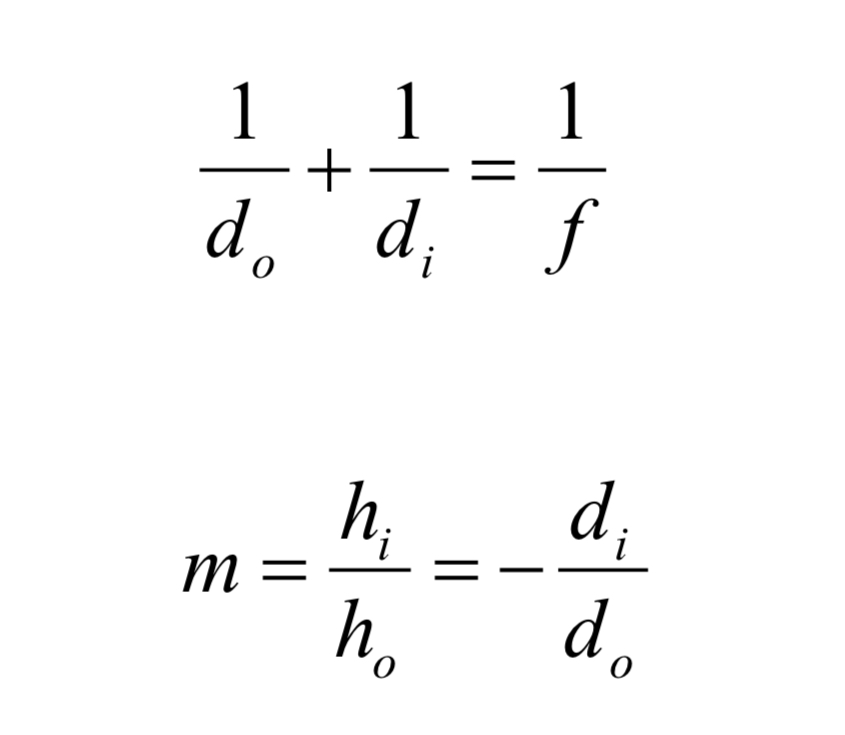
for lens, 1/f = is - (Minus)
angle of incidence equals =
angle of reflection
mnemonic for images
UV IR
upright = virtual
inverted = real