The Respiratory System
 Call Kai
 Learn
Learn Practice Test
 Spaced Repetition
 Match
Match Flashcards
 Knowt Play
1/234

There's no tags or description
Looks like no tags are added yet.
Name | Mastery | Learn | Test | Matching | Spaced | Call with Kai |
|---|
No analytics yet
Send a link to your students to track their progress
235 Terms
What is the primary function of the respiratory system?
To obtain oxygen for cellular respiration and remove carbon dioxide produced by cells.
Why do cells require oxygen?
To support ATP production through cellular respiration in mitochondria.
What are the four steps involved in respiratory gas exchange?
Ventilation, gas exchange, circulation, and cellular respiration.
What is ventilation?
The movement of air through a specialized gas exchange organ such as the lungs.
What is gas exchange?
The diffusion of O2 and CO2 between air and blood at respiratory surfaces.
What is circulation in the respiratory process?
The transport of O2 and CO2 throughout the body by the cardiovascular system.
What is cellular respiration?
The use of O2 by cells to produce ATP and the production of CO2 as a waste product.
How does altitude affect oxygen availability?
Higher altitude lowers the partial pressure of oxygen, reducing oxygen availability.
What happens to CO2 during gas exchange?
CO2 diffuses out of the body while O2 diffuses in.
What is Fick's Law of Diffusion?
Q = DA(P1 − P2)/L
What does Q represent in Fick's Law?
The rate of diffusion.
What does D represent in Fick's Law?
The diffusion coefficient.
What does A represent in Fick's Law?
The surface area available for diffusion.
What do P1 and P2 represent in Fick's Law?
The partial pressures of a gas at two locations.
What does L represent in Fick's Law?
The diffusion distance or path length.
How can respiratory systems maximize gas exchange?
By increasing surface area, maximizing pressure gradients, and minimizing diffusion distance.
What are lungs?
Internal cavities specialized for respiratory gas exchange with air.
How do lungs minimize diffusion distance?
They have very thin respiratory membranes.
What is perfusion?
The circulation of blood over gas exchange surfaces.
What is a gas exchange system?
Gas exchange surfaces plus mechanisms for ventilation and perfusion.
What factors determine respiratory surface area requirements?
Body size and metabolic demand (endothermy vs ectothermy).
What pathway does air follow through the mammalian respiratory system?
Nasal/oral cavity → trachea → primary bronchi → secondary bronchi → tertiary bronchi → bronchioles → alveoli.
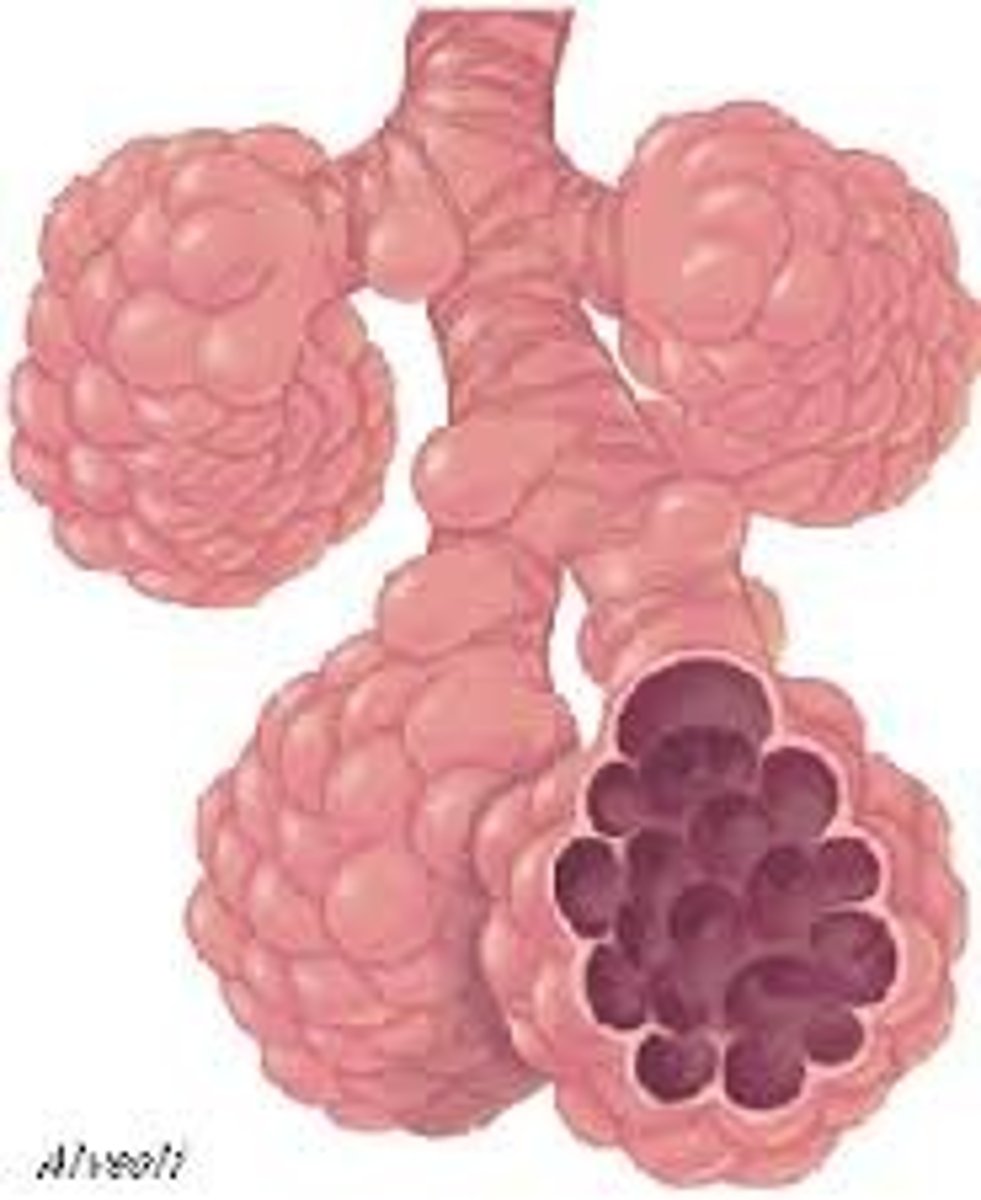
What are alveoli?
The primary sites of gas exchange in the lungs.
What is pulmonary ventilation?
Breathing; movement of air into and out of the lungs.
What are the major functions of the mammalian respiratory system?
Gas exchange, ventilation, protection, sound production, and olfaction.
What is Boyle's Law?
Pressure is inversely proportional to volume (P ∝ 1/V).
How does air move during breathing?
From regions of higher pressure to regions of lower pressure.
What causes airflow into and out of the lungs?
Changes in thoracic cavity volume that create pressure differences.
What is a respiratory cycle?
One inspiration and one expiration.
What is compliance?
A measure of the ease with which the lungs expand.
What does low compliance mean?
Greater force is required to expand the lungs.
What factors affect lung compliance?
Lung connective tissue, surfactant levels, and thoracic cage mobility.
Is inhalation active or passive?
Always active.
Is exhalation active or passive?
It can be passive or active.
What percentage of normal air movement is produced by diaphragm contraction?
About 75%.
What percentage of normal air movement is produced by external intercostal muscles?
About 25%.
Which accessory muscles assist inhalation?
Sternocleidomastoid, serratus anterior, pectoralis minor, and scalene muscles.
What is eupnea?
Normal quiet breathing with active inhalation and passive exhalation.
What is diaphragmatic breathing?
Deep breathing dominated by diaphragm movement.
What is costal breathing?
Shallow breathing dominated by rib cage movement.
What is elastic recoil?
The tendency of lungs and chest wall to return to resting position after inhalation.
What is hyperpnea?
Forced breathing involving active inhalation and active exhalation.
What is respiratory rate?
The number of breaths taken per minute.
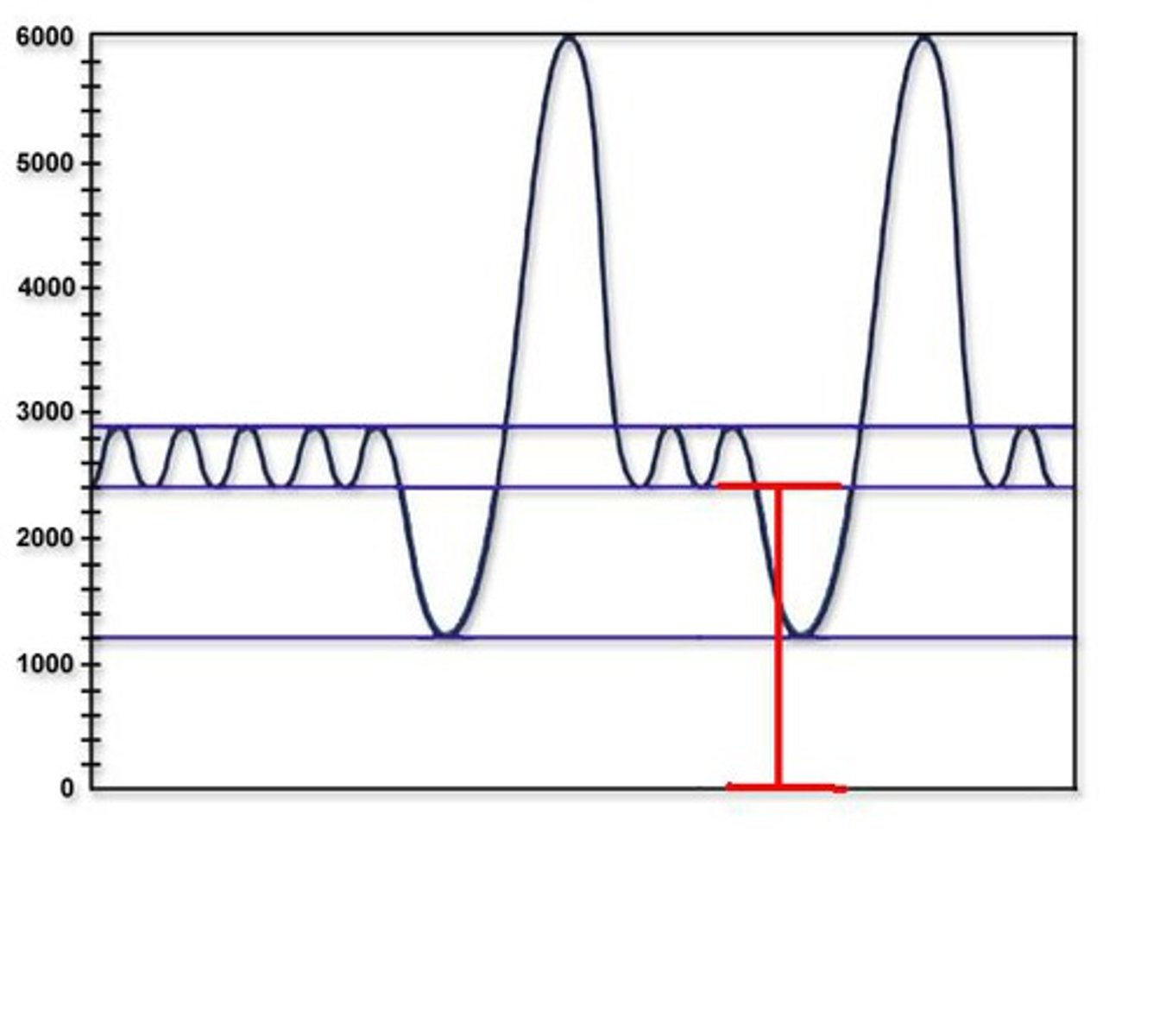
What is tidal volume?
The volume of air moved in one normal breath.
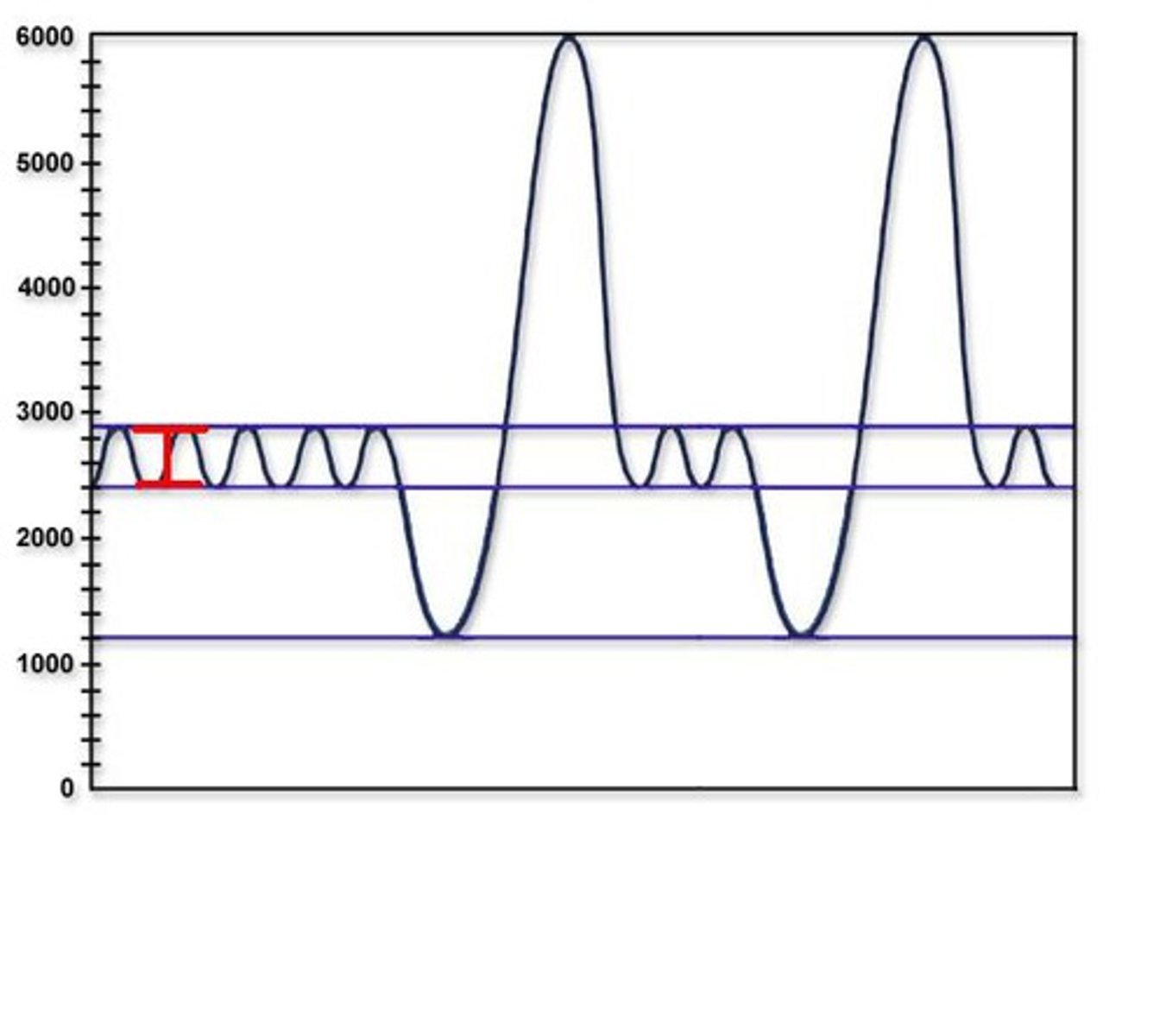
What is respiratory minute volume?
Respiratory rate × tidal volume. (the total volume of gas inhaled or exhaled per minute)
What is tidal breathing?
Air flowing into and out of the lungs along the same pathway.
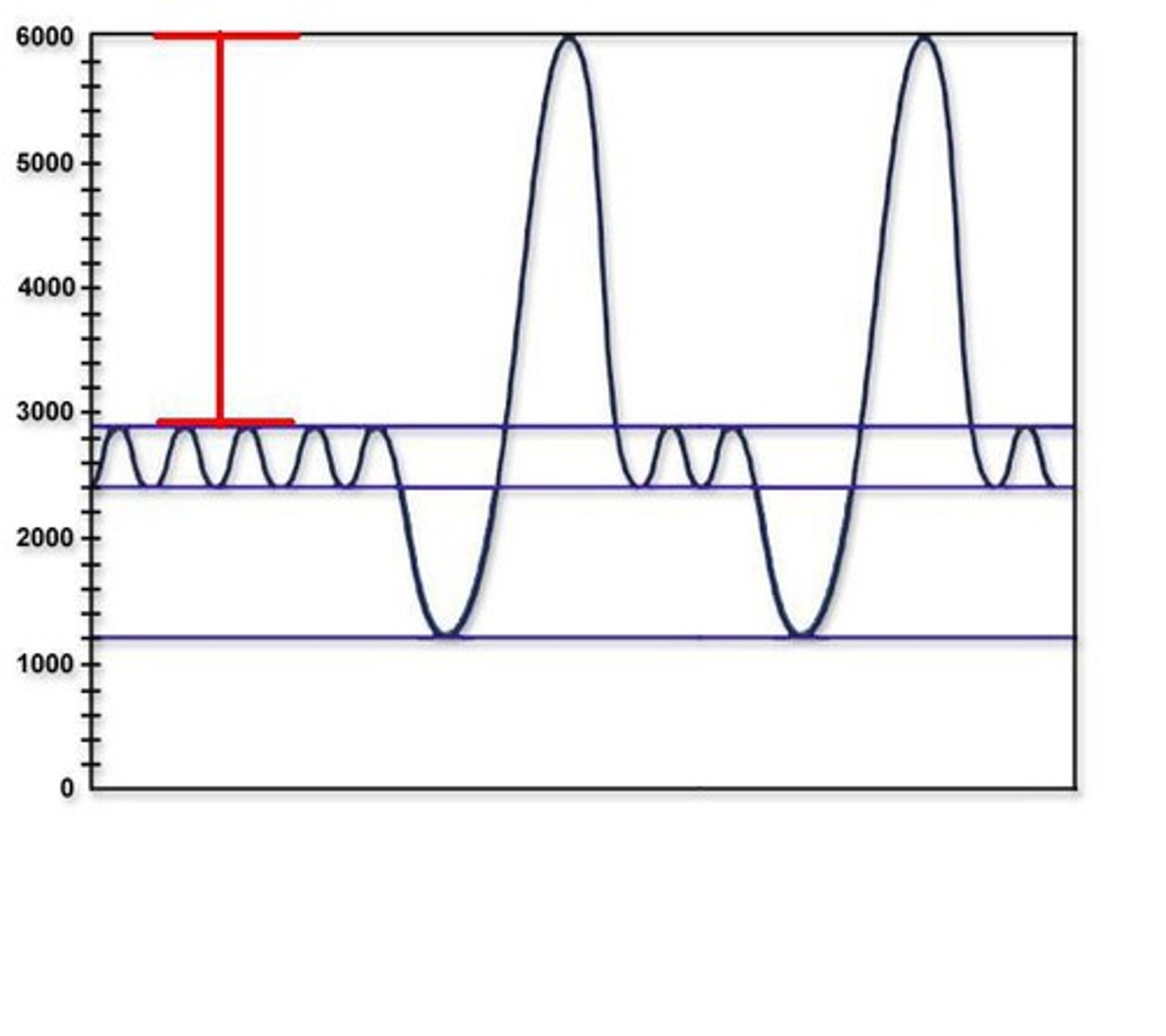
What is inspiratory reserve volume?
The additional air that can be inhaled after a normal inhalation.
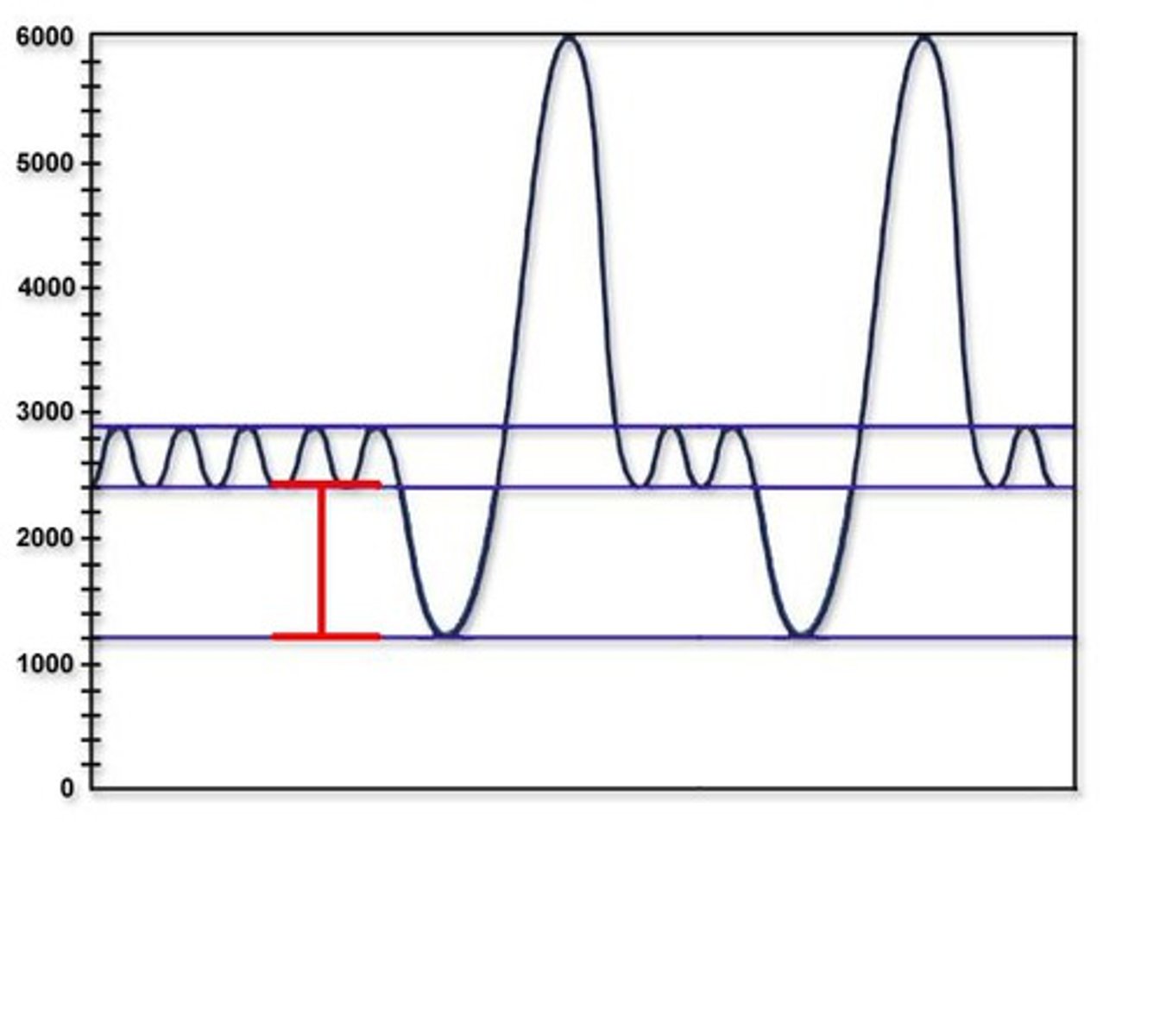
What is expiratory reserve volume?
The additional air that can be exhaled after a normal exhalation.
What is residual volume?
The air that remains in the lungs after maximum exhalation.
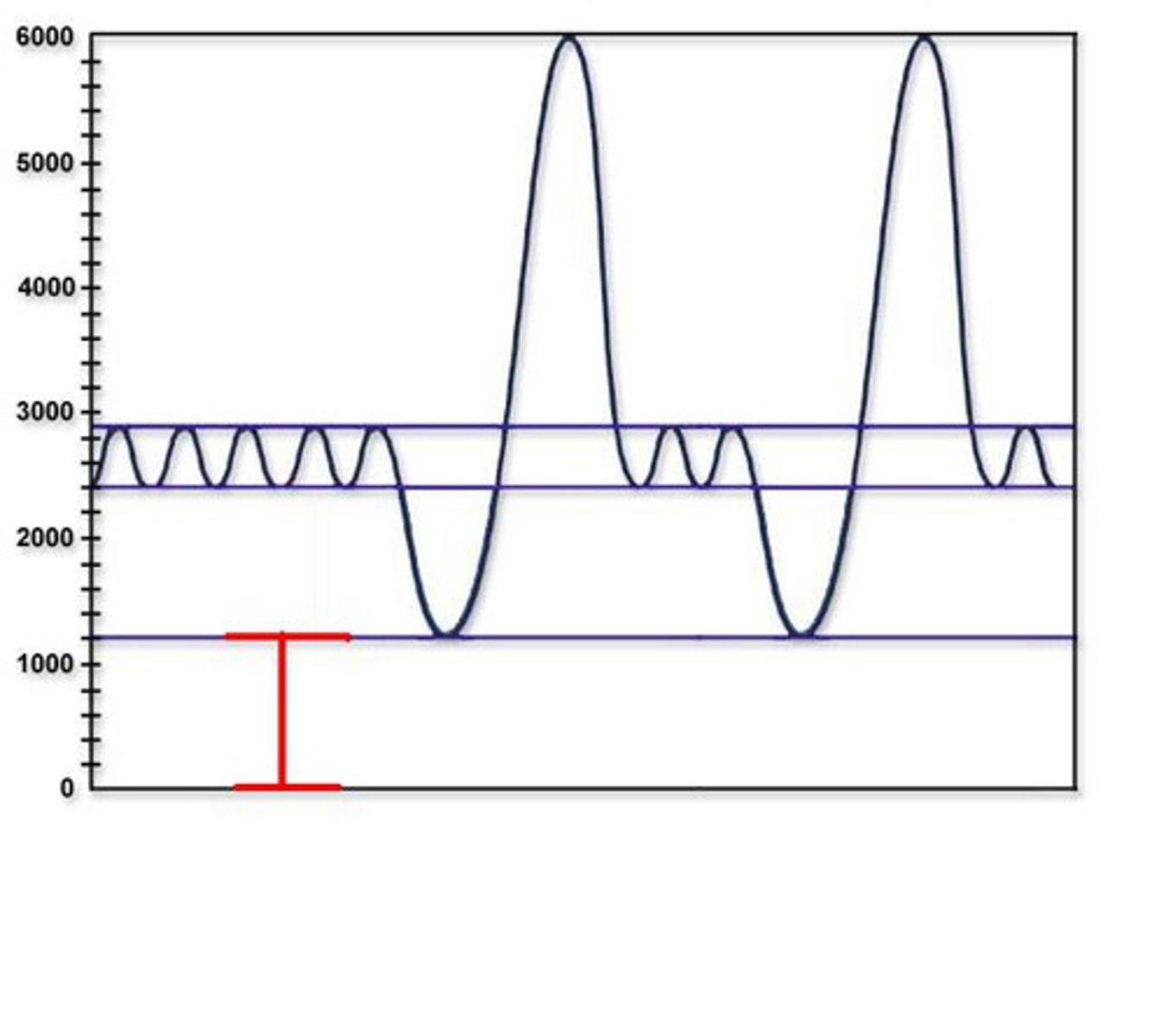
What is vital capacity?
Tidal volume + inspiratory reserve volume + expiratory reserve volume.
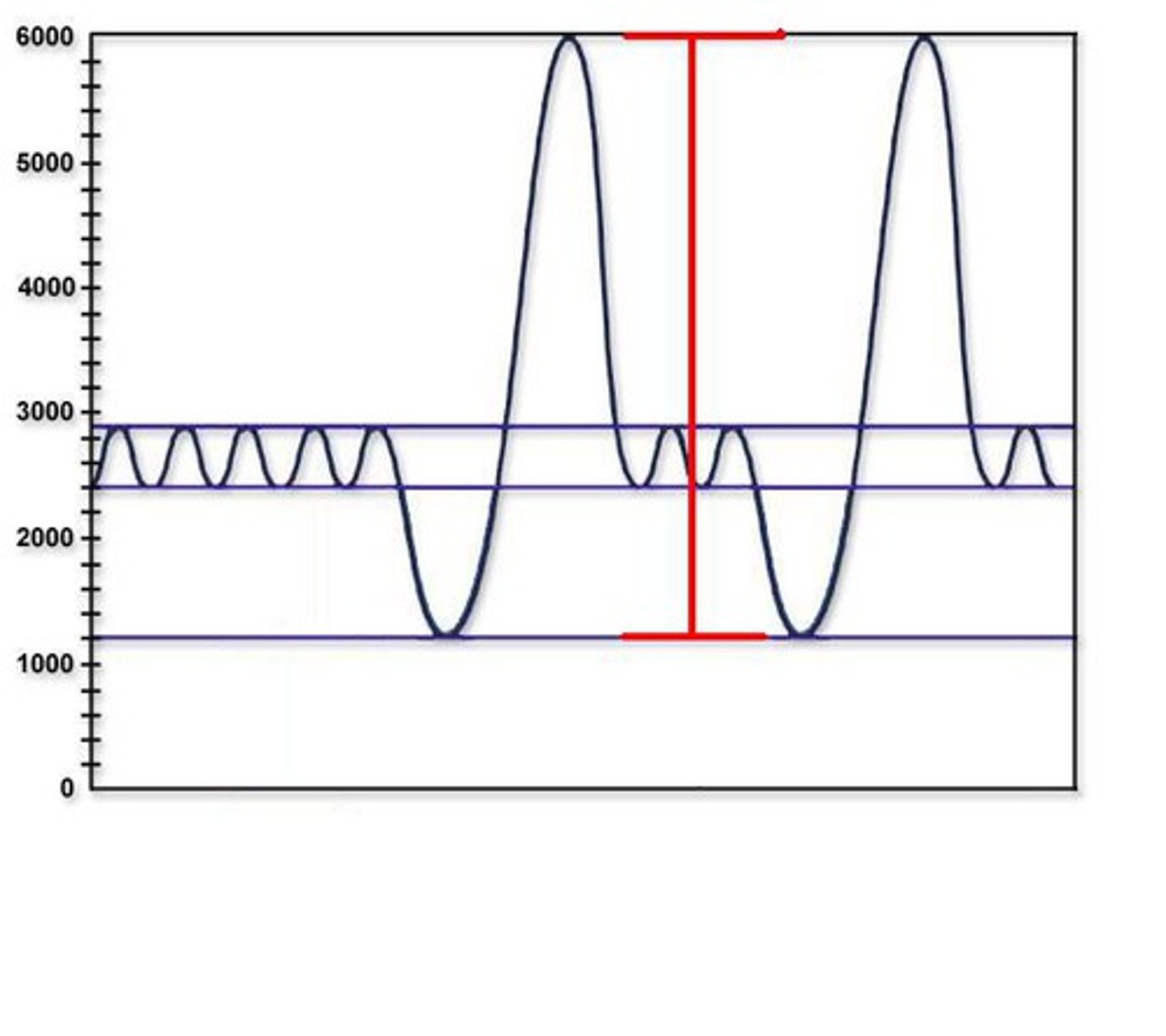
What is total lung capacity?
Vital capacity + residual volume.
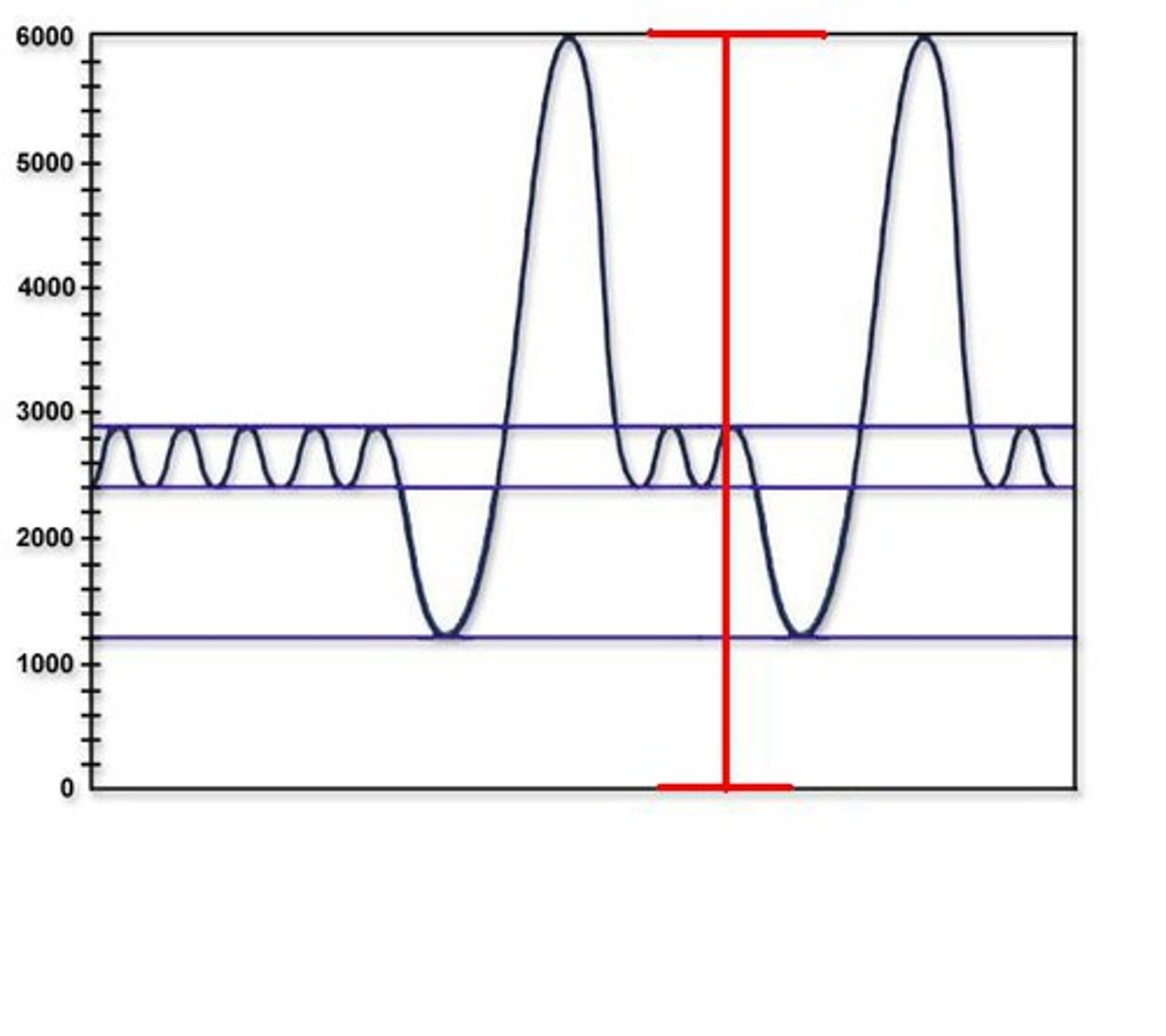
What is inspiratory capacity?
Tidal volume + inspiratory reserve volume.
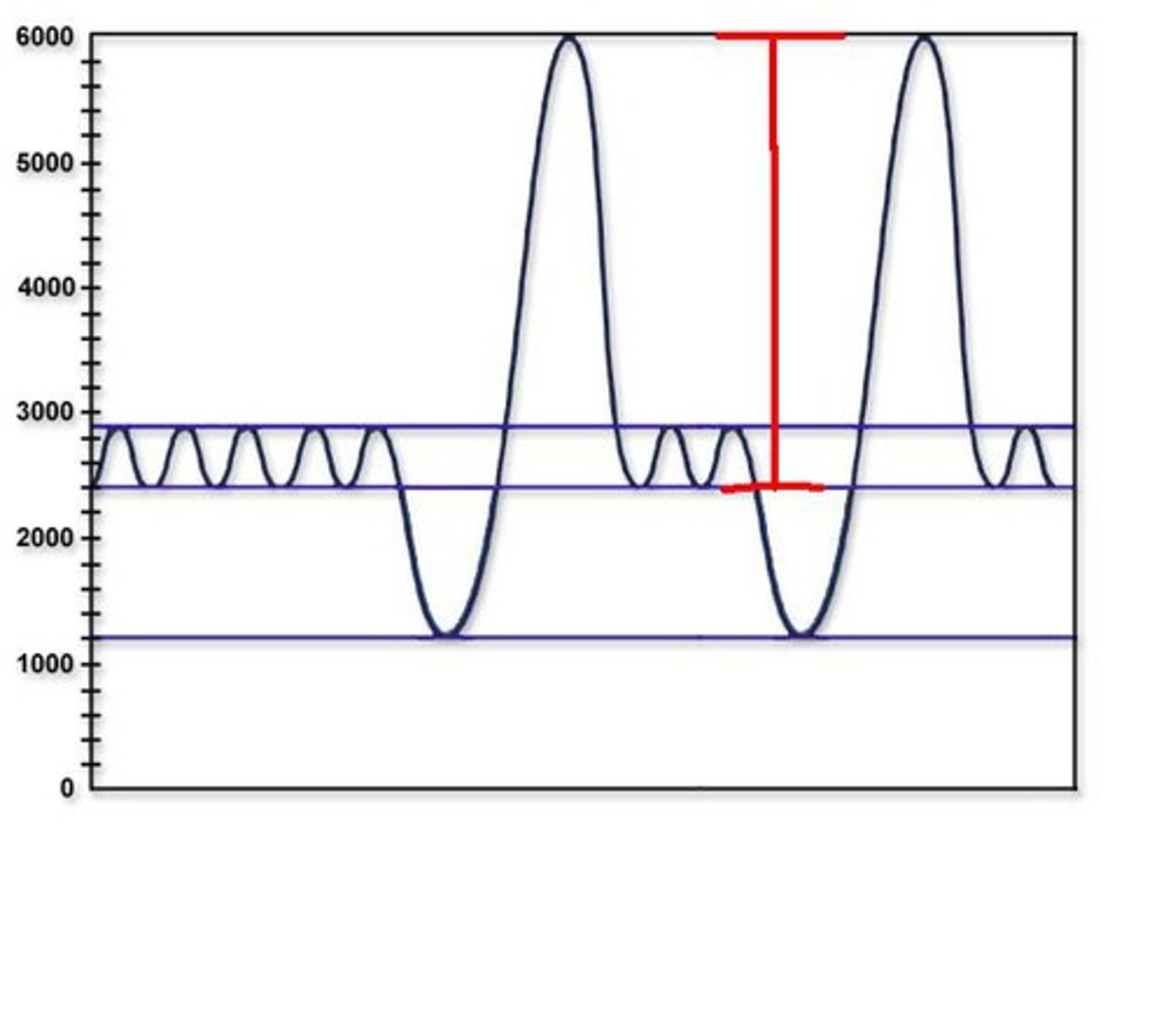
What is functional residual capacity (FRC)?
Expiratory reserve volume + residual volume.
Where is breathing primarily controlled?
In the medulla of the brainstem.
Which blood gas has the greatest influence on breathing rate?
PCO2.
Why does increased PCO2 stimulate breathing?
It lowers cerebrospinal fluid pH.
What is the DRG (dorsal respiratory group)?
A medullary region sensitive to CO2 that influences respiratory muscles.
What is the VRG (ventral respiratory group)?
A medullary respiratory rhythm generator and pacemaker.
What role does the pons play in respiration?
It coordinates smooth respiratory rhythms.
Which structures monitor blood oxygen levels?
The carotid and aortic bodies.
What happens when blood PO2 falls?
Chemoreceptors signal the medulla to increase ventilation.
How can emotions affect breathing?
They can stimulate respiratory centers in the hypothalamus.
How can emotional stress affect airways?
It may cause bronchodilation or bronchoconstriction through the ANS.
How does anticipation of exercise affect breathing?
It increases respiratory rate and cardiac output through sympathetic stimulation.
What controls bronchiole diameter?
The autonomic nervous system.
What is bronchodilation?
Widening of bronchioles that reduces airflow resistance.
What causes bronchodilation?
Sympathetic nervous system activation.
What is bronchoconstriction?
Narrowing of bronchioles that increases airflow resistance.
What causes bronchoconstriction?
Parasympathetic stimulation and histamine release.
What is the respiratory defense system?
A set of filtration mechanisms that remove particles and pathogens.
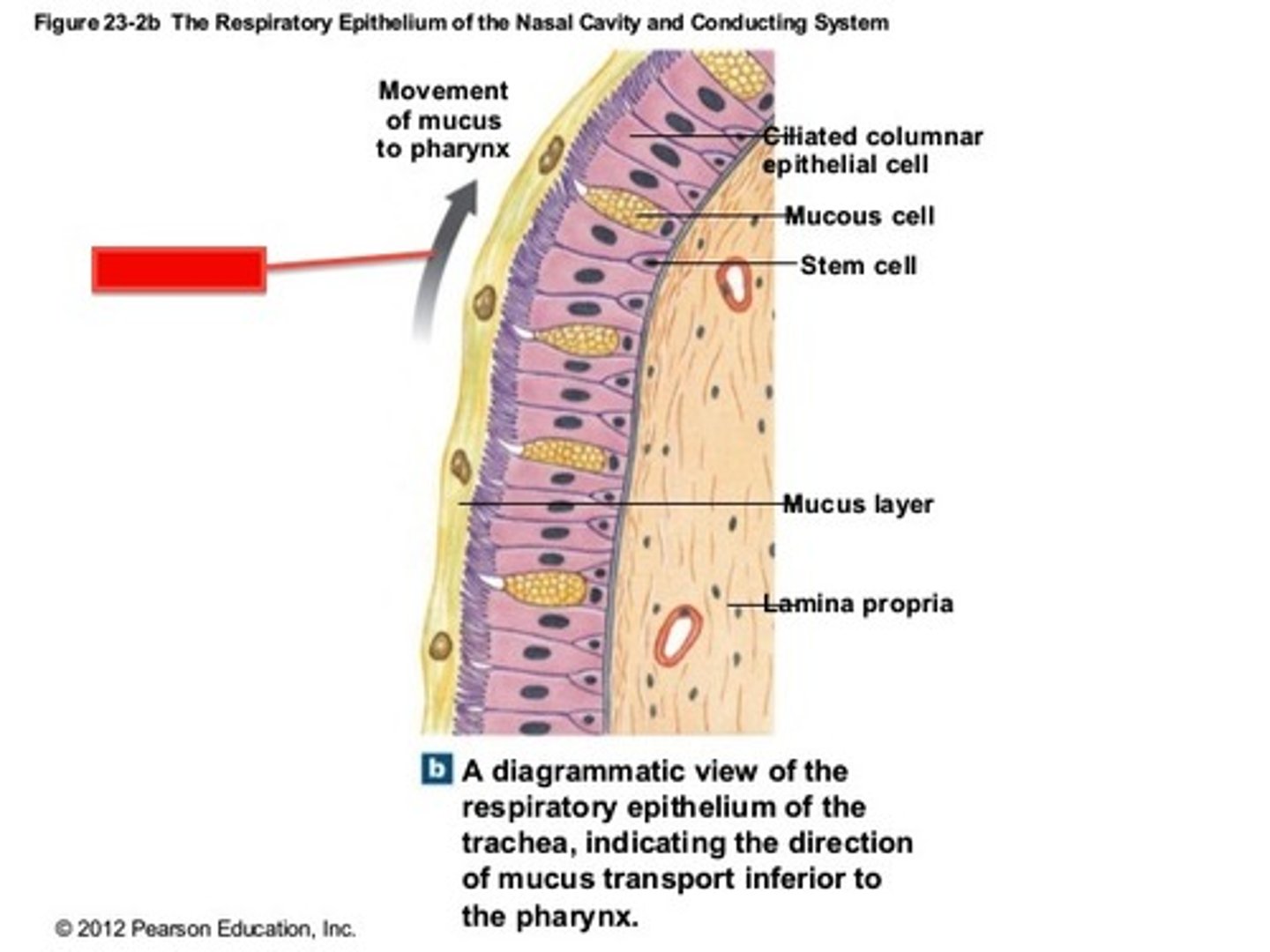
What is the function of mucus in the respiratory tract?
It traps dirt, particles, and microorganisms.
What is the mucus escalator?
Cilia moving mucus and trapped debris toward the pharynx. (pseudostratified columnar epithelium)
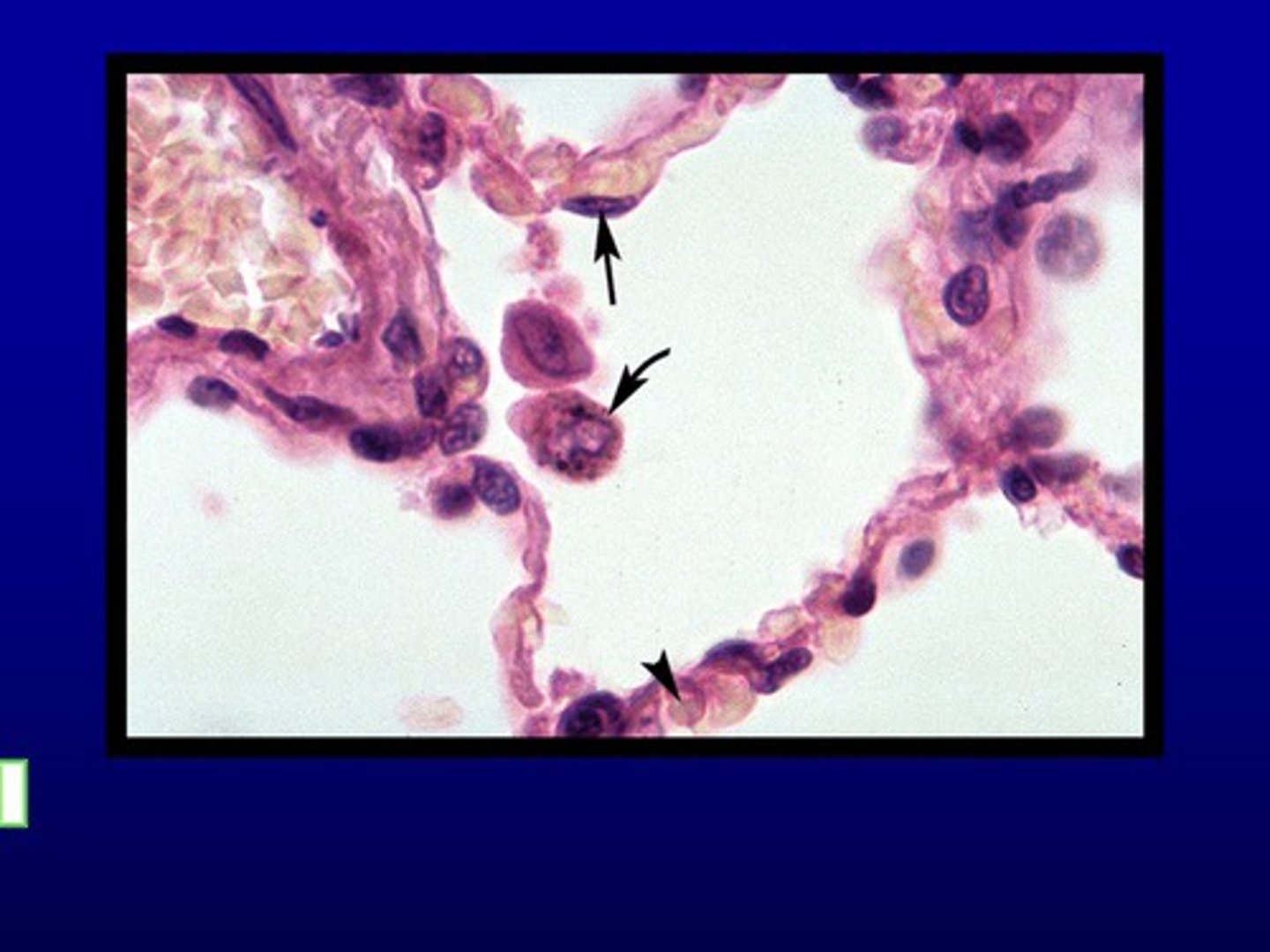
What are alveolar macrophages?
Immune cells that engulf particles reaching the alveoli.
What is surfactant?
A substance that reduces surface tension in the alveoli.
Why is surfactant important?
It reduces the force needed to inflate the lungs.
What condition can occur in premature infants lacking surfactant?
Respiratory distress syndrome.
What is bronchitis?
Inflammation of the bronchial walls causing breathing difficulty.
What is asthma?
Excessive bronchoconstriction that restricts airflow.
What are the respiratory system changes before birth?
Lungs contain no air and pulmonary vessels are collapsed.
What happens during delivery that stimulates breathing?
Loss of placental connection, decreased PO2, and increased PCO2.
What occurs during a newborn's first breath?
The lungs inflate and pulmonary circulation begins.
What fetal structures close after birth?
The foramen ovale and ductus arteriosus.
What is partial pressure?
The pressure contributed by an individual gas in a mixture.
What is atmospheric pressure at sea level?
760 mm Hg.
What is the approximate partial pressure of oxygen in dry air at sea level?
159 mm Hg.
What drives respiratory gas exchange?
Differences in partial pressure gradients.
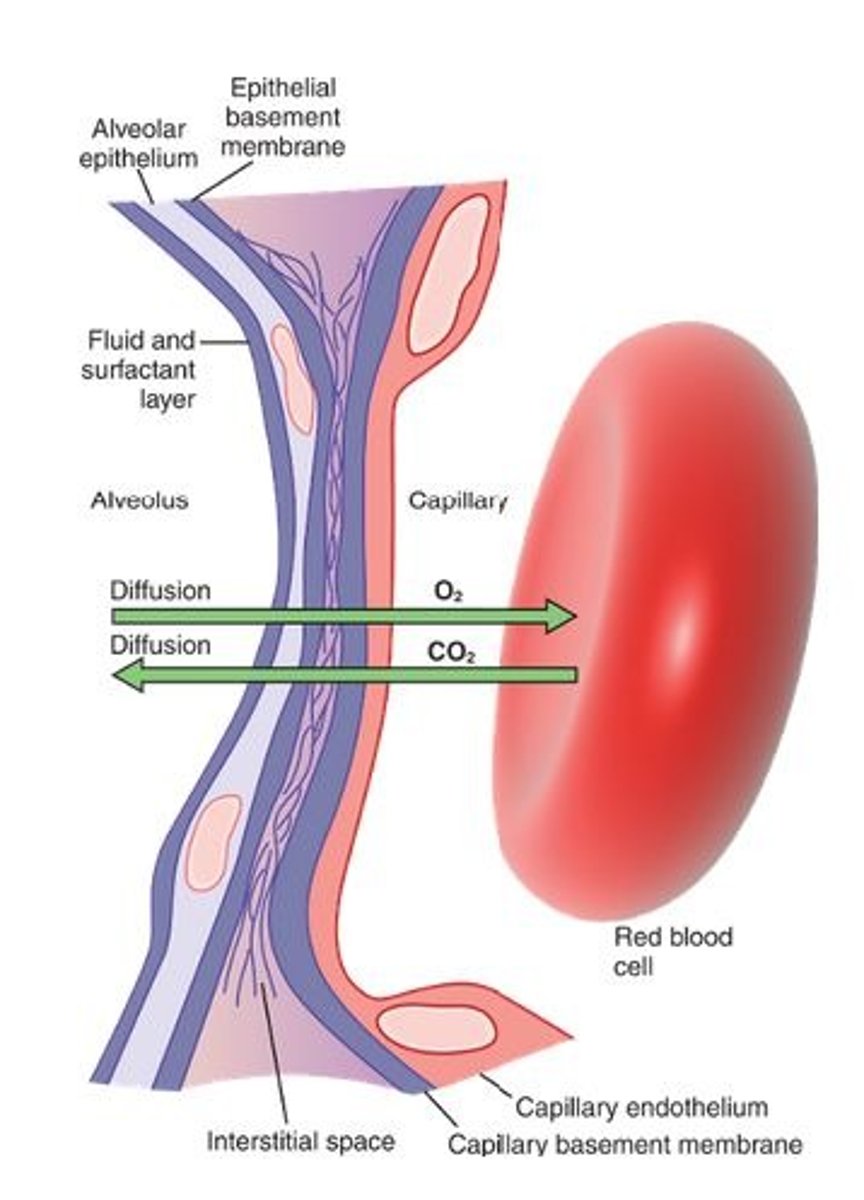
Where does external gas exchange occur?
Between alveolar air and blood.
What is the respiratory membrane?
The barrier across which gases diffuse between alveoli and blood.
What are the two main mechanisms that transport oxygen from air to mitochondria?
Convection and diffusion.
What is the oxygen cascade?
The progressive decrease in PO2 from atmosphere to mitochondria.
What is the approximate PO2 of inhaled air?
160 mm Hg.
What is the approximate PO2 in alveoli?
110 mm Hg.
What is the approximate PO2 of arterial blood?
100 mm Hg.
What is the approximate PO2 of venous blood?
40 mm Hg.
What are the three processes of external respiration?
Pulmonary ventilation (breathing), gas diffusion, and transport of O2 and CO2.
What is gas diffusion in respiration?
Movement of gases across membranes and capillaries.
What does transport of O2 and CO2 involve?
Movement of gases between alveolar capillaries and tissue capillary beds.
What divides the respiratory system into upper and lower portions?
The larynx.
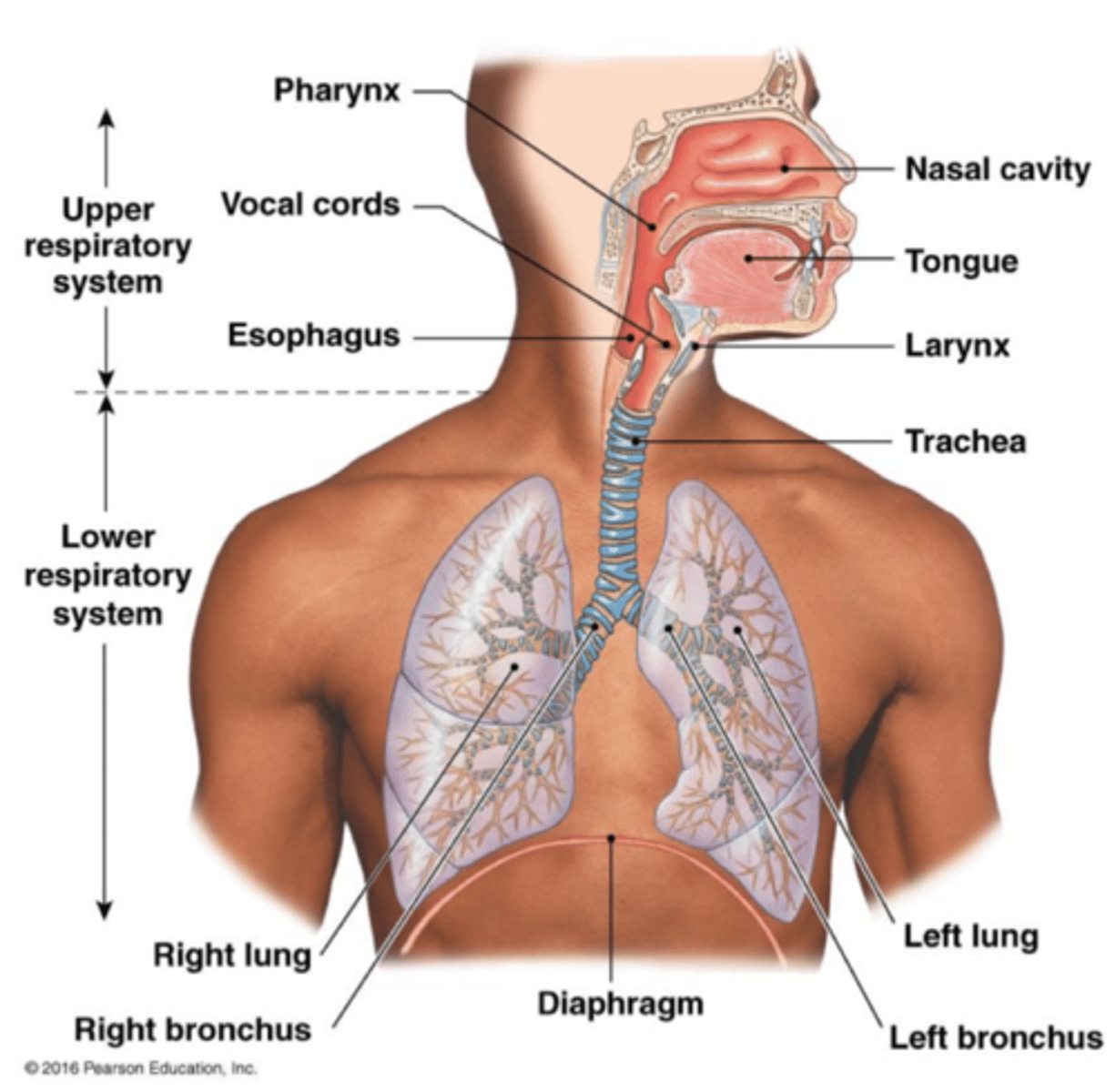
What is the conducting portion of the respiratory tract?
The pathway from the nasal cavity to the terminal bronchioles.
What is the respiratory portion of the respiratory tract?
The respiratory bronchioles and alveoli.