Hypothalamus, anterior and posterior pituitary gland
 Call Kai
 Learn
Learn Practice Test
 Spaced Repetition
 Match
Match Flashcards
 Knowt Play
1/82

There's no tags or description
Looks like no tags are added yet.
Name | Mastery | Learn | Test | Matching | Spaced | Call with Kai |
|---|
No analytics yet
Send a link to your students to track their progress
83 Terms
Outline the location of the hypothalamus
diencephalon
beneath the thalamus
at the floor of the third ventricle
Give 7 input examples into the hypothalamus
blood
cerebral cortex
hippocampal formation
amygdala
septal area
retina
ascending neural afferents
What are the 3 main things from the blood that are measured?
temp
osmotic pressure
hormones
What 7 hormones are monitored by the hypothalamus
leptin
triiodothyronine
cortisol
oestrogens
progesterone
androgens
ILGF-1
What are the 3 methods of detection in the hypothalamus
direct sensing via receptors
indirect via blood
indirect via nerves
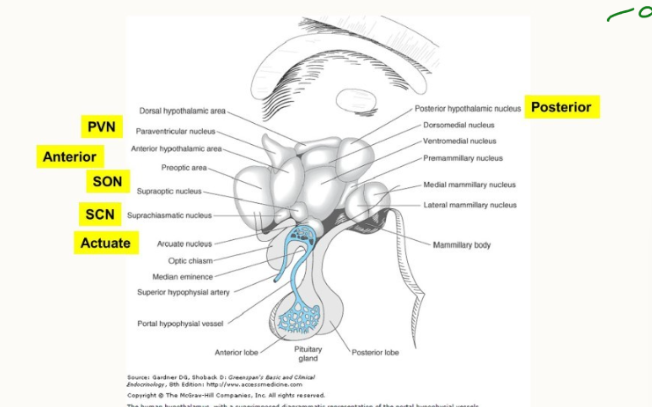
Name the 6 nuclei of the hypothalamus
paraventricular PVN
supraoptic SON
suprachiasmatic SCN
lateral LN
arcuate AN
mammillary
What are each of these nuclei functions in the hypothalamus?
paraventricular PVN
supraoptic SON
suprachiasmatic SCN
lateral LN
arcuate AN
mammillary
oxytocin, ADH, TRH, CRH
oxytocin and ADH
biological clock/circadian
arousal, hunger
energy, GnRH, GHRH, NP-Y
wakefulness
What are the two mechanisms of hypothalamic input
humoral
neural
What 3 neuronal areas are sensed in the hypothalamus (indirectly?)
visceral and somatic sensory nerves
limbic system (emotions)
reticular activating system - eyes
Outline thermoreception in the hypothalamus: HEAT
neurones in the anterior hypothalamus
heat → thermoregulation cooling centre → peripheral vasodilation etc.
Outline thermoregulation in the hypothalamus: COLD
neurones in the posterior hypothalamus
thermoregulatory heating centre → peripheral vasoconstriction etc.
Outline osmoregulation in the hypothalamus
direct measuring: respond to an increase in blood osmolarity = haemoconcentration dehydration
response:
ADH released from SON
secreted via posterior pituitary
kidneys retain water
thirst centre stimulated in LN
Outline satiation in the hypothalamus (hunger)
Arcuate nucleus
detect blood glucose + hormones →
leptin → fullness
ghrelin → hunger
what are the centres that respond to:
satiety
appetite
What do they detect?
satiety - high glucose levels → inhibits eating
appetite centre - low glucose levels → stimulates eating
what is the scientific word for:
fullness
hunger
anorexigenic
orexigenic
What is released from the small intestine in response to the hypothalamus stimulating appetite?
CCK: cholecystokinin produced
stimulates pancreatic secretion and gall bladder contraction
How does the biological clock work?
light hits retina
retina → SCN in the hypothalamus
hypothalamus stimulates pineal gland to prevent serotonin conversion to melatonin (therefore wake up)
what are the three rhythms
circadian
ultradian (<24hrs)
infradian (>24hrs)
What is the clinical relevance of understanding biological rhythms?
may need to take more than one blood sample to compare hormone concentration e.g. cortisol peaks in the morning, peaks and troughs throughout the day.
What hormones does the neurohypophysis secrete?
ADH
oxytocin
How are hormones released from the neurohypophysis?
produced in hypothalamus
travel down neurones into neurohypophysis
terminate on blood vessels and release hormone directly into circulation
posterior pituitary - storage site, not a true endocrine gland
What is the name of the circulation within the adenohypophysis
pituitary portal circulation
Outline how the hypothalamus and adenohypophysis are connected
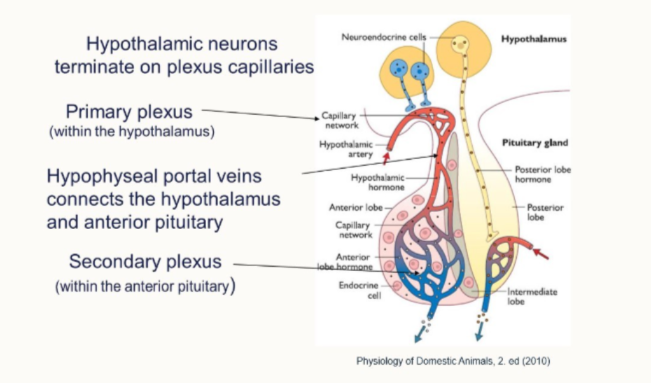
hypothalamic neurones terminate on plexus capillaries
primary plexus in the hypothalamus
hypophyseal portal veins connect to the adenohypophysis
secondary plexus within it.
What are the 5 releasing hormones produced by the hypothalamus?
CRH: corticotrophin-releasing hormone
TRH: thyrotropin releasing hormone
GHRH: growth hormone releasing hormone/somatotropin releasing hormone
GnRH: gonadotrophin releasing hormone
PRL-RH: prolactin releasing hormone
What are the 3 inhibitory hormones produced by the hypothalamus?
GHIH/somatostatin: growth hormone inhibitory hormone
GnIH: gonadotrophin inhibitory hormone
Dopamine: inhibits prolactin and other hormones
what do each of these hormones trigger to be released in the pituitary gland and what are the target organs thereafter:
GnRH+GnIH
CRH
TRH
GHRH + GHIH
PLR-RH
FSH + LH: testes and ovaries
ACTH → adrenal cortex
TSH → thyroid gland
GH → liver and other tissues
prolactin → mammary gland
What are these two types of secretion:
tonic
episodic
constant
pulse/surges
What do each of these hormones trigger in their target organs?
LH in testes
LH in ovaries
FSH in testes
FSH in ovaries
ACTH
TSH
GH
Prolactin
ledig cell growth → testosterone
progesterone, ovulation
inhibin → sperm production
estradiol, corpus luteum formation
cortisol, corticosterone
thyroxine, triiodothyronine
IGF-1
milk let down
is cortisol production an example of tonic or episodic secretion?
episodic - pulsatile and ultradian rhythm
what is an example of tonic inhibition, how does it become uninhibited?
prolactin
remains inhibited until stimulated → TRH → GnRH → PLR e.g. nervous system from suckling on the teat
How does dopamine inhibit prolactin?
it’s secreted by the hypothalamus PVN → neurones
released from neurone and binds to cell surface receptors on pituitary cells
induces DAG/Ca2+, PKA intracellular signalling
represses release and production of prolactin from lactotroph cells of anterior pituitary
what are neurohormones?
small peptides secreted by neurones - 3-40 amino acids
different secretion rates: ADH + oxytocin = lots, CRH = small
Give two examples of neuroendocrine hormones and how one works
Dopamine 2. TRH
Dopamine = catecholamine
acts through adrenergic receptors → heart and blood vessel stimulation
dopamin e= inhibitory hypothalamic hormone
What are the 5 cell types in the pars distalis of the adenohypophysis and what do they produce?
thyrotropes - TSH
corticotropes - ACTH
gonadotropes - FSH and LH
somatotropes - GH
lactotropes - PRL
what does the par intermedia produce in horses
melanotropes → MSH
In the adenohypophysis which cells are:
acidophils
basophils
somatotropes and lactotropes
corticotropes, thyrotropes, gonadotropes
What 3 hormones regulate somatotropin secretion?
GHRH
somatostatin (GHIH)
Ghrelin (from stomach), secreted in response to food
What does the growth hormone stimulate?
IGF-1 secretion from the liver
protein synthesis (anabolic effect)
lipolysis
inhibits insulin (therefore glucose utilsation)
How can the lactotrope staining change?
storing PRL: chromophil
no PRL stored: chromophobe
How is PRL regulated?
tonic inhibition by dopamine
TRH stimulation
hypertrophy during pregnancy
How are corticotrophic hormones produced?
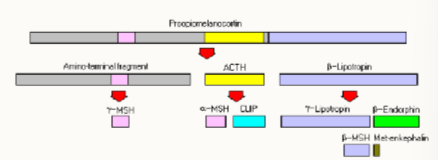
POMC is produced: prohormone, proopiomelanocortin
this is cleaved into the active hormones:
ACTH, MSH, beta-lipotrophic hormone, beta-endorphin, enkephalin (an endorphine), CLIP (corticotropin-like-intermediate lobe peptide
How do we get from the POMC to the active hormones?
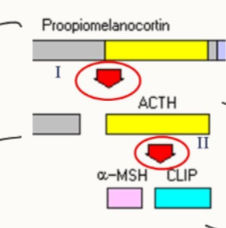
prohormone convertase I - in pars distalis
prohormone convertase II - pars intermedia
why are labradors susceptible to obesity?
POMC mutation, key hormones aren’t produced leading to:
increased adiposity and body weight
increased food motivation
increased frequency in assistance dogs
How are corticotropes regulated?
corticotropin-releasing hormone (CRH)
tonic stimulation
more CRH → increased ACTH secretion
less CRH → decreased ACTH secretion
negative feedback loop
What two hormones do gonadotropes produce?
FSH
LH
In males how does:
FSH
LH
affect the target organ?
FSH - supports spermatogenesis by sertoli cells
maintenance of leydig cells therefore testosterone production
In females how do these hormones affect their target organ?
FSH
LH
follicle development and estradiol production
stimulates ovulation, corpus luteum development and progesterone
How is gonadotrophic hormone production regulated?
GnRH from hypothalamus
negative feedback loop
How do thyrotropes affect their target organ and how is it regulated
TSH → follicular cells on thyroid gland → thyroglobulin → triiodothyronine (T3) and thyroxine (T4)
TRH from hypothalamus and tonic stimulation
Outline the pars intermedia:
structure
cells
referred to as … in horses
what is its control method in horses
small cystic cavities, follicles filled with colloid
basophils and chromophobes
melanotropes
prohormone POMC → MSH, NOT under negative feedback control
What is a closed loop
target cells secrete hormones that affect their own secretion
What is an open loop
no direct feedback
stopped by removal of a stimulus/depletion of biochemicals e.g. stimulation by milk let down
What is a positive feedback loop? Give an example
hormone secretion increases response to feedback - an amplification process
oxytocin in parturition → uterine contraction → stretch during delivery → nervous impulses to hypothalamus → more oxytocin
Compare short feedback loops to long feedback loops
Short: hormone from pit.gland → feedback to hypothalamus → more/less hormone
Long: hormone from gland → hypothalamus (± pit gland)
What can an adenoma in:
pars distalis
pars intermedia
GH-secreting pars distalis tumour
lead to?
ACTH and GH secretion non-function
nothing to note
affects acidophils (VERY RARE) → excess GH → alters growth and energy metabolism.
What is gigantism? What are the consequences?
hyperactivity/neoplasia before adolescence
all tissues grow rapidly
consequences
hyperglycaemia (GH antagonises insulin)
pancreatic failure (overwork)
diabetes mellitus
eventually pan-hypopituitarism
microsurgery possible in some cases
What is acromegaly, what are the consequences?
pituitary disorders after adolescence
consequences:
epiphyses of bones have fused
bones of distal forelimb and hindlimb grow
membranous bones of face grow
mandibles grow → prognathism
eventual organ enlargement
kyphosis of vertebrae → hunchback
Identify 4 systems that do not depend on the hypothalamus/pituitary gland
glucose regulation - insulin, glucagon, epinephrine
calcium regulation - PTH, calcitonin, active vit D
sodium and potassium regulation
gastrointestinal enzyme secretion
What are the two hormones produced by the neurohypophysis?
ADH (also alled vasopressin)
oxytocin
Oultine ADH:
1. what does it act on
what is the result
distal tube of the nephron and collecting duct
increases permeability to water → more reabsorbed → urine is more concentrated and of smaller volume
What can result with inadequate concentration of ADH? What clinical signs may we see
dilute urine when it should be concentrated
polyuria (excessive urination)
polydispsia (excessive drinking)
What are the two receptors involved in detection of dehydration?
osmoreceptors
stretch/volume receptors
How do osmoreceptors respond to dehydration?
found within the hypothalamus
respond to increased osmolarity of ECF
higher osmolarity → more ADH released → more water conserved
Define osmolarity
no. dissolved particles per unit volume
Outline how stretch/volume receptors detect dehydration
found in atria and veins
respond to LARGE changes (10% decrease in blood)
decrease in distension detected
nervous impulse → hypothalamus
more ADH → more water conserved
What are the most sensitive receptors to dehydration?
osmoreceptors
What is a major method for correcting dehydration?
thirst stimulation
when will large amounts of ADH be released?
an emergency!
How does ADH act on the nephron?
targets the distal tube and collecting duct
act on aquaporins - water channels
Where are aquaporins present in the:
proximal tubule
distal tubule
all membranes
always on basolateral membranes + only in apical membranes when ADH present
How does ADH act on aquaporins
binds to cell surface receptor
adenyl cyclase activated
cAMP generated
vesicles containing aquaporins → cell surface
exocytosed
proportional to plasma ADH concentration
removed via endocytosis
What is diabetes insipidus
diabetes = increased urine output
caused by ADH dysregulation
What are the two types of diabetes insipidus, what are each caused by?
neurogenic → inadequate ADH release from pituitary
nephrogenic → inadequate response within the kidney
How can we diagnose DI?
Give ADH:
concentrated urine produced → neurogenic (compensates for failure to produce ADH)
dilute urine → nephrogenic (kidneys fail to respond to ADH)
Outline oxytocin:
what cells does it act on
two examples of its presence
what kind of reflex is it?
smooth muscle cells
uterine muscles during birth and induces contraction of alveoli of mammary glands
neuroendocrine
How does the neuroendocrine reflex of oxytocin work during parturition?
nerve endings in cervix are stimulated
afferent impulse → hypothalamus
neuroendocrine cells in paraventricular and supraoptic nuclei depolarise
oxytocin from pars nervosa secreted
enters cirulation
act on oxytocin receptors of myometrium
stronger uterine contractions
What are two uses of oxytocin during parturition?
administered to induce parturition in many species - uterine intertia
retained placenta - induces contractions helping to expell it.
How does oxytocin at in the mammary glands?
stimulates milk let down:
binds to receptor on myoepithelial cells (surround alveoli and walls of small secretory ducts)
on the long axis of the secretory duct
duct becomes shorter and wider
opposite effect on circular sphincter muscle → relaxation
BOTH increase milk outflow
Why is there a high frequency of nerves in the teats?
detect suckling/preparation for milking
What is the nervouse impulse pathway from the mammary glands?
superficial sensory pathways and inguinal nerve
afferrent sensory neurones → lumbar segments of spinal cord
ascend the spinal cord sensory tracts
to thalamus → influence cell bodies of neuroendocrine cells
stimulate pituitary gland secretion (posterior)
How fast is the oxytocin mammary response?
slower than nervous - neuroendocrine
takes 2 seconds for sensory arc and oxytocin release
takes longer for it to be transported in circulation (20-30s)
What is the clinical relevance of oxytocin in the mammary glands?
administered IV or IM → induces milk let down
weak foals treated/mares being milked
mastitis
3 bullet points to explain the effect of oxytocin on mammary glands
increased pressure within alveoli
reduces resistance in excretory ducts
reduces resistance in teat canal
al lead to an increased milk outflow