Classics 51B Set
 Call Kai
 Learn
Learn Practice Test
 Spaced Repetition
 Match
Match Flashcards
 Knowt Play
1/32

There's no tags or description
Looks like no tags are added yet.
Name | Mastery | Learn | Test | Matching | Spaced | Call with Kai |
|---|
No analytics yet
Send a link to your students to track their progress
33 Terms
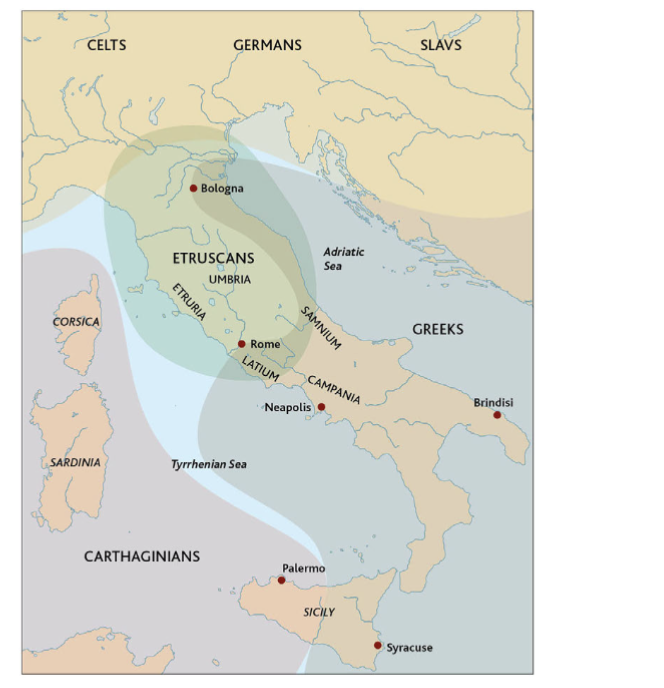
This is an Map of Italy. Shows spheres of Punic, Creek, and Etruscan influence during the Etruscan period
Roman art stems from Etruscan influence
This map demonstrated where Etruscan culture was first found. It was found when traders from Greece and Carthage arrived on the Italian peninsula, showed in the map above. The traders arrived there because they were seeking new markets.
Fondly, the culture was in it’s early stages and is currently laboled Villanovan.
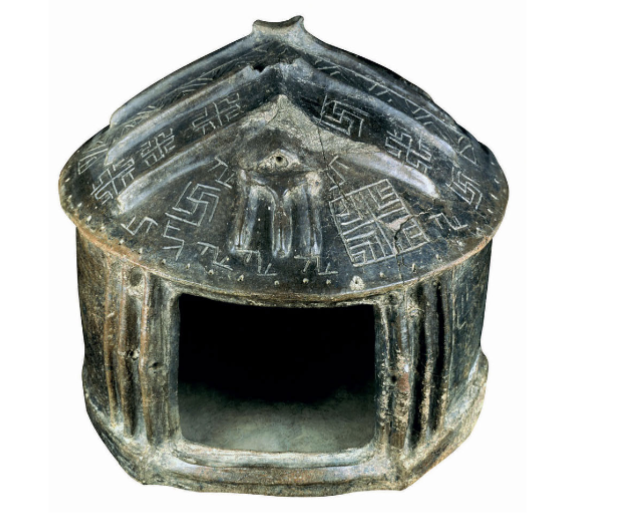
This is an picture of an Villanovan hut cinerary urn, dated 9th to 8th century BCE.
Cateorgized by inscribe decoration with orientalizing patterns of meandinering or swastika-like forms
It’s form is modeled after the thatched-roof huts that early Etruscans lived in
It was an possession that would be buried with the cremated remains of an deceased Etruscan
Symbolic of an nurturing home of the deceased
Demonstrates the close connection between homes and graves
Evidence of homes of the early period
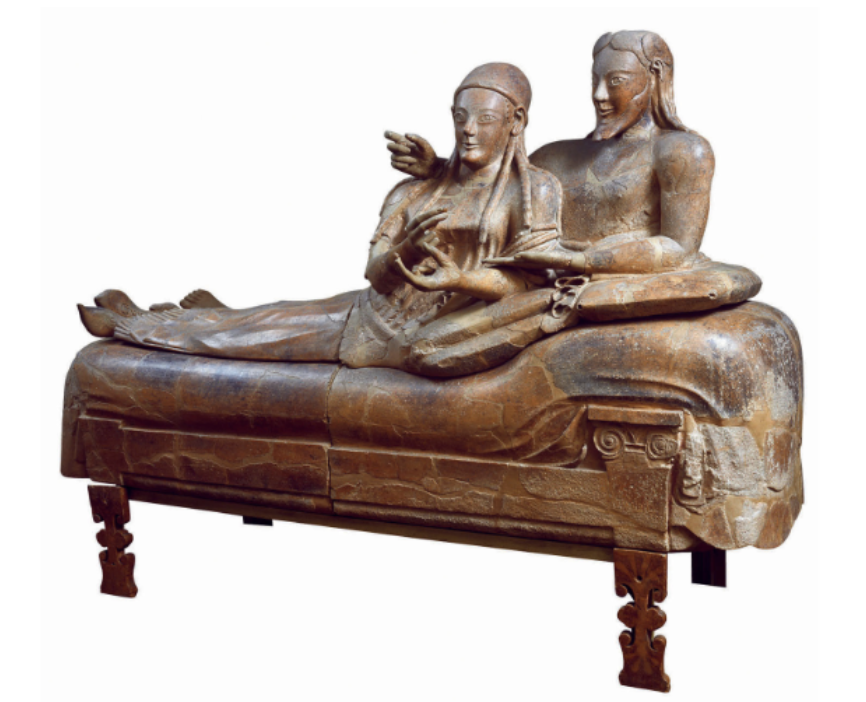
It is an famous sarcophagus found in Cerveteri, Italy in the late 6th century BCE
The features of stretched and angular representations resemble sytilzied portraits
The idealized expressions are similar to Greek Archaic style, but the posture and shape of the bodies show Etruscan influence
The work heavily emphasizes the face and then chooses to ignore less identifying features of the person, such as an feet
The sarcophagus is imposed there to house the body but it also functions like an hut
it’s pillar like structure does the work of an column-holding up an capital or decreative top block of a column
This means it become another architectural dwelling in it’s own right, lifting up another home above it
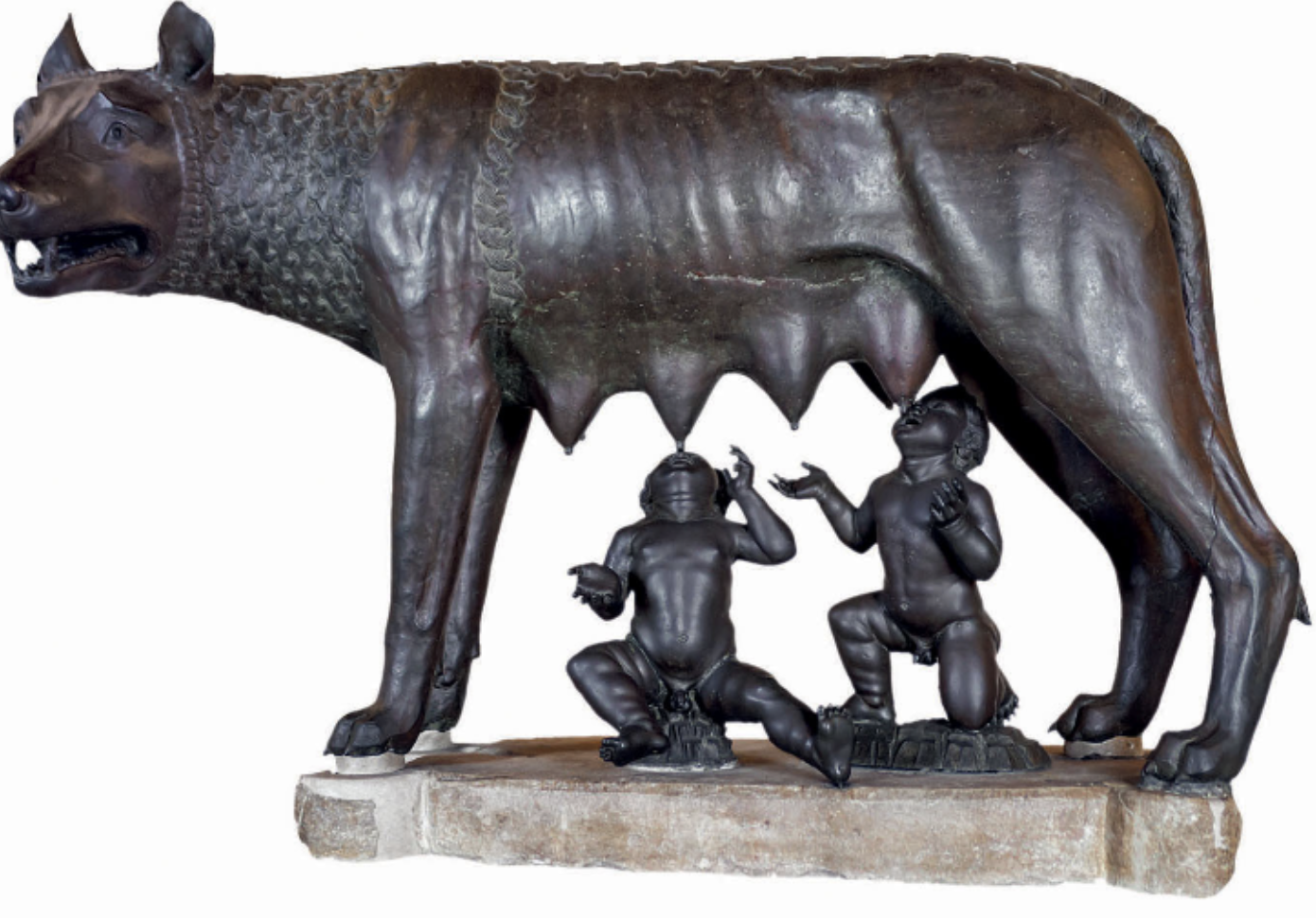
An bronze copy-cat sculpture found in Rome in the 11th to 12th C.E
Represents the founding of Rome through the children, Romulus and Remus suckling the wolf
Romulus and Remus was set to die on the etruscan river. But, they were found and nused to healthy by an etruscan wolf
The work shows the same stylized forms of the early 700s that demonstrate Etruscan influence
Since it’s an copy-cat, this version shows that it was created in the early medieval period instead of being an primary dated object
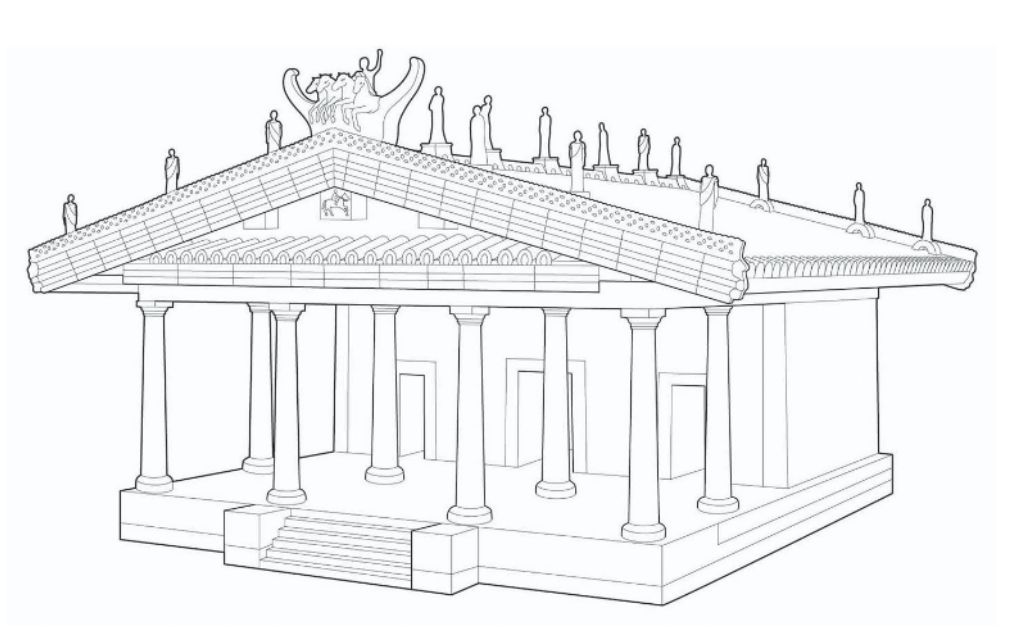
This is an reconstruction of the Portonaccio Temple
Found in Veii, Italy around 500 BCE.
The reconstruction shows an akroteria on the ridge of its roof
the akroteria is arranged to be similar to a terracotta statuary Area Sacra di Sant'Omobono in Rome- an important archaeological site at the foot of the Capitoline Hill, containing the remains of ancient temples
this practice is often seen within Etrurscian culture
What is an akroterial group
an ornament placed on a flat base and mounted on the pinnacle of the pediment of a building
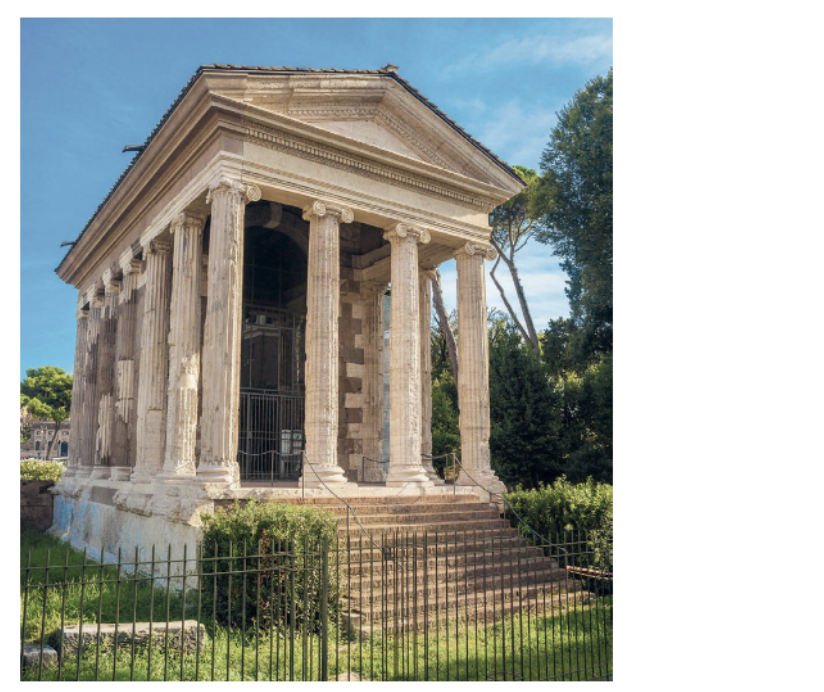
Shows the Temple of Portunus in Rome, Italy around 80-70 BCE
The Temple of Portunus is located near the Forum Boarium and are monuments built out of local stones for local gods
The deep porch with frestanding columns is an referenes to Etruscan styles
The columns are in Ionic order (slender columns with fluted shafts and volute capitals)
The temple uses decorative fissures (cracks) that are influences from the hellenistic world
Examplorary of Rome being captured themselves
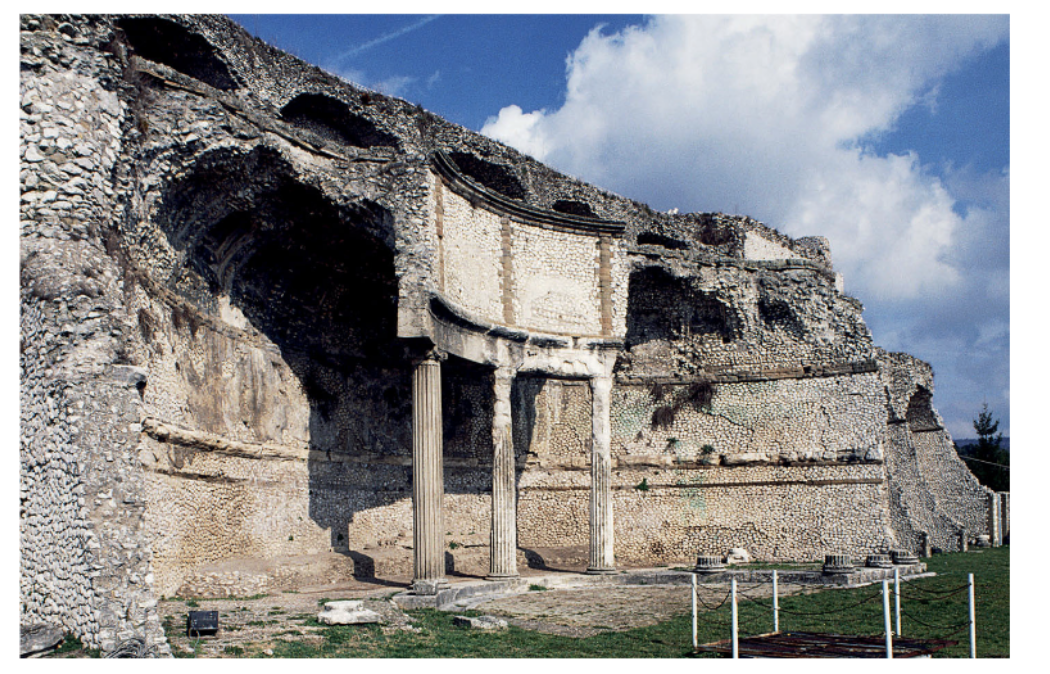
This is the concrete vaulting of the Sanctuary of Fortuna
Found in Praeneste, Italy, around 120 BCE
Demonstrates prime building method prior to the empire
The vaulting uses a
from which coulld be built out of wood first
Then, reusable material could build up these features to do an array of shapes (curved like this one) cheaply
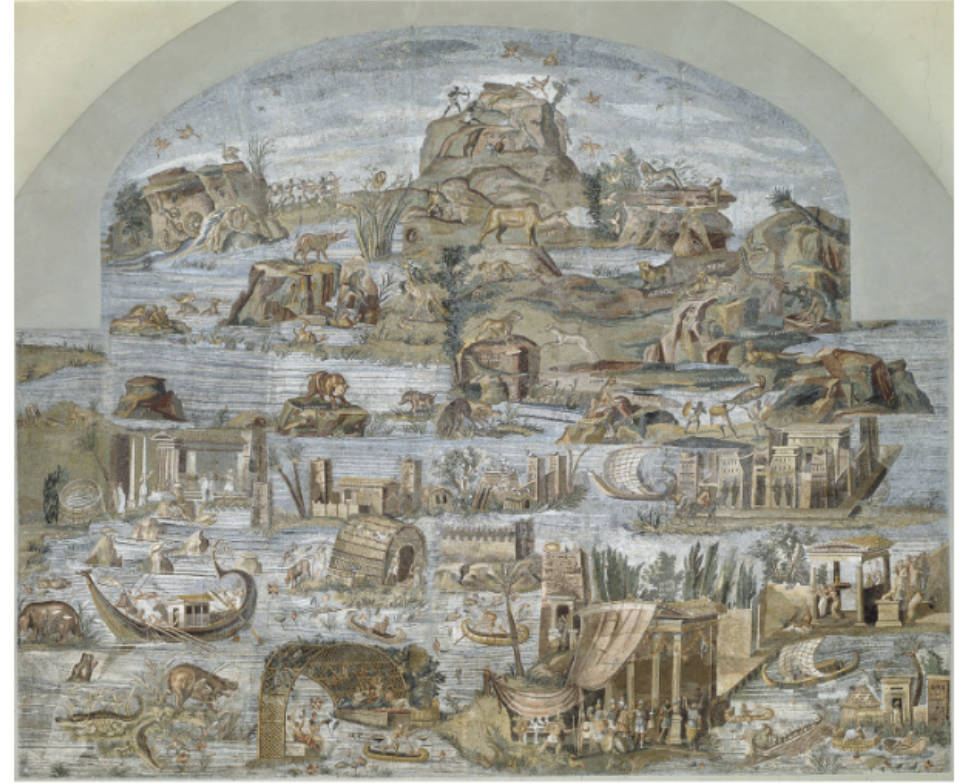
Praneste Mosaic in the Fortuna Sanctuary at Praeneste
Found in Italy in the 1st century BCE
An floor mosaic of the Nile and its passage into the Mediterranean
Utilizes Tessara or tiny little stones pressed one by one to provide an design
Idyllic representation due to the features creating an fantasy description of animals, buildings, and ships along the Nile
Shows the Roman fascination with the eastern Mediterranean in 1st century BCE
What is Tesserae?
setting of small cut rectangular stones into a bed of mortar to provide an design
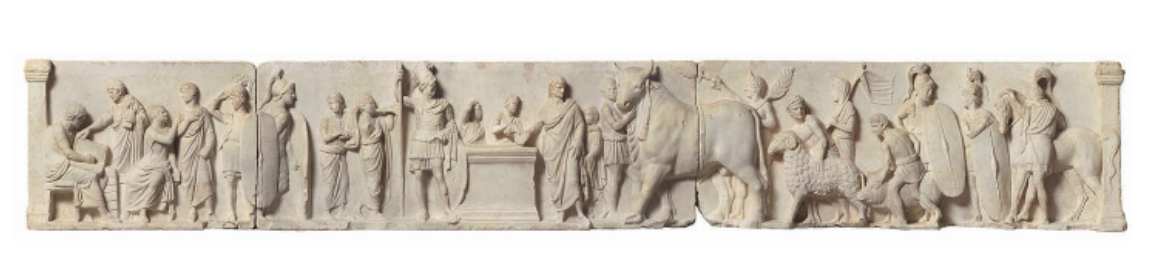
Originally found within the manubial buildings on the Campus Martius in Rome, Italy in the late 2nd to 1st century BCE
Known as the Paris reliefs
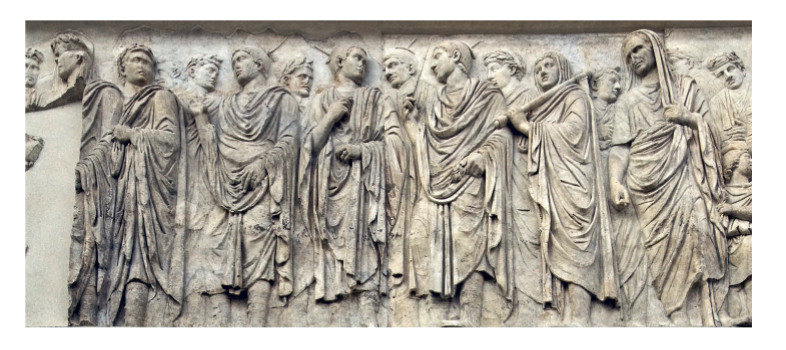
Depicts an scene of sacrifice (lustratio) offered to Mars, the largest figure on the left of the altar
The sacrifice is of an bull, an ram, and an boar
Opposite the god is the commissioner of the monument whose acts are being commemorated as they conduct the sacrifice and are in the style of an priest
Attendants charged with leading victims to sacfice, called the victimarii are there two
Armed soldiers frame the sacrifice on both end
At the left hand side are four figures recording this scene of testimony, referring to the Roman census which is an assesment of personal property. This was used to assign people their property class and voting tribes
Suovetaurilia
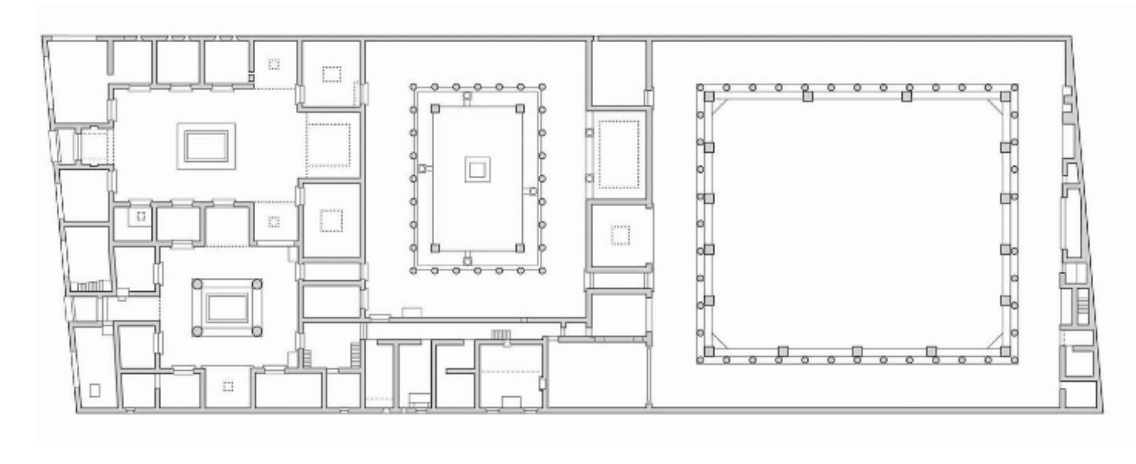
This is the Plan of the House of the Faun in Pompeii, Italy in 2nd century BCE
The House of the Faun is bigger than an standard domus
Because it occupied the entire residential block and has two atria (open central courtyards), it was an lavish late Republican house
It has two separate perisyles (continues porches) that borrows from Hellenistic period but still performs the same purpose of the peristyle in an Greek home
Due to Pompeii's city layout, the home was adapted so there is no clear sightline into the house
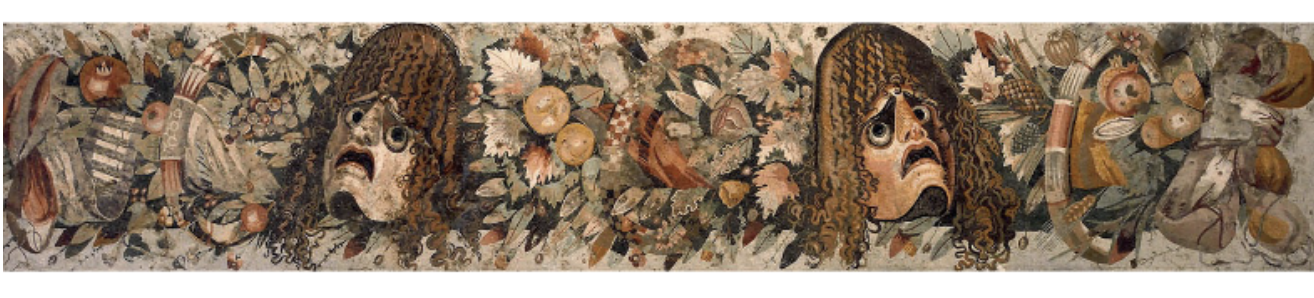
Mosaic from the House of the Faun in Pompeii, Italy in 2nd Century BCE
Shows an frieze of theatrical masks with garlands and fruits and symmetry
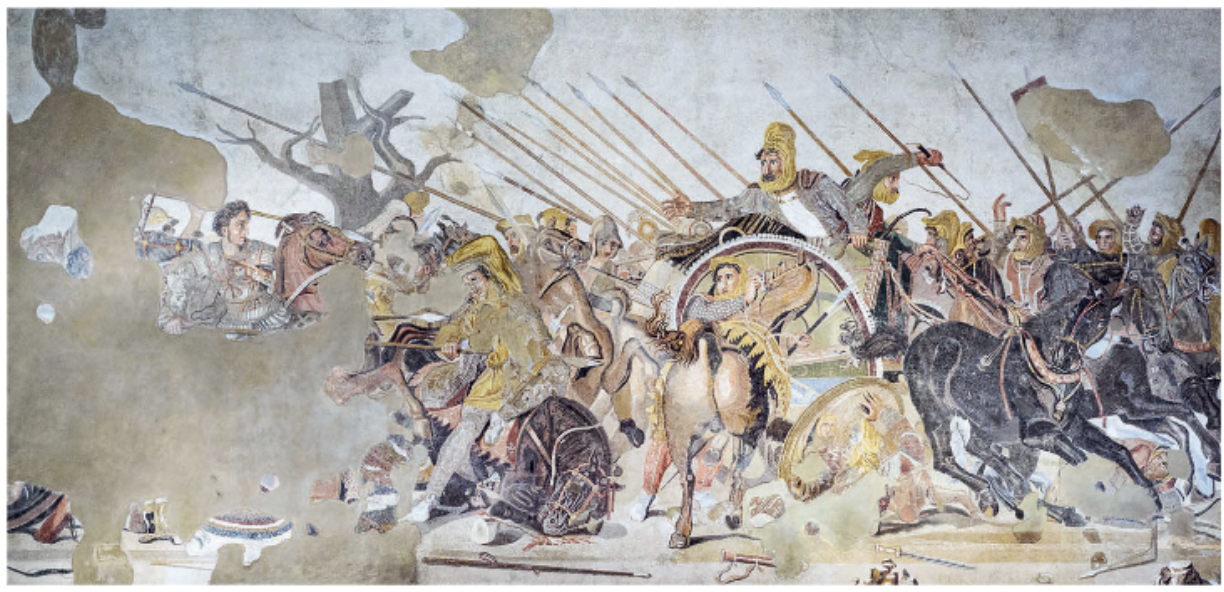
Shows the battle between Macedonian King Alexander and the Persian King Darius III in the Battle of Issus in 333 BCE
This is for Alexander’s conquest of Asia
This is a mosaic found in the House of the Faun
Example of an opus vermiculatum, which is a mosaic using tesserae
The tessarea also demonstrates nylotic elements
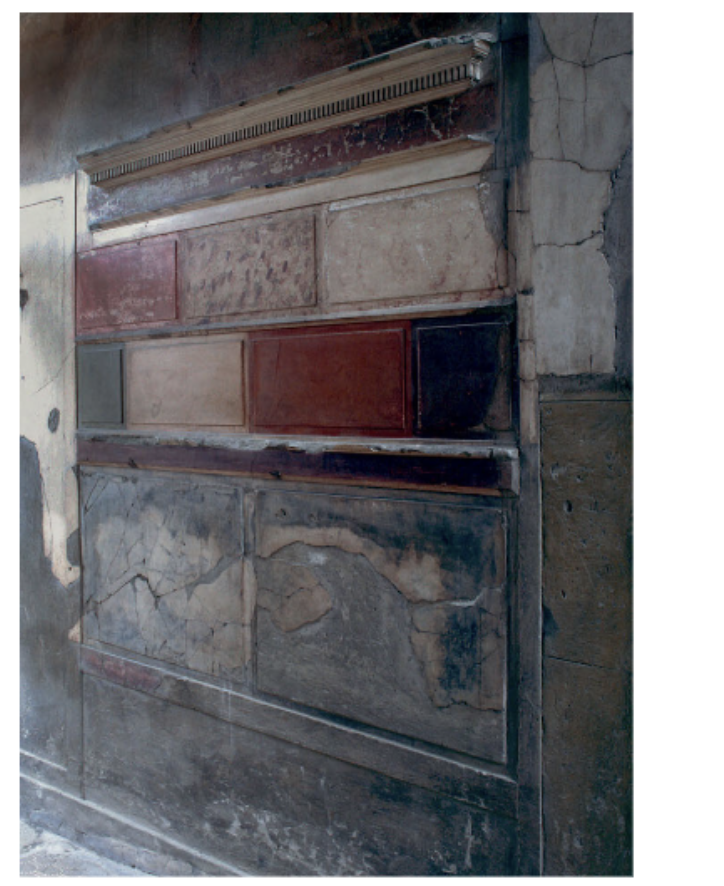
This is a wall painting in the Samnite House in Italy in the 2nd century BCE
The painting uses the Pompeian first style
Utilzies painted plastor forms that are carved out with 3 dimensional textures to appear as if they are actual stones
Includes fake stones painted on to create elegance and occupance
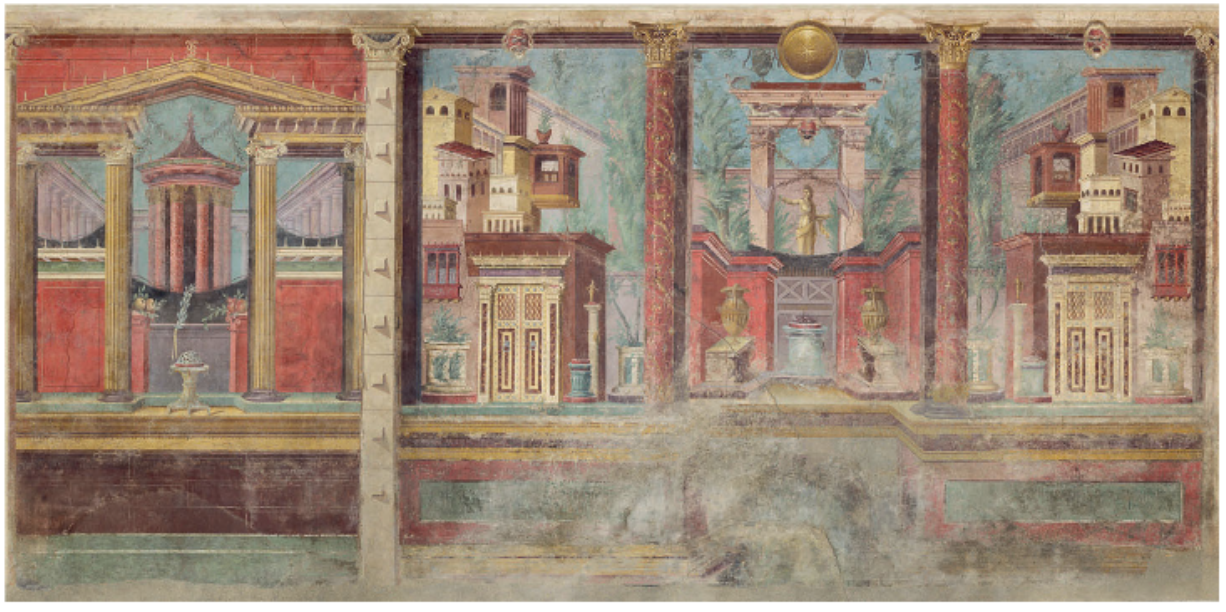
An rectangular portico in an Italian villa from 50,40 BCE
It utilizes linear perspective
It also has second style painting, where they have added artistic elements, to create an illusion of depth
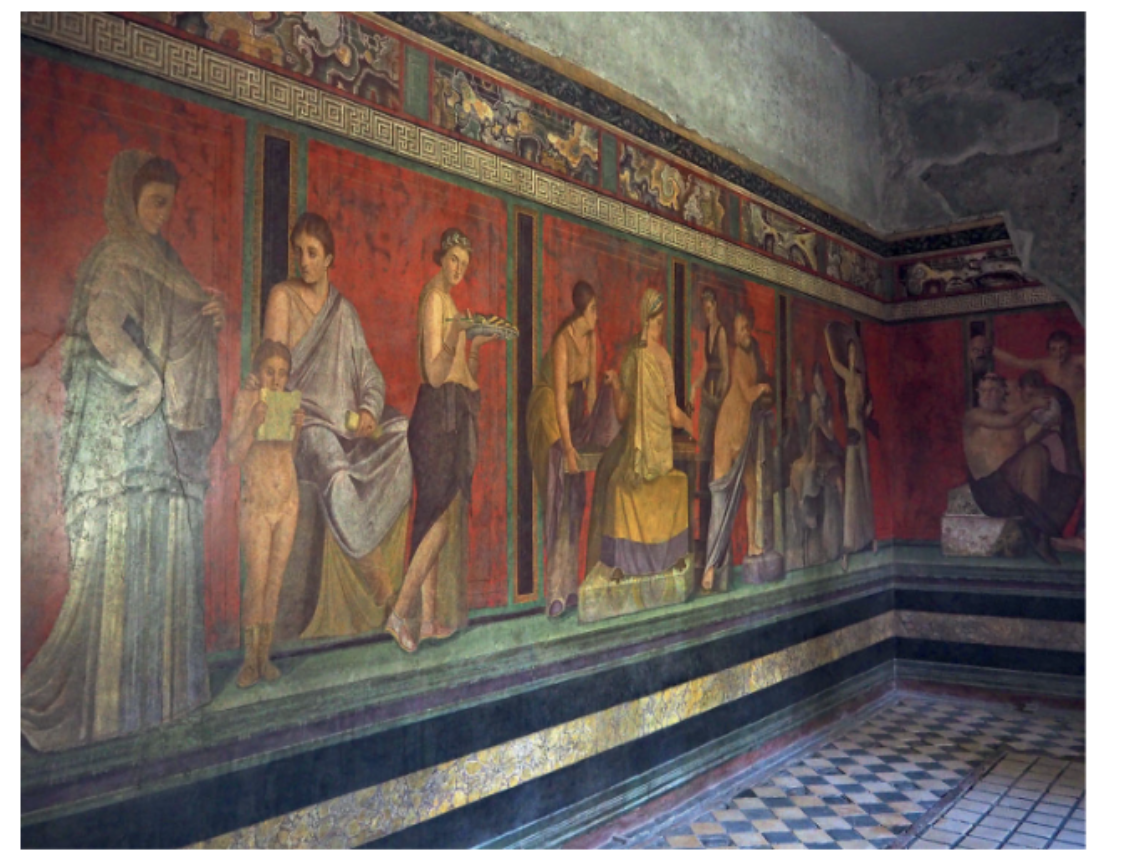
An frieze of Dionysiac from the 1st century BCE
The frieze is found in the Villa of the Mysteries in Pompeii, Italy
Shows an megalographic scene or an figural scene that unfolds around the room
Shows an painted socle (foundational base), an crowning deep cornice, and life-size figure
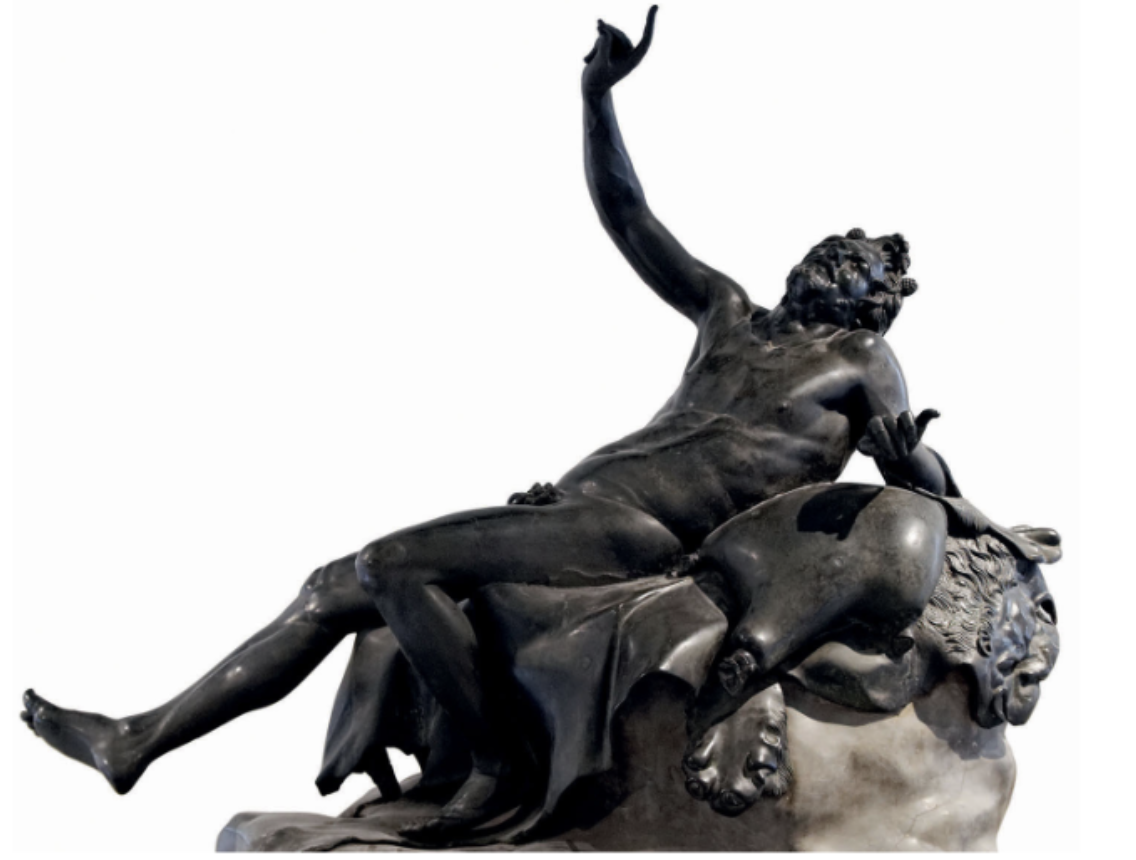
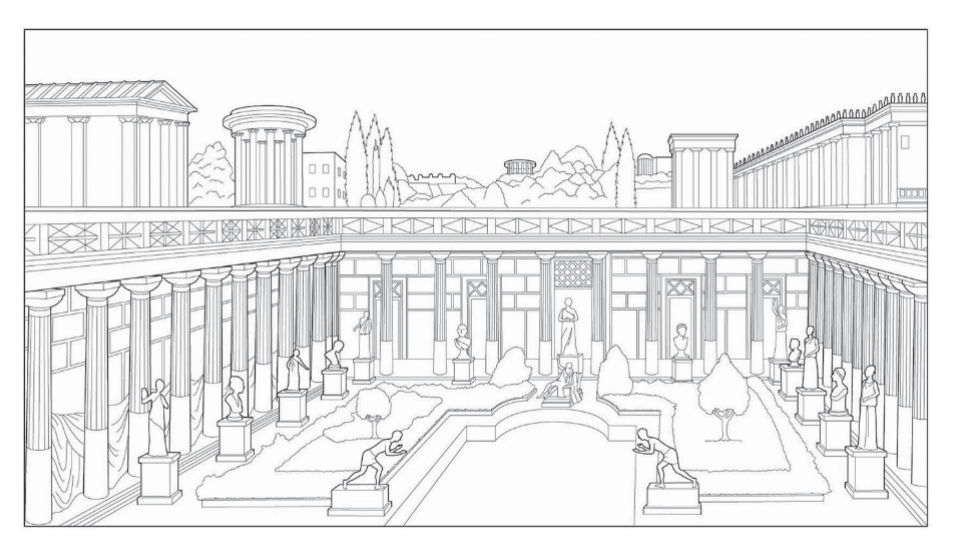
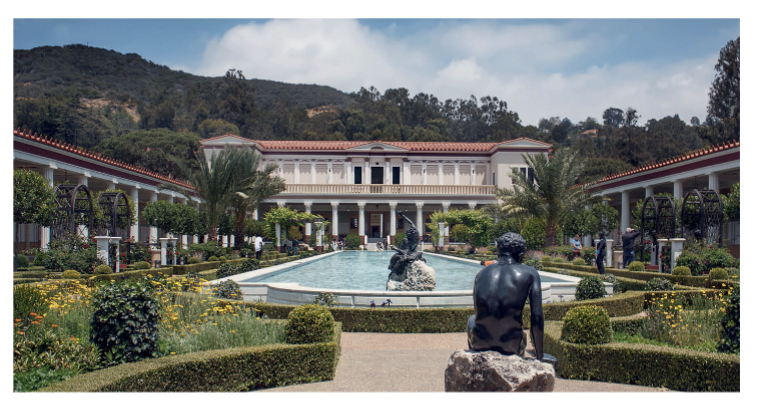
An bronze sculpture found in the Villa of the Papyri
Would be found in Herculaneum, Italy in the 2nd century BCE
Shows an drunken satyr reclining on rocks, that would usually be displayed in the pool of the peristyle of the villa
Satyrs are known to party out in the wilderness
The pleasurable aspects represents the Roman enjoyment of rustic open spaces
Also shows an older Hellenistic, Dionysiac taste
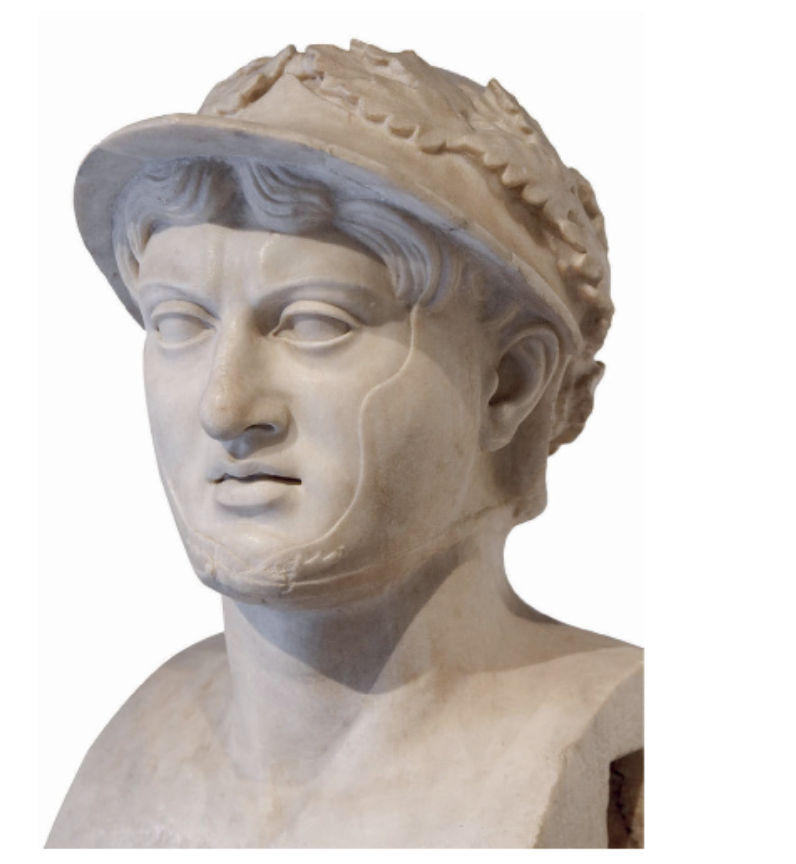
Marble Portrait of Greek King Pyrrhus
He was also an general who pursuid victories in southern Italy. Although successful, he did lose his campaigns
Found in 290 BCE
Usually found in the negotium space that would have an arranged protraits of philopshers, statesmen, and kings